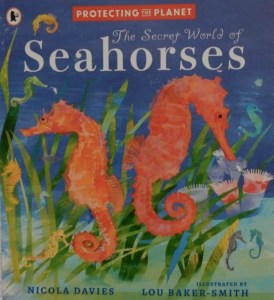
Protecting the Planet: The Secret World of Seahorses
Nicola Davies and Lou Baker-Smith
Walker Books
This immersive addition to the Protecting the Planet series is written in an accessible narrative style by zoologist,, Nicola Davies with impressive mixed media illustrations by Lou Baker Smith.
I’m fortunate to have seen live seahorses off the coast of Kerala but I doubt many readers of this book will have been so lucky as to see these graceful, fascinating, almost magical creatures. This is due in part to the 70+ million that are caught annually by humans who then make them into pills and potions or items such as key-rings to sell them as trinkets. Others of them meanwhile become the victims of pollution and dragnets. It’s still not too late however, to save these wonderful animals from becoming extinct: readers will discover how seahorses have adapted to their environment through movement and by means of camouflage and diet changes.
Furthermore on the positive side, they’ll read of innovative conservation schemes in the UK,
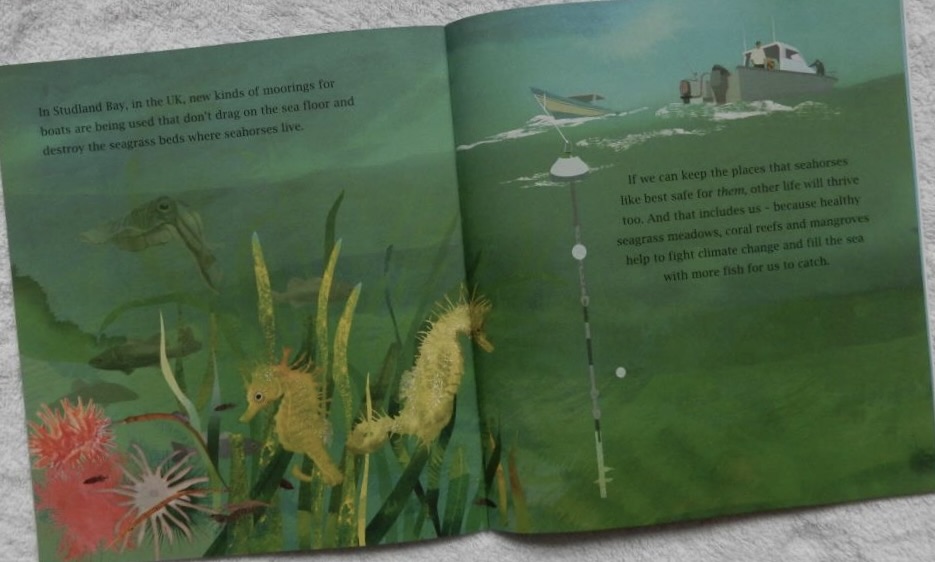
and in Malaysia and Cambodia to protect seahorse habitats.
Did you know that seahorses perform a ritual dance? You can discover why from the book and what makes paternal seahorses unique in the animal kingdom.
Certainly worth adding to family bookshelves and KS2 class collections; make sure children’s attention is drawn to the final spread ‘Seahorses and Climate Change’.

 Red Reading Hub - Jillrbennett's Reviews of Children's Books