Scrap: Escape from Somewhere 513

With old rivals and some new foes to deal with, Scrap, Paige and Gnat undertake a hazardous journey to the Ocean Jungles in search of the Wigeon, the last rocket ship on Somewhere 513. But they face a desperate struggle to extricate the ship from frogbears. While these beings dislike the taste of metallic Scrap, they’ll most likely have a taste for human flesh and bones.

Then Paige manages to get the ship airborne but Gnat is beguiled by a baby frogbear calling it cute; that is before it attacks. Eventually the ship crashes, happily with no fatalities, but the Wigeon is in a terrible state. However, over the space radio come voices supposedly broadcasting from Somewhere Five One Four saying they need help.

During all this a kind of alliance with Newman is formed but is he to be trusted?

With Scrap doing his utmost to repair the Wigeon and Harmony Highshine’s forces moving ever closer, it seems that if Paige is to keep her promise to her mum to keep Gnat safe, there’s no option but to remain with the Moochfolk, while Gnat and Scrap leave in the airship bound for Somewhere 514.

This is the final story in Guy Bass’s wonderful trilogy and its end chapter and epilogue brought tears to my eyes.
If you’ve not read the first two books, Scrap and Scrap: The Good, the Bad and the Rusty, start with those: they’re all gripping stories and Alessia Trunfio’s illustrations are a powerful addition to the narrative each.
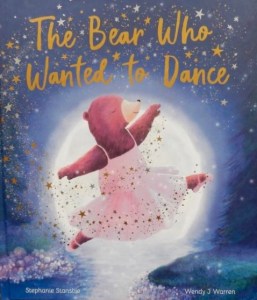
The Bear Who Wanted to Dance

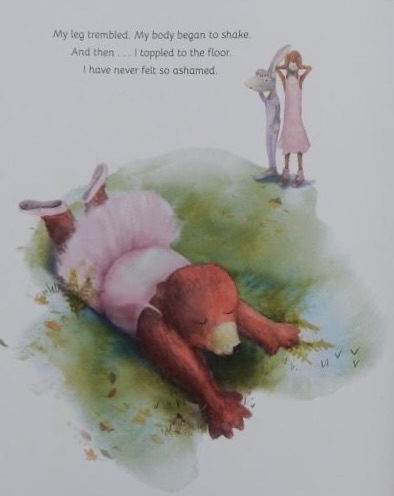
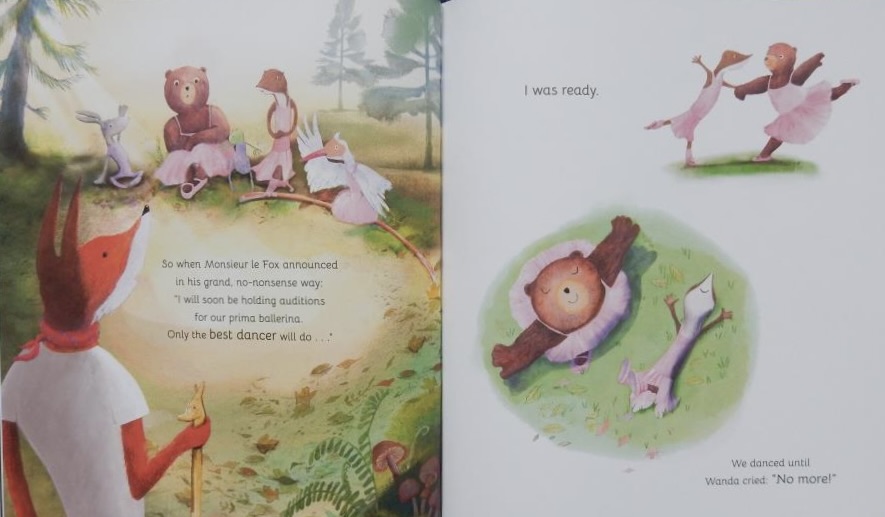
Follow your dreams no matter whoever or whatever you are, is the message that shines through this story of Rita the bear who was inspired by the very first ballet she saw and knew in her heart that she too wanted to become a dancer. She took lessons with Monsieur le Fox where she met Wanda and the two became firm friends dreaming of their lives in dance. Rita, our narrator tells how she practised daily, pushing herself ever harder until the day came when Monsieur le Fox tells the class that there’s to be an audition for the prima ballerina.

The night before the auditions, as the two friends browse through dance magazines, Rita begins to worry and her worry grows as she realises that none of the ballerinas depicted look at all like her – there’s not a single bear.

At the auditions the following day their teacher has worked them till they ached and come moonlight, he gives the instruction: “Everyone in arabesque!” Having taken up the pose, Rita loses her balance, falls, and is distraught.

Is that the end of her dance dream? Happily Monsieur le Fox’s response to her fall is unexpectedly positive and up she gets and on she goes and …

With a body-positivity theme, this story with its soft-hued illustrations and forest setting is a delight and will surely encourage those who dream big but don’t see themselves depicted in the media.

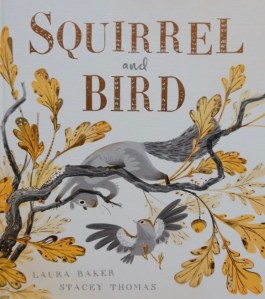
Squirrel and Bird

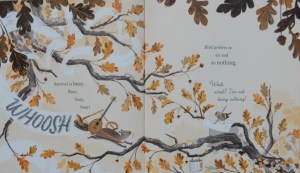
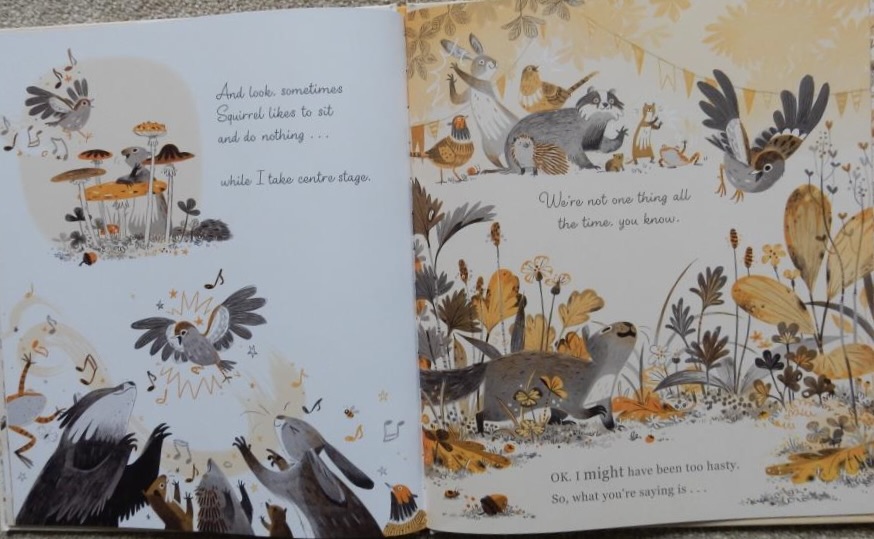
Squirrel and Bird are best friends and the external narrator introducing them emphasises their difference: ‘Squirrel is loud! Very LOUD!’ Bird, on the other hand, ‘hardly makes a sound at all.’ ‘Squirrel is busy. Busy, busy, busy!’ Bird though, ‘prefers to sit and do nothing.’ This way of describing them really annoys Bird as the comments are not the whole picture – far from it.

As the friends prepare for a concert to be held in front of the entire forest, tension mounts and eventually the feathered creature has heard enough and lets the narrator know in no uncertain terms. “ENOUGH!” comes the angry cry. ‘We are not only what you say we are. There’s so much more to us than that.’

Feeling the rebuke, the narrator shows a degree of surprise and has to agree ‘Bird is LOTS of things … and Squirrel is too!’

With Laura Baker’s very effective minimal text and Stacey Thomas’s charmingly detailed, muted sepia and grey scenes, the vital message comes through clearly: we are all an amalgam of different things at different times and hasty judgements are foolish.

A thought-provoking book to share and talk about with primary classes, possibly in a circle time session.

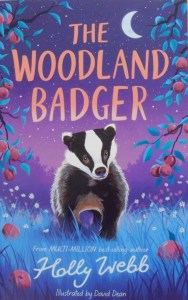
The Woodland Badger

Poppy loves to visit her mum’s allotment very close to their home where there are butterflies and bees aplenty. One day after school she accompanies her mum who is hoping to collect some strawberries for their tea later that evening. However Mum discovers that most of them have been nibbled, most likely by slugs. Fred, another allotment holder, offers them some of his strawberries and also tells them of his pre-bedtime method of keeping the marauding slugs at bay. During their chat he also mentions that hedgehogs eat slugs and they and other wild creatures live in the nearby woods. Mum suggests they stay a bit longer and see if any show themselves. At dusk, first a fox appears and then a badger; the two watch the badger, spellbound.

The following day Poppy talks excitedly about the badger to her teacher, Mr Finch and he responds enthusiastically. Then Poppy and her friend Grace use the school library to do further research and that night Poppy is allowed to sleep out on their balcony in the hope she can get another sighting of Diamond, as she names the badger. She is excited to see not one but two badgers, Diamond and another smaller one she names Ruby.

But then comes some alarming news from Fred: the woodland has been sold to developers and they plan to clear it and build houses, which put the badgers’ home at risk. Poppy and her mum know they must do something. In collaboration with their neighbours, they launch a campaign showing everybody the importance of protecting natural areas and the wildlife residing therein.

Empowering and gently educative, this story shows readers how food chains work in addition to giving information relating to the diet, habitat and behaviour of badgers. A great story for lower KS2 readers.

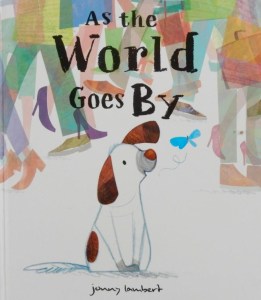
As the World Goes By

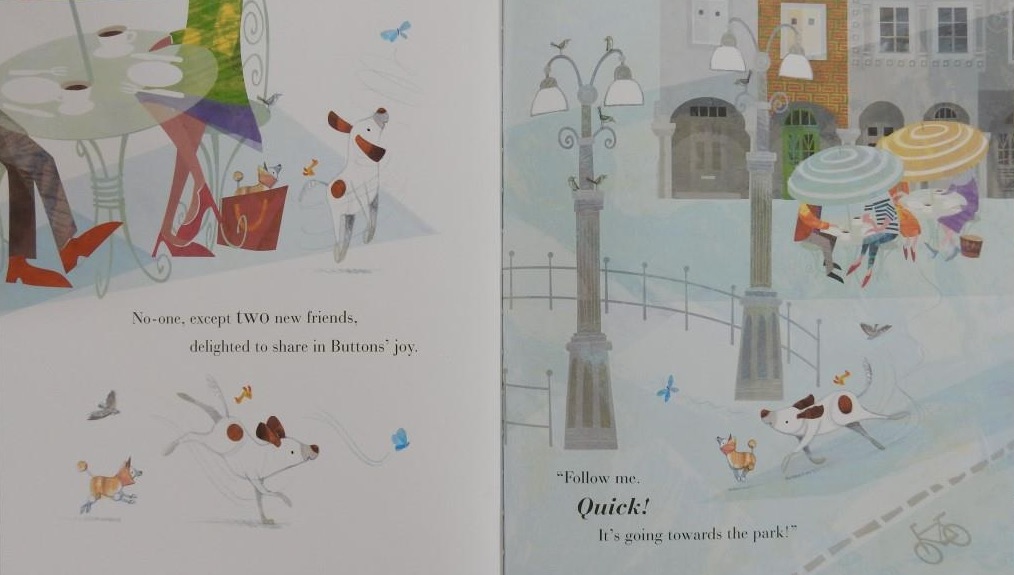
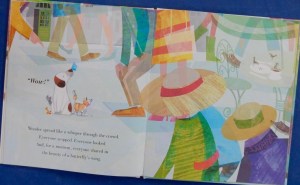
As Buttons the dog watches the world through his window he notices a blue butterfly, its wings catching the sunlight. Fascinated, he rushes outside to share this delight with others but is puzzled to find that nobody else seems to have noticed, so involved in their run of the mill daily lives are they. As Buttons continues on his way he encounters two other friendly creatures; they too are fascinated and join him in pursuit of the butterfly all the way to the park.

There the three sit enthralled as the winged creature dances for a short while then takes off again and enters an art gallery. Once more nobody notices until Buttons calls loudly STOP! At last the crowds do just that momentarily and enjoy the blue beauty.

Finally the world’s humans take time to watch the wonderful butterflies and one hopes the rest of the beauty all around.

In today’s world where so many people spend their time rushing everywhere, this is a reminder to slow right down, stop and take time to appreciate the natural environment. With its charmingly quirky illustrations, this book is a gentle reminder to encourage adults – be they parents, carers or teachers – to provide regular mindfulness

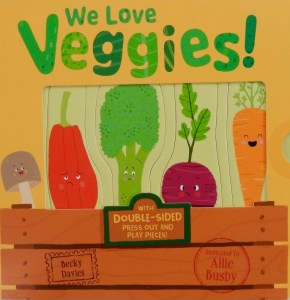
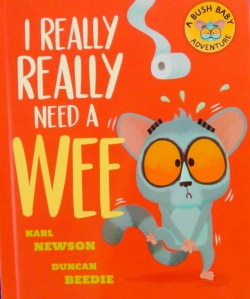
We Love Veggies! / I Really Really Need A Wee

These are two recent board books from Little Tiger: thanks to the publishers for sending them for review.

This is in the same style as We Love Fruit and again gives young children permission to play with food, albeit of the card variety. Having set free the double-sided veggie characters from the sliding tray inside the front cover of the book, child participants need to follow the clues given on each page and then select the appropriate cardboard piece. Can they work out which vegetable grows underground and is liked as food by rabbits? Or can they decide what vegetable is mostly made of water, has a purple, glossy skin and pale flesh?

A fun interactive guessing game with gently humorous illustrations by Ailie Busby and text by Becky Davies. Once you’ve shared the book a few times with toddlers it’s a good idea to introduce them to the real vegetables and to talk about how important it is to include ‘yummy’ veggies in a healthy diet.

From the body language and facial expression of the bush baby on the cover of this one, you know you’re in for a tricky time, one that will surely be familiar to adults who have been out with little ones
Here, the creature narrator’s attempts to distract himself make things worse and his efforts to find a place to relieve himself are disastrous. Eventually however, the object of bushbaby’s intense desire is in sight but almost inevitably, there’s an extremely long queue. When finally the little room is at last vacant, ‘woohoo!’ what a huge relief . But very soon after … you’ve guessed it …

Little humans will find this wee-ally funny. They’ll delight in Karl’s rhyming telling and Duncan’s side-splitting scenes; together they’re almost enough to make them wet themselves.

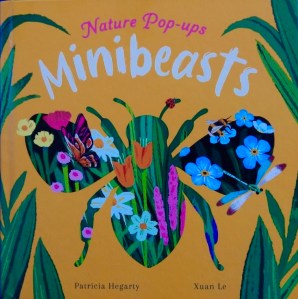
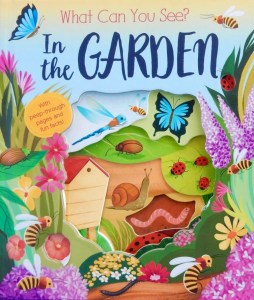
Minibeasts / What Can You See? In the Garden / We Love Fruit!

There are all new board books from Little Tiger – thanks to the publishers for sending them for review.

The first of a nature new series where the featured creatures almost leap out from among the plants growing in the flowerbeds. First comes a bumblebee that is busily collecting pollen from a composite flower; then there’s a ladybird that opens up its scarlet wing cases as though to take flight. Next not just one but – well maybe your little one can try counting them – the beautiful butterflies that, wings spread wide, take to the skies and flutter on the breeze. Meanwhile much closer to the ground, a shiny shelled snail climbs slowly, steadily amongst the grasses and ferns while, down by the pond darting among the lily pads, transparent wings shimmering is a dragonfly and finally, peeking from the foliage of blooming wisteria is a chirping grasshopper; but if you look very closely, there’s also one unnamed minibeast making its way along the branch.

Little ones will love watching all these small creatures as they peruse Xuan Le’s vibrant settings for Yoojin Kim’s cleverly engineered scenes.

More minibeasts appear in

At Rosamund Lloyd’s suggestion, young children take a walk in the garden and discover minibeasts in flight, follow a butterfly through its various stages of metamorphosis, watch honey bees at work, see camouflage and other ways minibeasts keep themselves save from predators. If you take time to forage in the plant litter there are woodlice, millipedes and snails to discover whilst beneath the ground earthworms burrow and ants create colonies. Little humans will delight in such facts as “some millipedes eat their own poo’ and that unlike themselves who have a backbone, insects have a skeleton on the outside called an exoskeleton .
The cutaway pages are cleverly positioned to allow readers to peep through and see what awaits.

Spring is here so share the book and then see what awaits outside your front door.

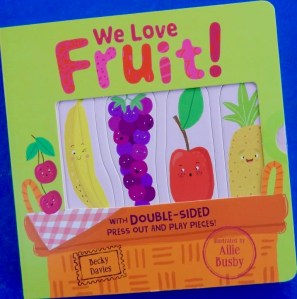
Don’t play with your tasty food. This is frequently said to little ones by parents or carers but now this book gives toddlers permission to do just that. Indeed they will love pulling out the double-sided fruit characters from the sliding tray inside the front cover and meeting the eight different fruity personalities. From these, little humans must follow the clues given on each page and choose the matching cardboard piece. Can they discover which fruit grows in bunches and when dried is called a raisin or which one might take as long as three years to grow?

A clever interactive guessing game, playfully illustrated by Ailie Busby with words by Becky Davies that offers opportunities for adult sharers of the book to talk about the importance of fruit in a healthy diet. I suspect several helpings will be desired by toddlers.