Rubbish? Don’t Throw It Away!

Rubbish? Don’t Throw It Away!
Linda Newbery and Katie Rewse
Otter-Barry Books

Members of Dragonfly Class are having an upcycling day and they’re all excited. Lucy found lots of pine cones in her grandad’s garden and she and her friends decide to turn them into owls. 

Yasmin’s mum has donated lots of old coat-hangers – just the thing to use for making mobiles and paper plates are ideal for masks.
Ali’s dads have brought along a large sink and this makes a splendid pond; 
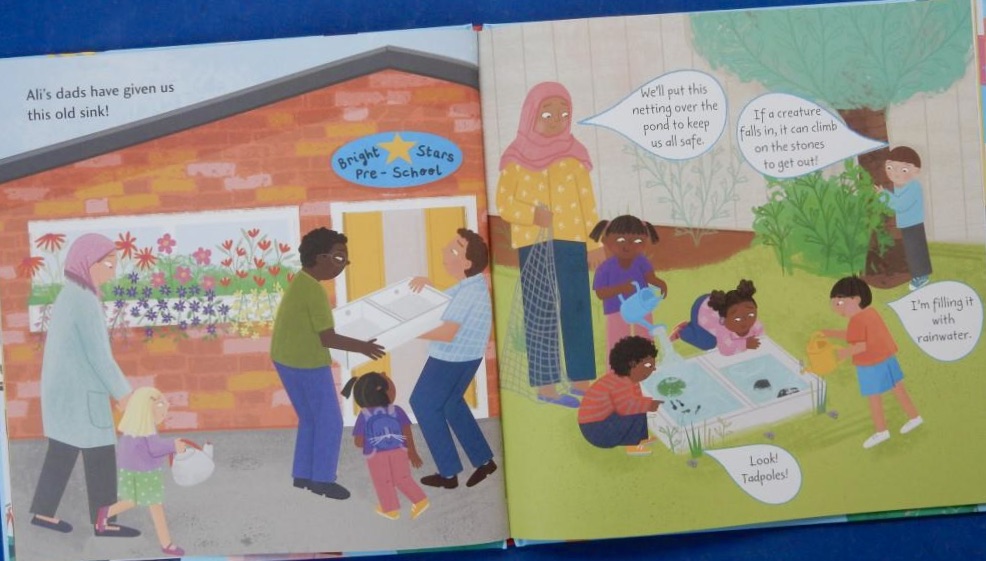
others have brought a leaf collection; this becomes a collage; Mohammed’s enormous box is perfect for a fort ; a length of fabric is fashioned into lots of different items. 

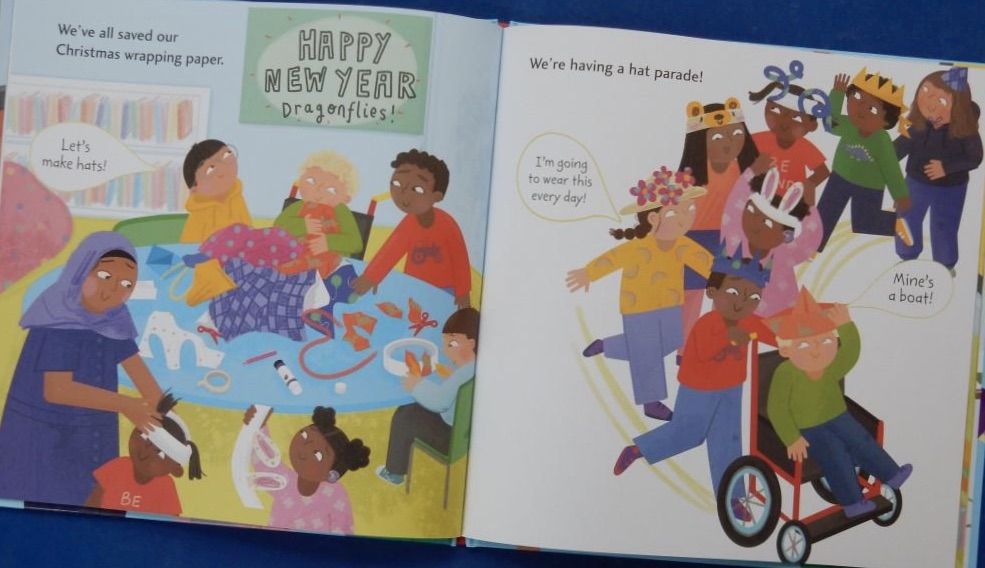
Christmas wrapping paper becomes all manner of funky hats 
and the parents and care-givers involve themselves in creating a mosaic for the garden; the garden is also where old tyres become planters while back indoors odd socks are super puppet bases and there are lots of clever ways to put other old items to use again too.

Not only have these children had terrific fun, they are never going to look upon ‘old rubbish’ without thinking, what can this be turned into?

This inclusive community of adults and children are a great demonstration of working together for the good of our precious environment. After sharing author and environmental campaigner, Linda Newbury, and illustrator Katie Rewse’s story, why not hold a similar event in your early years setting.
(Simple instructions for each activity are provided at the end of the book as almost all of them will need adult assistance.)

The Wall and the Wild

The Wall and the Wild
Christina Dendy and Katie Rewse
Lantana Publishing

At the edge of Stone Hollow town, young Ana grows a garden – a perfect garden, tidy and full of life; it’s in stark contrast to the wild, the place where she tosses her unwanted, left over seeds and against which she creates a boundary to delineate and shelter her orderly garden from the disorder beyond.

Soon Ana’s garden is full of scented flowers, delicious fruit and vegetables, leafy trees and birds and insects in abundance. It’s a place where people like to stop and admire what they see, but while they might be full of admiration, Ana is not.

Certainly not when she notices unfamiliar plants that have started to grow; these she pulls up, tossing them and other seeds that she now rejects into the wild. She also builds her boundary a bit higher and now her garden isn’t quite so thriving: less tasty crops grow and the numbers of visitors both natural and human, diminish. Despite this Ana continues to reject many seeds and shoots, hurling them into the ever-increasing wild against which she keeps on building up her boundary until eventually it’s an enormous wall.

Now at last Ana stops and takes stock of her creation – first on her side of the wall and then finally, she decides to look beyond …

What she discovers is truly astonishing and unexpectedly beautiful in its own way. Time to start removing some of that wall …

Both a fable, and a cautionary tale of sorts, Christina Dendy’s story, in tandem with Katie Rewse’s vibrant illustrations, shows the importance of biodiversity and of embracing and appreciating wildness. It’s great to see the subtle inclusion of Ana’s hearing aid in this beautiful book, which offers a great way to introduce the idea of rewilding and its potential benefits especially to those readers with gardens of their own.

The Garden of Hope

The Garden of Hope
Isabel Otter and Katie Rewse
Caterpillar Books

Isabel Otter and Katie Rewse have created a touchingly beautiful picture book story of loss, love, sadness, hope, transformation and beauty.

Maya’s mum is no longer on the scene (we’re not told if she has died or absent from the family home). Those remaining though – Dad, Maya and dog Pip are feeling bad and seem surrounded by desolation; that’s certainly so in the now overgrown garden.

Dad struggles to keep things going; Maya’s loneliness is in part compensated by Pip’s company but still she feels the loss, despite Dad’s stories.

One day when Maya feels particularly sad he tells her a story about Mum, relating how her remedy for down days was to go outside, plant seeds and wait for them to grow, by which time her worries would be replaced by something of beauty.

On the table are some packets of seeds.

A decision is made: it’s time to transform that neglected garden.

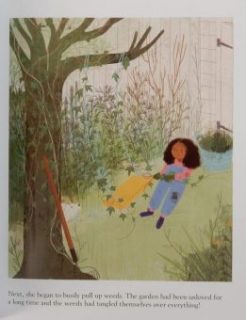
Little by little Maya prepares the ground for planting, her first seeds being Mum’s favourite sunflowers. Gradually along with the burgeoning plants, gardening releases something in Maya, allowing calming thoughts to grow.

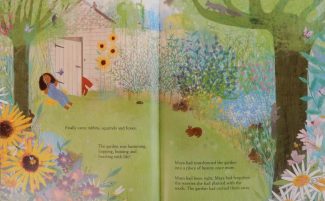
From time to time, Dad too takes comfort in gardening alongside his little girl. Lightness grows and with it some happiness. The flowers bloom attracting tiny creatures,

then larger ones until the entire garden is alive with hums, buzzes, flutters, flowers and, the first bursting of transcendent hope and … joy.

In a similar way Mum’s absence has left gaps in the family’s life, the author leaves gaps in the story for readers to fill. Her heart-stirring telling has a quiet power that is echoed in Katie Rewse’s graceful scenes.

Poignant, powerful: an understated gem.