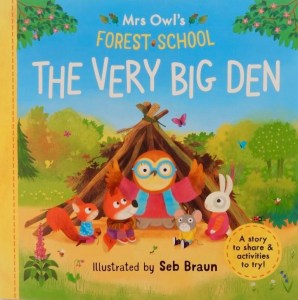
Mrs Owl’s Forest School: The Very Big Den
illustrated by Seb Braun, written by Ruth Symons
Templar Books
You never know what you will find, if you go down to the woods today, perhaps a forest school in progress.
Herein we join Mouse, Squirrel, Fox and Rabbit in a woodland setting beneath the trees where Mrs Owl holds her forest school. During the process of den building the animals use all their senses to learn about wildlife, both flora and fauna of the surrounding environment, as well as learning an important lesson about friendship and inclusivity. In addition they gain some useful skills such as how to tie knots and how to build a bug hotel.
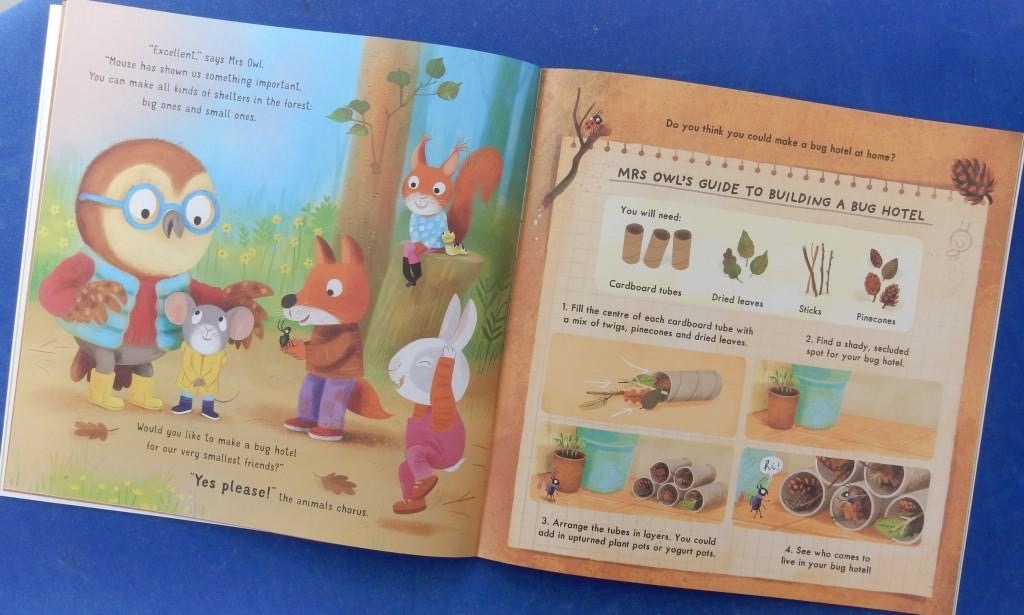
Written in consultation with Lizzie Noble, a forest childcare provider with a wealth of experience in running creative, play-based forest school sessions for families, this is a book that may well inspire youngsters to get out into the wild, wonderful world of nature. Seb Braun’s inviting, detailed, richly hued scenes help underscore some of the instructions woven into the narrative and should encourage young children to find and explore their local woodland places and perhaps try their hand at den-building. In my experience, children need little encouragement when it comes to the building of dens.
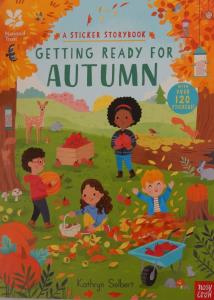
Getting Ready for Autumn
Kathryn Selbert
Nosy Crow
This seasonal sticker storybook is published in collaboration with the National Trust. Herein readers join a family and friends as they enjoy a range of early autumnal activities. Mum, Dad and two children walk in the woods where the trees now have their rich golden, orange foliage, and they keep their eyes open for woodland creatures such as deer, squirrels and birds. They also spend a fun afternoon apple picking in preparation for some baking and take advantage of windy days to fly kites.
With the new term about to begin there are the inevitable getting ready activities as the siblings are starting school. On their first day, Grandma comes to meet them and they visit the park to hunt for conkers. As the chillier days arrive, it’s time to put up some bird feeders and with the approach of Halloween, some ripe pumpkins are ready and waiting to be picked. The book concludes with some Halloween activities.
After the narrative come two ‘can you spot’ pages that will send children back to each spread to find the items shown; there are also several pages containing 120+ stickers to add to the relevant spreads.
A useful, book to have to hand as summer ends, especially on a rainy day.
 Red Reading Hub - Jillrbennett's Reviews of Children's Books