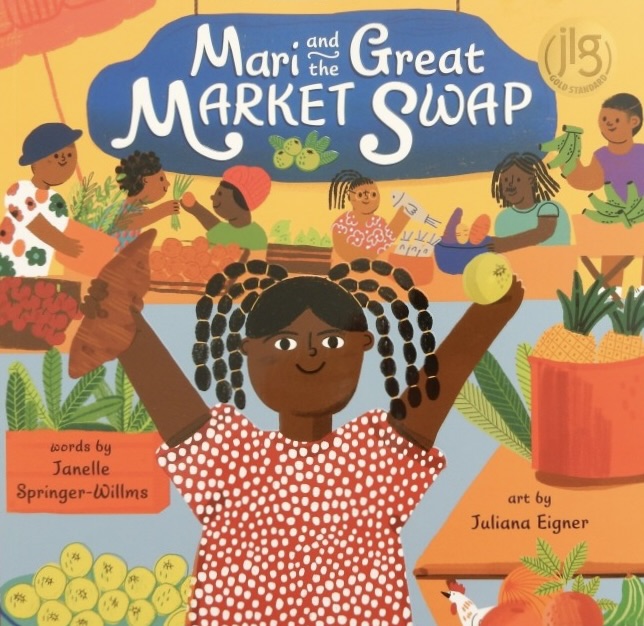
Mari and the Great Market Swap
Janelle Springer-Willms and Juliana Eigner
Barefoot Books
This story is set in Barbados where Mari and her Granny live on a backyard farm.
The ‘cock-a-doodle-doo’ of a rooster in the distance signals that it’s time for the two to load up the rusty van and set off to the market to sell their freshly picked guavas. They drive along narrow roads carefully avoiding the potholes, past fields of sugarcane and brightly painted houses to the small village where they park, unload and are warmly greeted by other vendors who are ‘like one big family, laughing and talking the whole day through.’
After a while, Mari’s friend Wendy arrives with some unwelcome news: “A sugarcane truck toppled upside down and blocking up de main road. So de customers can’t drive into town.” This meant that if they didn’t sell their goods everyone would struggle the following week. Suddenly though, the enterprising inclinations of Mari and her friend set to work: taking a basket each, they walk along to the ‘top road’ hoping to sell their goods to anyone. However, this is not what happens. Mari tries offering free samples but they have competition in the form of “free cane givin’ way up de road.” Suddenly along comes Granny saying she’s going for the van and what Wendy says next gives Mari her best idea yet. So begins a trading operating that everybody then joins in,
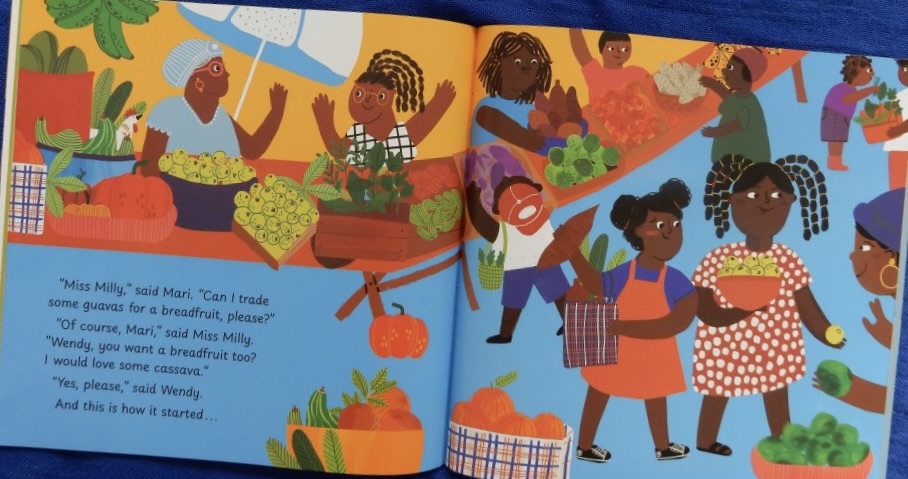
swapping with one another for what they need most. On her return Granny is overjoyed at what Mari has achieved
With Juliana Eiger’s vibrant, textured illustrations that are full of details to enjoy and the author’s use of Bajan creole in parts, readers really get the cultural vibe as they read this delightful book with its strong message of the importance of community.
(A final spread provides further information about Barbados, Bajan creole, markets and ways of trading.)

 Red Reading Hub - Jillrbennett's Reviews of Children's Books