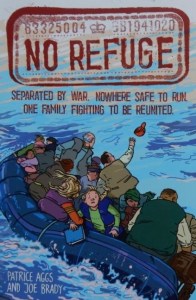
No Refuge

Following straight on from No Country, the situation for the escaping children of the family is dire and having put their trust in the rogues with illegal boats, they huddle together in a very flimsy powered dinghy.

We’re shown in flashback their terrible, scary journey across open country with Hannah in charge, dragging her siblings Bea and little Dom for days. They’re unaware that both Free Kingdom and New Army are searching for them, Bea insists on leaving dangerous, revealing pictorial messages for their Dad, whom she’s certain is following them. She also pushes Hannah to allow a large dog to join them; wise yes but also devastating.
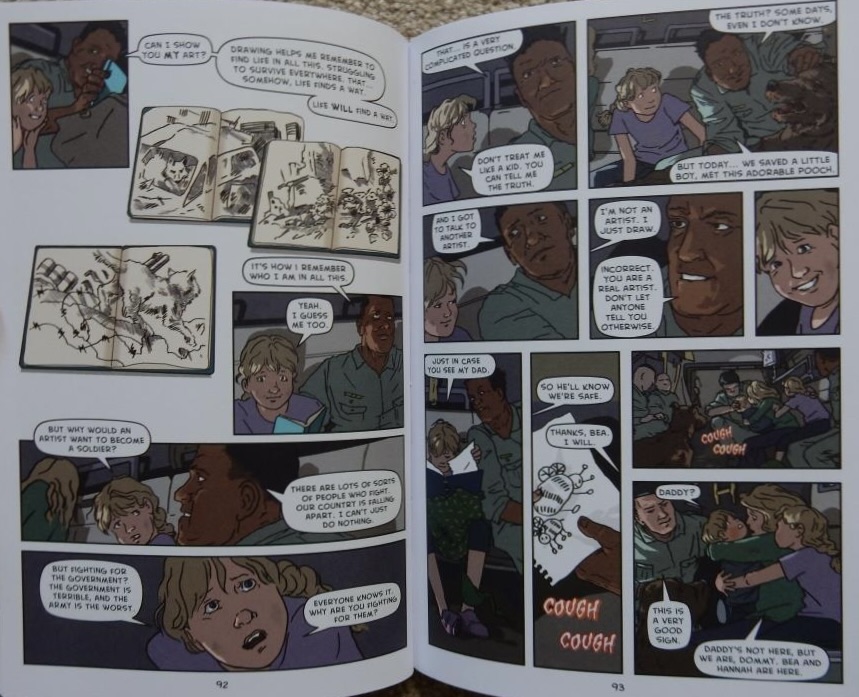
Starving, freezing cold, constantly anxious and hunted, they suffer horrendously, eventually being forced, when Dom is overcome by exhaustion and fever, to give themselves up and find medical help.
Their initial relief and gratefulness then turn to fury and panic as little Dom ‘disappears’ and they have to escape from the harsh girls’ boarding establishment to search for him.

Their quest leads them to the capital, a place where the privileged have created a calm oasis away from the rest of the country and its troubles. Undaunted, the girls are ready to face any risk; they make some unlikely allies including a people trafficker and never give up until something seemingly miraculous takes place.

An absolutely compelling, moving graphic novel wherein Patrice Aggs and Joe Brady explore the on-going real-world refugee crisis using the UK as its setting rather than numerous other countries such as Ukraine, Afghanistan and south Sudan. Highly recommended for upper KS2/KS3 readers.
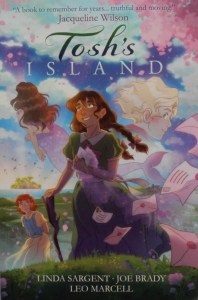
Tosh’s Island

This story told in graphic novel form was inspired by co-creator Linda Sargent’s real-life childhood beset by aches and pains which are eventually diagnosed as Still’s disease (an early on-set form of arthritis).

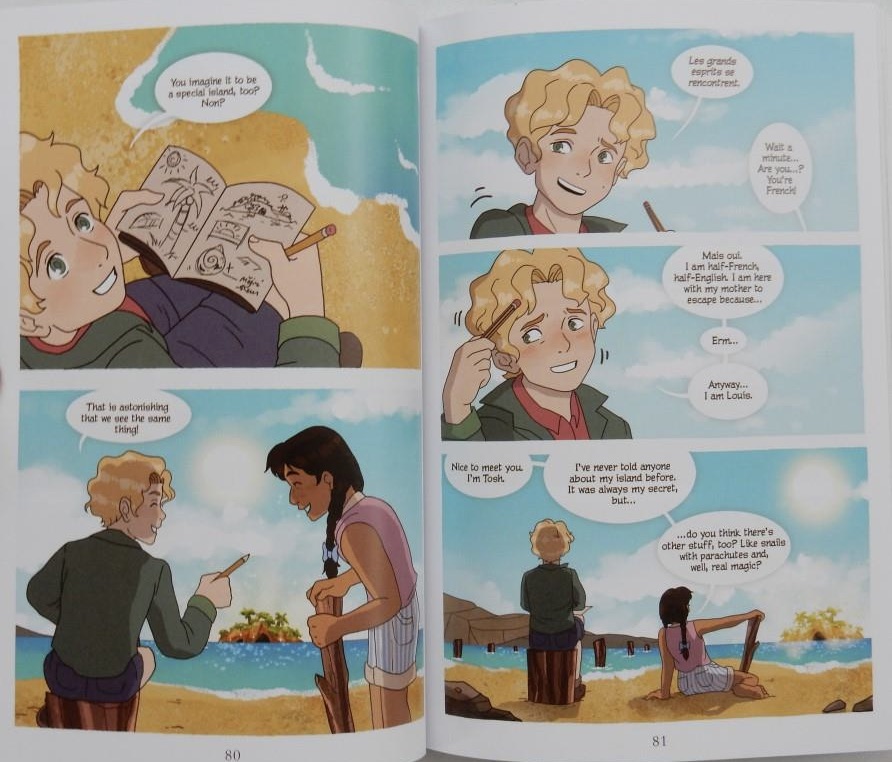
Like Linda did, Tosh is growing up in the countryside of Kent and often visits the county’s northern coast with her adoptive parents who farm hops. Tosh’s best friend is Millie, daughter of the postman and just before starting secondary school, Tosh is beset by pain. Pain that causes her to fall and be unable to grip properly, but which the doctor calls attention seeking and the result of an over-active imagination. Millie is supportive as are Tosh’s parents who agree to Tosh’s request for a day at Oyster Flats. It’s there as she sits gazing out to what she calls, “my island” that she notices close to the breakwater a boy drawing. He introduces himself as Louis and as it turns out, both of them consider the island is a magical place.

Then by means of Tosh’s stories and Louis’ drawing the friends share magical trips to the island: this enables Tosh to exchange her hurting legs for a mermaid’s tail. Before leaving, the two agree to write to one another and this gives Tosh something to feel hopeful about.

Back at school though, it feels as though Millie is leaving her best friend behind as she becomes involved with a group of girls some of whom are unkind to and about Tosh. Her illness develops further and following a reckless action, her father decides that something urgently needs to be done. Tosh is hospitalised and meets a very kind, supportive nurse and a doctor who gives her a diagnosis of juvenile arthritis, explaining that she’ll never get better as she’s been hoping, but will receive help to manage her pain.

The diagnosis brings about changes for the entire family, Tosh continues to write to Louis and eventually the two meet again on their special beach. There Louis reveals something sad he’s never before told Tosh and the friends agree to share everything as they prepare to face new adventures, real and imagined. One is left hoping that neither of them will ever feel isolated by pain – physical or mental – henceforward.

Hugely moving, this book with its powerful art is one that will linger long in the minds of those who read it. It’s an inspiring demonstration of the power of the imagination to heal and to offer hope in times of adversity.