Can I Tell You … ?

A pair of insightful new additions to the Can I Tell You About series are:

Can I Tell You About Diabetes (Type 1)?
Julie Edge
Jessica Kingsley Publishers
Debbie has had type 1 diabetes since she was six years old and is the only member of her family with the condition. She is able to do everything others can including sports but in addition has to devote time to extra things.
However, despite leading a pretty active life, Debbie’s diabetes is always with her; she cannot forget it – the testing, monitoring of blood sugar, injecting,
DSCN2170

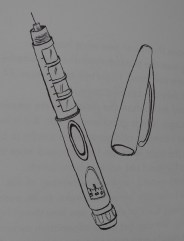
Debbie uses an insulin ‘pen’ for injecting herself

eating, the results of changes such as a cold or dose of flu can bring to her body and what this means for her. Despite her general up-beat tone, Debbie can at times feel a bit fed up, she says. Occasionally this is because of lack of understanding on behalf of other people, sometimes, it is because of her general mood or because her blood sugar levels are too high or too low.
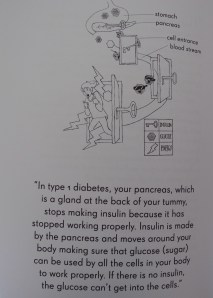
We are also told about the benefits of activity weekends when the young narrator meets up with other children with diabetes. In addition, there is biological information about the role of the pancreas and how its malfunctioning causes diabetes type 1.
DSCN2169

The final part contains information on how to help, aimed at friends, teachers, parents. There is also a list of recommended reading, websites and organisations.
The author, a doctor has been a consultant in Paediatric Diabetes for nearly twenty years and there are numerous drawings by Julia MacConville, further illuminating the written information.
This is an extremely informative, concise explanation and a testament to all those children who like Debbie, manage the complexities of life with type 1 diabetes each and every day of their lives.
I would want to see a copy in every primary school and, at least one copy in any classroom where there is a child with this form of diabetes.
Buy from Amazon

DSCN2173

Can I Tell You About Cerebral Palsy?
Marion Stanton
Jessica Kingsley Publishers
Herein we meet bright, thirteen year old Sophie, who uses a wheelchair, and a talking computer or VOCA for short that she operates with the aid of her personal assistant, to communicate with friends and teachers.
Sophie talks in a matter of fact voice about the reason for her own cerebral palsy and how this affects her; she stresses that her mind is not slow, rather it takes a longer time for her to say something that her friends can say in seconds.
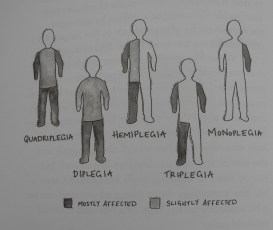
We learn how different parts of the body can be affected by cerebral palsy
DSCN2172

and what this means for people differently affected, sometimes behaviourally or emotionally and sometimes there are hearing or visual challenges.
It’s good to be treated less ‘like a little girl’ by her PA who assists with choice of clothes on shopping expeditions and also to be taken to sporting events by her parents.
Sophie’s physio. is a great help to her as are the occupational therapist and her speech and language therapist; and she has her own communication passport, which acts as a quick, handy way for people to get to know basic things about her.

DSCN2171

At the end is a section with suggestions for how teachers, teaching assistants, family members, PAs, community members and other professionals can be supportive. There is also a list of recommended organisations and websites.
All this and much more is packed into this short book written by a special needs teacher and mother of a child with cerebral palsy and illustrated with line drawings by Katie Stanton. I came away from it feeling I had learned a great deal, not only about CP but also about how young people such as Sophie have an amazing power to transcend their particular experiencing of cerebral palsy, no matter what.
Highly recommended for teachers, and for students in the fields of social care, health and education as well as young readers in primary schools. In fact it is an excellent starting point for anyone wanting to know more about working with individuals living with cerebral palsy.
Buy from Amazon

Find and buy from your local bookshop:http://www.booksellers.org.uk/bookshopsearch

Talking about Tourettes

DSCN1734

Can I tell you about Tourette Syndrome?
Mal Leicester
Jessica Kingsley Publishers pkb
In this straightforward account from the perspective of Max who has Tourette syndrome, we are made aware of what the syndrome is and how it impacts on his life and those around him. Max explains that he has involuntary tics and talks about how these tics affect his learning (things he likes to do such as drumming and karting concentrate his brain and it forgets to make him tic, whereas his TS makes it much more difficult to concentrate on those things he is not particularly interested in.)
Max also talks about how his energy levels fluctuate: his energy and concentration wane when he is jerking and his voice making noises sometimes causing a build up of frustration and ultimately anger in him.
We learn how teachers and others in the education system help Max, things his parents do, and he provides a self-help list for others with the syndrome and a dos and don’ts  list for those who wish to help.
The last part of the book switches from Max’s voice to more general information.
There is a ‘Facts about Tourette Syndrome’ section, a list of dos and don’ts for teachers, a list of ways schools can be supportive, information for parents and professionals and finally, a list of recommended reading, organisations and resources.
As an adult who knows comparatively little about Tourette syndrome and has never taught a child with a diagnosis of TS, I found this book extremely useful and informative. I have no hesitation in recommending it. A copy should be in every staffroom library and another in every primary school library for children to read.
Buy from Amazon

Find and buy from your local bookshop: http://www.booksellers.org.uk/bookshopsearch

Special Books for Special Children

Can I Tell You About Stammering?
Sue Cottrell
Jessica Kingsley Publishers pbk
Eleven-year-old Harry has a stammer. He tells us in a straightforward, matter of fact manner how this makes him feel, how his stammer manifests itself and in what situations, and talks about ways that people can be helpful and supportive when he starts to stammer. We hear about his visits to a speech therapist and also about his older brother, who also stammers and how his case differs from Harry’s. The author of this helpful little book is an education consultant and mother of a son with a stammer. She has researched the subject in depth and offers her expert advice via her character, Harry. In her advocate’s words, “Living with a stammer takes bravery and courage.” Sue Cottrell provides all of us, be we teachers, parents, friends or other professionals, with a sensitive and insightful introductory read. The book’s layout and the numerous line drawings by Sophie Khan make it suitable for young readers from around seven or eight; adults could learn from it too.
Buy from Amazon DSCN1566 From the same excellent series is:

Can I Tell You About Adoption?
Anne Braff Brodzinsky
Jessica Kingsley Publishers pbk
Herein Chelsea, a young girl who has been adopted as a baby, gives readers a frank account of the process of her own adoption as well as introducing two of her friends, Adilu from Ethopia and Kira from China who were also adopted. In contrast to Chelsea, they spent time in orphanages and their adoptions were transracial. There is a short section wherein the three children talk of the unanswered questions in all of their lives, there is information about foster homes and discussions on how teachers and parents can help adopted children or those undergoing the process of being adopted. The overall tenor of this book is upbeat and I can envisage it being a great help both to adopted children and those with whom they have regular contact – teachers and children – at school.
Buy from Amazon

DSCN1567 Babies Are Noisy
Anne-Marie Harrison
Jessica Kingsley Publishers
The time around the arrival of a new baby in the family can be one of anxiety and uncertainty for any young child; for children on the autism spectrum that time with all the changes a new baby entails, is likely to be particularly challenging. Subtitled ‘A book for big brothers and sisters including those on the autism spectrum’ this has a boy narrator, Andre who relates his story about having a noisy new baby. “My Baby” he calls the developing infant and we hear how he watched his mother’s stomach growing larger, about visits to the clinic, see a scan and learn how Andre was able to feel the baby kicking when he sat on his mum’s lap.

RSCN1569

Then after the birth come more challenges – presents for the baby, nappy smells, noise – lots of it – and general busyness at home. Being a big brother though can also be rewarding and Andre starts to help with the caring and he anticipates being able to play with his little brother one day. Such is the sensitivity with which the book is written, there is a real sense of it being a child with autism’s voice in this account. The illustrations too have a child-like style. All in all, this unassuming book will be of great benefit to families and professionals working with children particularly those on the spectrum, as part of the preparation for the arrival of a new baby.
Buy from Amazon

Find and buy from your local bookshop: http://www.booksellers.org.uk/bookshopsearch