Being Autistic

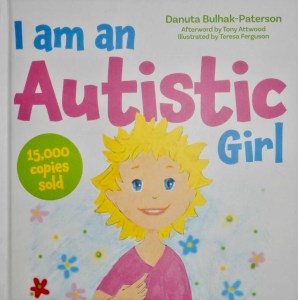
Here’s a book that explains exactly what the title says and does so in such a way that both KS2 child readers and beyond, as well as adults, be they parents, carers, teachers or support staff, can understand clearly. The author herself was diagnosed as being autistic as an adult as was the illustrator and together they have created a warm, gently humorous, very visual book that is affirmative and supportive. The choice to make it visual is particularly ap,t for a great many autistic people are visual thinkers. It’s divided into four parts, the first of which is short and makes plain the terms autism and neurodiversity.
Part two, the longest section explores various autistic traits.

I’ll never forget when one of my support staff shouted crossly at a foundation stage child on her very first day who was showing her distress by stimming. Cleary she’d not experienced this before and we’d not been told that the child might react to a new situation in such a way (she stimmed – repeatedly flapping her hands, turning round and round and humming). If only she’d had the opportunity to read this book the upsetting situation might never have occurred.

The third part describes other challenges autistic people might face and the fourth, What’s Next? talks about growing up and some of the possibilities life might offer.

With its emphasis on inclusivity and positivity this is a vital read for children whether or not they have an autism diagnosis, as well as adults everywhere. The latter really do need to be aware of the challenges an autistic person may face and thus be in the best position possible to be supportive.

Thumbsucker / I am an Autistic Girl

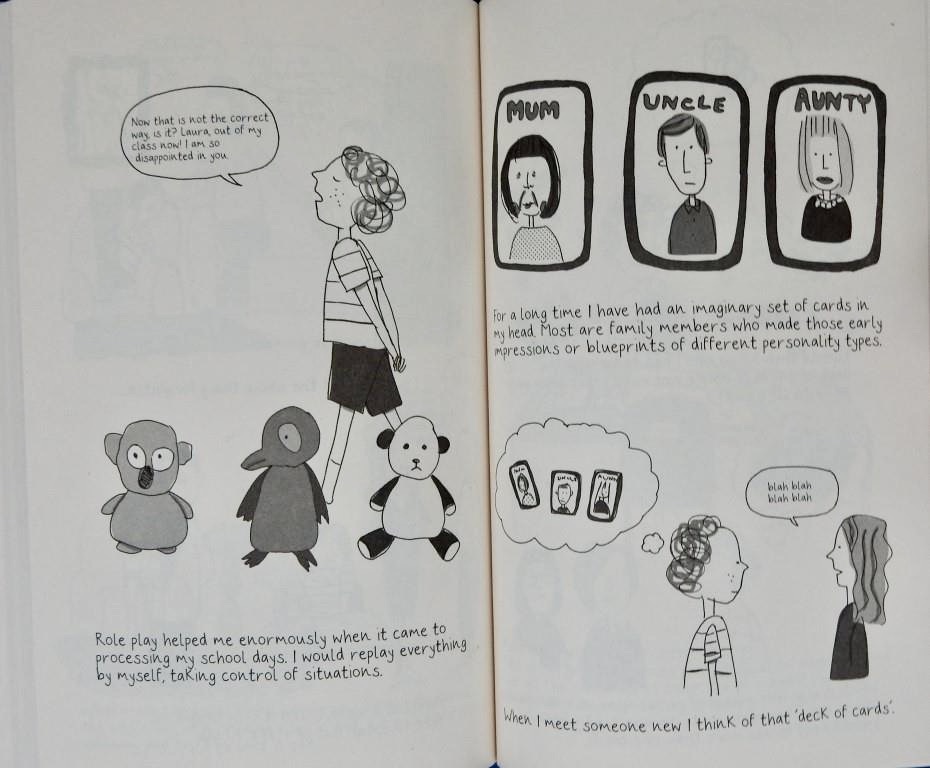
Eliza Fricker is a neurodivergent author and illustrator who didn’t receive an autism diagnosis until she was an adult. In this moving book she writes about what it was like as a girl who grew up in the 1980s feeling different and constantly beset by worries.

She was called among other things, fussy, a hypochondriac, fickle, spoilt, contrary, gullible, a freak, a chatterbox, a wimp and a weirdo, some of these labels being given to her child self by other people, and some perhaps were self dubbed.

She takes each one and in graphic novel style presents a vignette exemplar.

Fiercely honest, humorous and affecting, it reinforces my feeling that all teachers and others who work with children or young adults should have training on how neurodivergence presents itself in childhood, especially in girls and how best they can support neurodivergent learners. This book is an excellent, albeit salutary starting point for anybody involved with the welfare of the young.
A copy should definitely be in every school staff collection.

This is an updated edition of I am an Aspie Girl published several years ago, which was reviewed on this blog in 2016.

Where Do I Start?

Subtitled ‘How to Navigate the Emotional Journey of Autism Parenting’ this is I would say the go to guide for any parent with a neurodivergent child whether or not that child has already got a diagnosis. It’s written by Kate Laine-Toner, founder of Bristol Autism Support, the mother of a 13 year old child with autism and also received a neurodivergence diagnosis herself last year. So, this comes from a place of deep understanding, knowledge and empathy.

I’m not a parent but have taught many children from age three to eleven who were clearly neurodivergent; sometimes this was acknowledged by parents and shared with me and sometimes not. So I’m not the target audience for this book but I wish it had been around when I was in the classroom. I know I would have been in a better position to help those parents having read it.
There are two parts to the book, the first focuses on How to Help Yourself (as a parent); the second is on How to Help Your Child.

The seven chapters that comprise the first section give helpful advice on topics that include looking after yourself, talking to family and friends about autism and being assertive with professionals in education and healthcare, why you need help and how to get it. Interwoven throughout are Kate’s story of her daughter’s journey and her own experiences. For example she looks at some of the true feelings around a diagnosis that parents may be too frightened to disclose. I love the garden metaphor used: ‘view your autistic child as an amazing garden, and that autism is the soil in which everything in your child grows. … there will be plants and flowers that thrive without any help and those that need support and extra nourishment.’

Not all parents are by nature assertive but parents need to be assertive to get the help they need and to this end, several ‘why’ questions are offered (with an extended example).
Why can’t my child have this reasonable adjustment at school?
Why can’t we have the first appointment of the day?
Why can’t the GP meet us in the waiting area?
Why can’t we arrive 15 minutes before everyone else?
Why can’t my child eat the food we brought from home when the rest of us are ordering meals?

These asked in a non aggressive manner should, one hopes, get the person you are addressing thinking about how they might help.
Other key pieces of advice include never comparing your child with other children and focusing on the positives.

Part two has 12 chapters; these look at topics such as ‘How to Advocate for Your Child’, coping with your child’s anxiety, how and when to talk to your child about autism, emotional regulation (this includes an explanation of the differences between meltdowns, tantrums and shutdowns), sensory processing differences and executive functioning. The last – the ability to plan, organise and carry out tasks is something most neurodivergent people struggle with. Chaining (a technique to help with learning a new skill/routine) and using visuals can be a great help here.

The final chapter reminds readers of the importance of being in the here and now with a child, rather than worrying unduly about what their future might hold.
The book concludes with a lovely poem by Kate, which is also entitled ‘Where Do I Start?’

Thoroughly recommended no matter where a parent is on their journey with their neurodivergent child. I would also suggest a copy should be in every primary school.

Canine Capers: A Dog with Nice Ears / My Secret Dog / Safari Pug

A Dog with Nice Ears
Lauren Child
Orchard Books

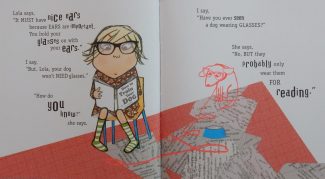
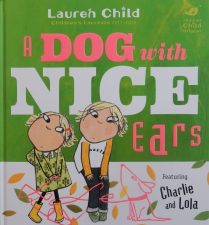
Another deliciously funny, wonderfully whimsical Charlie and Lola story from the current Children’s Laureate is sure to delight countless readers both young and not so young.
Herein Lola’s current obsession is dogs; she can talk of nothing else and would like one more than anything. “More than a squirrel or an actual fox.
In turn, she pretends to be one, pretends Charlie is one and pretends she has one.
There is a slight snag however: her Mum and Dad will agree to a rabbit – Dad will even take her to the pet shop to buy one – but they’ve stipulated, ‘ABSOLUTELY NO DOGS!’
Nevertheless, it will come as no surprise that Lola remains utterly convinced that she will leave the pet shop with the dog of her choice, and goes on detailing her specific requirements for same. Requirements that include “nice ears

a bushyish tail like a fox” and “It must absolutely do barking.

Lola-isms such as these are an absolute hoot for adult readers aloud.
I won’t spoil the ending but let’s just say that it concludes highly satisfactorily with the naming of Lola’s new pet.
With Lauren’s trademark mixed media, droll illustrations this is a canine caper par excellence.

My Secret Dog
Tom Alexander
Jessica Kinglsey Publishers

In a first person narrative account a little girl relates the trials and tribulations of having a pet dog and trying to keep it a secret from her mum who has decreed they don’t have room for a dog.
It begins when the cute-looking stray dog follows her home and she allows him in, initially just for something to eat.
Her mum is out and by the time she returns, the little girl has the dog safely hidden in the cupboard.
A sleepless night follows and then it’s time for school. Another challenge especially when the dog, after behaving well all morning, decides to demolish a scarf and pair of gloves, and then leaves a deposit in someone’s wellies.
Thereafter things decline rapidly until finally the narrator is forced to reveal her secret.
There follows a mother/child chat where keeping secrets is discussed and mum also explains why the dog cannot remain with them.

All does end happily though and there’s a wonderful final twist to the tale.
Simply told and illustrated, this engaging story will have readers smiling, perhaps even laughing, at the young narrator’s antics.
Discussions about keeping secrets and the consequences of one’s actions might well take place in a classroom setting after the book has been shared. Equally so at home where it can also be helpful for any parent whose child wants a dog in inappropriate circumstances.
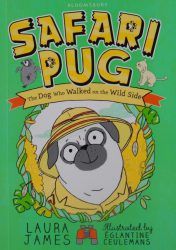
Safari Pug
Laura James, illustrated by Églantine Ceulemans
Bloomsbury Children’s Books

In the third adventure starring Pug, the dog is awoken one night by screams from Lady Miranda who goes on to inform him that there’s a lion in the bedroom.
A search follows and housekeeper, Wendy, assures them there is no lion and offers to stand guard overnight just in case.
Next morning Lady Miranda decides Pug must prove to Wendy that he’s not scared of lions and declares a visit to the local safari park to confront one, is necessary.
On arrival the ticket seller refuses to allow their sedan chair inside the lion enclosure, deeming it totally unsafe, and diverts them to the Animal Adventure land.
Thus begins a crazy adventure involving meerkats, penguins, monkeys and yes, there’s even a rare white lion cub named Florence and a decidedly dodgy character by the name of Arlene von Bling who seems to be showing more than a little interest in the lion cub.
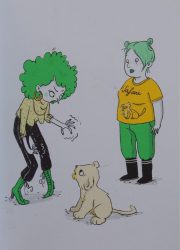
Humorously written, and illustrated throughout by Églantine Ceulemans whose art work is equally funny, this is a super book for readers just starting out on chapter books.