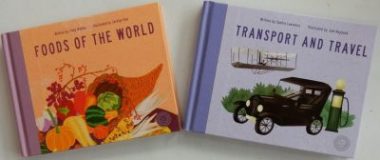
Foods of the World
Libby Walden and Jocelyn Kao
Transport and Travel
Sandra Lawrence and Jem Maybank
360 Degrees
Aimed primarily at KS2 (7-11) readers these are two of the Mini Hardback series, neatly packaged, alluringly illustrated with spreads playfully subtitled..
In the first book Libby Walden takes a broad view of what we eat, rummaging around in kitchens around the world and unearthing all manner of diverse and delicious dishes and tasty treats, from tagines
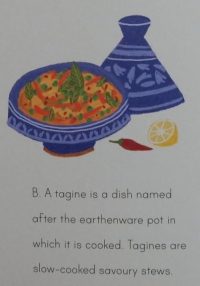
to turnips – albeit ones used as lanterns in Richterswil near Zurich in November, shark meat (served in Iceland as Hákarl) to strudel, cannali to chewing gum and bubble gum – yes even those are included, despite having no nutritional value, on account of needing to be chewed.

In addition to the vast array of culinary delights, readers can find out about unusual utensils and absorb a range of fascinating food-related facts.
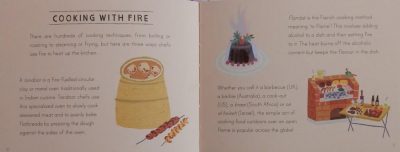
Cooking techniques too are covered, (my favourite of those here is the tandoor used in Indian cuisine).
So too are food terms, in particular those coming from the French language.
There’s also a look at the notion of ‘good manners’: not finishing everything on your plate is impolite in China, while Middle Eastern (and also in my experience, on the Indian sub-continent) people often eat with their fingers, but it has to be the correct (right) hand; to use the left hand would be a faux pas.
When you travel abroad are you a person who relishes the thought of sampling the cuisine of the country you’re visiting or do you seek out places to eat that serve as nearly as possible what you’re used to at home.
I’m one of the former although in some places it’s less easy to find suitable eating places since I’m a vegetarian who also tries to avoid anything dairy so I eagerly devoured this book. So too will young readers who enjoy a good nosh.
Fascinating factual Transport and Travel related snippets are presented in the second title, some historic, some present day and one or two. looking to the future.
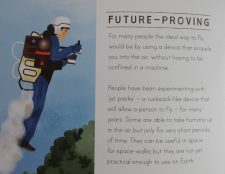
Moving around on land, through water, in the air, under ground and undersea are all covered though the book is divided into four main parts: travel on wheels, on rails, through the air and water.
We’re given a look at the great lengths people all over the world have gone to in order to get from one place to another as effectively as is humanly possible. Inviting illustrations offer readers a passenger’s eye view of such diverse modes of transport as tuk-tuks,
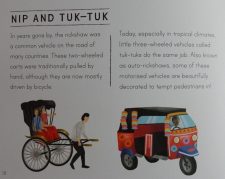
a gondola, a life boat, a bi-plane and a bicycle. What’s your favourite means of travelling?
 Red Reading Hub - Jillrbennett's Reviews of Children's Books