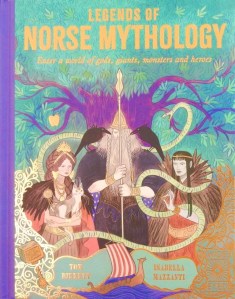
Legends of Norse Mythology
Tom Birkett and Isabella Mazzanti
Wide Eyed Editions
This book transports readers way, way back through time to a realm of ice and fire, magic and mischief. There they will encounter characters from Norse mythology including gods and goddesses, monsters, giants, elves, dwarfs, the Valkyries and other mythical beings – over thirty in all.
Starting with Odin, each individual profile introduces us to the character, giving such details as their chief attributes, there’s a story and additional details. Yes, all the well-known deities are there but you will also meet the likes of the bright and shining god, Baldur, renowned for his goodness,

Sif, goddess of wheat and golden hair, married to Thor, the Norns – Urd, Verdandi and Skull, controllers of the destiny of each and every living being in the world. If your preference is giants then you can search the contents page for where to learn of giant sisters Gjalp and Greip,
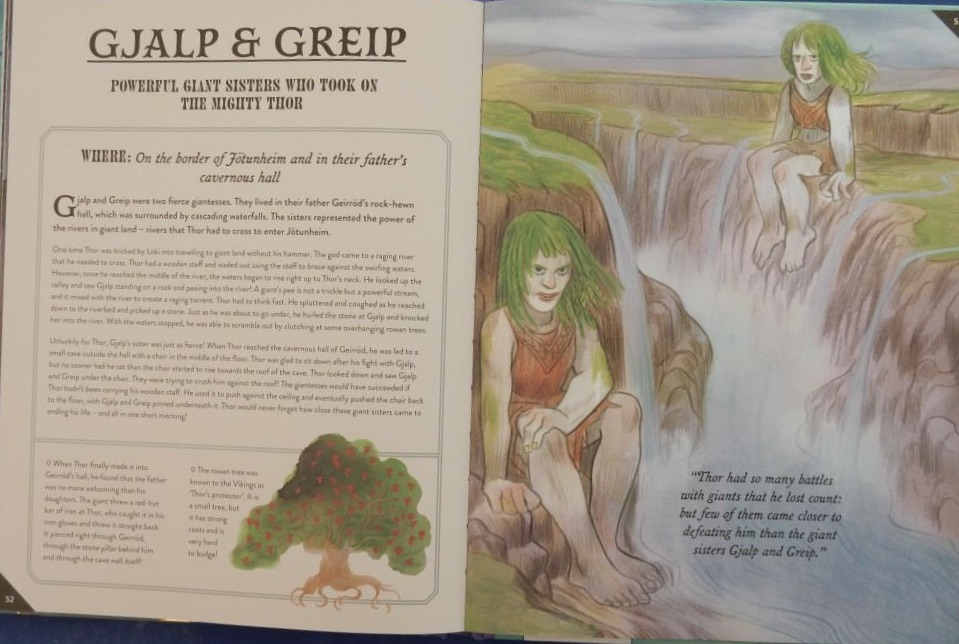
and Fenja and Menja, strong giantesses who grind out the salt on the ocean bottom.
Interspersed with the profiles are summaries of famous Norse tales and events such as that of Thor’s hammer and the story of Ragnarök.
The book is concisely written by Norse mythology expert Dr Thomas Birkett and illustrated beautifully, occasionally aptly spookily, by Isabella Mazzanti who manages to capture the essence of each character in her portrayals.
Altogether a very useful introduction to an endlessly fascinating topic; for KS2 readers and beyond.
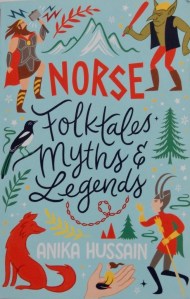
Norse Folktales, Myths & Legends
Anika Hussain, illustrated by Kate Forrester
Scholastic
Divided into four parts, the book comprises Legends from Norse Mythology, and a selection of folk tales from Denmark, Norway and Sweden, each section having five stories.
As you would expect, Loki the cunning, shape-changing trickster and powerful Thor, his ‘brother’ feature in the first, the Norse mythology section.
Along with lesser-known stories, the Danish section includes a retelling of Hans Christian Andersen’s Little Thumbelina, the tiny golden-haired girl with the beautiful voice who enchants creatures with her singing including a mole that she narrowly misses having to marry.
New to me in the Norwegian part, using the same folktale structure as Snow White, is The Twelve Wild Ducks wherein a queen who yearns for a daughter makes a deal with a witch: give up her twelve sons in return for a princess daughter.
I read of Jolly Calle for the first time in the Swedish section. It tells of a boy who remains upbeat and positive no matter what, and finds beauty in simple everyday things.
A delightful collection of tales retold in an appropriately direct style; it deserves to be added to KS2 primary class libraries and home bookshelves.


 Red Reading Hub - Jillrbennett's Reviews of Children's Books