The Invisible World of Germs / The Secrets of the Universe

The Invisible World of Germs
Isabel Thomas, illustrated by Geraldine Sy and Ana Seixas
The Secrets of the Universe
Dr Mike Goldsmith, illustrated by Adam Quest and Ana Seixas
Oxford Children’s Books

These are the first two in a new small format non-fiction series Very Short Introductions for Curious Young Minds. Full of fascinating information, it was written in consultation with one expert in the field (Alan Redford of Liverpool University) and contains easily digestible infographics, photos and dialogue boxes in addition to the explanations, and in each chapter there’s a ‘Speak Like a Scientist’ feature that provides readers with key terminology. If you want to discover what germs are, something about their history, key scientists and other ‘germ heroes’, how germs are transmitted, how our natural defences work,

the affects of medicines on germs, ponder the questions ‘Will there ever be a world without germs?’ and what might be the future of germs, then this engaging little book is definitely for you. It’s also one to add to KS2 class collections.

I was equally impressed by The Secrets of the Universe, this one being written by a doctor of astrophysics in consultation with Cambridge University cosmologist Sunny Vagnozzi. Again the writing style is engaging and lively and there are the same key features as The Invisible World of Germs – infographics, photographs and cartoons and most important the key questions such as What is the universe?; how was it discovered”; what are the important findings relating to the universe and who were the scientists responsible? …

how big is the universe and what is our place therein? are explored in bite-sized, easily digestible chunks. Find out about galaxies, gravity, the Big Bang, dark energy, consider the possibilities of life existing elsewhere in the universe and even of other universes in this exciting introduction to a mind-boggling topic that science-loving children will relish. 

Both books have a final glossary and index.

Fox: A Circle of Life Story

Fox: A Circle of Life Story
Isabel Thomas and Daniel Egnéus
Bloomsbury Children’s Books

This beautiful book sent me straight back to my copy of T.S. Eliot’s Four Quartets, to the opening line of East Coker, ‘In my beginning is my end.’

As the story opens in early spring in a still frozen forest life is astir: we follow fox as she sets out to find food for her three cubs.

We meet them a few weeks later – bigger, bolder and playful close to the safety of their den. They too decide it’s time to try being hunters as they follow their parent on the hunt.

Suddenly danger appears in the form of a car; the three cubs dash safely across the road but not so their mother. She is hit, tossed into the grass and dies.

The cubs return home leaving a decomposing body that little by little, over almost a year, returns to the earth, to the plants and to the air.

Her remains provide food and shelter for other creatures and a place for new life to be nourished and flourish. For death is not merely an end, it’s a beginning too.

The powerful, beautifully written non-fiction narrative of Isabel Thomas and the stunningly gorgeous illustrations of Daniel Egnéus combine to make a book that answers one of the ‘big’ scientific questions children ask, ‘ What happens when we die?’ and provides a perfect starting point for talking about the cycle of life and death or, as the subtitle says ‘A circle of life story.’
(There’s also a final spread that has separate paragraphs explaining ‘The building blocks of life’, “What is death?’, What is decomposition’, ‘The cycle of life’ and ‘Death is not just an end’.

There’s no need to wait for the death of a beloved pet or human before sharing this book with youngsters though: I’d suggest reading it with a class or in a family at any time, particularly at a time when the seasons change.

Little Guides to Great Lives: Nelson Mandela

Little Guides to Great Lives: Nelson Mandela
Isabel Thomas and Hannah Warren
Laurence King Publishing

Nelson Mandela is one of my all time heroes so I was particularly pleased to see this little biography aimed at children around the age of the class I was teaching (7/8) at the time he was released from prison in 1990. I remember we all got up and cheered and jumped around. Yes, we were quite political and had already done some work on apartheid and Mandela in class.

One of a new series, the book is written by Isabel Thomas in an accessible style for young readers.
It begins with a look at his village childhood when the young boy was named Rolihlahla (pulling the branch of a tree’ or perhaps ‘troublemaker’) and includes a local game.

After the death of his father, the teenage Nelson lived with the acting king of the Thembu people and became great friends with his son, Justice.

Brief details of his time as a university student lead on to running away to Johannesburg and, set against factual information of socio-political happenings, the events that took place up to and after he obtained his law degree; his work with the ANC against apartheid in particular, and his time (27 years) in prison, mostly on Robben Island.

The final pages tell of Mandela’s release from gaol, his leadership of the ANC, the scrapping of apartheid laws, his winning of the Nobel Peace Prize and his becoming the first president of South Africa to be elected by all the country’s people, ending with his death at 95 years of age in 2013.

There’s also a timeline and a glossary.

Hannah Warren’s retro style illustrations executed in a limited colour palette, using mainly the ANC colours, add to the book’s appeal.

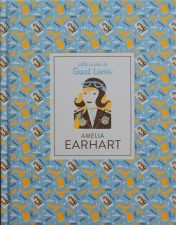
Also in the series and equally worth seeking out is the story of aviation super star and women’s right pioneer:
Amelia Earhart

Isabel Thomas and Dàlia Adillon


Moth

Moth
Isabel Thomas and Daniel Egnéus
Bloomsbury Children’s Books

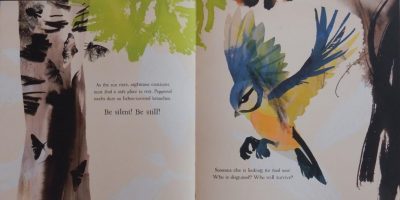
Interestingly this is the second picture book introducing adaptation and natural selection to children I’ve seen in the past few weeks – could a new trend be starting. I was first taught about these scientific ideas with reference to the Peppered Moth, the particular example used in this story, when doing A-level zoology donkeys ages ago, and now they’re part of the KS2 science curriculum – quite a thought.

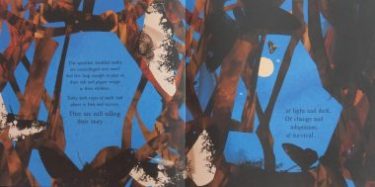
‘This is a story of light and dark. Of change and adaptation, of survival and hope.’ So says science writer, Isabel Thomas in the opening lines of her narrative, a narrative that seamlessly interweaves both science and social history.

In the nineteenth century almost all Peppered Moths had light grey patterned wings that blended with the tree trunks and branches it frequented.

With the coming of the Industrial Revolution also came air pollution blackening buildings, monuments and trees alike.

In this new environment, the light-coloured moths became easy to spot and were gobbled up by birds.
Darker forms of the insect were less conspicuous and more likely to escape predation and to breed whilst the lighter form became extremely scarce.

With the advent of the Clean Air Acts in the mid-twentieth century air pollution from smoke and soot was greatly reduced, trees and buildings were no longer stained. Now the dark moths were more conspicuous and less likely to breed successfully, though both forms of the moth can still be found.

All this, Isabel Thomas recounts in her dramatic, sometimes lyrical text that ends with hope. A hope which, as we hear in the final explanatory pages, might lead to other living things being able to adapt to the changes, including climate change, that we humans inflict upon our planet.

Daniel Egnéus’ illustrations are as lyrical as the text, embodying at once arresting beauty and veritas, and instilling a sense of awe and wonder. It’s rare to see such an eloquent science-focused book that also embraces the arts side of the curriculum.