Malala A Brave Girl from Pakistan/
Iqbal A Brave Boy from Pakistan
Jeanette Winter
Simon & Schuster
Let us not pray to be sheltered
from dangers
But to be fearless when
facing them.
This quote from Rabindranath Tagore sums up perfectly the attitude of the two indomitable-spirited young people in these real-life stories. Both Malala Yousafzai and Iqbal Masih were faced with terrible cruelty and violence and by being brave and speaking out about the right for freedom and for education, are an inspiration to people the world over.
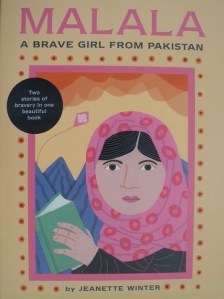
The name Malala Yousafzai is possibly better known due to her recent (co-) winning of the Nobel Prize for Peace 2014, the youngest ever recipient.
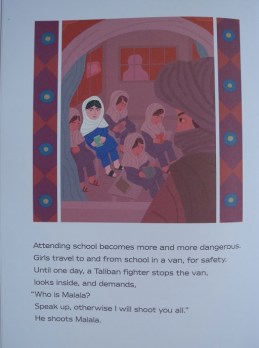
The story here outlines how Malala stood firm against the threats of the Taliban and spoke out against their orders to her and fellow girl students in the Swat Valley of Pakistan not to go to school, and not to read. ’I have the right,’ she said and continued both to speak out and to go to school somehow. We are told how the van Malala and fellow students travel to school in is stopped and the young activist shot almost losing her life.
After her recovery we hear of the speech she gave to world leaders on her 16th birthday,
“They thought that bullets would silence us,
but they failed …
One child, one teacher,
One book, one pen,
Can change the world.”
So said the girl from Pakistan who has really made the world listen.
Flip the book and you have the other story:
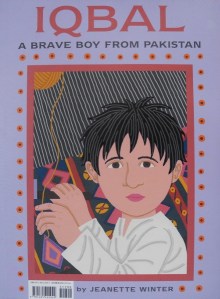
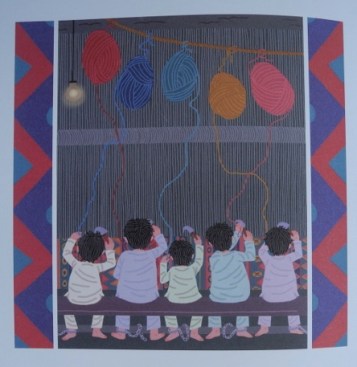
When he was just four years old Iqbal’s parents, needing money for his brother’s wedding, took a loan of just 600 Rupees (around 12 dollars) from the owner of a carpet factory, In return Iqbal became a bonded labourer working at a loom from before dawn until after sunset, weaving intricately patterned carpets alongside fellow child workers. Despite this Iqbal’s mind remained free.
Then one day he attends a meeting about Peshgi (the loans holding such children in bondage) and learns that the practice has been outlawed making him and his co-workers truly free. Thereafter, Iqbal studied and also continued to speak out against enforced child labour, even travelling to America so do so until eventually after receiving threats against his life, twelve year old Iqbal is shot and killed while riding his bicycle.
Both stories are powerfully and succinctly related in a text appropriate for young primary school audiences. Executed in a subdued palette, the pictures and their patterned borders strongly evoke the sense of place and make more tangible the emotions of the characters. The image of a kite, an image that symbolises both childhood and freedom serves as a link and connecting thread between the two stories – stories with one transcendent theme.
Find and buy from your local bookshop:
http://www.booksellers.org.uk/bookshopsearch
Buy from Amazon
 Red Reading Hub - Jillrbennett's Reviews of Children's Books