
Wonderful Words That Tell A Tale
Tom Read Wilson, illustrated by Ian Morris
Words & Pictures
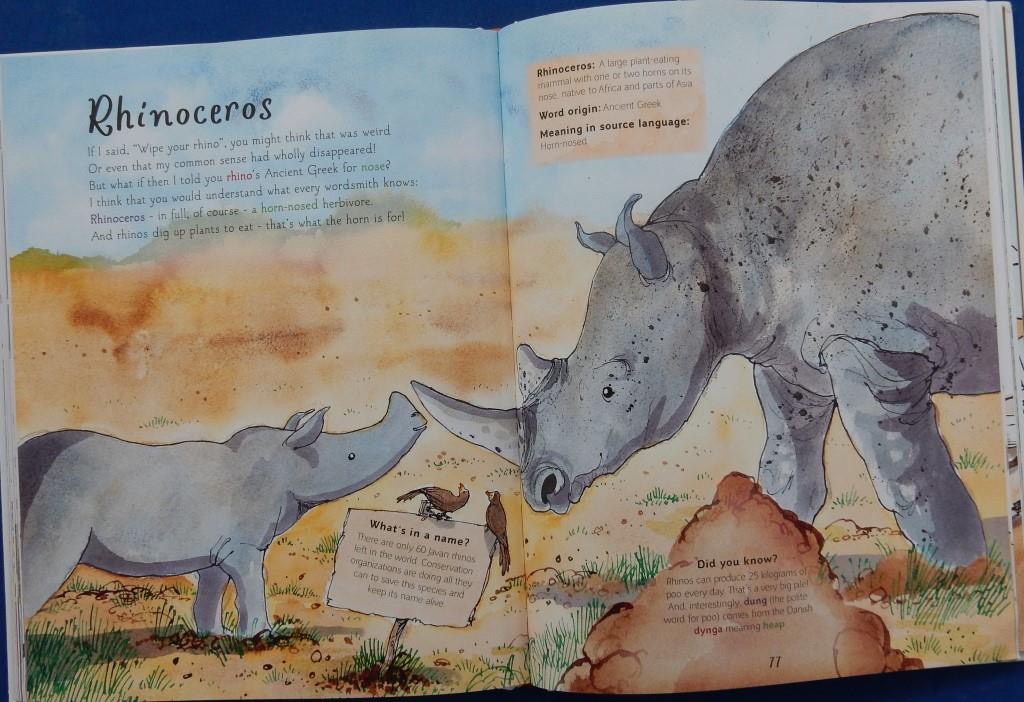
Presented by word wizard Tom Read Wilson, this is another collection, alphabetically organised, of fascinating facts and anecdotal stories related to everyday words. There are four words for every letter of the alphabet and each starts with an amusing ‘star word’ poem/story after which come a definition, information about its origin, meaning and etymology.
Did you know for example that astronauts wore nappies during take off and space walks as it’s impossible to go to the loo, so instead they use what are called MAGs (Maximum Absorbency Garments).
What about those jeans you love to wear: the word denim is a contraction of ‘serge of Nimes’( a French city), serge being a heavy fabric from which lumberjacks’ workwear was made. I loved discovering this palindromic phrase – palindromes need not be single words, we’re told – is made up of seven words – ‘Murder for a jar of red rum’.
Assuredly a book to encourage children to enjoy language and words for their own sake as well as showing how the English language has evolved and continues to do so. Have a copy in your classroom collection: youngsters can have fun reading it, enjoy the humour in Ian Morris’s illustrations, then go home and impress their parents and siblings with what they’ve discovered.


 Red Reading Hub - Jillrbennett's Reviews of Children's Books