Kerfuffle Bird

Meet the Hushlings, they’re quiet, polite and always keep their feelings under control. It suits them to be thus, all except Maeve.. She really wants to let some of her Big Feelings out but does her utmost to keep them tamed.

One day there appears a large blue egg that. after three days, cracks open and there emerges a flamboyant and very noisy Kerfuffle Bird that shatters the peace of the Hushlings sending them dashing for cover. Not so Maeve however; she accepts the bird’s offer and they take to the air in party mood, coming to land in front of Maeve’s parents. Shock horror! The bird flies right into their abode, gobbles the food on the table

and proceeds to test the patience of Hushville’s residents to the limits. They said nothing until one night the bird’s powerful snoring releases something in them and it’s only Maeve who understands. So alarmed is the Kerfuffle Bird (what a terrific name) that it decides to leave Hushville.

Can any of the Hushlings do or say anything to make the bird change its mind? Seemingly it’s now not only Maeve that appreciates the importance of expressing one’s feelings: so can they all find a way to live harmoniously together?

A lively fun story about expressing your true feelings, acceptance and learning to live together. Gwen Millward captures so well the chaos that ensues with arrival of Hushville’s lively endearing avian in her energetic scenes.
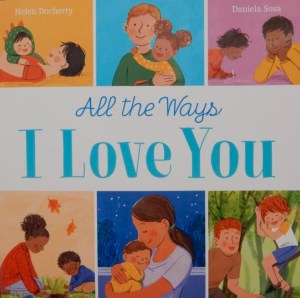
All the Ways I Love You

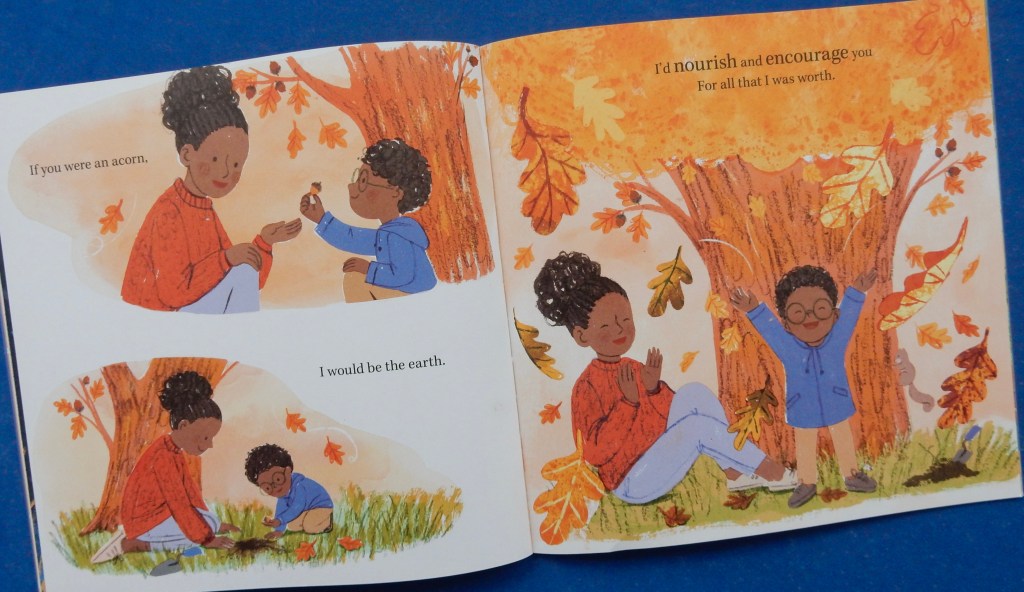
Herein are presented a dozen scenarios where mums, dads and small children are imagined having a great time together. Some scenes are of the familiar kind – a garden, exploring in the park during the autumn,

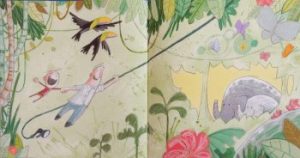
watching through the window a bird sitting on eggs in a nest, for instance. Others – floating through the sky on a little white cloud, swinging on a vine in the jungle – are more fantastical. What they all have in common though, is the love that the adult is showing to the little child in his or her care.

Helen Docherty’s soothing rhyming text with its wealth of ‘what ifs’ and Daniela Sosa’s joyous, richly coloured illustrations, make this both reassuring and an invitation to small children to use and develop their imagination – an essential part of learning.

A book to share, ponder upon and enjoy with a young child or perhaps, to give as a gift to a family with a new baby.

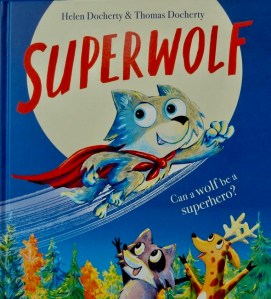
Superwolf

Little Luna has a yearning: to be a superhero is her life’s goal. Her big brother tells her this can’t happen because everyone beats a hasty retreat when they see a wolf. Undaunted, Luna works hard honing her super hero skills until she feels ready to show others just how super she can be. Off she flies and soon encounters a kitten stranded atop a tree. Luna swoops towards the treetop and in so doing causes the kitty to take a leap – right into the paws of his waiting parents and the three dash away.

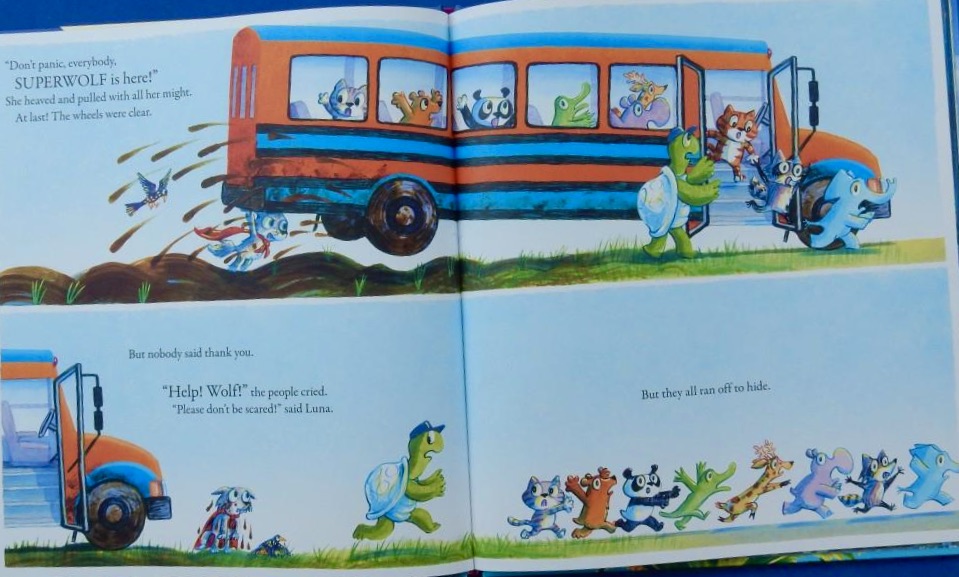
Soon Luna spies a bus stuck in a muddy patch. Having shot downwards, she uses her strength until the wheels are free. No recognition of her might is forthcoming though: the passengers merely run to hide.

And so it goes on. No matter where she goes and what she does, her help is unappreciated. Thoroughly dejected, Luna creeps away, tossing her cape aside, she is ready to give up following her dream; but then she hears a cry for help coming from the river. A family of rabbits in a boat are being swept towards a waterfall. Could this be the opportunity Luna has been looking for? She grabs her cape, flies after the terror-stricken rabbits and …

All this goes to show that you should never give up on your dreams.

Told in a jaunty rhyming text by Helen and illustrated by Thomas, whose scenes of Luna’s endeavours to prove herself are bursting with life, full of drama and fun details including a bird that appears in every picture.

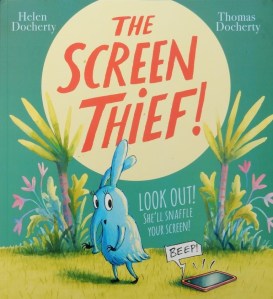
The Screen Thief!

The Screen Thief!
Helen Docherty and Thomas Docherty
Alison Green Books

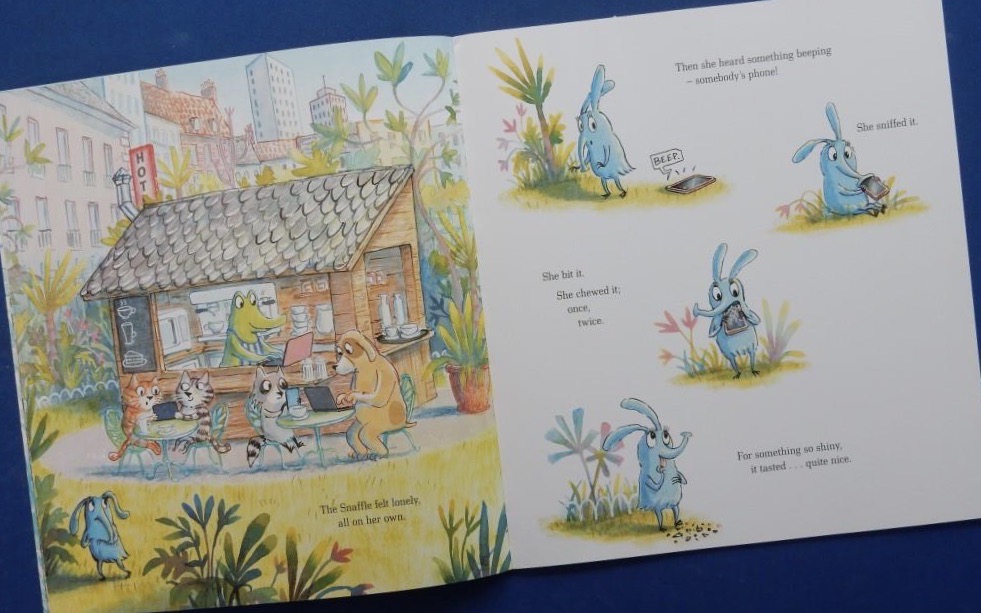
Watch out, watch out, a Snaffle’s about. Newly arrived in a city near you and on the lookout for some playmates, the creature is puzzled to see that everyone she sees is too busy staring at their screens. But what exactly is so special about these things, that nobody has time to notice a newcomer?

Puzzled, the Snaffle feels lonely but then she hears a beep! beep! coming from a phone on the ground so she does what all inquisitive creatures do, sniffs it and chews it and then gobbles the lot. Hmmm! Pretty tasty.

Off she goes in search of further screens to sink her teeth into, but the more she consumes, the hungrier she becomes. Before long the library has lost twenty computers and the TV shop almost sixty of its largest sets. But there’s worse to come as the hungry-for-more Snaffle makes her way through the city towards the park.
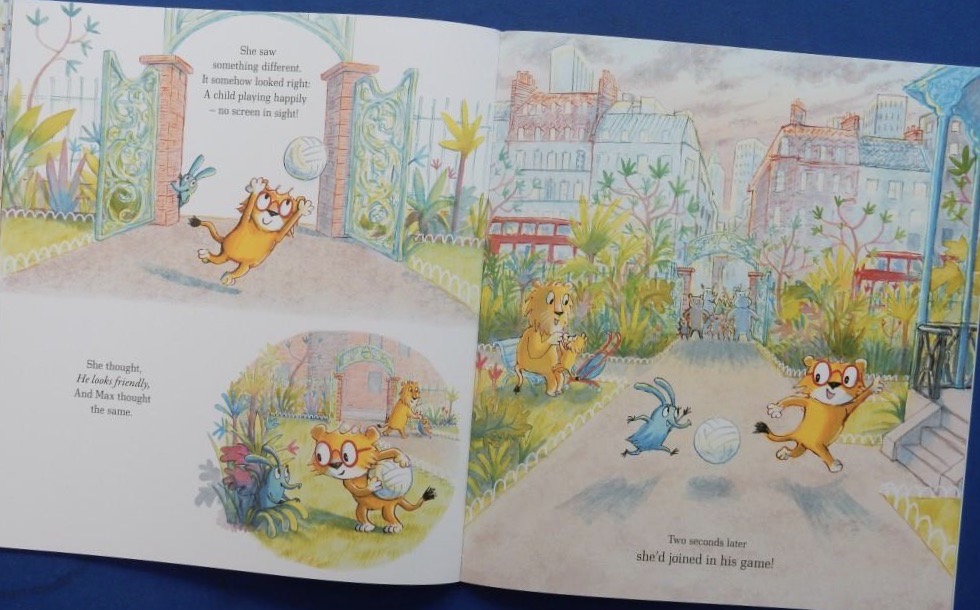
Therein are lots of very sad children eager to find the culprit and one child called Max: Max is forgiving and happy to contemplate life sans screens. Meanwhile the Snaffle is now suffering from an attack of ‘scrindigestion’ and a kind of empty inside feeling. But then she looks up and sees a happy-looking screenless child playing just inside the park and in a flash …

Suddenly the two become aware of the large angry crowd that has gathered ready to give chase. Will they listen to what Max has to say? And if so, might his words precipitate a degree of change …

Assuredly, it’s a case of put your screens away, take a rest from your play; come sit and listen to this fun, timely treat of a tale told in Helen’s faultless rhyme and Thomas’ wonderfully detailed scenes of screen obsessives who learn a very important lesson, thanks to a visit from the friend-seeking Snaffle..

Things to Do with Dad / You Can Never Run Out of Love

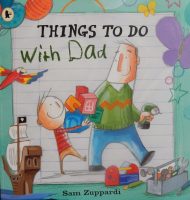
Things To Do With Dad
Sam Zuppardi
Walker Books

Dad and a small boy make and consume breakfast pancakes together. A promising and joyful start to the day but then Dad turns his attention to the ‘Things To Do’ list tacked to the fridge door – not so joyful.

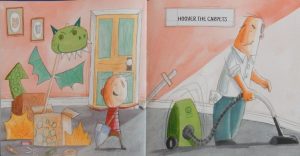
Dad makes a start with the chores with his son playing alongside. Washing up and bookcase building go smoothly enough but after a vacuuming incident,

the boy seizes the to-do list and his green crayon, and amends the list, starting with the title.

From then on imaginative play rules: ‘Make the beds’ becomes ‘Sail a pirate ship; ‘Hang out the laundry’ is changed to ‘Join the Circus’ and best of all methinks, ‘Water the garden’ morphs into a fantastic jungle adventure.

Good old Dad; he enters into the spirit of things heart and soul, so much so that at the end of the day, an exhausted but happy father and son snuggle together for a well-earned rest under a tree.

With only the list for text, Sam Zuppardi lets his own inventiveness flow in superb scenes of playfulness and the power of the imagination: the characters’ expressions say so much without a single word being spoken between the two.

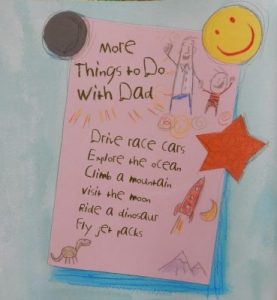
The ideal way to turn boring chores into a fun-filled day: bring it on. We’re even supplied with a list of further ideas on the final page. I wonder which chores might generate these items.

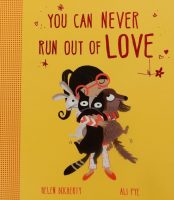
You Can Never Run Out of Love
Helen Docherty and Ali Pye
Simon & Schuster

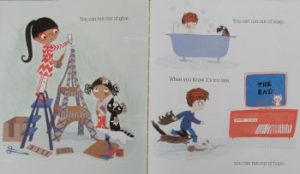
‘You can run out of time. / You can run out of money. / You can run out of patience, / when things don’t seem funny. BUT …// You can never (not ever), / you can never / run out of LOVE.’

That’s part of Helen Docherty’s tender, gently humorous rhyming text celebrating love- giving and accepting – and its inexhaustibility. Other things might be in short supply, but never love.

We see, in Ali Pye’s warm-hearted illustrations love in many forms – love between family members; love between friends, love for animals, love between a boy and girl next door …

Affectionate? Yes. Joyful? Certainly. Slushily sentimental? No; but it’s inclusive and perfect for bedtime sharing with young children.

I’ve signed the charter