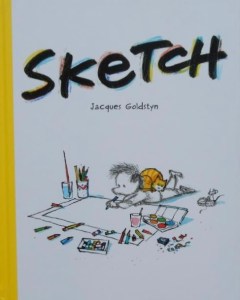
Sketch

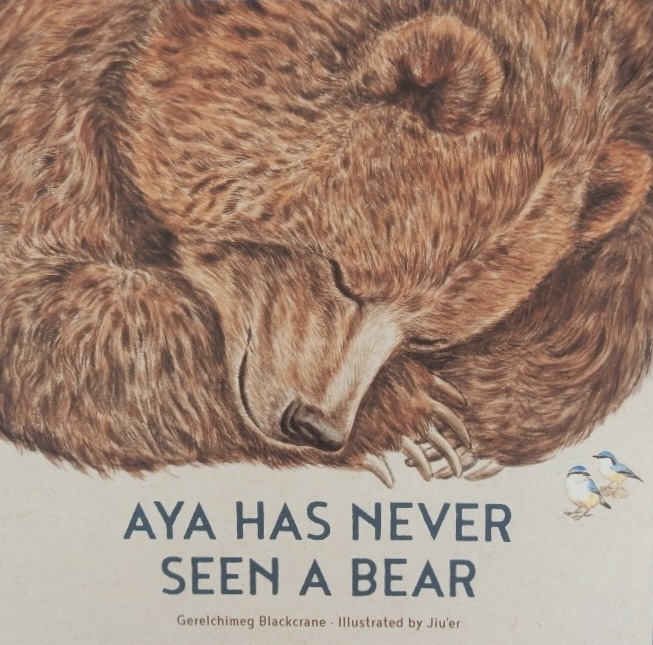
Almost as soon he’s born the baby seems a little different, in appearance especially. His parents adore him and name him Sketch. They watch avidly as he does amusing things, a bit wild on occasion.

However the place where the family lives is a perfect town with straight streets and identical houses where everything has a place and everything works on time. Orthodoxy rules.

It’s when Sketch encounters other children that things get a bit challenging, though the boy isn’t bothered; he merely gets on with what he likes to do – investigate and invent. When he starts school, the headteacher looks with displeasure at his scruffiness and expects trouble from Sketch. His teachers look disapprovingly at his writing – a jumble of lowercase and capital letters – and tell him to write as the others do and they certainly don’t appreciate his active imagination. One member of staff, the art teacher . Miss Beauregard, does create an environment wherein Sketch is happy; she loves his work, which is so different from that of the other pupils and gives him words of encouragement, telling him to persevere.

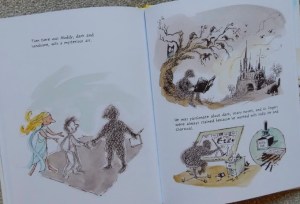
At High School, Sketch bonds with some other artistic students – Flow, a dancer, dark, handsome Muddy who has an air of mystery about him

and Doodle who is forever changing his shape and form; these new friends give him strength as they become inseparable. Part of that strength enables him to turn down their idea of moving away, for Sketch has a rather different idea.

This whimsical picture book is an ode to divergent thinking and creativity that will appeal especially to imaginative readers, including those older than the usual picture book audience.

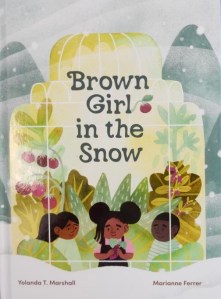
Brown Girl in the Snow

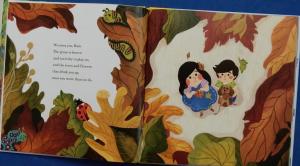
Amina, the narrator of the story has recently moved from the Caribbean where she was able to grown all kinds of plants, to a snowy city in a new country, and she’s not happy.

“There’s a brown girl in the
Tra la la la la,
where none of her plants will grow”


She sings as she watches the other children playing, then asks her elder brother how she can grown her garden in such an environment. He suggests she should wait for the spring to come. Hearing her song, her dad takes her to the library where she discovers a book about gardens. This cheers her somewhat and the following day her teacher asks why she’s not out playing with the other children. Having heard how Amina misses growing plants, she has an idea:

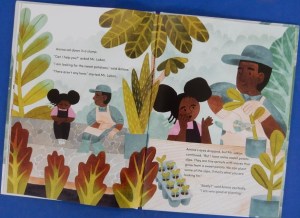
she sets up a class field trip to a greenhouse. When her classmates her about this, some of them start talking about the plants they are missing from their home countries such as The Republic of Congo and India. They also ask Amina to join them in their play outside next time. The weeks pass and at last it’s the field trip. Amina is a bit disappointed that she doesn’t see sweet potatoes growing in the greenhouse though there are lots of other tropical plants; nonetheless the trip is a success. Particularly when Mr Lokon discovers that she was hoping to find sweet potatoes and gives her some slips to plant.

He also invites her and her new friends to return and watch their growth. This they do though it takes a long time and in the meantime, Amina becomes much more positive about her new home.

The refrain, “There’s a brown girl …” is repeated several times throughout the story, with different ending lines as events progress and young listeners will enjoy joining in each time. Aptly Marianne Ferrer’s stylised watercolour depictions of the plants and some clothing items are in various green hues, with a dark magenta for Amina’s sweet potatoes.

The author draws on her own experience for this story: it’s ideal for children who are moving to a different climate and those who feel homesick for a previous country as well as for a KS1 topic related to growing plants.

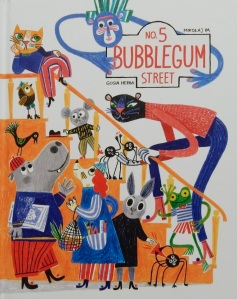
No. 5 Bubblegum Street

Translated from the original Polish by Scotia Gilroy, this picture book takes readers inside the apartment building at No. 5 Bubblegum Street. It’s five pm we’re told by our tiny, friendly insect narrator, who lives in the top floor apartment, number 11.

One by one, we are introduced to the residents of each floor, the first being Mouse, a famous rapper preparing to go out. Mouse is frantically searching for his hat to complete his outfit. Apartment two is home to some monkeys and we join them in their kitchen as they bake a delicious “speckled orange orangutan cake” Apartment three, owl’s residence is currently empty; all we see is evidence that Owl enjoys games of different kinds.

There’s also Cat, lover of birdsong; Panther who is mad about house plants, a family of spiders, musicians all, a slumbering Hippo,

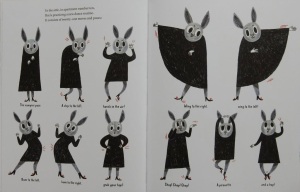
frogs, a sculptor dog and Bat ready and willing to share a twenty one move dance routine.

Come 6pm all these neighbours meet on the rooftop terrace where they each contribute their particular talent to a party and a great time is had by all.

This will appeal to children who enjoy poring over detailed illustrations, especially of the quirky kind. Full of movement and joyfulness, Gosia Herba’s, executed in bright pencil colours, are certainly that.

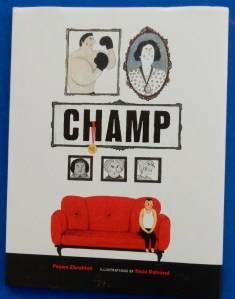
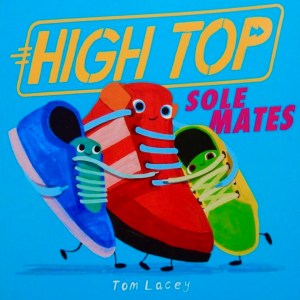
Champ / High Top Sole Mates

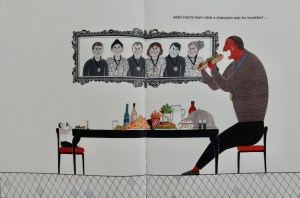
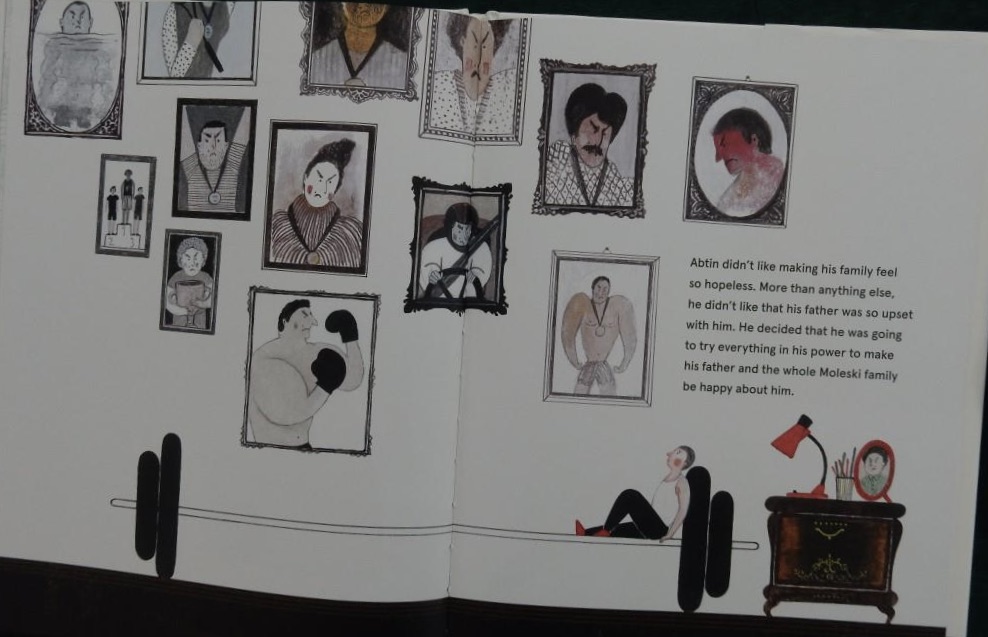
Abtin Moleski was born into a family of champion athletes but no good at sports and without the slightest urge to win, he doesn’t feel he really belongs. Despite everything his family has done to help him become a champion,

he has no interest in being a sporting hero. Abtin’s passion is for art and upset at being a huge disappointment to others in the family, he resolves to do whatever it takes to make his father, indeed the entire family, proud. To this end he works and works until at last he has what he thinks is a solution.

What he does is revealed in an amusing and clever visual twist. How will his family respond?

With its themes of individuality, self-acceptance and understanding, family pressure, resistance and resilience, this is a book to share and discuss with children across a wide age range. It’s written and illustrated by two Iranians, whose creative wisdom is evident throughout the story. Caroline Croskery has translated the story into English.

High Top is everyone’s friend and loves to show it in all possible ways: from smoochies to surprises, cuddles to cosy knitted gifts, the sneaker does everything to transmit his loving feelings to his fellow footwear. Then one day he decides to ramp up the level of his love-in; to this end he collects all manner of bits and pieces which he takes to the top of a big hill and there, fashions a brand new mega love sign. However things don’t go entirely as he hopes, leaving a devastated High Top tottering back to his box.

It appears that he’s had some visitors in his absence though. Have they left a message telling him to get knotted or is there something there that will brighten up his life of loving.

Laced with gentle humour, polished with puns and brushed with bright colours, this second episode in the life of a lovable item of footwear will perhaps fit many sizes.

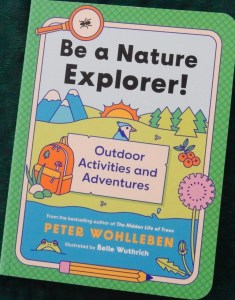
Be a Nature Explorer!

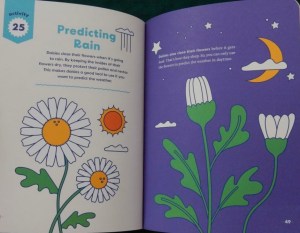
The author, once a forester and now running a forest academy in Germany, introduces over fifty activities that will help and encourage children to leave their screens and discover the delights of being in the great outdoors. It doesn’t matter the time of year or where they are – city, town, countryside or their own back gardens, youngsters will find something that will get them interacting with the natural world.
First though, one needs to be prepared and the two opening spreads are devoted to what to take when venturing out and some words of encouragement from the author.

As a foundation stage/ primary teacher who has been involved with regular forest school pursuits, many of the ideas are not new to me; however that will not be the case with lots of parents.

Did you know that there are more life forms in a handful of earth than there are people on earth? Wow! Most of these are so small they can’t be seen with the naked eye but why not collect a few handfuls of soil and leaf litter and investigate the different creatures therein? It’s likely there’ll be beetles, worms, slugs, snails, ants, woodlice for starters.

Identifying trees can be tricky – looking at the bark, fruits and leaves will provide useful clues for young investigators and the book contains helpful photographs of some deciduous trees and conifer as well as descriptions of what to look for.

There’s a wealth of fun learning between the covers of this book – something different for every week of the year.

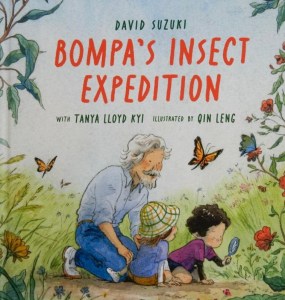
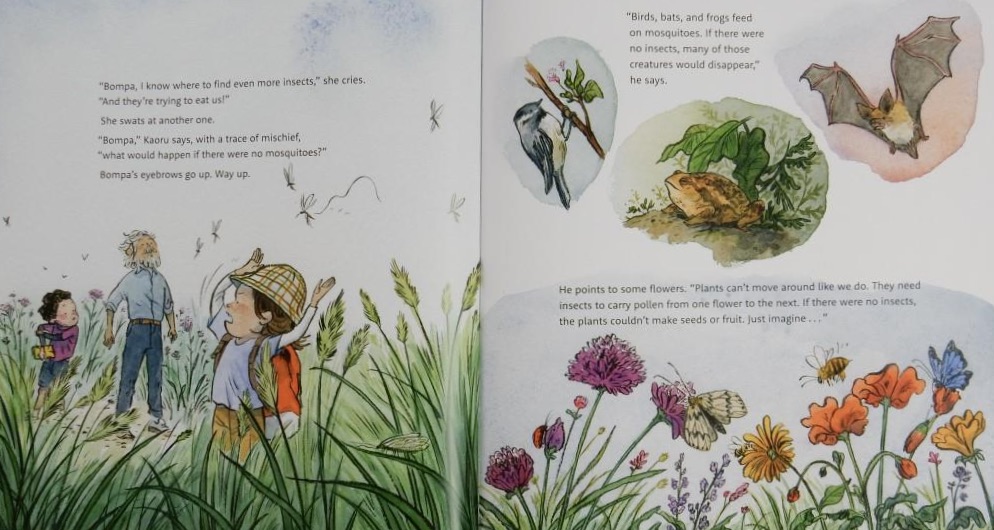
Bompa’s Insect Expedition

This book was inspired by author David Suzuki’s adventures with his own grandchildren and features twins Nakina and Kaoru who love having adventures with their grandpa. This adventure is a nature expedition and by the time Bompa arrives, the two have amassed everything they might need including Kaoru’s field journal.

As time is short on this particular day, their expedition is an insect search in the area right close to their home. Initially Kaoru is somewhat sceptical about discovering anything new, but there are plenty of surprises and new learning in store.

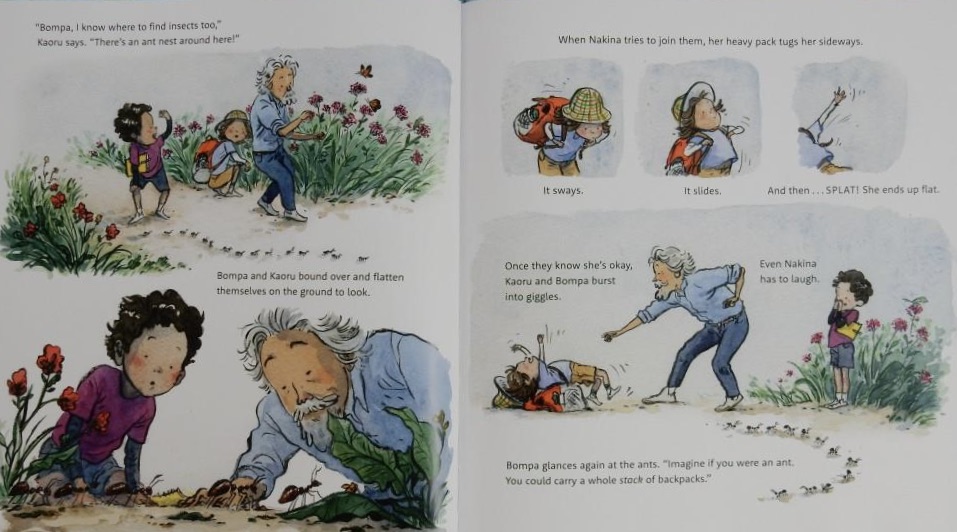
The two children are both inquisitive and imaginative in their approach as they encounter in turn, a bumblebee, dragonflies, caterpillars of the monarch butterfly, an ants’ nest,

mosquitoes and a lacewing. During their exploration, Bompa imparts a wealth of scientific information, much of it in response to what the twins say, taking every opportunity to encourage and deepen their thinking.

The story ends with the three enjoying a picnic and is followed by a page from Kaoru’s field journal, a peek at the contents of Sakina’s backpack and a final spread with some additional insect facts.

David Suzuki is a renowned scientist/environmentalist and this engaging book is published in partnership with the David Suzuki Institute; his co-author, Tanya Lloyd Kyi, has written numerous books for children. Qin Leng’s watercolour illustrations are a delight, bringing out the intergenerational love between the characters as well as showing details of the fauna and flora of the environment the three explore.

The Shade Tree / Rapunzel

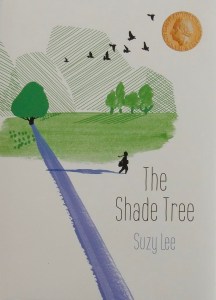
This is a re-telling of an old Korean folk tale wherein we see how a young traveller tricks a rich but heartless man into selling him the shade from the tree that grows on the latter’s land. The rich man considers he’s made some very easy cash but hasn’t considered the effects of the lengthening shadow of his house as the day progresses.Whatever the shade touches is thus owned by the traveller, and he can share it with whomever he wishes. Furthermore when the shade covers the rich man’s house, the traveller can enter that house, which he does,

eventually causing the wealthy one to move out. Once the house is vacant the traveller settles down and enjoys life as the new resident.

Much of the power of this thought-provoking telling lies in its simplicity, simple too is Suzy Lee’s art; it’s almost abstract in style and uses a limited colour palette to effect. With its dramatic gatefold, this is altogether an unusual book that feels at once both old-fashioned and contemporary. It would probably appeal most to older readers especially those with an interest in folk stories.

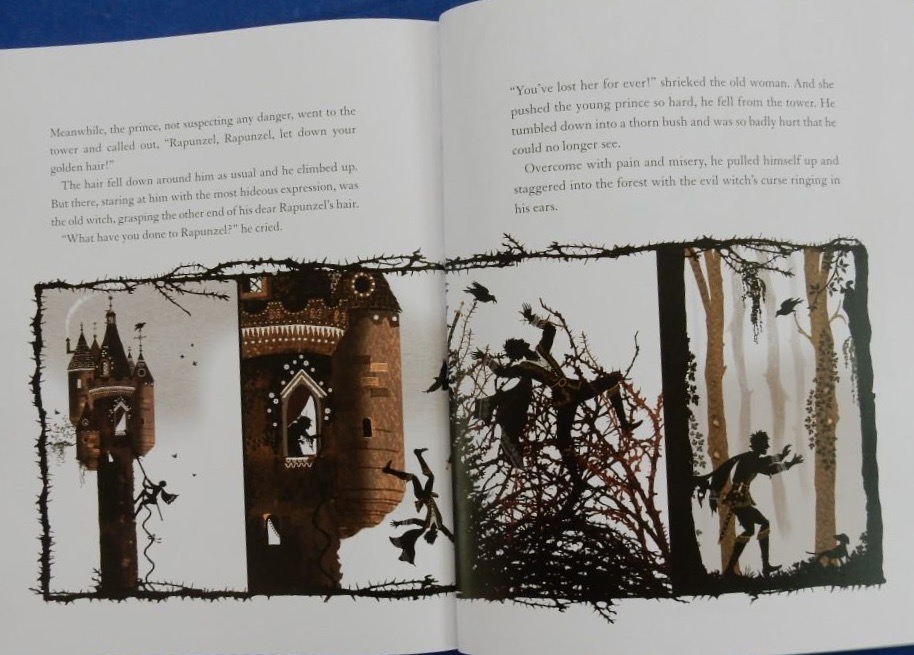
Sarah Gibb has taken the original classic fairytale and turned it into a visual feast.with a mix of gorgeous silhouettes and delicate, detailed colour illustrations, without losing any of the essential elements of the plot in her simplified telling. We still have the drama: the witch discovering the young husband helping himself to the salad leaves from her garden to cure his ailing wife and his promising to give her the baby when born in return. And romance: the baby Rapunzel becoming a beautiful girl incarcerated in a tower, who is visited by a prince and the two eventually marrying.

Rapunzel’s tower is illustrated in true fairytale style, with turrets and weathervanes, vines and roses
and the contrasting silhouette style prince staggering through the forest having been seriously hurt as a result of his fall from the tower.
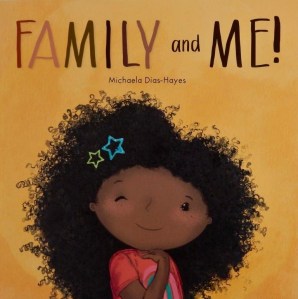
Recently reissued with a new cover, I suggest that if you are looking for a highly pictorial version of the fairytale, look no further than Sarah Gibb’s offering.

Afterward, Everything Was Different

Afterward, Everything Was Different
Rafael Yockteng and Jairo Buitrago (translated by Elisa Amado)
Greystone Kids

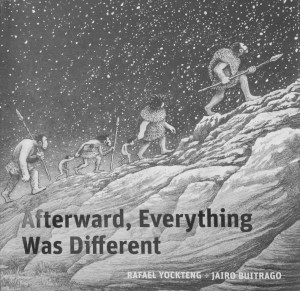
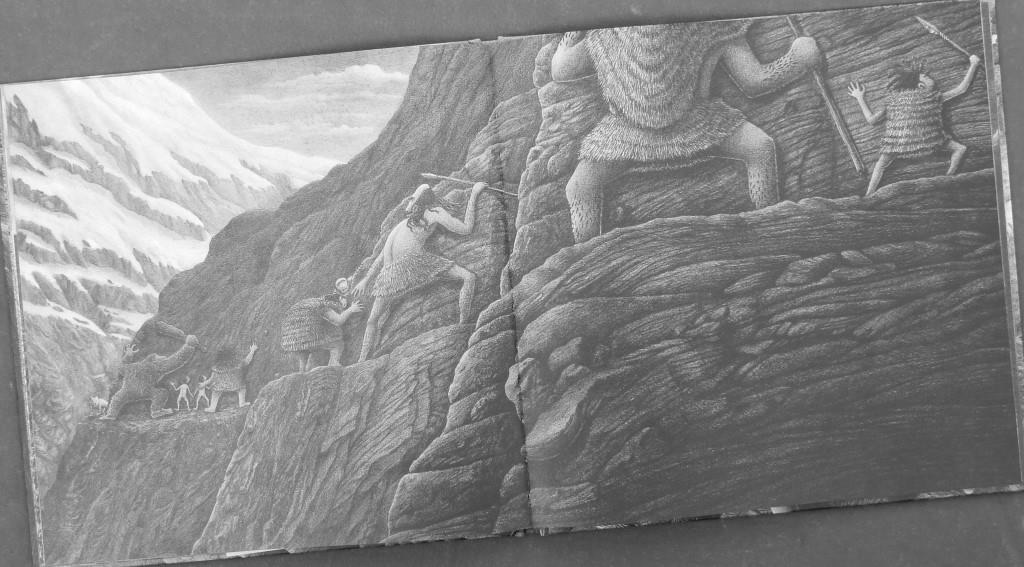
Wordless until the very last double spread, this story starts with six spreads of a bison hunt and only then do we have the title page. By that time readers will have already been sucked in by Rafael Yockteng’s powerfully atmospheric black-and-white illustrations, even though the hunt goes badly for the hominid hunters of the Pleistocene era.

The men then rejoin the others in their tribe and we follow the travels of one particular family as they journey,

clad in animal furs, apart from the young children, who are naked, even in the heavy snow, always on the lookout for signs of predators be they from footprints or other signs. As they search for a cave in which to make a home, the intrepid travellers come upon many wild creatures, one of which becomes a rug in their cave.

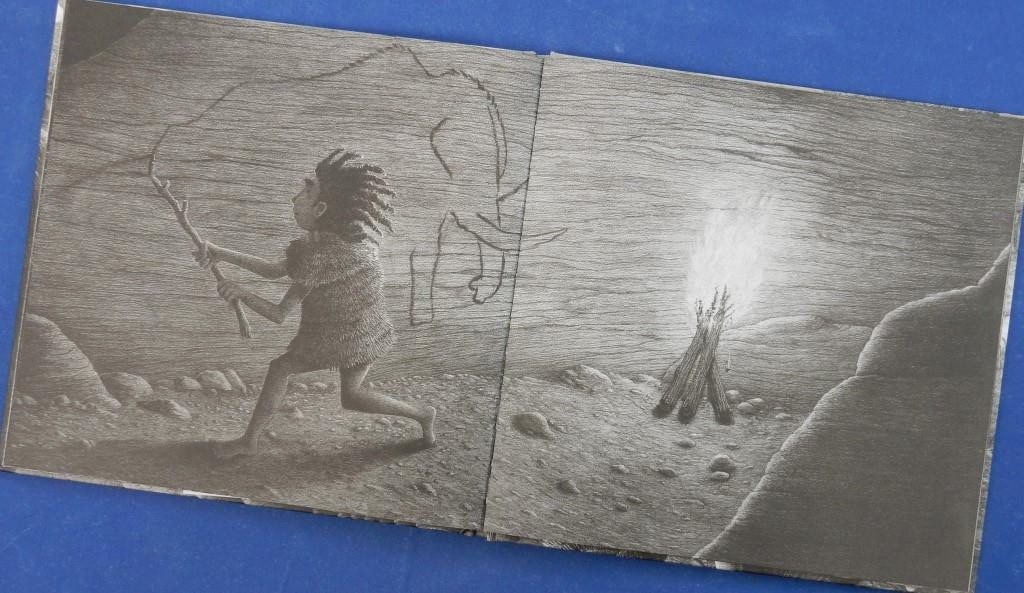
One girl is left alone in the cave and having paid close attention to everything thus far, she creates with a charred stick, beautiful cave drawings on the walls depicting the details of their journey.

This hugely thought-provoking book is a wonderful testament to survival, to art and to stories and how they make us human. Share and ponder upon it at home or in the classroom. Afterward, Everything Was Different is bound to spark conversations on human history and awe at the power of Yockteng’s art drawn in graphite and white ink.
(Backmatter provides further information on the Pleistocene era.)

What Will I Discover? / The Stars

These are both Greystone Kids titles – thanks to the publisher for sending them for review

What Will I Discover?
Tanya Lloyd Kyi and Rachel Qiuqi

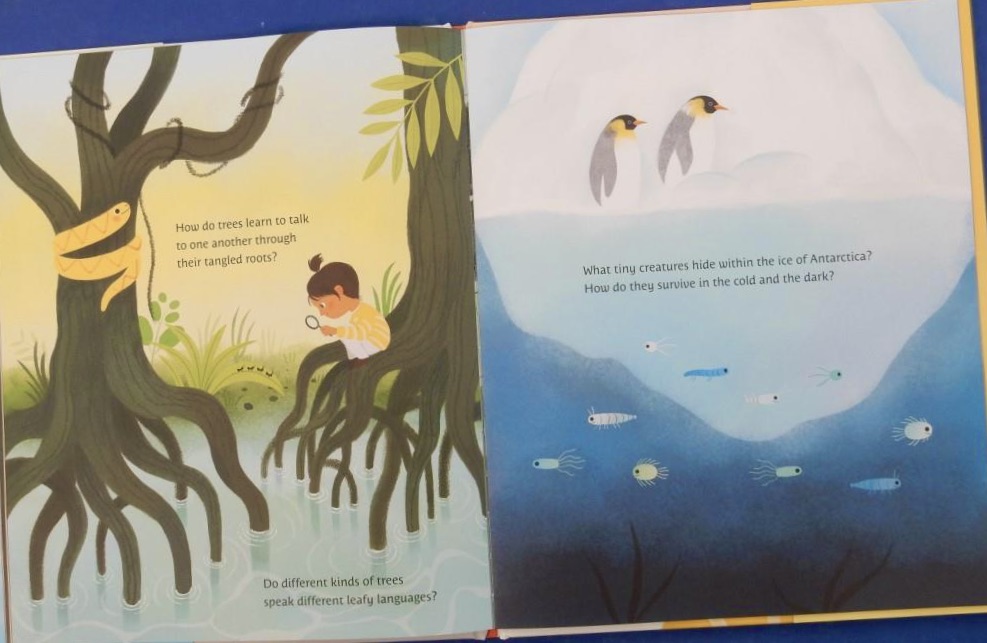
‘Sometimes I think scientists know everything about the world’ muses the girl narrator of this book. She goes on to mention several examples of some of what they have discovered: that otters tie themselves to kelp to prevent them floating off during sleep, that the feet of sea stars are tubular; that macaws have bony tongues to help crack hard shells and glass frogs have see through skin to help them hide. She also talks of fossil evidence, looks afar out into space and within the human brain where nerve cells communicate with one another. But even so, our narrator has some yet unanswered questions: why does every humpback whale sing a different song? How many bits of rock bounce and collide in a sandstorm? How do trees learn to communicate through their roots; what tiny creatures hide in the ice of Antarctica and how do they manage to survive?
Then closer to home, ‘How do ideas pop into my head?’ and finally her biggest question of all – that of the title, which is one only she can answer.
The last page asks readers to search back through the book’s pages for 10 tiny images and, enthusiastically underwrites ‘investigating, inventing, or creating’ as necessary qualities for scientists, concluding that despite extensive research in all STEAM areas, we humans still have so much to learn.
Tanya Lloyd Kyi offers an open invitation for young readers be they at home or in the classroom: always be curious and look for answers. This is underscored through Rachel Qiuqi’s alluring scenes including those of seascapes, the jungle, the desert, flora and fauna, dinosaurs, outer space and neurons within the brain.
Narrative non-fiction recommended for KS1 learners.

Also likely to appeal to readers with inquiring minds is

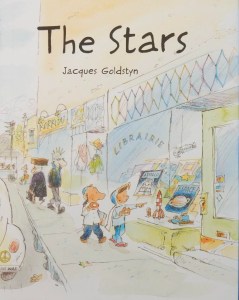
The Stars
Jacques Goldstyn (translated by Helen Mister)

Set in Montreal, this story introduces Yakov who acts as the book’s narrator. he’s the older brother of three sisters who he has to take to the park every day when he’d much prefer to be reading about space. Into space is somewhere he aspires to go one day in the future; meanwhile he constructs rocket ships from empty packaging, His father is against his aspirations but his mother is more encouraging. 

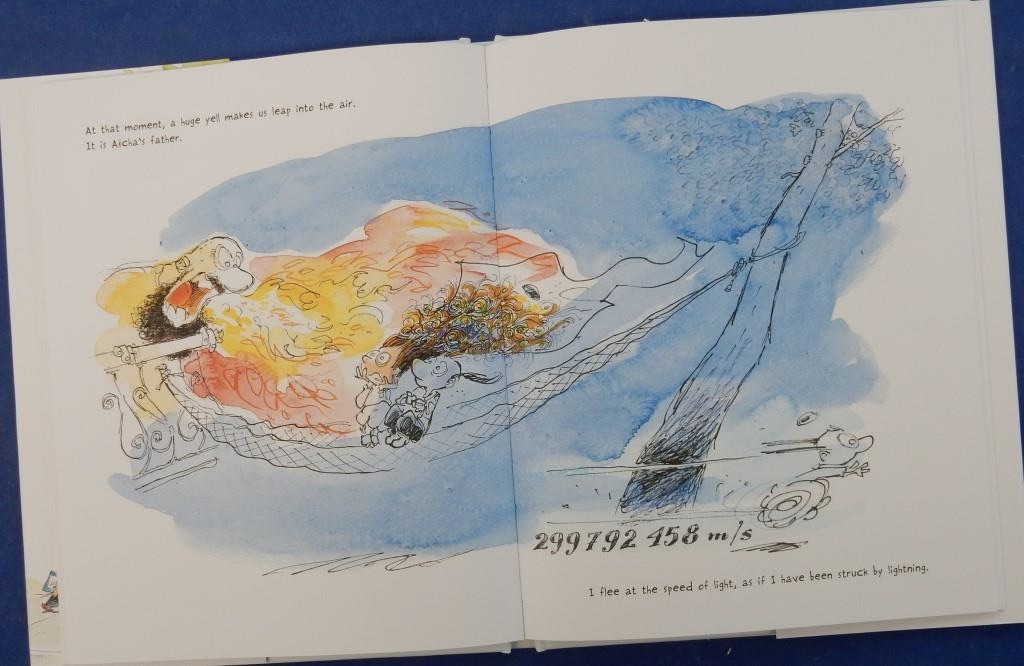
One day at the park Yakov meets a girl, Aisha, reading about space while supposedly minding her siblings. It turns out that she and her family have just moved close to where Yakov’s family live. With a shared interest the two become great friends and spend time star gazing together. Both fathers are far from happy and even erect a wall between their two homes to prevent Yakov and Aisha from meeting.

Years pass and Yakov becomes a scientist working at NASA. One day he attends a big international astronomy conference and guess who is also attending. Since then they’ve not been apart.

Author/illustrator Jacques Goldstyn presents a fair amount of information in telling this story of two young people who, against the odds, pursue their passionate interest in the stars and the universe.

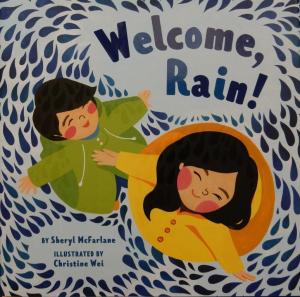
Welcome, Rain!

Welcome, Rain!
Sheryl McFarlane and Christine Wei
Greystone Kids

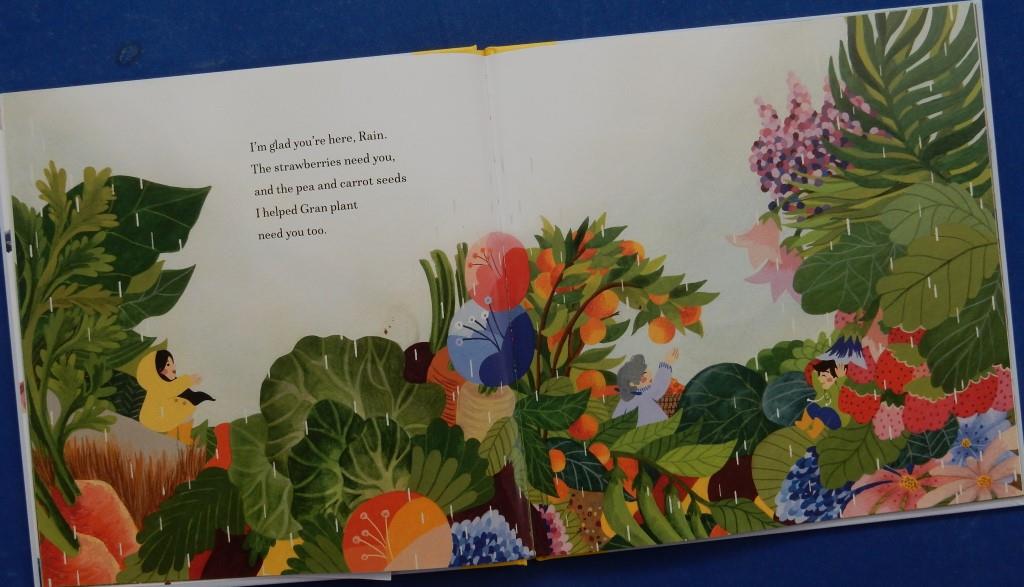
Directly addressing the rain, a little girl pays tribute to its wonders – the fresh, happy smell, the muddy puddles it makes for splashing in, and the water it provides for seeds and plants to grow.

Moving indoors she says thank you for the tap water for baths, cooking in and washing up, and for making tea. Having paid tribute, the child then moves on deciding as she watches while hugging her dog reassuringly, that, ‘maybe that’s enough for now, Rain. The creeks and lakes are full and the birds are huddled in our trees …’

As is nature’s way, the rain does stop eventually and fun outdoor activities restart, until that is the hot weather becomes too much to bear. Then again comes a change of tone: ‘We miss you, Rain, … and the trees and flowers that drink you up miss you more than we do.’

Coming full circle, the rain returns and I love how the young narrator curled up in bed says, ‘Good night, Rain. You are a bedtime pitter-patter lullaby playing on the roof. … a drip-drop song of raindrops singing in the trees.’

Christine Wei’s beautifully patterned images and her dense hues bring her landscapes to life in Sheryl McFarlane’s upbeat poetic celebration of what is for many of us, an increasingly unpredictable facet of our lives, the rain.

Super Small / The Versatile Reptile

Super Small
Tiffany Stone and Ashley Spires
Greystone Kids

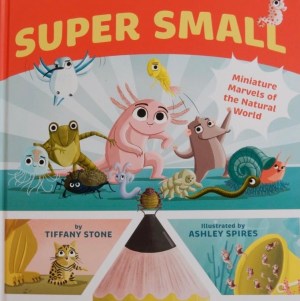
You may be surprised to learn that some of the world’s smallest creatures have awesome superpowers.

The minute oribatid mite can lift more than 1,000 times its own weight. The pygmy seahorses are so good at camouflage that scientists only discovered them accidentally when they brought some coral into a lab to study; then there’s the bee hummingbird that’s able to fly backwards and upside-down – clever stuff!

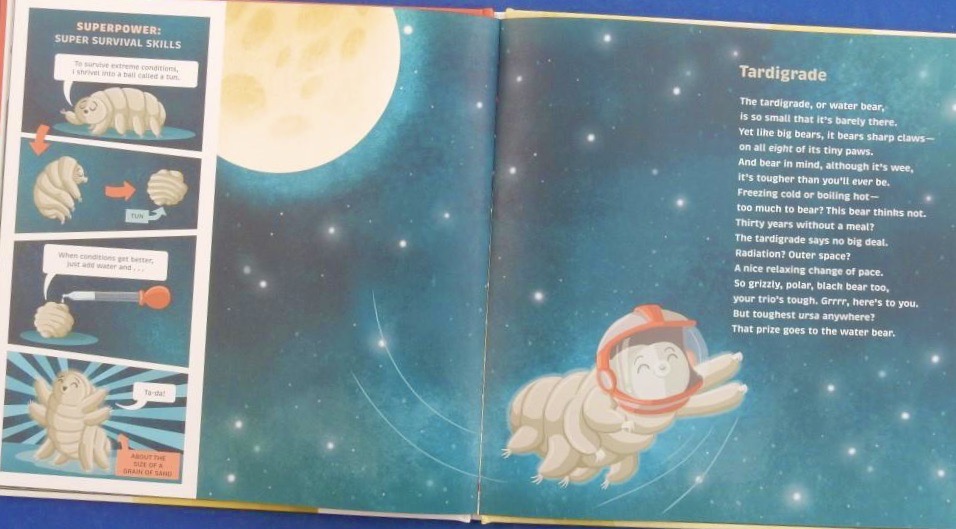
Did you know that wood frogs are able to survive harsh winter conditions as ‘frogsicles’ – they stop breathing, their hearts stop beating and their bodies make a kind of protective antifreeze and as for those teeny tiny tardigrades, here’s what author Tiffany Stone has to say about them: ‘The tardigrade, or water bear, / is so small that its barely there. / … And bear in mind, although it’s wee, / it’s tougher that you’ll ever be. / Freezing cold or boiling hot— / too much to bear? This bear thinks not.’

Ashley Spires uses her artistic superpower to illustrate each featured creature, making every miniature marvel appear super-confident; and to accompany her poetic descriptions Tiffany Stone provides some side-notes in the form of animal monologues (or dialogue) presented in comic strip style side panels. This is a book that will appeal to animal enthusiasts especially.

So will:

The Versatile Reptile
Nicola Davies and Abbie Cameron
Graffeg

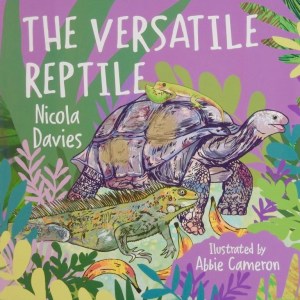
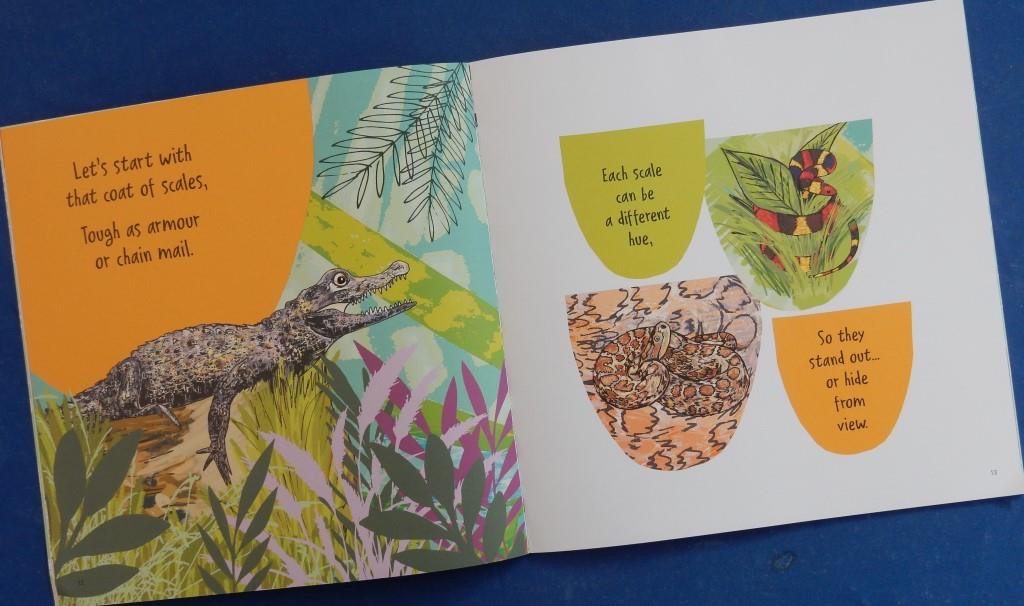
In this addition to the rhyming series in which Nicola Davies presents a look at various animal types, we meet some reptiles.

Reptiles are found in many different parts of the world as the young adventurer in this book discovers in her search. These scaly creatures might be jungle dwellers, live in desert places or swim in the seas among the seaweed, and can vary in size from massive to minute and from endearing to downright grim and ghastly. 

One thing the entire reptile group can claim though, is versatility. 

Abbie Cameron’s accurately detailed, close-up illustrations really drive that point home to readers who will one hopes enjoy coming face to face with such fascinating creatures. This reviewer certainly did.

Perfectly pitched for KS1 readers.

Family and Me! / Wildflower

Family and Me!
Michaela Dias-Hayes
Owlet Press

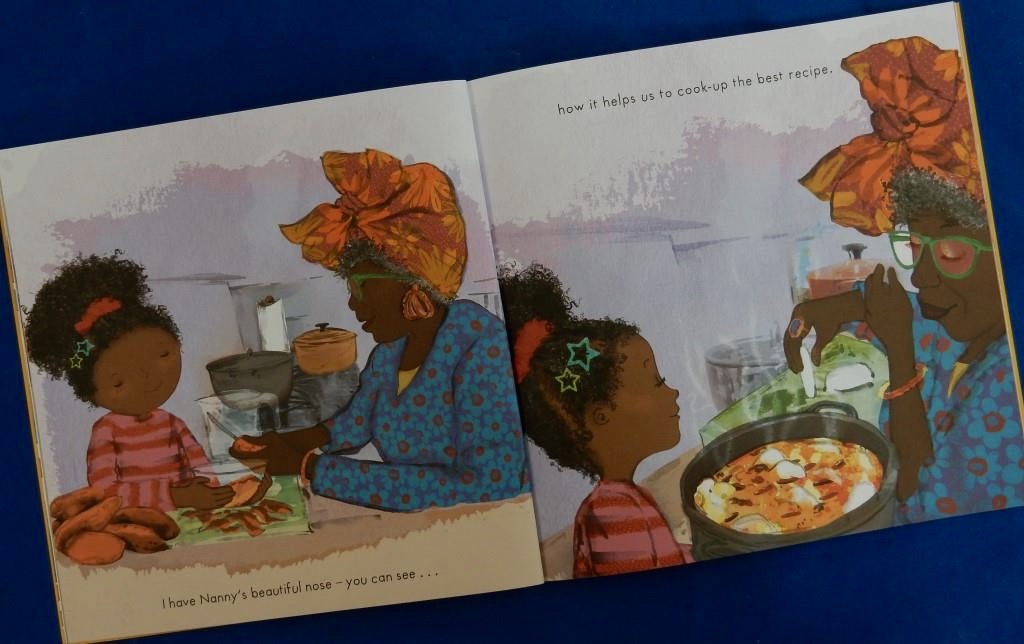
What a gorgeous celebration of herself, her family and her heritage, the little girl narrator of this rhyming book shares with readers. Feature by feature she presents key parts of herself starting with her eyes – these are just like her mum’s eyes, caring and true; her nose is similar to the beautiful one her Nanny has, which she puts to good use when they cook together . 

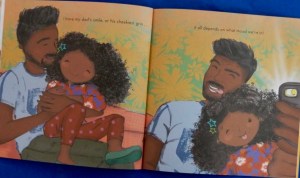
From grandad comes her glowing skin, from her aunt dazzling hair to crown her super sense of fashion. Her dad has passed on his super smile and cheeky expression, 

uncle his gentle touch and love of creating art, she has her grandma’s finely tuned ears whereas with his amazing dance moves, Grandpa has passed on his joyful sense of movement and ever dancing feet. 

Thus we see this little girl has dual heritage and she goes on to show off her framed portraits of her Mum’s family that make one half of her and her Dad’s, which provide the other half. How wonderful to celebrate such a super family – nine individuals (plus pets) – who so clearly love one another dearly.
That love shines forth from every single one of Michaela’s gorgeous warm illustrations is so evident and the shared tenderness between adults and child is unmistakeable throughout.

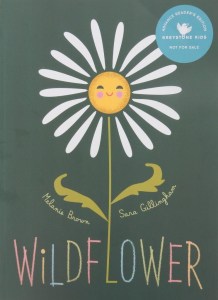
Wildflower
Melanie Brown and Sara Gillingham
Greystone Kids

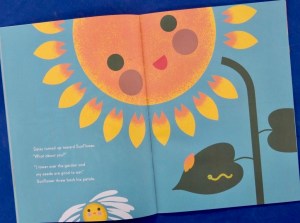
Newly in bloom, Daisy is happy in her sunny spot in the garden. However her happiness is short-lived thanks to Rose’s hurtful words, “My mama says you’re just a weed, and you don’t belong here.” Poor Daisy’s petals droop even further each time another flower tells her she’s a weed. Sage says that she is a chef’s best friend, Sunflower towers over the garden and has seeds that are good to eat, 

Chamomile makes soothing tea that helps people sleep, and Strawberry Flower produces sweet, juicy fruits to feed people. Then, Sweet Pea shares the information that like Daisy, she wasn’t planted; she too was blown in by the wind and is sometimes called a weed. Up chimes Blackberry Vine imparting the news that despite the delicious fruits she produces, she also gets called a weed. Moreover Dandelion’s seeds are windborne but she calls herself a wild flower that grows wherever the wind drops a seed. 

By now, Daisy’s self belief has been restored. Finally there grows a Milkweed flower, meek and mild; this one introduces itself as a weed but Daisy is ready to speak out against Rose, giving her vital information, “Every plant I met today has something special about them to be proud of, no matter what you may call them.” She also warmly welcomes the newcomer to the garden they all share.

The ‘believe in yourself and love yourself exactly as you are’ and ‘stand up for others against prejudice’ messages are engagingly conveyed for young children in this beautifully simple story where words and pictures work in harmony.

Nature is an Artist

Nature is an Artist
Jennifer Lavallee and Natalia Colombo
Greystone Kids

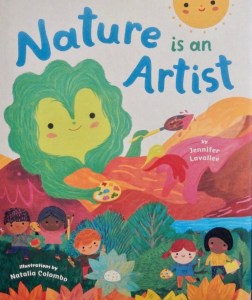
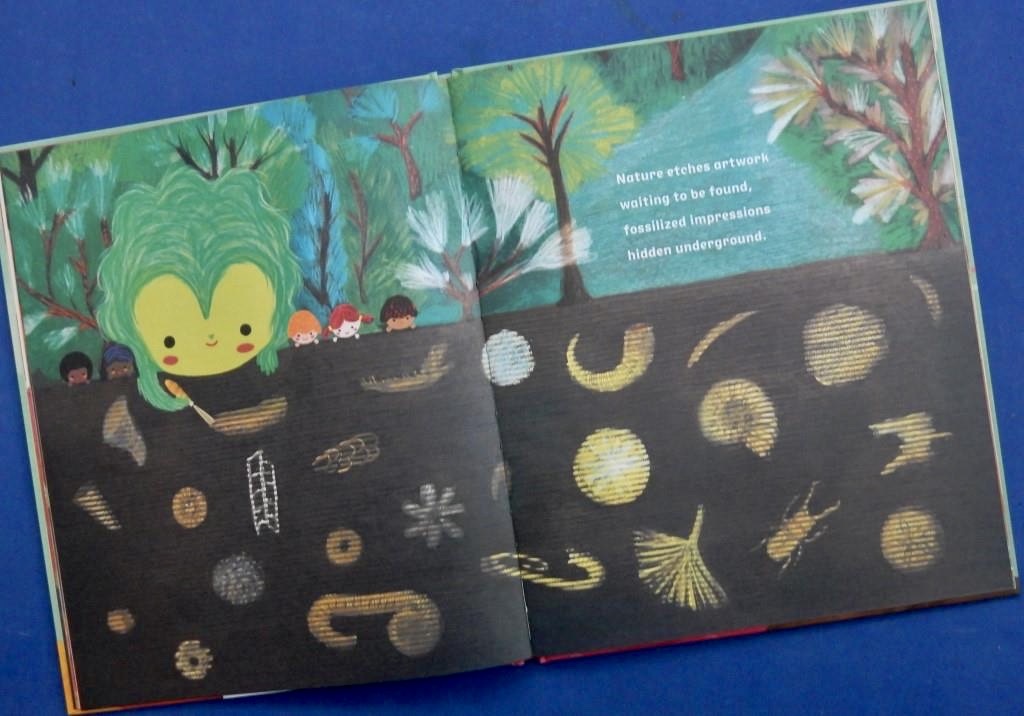
Nature has many awesome qualities not least of which is its incomparable artistry – its beauty and its incredible variety: that is what this book explores and celebrates.

There is complete harmony between author Jennifer Lavallee’s rhyming text and Natalia Colombo’s striking illustrations of nature – both its manifestations and the green being that leads a group of five children on an exploratory journey through various beautiful natural landscapes showing them the sunrise over some hills; a field alive with buzzing bees and daisies growing in abundance around the trees; the rich colours of summer flowers in full bloom as they begin to scatter the petals. 

Next, resting on a rock at the water’s edge, nature shows itself as sculptor extraordinaire, carving and moulding rocks and clay. Then hidden deep beneath the ground lies evidence of nature’s etchings – those fossil impressions making patterns we all so love to find; 

while with rain and sun together, high up in the sky, nature creates a rainbow: a kaleidoscope of gorgeous colours, a prism up above.

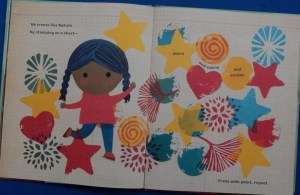
As the children witness each stunning landscape one of their number with nature now as teacher/mentor is inspired to recreate what they’ve seen in art of their own making: one by finger painting, another making a colour paper collage, one sculpts towers in sand; fossil etchings are done by stamping various shapes on a large sheet 

and a rainbow is formed from torn tissue paper pasted on a glass jar and a lighted tealight within to provide the glow.

Whether used in a classroom or at home, those with whom this book is shared should not only develop a deeper appreciation of the natural world but also be motivated to try some of the art techniques the book includes.

This Is Not A Dinosaur! / Drawing Outdoors

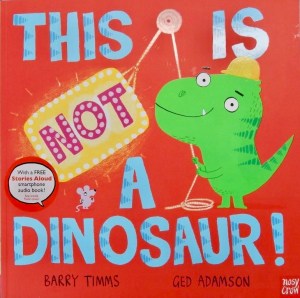
This in Not a Dinosaur!
Barry Timms and Ged Adamson
Nosy Crow

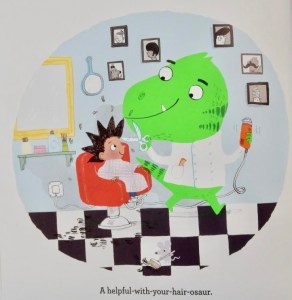
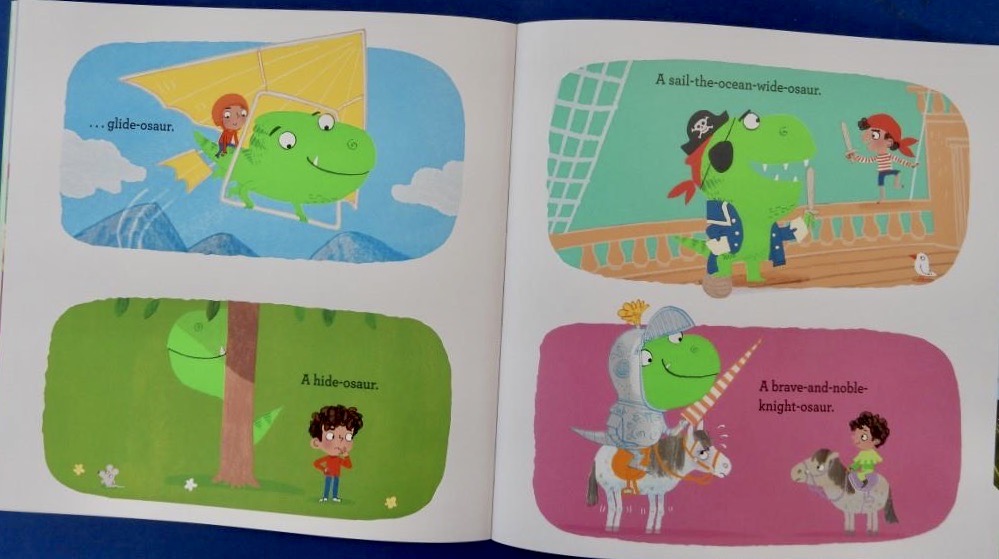
The NOT dinosaur that the small boy in this story meets is definitely a versatile creature. Said large green, possibly prehistoric being that appears in the playground offers all manner of exciting, special and useful possibilities as a playmate. It can become pretty much anything and everything from a sign-osaur to a soccer star supersonic-kick-osaur; it might morph into a tonsorial wonder-worker trimming and skilfully styling your tresses,

or a fearsome freebooter sailing upon the ocean deep. One thing is certain: should you decide to befriend this beastie, there are fun adventures aplenty in store; you might even find yourself scaling a mountain, flying through the air

or tip-toeing into a creepy haunted house.

With its wealth of wordplay, Barry Timms’ rhyming text combined with Ged Adamson’s funny, action-packed scenes of a burgeoning friendship add up to a super story to share with young humans, definitely NOT dinosaurs around the age of the un-tailed protagonist, be that at home or in school. I’ve no doubt if you read this with a Foundation Stage or KS1 class, they will imagine themselves into many more playful NOT dinosaur situations. The classroom potential this book offers is huge.

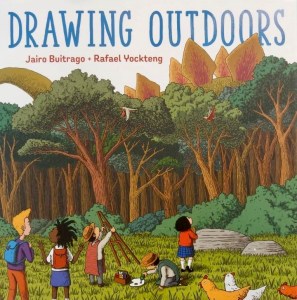
Drawing Outdoors
Jairo Buitrago, (translated by Elisa Amado) and Rafael Yockteng
Greystone Kids

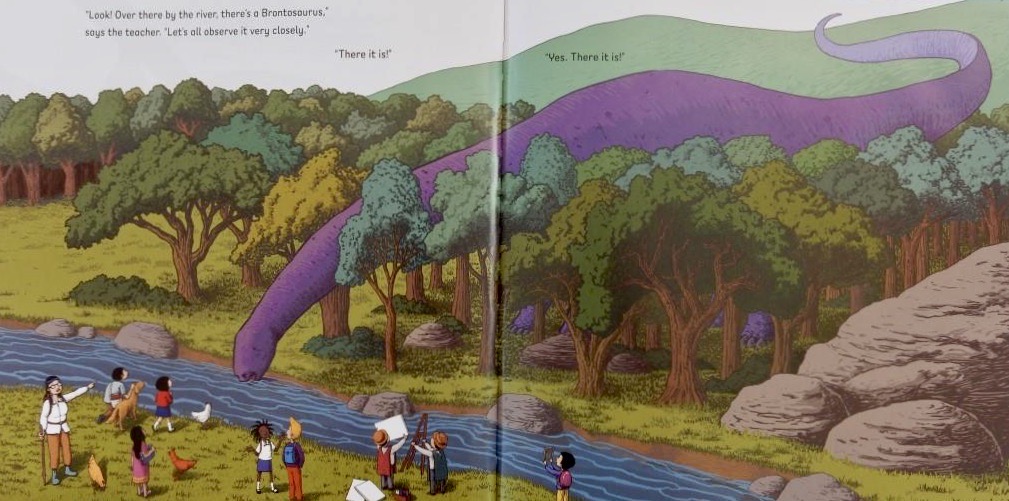
Between two lush green mountains, beside a pure blue river in the middle of nowhere stands a small school. Education is far from dull for its pupils however. Through a girl narrator we hear about one particular day when their teacher greets them with the news that their learning will be done outside and she leads them off with notebooks and drawing equipment at the ready. ‘We are explorers” says the narrator. Even the twins who have already walked a long way to reach school leave their reluctance at the door, motivated by the prospect of an adventure day out.

First into view as they reach the river bank, among the lush vegetation stands a Brontosaurus!

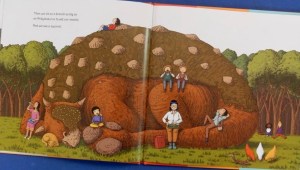
Then, there’s a Triceratops,a Stegosaurus, Pterodactyls, a roaring Tyrannosaurus Rex. Finally, the group sit to eat their snacks on a branch “as big as an Ankylosaurus”.

Then with a wealth of drawings it’s back to that school with ‘almost nothing. A blackboard, some chairs. And … a teacher, and a Brontosaurus that’s as big as a mountain.’

With Jairo Buitrago’s spare, matter of fact text, it’s left to listeners and readers to decide whether the dinosaurs we see in Rafael Yockteng’s landscapes are real or not. Their book pays homage to the imaginative teachers who truly value creativity one wishes all children will meet in their time at school. I’m sure re-reads will the requested after a sharing of this story with young children.