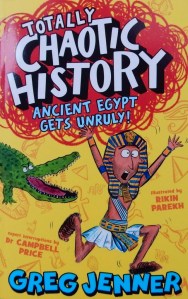
Totally Chaotic History: Ancient Egypt Gets Unruly!
Greg Jenner, illustrated by Rikin Parekh
Walker Books
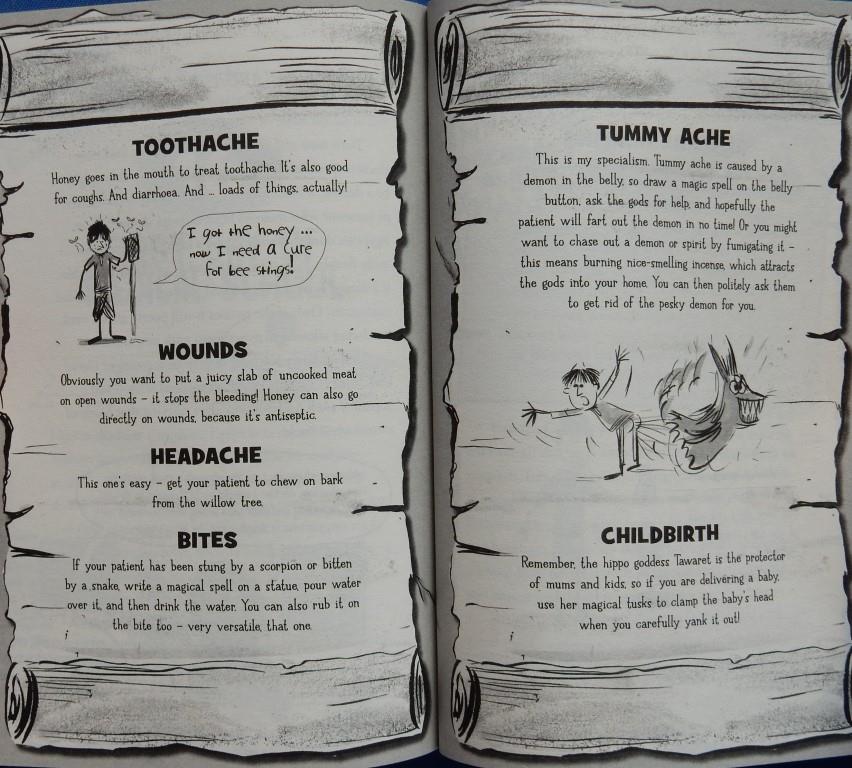
Speaking directly to his audience using a chatty present tense style, writer, Horrible Histories consultant and presenter of the hit BBC history podcast ‘You’re dead to me’, takes readers on an action-packed, chaotic romp through the whole of Ancient Egyptian history. In this enterprise as he navigates this messy world, he’s aided and abetted by Egyptologist, Dr Campbell Price, curator of Egypt and Sudan at Manchester Museum with interjections in the margin, myth busters and ‘accuracy alarms’ that sometimes challenge Greg’s ‘facts’. Adding to the humour of the text and the reader’s enjoyment and perhaps understanding, are Rikin Parekh’s comical illustrations on every spread.
There’s a brief introduction and timeline, after which we are taken on a whistle-stop chronological tour of the key events in Ancient Egyptian history. Then follow short chapters devoted to important figures such as pharaohs and Alexander the Great (he with a mega ego), as well as other topics you would expect such as mummification and hieroglyphics; we also pay a visit to “Doctor Peseshet’s medical school to see how they treated such problems as toothache, headaches and tummy troubles.
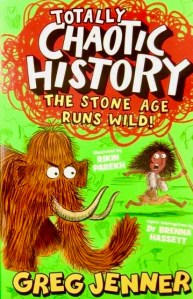
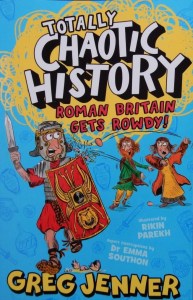
This cracker of a book will be of huge appeal to children who are interested in history in general and Ancient Egypt especially. For KS2 readers I recommend adding it to home, classroom and library bookshelves. With Roman Britain Gets Rowdy! coming in October, this promises to be a brilliant series.
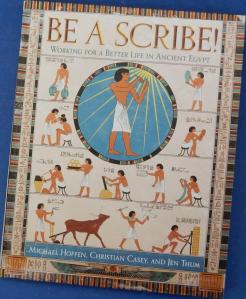
Be A Scribe!
Michael Hoffen, Dr Christian Casey and Dr Jen Thum
Callaway
With nothing much to do during the covid-19 pandemic, Michael Hoffen, a teenager in New York spent his time learning about Ancient Egypt and with valuable help from Dr Jen Thum, an Egyptologist and curator at the Harvard Art Museums, and teacher and mentor Dr Christian Casey, a postdoc at the Freie Universität Berlin. During regular meetings over the course of three and a half years, under the guidance of Dr Casey, Michael translated a work of ancient Egyptian literature, called ‘The Satire of the Trades’ and inspired by all he learned, he wrote the book, together with Dr Jen Thum.
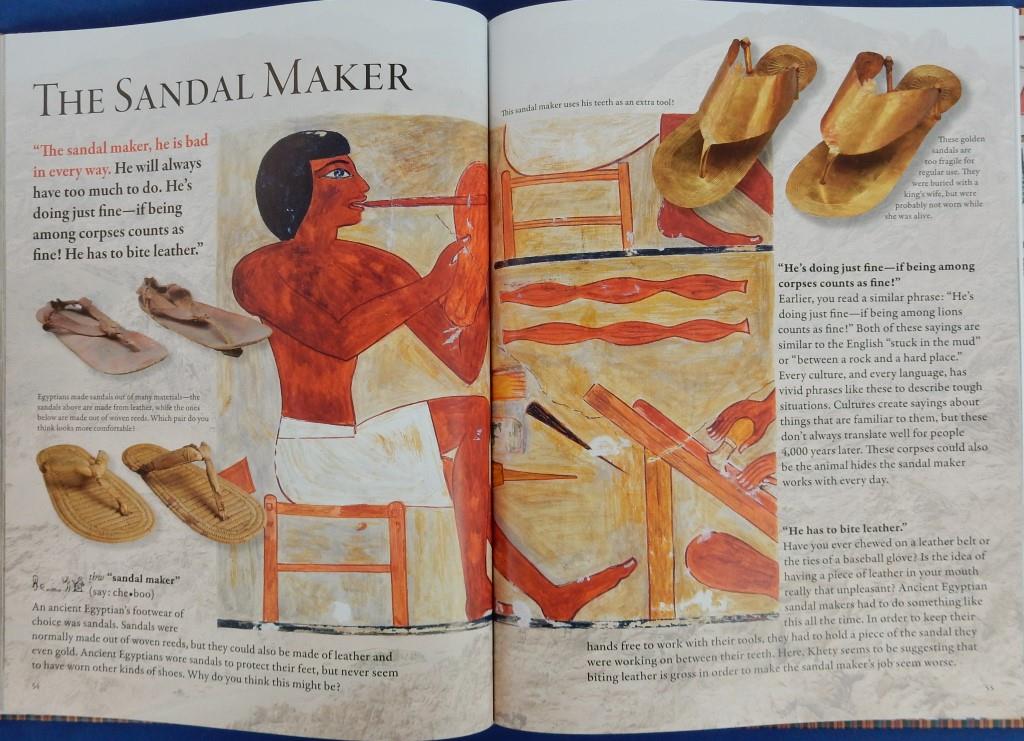
The narrative tells how a father, Khety, takes his son, Pepe, up the river Nile to a distant school so he can learn to read and write with the possibility of then being hired as a scribe in the royal court. The author uses photos of over a hundred real ancient Egyptian artefacts to help with the telling, giving readers fascinating information on such topics as the kinds of work people did and how this affects their lives – eighteen jobs are each given a detailed double spread.
In addition there’s a wealth of wisdom including such advice as ‘If you leave school at lunchtime and wander about in the street’s someone will punish you.’ The physical punishment of children was common in ancient Egyptian society.
Superbly produced, this is a book to add to primary collections and with the connection made to modern life throughout, it should appeal to history lovers as well as those studying ancient Egypt as a class history topic.


 Red Reading Hub - Jillrbennett's Reviews of Children's Books