Ice Journey of the Polar Bear

This addition to the excellent Protecting the Planet series is written by conservation biologist, Martin Jenkins. In this book, the author has deftly woven into his narrative the crucial importance of conservation: like those written by Nicola Davies, as well as a story, this is a rallying cry to youngsters to act as stewards for our precious plant and its wildlife now and for future generations.

Here we follow an adult polar bear as she undertakes an arduous and challenging journey
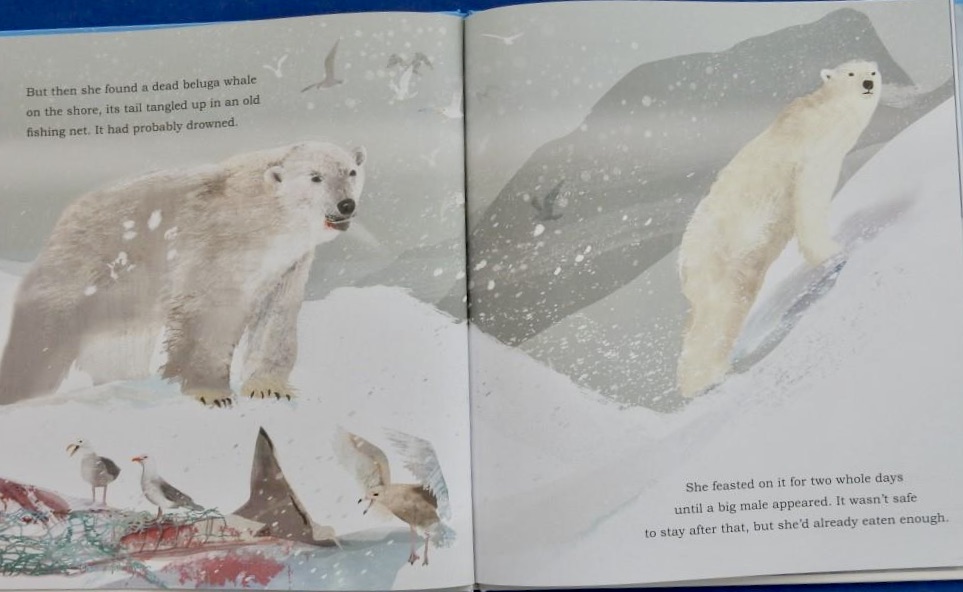
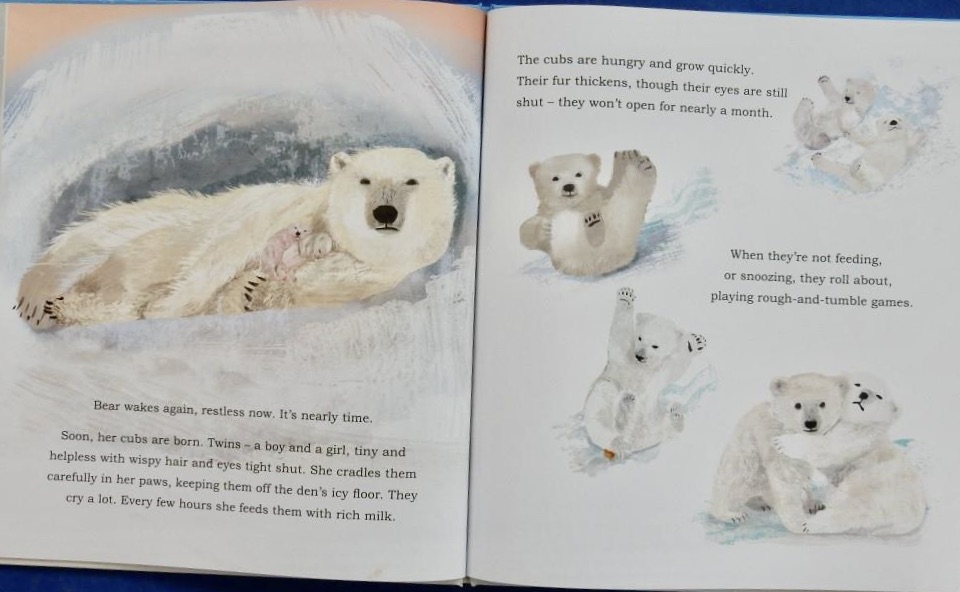
through a stunningly illustrated Arctic landscape during which she gives birth to twin cubs, one male, one female.
During her travels it becomes alarmingly evident to us, the readers, how climate change has negatively impacted, not only upon the polar bears but upon the Arctic environment. This means that the future for these cubs, which we hope will survive to become awesome animals like their mother, is an uncertain one.

As the author says in a note at the end of the story, ‘as the climate warms the bears are now spending more time on land than before. So far they seem to be coping and polar bear numbers are keeping quite steady, but as things get worse the population will probably start to decrease.’ This underscores the vital importance of our role as individuals and communities.

An important book to add to KS1/2 classroom collections and family bookshelves.

Antarctica

Antarctica
Karen Romano Young, illustrated by Angela Hsieh
What on Earth Books

This book was written by polar explorer, author, artist and much more, Karen Romana Young.
Immediately engaging, her writing is a combination of personal narrative and facts about people, fauna and flora and of course, the land itself, as she takes readers on a trip across the melting continent. We meet her fellow scientists working at Palmer Station and the author’s responses to some of the questions they posed, form part of the narrative including, ‘As the ice retreats and Antarctica warms, what will happen to the seed clouds and the rest of the Antarctic food chain?’

It’s truly alarming to read of the 80% drop in Antarctic krill in the last half century, on account of both global warming and overfishing of the krill, a source of food for penguins.

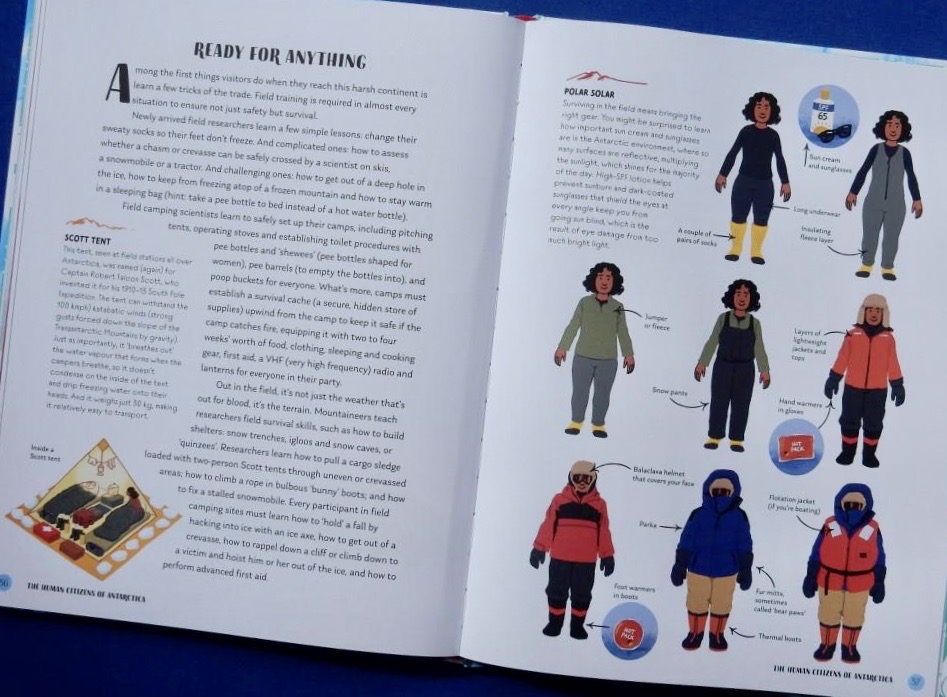
There’s information on the continent’s geological history, how visitors can get to Antarctica, how researchers manage to stay alive despite the extreme cold and testing terrain,

what happens at a research station, and a look at some of the recent scientific discoveries.

Amazingly a lot of animals do live in this, the world’s coldest, windiest and driest continent, most in or near to the sea: readers are introduced to some of these including nematodes and microscopic tardigrades (nicknamed I discovered herein, ‘water bears’). However if your interest is in the larger creatures, then you’ll be fascinated to read of polar gigantism, a phenomenon still puzzling scientists and which has resulted in massive jellyfish and colossal squid; even the krill here, which form the foundation of the Antarctic food chain, are twice the size of those anywhere else on Earth.

Angela Hsieh (who has also visited Antarctica) provides the illustrations – a helpful complement to the text – and there’s a final, glossary, some source notes and an index.

An excellent resource for youngsters (and others) with an interest in the location, climate change and biology.