The Ice Children

This image has an empty alt attribute; its file name is dscn9739-1.jpg


With echoes of Hans Christian Andersen’s The Snow Queen and Oscar Wilde’s The Selfish Giant, this magical fantasy from the author of Twitch and the Adventures on Trains series draws you in from its opening lines: ‘Once upon a warm winter, in the dawning darkness of December, a boy was found in the city rose garden. The boy looked like a statue. He was frozen solid.’ Said boy, Finn, the five year old brother of Bianca is wearing his pyjamas, his hair is full of icicles but he’s still alive – at least he has a heartbeat but nobody can wake him. Bianca is determined to find out what is going on. She soon suspects that the sparkling silver book he got from the library has something to do with it but the book has mysteriously disappeared.


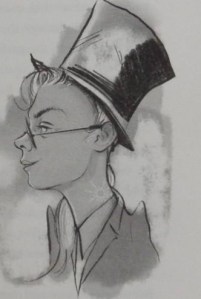
Now whereas one frozen child is indeed puzzling, with the number of ice children increasing day by day, it is imperative that the mystery is solved and Bianca knows it’s down to her to discover the truth. Who or what is behind the freezings? Could it be that strange tall cloaked man with a top hat and a triumphant smile?


This image has an empty alt attribute; its file name is dscn9740-1.jpg

Bianca’s quest takes her into a fantastical winter wonderland, full of beauty and danger where nothing is what it seems: a world splendidly depicted in Penny Neville-Lee’s black and white illustrations


This image has an empty alt attribute; its file name is dscn9741-1.jpg

Make yourself a hot chocolate, snuggle up in your hoodie blanket and prepare to be transported into a brilliantly imagined tale, at the heart of which is a vitally important message about climate change and global warming.

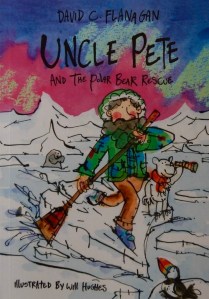
Uncle Pete and the Polar Bear Rescue

Uncle Pete and the Polar Bear Rescue
David C. Flanagan, illustrated by Will Hughes
Little Door Books

The third exciting adventure for Uncle Pete and his sidekick TM (Tiny Mouse) sees them preparing to undertake an expedition to the Arctic in the hope that they can reunite Berg, the little polar bear, with his family. Having gathered together all the crucial cold weather gear (and making the odd item such as miniature fleecy, bright red ‘jammies’ and a padded jacket for TM, not to mention a somewhat superfluous orange woollen scarf for Berg), Uncle Pete pours jars of stardust fuel into the plane and affixes a large pair of skis onto the wheels. They line the plane with hot water bottles, load the camping equipment and food and then they’re ready for take off.

When they arrive at the spot where Berg’s family were last ween, the snow and ice have melted and of polar bears, there is no sign. Uncle Pete explains to TM that the snow’s disappearance is because of the Earth’s temperature rising due to human action and they postpone further searching until the following morning. After supper the three travellers are thrilled to see the Northern Lights and they decide to sleep outside their tents to watch he dancing lights.

The following morning the friends have an encounter with a passing whale that seems to be trying to communicate something important to them.

Berg understands that it’s trying to say that his family have been taken by a ship.

Off they go to track it down and having located it, the three find themselves under fire from men with guns on board the sinister looking vessel. There follows a series of exciting and sometimes alarming incidents including the capture of TM by the ship’s evil captain, another encounter with the whale and, joy of joys, the emergence from the ocean of a wooden submarine crewed by their squirrel friends from the forest.

Then comes a temporary return to the forest , a journey through underground tunnels, the drawing up of a new rescue plan, a daring deliverance of the ship’s captives and a parting of the ways for Berg and his rescuers.

David Flanagan weaves the global warming issue through this latest compelling Uncle Pete fantasy which, with its themes of collaboration, kindness, determination and creative thinking, and Will Hughes splendidly quirky illustrations, makes a great read aloud as well as a solo read for those gaining confidence as independent readers.

Sona Sharma Very Best Big Sister / Agents of the Wild: Operation Icebeak

Here are two terrific young fiction titles from Walker Books

Sona Sharma Very Best Big Sister
Chitra Soundar, illustrated by Jen Khatun

Young Sona Sharma lives with her family in the Tamil Nadu city of Chennai.

As the story opens, she’s getting increasingly agitated about the forthcoming birth of a new baby sibling, an event about which the rest of her household and extended family seems obsessed. (It’s also one that children in a similar situation to Sona might find difficult adapting to).

Sona most definitely needs the sympathetic listening ear of Elephant, her best friend and constant companion (except at school). Everybody seems set on Amma having a baby boy and when talk of the naming ceremony comes up, Sona resolves to help her Appa find the perfect girl’s name (her Amma is ‘looking for boy names’ he tells her.) Nobody in the family is allowed to know if it’s a boy or girl until after the birth.

Even with this important task, sharing is still a big issue for young Sona: can it be resolved before the baby arrives?

Can Sona become the very best big sister and live up to that family motto ‘Iyavadhu Karavel’? (Always help as best you can.)

I totally fell in love with Sona and the rest of her family and community (how great to have a woman auto driver). Through Chitra’s absolutely gorgeous story of welcoming a new arrival into the hearts and home of a loving community, told from Sona’s perspective and beautiful line drawings by Jen Khatun, readers/listeners will encounter some of the traditions
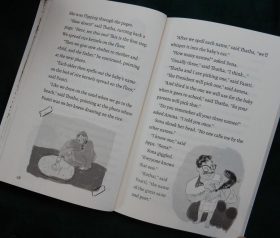
and rituals – cultural and familial – of this large Indian Hindu family which may well be new to them.
I can almost smell the jasmine and feel the steamy heat as I’m transported to one of my most favourite parts of the world – one I can’t wait to revisit once this terrible pandemic allows. Till then I have this warm-hearted tale to re-read over and over (until I can bear to pass it on). More please.
Agents of the Wild: Operation Icebeak
Jennifer Bell and Alice Lickens

Now permanent SPEARS field agents, Agnes and her partner Attie receive an emergency call and before you can say ‘penguins’ the two of them are disappearing down a speed funnel, destination Antarctica. It’s from there, sent by the team at the marine outpost, that the distress call came.
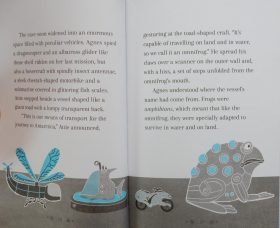
What is causing the seismic tremors being felt within and around the vicinity of the treatment centre, outpost 22? Why are all the Adelie penguins behaving in such an odd fashion? And, what on earth is the celebrity presenter and rare bird expert Cynthia Steelsharp, (one of Attie’s heroes) doing in a tent in the middle of the ice fields?

Moreover, why is she so interested in the little shrew’s trinoculars (that he’d needed to pass a two weeks training before being allowed to use in the field)?
Looks as though it’s a case of ‘operation species rescue’ for the SPEARS partnership (even though it may also mean an operation rescue of one of the pair).
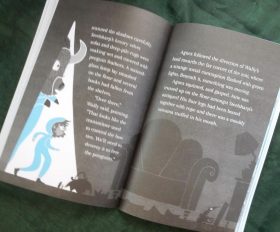
Once again, team Jennifer (author) and Alice (illustrator) successfully interweave ecology and biology into an exciting and very funny story making it both enormously entertaining and educative (not a hint of preachiness at all).

Established Agnes and Attie enthusiasts (and I know a fair number) will devour this, likely in a single sitting; but you don’t really need to have read the first book to love this one, though if you’ve missed it I’d recommend getting hold of book Operation Honeyhunt and then move on to Operation Icebeak.

If you’re a teacher of 7s to 9s and would like to encourage your children to become eco-warriors, either book makes an enormously enjoyable class read aloud. (Back-matter includes information about the fragility of the Antarctic ecosystem and how readers can help reduce global warming.)

A word of warning – two actually: first -never say the word ‘onesie’ to your partner, let alone one clad in a watertight thermal body suit with SPEARS emblazoned across it; second – it doesn’t always pay to trust little lizards with the ability to change their colour.

AstroNuts

AstroNuts
Jon Scieszka and Steven Weinberg
Chronicle Books

In this, the first book of what is to be a series, our narrator is planet Earth, yes that’s right Earth and it starts by taking readers back thirty one years to 1988 when, so we hear, in a secret lab. within Mount Rushmore two scientists working for NNASA (Not the National Aeronautics and Space Administration) built four super-powered animal astronauts designed to become activated should humans ever come near to destroying their home planet. Their role would be to travel through outer space in search of a new ‘Goldilocks Planet’ (not too hot, not too cold, but just right for human habitation).

That catastrophic time now has come, so let’s meet the AstroNuts – fearless leader AlphaWolf, along with SmartHawk the super-organised planner, electromagnetic LaserShark – protector and food finder, and StinkBug -as they blast off in their secret craft.

Having travelled 39 light-years in less than 3½ hours they crash land their rocket on Plant Planet.

This place certainly does have a super-abundance of lush vegetation. But it turns out that these plants aren’t the mindless flora the AstroNuts first thought. And yes, there’s food aplenty; shelter building potential – well maybe,

but a balanced ecosystem? Seemingly not. But are those inhabitants actually friend or foe? Don’t miss the fold-out feature.

This is a clever mix of science and laugh-out loud bonkerness.

What better way to put across the climate change message and along the way impart a considerable amount of biological and chemical information, than with this heady concoction of Scieszka’s irresistible verbal playfulness and Weinberg’s clever digital collages constructed in part from images from the Rijksmuseum in Amsterdam.

Leaf

Leaf
Sandra Dieckmann
Flying Eye Books
Sandra Dieckmann’s love of the natural world shines right out at you from the arresting cover of her debut picture book.
It opens with a ‘strange white creature’ on an ice floe drifting shoreward upon dark and brooding waters, watched by a large black crow. Once ashore, the polar bear makes its home in a deserted hillside cave: an outsider watched and distrusted by the forest animals. It forages for leaves, watchful, wary; and the residents bestow upon it the name Leaf on account of its strange behaviour, but equally because they want rid of him. They all talk about Leaf but none dares talk to him.

And so it goes on until one day leaf- clad, the bear charges through the forest astonishing all that see, and launches himself, from the hillside and plunges into the lake below.
While the soaking creature hides once more in his cave, the other animals meet to discuss what to do. Conflicting opinions emerge, (only the crows speak for him) with the result that they do nothing.
Leaf meanwhile renews his determination to take flight, this time from a cliff …

and once he’s safely back on shore, the crows – intelligent beings that they are – finally allow him to speak. And speak he does – to them all – about melting ice and his desire to return to his family.
As conveyors of mood and movement, Sandra Dieckmann’s illustrations are impressive.

Executed in black, white, greys, blues and teals with occasional stand out splashes of red, orange, rust, yellow and the greens of the patterned leaves and flowering plants, the landscape portrayed is at once beautiful and at times, hostile.
It’s said in folklore that crows are harbingers of change: I’d like to think that those in Leaf’s story might act as symbols of a positive change in the way outsiders are viewed by too many of us. With themes that include global warming, outsiders, prejudice, loneliness and reaching out to others, this poignantly beautiful book is both topical and timely.

I’ve signed the charter