Sunflower Shoots and Muddy Boots

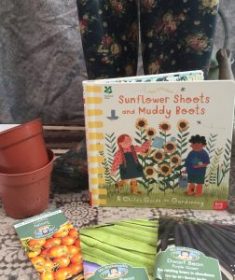
Sunflower Shoots and Muddy Boots
Katherine Hallligan and Grace Easton
Nosy Crow

Published in collaboration with the National Trust this is a super introduction to gardening for youngsters no matter whether they have available a large outdoor space or a tiny one.

In a dozen spreads author Katherine Halligan includes pretty much everything you need to know when starting out as a gardener, from the kinds of plants that are easy to grow; making an indoor garden (you might use welly boots or old suspended hats);

constructing a garden den; composting, tasty things such as radishes that can be grown in a variety of containers, and raspberries, that need more space.

Also included are ways to deter pests by gardening organically; encouraging desirable wildlife such as birds and butterflies by planting some trees

and/or sowing wild flower seeds. There’s a page on the kind of gear you’ll need, another on safety, one on pressing flowers and a final page of tips for adults.

Each spread is highly visual and there are instructional paragraphs, tips, ‘did you know?’ questions; appropriately placed lists of what’s needed for individual projects, as well as a list of useful gardening definitions.

Bursting with ideas, activities and facts to get children interested, with its wipe-clean pages, and Grace Easton’s eye-catching illustrations, this is a book to use at home, in a nursery/early years setting or a school gardening club.

Plant, Sow, Make & Grow

Plant, Sow, Make & Grow
Esther Coombs
Button Books

Absolutely bursting with helpful gardening information whatever the season (the book is divided into four seasonal sections), the enthusiastic author, who started a gardening club at her daughter’s primary school and still runs it, has created a super book that introduces children to the wealth of opportunities being involved in a gardening project offers.

Before the seasonal sections, readers learn what the essentials are to get started, including the idea of creating a planting plan – all vital if you’re to make a success of your garden. Re-using and recycling are a part of the former and I like the idea of using loo rolls to make seed pots (I’ve frequently cut the tops from cardboard milk cartons but never tried this idea before).

Spring seed growing suggestions include salad leaves, tomatoes

potatoes, strawberries (the purchase of a few small plants initially is suggested here), root vegetables such as carrots and beetroot, peas and sweetcorn make up the edible kinds. Growing some flower seeds is also suggested because flowers will attract pollinators to your veg patch.
Then come a page on thinning out seedlings and another on wildlife – good and not good.

The summer section focuses on pumpkin growing, companion planting and lots of ideas for making useful items including a hanging-bottle container for tomatoes, a protective cover for strawberries, a watering can out of a screw top plastic bottle, as well as some creative activities, the suggestion of measuring some of the especially tall-growing plants

and some bee-related info. Then of course, there’s the important ‘summer harvest’.

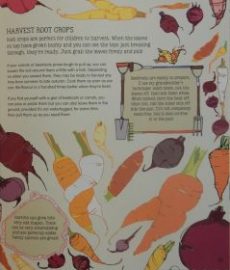
Autumn is the season when much is ready for harvesting: sweetcorn, potatoes, root crops should all offer rich pickings and diggings at this time.

Compost, potting on strawberries, harvesting wild flower seeds, carving a pumpkin, creating a seasonal wreath and a bug home are also covered in this section.

Winter is the shortest section and again it’s packed with great tips such as saving seeds to plant the following year as well as stems for next year’s canes; creating a bird feeder from a sunflower head and more.

Motivating and thoroughly down to earth, this alluringly illustrated book is one I wholeheartedly recommend for school and home.