These are two quirky books from Prestel – thanks to the publisher for sending them for review

Where is Everyone?
Tom Schamp
Prestel
Herein Tom Schamp invites little ones to discover the unexpected in the expected as they lift the flaps to find what is hiding beneath in turn the bushes, a toadstool, a small car,

a washing machine, a fridge, a toaster, a cup and saucer, a sofa, a toilet, a sink, a bath, a bed, a gift-wrapped box and a tiered decorated cake. The text on each page comprises a ‘who question’ and the answer hidden under the flap – a peacock, Puss in Boots or a tortoise raring to go, for instance.
Now who would expect to find a racoon inside the washing machine or a hamster getting rather heated in the toaster? And I suspect nobody would anticipate there being a monkey on a surfboard lurking behind that cup containing that cuppa, nor a napping camel tucked away behind that comfy couch.
Full of whimsical ideas, this playful board book with its duck commentator surely will encourage youngsters to go beyond the information given and look at things with a fresh, creative mind and eye.

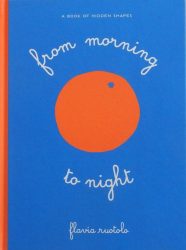
The Day Time Stopped
Flavia Ruotolo
If you’ve ever stopped to wonder what your friend in another part of the world is doing right now, perhaps because you want to call them on your mobile, then here’s a fun book for you.
The young narrator who happens to be in Genoa, Italy is just taking her first bite from an ice-lolly (she calls it a popsicle) at 5:33pm her time when inexplicably, time stops.
At that exact time in another part of Europe – Berlin – Selma and Nora bring their scooter to a sudden halt – just in time to prevent a small creature getting run over.
In La Paz (Bolivia) however it’s 12.33pm and Rosa’s grandmother has just finished knitting a sweater while in New York City two children discover their tube of toothpaste is empty – it’s 11.33 am their time.

At that moment too Kimo’s underwear pings off the washing line in Port Moresby (Papua New Guinea) where the time is 2:33am and in Sapporo, Japan Yuki’s cat is woken by a noise. (The clock there would say 1:33am).
Concurrently, Makena, way off in Nairobi proudly shows her first ever self portrait to her dad, the time there being 7:33pm; whereas in Maurituis’s Port Louis it’s 8:33pm and Carl the canary wants his dinner.

And so on …
Then, suddenly time restarts and things seem normal once more: now for our narrator back in Genoa, it’s 5:34pm.
Flavia Ruotolo’s seemingly simple playful presentation of people, animals and their activities is essentially a philosophical reflection on the notion of time and place that takes readers across two dozen time zones and on a lightning visit to twenty six countries. These are shown on a world map on the penultimate spread and the book concludes with an explanation of why it isn’t the same time the world over.


 Red Reading Hub - Jillrbennett's Reviews of Children's Books