Celebrate!

This image has an empty alt attribute; its file name is dscn9748-1.jpg


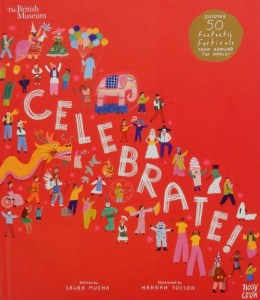
Wow! What a massive and challenging undertaking to research and present fifty festivals and celebrations from all over the world. This is what writer Laura and illustrator Hannah have done, in collaboration with the British Museum.


By bringing people together, festivals help create a sense of belonging – of being connected – be that to a country, a religion, a family or another group with a shared interest. The first nine festivals in this book are celebrated all over the world, so next time you participate in Diwali or Christmas festivities for example, think how many others all over the globe are doing so too.


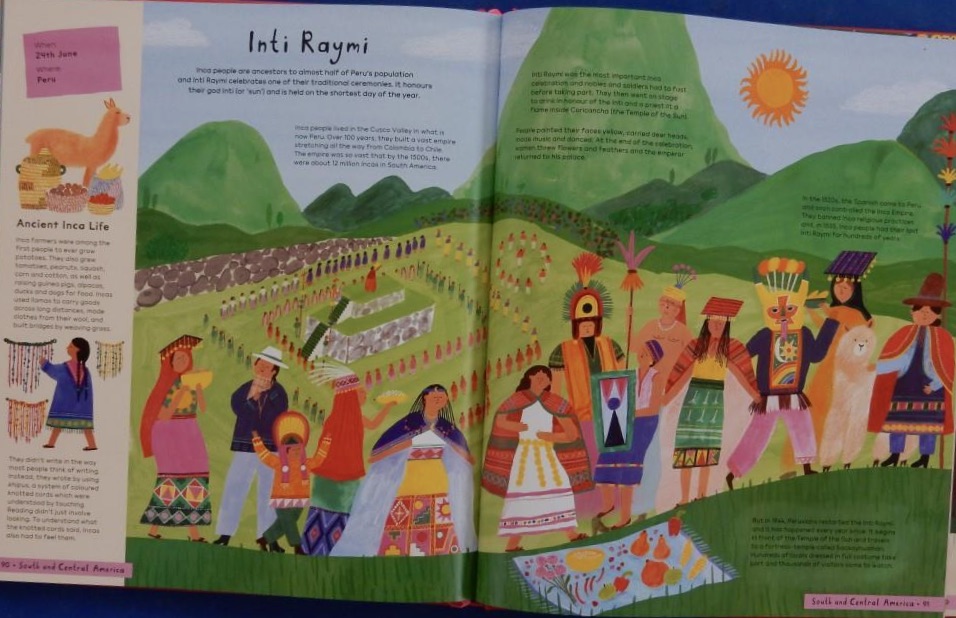
Then come ten celebrated in different European countries, followed by in turn seven in parts of the African continent, six in countries of Asia, the same number in North America. We learn of nine celebrated in countries of South and Central America. Inti Raymi is when the Inca people of Peru, many with their faces painted yellow, honour Inti (their sun god) by making music and dancing.

This image has an empty alt attribute; its file name is dscn9750-1.jpg

The final three we’re introduced to are observed in countries of Oceania.


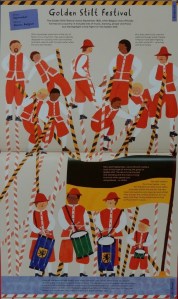
During my travels to India I’ve participated in quite a lot of festivals, mainly Hindu ones, at various times of the year, and have also enjoyed being an onlooker at secular and religious festivals there and in other parts of the world. However, I was fascinated to learn of a fair number that were new to me: it’s great to discover new rituals, celebratory dress, dance and music. One such is the Golden Stilt Festival that marks 30th September 1830 when Belgium officially became a country. Its highlight is the Fight for the Golden Stilt.
This image has an empty alt attribute; its file name is dscn9749-1.jpg


With her vibrant scenes, Hannah Tolson’s illustrations really help bring each celebration to life on the page. She does so in such a way that readers are likely to notice different details each time they revisit the book.
Celebrate With Me!

Celebrate With Me!
ed. Laura Gladwin, illustrated by Dawn M. Cardona
Magic Cat

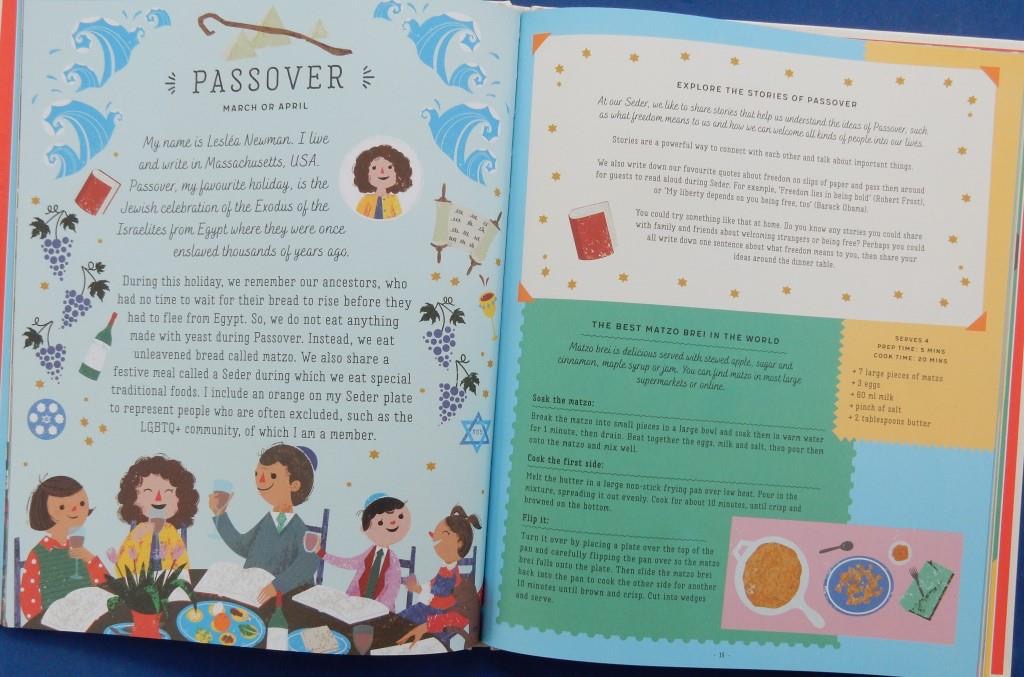
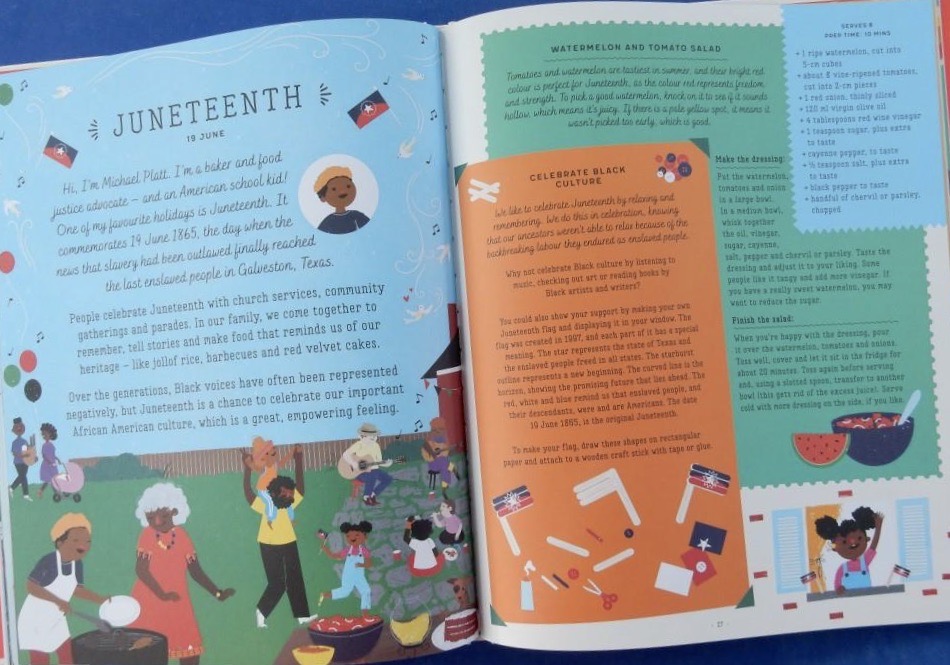
Twenty five creative people including chefs, artists, storytellers and designers from various parts of the world, have a double spread in which to present their favourite festival. Each person provides an introduction telling what makes their chosen festival special for them. Some festivals have a fixed date and others vary each year and the book starts with New Year’s Day and closes with New Year’s Eve. It introduces readers to some of the less frequently mentioned festivals and celebrations as well as presenting some that are well-known including Diwali, Eid-Al-Fitr and Easter. I had not come across Juneteenth before reading baker and food justice advocate, Michael Platt’s spread on the celebration.

Since food is such an important festival component, every one includes a recipe (to be used under adult supervision) – some are sweet, others savoury – as well as an art/craft activity, a story, song, game or something else that for each presenter, is part and parcel of their personal way of celebrating.

The book concludes with a look at some birthday traditions around the world and a spread suggesting readers ask those they know some festival related questions.

Diversity is key in this invitingly illustrated book. It’s a great way to learn about a variety of cultures and to help readers feel connected to the cycle of the year and to other people.

We All Celebrate

We All Celebrate
Chitra Soundar and Jenny Bloomfield
Tiny Owl

Probably somewhere in the world, no matter the month or the date, there will be people celebrating something or somebody, a birthday perhaps. This insightful book acknowledges that and introduces young readers to some of the less often mentioned festivals and celebrations from around the world, as well as presenting some that are well known such as Deepavali and Christmas.

Chitra Soundar uses both a global and a seasonal approach that starts with people wishing one another ‘Happy New Year’. and perhaps if they’re living in parts of Canada, jumping into the chilly sea doing the ‘Polar Bear Plunge’. However not all calendars begin on January 1st. Nowruz – the Persian New Year – celebrated in many countries including Iran, Tajikistan, Afghanistan and Turkmenistan is in March.

I think we all welcome the arrival of spring when we can begin to cast off our heavy winter clothes and blossoms start to burst forth. Blossoms – in particular those of the cherry trees or sakura – are a cause for celebration in Japan where people gather together for Hanami under the trees all pink with delicate sakura.

In contrast in India, the spring festival of Holi is anything but a quiet occasion to appreciate nature; it’s a time to join the throngs in the streets throwing coloured powder and water, and dancing to loud music. When in India at Holi, I hide away as I break out in a rash if I get the powder on my skin.

Summer, especially midsummer is another cause for celebration; I learned from this book that in Sweden families get together in the countryside and parks where they make garlands of flowers, adorn a maypole and dance around it, as well as feasting.
Sometimes the first day when Muslims celebrate the breaking of their Ramadan fast, Eid-al-Fitr, falls in the summer: Chitra devotes a double spread to fasting. giving brief details of some other fast days for other religious traditions.

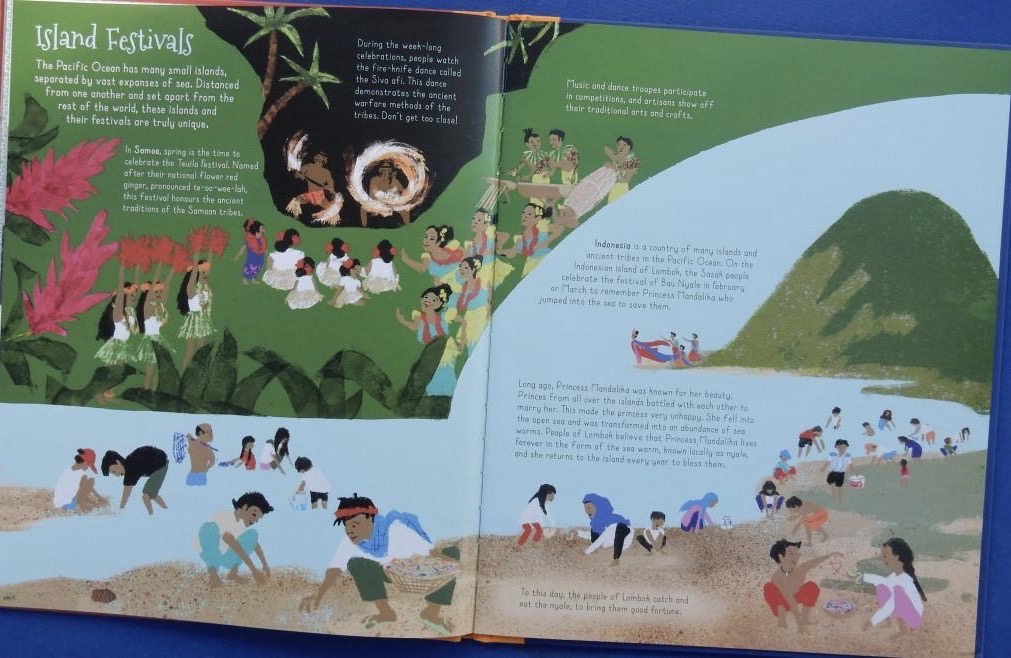
No matter the time of year, food, music and dancing often play a big part in celebrations. It’s certainly true for carnivals and for some Pacific Ocean island festivals.

Autumn seems to be a time for honouring dead ancestors; people do so in South East Asia and in Mexico.

Strangely for UK readers, people in Peru celebrate the winter solstice (Inti Raymi) in mid June. Much more associated with winter is the Jewish festival of Chanukah celebrated over eight days and nights.

It’s important to remember, as Chitra reminds readers on the final spread, that like humans, celebrations change and evolve over time, but despite our differences, everybody celebrates.

Debuting as a picture book illustrator, Jenny Bloomfield’s vibrant, detailed spreads really do evoke the spirit of the celebrations.

Definitely a book for school collections and topic boxes.