Kids Can Cook Around the World

With its enticing cover, this sturdy hardback introduces children to dishes both sweet and savoury from around the world.
Before the recipes there’s a short ‘Before You Begin’ section that talks about safety, equipment and basic techniques. Thereafter come the recipes themselves, the world in this book being divided into five areas: North and South America, Europe, Africa and the Middle East, Asia, and Australia and New Zealand, each of which has an introductory spread with interesting facts about the food. I was surprised to read that ‘Coca Cola was invented in North America, originally as a medicinal drink’, that there are over 350 different kinds of pasta and that there are more than 1,000 different types of cheese in France.

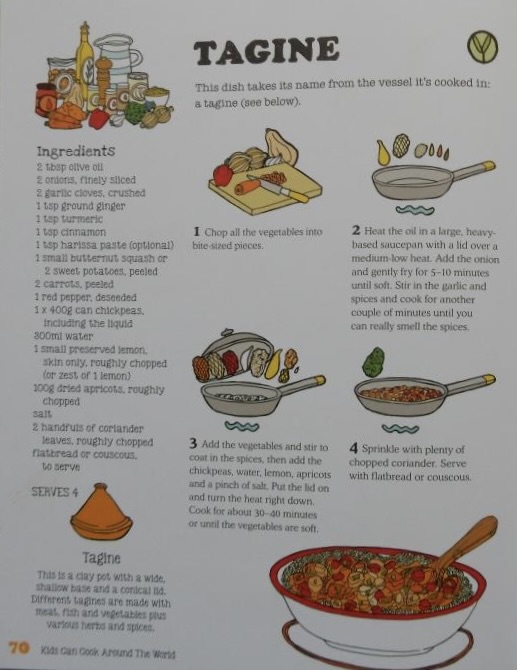
A fair few of the dishes will be familiar depending to some extent both on how open you are to trying cuisine from various parts of the globe and how well travelled you are. You will certainly find some mouth-watering selections including madeleines, a vegetable tagine

and I’m eager to try making koshari. All recipes have step-by-step instructions with visuals alongside each step and the number of servings each makes.

My only quibble about the book is that there aren’t many vegan recipes but that’s a personal thing and doesn’t stop me recommending it as a very useful one to help youngsters develop their cooking skills.

100 Forest School Activities / Bird, Bee & Bug Houses

Team Naomi and Dan, who run Outback2Basics, bring their ardour for the outdoors to the pages of another book.

Forest School should be part and parcel of the curriculum for every primary school child and the activities herein offer a wide range of ways to get youngsters connecting with the natural world.
It’s divided into five main sections, the first being Connecting With Nature. I particularly like something I’ve not tried before – making a camouflage cape. It will involve some cutting and sewing so make sure you check the ‘You Will Need’ list before setting out.
Chapter two Fire, Food and Shelter has more than ten food-related suggestions including making feta rolls, which sound tasty and something I plan to try.
Decorating leaves as per the instructions for one of the Nature Crafts is a creative idea that has lots of potential and once decorated said leaves can then be used to make for instance, greetings cards, a mobile or leafy butterflies. Another leafy possibility is to mould a leaf bowl using air dry clay and it can be done during any season of the year.
It’s great to see that most of the Games in the section of the same name are designed to get children working co-operatively and who wouldn’t want to try creating a ‘twiggy owl’.

There’s a template given at the back of the book but children might like to create a much larger owl so they could start by drawing their own template. Equally delightful is the leaf bat also made from sticks and leaves. All members of your forest school group could then leave one leaf bat dangling somewhere to create a collaborative display.
Before the five chapters are an introductory spread, followed by some general practical information including safety preparation, basic knots and vital pages about knives and fire.

Teachers and others working with children, this latest book by the Walmsleys is well worth adding to your resources.

Our local community-built forest play area for young children contains two bug hotels. Little humans and their carers who may be inspired to open heir own establishments would do well to get hold of a copy of this enticingly illustrated book. Therein are practical, clear instructions on how to do so, as well as a dozen or so other projects to help and encourage wild-life from birds to beetles, bats to butterflies.
Some projects such as making a bird box or a bat house

will need considerable adult involvement but others, a bird bath, a butterfly puddle area or a mini meadow for instance, require minimal adult intervention. Alongside the projects there are spreads with useful factual information relating to terminology and about some of the creatures likely to be encountered including owls, bats and frogs.
Esther Coombs supplies clear visual support and relevant illustrations of the animals. Backmatter includes a glossary and lists some conservation websites.

My First Baking Book / Kids Can Cook Vegetarian

My First Baking Book
David Atherton, illustrated by Harry Woodgate
Walker Books

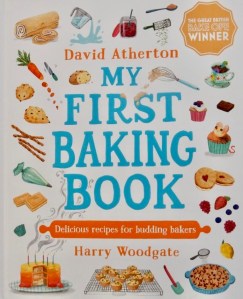
Great British Bake Off winner David Atherton has a new cookery book for young cooks and it’s bursting with exciting recipes, each with a healthy twist. It’s divided into five sections – breads, cakes, sweet biscuits and bites, pastries and finally, some extra special ‘showstoppers’ but first of all David offers users some helpful tips, ‘tricks’, a few facts and an equipment list.

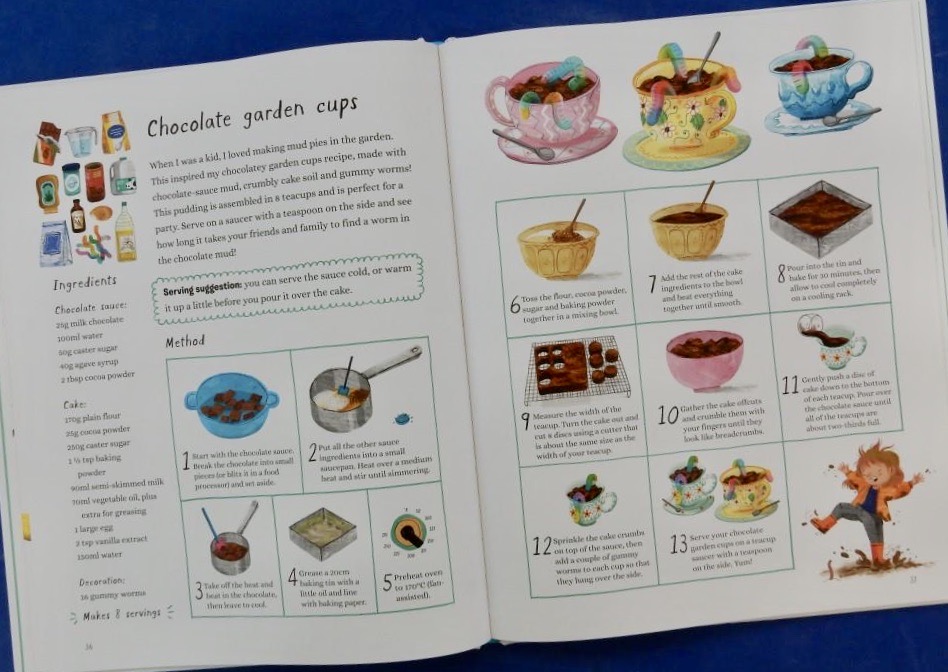
I’ve certainly never thought of baking a loaf in a flowerpot but this is one of the ideas in the bread section and it was interesting to find chocolate chip buns in the same section – a recipe to try when I have young relations staying; that’s if I can tempt them way from all the alluring cakes in this book. The chocolate garden cups remind me of when we visit Udaipur, Rajasthan where the owner of our favourite cafe would quickly rustle up chocolate cup cakes (sans gummy worms) for us when they’d run out of the pre-baked ones. I think those were cooked actually in the cups rather than a baking tin like they are in David’s recipe.

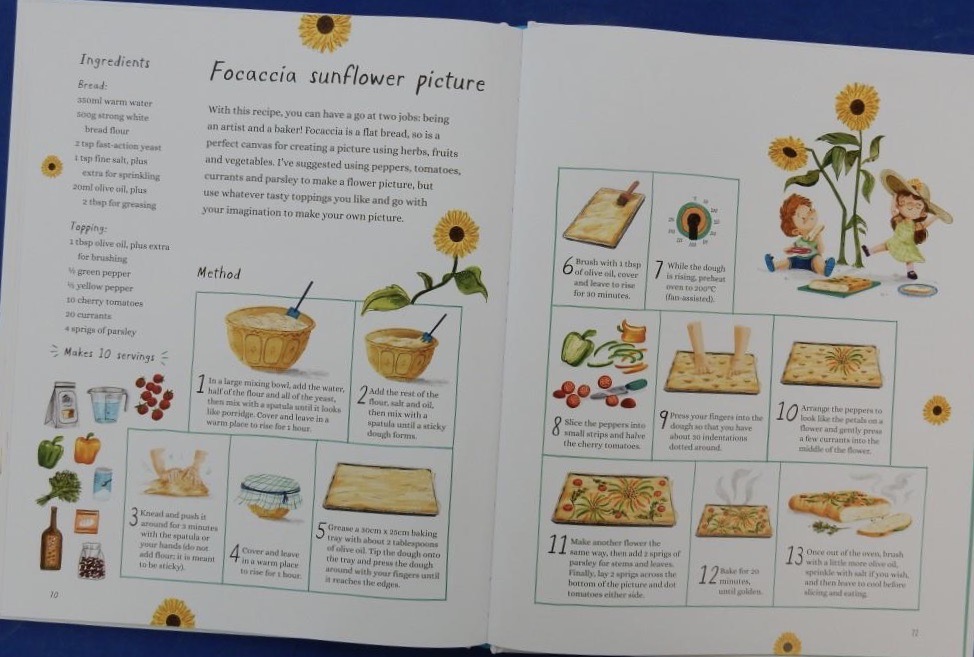
My very favourite idea is the show stopping focaccia sunflower picture. This is actually a flatbread that looks like a work of art in Harry Woodgate’s illustrations. It’s the perfect thing to offer any Ukranian guests you might be hosting, or to bake with a primary school class where there are Ukranian children.

As with his previous books David puts exciting, creative twists on baked goodies that might otherwise seem relatively ordinary and there are plenty of those in this book, each one clearly and alluringly illustrated by Harry Woodgate.

Kids Can Cook Vegetarian
illustrated by Esther Coombs
Button Books

Comprising an introduction giving information on safety, equipment and basic techniques and more than thirty recipes divided into three sections, this is for a vegan like myself, a very welcome addition to the Kids Can cooking series.

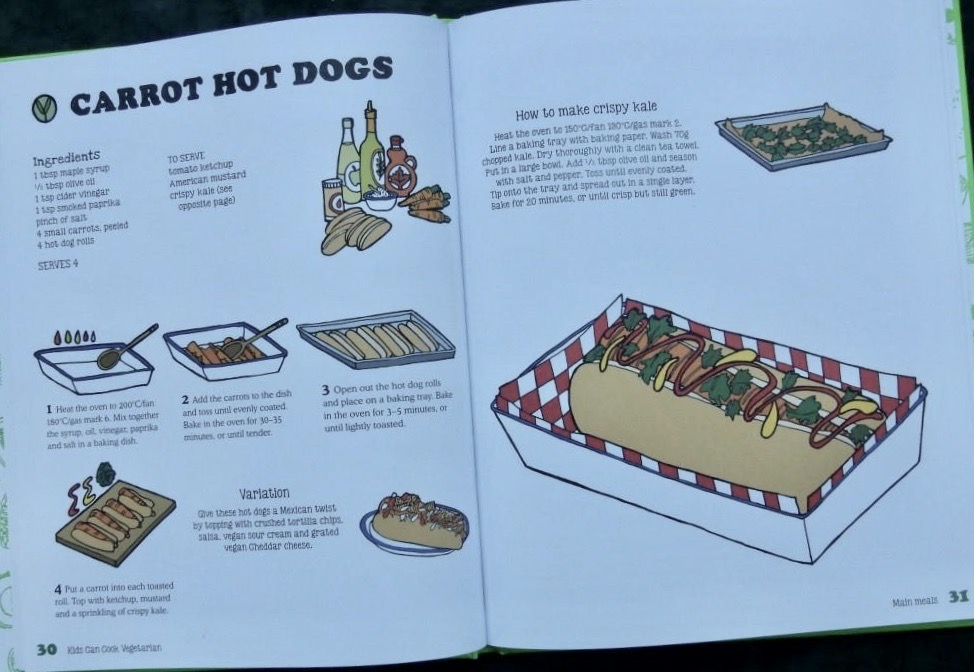
First come the ‘snacks and sides’ – savoury treats and three dips. Main meals is the largest part and includes breakfast burritos, falafels – my mouth is already watering at the prospect of making these, a yummy sounding roasted vegetable bowl, bean burgers and carrot hot dogs – now there’s another great idea. 

For those with a penchant for pasta, several of the recipes in this section include some kind of pasta, though I rather like the thought of courgetti, which looks like a noodle dish but uses long thin strips of courgette. This is definitely going on my list to try.

There are six ‘sweet treats’, two of which are for pancakes (blueberry and banana) but the recipe that is top of my must make treat list is the courgette brownies.

With easy to follow, step by step instructions for each recipe, illustrated by Esther Coombs, this book offers hours of fun in the kitchen (under the watchful eye of an adult) and an assortment of goodies to look forward to consuming. Wash those hands, put on your apron and off you go.
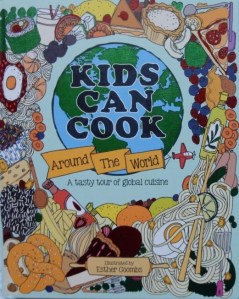
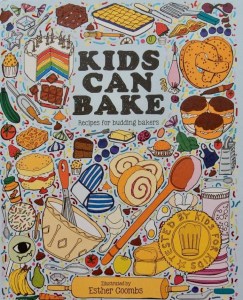
Kids Can Bake

Kids Can Bake
illustrated by Esther Coombs
Button Books

Following on from Kids Can Cook comes another colourful book of step-by-step recipes for youngsters (under adult supervision of course). During the past eighteen months and especially during lockdowns lots of people turned to cooking, becoming enthusiastic about it and although we’re not under such restrictions now people’s enthusiasm for home cooking remains high, especially with so many cooking programmes on TV at the moment, so this is a timely publication

After the safety precautions, visual list of equipment and of some basic techniques; the book is divided into sections – Bread, Pizza & savoury snacks, Pies & tarts,

Cookies & other sweet treats, Cakes, cupcakes & muffins, Bars & tray bakes, Desserts and finally, Cake toppings.

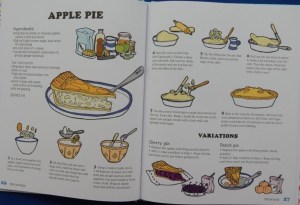
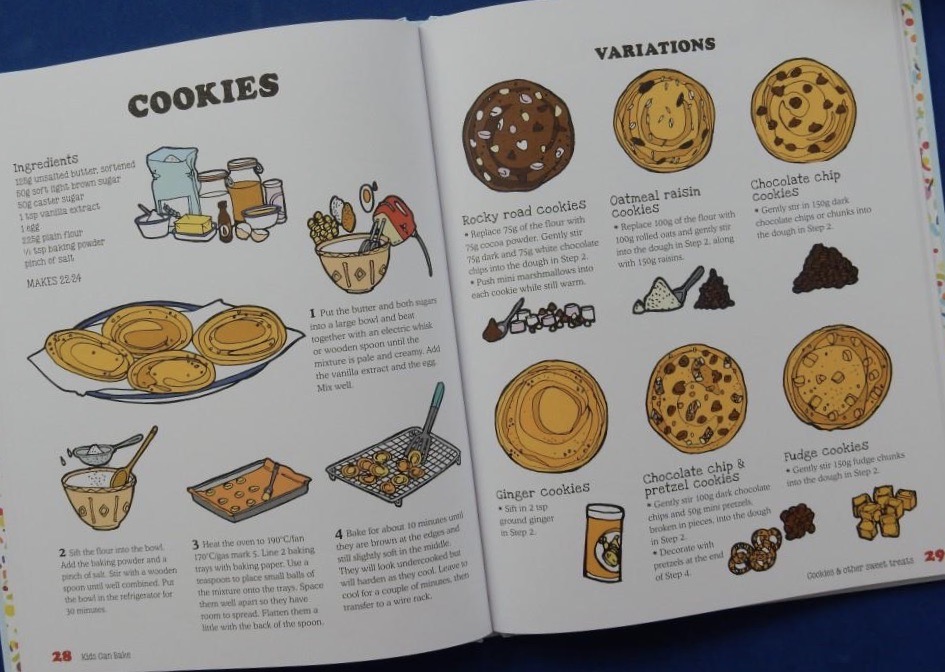
There are alluringly illustrated instructions for making such things as soft pretzels and cornbread; many people’s favourite – pizza (choose your own additional toppings) and mini vegetable quiches; apple pie (and variations), cookies (with options for half a dozen different varieties),

as well as Swiss roll and several other family favourites. If your preference is perhaps for brownies or flapjacks, you’ll find recipes for those too. I’m going to try some vegan substitutes for the butter and other dairy ingredients.

With Christmas approaching all too fast, why not buy this for a child now and suggest they dip in and practice that yummy-looking marble cake or even the rainbow cake, so it can be offered instead of the traditional Christmas cake; and some of the other sweet delights such as caramel shortbread would make a good gift for a friend or relation.

Kids Can Cook

Kids Can Cook
illustrated by Esther Coombs
Button Books

During the lockdown period many more people have taken to cooking, be they adults or adults and children together. If you’re looking for an introduction to cooking then this is a good starting point. Similar in style to Plant, Sow, Make & Grow, it’s very visual and really does get down to the basics with techniques such as how to crack an egg, how to beat it and how to test if a cake is cooked.

Before any of that however comes a contents page, a vital page of safety instructions and another showing and listing essential equipment for the recipes included.

The main part of the book has three sections – Breakfasts, snacks and breads; Main meals and sauces, and Sweet treats.

All the recipes are straightforward starting with a list of ingredients, are clearly illustrated and provide step-by-step instructions.

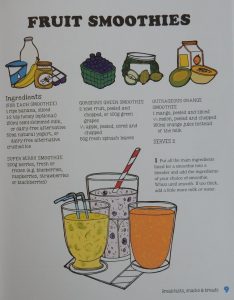
A word of caution however, if you’re a vegan family then some of the recipes won’t work for you unless you adapt them; but in other cases vegan alternatives are suggested. For example in ‘Breakfasts, snacks and breads’ the fruit smoothies,

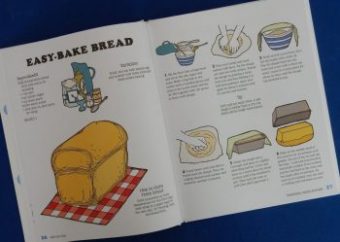
tofu skewers and the easy-bake bread are definitely suitable

and the veggie sliders in the second section are really tasty. However, no self-respecting Indian cook would tell you they are serving up ‘Curry’ as such – veggie or otherwise.

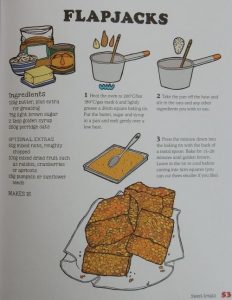
I have to admit that my favourite section is the ‘Sweet treats’, which includes fruit lollies and scrummy flapjacks (I’d want to use a non-dairy spread instead of the butter though).

If you’re currently home schooling Kids Can Cook ticks a lot of educational boxes: there’s maths in the weighing, measuring and counting; science, and of course, literacy, not forgetting fine motor skills such as pouring, kneading, chopping, whisking, rolling out and more.

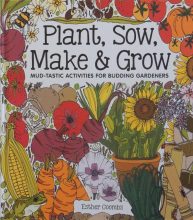
Plant, Sow, Make & Grow

Plant, Sow, Make & Grow
Esther Coombs
Button Books

Absolutely bursting with helpful gardening information whatever the season (the book is divided into four seasonal sections), the enthusiastic author, who started a gardening club at her daughter’s primary school and still runs it, has created a super book that introduces children to the wealth of opportunities being involved in a gardening project offers.

Before the seasonal sections, readers learn what the essentials are to get started, including the idea of creating a planting plan – all vital if you’re to make a success of your garden. Re-using and recycling are a part of the former and I like the idea of using loo rolls to make seed pots (I’ve frequently cut the tops from cardboard milk cartons but never tried this idea before).

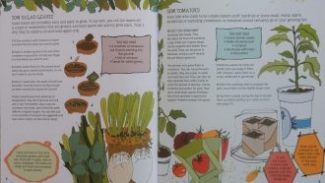
Spring seed growing suggestions include salad leaves, tomatoes

potatoes, strawberries (the purchase of a few small plants initially is suggested here), root vegetables such as carrots and beetroot, peas and sweetcorn make up the edible kinds. Growing some flower seeds is also suggested because flowers will attract pollinators to your veg patch.
Then come a page on thinning out seedlings and another on wildlife – good and not good.

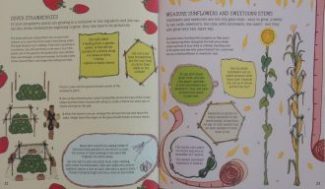
The summer section focuses on pumpkin growing, companion planting and lots of ideas for making useful items including a hanging-bottle container for tomatoes, a protective cover for strawberries, a watering can out of a screw top plastic bottle, as well as some creative activities, the suggestion of measuring some of the especially tall-growing plants

and some bee-related info. Then of course, there’s the important ‘summer harvest’.

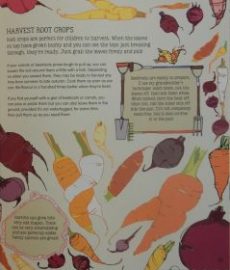
Autumn is the season when much is ready for harvesting: sweetcorn, potatoes, root crops should all offer rich pickings and diggings at this time.

Compost, potting on strawberries, harvesting wild flower seeds, carving a pumpkin, creating a seasonal wreath and a bug home are also covered in this section.

Winter is the shortest section and again it’s packed with great tips such as saving seeds to plant the following year as well as stems for next year’s canes; creating a bird feeder from a sunflower head and more.

Motivating and thoroughly down to earth, this alluringly illustrated book is one I wholeheartedly recommend for school and home.