Politics

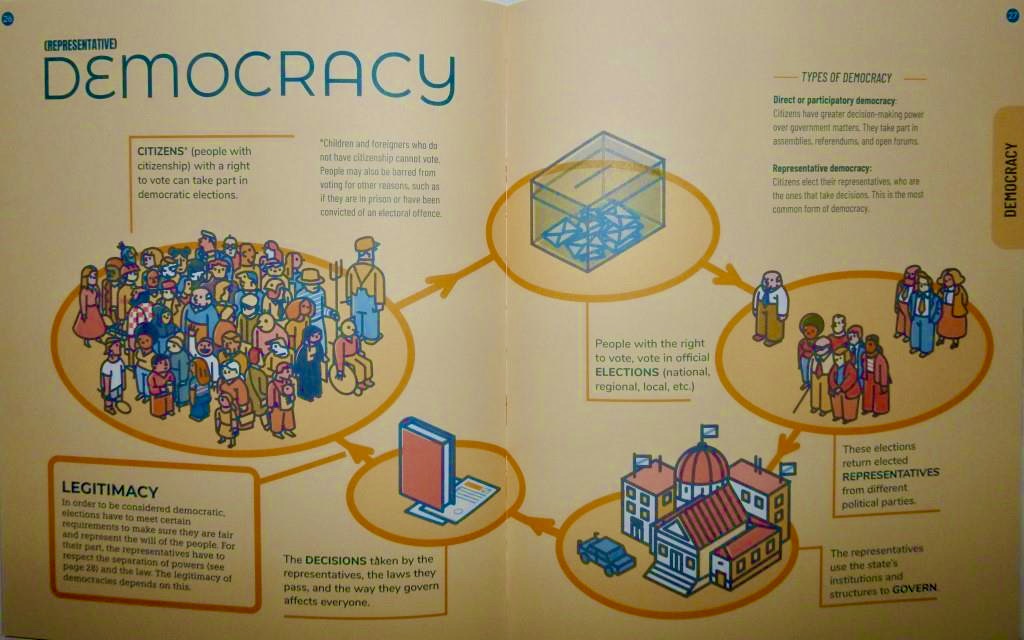
In the latest of this excellent series, Eduard Altarriba guides readers through what can often be a confusing topic and not only for younger readers. Questions including What is power? Who has it and how do communities govern themselves? are explained in a step-by-step manner. There’s also a look at the origins of political thought, democracy

and forms of government going right back to Ancient Greece. What is democracy, what is the best form of government and how does a government operate are also covered, as is what are the responsibilities of a government, left and right politics, majority governments and coalitions

Corruption and Populism too are discussed and the book poses a What would you do question on the final spread. Readers are asked to don the hat of mayor of a town where a multinational company wants to build a factory on land very near the river.

Clearly and concisely presented using infographics and diagrams this is an illuminating introduction to a vital topic relating to how the world works for Y6 readers and beyond, adults included. Teachers will find class discussion topics aplenty here too.

My First Book of Evolution

The stellar pair, author Sheddad Kaid-Salah Ferrón and illustrator Eduard Altarriba present another important STEM topic – how all life came to exist.

Starting close to home, there are pages that look at both the family tree and the tree of life, the latter being defined as ‘the family tree of all living things that have ever lived on Earth.’ Then comes a spread on species comprising a definition and examples, mentioning that the definition doesn’t actually apply to everything in the natural world, including many bacteria.

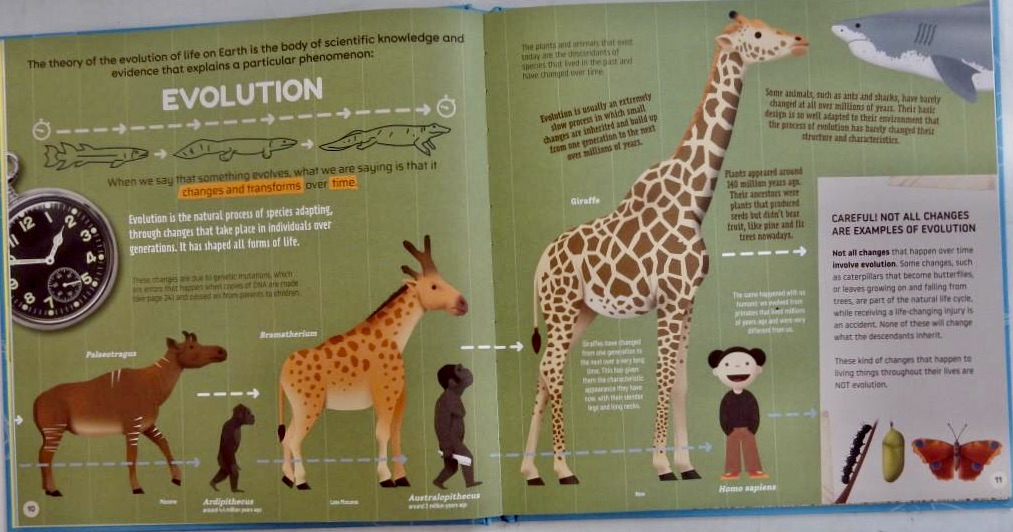
Evolution itself is presented next

followed by the process of natural selection wherein it’s explained its connection with evolution using giraffes as examples. Charles Darwin is mentioned here and the voyage of the Beagle, Dawin’s observations and his ‘The Origin of Species’ are the subjects of two double spreads.

Heredity, Gregor Mendel and genetics including mutations are also explored; there’s a look at LUCA (the ancestral organism all living things are descended from) and the book ends on future possibilities.

Exciting and accessible, this is a great starter book for budding scientists at home or school, as well as adults who may not have learned about the topic previously.

Economics

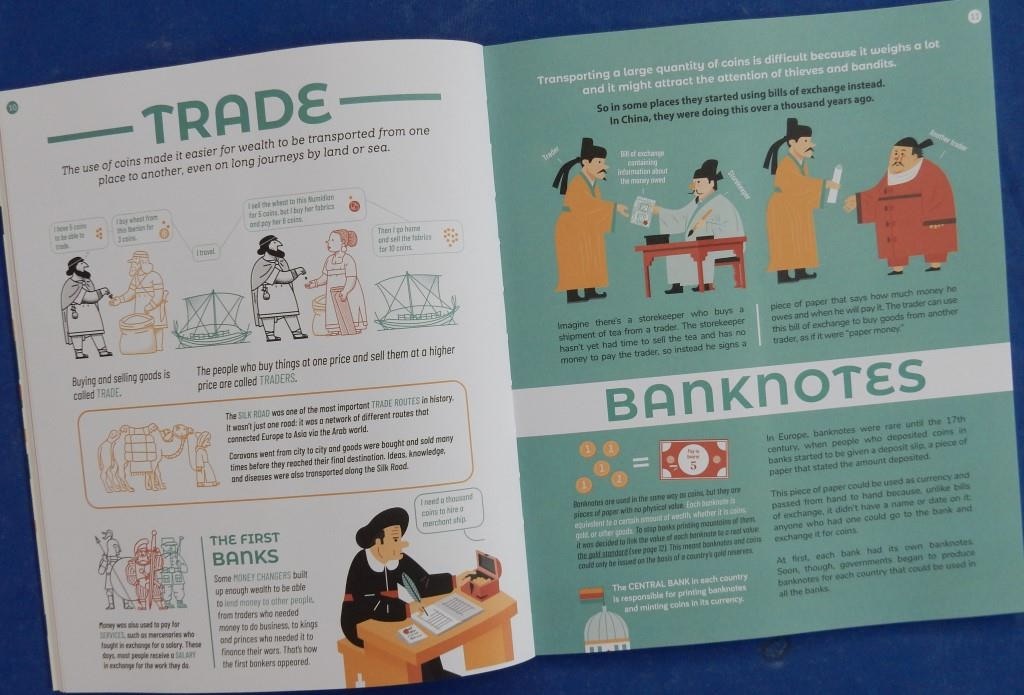
With ‘the economy’ being mentioned almost every time one turns on the TV or radio, this is indeed a timely publication. Herein the author provides an easy-to-understand explanation for older KS2 children about the economy, what fundamental economic ideas and theories are, as well as how its structures and rules impact on our daily lives and shape the way societies and the wider world function. I particularly like the way he uses as a starting point, the example of a village wherein sheep are reared and cheese made from their milk to explain such terms as surplus and exchange. This is just one of the devices used to make the complex world of economics accessible to children; children who will surely encounter words such as inflation and the escalating cost of living in the news.

In his usual fashion, Altarriba’s sequencing of topics explained is carefully considered so that each new subject (there are almost forty in all) segues logically into the next.

With its wealth of infographics and illustrations children can discover such things as how money works, the things you can do in a bank, what happens in the stock exchange and much more.

Altogether an excellent and illuminating introduction to a topic that is something of a mystery to all too many of us.

Migrants / What Is War?

Migrants
What Is War?

Eduard Altarriba
Button Books

Both of these books are, sadly, hugely topical right now.

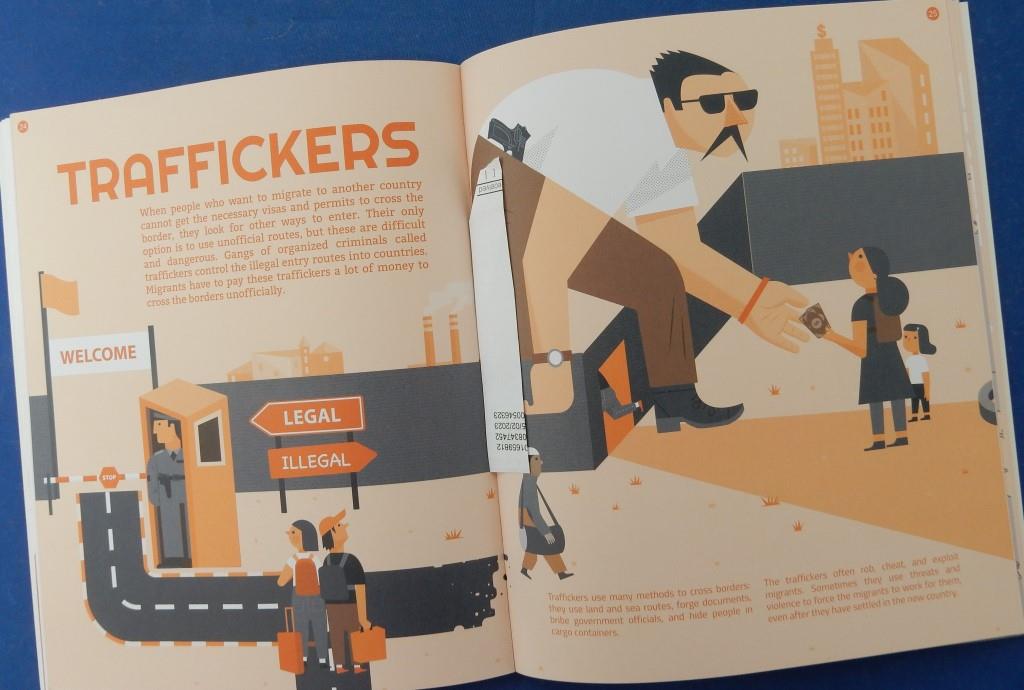
In Migrants, this sometimes emotive subject is explored in a matter of fact and dispassionate way. Eduard Altarriba explains that people have always been on the move since early humans migrated out of Africa to Europe and Asia more than a million years ago. He looks at borders between countries and why they exist, passports and visas that are required to cross them, how some countries colonised and created others, and discusses the reasons why migration might take place.

There is an excellent map showing the main migrant routes used in the last thirty five years. For some people it proves impossible to obtain the documents needed to cross borders so they have no option but to use often dangerous, unofficial routes and this leaves them open to exploitation by criminal gangs of traffickers.

The author covers the topic thoroughly yet succinctly, posing questions and answering them, progressing logically from one explanation to the next, with just the right amount of detail for older KS2 readers,

The same is true of What Is War? which is equally well-designed and illustrated. Altarriba’s approach is non-partisan and he explains that conflict between two clashing viewpoints, if unresolved through diplomacy or politics, may lead to violence and war. Disputes might be about borders or between different ethnicities, social or political groups within a country, in defence of national interests or historical grievances.

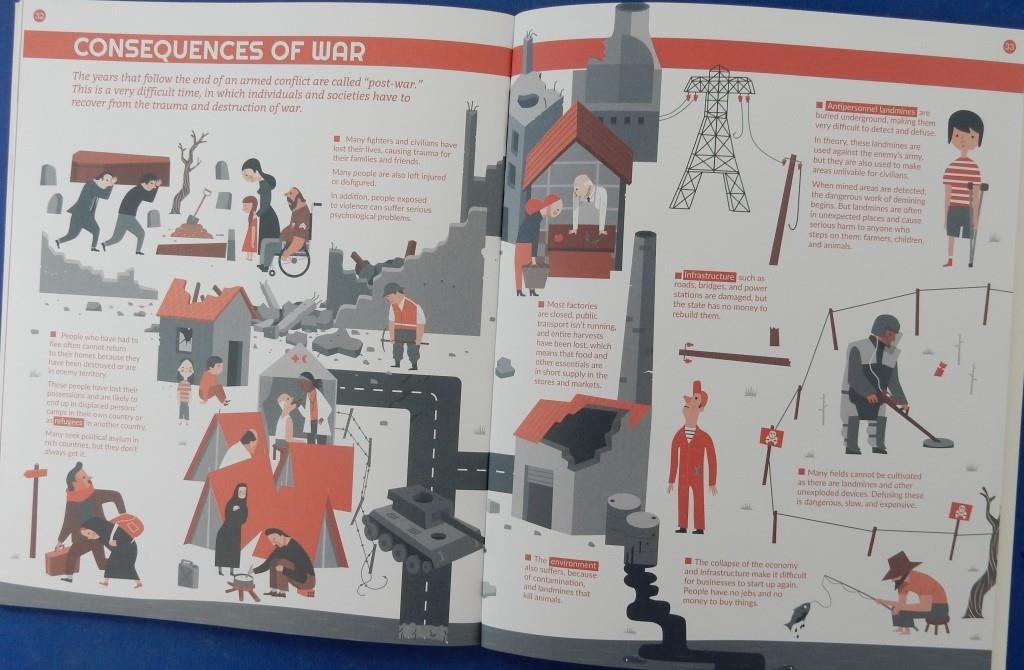
There are spreads about the principal actors involved, both national and international, the power brokers, the weapons and technology deployed. There’s a timeline stretching from ‘warring’ Neolithic hunters to the 20th century, a look at the types of war and the concept of a ‘just war’, a spread explores how a war might end and peace and mediation. This is followed by a brief look at the consequences of war both on individuals and societies.

The book concludes with three case studies: North Korea, the war in Syria and the war in Ukraine. War is a topic that, from questions they ask, worries many primary children, some of whom currently have Syrian and Ukrainian classmates.

I would strongly recommend adding both titles to upper primary class collections.

My First Book of Electromagnetism

My First Book of Electromagnetism
Eduard Altarriba and Sheddad Kaid-Salah Ferron
Button Books

In their usual stellar way author Sheddad Kaid-Salah Ferron and illustrator Eduard Altarriba present another STEM topic – that of electromagnetism, broken down into bite-sized portions suitable for primary readers.

In our modern world it’s almost impossible to think of many things that work without either electricity or magnetism but what actually are these physical phenomena and how do they work together? Furthermore, what do these things have to do with light? These and many other questions are explored in this fascinating book.

To relate the story of electromagnetism and our developing understanding of it, the author takes us way back to circa 600BCE to when Thales of Miletus’s first experiment with magnetic attraction when by rubbing a small piece of amber on some fur, he noticed a strange force that could attract small pieces of straw. Moving on we encounter Benjamin Franklin, an 18th century American scientist who worked on the idea of electrical charge in his experiments.

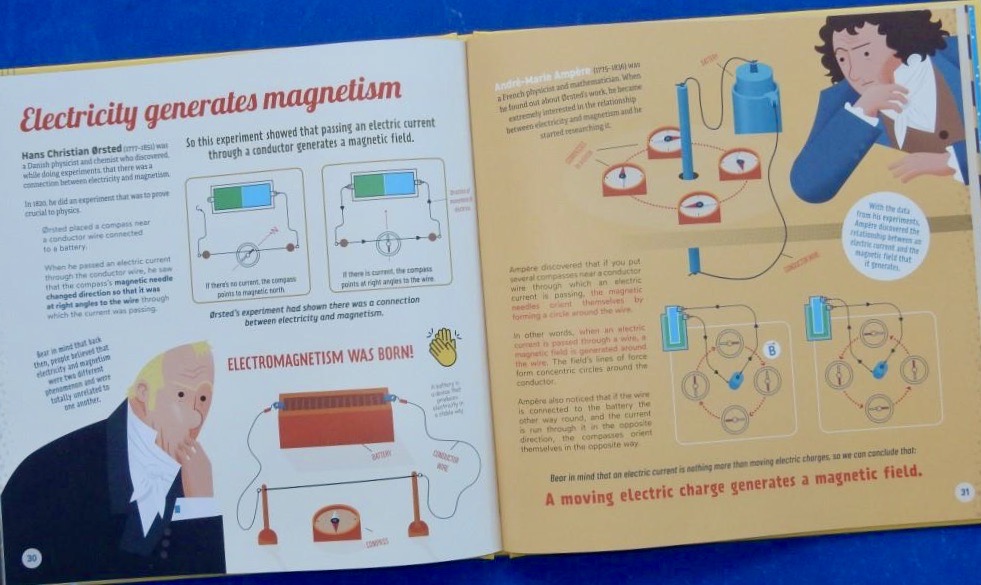
Until the work of Ørsted and of Ampère people thought electricity and magnetism were unrelated; those two experimented during the latter part of the 18th and first half of the 19th century.

That brings us right through to Michael Faraday and James Clerk Maxwell unifying the fields of magnetism and electricity to develop the theory of electromagnetism. Because of Faraday’s poor background, what was his original idea was left to Maxwell to write the four famous basic equations describing all electric and magnetic phenomena.

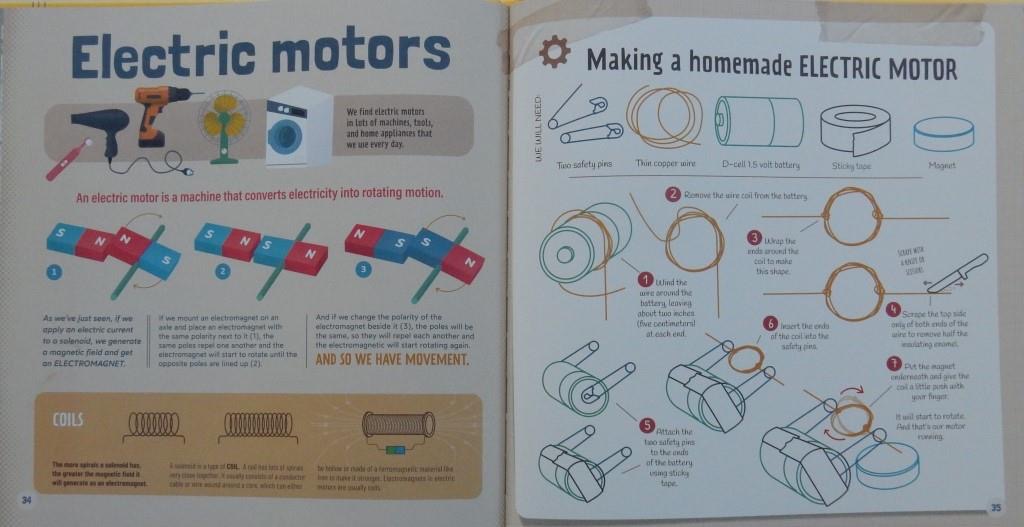
At intervals during this exciting account, readers can pause and do some experiments for themselves. These include making an electroscope to test for electric charge, creating a homemade battery and constructing a working motor.

It’s not simple science that’s described herein but it’s made accessible, engaging and exciting for children, and is presented in a way that will help them understand. Using his design background, Eduard has created enticing illustrations and helpful info-graphics to complement the text.

Recommended for budding scientists either at home or in school.

My First Book of Microbes

My First Book of Microbes
Sheddad Kaid-Salah Ferrón and Eduard Altarriba
Button Books

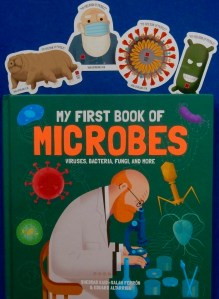
From the award-winning team whose previous titles include My First Book of Quantum Physics, this new STEM title explains the intriguing world of microorganisms – good and bad -to upper primary children and beyond.

They start by saying that these minute organisms come in all manner of different shapes and sizes, and using a rice grain for comparison show alongside it, a bacterium and a virus; then go on to explain the role of electron microscopy in observing such things as viruses.

Diving deeper into the hidden world of microbes, viruses, bacteria, fungi and more, they explain what these things are, where they are found, why many of them are vital to our very existence, as well as looking at the infections some microbes can cause, with a historical overview of the major epidemics and pandemics – including one we all know about, the devastating effects of COVID 19, which has its own double spread.
A number of topics are explored including algae, protozoa, phages,

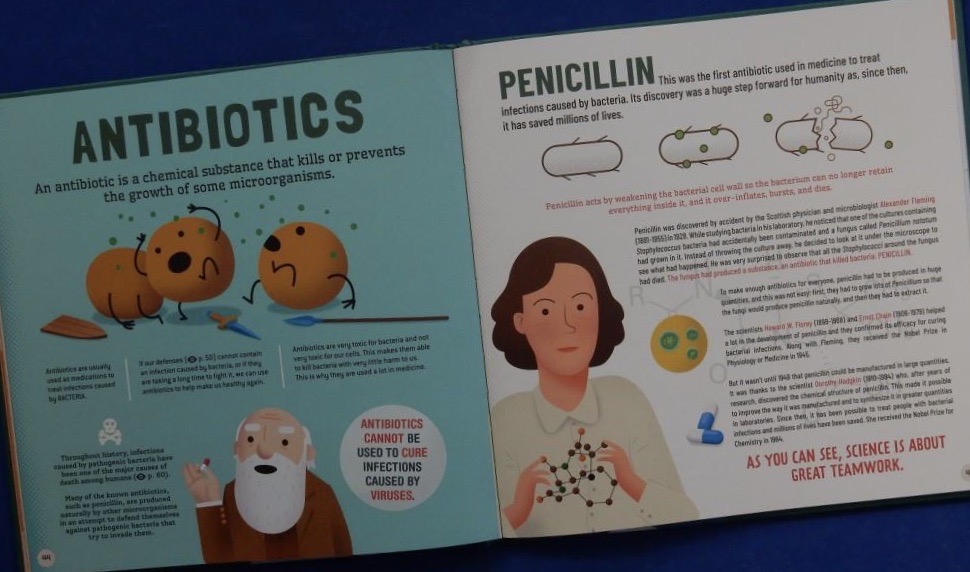
archaea (only discovered in 1977), how viruses cause infections, the importance of hand washing, the role of antibiotics

and how some bacteria can develop a resistance to them, the way our immune system protects us, vaccines and their role in immunisation and the eradication of some diseases such as Smallpox.

A number of key scientists – Louis Pasteur (who pioneered modern microbiology), Robert Koch who discovered the bacteria causing tuberculosis and Edward Jenner developer of the first vaccine are featured, and the important role of teamwork in this area of science is discussed.

As always with this series, every spread is well-designed with a clear layout, diagrams and fact boxes that augment Sheddad Kaid-Salah Ferrón’s thoroughly engaging text; and Eduard Altarriba’s colourful, sometimes playful illustrations help bring to life in an accessible manner, a topic that is sure to excite many youngsters, be they budding scientists or not.

My First Book of the Cosmos

My First Book of the Cosmos
Sheddad Kaid-Salah Ferrón and Eduard Altarriba
Button Books

Team Ferrón (physicist and writer) and Altarriba (graphic designer and illustrator) have a special skill of presenting highly complex topics to children in a manner that is accessible, entertaining and educative.

Their latest book, My First Book of the Cosmos again does just that, managing to compress the vast Universe between 56 pages taking us on a trip through the life of the Cosmos from its birth to its possible end time. Incredible!

What then is this Cosmos or Universe? The author sums it up thus ‘the Universe is everything that exists: it is all space and time, and it is where all mass and energy is found’: awesome and mysterious for sure.

First off is a look at gravity and we’re presented with the gravitational models of Newton and Einstein, followed by a look through ‘Gravitational Lenses’, the first being thought of by an amateur scientist, Rudi W. Mandl. A gravitation lens, as defined here is one that ‘works like a powerful telescope that magnifies and distorts light’.

Having examined beginnings, topics include Galaxies, and the vexed question of The size of the universe.

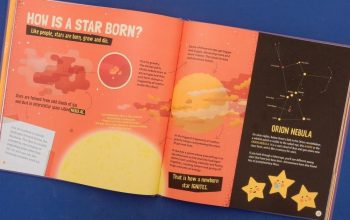
Then there’s an explanation of How a star is born; it’s formed from interstellar clouds of cold gas and dust called nebulae.

Next comes a look at the different types of stars – I didn’t know there were so many – as well as the life of a star from its birth to its death including how and why these happen.

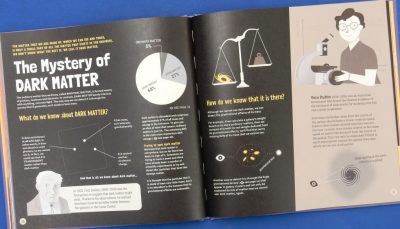
Plus if you’ve ever wanted to peer into a black hole or discover the mysteries of dark matter – a very tricky matter indeed,

and those of dark energy – that which ‘separates galaxies instead of bringing them together’ – in other words, it causes the Universe to expand ever faster, you can do so here.

Mind-blowing, imagination-stretching stuff!

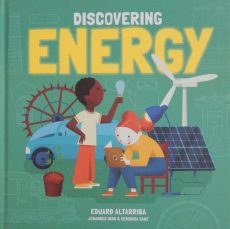
Discovering Energy

Discovering Energy
Eduard Altarriba, Johannes Hirn & Veronica Sanz
Button Books

In his characteristic bright, retro illustrative style, Eduard Altarriba in collaboration with writers Hirn and Sanz, both of whom are experts in physics, explores the vital topic of energy and its effects on all our lives.

After a spread on the sun’s energy, the book looks at what energy actually is including the difference between potential and kinetic energy.

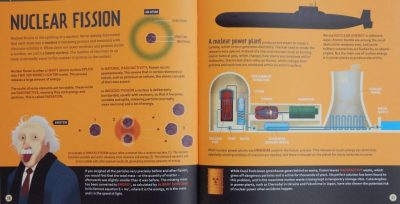
It goes on to investigate the interrelationship between energy and power, exploring wind power, water power, electricity, fossil fuels, nuclear power, solar power and much more.

Historical pioneers including Aristotle, Galileo, Newton, James Watt of steam engine fame, Alessandro Volta who created the first battery and Einstein

are all introduced in relation to their contributions to our understanding of the topic.

In the light of the drastic effects of climate change on the planet and life thereon, there is a spread on the all-important area of ‘clean and green energy’ and the crucial developments that will make safe, clean, sustainable energy now and in the future.

This vast subject is one we all need to come to grips with and it’s never too soon to start learning. This enlightening book, although aimed at young audiences, could also be useful to adults who have no background at all in physics.

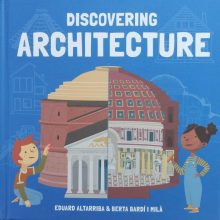
Discovering Architecture

Discovering Architecture
Eduard Altarriba and Berta Bardí I Milà
Button Books

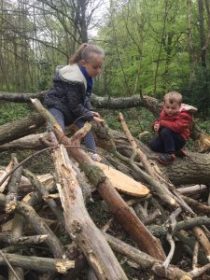
The urge to build structures is seemingly, a universal human trait. I spent some of the Easter break constructing a den in a quiet woodland glade in Bushy Park, from a fallen tree trunk and branches, with 6-year old Emmanuelle and her soon to be 4, brother Samuel.

When they are ready to discover more about the build environment, this tremendous introduction should prove invaluable.

The graphic designer and illustrator Eduard Altarriba has already introduced young readers to Quantum Physics and now in a similarly engaging manner presents a look at iconic buildings through history, their creators and some of the items that might be found inside such buildings.

Starting with the earliest known building projects, the pyramids of Egypt, Iraq and Mexico, Classical Greek, Roman and Byzantine places of worship, domestic and vernacular architecture from many parts of the world, information on architects such as Antoni Gaudí, Le Corbusier, Ludwig Mies van der Rohe and Zaha Hadid …

readers are given a superb presentation of things and people architectural.

The final spreads focus on architecture’s basic elements – there’s a cut-away diagram of the principal parts of a building; what being an architect entails and lastly a look at what buildings might be like in the future (it’s good to see sustainability given a paragraph here).

University lecturer at the School of Architecture, UPC, Barcelona, Berta Bardí I Milá packs a wealth of absorbing information into the uncluttered spreads, so finely designed and illustrated by Altarriba.

Perfect for KS2 readers and perhaps adults wanting a starting point for the topic.

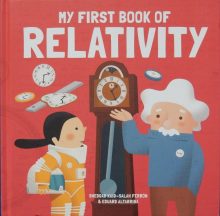
My First Book of Relativity

My First Book of Relativity
Sheddad Kaid-Salah Ferrón and Eduard Altarriba
Button Books

We had My First Book of Quantum Physics and now for a companion volume, its creators have turned their attention to another potentially complex science topic, that of relativity.

However, in the hands of this partnership, Einstein’s theory of relativity and other related aspects of connections between space and time are explained in such a way as to make them accessible to young readers. For, as it says on the back of this book, ‘it’s never too early to start exploring big ideas.’ So, how does one start?

The space-time theory, we read, can only be properly understood by first understanding what the two concepts mean in themselves; and then we’re in a position (like Einstein) to understand ‘the world through relativity’.

Time is succinctly explored – how it’s measured, by what means and the various units used.

Speed,
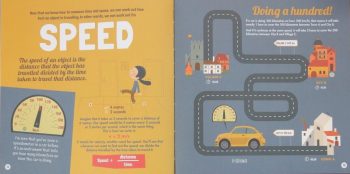
movement and the vital importance of frames of reference are explained, the latter using the example of a moving train and then a person in space.
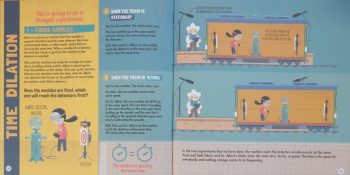
There are spreads on adding up speeds and the speed of light, leading into Einstein’s two theories, special relativity and general relativity (his theory about gravity).

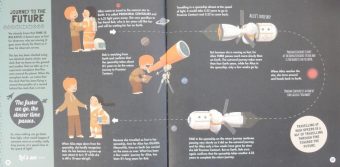
I love the ‘thought experiments’ relating to time dilation and clocks; and the wonderful spread whereon ten year old Alice travels to our nearest star Proxima Centauri, leaving her same aged friend  waiting for her on Earth and returning to find she’s still  ten whereas he is now almost 19, put me in mind of T.S. Eliot’s famous lines from Burnt Norton ‘Time present and time past / Are both perhaps present in time future / And time future contained in time past.’
If only physics had been made this fascinating back in the day when I was studying it at A-level (albeit only for a few weeks before deciding it wasn’t for me).

I’d not heard of muons before reading this book – a muon being an elementary particle of the electron family weighing around 200 times more than an electron, but again found the spread using a muon to check time dilation and length contraction totally engrossing.

The book concludes with how speed increases the mass of an object; the imaginings of the young Einstein (note the word imagined is used by the author, highlighting the crucial importance of the role of the imagination in scientific discovery) and a look at the mathematical equations Einstein used to describe his ideas of special relativity, the former taking mere weeks to find, whereas he took ten years to understand the ideas themselves.

The entire topic is mind-stretchingly incredible and brilliantly explained in this book, with the aid of Eduard Altarriba’s vibrant, graphics. Strongly recommended for budding scientists either for home reading or in school.

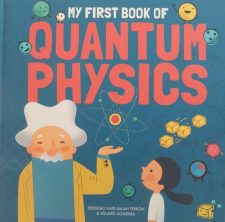
My First Book of Quantum Physics

My First Book of Quantum Physics
Sheddad Kaid-Salah Ferrón and Eduard Altarriba
Button Books

‘A children’s science book to educate and inspire’ says the press release of this book. Does it live up to the claim? Let’s take a closer look.

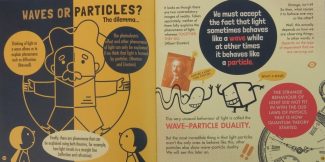
In the introduction the author explains that everything we see around us is composed of minute subatomic particles and as scientists began to discover more about them, they realised that a new set of theories was needed because the laws of physics as they stood, did not apply.

Thus new theories were generated and these are what we now know as quantum physics. Moreover without this science of subatomic particles none of our favourite electronic devices, so important in our everyday lives, would exist – now there’s a thought.

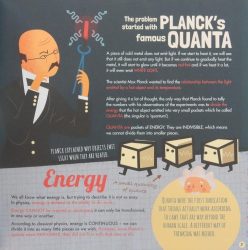
I remember very little about the content of the O-level physics I studied at school – it’s amazing I managed to pass – but one thing I can recall is being told about Plank’s quantum theory: this is one of the topics discussed in the book after the
introductory pages about ‘classical physics’ and its limitations; it makes much more sense to me now than it ever did back in the day.

Niels Bohr, another physicist whose name I came across in my limited physics education is also featured here with an explanation of the first ever vision of the ‘Quantized atom’.

What this highly illustrated book does is take key concepts and ideas

and explains them in a way that is comprehensible – no easy task – to both upper primary and lower secondary age children, but this is entertainingly written and invitingly presented with lots of diagrams and illustrations including a quantum timeline.

With my basic knowledge of the topic I would say this is an excellent introduction; author Ferron and illustrator Altarriba have done a great job to make it accessible and exciting.