Welcome to Wild Town

Welcome to Wild Town
AF Harrold and Dom Conlon, illustrated by Korky Paul
Otter-Barry Books

Have you ever wondered what it means to be truly wild? No? Then you really should pay a visit to Wild Town, for which Korky Paul has provided a map to peruse before arrival. Like the poems, the town is organised into several areas or sections and having, like Dom Condon, signed The Wild Agreement, readers are free to enter therein.

As a vegan, I’m happy to see that our first location is Herbivoreville. However after sampling several of the poems I’m not sure how relaxed I feel here, especially after reading Harold’s Wild Town Proverb #1: ‘A weed’s just a plant / growing in the wrong place. // Tell that to the fly-trap / latched onto / my face.

Playful, yes, as are The Rabbit’s Prayer and Dom’s Elephant Cleaner: ‘ The Elephants empty the bins in twos, / then wash he floors and clean the loos. / They wipe the tops with hairy mops – / one works hard whilst the other stops – / and yet the truth, I must confess, / is that they leave the house a mess.’

Moving on, the Fluttertown offers an opportunity to stay at Chrysalis Hotel, though after reading this in Harold’s description, “Squeeze in and relax // Relax so much you turn to mush – / become a soup filling the room.” I might just give it a miss and move on with some trepidation to the Carnivore Quarter, stopping only on account of Dom’s The Rule Breaker because I tend to be a rule breaker: here are a couple of the verses:’We crept outside when it was dark / We climbed the fences int he park / We did the things they said we couldn’t / We didn’t stop at things we shouldn’t . … We wouldn’t eat the food they grew / We wouldn’t learn the things they knew / We ran and played and sang out loud / We stood up tall and were not bowed’.

All manner of animals reside in this environment, significantly the lions and cheetahs – they feature in several poems; the ducks in Wolf Park are a pretty intolerant lot causing a to do on account of the streaker in Harald’s Going Green or A Worrying Sight in Wolf Park wherein you’ll meet a man who, so he says, has started photosynthesising. He’s so doing to save the planet.

Next stop is The Quiet Side of Town and there I loved He Lives on Slow Lane where in the final verse Dom says, “He’s the oldest of the wild ones / he’s the freest of the free / he’s the calmest in the forest / and he’s often called a tree.’ – a wonderful description of my favourite thing in the natural world, Wild Town or wherever.

It’s now time for Leaving Wild Town but first I certainly will do as Dom asks: ‘Let this landscape / draw itself upon your skin / marking the heart // with an X’. That shows just how much this reviewer has enjoyed a foray into such a special place where both the verbal and visual pictures leave an indelible memory. May the wild go with you too.

Fly, Butterfly, Fly!

Fly, Butterfly, Fly!
Dom Conlon and Anastasia Izlesou
Graffeg

The butterfly addressed in the title is a Cabbage White. As she flits about with the other butterflies in the meadow, she considers herself too plain in comparison with the surrounding flora and her more colourful butterfly companions, the likes of Small Tortoiseshells and Chalk Hill Blues. Consequently it’s a case of ‘Fly, Butterfly, Fly, as she embarks on a journey to butterfly habitats across the world.

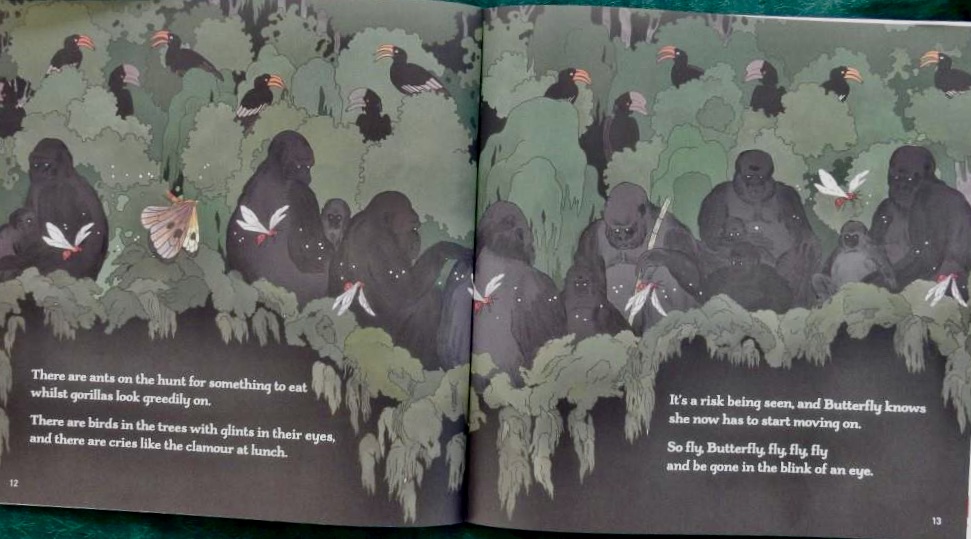
First stop is the Amazon rainforest burgeoning with richly hued fauna and flora. However, Butterfly is aware that attractiveness can cause danger due to those on the lookout for something tasty to eat,

so she takes flight again, next stop Mexico. There, along with the humans, the Monarch butterflies are celebrating the Mexican Day of the Dead. There are less of this species now though, as their vital food plants are being killed.

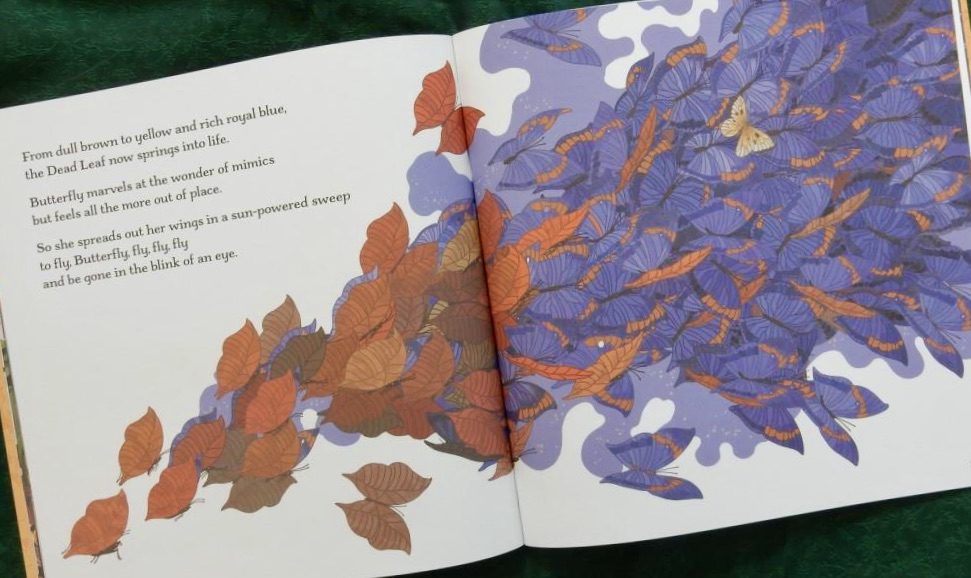
Off goes our Butterfly once more – to the tropical forests of India. There she’s in for a colourful surprise, for out of what appears to be the leaf covering on the ground, rises a host of Dead Leaf butterflies.

Over then to Papua New Guinea’s Mount Lamington volcano, home of the world’s largest butterfly, the Queen Alexander where the hues of the caterpillars make Butterfly think of her home, far away.

Off she goes heading homewards but her journey isn’t yet done; she stops over in the USA, where as in many other parts of the world, butterfly numbers are on the wane. Our common or garden Cabbage White has vital pollination work to do before she finally reaches the place from whence she started; the place where in fact, her colour is exactly right and where, satisfied among her own, she must now lay her eggs in readiness to say, “crawl, Caterpillar, crawl.’

Through Butterfly’s travelog, comprising Dom Conlon’s poetic narrative together with Anastasia Izlesou’s show-stopping illustrations, readers are made aware of the desperate plight of all too many of the world’s precious butterfly species.
An important addition to the Wild Wanderers series and let’s hope, a wake-up call to us all to do whatever we can to stop further decline in butterfly numbers wherever we are.

Matilda Meets the Universe

Matilda Meets the Universe
Dom Conlon, illustrated by Heidi Cannon
uclan publishing

The ambitious Matilda returns, as effervescent as ever, and again she will impress readers with her intelligence, confidence and skill at providing in-depth expositions of scientific subjects.

Penned in the form of an interior monologue notebook, Matilda sets out to discover whether life exists on other planets. ‘… finding alien life is going to be difficult. Finding out HOW difficult is what I’m ALL about though so BRING.IT.ON.’ she writes, going on to tell us that one reason for keeping her journal is that it helps her get things straight in her head. So true.

She writes about topics such as the Big Bang, the electromagnetic spectrum and ways of communication, mentioning ground breaking work of such scientists as Georges Lemaître, James Clerk Maxwell, Jocelyn Bell Burnell, Sir William Herschel, Frank Drake and his equation (new to me) and Albert Einstein. I love the way she talks about the Goldilocks Zone.

Helping Matilda in her research are members of her family – her dad, mum,

younger brother and her friend Kareem, not to mention a lot of snacks of various kinds. However possibly THE most important thing she learns is much closer to home, something about herself and the way she has been treating her little brother: ‘I need to stop calling him my little brother or HE WHO SHALL NOT BE NAMED. He is called Harry and I realise that when he’s hanging around, he’s only trying to learn how to communicate with me. … I need to learn how to listen. Then moving out from that ‘I’m looking around this little planet of ours and wondering if we couldn’t all benefit from learning to talk to one another in a better way.’ Wise words indeed. As is her decision to make the most of all the experiences earth has to offer.

It’s amazing how much information is packed into the pages of this book but Matilda has an infectious enthusiasm for her explorations and humour permeates her writing, helping to make it more accessible. So too do Heidi Cannon’s illustrations and diagrams, which appear at every turn of the page. There’s also a glossary at the end.

Highly recommended for curious children whether or not they have a special interest in STEM subjects.

Grow, Tree, Grow!

Grow, Tree, Grow!
Dom Conlon and Anastasia Izlesou
Graffeg

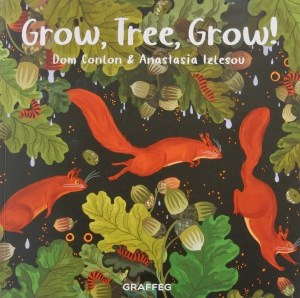
The fifth in the Wild Wanderers series is every bit as good as the previous titles; in fact as trees are my number one thing in nature, this, with an Oak tree as its main focus is my favourite so far.

In his wonderful lyrical text Dom describes how in the forest as winter departs, an oak sapling is slowly growing to become Tree. All around minibeasts, rabbits and larger creatures are hunting for food to survive.

Many years later we see Tree has become a safe haven – ‘a canopy-guarder / a sanctuary for all to share.’ All being squirrels, woodpeckers, birds, bats, spiders and badgers. 

Growing in the forest too are other trees – chestnut, ash and beech, each helping to keep the atmosphere clean, … ‘and branch is to sky / as root is to earth so // grow, Tree, grow!’ urges the narrative.

Seasons come and go bringing changes in the form of acorns within each of which lies another potential oak, but squirrels have designs on these goodies so Tree must make more and yet more till they’re ready to fall. The ground though is shared with acorn-loving pigs but they are not the biggest danger: that is the people who chop down the precious trees to make room for towns full of houses, shops and traffic.

Is it possible that a thousand years have passed since Tree’s tiny sapling started to grow; it surely is, but nothing in nature lasts for ever. Even an oak as majestic, as awesome as Tree must eventually die and now its time has come so, ‘rest Tree, rest.’ while all around new life springs forth and the wondrous cycles of nature continue – each to each returns its need and life goes on.

The web of life that is harboured during the lifetime of an oak tree is brilliantly caught in Anastasia Izlesou’s intricate tracery of lines and shades of russets and greens. Simply gorgeous!

Blow, Wind, Blow!

Blow, Wind, Blow!
Dom Conlon and Anastasia Izlesou
Graffeg

This is a new addition to The Wild Wanderers series.

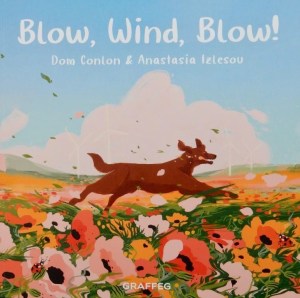
Who wouldn’t want to be swept up in the breeze and follow Wind on a lyrical journey as it gains heat and strength from Earth and then continues on its way scattering ‘leaves like a sneeze’, moving on to turn Dutch windmills,

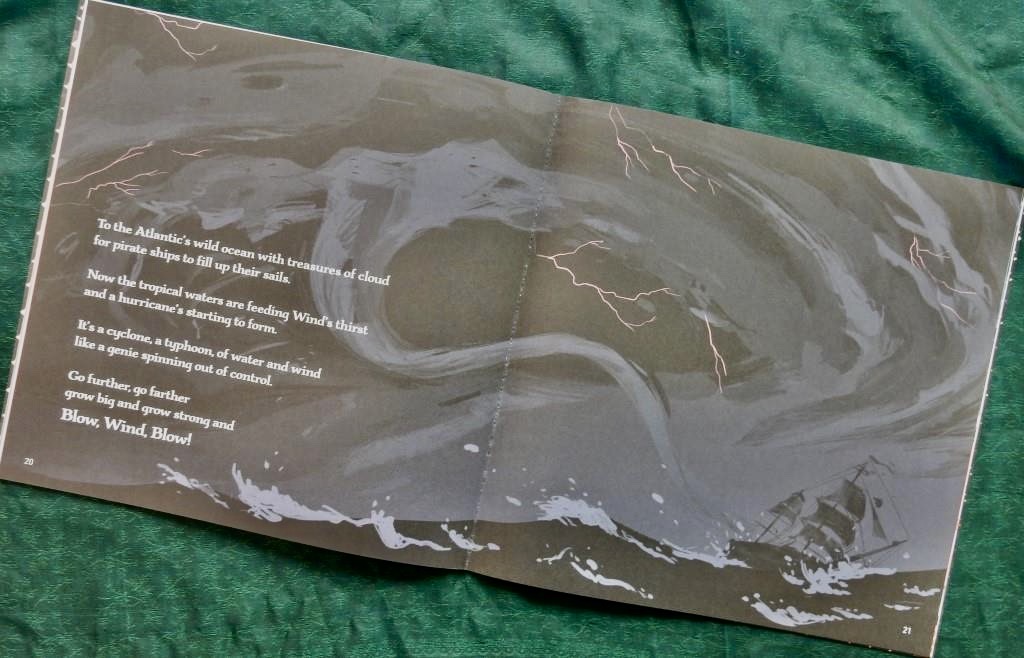
lifting up a balloon in Paris, travelling on across the still, quiet Pacific towards the deserts of Africa creating sandstorms in its wake as it goes on across the Atlantic, cyclonic now

wreaking havoc in Florida until, cooled by a cold blast from the Andes, Wind gradually calms, gently dispersing seeds

till finally it’s all blown out and ready to find a place to rest …

With its repeat refrain, ‘Go further, go farther / grow big and grow strong and / Blow, Wind, Blow!’ readers and listeners are treated to an exhilarating worldwide adventure related through Dom Conlon’s poem that in combination with Anastasia Izlesou’s powerful images of the elemental force and the consequences of its movements, create a mesmerising fusion of art and science.

Youngsters will love joining in the words that urge Wind to go, blow or slow in this book that has great classroom potential, but first and foremost share it for its own sake.

Swim, Shark, Swim!

Swim, Shark, Swim!
Dom Conlon and Anastasia Izlesou
Graffeg

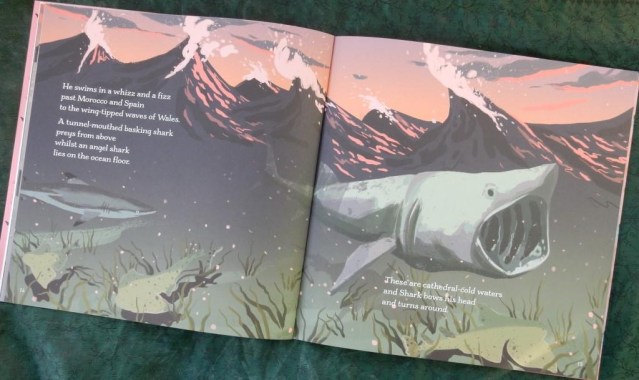
In the second of this Wild Wanderers series we join Shark – a blacktip reef shark – in an exploration that takes him on a long, long journey through the oceans of the world searching for a home. Seemingly it’s an almost circular swim that starts and finishes in the waters around Australia.

On his journey he encounters all manner of marine creatures including penguins and a tiger shark off the southern Cape of Africa,

and an angel shark in European waters.

There are blue sharks, octopus and squid in North American waters while off South America lurk Hammerheads. In the Pacific he sees dolphins, humans and in the kelp forest a Great White shark. Off the coast of Hawaii manta rays and green sea turtles dive and dance; 

then finally there is the Great Barrier Reef and a host of other blacktip sharks all of which help the reef in its struggle to survive.

Totally mesmeric is Dom Conlon’s poetry of motion, which cleverly weaves a sub-aquatic non-fiction story that is ideal for sharing with children either in KS1 or KS2. Anastasia Izlesou’s visual images too, transport readers and listeners to an underwater world of wondrous richness and beauty.

As well as the factual information contained in Shark’s odyssey there is a map tracing his path and a double spread of facts about sharks and the other marine animals.