
Four Silly Skeletons
Mark Sperring and Sue Hendra
Bloomsbury Children’s Books
Meet the silly skeleton quartet: there’s Fred, Sid, Belle an Bill, residents of a hill-top house, while down below at the foot of the same hill lives their sweet-natured Auntie June with Skellybones, her cat. The four young’uns get up to all manner of shenanigans and it’s down to their aunt to set their wrongs to right.
One dark night when the sky is full of stars and the young skellies full of energy, off they shimmy down the hill,
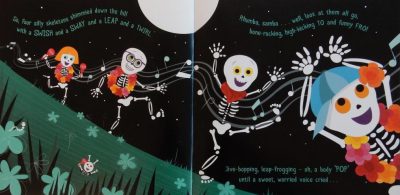
only to be halted in their tracks by Auntie June clutching a large bag full of lamps and other lights and warning of the darkness on the hill. But do those four sillies pay heed to her concerns? Oh dearie me, no: what’s the need for extra light when the moon’s big and bright, they say. But that’s before they come upon this …
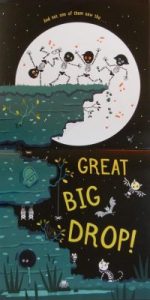
which results in a hurtling, spinning, screaming drop that ends in bone-scattering disaster. So it’s just as well that Auntie June has heard their wails and come to their aid, and just happens to have a large pot of sticky stuff with her; sticky stuff that is just the thing for some hasty repairs.
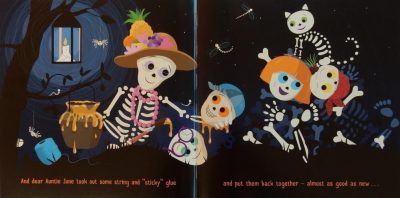
Now let that be a lesson to those full-moon frolickers.
Told in rowdy, bone rattling rhyme and illuminated by Sue Hendra’s super skeleton scenes of mischief and mayhem, this is just the thing for a Hallowe’en romp.
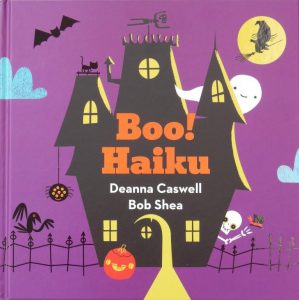
Boo! Haiku
Deanna Caswell and Bob Shea
Abrams Appleseed
In this follow up to the Guess Who, Haiku are a host of mock-scary frights to delight! Starting with ‘broom across the moon/ pointed hat at the window/ hair-raising cackle’ children are asked to guess who. There’s a small visual clue below the text in addition to the haiku and the answer is revealed when the page is turned.
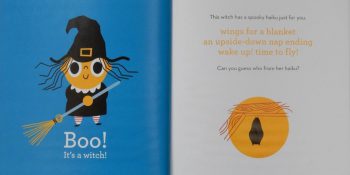
The subject then presents another haiku to listeners and so on through traditional Hallowe’en-associated items – a bat, a skeleton, a pumpkin (jack-o’lantern), a ghost and so on and finally –
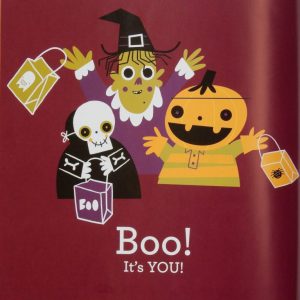
The last page provides information about the haiku form and syllabification; and I particularly like the reference to ‘an element of play’.
This cries out for audience participation and is great to share with preschool children who will be honing their listening skills while having fun.



 Red Reading Hub - Jillrbennett's Reviews of Children's Books