Puppet

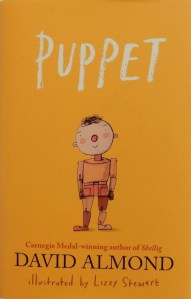
David Almond’s sublimely written poignant fable, with Lizzy Stewart’s impressive illustrations will really pull at your heartstrings.

Silvester is a widowed puppet maker; together with his wife, Belinda, he gained a reputation for creating some of the most beautiful puppets and shows in the area. As a result, the local museum wants to exhibit the subjects of his work and a young woman, Louise from the university wants to write a short history of his creations to be offered for sale when the exhibition opens. All he has left are his memories, posters, and photographs of his beloved Belinda.

So what can a puppet master do when he’s old and alone? Pondering this question, Silvester feels strangely free. Days pass and one night, awaking from his dreams, the attic seems to call to him. Up he climbs, sits at his workbench and fashions a new puppet. Then comes, “E-O.” That’s the first sound the puppet makes: Silvester thinks he’s imagining it. Next morning he tries to get the puppet to stand; it’s a tough call but eventually he succeeds. “Hello, Puppet,” says Silvester. “E-O” comes the reply.

Puppet is a quick learner, he walks and it’s not long before the old man has found a firm place in his affections for his creation. They visit the park together and there they meet a rather unusual girl named Fleur and her mum, Antonia. The latter remembers some of Silvester’s magical shows from her childhood. The puppet becomes known in the local community as Kenneth and soon Fleur becomes Silvester’s ‘apprentice’, learning how to create and use puppets.
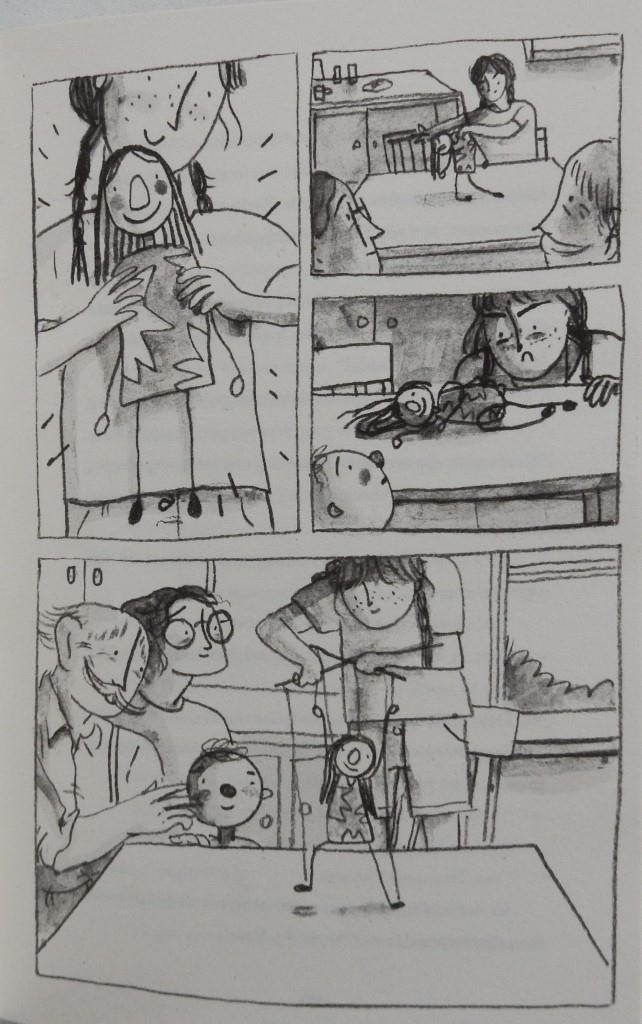
This eventually leads up to a public performance – but all the while, Silvester has been growing more and more tired. With the show over and everything cleared away, telling his friends, he’s seldom been happier, the old man heads home with Puppet and they lie down to sleep together. “Jam,” whispers Puppet the next morning … “Da- ad” but … . I had tears in my eyes at this point, such was the emotion I’d built up inside.

With his wondrous tale of creativity, playfulness and the circle of life, David Almond shows that with trust, love and the power of the imagination, anything is possible. Share it with a class: the children will be swept away by the magic of the telling, as will individual readers.
A Way to the Stars

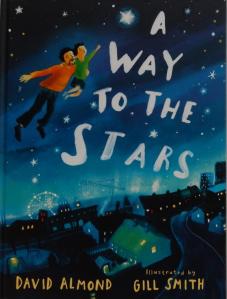
Young Joe wants to find a way to the stars but when he tells his friends they just laugh at him. Not so his Dad though: noticing the responses from those friends, he intervenes offering help.

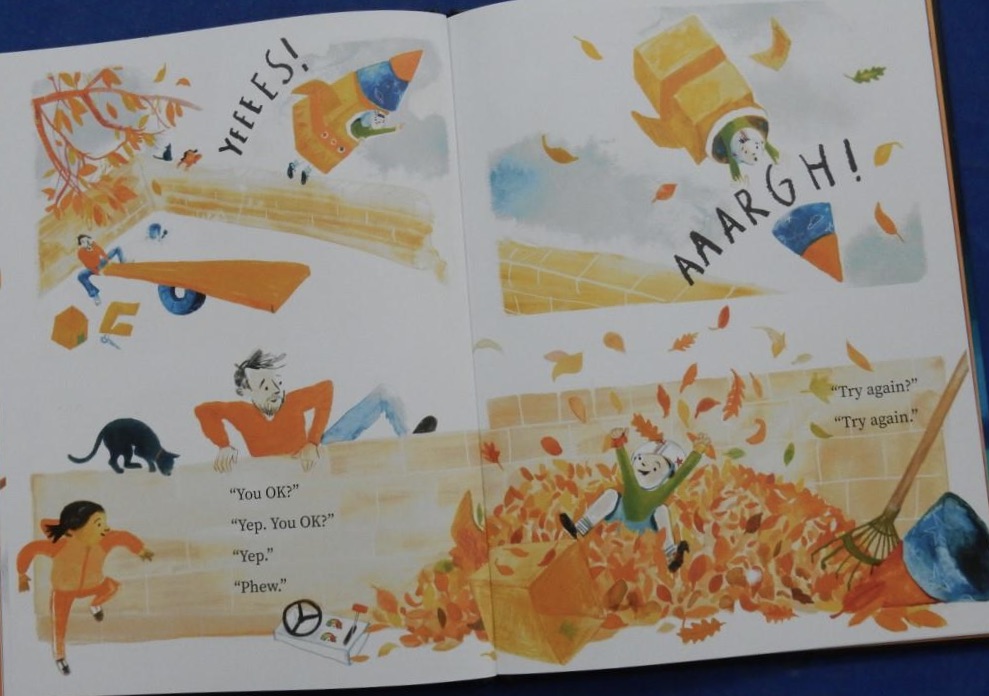
Together they try all manner of ways to reach the stars, some pretty risky, but with his supportive parent always there to catch him, no harm comes to Joe. Instead they have lots of fun being inventive as they try constructing among other ideas, a tower to climb, building a rocket and fashioning a seesaw.


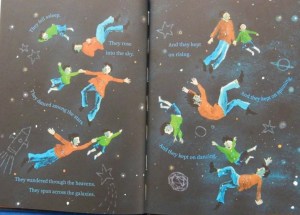
Refusing to give up – “in your dreams” Joe says as they laugh over their efforts – father and son build a shed, paint the inside with a gorgeous skyscape and fall fast asleep. We share in their thrilling dream as they rise skywards and “danced among the stars … wandered through the heavens,. They spun across the galaxies … and they kept on dancing.” …

All the way to the stars.


I love the way in which Gill Smith’s colour palette moves from the warm autumnal hues of the opening spreads to the midnight blues of the skyscapes towards the end of the story. A truly uplifting tale of resilience from the minute we meet Joe in his bedroom with its planet mobiles and other evidence of his passion and his ambitions.

The Woman Who Turned Children Into Birds

The Woman Who Turned Children Into Birds
David Almond and Laura Carlin,
Walker Studio

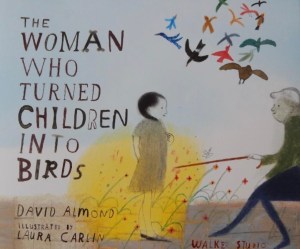
When a woman, Nancy Solo by name, arrives in town claiming to be able to turn children into birds, the adults warn the youngsters to stay away, scoffing, calling it piffle and balderdash. The children however think differently. First to approach Nancy on the bench is Dorothy Carr. Nancy whispers into her ear and off flies the girl, a swallow ‘swooping up into the blue’, but only briefly.

Before long another child, Colin Fox steps forward

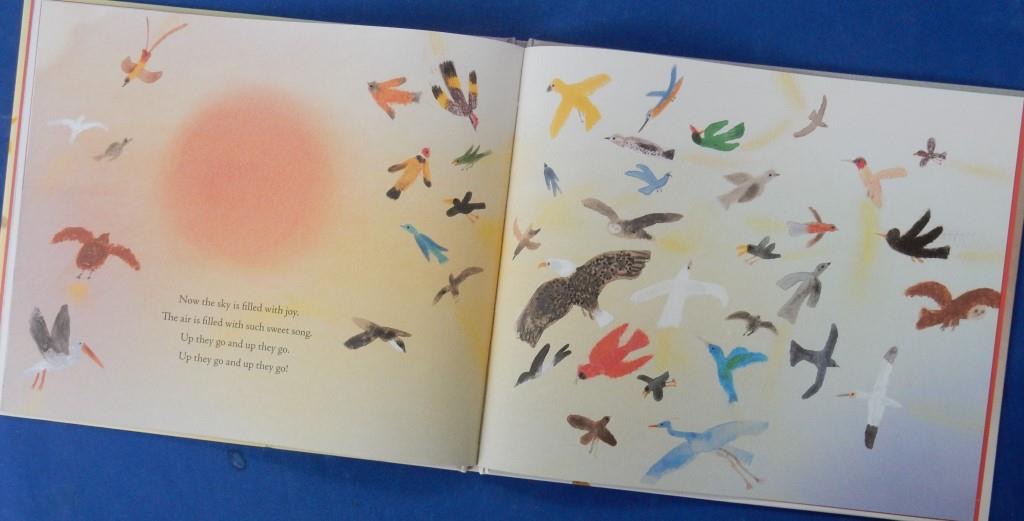
and takes to the air – as a sparrow. Very soon the sky is full with a goldfinch, a rook and a host of other children transformed into birds. With more and more children enjoying their flight, Nancy asks the adults, “But what on earth are you afraid of?” Twice she asks the question and on the second occasion one of the grown ups starts to soar, thoroughly enjoying so doing; and it’s not long before the sky is filled with joyful song and soaring birds.

Nancy’s work here is done; everyone has become a risk taker, overcoming that fear of flying, and it’s time for her to move on to another town and work her magic.

Full of playful language, there’s a fable like feel to David Almond’s tale and Laura Carlin’s wonderful mixed media illustrations show an aura of light surrounding each transformation as it occurs. A story to revisit over and over with the possibility of new meaning emerging with each reading.

Paper Boat, Paper Bird

Paper Boat, Paper Bird
David Almond, illustrated by Kirsti Beautyman
Hodder Children’s Books

Mina – a character from Skellig and its prequel My Name is Mina is now visiting Japan with her mother, experiencing the culture and learning a great deal. While travelling on a bus in Kyoto she watches a woman folding a piece of paper that becomes an origami boat; this she gives to Mina and soon after, a paper bird and when she leaves the bus, some origami paper. Watching the woman fashion these almost magical things from squares of paper captures Mina’s imagination.

As she travels to the temple at Kinkaku-ji, she holds onto her delight in the origami

and in the garden surrounding the temple Mina creates a boat and bird herself. She places the bird in the boat and gently puts it into one of the streams. Later it’s discovered by Mikaya who is with his dad; the boy notices the name on each one and when they stop, he writes his name on the bird and launches it into the air: communication and kindness are passed through origami,

and eventually Mina and Mikaya meet one another.

Powerfully beautiful – the power being in the simplicity of the telling and also in Kirsti Beautyman’s illustrations that have an airy, almost ethereal quality to them. David’s story is based on a real life happening when he was in Tokyo with his young daughter. He uses his awesome art of creating a story out of brief experiences and as always with his stories, this one with its quiet, contemplative gentleness resonates long after you’ve put the book down.

Glassheart / Brand New Boy / Vampirates: Demons of the Ocean

Glassheart
Katharine Orton
Walker Books

Prepare to be both chilled and enchanted, bothered and bewitched as you read this, the second of Katherine Orton’s stories. It tells of Nona who has lost all her family in the war (WW2) and of her adopted Uncle Antoni. This though isn’t a tale of war itself, but of its aftermath, as together they travel through the wilds of Dartmoor, each caring and protecting the other as a magical adventure unfolds. With echoes of folktale and legend, the landscape that the author crafts is wild, unpredictable – sometimes sinisterly nightmarish.

Her tale is one of power, fragility and also strength as the two walk side by side, stopping to replace stained glass windows, Nona with a small piece of magical glass in the form of half a heart reminding her of what once was, Uncle Antoni with his skill and artistry in stained glass.

With the girl as his apprentice, they undertake a mysterious commission that sees Nona face to face with her nemesis. But though fragile, Nona has an inner strength, loyalty and determination which drives her on in her endeavour to protect those she loves.

Truly evident is Katherine Orton’s understanding of suffering and the assuagement of grief.

Brand New Boy
David Almond, illustrated by Marta Altés
Walker Books

George joins an ordinary class in an ordinary school somewhere in northern England. Daniel is fascinated and watchful, especially when George’s ear falls off. It’s clear that this newcomer is far from ordinary. But then Daniel is actually not so ordinary either. He’s capable of doing extraordinary things: he’s caring, perceptive, questioning, open-minded and ready to accept somebody just a little bit different.

So, while he and his friend Maxie in particular go about their football and other activities at school, his mind is full of thoughts about the mysterious newcomer. But then just as suddenly as he came, two days later, George is there no more. Will he ever come back?

If ever there was a story to encourage children to think about what they are and to consider the true meaning of being human, and of freewill, then this is it.

Deceptively simple in its telling David Almond’s story has a quiet power while Martha Altés illustrations bring out the humour inherent in the tale.
Never underestimate children; all too frequently I see both teachers and parents so doing. They too should read this book.

Vampirates: Demons of the Ocean
Justin Somper
UCLAN Publishing

This is a reissue of a book (the first of a series) originally published some fifteen years back. It’s a swashbuckling tale of pirates and vampires set in the future in an attractive-sounding location – Crescent Moon Bay on the Australian coast.

We meet twins Grace and Connor, who are left entirely alone in the world when their lighthouse keeper father to whom so many owe their lives, suddenly dies. The children cast themselves off in his boat out to sea and all too soon are hit by a storm but they’re not to meet their demise in the ocean. Grace is rescued by Lorcan Furey, one of the vampire crew of a strange boat, Connor by friendly pirates.

The action then switches between the two as their stories unfold alternately with secrets emerging until at last, the two are reunited. With its lively cast of characters (depicted before the title page) this is an entertaining start to a sequence of further adventures for older primary readers and beyond.

The Dam

The Dam
David Almond and Levi Pinfold
Walker Studio

Based on a true story, award-winning author Almond tells in lyrical style a tale of loss and hope, music and memories, memorial and mystery, water and wonder.

One morning early, a father wakes his daughter instructing her to “Bring your fiddle,”. Then together they walk into the valley, an abandoned valley in Northumberland that is soon to be flooded once the Kielder Dam construction is complete.

Now the buildings lie empty, their inhabitants re-housed. The father pulls down the door of a deserted cottage, bidding his daughter to enter.
“Play, Kathryn, play,” he instructs. “Dance, Daddy, dance.” comes her response and so they do.

First there, and then at every other one of the deserted dwellings, filling each one with music as Kathryn plays ‘for all that are gone and for all that are still to come…”

It’s heard by the birds, the beasts, the earth, the trees and the ghosts.

As darkness descends the two walk away leaving behind them drowning beauty, water echoing deep in the dam and drifting forth, rising and echoing too in the waves, leaves and grass they tread upon;

in their memories; in their dreams and right through them in all their internal dams, making them play, making them sing, making them dance, and so it will always be.

Totally riveting, this powerful book is a thing of beauty, elegance, awe and reverence as the author and artist pay homage to a deeply loved landscape: Almond with his spare poetical telling, Pinfold with his majestic windswept spreads, brooding vignettes, and musical, mystical skyscapes.

A treasure of a book.