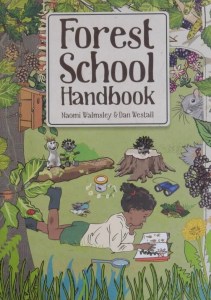
Forest School Handbook

Forest School Handbook
Naomi Walmsley and Dan Westall
GMC Publications

It’s great to see husband and wife team Naomi and Dan, who run Outback2Basics bringing their passion for the outdoors to the pages of another book.

As a teacher, I’ve long been a firm believer in the vital importance of outdoor education for children right from their early years and consequently many of the activities in this handbook are not new to me. Nonetheless, it’s always good to be reminded of things as well as to discover fresh ideas.

After an introduction, which talks about the purposes of forest school activities and the benefits from playing outside and interacting with the natural world, the book is divided into ten sections, each with an abundance of colour photographs, and the age appropriateness, time, materials and tools needed for every activity.

Controlled risk taking and developing social skills, both of which are fundamental to forest schooling are two of the most vital elements of education and the sessions this book offers are so much more worthwhile than being cooped up all day in a stuffy classroom. What would you rather your child(ren) did: make charcoal (and perhaps use it to draw with), build a shelter from the materials lying around in the environment or spending hours staring at a screen?

One activity that appealed to me especially from he ‘Things to do with conkers’ spread is creating conker animals, in particular a conker caterpillar.
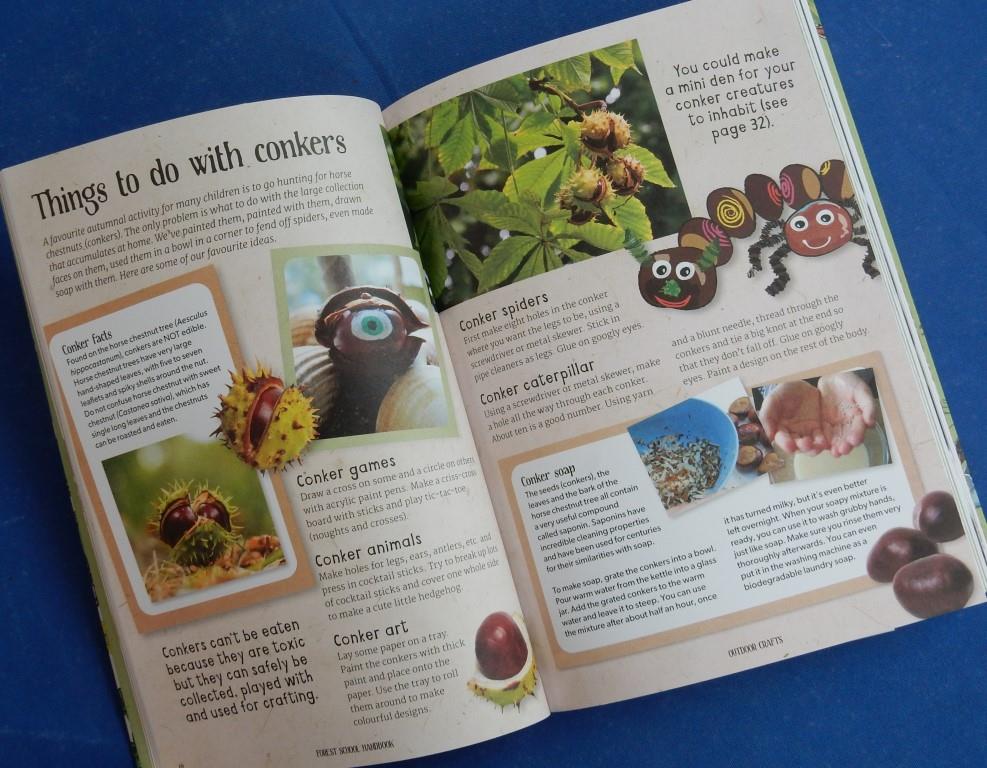
Making soap from conkers also sounds interesting .

Altogether a smashing little book that deserves to be in every family and class collection.

Urban Forest School

Urban Forest School
Naomi Walmsley and Dan Westall
GMC Publications

Wow! What an absolute treasure trove of ideas this is for anyone who wants to include forest school and all that this has to offer into an urban school or nursery setting. That, one hopes (unless it’s already embedded into their curriculum) includes all early years and primary teachers and other staff.

Equally during this time when many parents are faced with home schooling their children, this book by a husband and wife team totally dedicated to outdoor learning, offers a wealth of activities across the whole curriculum and most could be used with a very wide age range.

After an introduction explaining what urban forest school actually is and where to look for urban nature, why it’s important to do so, and giving instructions on how to tie some useful knots, the main body of the book is divided into four sections.

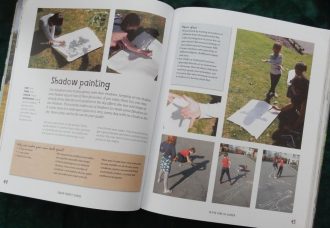
We start with In the park or garden (a quiet street or a porch would suffice) where one of my favourite activities is shadow painting. Strangely enough as I was walking with my partner the other day past a patch of stinging nettles I remarked that their shadows looked much more striking than the actual plants. Then two days later I found this idea in the book. I’ve had children draw around their own or a friend’s shadow many times but never thought of using plants – love it!

Moving further afield Around the city or town has a nature focus and includes such things as cloud spotting and I really like the idea of the city sit spot – an opportunity for mindfulness of whatever your surroundings might be. From that sit spot or walking around, children can begin to get to know about the trees and the flora and fauna close by.

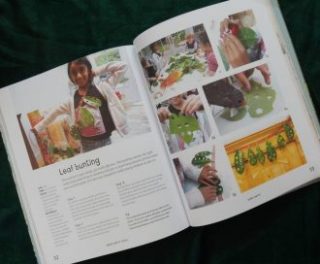
The third section – Home crafts – offers a wealth of creative activities: the leaf watercolour printing can be fun in its own right but also the starting point for other arty projects. I can’t wait to try the leaf bunting activity with children – I have to admit to having a go myself with some leaves and hole punches.

Recipes comprise the final section and there you’ll finding such diverse ideas as stinging nettle smoothie – this one might be an acquired taste, and spiced blackberry sorbet – more up my street I think, but the blackberry plants are still at the flowering stage just now.

Packed with enticing illustrations and photos, and covering so many areas of the curriculum, this bumper book includes something for all ages from the very young upwards, and is a fantastic encouragement to get children outdoors learning about and through nature.

Forest School Adventure

Forest School Adventure
Naomi Walmsley and Dan Westall
GMC Publications

The husband and wife authors of this book are passionate about introducing children (and adults) to their wild side, to connect them to the natural environment. The book of more than 170 pages is profusely illustrated with photographs and after an introduction extolling the benefits and importance of outside play in nature, is divided into four sections.

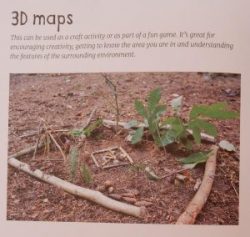
In the first, Nature Awareness, there are such activities as making a bug hotel, creating natural collages and sculptures, leaf and flower plaques, playing with clay and making 3D maps.

Each activity is introduced with the suggested age range, likely time needed, the tools required and the materials to be used. My favourite in this section is Sit Spot – finding a place to sit quietly for ten minutes or more to take in the sights, sounds and smells of the natural surroundings.

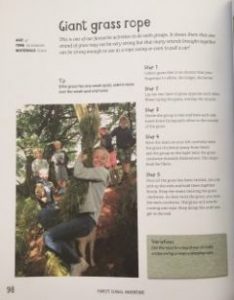
The next section, with more than 80 pages, is Bushcraft and covers knots, shelter building all aspects of fire from lighting one without matches, types of firewood and fire lays, and carrying fire, collecting water, making cordage

and rope, using a knife safely, wilderness first aid, arrow and spear making, making pots and even making a lamp from nuts.

Section three has 25 pages on Wild Food including foraging tips and recipes for cleaver and nettle cordial, nettle tea, methods of cooking chicken and fish over a fire and cooking inside fruit and vegetables.

The final, briefest section, is devoted to games. My favourites were ‘seven second camouflage’ and ‘egg drop’ – making a protective nest around the egg so it doesn’t break when dropped from around 2metres.

Interspersed with all this are half a dozen episodes from the authors’ 5 months stone-age immersion experience in the USA.There’s also a list of resources at the back of the book.

I believe that forest school should be part and parcel of children’s early years and primary curriculum. However, despite the enthusiasm for it, particularly with early years staff, many schools stop offering it for older children claiming pressure from the supposedly more academic curriculum. Perhaps reading a book such as this could re-enthuse or introduce all adults working with children to the benefits of, and learning potential across the curriculum, of forest school.

Every primary school should have a copy.