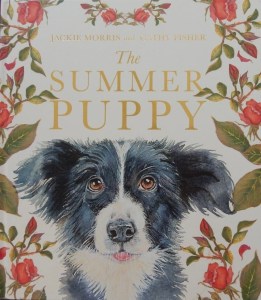
The Summer Puppy

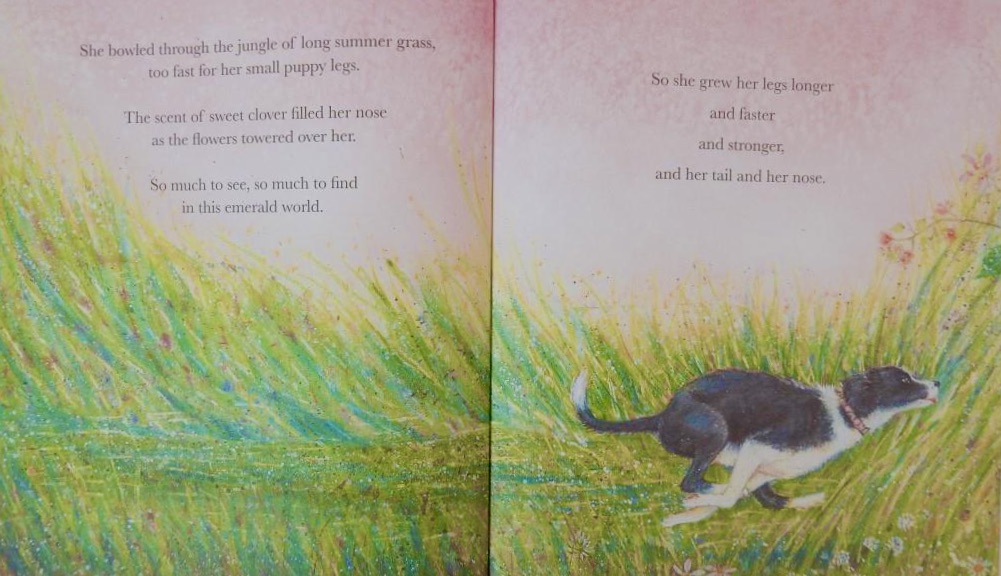
This truly beautiful book was inspired by memories of a real and much-loved dog that belonged to Jackie’s daughter and tells the story of Rosie and her first summer spent at their Pembrokeshire home. Cathy Fisher, the illustrator lives in Pembrokeshire too and it’s evident how much they both put into creating the tale. Jackie’s lyrical descriptions of the countryside: ‘The scent of sweet clover filled her nose / as the flowers towered over her. // So much to see, so much to find / in this emerald world.’

and in complete harmony with the words are the magnificent illustrations of the dog exploring its environment with its child owner. Through the changing seasons from early summer to autumn and the onset of winter, they investigate the woods, fields and beach.

Every turn of the page brings fresh delights for readers and listeners, including this reviewer who is cynophobic (but also a lover of the natural world) and likely to encourage lots of people to embrace the great outdoors and explore the joys of nature.

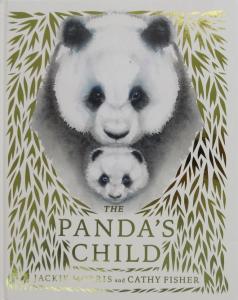
The Panda’s Child

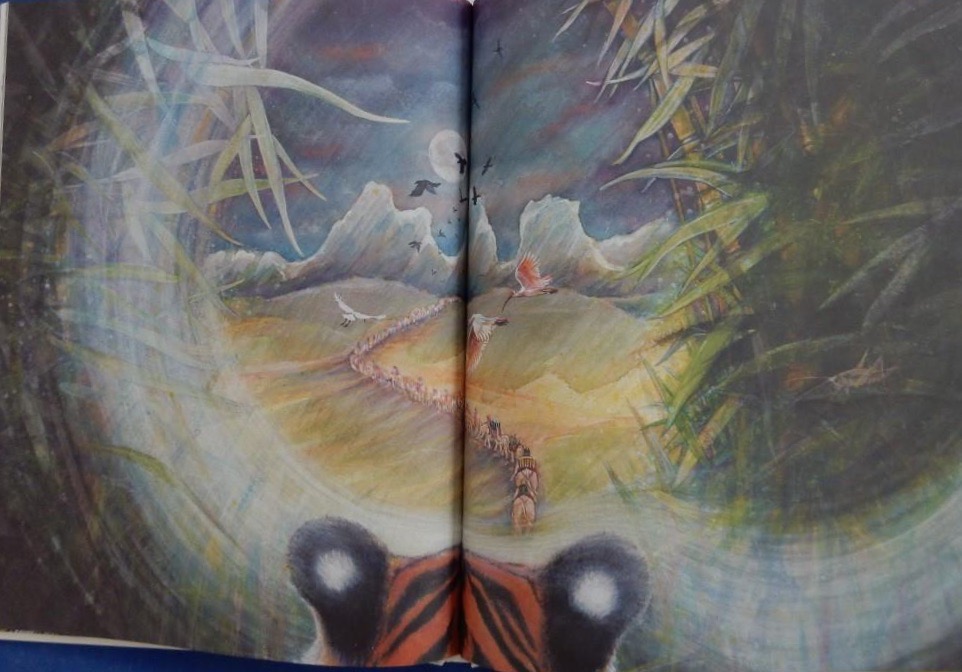
Left behind by her fellow villagers as they walked in the forest, a mother lies down with her baby boy in the warm sun. She drops off to sleep briefly and wakes to discover the infant has gone. After three days of searching the villagers conclude that the baby must have been taken by a creature of some kind or perhaps the forest spirits.

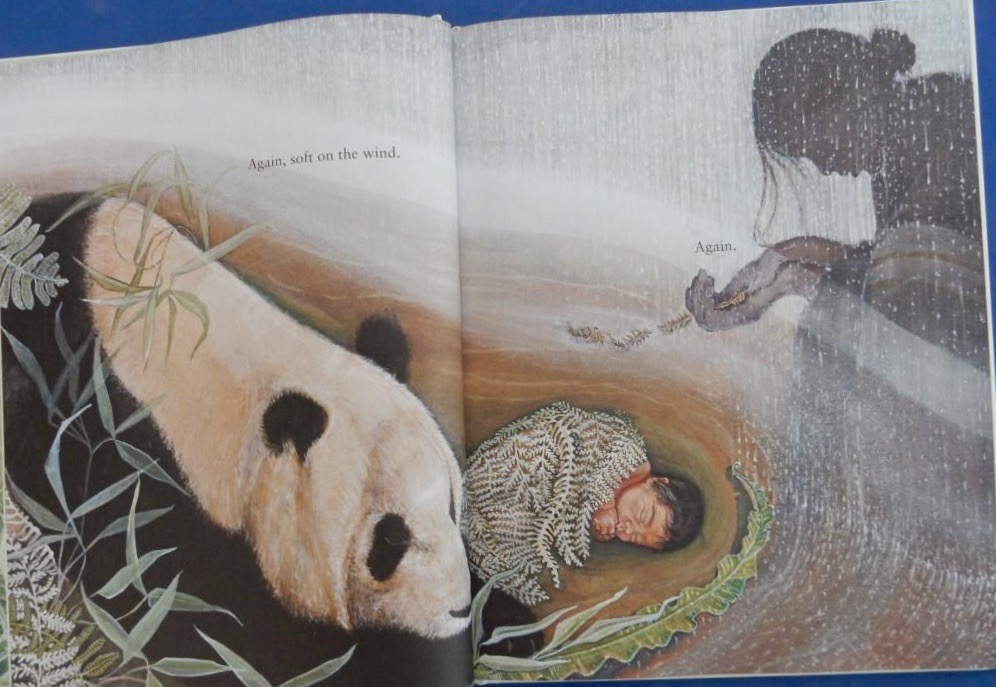
The mother refuses to give up though and continues searching alone, hope gradually fading the longer she looks. But then, drifting on the wind she hears something: could it be? Wonder of wonders, in a cave beside a large ursine creature lies her child, alive after seven days.

The bear – a she panda – must have kept the baby alive, the villagers decide, and henceforward, they have a strong bond with the animal. They also have a special bond with the little child.

The years pass and on the child’s ninth birthday some strangers ride into the village. It’s evident from their lavish dress these are rich people, accompanied by large hunting dogs and elephants most of which bore cages of animals of various kinds. One cage however is empty. The villagers hope that by ignoring the visitors, they would move on but the boy, attracted to the horses, approaches them and is told they are searching for a black and white creature. Said creature is to be a gift for a great ruler, Alexander. Eventually the riders depart, only to return several days later. This time the empty cage has been filled by a black and white animal: the panda’s child. The boy begs them to take him with them to ensure the creature remains alive and eventually they agree, to the horror of the entire village. But has the child really betrayed all those responsible for keeping him safe? Or does he have another reason for wanting to accompany the wealthy travellers even if it means risking his own life?

Hugely moving, Jackie Morris’s spellbinding tale with Cathy Fisher’s mesmerisingly beautiful illustrations will stay with readers long after the book has been closed. With its environmental and conservation themes it will appeal to a wide age range and would make a wonderful present for a lover of the natural world.

The New Girl

The New Girl
Nicola Davies and Cathy Fisher
Graffeg

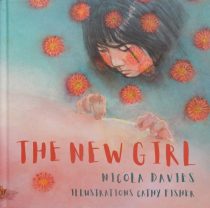
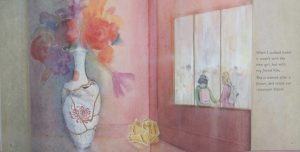
Softly spoken, sensitively rendered and enormously moving is Nicola and Cathy’s latest picture book narrated by a member of the class into which the new girl arrives ‘wrapped up like a parcel’ and not understanding a word that was said by her classmates.

Almost unbelievably, the newcomer is set apart to eat her lunch on account of its ‘funny’ smell and as school ends she walks away quite alone. This cruel behaviour continues day after day as winter arrives bringing with it dark and dreariness.

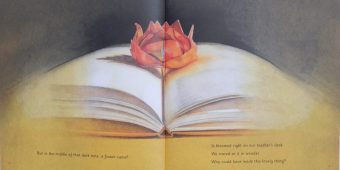
Then one day into that dark something wonderful appears on the teacher’s desk.

Each day after that another one appears somewhere in the classroom bringing with it feelings of warmth and cheer until the beautiful objects stop coming.

At their teacher’s suggestion, the children start trying to make their own paper flowers, the narrator unsuccessfully … until the new girl shows her how.

Flower making isn’t all that’s learned in that classroom on that particular day though; so too is a new language and the importance of accepting difference, of understanding and of friendship …

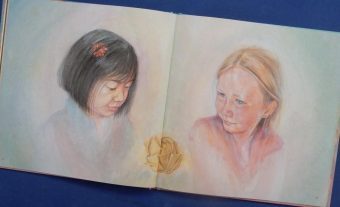
Cathy Fisher’s illustrations are startlingly realistic, full of feeling and atmosphere – the ideal complement to Nicola’s text.

Primary classrooms should definitely add this to their collections.

A Boy’s Best Friend / The Mountain Lamb

These are books five and six in Nicola and Cathy’s Country Tales short fiction series about young people growing up in a rural environment, published by Graffeg who kindly sent them for review.

A Boy’s Best Friend
The Mountain Lamb
Nicola Davies, illustrated by Cathy Fisher

A Boy’s Best Friend starts with young Clinton reluctant to leave his tropical island home, his gran and his fisherman Uncle Cecil to join his mother in London where she’s lived for five years. He feels anxious about meeting his step-father, eager to meet new little sister and very unhappy at the prospect of having to leave behind his much loved dog, Rufus.

But leave the island he does arriving in England as spring approaches. At first, despite the family’s best efforts, he feels lost and as though all the light has been leeched from him in this chill, drear place called London.

Then comes news of a school trip by minibus to a castle in Kent and despite there not being the intended farm visit, Clinton joins the party. But when the minibus meets with an accident and ends up partly in a ditch, Clinton takes the opportunity to help an old man, David with his stampeding cows, scared by the crash.

From then on, despite being in big trouble at school and at home for running off after the accident, things start to look brighter for young Clinton who readily takes up the farmer’s subsequent offer to visit his farm and lend a hand.

Beautifully told and full of warmth, Nicola’s short tale of love, change and adjusting to a new life, will speak to everyone, especially those who have had to leave much of what they love to start a new life elsewhere. Cathy Fisher’s delicately worked black, white and grey illustrations further add to the atmosphere of the telling.

Young Lolly in The Mountain Lamb is faced with tremendous challenges too. Her mother has died and now Lolly lives on a sheep farm with her grandparents. It’s lambing time and up on the moor, she finds an orphaned baby lamb so small it fits inside the woolly hat she uses to carry it home.

Fearing that it won’t live through the night, Lolly is surprised to hear its tiny bleat next morning at breakfast time: seemingly the lamb wants feeding. Lolly decides to call it Susan after her mother.

Grandpa encourages the girl to take responsibility for rearing the little creature. She rapidly forms at attachment to it, knowing though that it will eventually have to become part of the flock.

After months of not leaving the farm and its surroundings, it’s time for Lolly to return to school but fog causes Gran to abort the journey and they go back to the farm.

Time passes with Lolly staying back rearing the lamb and helping her grandparents indoors and out. One day Susan goes missing and despite a blizzard, Lolly embarks on a perilous search. Is she to meet a fate similar to her mother whom we learn had died in an accident on a Himalayan climb?

Happily not, for her Gran is experienced in Mountain Rescue.

The lost lamb makes its own way safely back and finally Lolly returns to school after a long, hard but rewarding few months.

This tale of courage and love is potent and moving throughout; I couldn’t put it down.