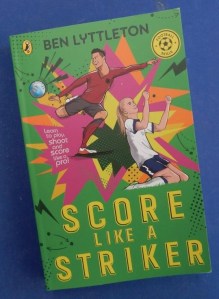
Score Like A Striker

Have you ever imagined yourself scoring the vital goal in the soccer World Cup final, if the answer’s yes, this first title in the author’s Football Skills series is likely to be the ideal book for you; it’s written by Ben Lyttleton, a former soccer scout, now broadcaster, football club co-owner and penalty coach.

The author showcases and analyses the techniques used by brilliant goal-scorers such as Lionel Messi, Harry Kane and Chloe Kelly (she who scored the winning penalty against Spain in a thrilling penalty shootout which secured England the UEFA Women’s Championship a few days back); showing readers what is necessary to become a shining star on the pitch. First you need to love the game for its own sake, but in addition to skill, a great deal of practice, dogged determination and resilience are necessary; so too is a willingness to learn from your own mistakes.

The chapters are kept short, the facts are punchy, there’s humour in the writing and the illustrations are detailed, so whether readers want to sharpen their footie skills or just read yet more about their favourite sport, then they should get hold of a copy.

The Football Encyclopedia

Are you looking for a special book for a soccer-loving child? If so then this could be the answer; it comes from the same team that write the hugely popular Football School series and is illustrated in vibrant colour by Spike Ferrell.

Bellos and Lyttleton’s approach is to help readers comprehend the world through soccer thus enlarging their understanding of bigger issues such as national identity, gender equality, human rights and technology, as they peruse the book. There are five sections, each of which concludes with a quiz.

Section one, The Game includes the worldwide origins of the game in Africa, Asia, Europe, the Americas and Oceania and a highly amusing visual timeline. There’s also a very clear explanation of how to play the game with its rules and laws – vital for a reviewer like myself whose knowledge of the game is pretty poor, as well as pages on shirts and other kit, the ball, and a final ‘gallery of the greats’.

The Clubs deals with football clubs in the UK and around the world, leagues, competitions, kit colours, mascots, stadiums, and a useful, interesting section on how clubs are structured and funded.
The third part begins with a spread documenting the birth of international football, followed by another on flags, pages on the World Cup, both men’s and women’s, the Euros and more. I love the spread presenting the various animal nicknames of some countries.
Next, the Football Family charts a possible path to becoming a professional player, then explains what it’s like so to be – this covers nutrition, resting and recovery;

we also learn about the role of a coach, the referee and tactics.
Finally, Football Everywhere underscores the authors’ conviction that football is a good starting point for learning, with ten sections examining football ‘through ten different lenses from numbers and language to technology and the future’.

Both full of information and highly entertaining, I envisage if this is put in a classroom, there will either be groups of children clamouring to read it together, or a queue of individuals needing to create a rota to feast their eyes on it.