The Dress in the Window

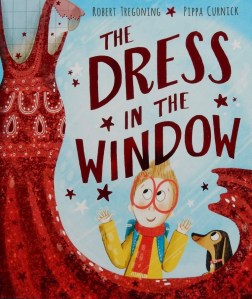
One day when walking through town with his mum, a boy spots a sparkling red dress in the window of a second-hand shop. Dazzling and flowing, the dress seems to be asking the boy to stop and take notice, so he does. He imagines who might have owned the dress previously but the lad knows how amazing it would make him feel.

Rather than offering to buy it for her son, Mum suggests he earns some money by doing chores for other people so he can pay for it himself. This he does by washing cars, helping with housework, tending a neighbour’s garden and doing a bit of pet care.
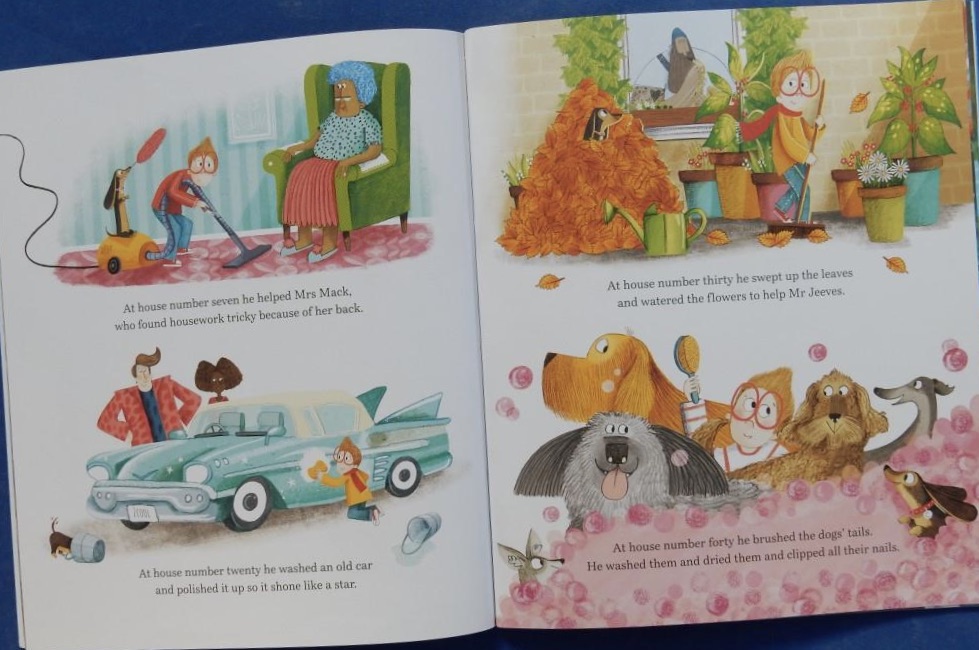
Gradually the money mounts up till the boy has sufficient to buy the dress.

Next day is his birthday and after school, the boy can hardly wait to return to the secondhand shop and make his longed for purchase. Horror or horrors! The dress has gone from the window. Mum pacifies her son with talk of presents waiting at home and when they get there, it’s not just presents waiting for him. All the neighbours are there too and they have a tea party.

Then comes present-opening time. Joy of joys, when he opens the present from Mum, there is the shimmering, glimmering dress. How he smiles, how he sparkles as he dances with delight – right out of the house and into the street.
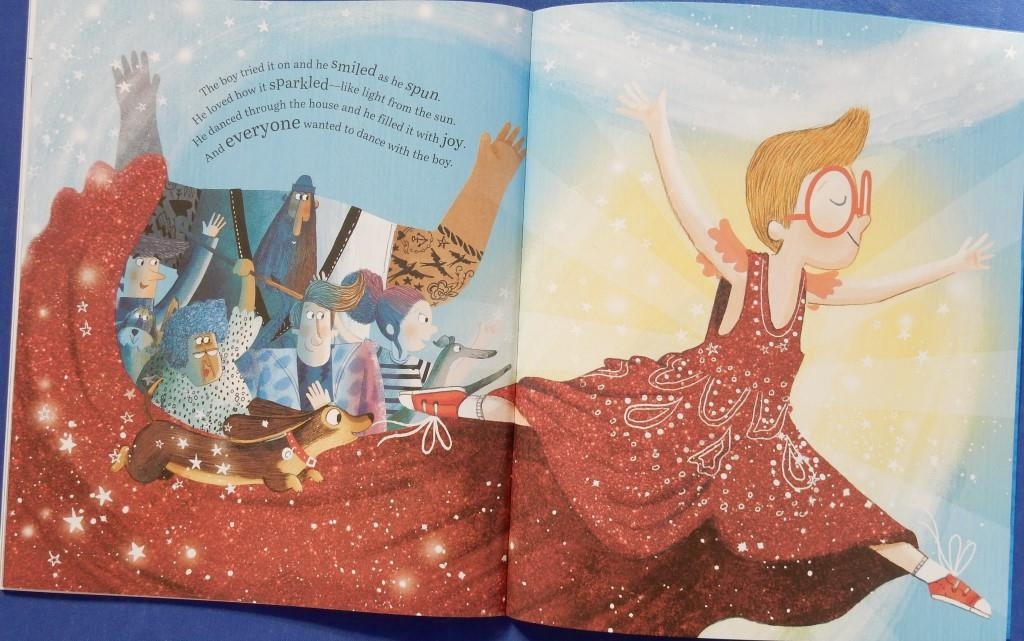

What a splendidly joyous celebration of being true to yourself. With its themes of unconditional love and acceptance, this lovely story is a demonstration of just how amazing life can be when you have the support to be true to yourself. The combination of Robert Tregoning’s rhyming text that is a treat to read aloud and Pippa Curnick’s gorgeous illustrations make this a very special book to share with young listeners at home or in the classroom.
Penguins Don’t Wear Pink / Missing Violet

Penguins Don’t Wear Pink
Jeffrey Turner
Beaming Books

Henry the penguin has a passion for pink things but best of all is his pink peaked cap, which he wears to school every day. The other animals’ teasing causes him to do some thinking 

and he decides to wear a hat of a different colour. Nobody comments on his green hat the following day, nor the blue one or the orange one on the next two days. Henry has another think and decides that no matter what his fellow students might say, he’ll wear the pink hat again on the fourth day. Will the response be any different this time? What do you think?

Brightly illustrated this is a sweet story about having the confidence to be yourself, able to wear any colour you choose, no matter who you are or what others think.

A helpful book to start a discussion with young children.

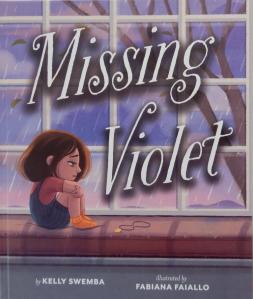
Missing Violet
Kelly Swemba and Fabian Faiallo
Beaming Books

The young narrator of this story talks of her best friend Violet, as ‘an expert at spreading sunshine. Her healing hugs made falls hurt less.’ So when Violet becomes very sick and then dies unexpectedly, the narrator experiences ‘a swirl of feelings all at once’. 

We share her emotions ‘My heart pinched. My insides ached’ first through a rainbow of swirling colours 

and then when she visits a counsellor, through separate colours: orange for bewilderment, red for anger, blue for deep sadness.

When she turns to her mum for further help, the two of them paint pictures of the two girls together and decorate a special box in which to keep them. Still the tears come so she tries talking to her classmates and discovers that they too miss Violet. They decide to say goodbye to their friend by writing notes to Violet and blowing bubbles in the school playground in a gentle farewell ritual. 

With its hopeful ending, this story of loss and grief is pitched just at the right level for young children.

John’s Turn

John’s Turn
Mac Barnett and Kate Berube
Walker Books

As the story opens we’re party to an event in the school canteen; here every Friday a school assembly takes place and one pupil presents something in what’s called the ‘Sharing Gifts’ performance. On this Friday it’s John’s turn and it’s pretty clear that he’s feeling nervous as he eats breakfast and dons his attire. Singing over, Mr Ross introduces John and out the boy steps as the curtain is pulled aside.

There’s some sniggering at the music that starts playing (‘strings, violins and things, and then maybe flutes’)

and the dance begins.

We’re treated to a sequence of double-page spreads – three wordless, two almost so – showcasing John’s moves: how stunning they are as we see his facial expressions and body language change as his fears dissipate and seemingly effortless, graceful capability takes over making him joyful.

Joyful too are the members of the audience as their doubts turn to real appreciation.

Kate Berube’s paint and ink illustrations communicate John’s feelings and showcase his accomplished athletic performance superbly, perfectly complementing Mac Barnett’s text, which takes the form of a simple pertinent narration that one assumes is by one of John’s fellow pupils.


Wonderfully empowering, this is a gorgeous book about finding the courage to be your true self that will speak to any child.

Old Hat

Old Hat
Emily Gravett
Two Hoots
There’s certainly nothing old hat about Emily Gravett: her latest offering simply brims over with that droll sense of humour she has.
Are you a slavish follower of fashion, no matter whether or not the latest styles are right for you? Do you use clothes to express your personality or are they a means of hiding that true self? This is the question explored herein.
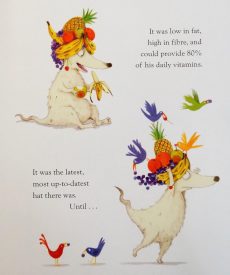
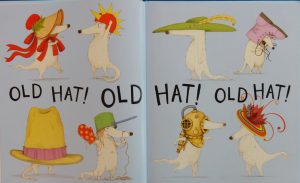
Harbet has a practical hat, a warm cosy, much loved one, knitted by his Nana; but teased by his so-called friends, he discards what they tell him is ‘OLD HAT’ and sets about becoming a follower of fashion.
The problem so splendidly examined has him sporting ever more outrageous styles of titfer. There are some absolutely amazing styles to feast your eyes on: the vitamin-loaded, high fibre fruity kinds are most tasteful …

and the intricately drawn, elaborate nautical styles are truly mind blowing.

The trouble is once he’s left the hat shop, his particular model is already so OLD HAT!

What is a chap to do? There’s only one thing for it: Harbet must eschew all forms of headwear and set his own trend.
Hats off to Harbet for learning a crucial lesson about celebrating one’s own uniqueness rather than trying to be like others, a dedicated follower of fashion.
This is one that will be appreciated by adults as much as young readers, and might well spark off some millinery manipulation in the nursery or classroom.

I’ve signed the charter