Mae and Gerty and the Matter With Matter / Let’s Build / Weather

This image has an empty alt attribute; its file name is dscn9939-1.jpg

Science and story come together in this picture book.


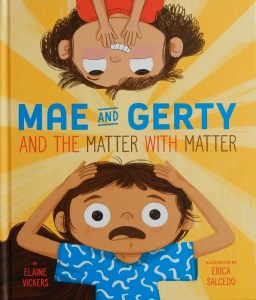
Mae and Gerty are sisters but they are very different. Mae, the elder of the two becomes increasingly annoyed when her parents constantly talk about their notions that Gerty is showing a scientific bent at so young an age; indeed the very first word she said was ‘madda’. Dad is forever drawing attention to her actions: “Look at all the ways she can manipulate matter: pushing, pulling and colliding!” he comments one bath time.

Gerty certainly does love mess making,

This image has an empty alt attribute; its file name is dscn9940-1.jpg

trying things out, constantly asks questions. These are exactly the things scientists do and during the story, both siblings discover that this is so, for Mae decides to show her mum and dad that she too can do all that Gerty does. They start exploring together and soon they become a true science team taking every opportunity to experiment, asking Why? Why? Why?

This image has an empty alt attribute; its file name is dscn9941-1.jpg

Some of their experiments in the kitchen produce matter of a very tasty kind but most important of all is that with their parents’ encouragement the siblings’ eyes and minds are always open to the scientific possibilities the world offers.


After the narrative, the author provides some questions adults might discuss with young listeners and there’s also a bubble recipe. Erica Salcedo’s wonderfully expressive scenes of the girls’ interactions with matter really brings out the importance of letting children explore the world with all their senses.

There’s more science in


This image has an empty alt attribute; its file name is dscn9898-1.jpg

These are both additions to the Science Words for Little People series.
In Let’s Build, the children are going to make a car wash and the book takes us through the stages involved in its construction from drawing up a plan to the finished building. The simple text is split between a straightforward narrative and speech bubbles containing the child constructors’ comments. Key words – materials, invent, tinker, forces, magnets, strong foundations, machines, movement solving problems, energy are used as headings for each of the twelve spreads, the twelfth being ‘all about building’ whereon readers are asked leading questions to get them thinking about their own projects.
The final spread gives ideas to adults to help them get the most from this book and Weather.
Similarly organised, the latter uses key terms including meteorology, atmosphere, various cloud names, cyclones, hurricanes, tornadoes and hurricanes in the brief narrative that has spreads on sun, clouds, rain, a rainbow, wind, storm, snow, seasons, weather watching and climate.


Visually and verbally engaging with a diverse group of child characters, both titles are worth adding to early years collections.


Remembering Sundays With Grandpa

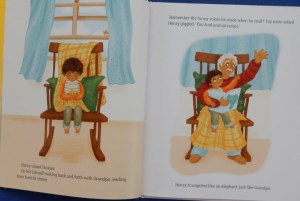
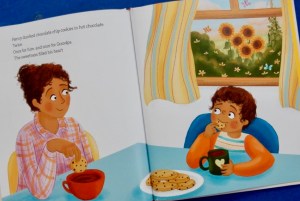
It’s Sunday morning and Henry has woken up feeling sad.. His Grandpa died just a short while ago and the boy goes downstairs to share a hug with his mum. She responds to Henry’s “Why did he have to die?” question by saying that Grandpa’s body had become too frail but his love will live on forever. She goes on to show the boy how she knows this is so. First she suggests he should sit in the rocking chair and having shut his eyes, Henry is able to feel Grandpa’s presence when they read stories together.

Out in the garden the cucumber vines offer another reminder, this time of how Grandpa got hiccups when he ate their fruits.

Back indoors they continue looking: Henry finds other reminders – a crab hat, Mum’s musical jewellery box and she in turn sees Grandpa in Henry’s features. Most importantly though, they both know that Grandpa is always in their hearts and Henry then thinks of another place they’ll always find Grandpa’s love, which leads to a special ritual every Sunday henceforward …

A gentle story of loss that reminds readers that although a person is no longer physically present, their love lives on forever and always.

The Infinity Rainbow Club: Viola and the Jurassic Land Exhibit

In this, the second in The Infinity Rainbow Club series, the focus is on Violet. Readers of the first story will recognise her as Nick’s friend and classmate who is learning to manage her OCD. Now the two are partners at a dig being undertaken by palaeontologists including Violet’s mum who works at a natural history museum and her dad, a botanist.. The teacher in charge of the Infinity Rainbow Club. Ms Daisy has arranged for all members plus families to join the dig at Paleo Park over the weekend.

No sooner have the children begun work than Violet and Nick discover what could be a dinosaur bone and sure enough, straightaway Violet’s’s intrusive thoughts start up. She constantly checks her work and worries that how ever carefully she does everything, something will go wrong. What she needs to do is to find how to trust what she’s doing and to enjoy enjoy the Jurassic Land exhibit that is the outcome of all the effort she and the others – Nick especially – have put in.

Jen Malia once again provides a child-friendly picture of a neurodivergent child and her supportive family that includes the wonderful Lao Lao, her grandmother.

A book to share with younger KS2 children who will gain a valuable insight into obsessive compulsive disorder and how one individual manages anxiety, intrusive thoughts and repetitive behaviours.

The Infinity Rainbow Club: Nick and the Brick Builder Challenge

This, the first of a new series, follows Nick, who like the book’s author is neurodivergent. This means that he experiences the world differently from many of his primary school classmates who do not have autism.

When teacher, Ms Daisy, announces to members of the Infinite Rainbow Club that the children are going to participate in the very first Brick Builder Challenge and asks them to choose partners, Nick realises that with eleven in the group, one person will be left without a partner and he hopes it will be him. He prefers working alone. However, he’s then told he will partner a new girl, Ruby who is joining the club the following week.

We stand behind Nick’s head as he endeavours to get on with his siblings, share his friends with others and, having qualified for the finals of the Brick Builder Challenge, heed the warning he must do better in working collaboratively if he and Ruby are to win the district competition.

Can Nick manage to do this?

Having taught quite a lot of neurodivergent children in my time as a primary school teacher, I know that in each one, the condition manifests itself differently. Jen Malia shows this so well in the story: I love the way Ms Daisy addresses the group as ‘Brilliant buzzing brains’. I also love the way his empathetic mother gently supports Nick, especially when his emotions overwhelm him. Woven into the story too are ways in which the children learn and use coping strategies – breathing techniques, fidget toys, wobble cushions and spend time in the sensory gym – a helpful insight for neurotypical readers.

With engaging illustrations by Peter Francis, this is a book to include in KS2 class collections.

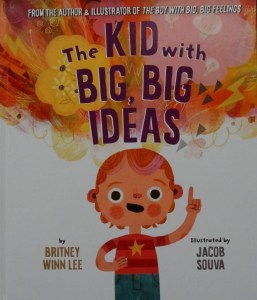
Kaia’s Big Felines / Duck, Duck, Tiger / The Kid with Big, Big Ideas

Like all young children, Kaia has a multitude of feelings and emotions, each of which she associates with a different kind of cat and she loves to play with these creatures in her mind.
She sees herself as fast and fearless like Cheetah, loves to be in the spotlight like Leopard, is sometimes carefree and lighthearted like Puma, quiet and calm like Snow Leopard, and identifies with Tiger’s fierce temper. When her emotions become too intense, she needs to take some quiet time alone to rest and regain her equanimity. After this her friends can return and it’s time for some peaceful shuteye.

A charming, beautifully illustrated book to show youngsters that we experience a variety of feelings and that there are times when we all feel emotionally overwhelmed. A helpful starting point for a KS1 classroom circle time discussion.

Lila feels out of place all the time, like a tiger in a world full of ducks. She struggles with her feelings of otherness and in order to belong and not be rejected, she hides her true self and tries her best to be a duck. Eventually though, her efforts at pretence take their toll and she can’t cope any more so she decides to confide in her Gran. Gran’s empathetic response is such that it encourages Lila to embrace her true tiger self, to discover what true pride really means for her.

An affirming picture book that uses a feline metaphor was inspired by the author’s childhood experiences. Yes, this boldly illustrated, affirming book is about and based on the acceptance of an LQBTQ+ identity, but the story is equally applicable to those who feel different in any way, offering a safe space within which to talk about feelings of otherness and discuss embracing our unique selves, acceptance, and self-pride.

Listen carefully to children’s ideas is the message that comes across loud and clear from this rhyming story, which begins like this: ‘There once was a kid with glittery nails / who always wore colorful socks, /and all around town, this child was known / for thinking outside of the box.’ Hurrah! a creative, divergent thinker. In this instance a nonbinary child with ideas so big and wild that grown-ups often dismiss them. I love this, “Imagine if everyone was accepted, / with curiosity and an open mind. / And if every place in the world was safe / and every person you met was kind!”
Sadly this child begins to lose heart having overheard a discussion on Gran’s tv news. However Gran is a supportive person and with her encouragement and help, the two of them come up with the biggest idea so far – Just Ask Kids – a programme where people of all ages and stages come together on air and endeavour to solve problems by using their imaginations.
Although things are improving in this respect, children are all too frequently excluded from decision making. We need to be braver and bolder and accept that children’s voices need to be heard; some of their ideas might set our world on the road to real progress. Illustrator Jacob Sousa has used his imagination to great effect in his portrayal of this book’s protagonist and the way in which one community is opened up to change.
We Are Expecting You! / Dear Star Baby

We Are Expecting You!
Barney Salzburg
Scholastic

Little elephant excitedly anticipates the arrival of a new sibling but it’s hard having to wait so long. However the little purple pachyderm goes through all the things the two siblings will do together- play peekaboo, tell jokes for instance. “I will read to you. I can sing to you. …

We can dance together. …”

Reminding this reviewer somewhat of Mo Willems’ artwork, Saltburg’s simple, stylised illustrations show the little elephant always close to its expectant mother directly addressing her bump until the wait almost gets too much and its “I can’t wait for you to be here” changes into a very loud assertion of readiness. All the time the focus of the brief text is on what the siblings will share, making this a warm and captivating way to introduce the notion of a growing family to a very young child.

Sadly not all pregnancies end in a joyful outcome as we see in

Dear Star Baby
Malcolm Newsome and Kamala Nair
Beaming Books

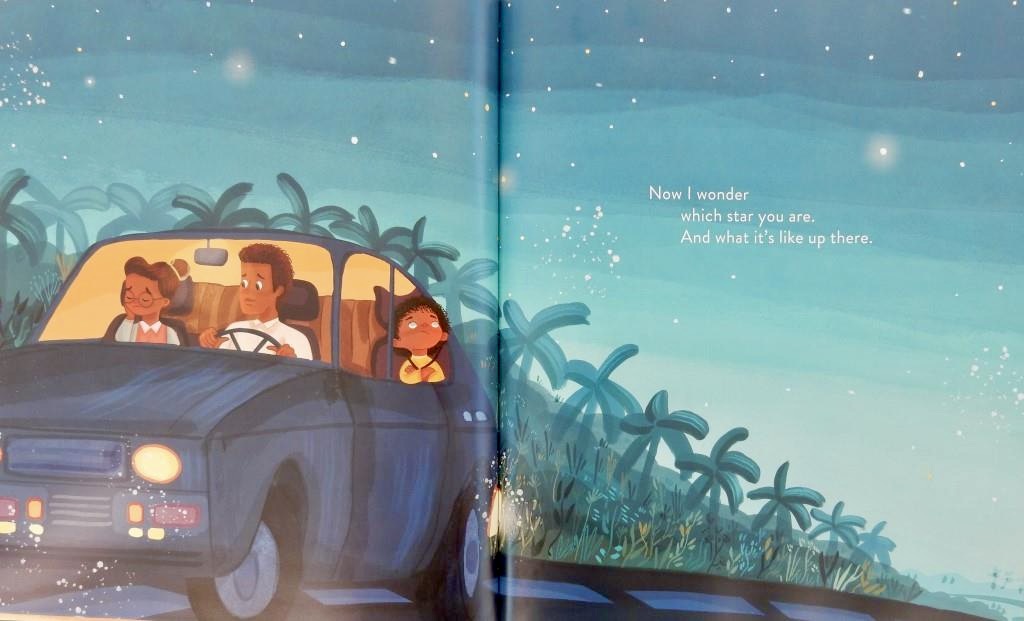
This is a heartfelt story written as a letter from a small boy to his baby sibling that didn’t come home. He starts by saying how happy he felt as he helped his Daddy prepare the room, accompanied his Mama to buy some gifts and Dad shared stories about being a helpful big brother. But then Mama goes to hospital and his parents have to break some very difficult news: the baby won’t be coming home after all, and has gone to be with the stars.

He goes on to talk about the things he was looking forward to doing with his sibling and how the family members process their grief after this devastating loss.

Miscarriage is something many families experience and Malcom Newsome’s tender telling written out of his own personal experience, and Kamala Nair’s equally tender illustrations expressing love, loss and remembrance, offer a safe space for those who lose a baby through miscarriage, as they share the book.

What’s That, Jack? / Doe’s Dandelions

What’s That, Jack?
Cédric Ramadier and Vincent Borgeau
Gecko Press

Jack, a short black dog is with George, his tall blue pooch pal. Suddenly they see a large dark blue sphere falling through the sky. It ‘bomphs’ down right close to them as Jack dozes. Waking up his pal, George asks, ‘Hey! What’s that, Jack?’ But Jack knows not. 

They start to investigate by poking, prodding and pushing the thing, which starts to roll. With it go the two dogs and when it reaches a cliff edge, over they go. The same “What is it, Jack’ prompts the response ’It might be a parachute!’ as the thing flattens out and they each grab hold of the side, floating down into a river. Therein the thing morphs into a raft and once on land again, further possibilities emerge.

But then after a night’s sleep, the two watch as the object disappears once more, just as mysteriously as it came leaving the friends none the wiser as to its identity. One thing they do agree on though is that ’it was wonderful.’

Written by Cédric Ramadier in a simple manner with repeat phrases to join in with, and illustrated in a bold, naive style, by Vincent Borgeau, this adventure presents the idea of uncertainty in a playful manner that young children can relate to. It works either as a read aloud for a group or class, or with its patterned text, as a solo read for those starting to read for themselves.

Doe’s Dandelions
Laura Renauld and Jennie Poh
Beaming Books

Almost everywhere I walk or drive at the moment I see fields, banks and verges covered with dandelions – weeds to many humans but a gorgeous splash of colour for others. This book, which features Doe and her animal friends has a similar theme.

As the story starts Doe is eagerly anticipating showing her daffodils in the Spring Petal Parade. However as she looks around her garden she notices something else has crept into her daffodil bed – dandelions and they’re popping up everywhere. Off she goes to warn her friends about the dastardly dandelion invasion.

However she soon learns that not everyone views dandelions as a nuisance. Porcupine enjoys eating the leaves; 

Squirrel calls them ‘tiny suns’ and considers they mix well with her snowdrops and Bear has a yard full of them and uses them as a feature in his wishing garden.

Astonished at the different perspectives, she now has a much wider view of something she once thought was a problem. Will she include them in her exhibit for the Petal Parade? What do you think? And what about her friends; will it be a case of – daffo-do or daffo-don’t?


A joyful celebration of friendship and nature, beautifully illustrated by Jennie Po whose textured, patterned art is a delight. Look at each scene closely or you may well miss some of the details such as minibeasts. (The final spread gives a step-by-step guide to holding your own petal parade.)

Penguins Don’t Wear Pink / Missing Violet

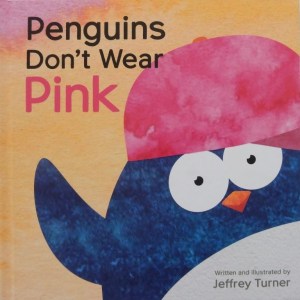
Penguins Don’t Wear Pink
Jeffrey Turner
Beaming Books

Henry the penguin has a passion for pink things but best of all is his pink peaked cap, which he wears to school every day. The other animals’ teasing causes him to do some thinking 

and he decides to wear a hat of a different colour. Nobody comments on his green hat the following day, nor the blue one or the orange one on the next two days. Henry has another think and decides that no matter what his fellow students might say, he’ll wear the pink hat again on the fourth day. Will the response be any different this time? What do you think?

Brightly illustrated this is a sweet story about having the confidence to be yourself, able to wear any colour you choose, no matter who you are or what others think.

A helpful book to start a discussion with young children.

Missing Violet
Kelly Swemba and Fabian Faiallo
Beaming Books

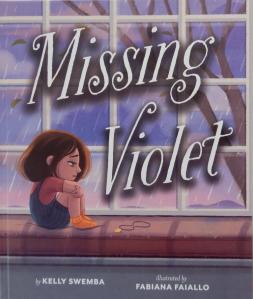
The young narrator of this story talks of her best friend Violet, as ‘an expert at spreading sunshine. Her healing hugs made falls hurt less.’ So when Violet becomes very sick and then dies unexpectedly, the narrator experiences ‘a swirl of feelings all at once’. 

We share her emotions ‘My heart pinched. My insides ached’ first through a rainbow of swirling colours 

and then when she visits a counsellor, through separate colours: orange for bewilderment, red for anger, blue for deep sadness.

When she turns to her mum for further help, the two of them paint pictures of the two girls together and decorate a special box in which to keep them. Still the tears come so she tries talking to her classmates and discovers that they too miss Violet. They decide to say goodbye to their friend by writing notes to Violet and blowing bubbles in the school playground in a gentle farewell ritual. 

With its hopeful ending, this story of loss and grief is pitched just at the right level for young children.

Marvellous Margot / Nila’s Perfect Coat

Marvellous Margot
Lou Peacock and Ingela P Arrhenius
Nosy Crow

Margot has a big heart and is always ready to lend a helping paw to her friends; she’s also aware that cake and kindness are the ideal combination. With that in mind, one sunny morning she bakes a special cake for her pal Oscar, places it in her little wagon and sets out through the city to Oscar’s home. 

On the way though she encounters several other friends each of which is either upset, cross or frustrated. Now Margot has a fix-it attitude and stops to assist each one, also offering them a slice of Oscar’s cake once their problems are solved. 

You’ve probably guessed what has happened to the cake by the time she arrives at Oscar’s but he greets her with a big hug, kind words and a surprise.

Lou Peacock’s wonderfully warm story with themes of friendship and kindness and the repeat refrains for joining in with, is charmingly illustrated by Ingela P Arrhenius with sufficient detail and bright colours to keep youngsters engaged.
Share with little ones at home or in a foundation stage setting. Teachers, there’s lots of potential if you read it in the classroom.

Also with themes of kindness and friendship is

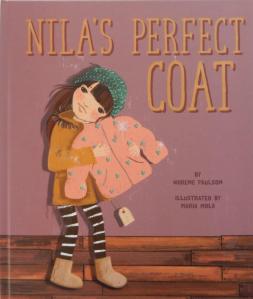
Nila’s Perfect Coat
Norene Paulson and Maria Mola
Beaming Books

Nila enjoys ‘treasure hunting’ in charity shops and one day when out shopping with her Mum, a coat catches her eye. It’s warm and a perfect fit but her mum tells her that she doesn’t need another one. However she is willing to let her buy it using birthday money given to her by her Dad, if he agrees. Meanwhile it must go back on the stand. Dashing out to catch the bus the following morning, Nila forgets her coat, only to find there’s another girl, Lily also sans coat. This means both girls have to stay inside at playtime as it’s cold. Nila’s invitation to Lily to join her in a game is turned down: in fact Lily seems distant and the mention of a coat by their teacher at hometime upsets her.

Having spent the weekend with her Dad and getting the go ahead for the purchase of the coat, they go back to the charity shop and Nila makes the purchase. As they walk past Lily’s home, she notices a For Sale sign outside and Dad says “Her family is going through a hard time,”.

Back with her Mum, Nila contemplates her new coat 

and says that there is somebody who needs it much more than she does. Her decision about what she should do means that nobody has to stay inside during playtime on Monday.

This gentle lesson showing the difference between needing and wanting something, and the role of charity shops in reducing waste, is told in a non-preachy, sensitive way, and equally warm are Maria Mola’s illustrations

Mabel’s Topsy-Turvy Homes / Simon the Hugger

These are recent publications from Beaming Books – thanks to Suzy Senior and the publisher for sending them for review.

Mabel’s Topsy-Turvy Homes
Candy Wellins and Jess Rose

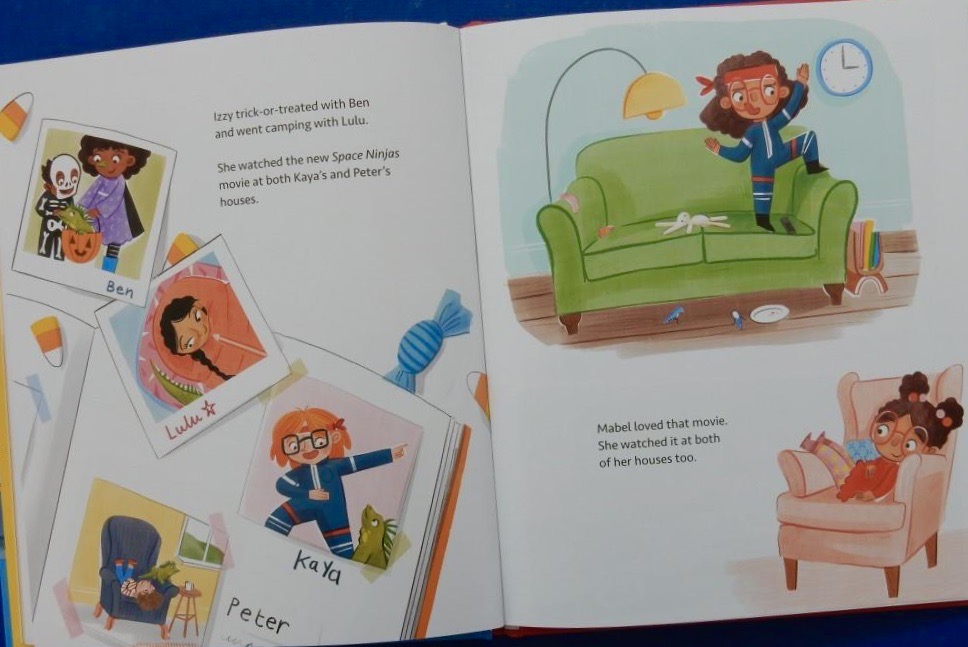
Many children find themselves facing a situation similar to that of Mabel the protagonist in this story. Her parents are separated and as a consequence she has to move back and forth between her mother’s and her father’s homes. With different layouts and different routines she finds this rather difficult to cope with.
When it’s Mabel’s turn to care for the class pet iguana for the weekend, having read the accompanying diary, she cannot help but compare her existence with that of a creature that is passed between many different homes and also has lots of fun adventures. In so doing she realises just how much fun she’s had and how having two homes has its advantages as well as downsides.

The book ends on an upbeat note, ‘… two houses means double the fun.’

With the diverse cast of characters shown in Jess Rose’s vibrant, expressive illustrations, the story provides children with a safe space within which to think about some of the unsettling feelings – positives and negatives – their own parents’ separation causes.

A useful book to have among class resources for a topic on families or homes.

Simon the Hugger
Stacy B. Davids and Ana Sebastián

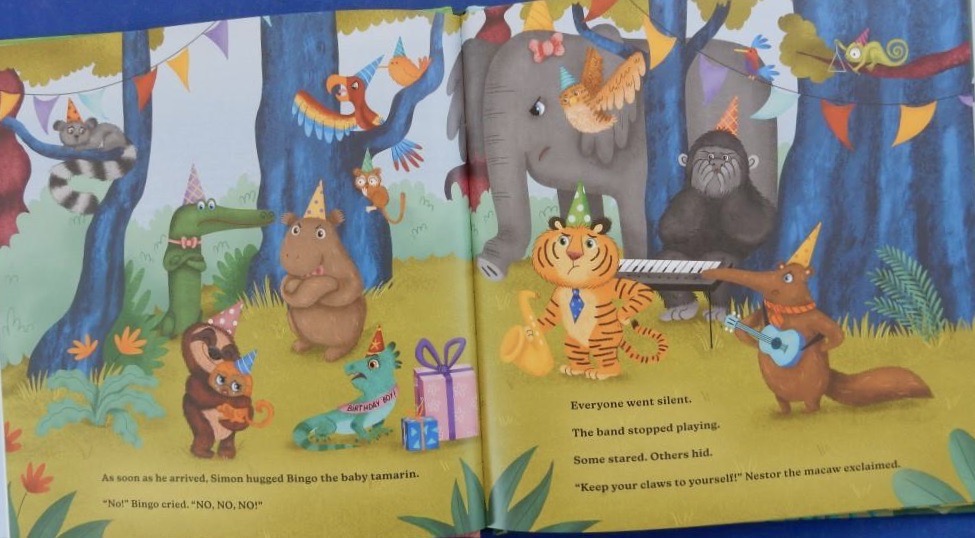
Simon the sloth loves to hug: he hugs pretty much anything and anyone from his friends and family to flowers and rocks, he even hugs himself.

But then one day his friend Elsa the jaguar doesn’t want his farewell hug at the end of their game, Trixy the owl turns down his congratulatory hug for her art prowess and when he tries hugging the baby Tamarin, Bingo, she too says “NO!”

Confused and upset, Simon makes himself a sign asking others to hug him. Along comes Ricky porcupine to do just that but as he advances, Simon realises that for the very first time he doesn’t want to be hugged. Ricky however is happy to offer an alternative way of showing friendship. That, and a cry of hurt from Elsa, help Simon realise that not everyone is in hugging mood at exactly the same time and the other person must always give their consent prior to a hug.

Cartoon style illustrations and a simple, straightforward text convey the important message about invading another’s personal space without their permission.

In the back matter, the author offers a guided discussion and questions that teachers and caregivers could use to discuss the topic with young children.

My Family and Other Families / Some Daddies

My Family and Other Families
Richard and Lewis Edwards-Middleton, illustrated by Andy Passchier
DK

In this story we follow Liam and his family on their visit to the funfair. Leo is super-excited at the prospect of riding on the big wheel, but with his ticket tucked into his pocket, we wonder if he’ll ever get to the wheel on time. There are so many other families there who all want to stop and chat – families that don’t necessarily look like his own but who all show loving care to their children just like his own. Suddenly Liam realises that his ticket is no longer in his pocket and he frantically retraces his steps asking the other visitors if they’ve seen it. 

Nobody has but everybody offers to join in the ticket search and eventually Liam has a ticket clasped tightly in his hand and he heads over to where a man is making that last call for riders to board the wheel. Now there’s one final opportunity for kindness so that all the children are able to have a ride.
The final sentence in the book, ‘A family is people who care about you’ sums up the authors’ crucial message of diversity and nicely rounds off the story.

Shown inside the front cover and hiding in plain sight in vibrant illustrations are thirteen hidden surprises that young children can search for during the telling. A book to add to collections in early years settings.

Some Daddies
Carol Gordon Ekster and Javiera Mac-lean Álvarez
Beaming Books

“Every daddy is different!” So goes the repeat refrain in this celebration of fathers of all kinds and their styles of parenting. Some are early risers, while others take a while to get going in the morning. Some drink coffee, some drink tea, some prefer a smoothie or water. Some wear suits, some don uniforms, and some work from home in their pyjamas! Some daddies are arty, some like growing things, some love to read. 

Daddies might be good cooks or they might rely on take-aways; some will bid you goodnight with a song, others with a bedtime story. Some are yours from the moment of your birth, others are not a biological relation and choose you later on, some share you with a mum, others with another dad. Yes there are many, many different ways that daddies can look, eat, work, play, and be; however there’s one thing all daddies have in common: daddies are special people who love their little ones.

Brightly coloured, slightly quirky illustrations support the upbeat text with its key message about similarities and differences.

The Island / Sarah Rising

These are two picture books that deal with current political events and issues.

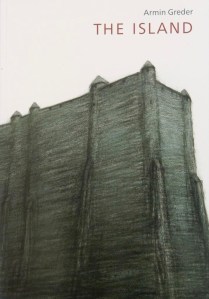
The Island
Armin Greder
Allen & Unwin

This is probably even more pertinent today than when it was first published in the UK around fifteen years ago.

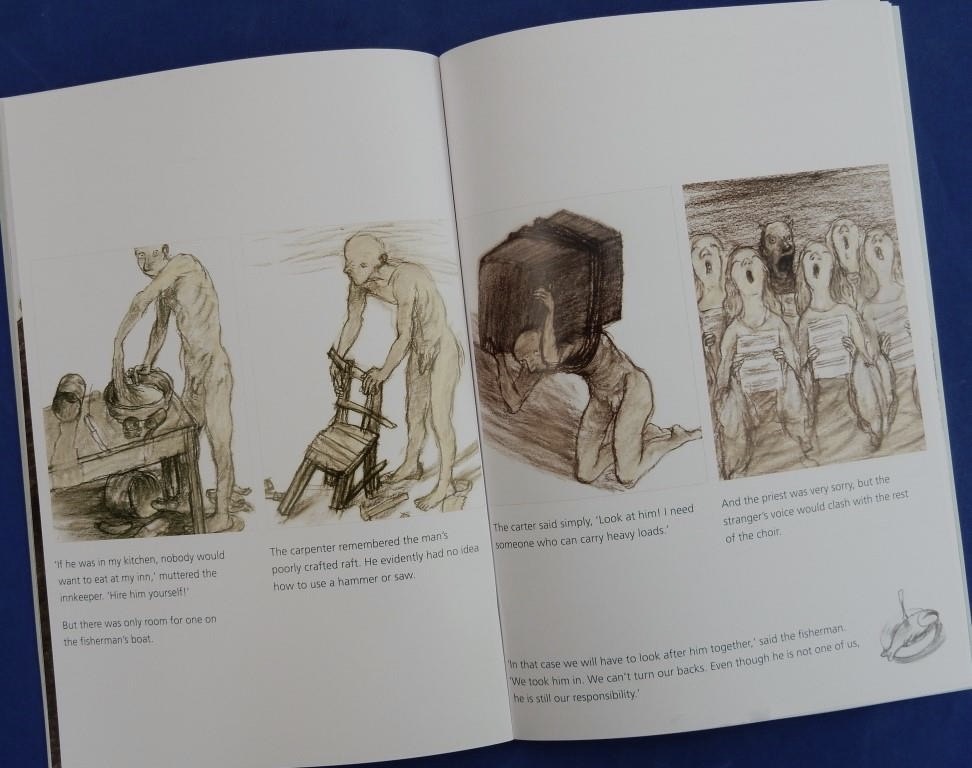
Washed ashore on his inadequate raft is a man, different from the islanders, which causes them to fear him, but a fisherman persuades the others to take him in. Reluctantly they do so but immediately send him to a deserted part of the island, locking him in a goat pen and leaving him alone. One morning though, the man appears in the town and again is met with hostility except from the fisherman who suggests the possibility of finding a job for the stranger. Excuses pour forth

and the man is returned to the pen but the islanders are increasingly hostile and eventually they reject him completely, savagely driving him with their farming implements, back into the sea.

They turn on the fisherman too, setting fire to his boat and fuelled by their fear, they erect a huge wall around their island to deter further newcomers.

With his brilliant combination of words and deliberately ugly unforgettable images, it feels to me as though Greder is holding up a mirror to the all too many people – including some in positions of power – who are unashamedly hostile towards refugees and asylum seekers. They are the ones who really need to read this book with its themes of prejudice, racism, xenophobia and human rights. With those intensely disturbing scenes of viciousness to another member of the human race, it’s impossible not to feel disgust and shame at such attitudes.

Sarah Rising
Ty Chapman and DeAnn Wiley
Beaming Books

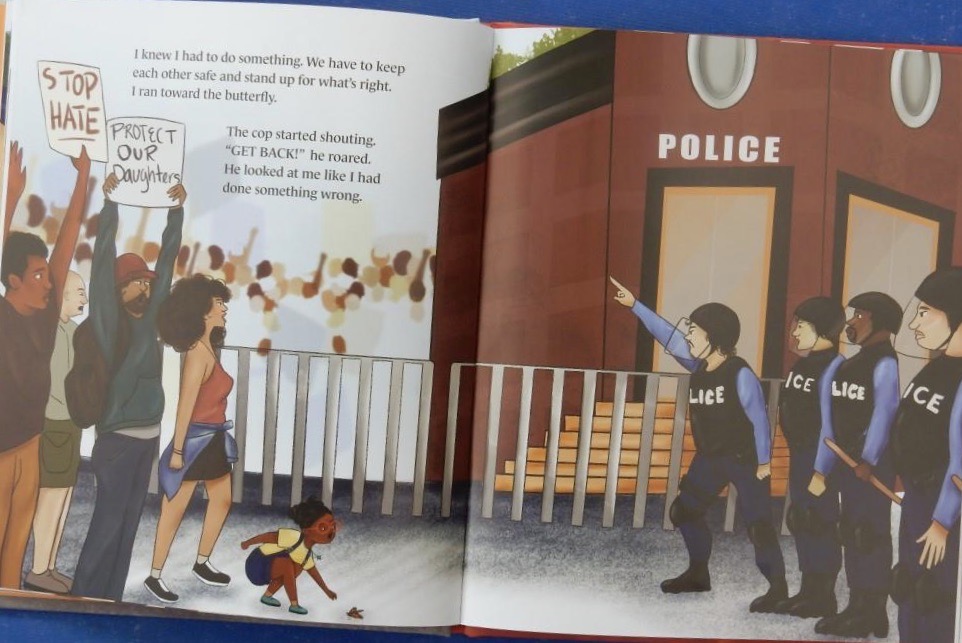
This first person narrative is presented by young Sarah whose day starts in the usual way having breakfast, feeding her insect pets and packing her things in her school bag. But then her Dad gives her some news that changes things completely: he tells her that the police have ‘killed another Black person.’ “They’re supposed to serve and protect us … but they hurt us instead.” ‘ He takes his daughter along to a protest; she joins the throng demanding justice and in so doing she sees for herself the cruel way a police officer attacks a harmless butterfly. Sarah rescues the butterfly left lying on the ground

and rejoins the marching crowd but suddenly realises that in so doing she’s lost her Dad. However with the help of a kindly woman who sees her distress, together with her own inner strength, she gradually overcomes her fear and is eventually reunited with her Dad. A scary experience for first time activist Sarah but one that will surely be the first of many demonstrations of dissent designed to make a crucial difference.

Vividly illustrated by DeAnn Wiley whose scenes include one showing murals of George Floyd and Breonna Taylor, both of whom were brutally killed by the US police – a vivid reminder of these terrible events. If a girl like Sarah can make a difference so can youngsters everywhere: backmatter includes some suggestions of ways to create change in a community.

The Perfect Present / Tofu Takes Time

The Perfect Present
Petr Horáček
Otter-Barry Books

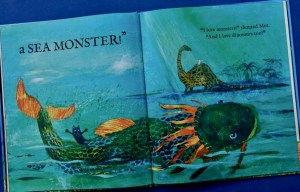
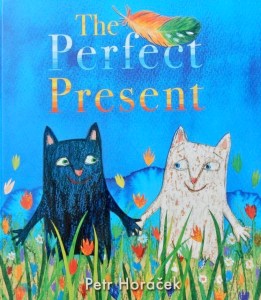
Mot and Tom are the best of friends; they also share a birthday on which they exchange gifts. Tom gives Mot a multi-coloured feather which his friend imagines might be from the world’s most spectacular bird. Mot gives Tom a marble, also multi-coloured; could that perhaps be the universe’s smallest planet. Tom would love to give his friend an entire ocean alive with creatures large and small, perhaps even a monster

and a host of wild animals like lions, monkeys and an elephant. Mot’s choices to give Tom are hills, rivers, forests and mountains, the sun too.

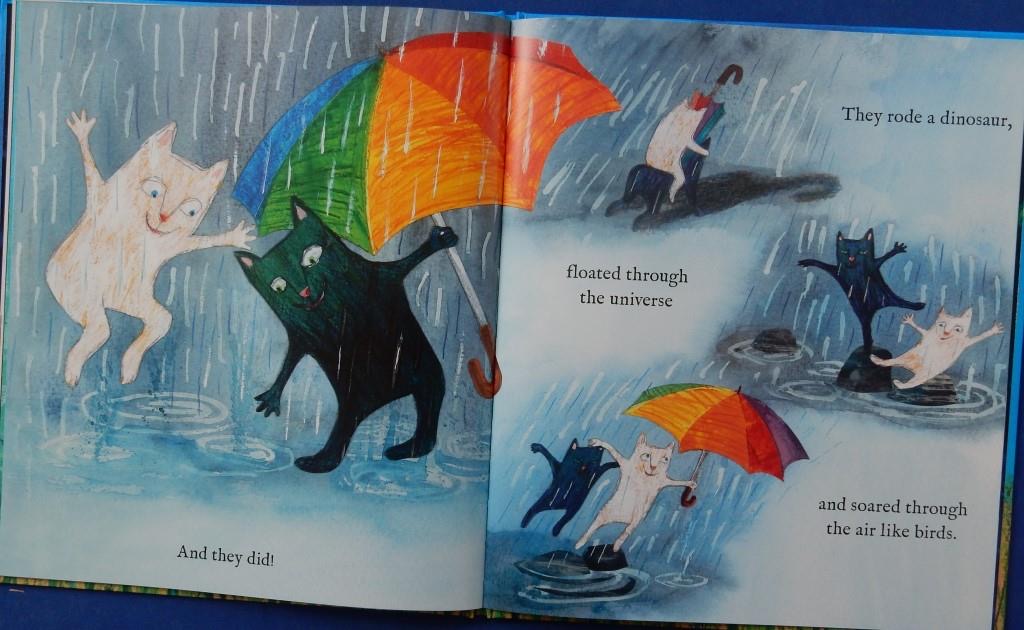
Having spent a long time in all these imaginings the two friends go outdoors to play in the rain

and then back indoors after a bath together they share a scrumptious birthday tea. I wonder what Tom and Mot decided was the best present of all as they snuggled down ready for sleep.

Petr Horáček’s vibrant mixed media illustrations radiate the warmth these two moggy pals share in this gorgeous celebration of friendship and the power of the imagination that’s perfect for giving and sharing with young humans on any day but perhaps birthdays especially.

Also showing the importance of spending time together is

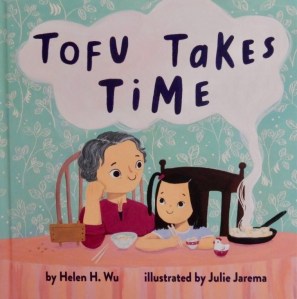
Tofu Takes Time
Helen H. Wu and Julia Jarema
Beaming Books

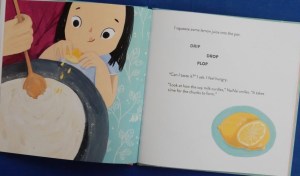
Instead of popping to the supermarket to buy readymade tofu, it’s a case of PLINK PLANK PLUNK followed by CLICK CLACK WHIRRRR as Lin’s grandmother, NaiNai begins making tofu from scratch, watched by the little girl who is impatient to see the finished product. But all good things take time and patience, and that is what NaiNai tells Lin from the outset as she gradually involves her in some of the tofu-making tasks including straining the soy milk, lemon squeezing

and squishing and moulding the curds into shape.

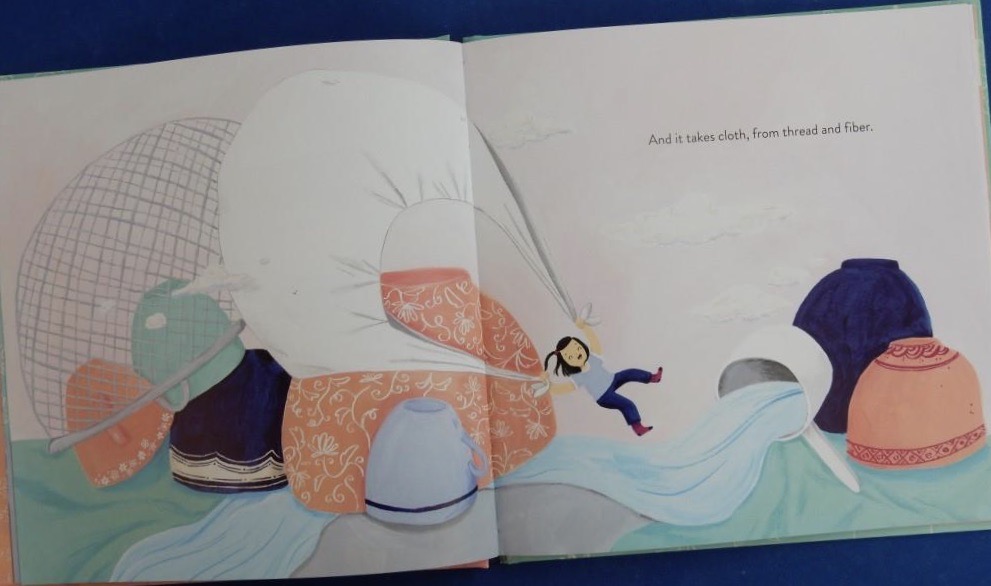
However, as Lin gradually learns, the tofu making process not only takes time, it takes the whole universe too. It takes the seed from soil and sunshine, the cloth from thread and fibre,

weight and space, stories and pictures from books: and most of all, it takes spending precious time with her much-loved grandmother.

Julia Jarema’s illustrations have a feeling of gentleness, as they alternate between details of the tofu-making and Lin’s imaginings in Helen Wu’s tasty tale of patience and delayed gratification. Her inclusion of playful, onomatopoeic language and NaiNai’s repeat phrase add to the fun for young listeners; and her ‘more about tofu’ and author’s note will interest both adults and youngsters with an interest in cooking.