These are two picture books that deal with current political events and issues.
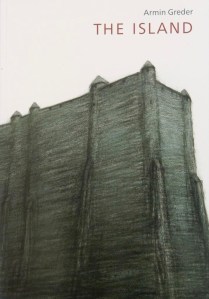
The Island
Armin Greder
Allen & Unwin
This is probably even more pertinent today than when it was first published in the UK around fifteen years ago.
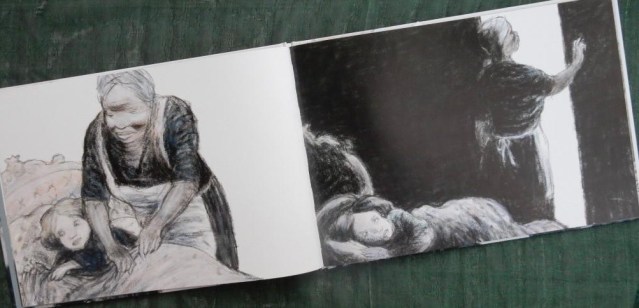
Washed ashore on his inadequate raft is a man, different from the islanders, which causes them to fear him, but a fisherman persuades the others to take him in. Reluctantly they do so but immediately send him to a deserted part of the island, locking him in a goat pen and leaving him alone. One morning though, the man appears in the town and again is met with hostility except from the fisherman who suggests the possibility of finding a job for the stranger. Excuses pour forth
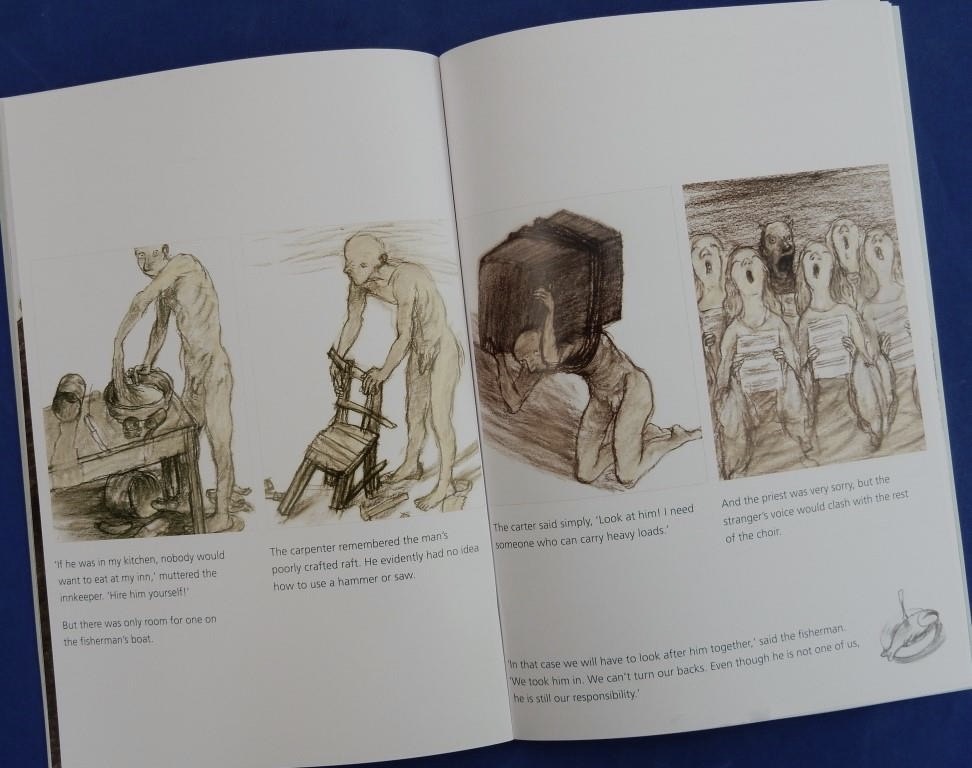
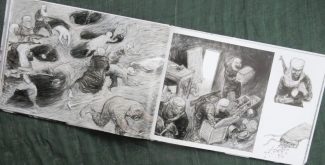
and the man is returned to the pen but the islanders are increasingly hostile and eventually they reject him completely, savagely driving him with their farming implements, back into the sea.

They turn on the fisherman too, setting fire to his boat and fuelled by their fear, they erect a huge wall around their island to deter further newcomers.
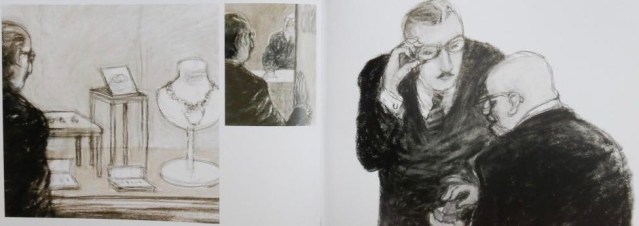
With his brilliant combination of words and deliberately ugly unforgettable images, it feels to me as though Greder is holding up a mirror to the all too many people – including some in positions of power – who are unashamedly hostile towards refugees and asylum seekers. They are the ones who really need to read this book with its themes of prejudice, racism, xenophobia and human rights. With those intensely disturbing scenes of viciousness to another member of the human race, it’s impossible not to feel disgust and shame at such attitudes.

Sarah Rising
Ty Chapman and DeAnn Wiley
Beaming Books
This first person narrative is presented by young Sarah whose day starts in the usual way having breakfast, feeding her insect pets and packing her things in her school bag. But then her Dad gives her some news that changes things completely: he tells her that the police have ‘killed another Black person.’ “They’re supposed to serve and protect us … but they hurt us instead.” ‘ He takes his daughter along to a protest; she joins the throng demanding justice and in so doing she sees for herself the cruel way a police officer attacks a harmless butterfly. Sarah rescues the butterfly left lying on the ground
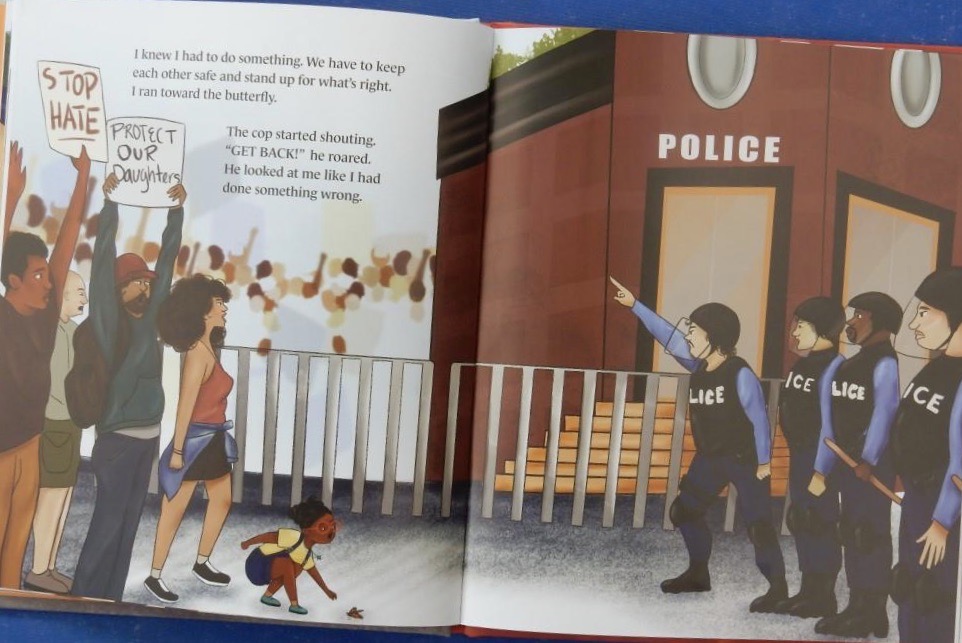
and rejoins the marching crowd but suddenly realises that in so doing she’s lost her Dad. However with the help of a kindly woman who sees her distress, together with her own inner strength, she gradually overcomes her fear and is eventually reunited with her Dad. A scary experience for first time activist Sarah but one that will surely be the first of many demonstrations of dissent designed to make a crucial difference.
Vividly illustrated by DeAnn Wiley whose scenes include one showing murals of George Floyd and Breonna Taylor, both of whom were brutally killed by the US police – a vivid reminder of these terrible events. If a girl like Sarah can make a difference so can youngsters everywhere: backmatter includes some suggestions of ways to create change in a community.
 Red Reading Hub - Jillrbennett's Reviews of Children's Books