Gloria Goes For Gold / Albert and the Flood

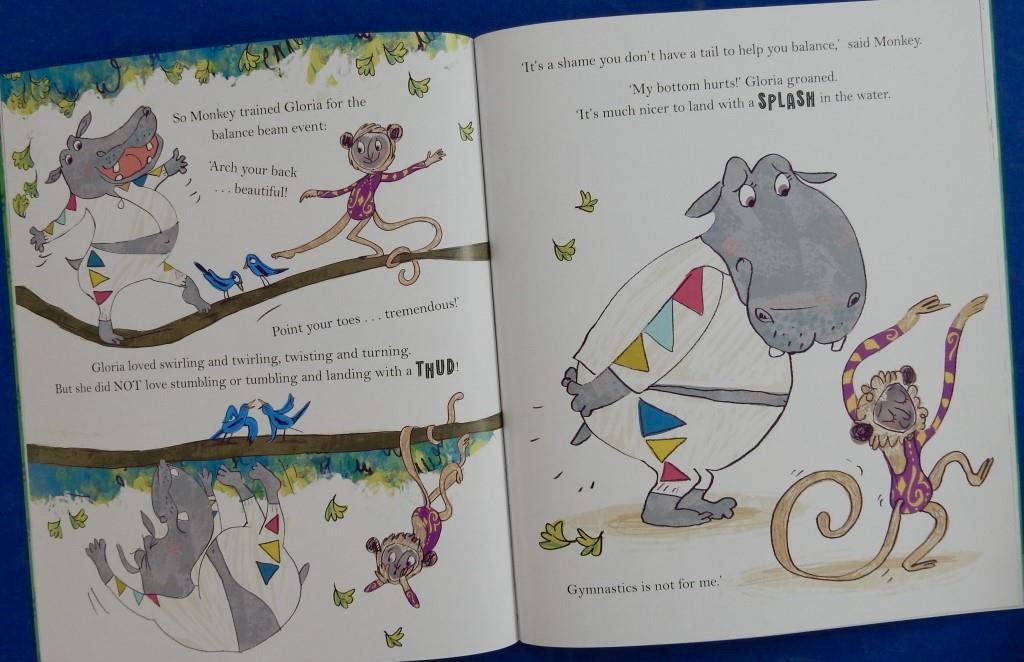
Of all the unlikely animals to be called graceful it’s Gloria the hippo and her family members, a champion- winning team of synchronised swimmers that always comes away with gold at the Artistic Swimming Championships. However Gloria is not as happy as the others about this: she longs for a prize she doesn’t have to share. Then comes a letter about the upcoming Savannah Games and Gloria decides to find a sport she can win solo. Off she goes leaving the other hippos to practise their routine and before long bumps right into sprinter Cheetah going so speedily she fails to see Gloria. The hippo decides she’d like to try sprinting and Cheetah offers to coach her. Pretty soon Gloria realises that this sport isn’t for her and as she sits beneath a tree contemplating what next, down swings Monkey. He makes gymnastics appear great fun but Gloria quickly discovers that she’s not cut out for being a gymnast.
Nor does she take to distance swimming. In fact she decides that after all, she’d rather be part of the family team; but feels too ashamed to ask.

The next day sees the start of the Savanna Games and Gloria tucks herself away among those watching the artistic swimming.

While so doing she overhears something her brother says to their cousin. Is there a situation that needs saving? If so, what should she do?

Priceless pictures by Annabel Tempest are for me the real winners in this book. No matters whether one aspires to be a solo winner or part of a winning team, it’s important for children to see that it’s participation and doing one’s best that really count the most and Marina Firth’s telling shows this in a fun, non-didactic way.

It’s a truly eventful day for Albert and his friends despite the sporting event Games Day being rained off. Actually that’s an understatement for it’s a thunder storm that is responsible for rescheduling of the Games, despite what the ant commander says as the rain starts. However the steady rain rapidly turns to a torrential downpour that causes severe flooding of many of the creatures’ homes. Fortunately Albert quickly starts leading a rescue mission, aided and abetted by Frog, a group of ants and some spiders.
Before long, Albert’s shell was packed with minibeasts, while others of the rescued found safety elsewhere.

Then suddenly the rain eases off and the storm clouds pass to reveal a glorious sight in the sky.
The ant commander makes an announcement that pleases most of the creatures; and then Albert too makes an announcement. Can you guess what he said: it concerned something of vital importance.

This is Albert’s seventh adventure created by team Ian and Eoin and it’s one that contains an important life lesson for young children. Eoin’s illustrations are very amusing and both adult readers aloud and their audiences will laugh at many of the scenes.

Daisy’s Dragons / Green

Daisy’s Dragons
Frances Stickley and Annabel Tempest
Studio Press

Here’s a picture book that encompasses dealing with your feelings, owning a pet (or several) and even perhaps coping with pandemic reds, greens and silvers, and sometimes blues, pinks, and purples too. These colours refer to the pet dragons that young Daisy has and only she knows they’re there, each playing its own particular role. That is until one day when everything goes haywire on a visit to the ice-cream shop

and the result is that three of Daisy’s dragon friends go missing, and Daisy herself gives vent to her own emotions as she becomes scared, angry and sad, sending the others away.

In an attempt to bring back the absent Happy dragon feelings, the little girl plays with her toys and as she does so she realises that it’s actually very important to have the entire range of emotions: “None of you are bad,” she says, confirming what an apologetic Sad has already articulated with “But all of us are part of you … and none of us are bad.”

Told in Frances Stickley’s rhyming narrative and with Annabel Tempest’s splendidly portrayed dragons, this is an engaging story that opens up opportunities to talk about the all important topic of emotions with young children. I suspect that by the time the story’s told, both adult sharers and young listeners will have developed a fondness for all six special dragons.

Green
Louise Greig and Hannah Peck
Farshore

There’s always a slight quirkiness to Louise Greig’s books that I love, and so it is with this one.
Ed becomes downhearted when he’s no longer the owner of the best sled of the slopes. Back to his shed he goes to build an outstanding one, spending many a wintry day and night to that end. Despite knowing that he’s missing out on lots of fun he just can’t bring himself to go out and join his friends who are eager to see him.

Unbeknown to the boy, during the time he’s been working away, the days have been growing longer and warmer, and when he finally emerges he fails to hear the song of the blackbird and see the blue flowers peeping through. Then unexpectedly after a shower, everything turns green, speckled with white daisies. Now what will he do with a sled, even if it is THE best?

Suddenly he hears his name being called: it’s his friends saying how much they’ve missed him. Now at last Ed feels the sun’s warmth and he’s filled with joy but feels somewhat foolish as he explains what he’s been doing. Soon he realises that he’s missed so much: the companionship and exhilaration he now experiences are the things that really matter; they’re way more important than having something biggest and best.

Told in Louise Greig’s poetic text with Hannah Peck’s scenes that perfectly capture the feelings of the characters and their movement, this is a thought-provoking story about emotions, showing how envy negates the pleasures of the here and now.

How to Change the World / Climate Rebels

How to Change the World
Rashmi Sirdeshpande, illustrated by Annabel Tempest
Puffin Books

In her follow up to How to be Extraordinary, Rashmi Sirdeshpande presents a companion book in which she shows what a large impact can be made by people working together. There are fifteen stories of teamwork that start way back in sixth century BCE Athens with the origins of the very first democracy and is followed by a look at the incredible human engineering collaboration involved in the building of the Great Pyramid in the desert of ancient Egypt.

Then come the campaigns for change – well known and less so – in various parts of the world. Thus among environmental campaigners we have not only the universally known Greenpeace and the Montreal Protocol banning CFCs, but also the Treeplanters of Piplantri that I know of only because a friend took me to visit the village in Rajasthan a few years back. (Every time a girl is born 111 trees are planted in honour of the chief’s daughter who died during a drought around fifteen years ago).

Then, as well as the Montgomery Bus Boycott triggered by Rosa Parks’ action, there is the Singing Revolution in Estonia where people used song to tell the world that this small country had always been a free nation.

Following the spread about the abolition of slavery campaign in the British Empire is one about the 1965 Freedom Ride campaigning for justice for the indigenous people of Australia.

Alluringly illustrated by Annabel Tempest and attractively laid out, each spread with its well-written text offers an example of high quality narrative non-fiction for primary readers.

The same is true of

Climate Rebels
Ben Lerwill
Puffin Books

‘The greatest threat to our planet is the belief that someone else will save it’. Robert Swan’s quote at the beginning of this book is a powerful reminder that the terrible effects of climate change can only be arrested through our individual and collective actions.

Award winning writer Ben Lerwill presents twenty five inspiring and fascinating stories of individuals (and some groups) who have worked tirelessly and continue to do so for the causes in which they believe so passionately.

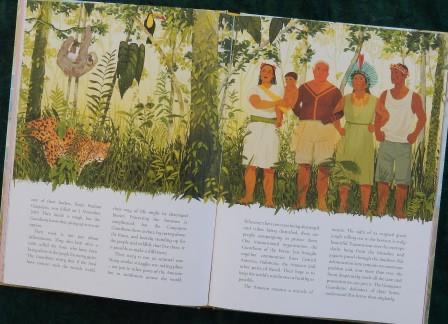
Among those featured are Dr Jane Goodall (who wrote the book’s introduction), Sir David Attenborough, the Greenpeace founders, Rachel Carson and Greta Thunberg. Alongside those are accounts of less famous names – The Guajajara Guardians –

who often risk their lives while working to protect the Amazon Rainforest; and William Kamkwamba who built a windmill in a small village in Malawi and went on to build more that pump water to the crops in the fields, thus improving the life of his entire community through renewable energy.

Not only is this book a powerful call to action; it’s also a reminder that we need to stand together – there might just be time to make those crucial changes to the climate change story.

Compellingly written in a lively style and illustrated by Masha Ukhova, Stephanie Son, Chellie Carroll, Hannah Peck and Iratxe Lopez de Munain, this book is strongly recommended for home and school reading.

How To Be Extraordinary

How To Be Extraordinary
Rashmi Sirdeshpande and Annabel Tempest
Puffin Books

What an inspirational selection of people Rashmi Sirdeshpande has chosen for her look at the lives of fifteen men and women from around the world, each of whom has made a truly impressive contribution to humanity. The balance of male and female inspirers is as equal as an odd number allows with one more male. I think if I were asked to compile a book like this, I’d want to include every one of these, who come from all walks of life.

There’s my all time hero, freedom fighter, Nelson Mandela, Britain’s first female spy, Polish born Krystyna Skarbek who once faced off German officers while in possession of a top-secret silk map, which she rolled and used as a headscarf. (Sadly, the extent of her bravery wasn’t recognised until after she died).

I’ve followed the career of Sir “Mo” Farah” from his early days in a secondary school just up the road from the primary one I taught at, through the time he trained at St Mary’s University, becoming elated as he won those Olympic gold medals, until now; his athletic skills and versatility are undoubtedly ‘superstordinary’.

It’s great to see the author/illustrator of much-loved children’s books, Judith Kerr, who with her parents fled Nazi Germany, arriving in London in 1936; and the unstoppable environmentalist, Sir David Attenborough, who continues to be an inspiration in his 90s as well as another environmentalist, Wangari Maathai from Kenya.

Readers (even adult ones) will be less likely to know more than the names of particle physics phenomenon, San Lan Wu; Aeham Ahmad, Syrian musician and ‘peace-builder’; and I must mention the phenomenal war surgeon David Nott who for more than 25 years has been taking unpaid leave to volunteer in places of conflict and natural disaster including Afghanistan, Sierra Leone and Syria.

The potted biographies are each allocated a double spread, which is packed but not overwhelmingly so, with information, quotes, and illustrations by Annabel Tempest.

One of the messages young readers will take from this book is that there’s a multitude of ways to be extraordinary. I watched two young children on TV the other night with their campaign against free throwaway plastic toys. I’m sure there are countless other youngsters out there whose imaginations these fifteen inspirational role models might ignite.

Add this one to family bookshelves and primary school class collections.