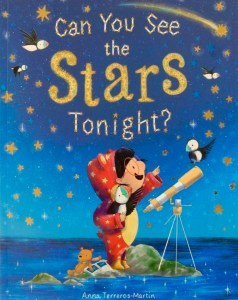
Can You See the Stars Tonight?
Anna Terreros-Martin
David Fickling Books
Most of us are very aware of the need to rein in our use of energy in order to protect the planet, but I suspect that light pollution is not the first thing that springs to mind when the word pollution is mentioned. I live part of my life in a small village near Stroud in Gloucestershire and the other part in suburban outer London: the difference in the number of shining stars visible in the night sky is astounding. Apart from the houses, there are far more street lights, commercial premises lit at night, illuminated advertising etc. in TW12 than in rural Gloucestershire.
Nora the small girl protagonist in Anna Terreros-Martin’s story, enjoys using her telescope and looking at the stars from her bedroom window and she becomes aware that the stars are much less bright than those in her book. She’s remarking about it to Puffin when suddenly a baby puffin – a puffling – comes flying into her room, clearly in a panic. When she goes down to tell her dads, they tell her that it’s the tenth lost puffling that instead of flying out to sea for winter, has flown into the town that week. Why? Nora wants to know.
Dad and Papa suggest they spend the weekend camping on Puffin Island, return the puffing they have and see what is happening on the island.
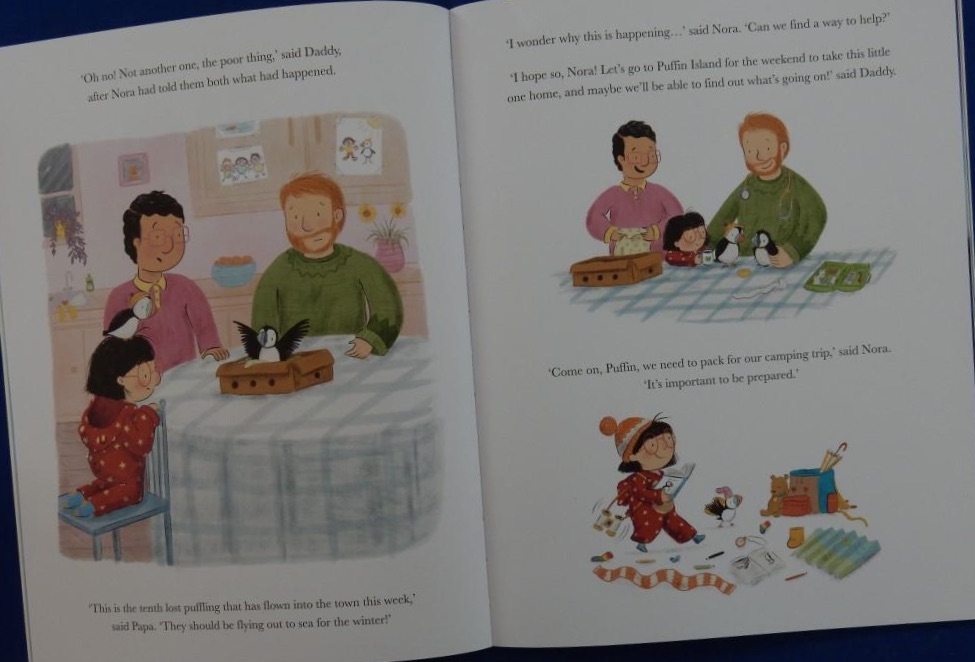
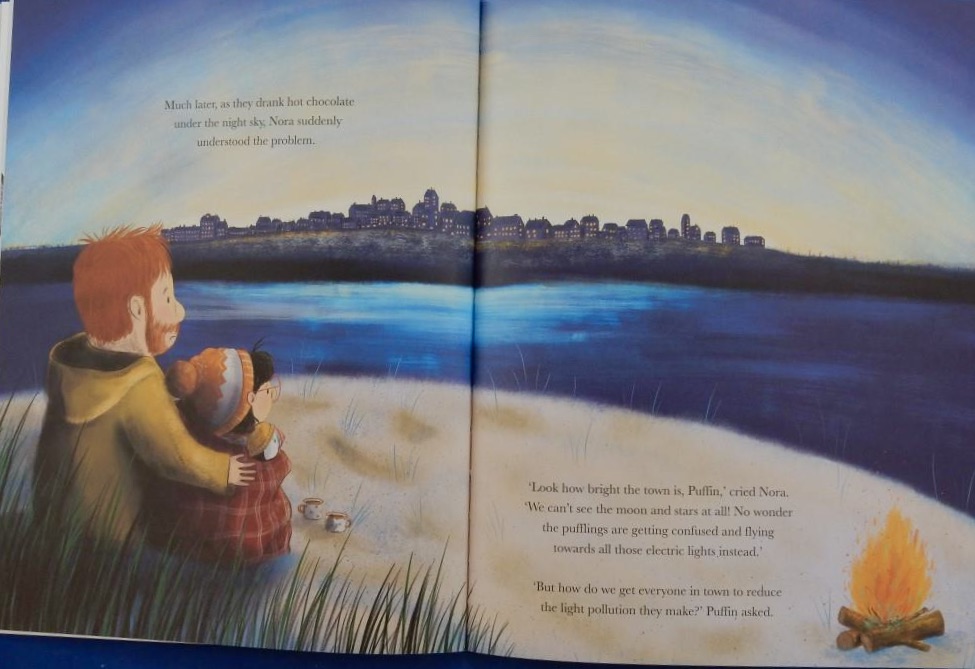
Once there, with the help of her Papa and Dad, as well as Puffin, Nora learns that pufflings normally use the light of the moon and stars to help them find their way. Then as darkness falls and they sit together under the night sky, Nora realises that light pollution from the town is confusing the little birds.
Back home, determined to find a solution to the issue, she enlists her school friends to join her in making a difference to the amount of artificial light. They make sure all the electric lights are turned off, close the curtains and put up the light shields they’ve made. Now as they look out, it’s clear that the pufflings are flying out to sea, guided by the moon and stars, just as they should be.
An important book that highlights an issue that will be new to many young children. Nora is such an engaging character, let’s hope she is as successful in enlightening and galvanising readers as she is her friends at school.



 Red Reading Hub - Jillrbennett's Reviews of Children's Books