The Invisible World of Germs / The Secrets of the Universe

The Invisible World of Germs
Isabel Thomas, illustrated by Geraldine Sy and Ana Seixas
The Secrets of the Universe
Dr Mike Goldsmith, illustrated by Adam Quest and Ana Seixas
Oxford Children’s Books

These are the first two in a new small format non-fiction series Very Short Introductions for Curious Young Minds. Full of fascinating information, it was written in consultation with one expert in the field (Alan Redford of Liverpool University) and contains easily digestible infographics, photos and dialogue boxes in addition to the explanations, and in each chapter there’s a ‘Speak Like a Scientist’ feature that provides readers with key terminology. If you want to discover what germs are, something about their history, key scientists and other ‘germ heroes’, how germs are transmitted, how our natural defences work,

the affects of medicines on germs, ponder the questions ‘Will there ever be a world without germs?’ and what might be the future of germs, then this engaging little book is definitely for you. It’s also one to add to KS2 class collections.

I was equally impressed by The Secrets of the Universe, this one being written by a doctor of astrophysics in consultation with Cambridge University cosmologist Sunny Vagnozzi. Again the writing style is engaging and lively and there are the same key features as The Invisible World of Germs – infographics, photographs and cartoons and most important the key questions such as What is the universe?; how was it discovered”; what are the important findings relating to the universe and who were the scientists responsible? …

how big is the universe and what is our place therein? are explored in bite-sized, easily digestible chunks. Find out about galaxies, gravity, the Big Bang, dark energy, consider the possibilities of life existing elsewhere in the universe and even of other universes in this exciting introduction to a mind-boggling topic that science-loving children will relish. 

Both books have a final glossary and index.
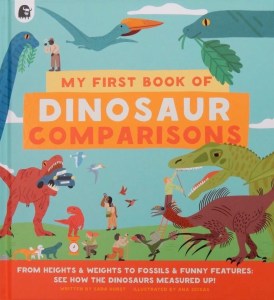
My First Book of Dinosaur Comparisons

My First Book of Dinosaur Comparisons
Sara Hurst and Ana Seixas
Happy Yak

Authors are always looking for new ways to present dinosaurs to young enthusiasts who seem to have an insatiable appetite for these prehistoric creatures.

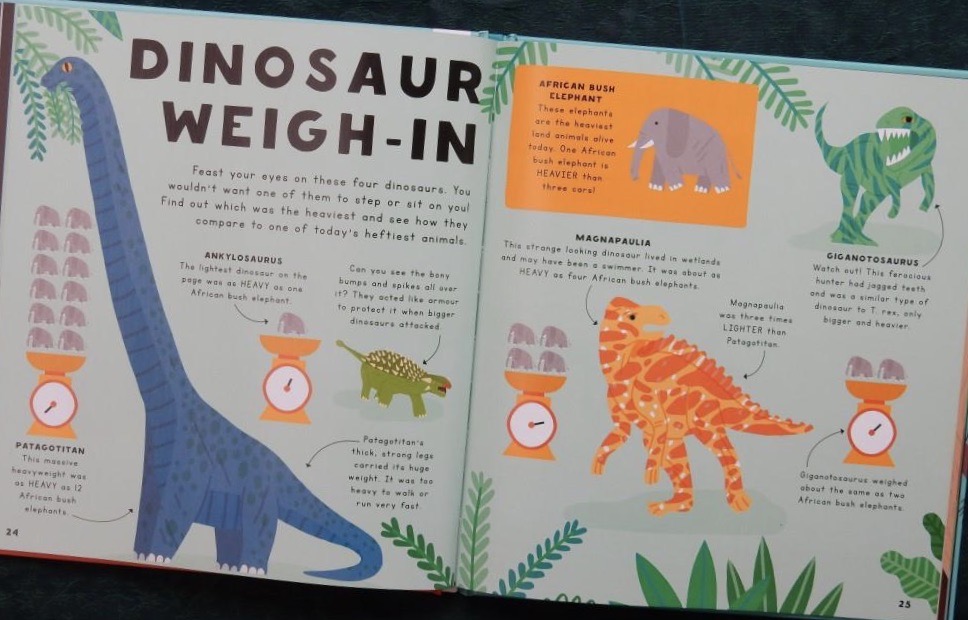
Herein Sara Hurst compares dinos. with vehicles, predators, humans and modern day foods among other things. With a body longer than a tennis court, Diplodocus needed to munch through around 33kg of ferns daily – that’s the equivalent of a human gobbling 66 boxes of cereal every single day – imagine that!

First though come an explanatory spread explaining comparisons, a pronunciation guide to dinosaur names and a time line.
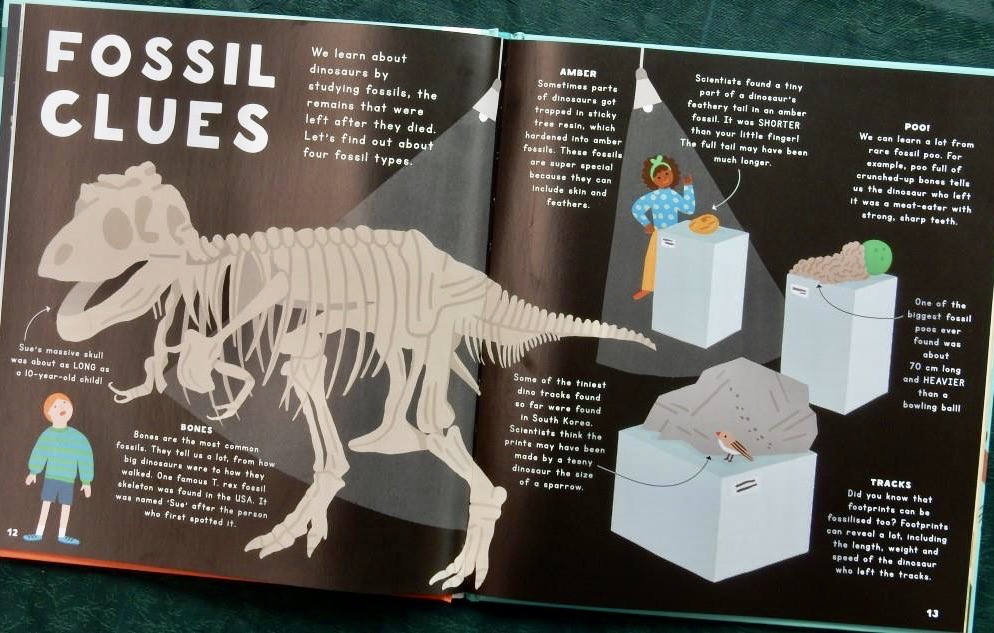
The comparisons start on the Fossil Clues pages where readers learn for example, that one of the largest fossil poos ever found was around 70cm long and weighed more than a bowling ball.

I was fascinated to discover that a dinosaur’s age is calculated by counting the growth rings inside its bones (in a similar fashion to trees I imagine).
Other spreads look at the super skills of a variety of dinosaurs – Dromiceiomimus was about as speedy as an ostrich and twice as fast as the fastest man sprinter. Other spreads explore defence, food, weight

hunting ability, self defence and more, concluding with what was the likely cause of dinosaurs dying out.

In addition there’s a scattering of quizzes (answers at the back) and the entire book is brightly and dramatically illustrated by Ana Seixas.

Scratch and Learn: Human Body / The Great Big Book of Life

Scratch and Learn: Human Body
Katy Flint and Ana Seixas
Wide Eyed Editions

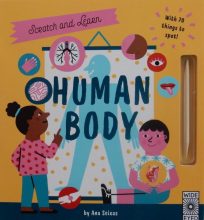
I’ve loved some of the EtchArt books from Quarto but this is the first science title I’ve seen, essentially an introduction to how the human body works.

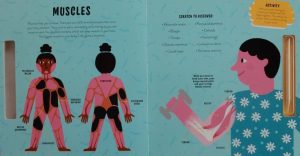
It comprises two main elements: ‘Scratch to Discover’ where the reader uses the stylus to find ten things on each of the seven spreads: the skeleton, muscles,

organs, eating and digestion, the senses, the brain

and, lungs and heart.

Then there are activities – one per spread – to demonstrate how different parts of the body function. For example the muscle-related one says, ‘With your palm facing up, touch your thumb and little finger together. This shows one of your flexor tendons working in your wrist.’

There’s also an invitation to play a search-and-find memory game.

Each topic has an introductory paragraph and some also include additional bite-size snippets of information.

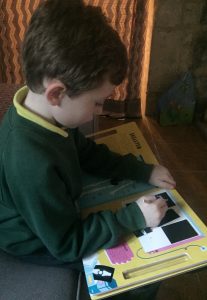
Spencer investigating the skeleton

Graphic designer/illustrator Ana Seixas brings a gentle humour to the pages of this fun, interactive book to use at home that is relevant to the KS1 science curriculum.

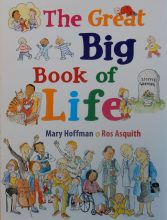
The Great Big Book of Life
Mary Hoffman and Ros Asquith
Frances Lincoln Children’s Books

The 6th in The Great Big Book of … series looks at life from conception and birth to death and memories.

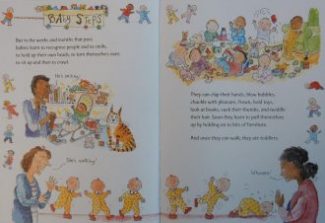
The early years are allocated several spreads – infant physical development,

sleep, feeding, staying healthy, learning to use the loo and how language develops.

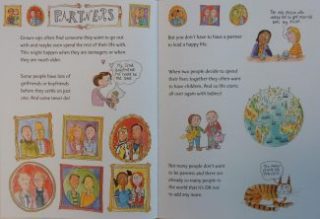
Subsequent topics are school (including home schooling), the teenage years, work, partners,

the middle years, old age, death and finally a spread advocating living life to the full no matter who we are, which includes thinking of other people as well as ourselves.

As in previous team Hoffman and Asquith titles, diversity is a key element. Mary’s light-hearted narrative style combined with Ros’s wonderfully witty illustrations make for an informal and explicit read.

A book to add to your home or school collection.