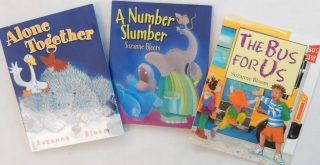
Alone Together
A Number Slumber
The Bus For Us
Suzanne Bloom
Boyds Mills Press
Suzanne Bloom knows just what works for beginning readers; but much more important she knows what will help foster a love of books and reading in young children as these three books demonstrate.
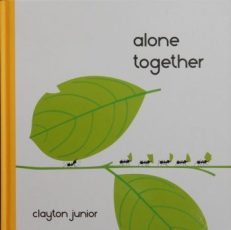
Of the three my favourite is Alone Together, a Bear, Fox and Goose story wherein Bear endeavours to have some solitude.
Fox however doesn’t seem to appreciate what this means as he bounces up to bear demanding to know, ‘Why are you all by yourself, bear? /Are you sad? / Are you mad? ? Are you lonely?’
The humour mounts when, following Bear’s ‘Occasionally, I like some quiet time.’ response, Fox agrees and proceeds to Hmmmmmm repeatedly, twirl and whoosh! around an increasingly agitated Bear who looks as though he’s about to tear his fur out.
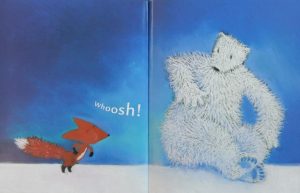
But covered ears and eyes and other signs of his ursine friend’s increasing agitation have no effect on Fox, so Bear has to spell it out explaining that hush means ‘No noise! Quiet! Please.’
It now appears as though Fox might have worn himself out as open-mouthed, he topples back into Bear’s snuggly fur just before Goose reappears. With a seeming truce between Bear and Fox now in place, Goose demands to know if Bear has had sufficient alone time.
Perhaps that truce was a little short-lived after all …
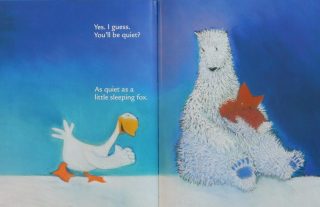
A smashing piece of picture book comic theatre, this delightful tale unravels rather like a silent movie.
A Number Slumber is a lovely count down to bedtime animal style that begins by asking readers, ‘What do you do to get ready for bed?’
It goes on to posit a series of likely pre-bed activities – tooth brushing, listening to a story and more before turning the focus to other sleepyhead creatures.
There follows a series of lovely alliterative examples as ‘Ten terribly tired tigers tiptoe to their beds. Nine normally nimble newts rest their sleepy heads.’ And so on …
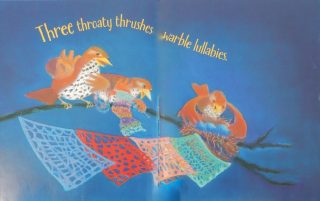
until ‘One really weary wombat yawns …’ and the final page shows a sleeping bundle … ‘just like you.’ Now who might that be?
Readers will have to turn back to the title page to confirm if their guess is correct.
You can count on this soporific delight to help send your little humans off into slumberland, thanks to Suzanne Bloom’s soft focus scenes rendered in gorgeous dreamy colours that accompany her rhyming text.
For vehicle enthusiasts especially is The Bus For Us that introduces a variety of vehicles. By means of a question and answer text and accompanying sightings of the traffic that passes the bus-stop at which a brother Gus, and his questioning sister Tess wait. (Watch that bus-stop as you turn the pages).
There’s much more to it than that though: plenty of action, involving both humans and animals, takes place as the queue for the bus increases …
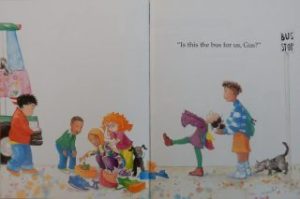
until at last a yellow school bus arrives to pick up all the waiting passengers.



 Red Reading Hub - Jillrbennett's Reviews of Children's Books