There are all new board books from Little Tiger – thanks to the publishers for sending them for review.
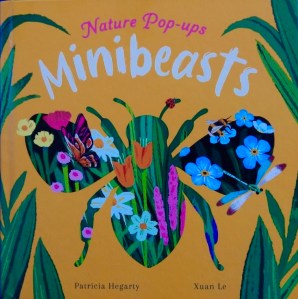
Minibeasts
Patricia Hegarty and Xuan Le
The first of a nature new series where the featured creatures almost leap out from among the plants growing in the flowerbeds. First comes a bumblebee that is busily collecting pollen from a composite flower; then there’s a ladybird that opens up its scarlet wing cases as though to take flight. Next not just one but – well maybe your little one can try counting them – the beautiful butterflies that, wings spread wide, take to the skies and flutter on the breeze. Meanwhile much closer to the ground, a shiny shelled snail climbs slowly, steadily amongst the grasses and ferns while, down by the pond darting among the lily pads, transparent wings shimmering is a dragonfly and finally, peeking from the foliage of blooming wisteria is a chirping grasshopper; but if you look very closely, there’s also one unnamed minibeast making its way along the branch.
Little ones will love watching all these small creatures as they peruse Xuan Le’s vibrant settings for Yoojin Kim’s cleverly engineered scenes.
More minibeasts appear in
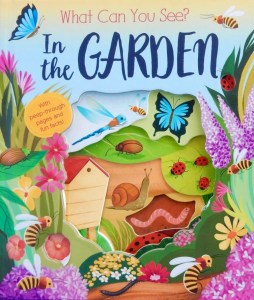
What Can You See? In the Garden
Rosamund Lloyd and Maria Perera
At Rosamund Lloyd’s suggestion, young children take a walk in the garden and discover minibeasts in flight, follow a butterfly through its various stages of metamorphosis, watch honey bees at work, see camouflage and other ways minibeasts keep themselves save from predators. If you take time to forage in the plant litter there are woodlice, millipedes and snails to discover whilst beneath the ground earthworms burrow and ants create colonies. Little humans will delight in such facts as “some millipedes eat their own poo’ and that unlike themselves who have a backbone, insects have a skeleton on the outside called an exoskeleton .
The cutaway pages are cleverly positioned to allow readers to peep through and see what awaits.
Spring is here so share the book and then see what awaits outside your front door.
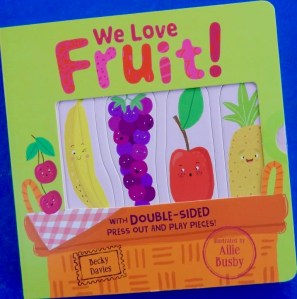
We Love Fruit!
Becky Davies and Ailie Busby
Don’t play with your tasty food. This is frequently said to little ones by parents or carers but now this book gives toddlers permission to do just that. Indeed they will love pulling out the double-sided fruit characters from the sliding tray inside the front cover and meeting the eight different fruity personalities. From these, little humans must follow the clues given on each page and choose the matching cardboard piece. Can they discover which fruit grows in bunches and when dried is called a raisin or which one might take as long as three years to grow?
A clever interactive guessing game, playfully illustrated by Ailie Busby with words by Becky Davies that offers opportunities for adult sharers of the book to talk about the importance of fruit in a healthy diet. I suspect several helpings will be desired by toddlers.
 Red Reading Hub - Jillrbennett's Reviews of Children's Books