
Whose Tracks in the Snow?
Alexandra Milton
Boxer Books
‘Look! Look! / Tracks in the snow!’ is the cry on each alternate spread in this gorgeously illustrated book that introduces readers first to the footprints and then having described the chief characteristics of the prints, ‘Tracks like hearts, Tracks in two lines’, asks them to guess who left those marks, ‘by the snow-covered pines?’
The black smudgy marks each time are a close facsimile of what children would see in the natural world and a small glimpse of a part of each animal provides an additional clue, in this instance, the dark brown tip of a lighter brown tail. The page turn reveals the answer—‘A shy red deer’—and some information about the creature depicted in all its glory.

The rhyming text with its repeat refrain is a joy to read aloud, the descriptions of the tracks are superb ‘Tracks with lines, / Tracks like a kite’ are those of a waddling wild duck,
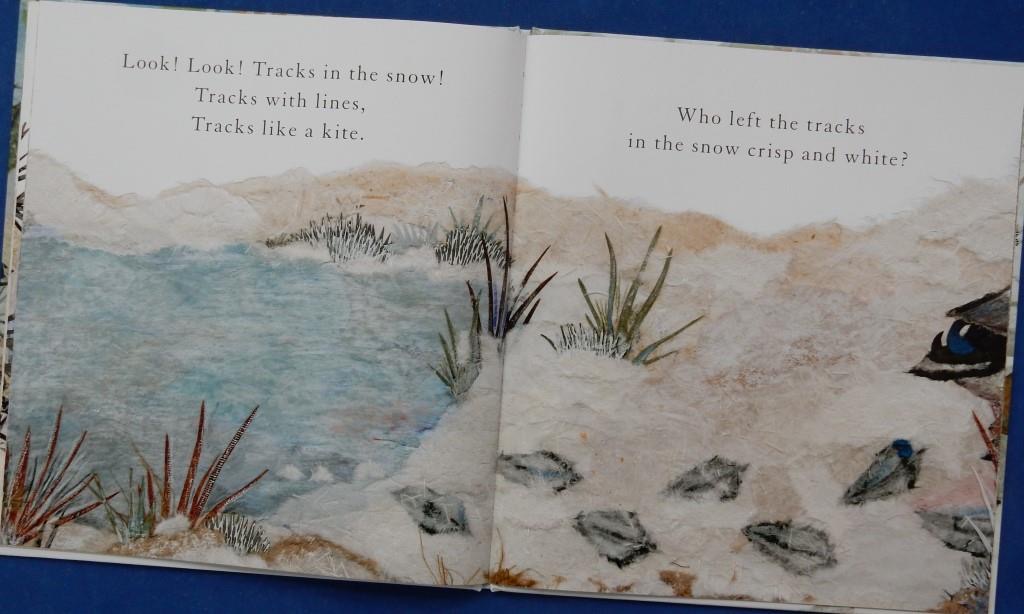
‘Tracks like diamonds …’ refer to those made by the bushy-tailed fox’, but it is Alexandra Milton’s exquisite collage illustrations at every turn of the page that are the real show stoppers. Just look closely at the snow with its variations in colour and small portions of shading. Six animals, six landscapes and each a joy to behold.
What a wonderful way to entice youngsters out into the woods on a snowy day for some track-spotting. (The back endpapers show life size tracks of the six animals – pheasant, duck, fox, hare, deer and squirrel.)
 Red Reading Hub - Jillrbennett's Reviews of Children's Books