Super Small / The Versatile Reptile

Super Small
Tiffany Stone and Ashley Spires
Greystone Kids

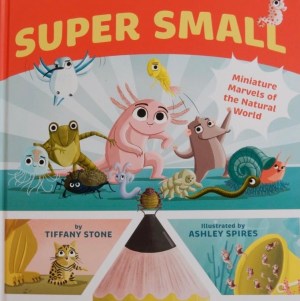
You may be surprised to learn that some of the world’s smallest creatures have awesome superpowers.

The minute oribatid mite can lift more than 1,000 times its own weight. The pygmy seahorses are so good at camouflage that scientists only discovered them accidentally when they brought some coral into a lab to study; then there’s the bee hummingbird that’s able to fly backwards and upside-down – clever stuff!

Did you know that wood frogs are able to survive harsh winter conditions as ‘frogsicles’ – they stop breathing, their hearts stop beating and their bodies make a kind of protective antifreeze and as for those teeny tiny tardigrades, here’s what author Tiffany Stone has to say about them: ‘The tardigrade, or water bear, / is so small that its barely there. / … And bear in mind, although it’s wee, / it’s tougher that you’ll ever be. / Freezing cold or boiling hot— / too much to bear? This bear thinks not.’
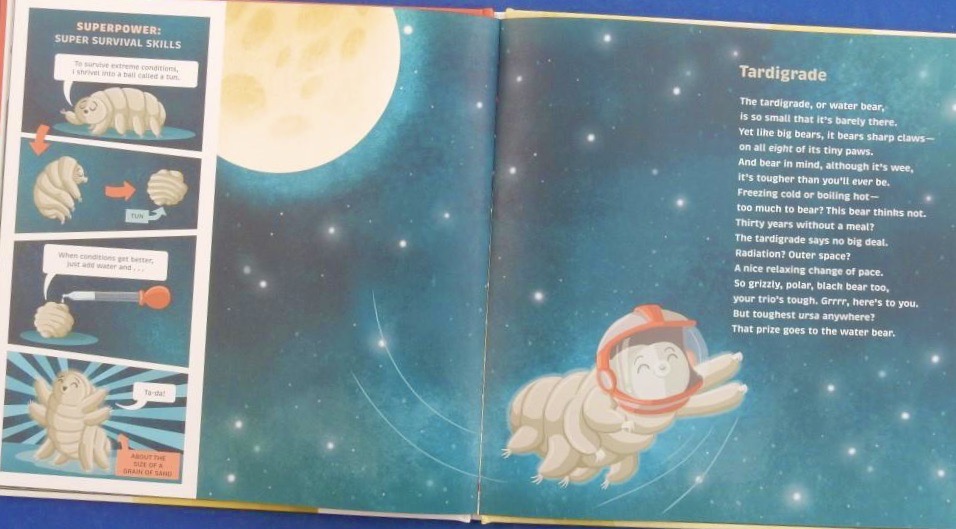
Ashley Spires uses her artistic superpower to illustrate each featured creature, making every miniature marvel appear super-confident; and to accompany her poetic descriptions Tiffany Stone provides some side-notes in the form of animal monologues (or dialogue) presented in comic strip style side panels. This is a book that will appeal to animal enthusiasts especially.

So will:
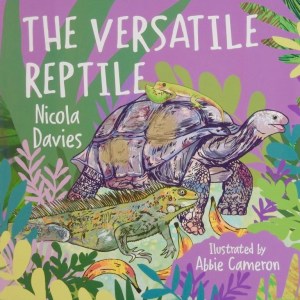
The Versatile Reptile
Nicola Davies and Abbie Cameron
Graffeg

In this addition to the rhyming series in which Nicola Davies presents a look at various animal types, we meet some reptiles.

Reptiles are found in many different parts of the world as the young adventurer in this book discovers in her search. These scaly creatures might be jungle dwellers, live in desert places or swim in the seas among the seaweed, and can vary in size from massive to minute and from endearing to downright grim and ghastly. 
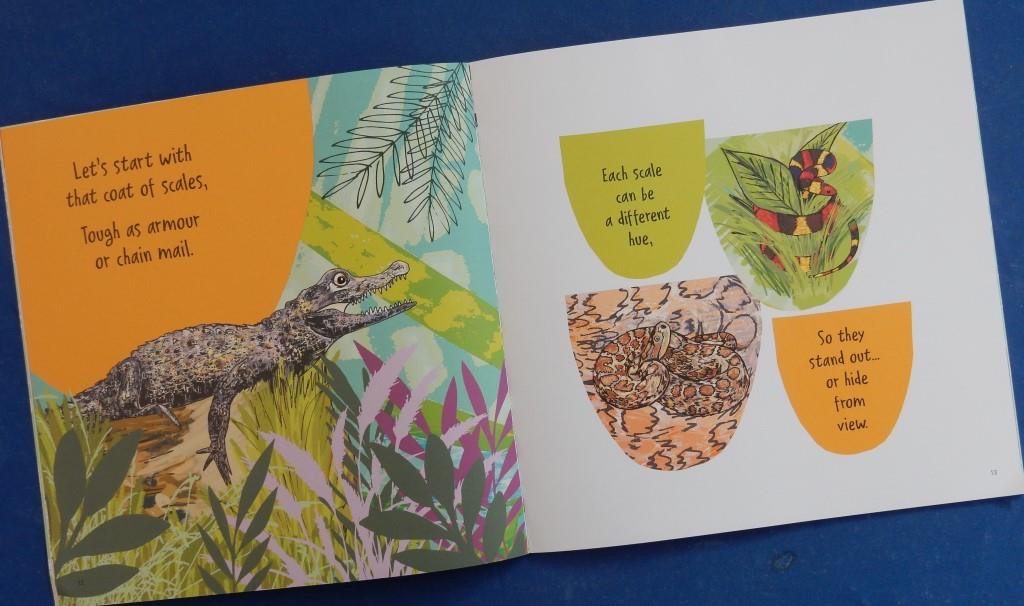
One thing the entire reptile group can claim though, is versatility. 

Abbie Cameron’s accurately detailed, close-up illustrations really drive that point home to readers who will one hopes enjoy coming face to face with such fascinating creatures. This reviewer certainly did.

Perfectly pitched for KS1 readers.

Invertebrates Are Cool! / Slow Down and Be Here Now

Invertebrates Are Cool!
Nicola Davies and Abbie Cameron
Graffeg

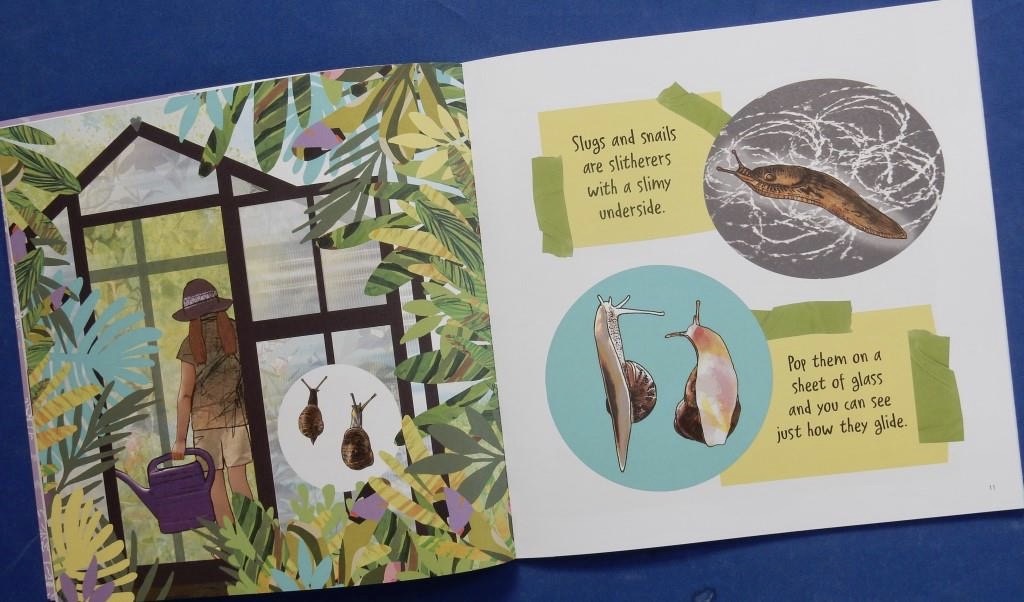
In author Nicola Davies’s latest Animal Surprises book, she takes us in the company of a young naturalist, on an exploration of the world of bugs, mini-beasts and some sea creatures too. In case you are wondering what all these might have in common, it’s that every one of the animals featured lacks a backbone. First of all we get close up to some earthworms, find out how to make a simple wormery and watch the clever tunnellers at work. Next come the slitherers with slimy undersides – snails and slugs.

It’s strange to realise that these are cousins to cuttlefish, squid, nautilus and even more astonishingly, the octopus.

Beetles are the next focus; did you know there are more than 400, 000 different kinds? Some such as ladybirds will be familiar, but readers may not have encountered chafer beetles or the devil’s coach horse, both of which are featured in Nicola’s rhyming narrative and Abbie Cameron’s illustrations. The latter are sufficiently detailed to enable identification of the creatures and on some spreads readers are able to get right up close to the featured animal.

There’s a final ‘match the animal to its home’ puzzle. A book that’s likely to nurture children’s interest in the natural world and whet their appetites to get outdoors and explore.

Slow Down and Be Here Now
Laura Brand, illustrated by Freya Hartas
Magic Cat Publishing

The author presents twenty awe inspiring events that take place in the natural world, each of which is a captivating reason to do as the title says, to slow right down and to be fully in the present, immersed in an amazing wild life happening. It’s as though time has been suspended as she presents each of these ‘moments’ in its allocated double spread, including a harvest mouse building a nest, a snail retracting into its shell when threatened by a predator, a goldfinch extracting seeds from a dry teasel head

and a frog sating its hunger by catching and swallowing a fly. Thus the reader is able to watch each occasion when they so choose, as they savour the words and study carefully Freya Hartas’s delicately detailed, sequential illustrations, which include occasional gently humorous anthropomorphic enhancements.


The text itself comprises a mix of easily digestible paragraphs of information, an on-going narrative and captions to the illustrations.

Not all the nature moments could be observed at first hand but anyone who follows the suggestions on the ‘Come Into the Here and Now’ pages, will likely encounter some of these wonders or indeed, chance upon opportunities of their own to observe moments of joy, awe and wonder.

The Secret of the Egg / Amazing Animal Babies

The Secret of the Egg
Nicola Davies and Abbie Cameron
Graffeg

What a cracking book this is; the first one I’ve seen in this series by zoologist, poet and author, Nicola Davies and illustrator Abbie Cameron.

Through a highly engaging rhyming narrative, Nicola introduces children to animal eggs of all shapes and sizes;

eggs that might be found in puddles or high in a tree; those you might have to dig for, or search in the sea or pond to discover. There are reptiles’ eggs, birds’ eggs, amphibians’ eggs, fishes’ eggs, even mammalian eggs.

With the exception of the platypus, none of the creatures featured are named so identifying whose eggs are whose is left to Abbie Cameron’s richly detailed, painterly pictures so adult assistance or some additional research may be needed.

This would make a great way to introduce a ‘new life’ topic to young children.

Amazing Animal Babies
Aina Bestard
Thames & Hudson

Animals large and animals small, from various parts of the world feature in Aina Bestard’s book.
Using as many as six intricately detailed transparent overlays the author/illustrator documents in words and aptly coloured visual images, how each animal produces and rears its young.

Herein readers will discover that the penguin parents, as well as the other members of a penguin colony play a part in the rearing of penguin chicks but it’s the Dad penguin that keeps the egg warm while Mum penguin goes off searching the ocean for food. After a chick is hatched however, both parents take turns to find food until their little one can care for itself.

In contrast, having found a safe place to lay her eggs, a mother tortoise leaves them alone to hatch and feed on the surrounding vegetation.

Once they’re laid it’s the father seahorse that takes care of the eggs inside his pouch, whereas with the kangaroo, the baby kangaroo is kept safe in its mother’s pouch.

The monarch butterfly and the common toad never meet their parents and grow up entirely on their own.

The final animal, the blue whale is reared on its mother’s milk, sometimes with the help of other whales.

The illustrations are exquisite and the narrative chatty: prepare to be amazed as you turn the pages of this fascinating book.