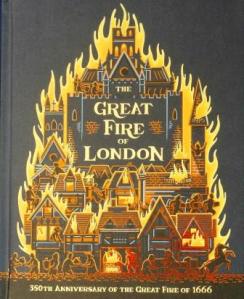
The Great Fire of London
Emma Adams and James Weston Lewis
Wayland Books
Spectacular illustrations by James Weston Lewis at every turn of the page and a topic that’s certain to become even more popular in schools later this year with the 350th anniversary of London’s Great Fire: a recipe for success if ever there was one. But this book also has a narrative that draws readers in right from the start and keeps them gripped throughout the account of the disaster from first sparks falling from that Pudding Lane bakery oven, to unstoppable, all-consuming nightmare that lasted for more than three days.
Emma Adams, sets the scene for the fire’s outbreak by detailing a filthy, busy 1666, end of summer, London city with its closely packed wood, straw and pitch houses, made even more dusty and dry by lack of rain; and relying on fire and candles for cooking and light – a disaster waiting to happen.
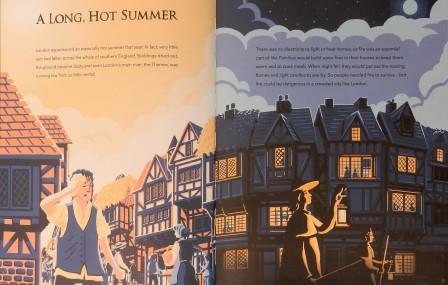
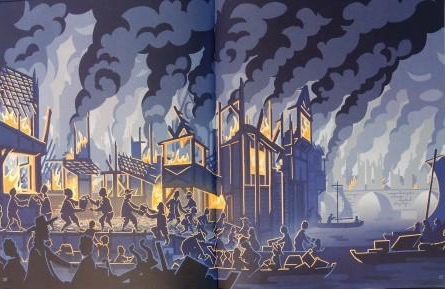
The account of the spreading fire itself …

includes extracts from Pepys’ diary, details of the Mayor’s reluctance to demolish buildings, the destruction of the old St Paul’s Cathedral, as well as the eventual demolition organisation by the King that helped slow the fire’s progress.
Even then though, Londoners were a resilient lot: rich and poor alike set up huts and tents to the north of the city and over the next thirty years London city was rebuilt. New building laws were passed that meant safer housing and Christopher Wren designed the new St Paul’s Cathedral that was to take almost 40 years to complete.
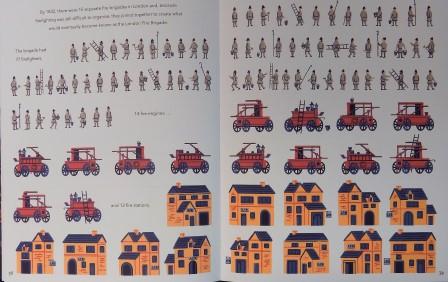
From the ashes too came new improved fire-fighting techniques and equipment and eventually, the London Fire Brigade; mentions of all this is integrated into the narrative and visuals add further detail …
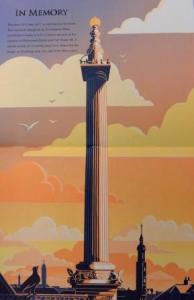
Standing tall in commemoration of London’s Great Fire we have The Monument, just 61.5 metres so we are told, from where the fire broke out.
The three final spreads are given to People – the three significant figures being King Charles 11, the inadequate mayor, Sir Thomas Bludworth and Samuel Pepys; Places – St Paul’s Cathedral, London Bridge, the Old Bailey and Guildhall; and a map.

This really does bring home the extent of the fire and would make an excellent starting point for a visit to seek out evidence of its legacy.
All in all, this is an exciting resource book for primary schools and any child interested in this chapter of London’s history.
Use your local bookshop 

 Red Reading Hub - Jillrbennett's Reviews of Children's Books