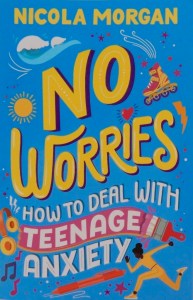
No Worries: How to deal with Teenage Anxiety Nicola Morgan Walker Books
Expert on teenage well-being, Nicola Morgan has written a guide to help young people cope with anxiety, according to a survey, the most used word, so she discovered, used when talking about their health and well-being. Nicola’s advice is based upon the latest science and her formidable knowledge and understanding of what makes for a healthy and balanced teenager and she divides her latest book into three parts.
Part One is Anxiety and YOU, part two is called All About Anxiety and looks at what is happening in an anxious person’s body and brain, as well as the effects of anxiety. The third part offers Strategies and Solutions – obviously the most important section. Here you will find among other things, breathing strategies, mindfulness and meditation strategies and suggestions of practical ways to distract from worrying thoughts.
The book concludes with some anxiety experiences shared by people from their own lives and there’s a list of further resources.
Highly practical and written in a language that is both accessible and full of wisdom, this is a book I’d strongly recommend to all young people particularly if they are struggling with pressures and the resultant anxiety in their lives. Assuredly one to add to a teenager’s bookshelf; it’s packed with helpful information and advice.
Hello Me! Dr Naira Wilson and Elisa Paganelli Little Tiger
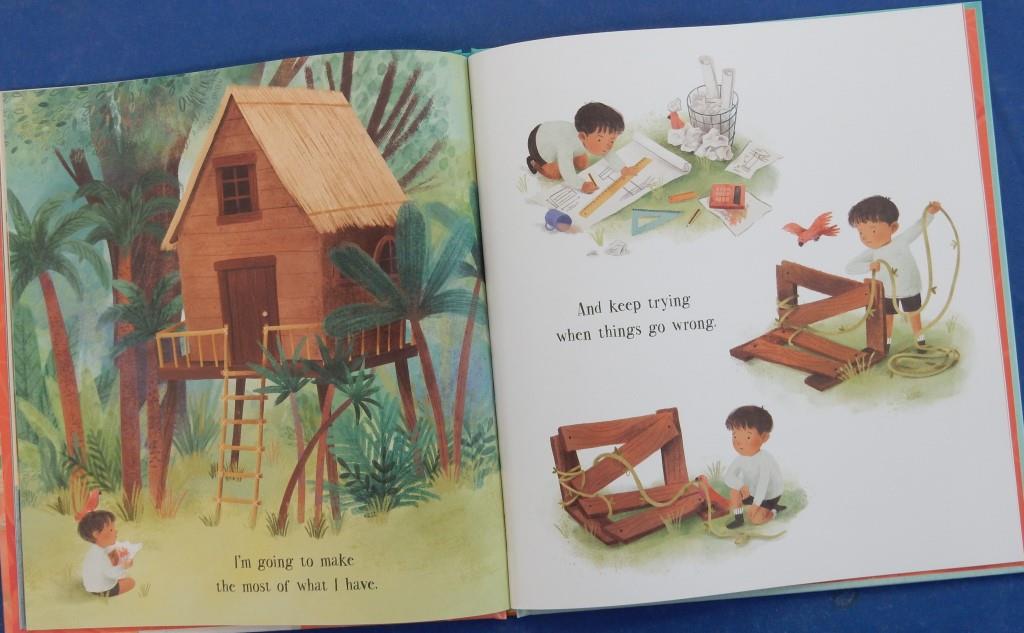
Positivity is key in this gentle book wherein the author, a child psychologist, presents a young boy narrator explaining and showing how he gradually learns self-care and self-acceptance. He begins thus: ‘Sometimes I think my mind is like a house. Just like a house, I need to treat my mind with love and care.’
Like all of us, this child has flaws and makes mistakes, but just like us all too, he acknowledges those mistakes using them as a powerful learning tool.
When jealousy rears its head, our narrator accepts that nobody is perfect and everyone is different. The important thing is to be flexible in your attitude to routines, make the best of what you have and not to be afraid to ask for help when it’s needed. Friends and their love are key but so too is learning to love yourself for who and what you are.
The final spread breaks down the key points in the narrative, augmenting them with vignettes taken from Elisa Paganelli’s beautiful larger illustrations.
Accessible and easy for young children to relate to, this would be a good book to open up a classroom circle time discussion on looking after and loving oneself.
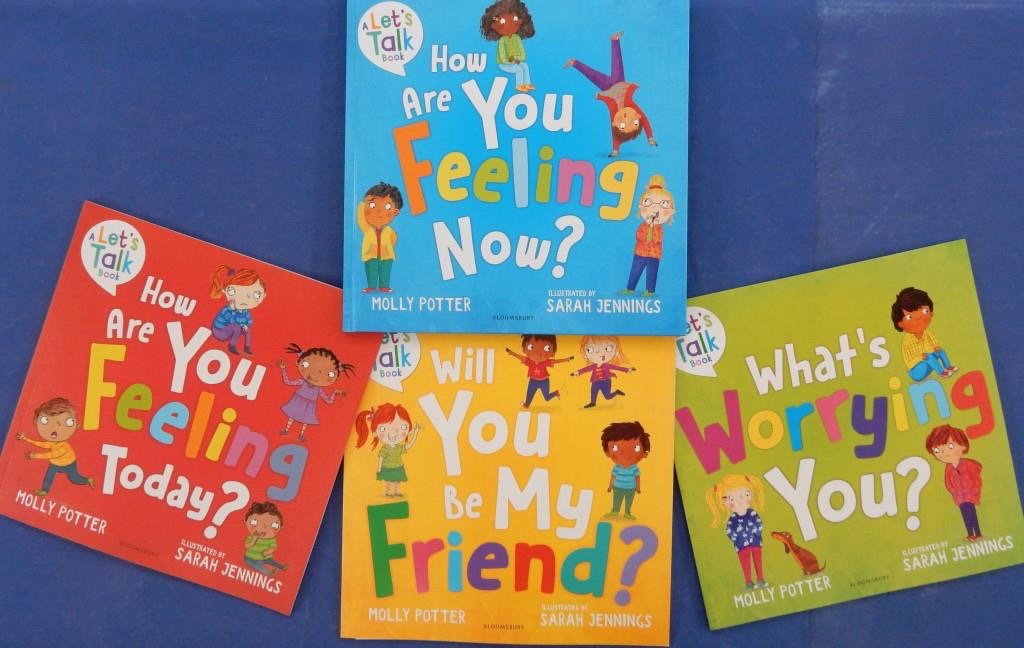
How Are You Feeling Now? How Are You Feeling Today? What’s Worrying You? The Same But Different Will You Be My Friend? Molly Potter and Sarah Jennings Bloomsbury Education
How Are You Feeling Now? is a hardback addition to the interactive Let’s Talk series; the other titles are, in the publisher’s words ‘refreshed paperback editions’ of existing titles.
Developing emotional intelligence is a key part of children’s education in the early years and in her newest title Molly Potter adds another twelve ways of feeling to happy, angry, bored, worried, sad, excited, grumpy, scared, quiet, jealous, embarrassed and shy, which were discussed in How Are You Feeling Today? again devoting a double spread to each one. The new ones are giggly, anxious, confused, disappointed, proud, brave, frustrated, guilty, lonely, grateful, surprised and playful. For each, she explains what the feeling means and offers several suggestions – some sensible, others slightly offbeat, to help manage it. ‘Tell an adult that you need clarification because you are confused. It’s fun to use fancy words!’ or ‘ ‘Say I am SO confused. See how long you can say “so” for!’
Those of us who work or live with young children know they experience a whole range of emotions every day. A lot of them do not know how to deal effectively with these emotions. Since the start of the COVID pandemic many more youngsters began finding it difficult to cope with the gamut of feelings that beset them and this is still true now. So, books like this new one, written in straightforward, child friendly language giving fun, imaginative, positive ways to deal with these feelings, illustrated with Sarah Jennings’ appropriately expressive vignettes is a welcome resource for both parents and those in education. Also included is a guide for parents with information about emotional intelligence and advice about how we as adults can be important role models.
Worrying is normal, adults worry and so increasingly do children, often due to the pressures of the education system. In What’s Worrying You? Molly identifies other possible reasons why a child might feel worried: falling out with a friend, being picked on, arguing parents, fears and phobias, jealousy, being ignored, not having friends to play with and being ill. The verso acknowledges the child’s feelings and provides several words for their feelings: a great way to open a conversation and to help the child concerned verbalise how they feel. The recto comprises ‘things to remember’ in the form of gentle guidance and suggestions to improve the particular situation. As always the tone is spot on for young children. Back matter offers a Feelings glossary and guidance for adults about helping a child to talk about their worries.
Both The Same But Different and Will You Be My Friend?have been reviewed previously on this blog. All the titles deserve a place in Foundation Stage settings and families with young children.
Pause, Breathe, Be Megan Borgert-Spaniol and Lauren Kukla, illustrated by Aruna Rangarajan Beaming Books
Subtitled ‘A kid’s 30-day guide to peace and presence’, this handbook comprises thirty challenges divided into three sections – first Pause, then Breathe and third, Be. The authors intend readers to take the challenges one per day, in an order that most suits each individual. The Pause section has reflective activities to help personal reconnection including sitting sans phone for ten minutes looking through a window with a good view, staying alert and silent to let deeper thoughts become conscious ones.
One Breathe challenge is to try and spend an entire day without using a screen of any kind. I really like the idea (in part two) of spending a day trying to ‘see beauty and humanity in the ordinary and imperfect.’ as well as the ‘Today choose generosity over judgement’ in the final section; it’s all too easy to slip into that ‘he’s so weird’ , ‘how stupid is she’ way of thinking.
Each section has quotes from famous people; the Dalai Lama speaks in the final one,
and several authors in the previous two.
I’ve seen what happens when primary schools put enormous pressure on year six children to achieve good SATS scores, seeming to be much more interested in their statistics than the mental well-being of their pupils: children in a constant state of anxiety unable to relax and enjoy themselves. This mindfulness book could make a lot of difference for those undergoing that enormous stress; better still if they got a copy at the start of Y6. it should assuredly help users build their self-esteem



 Red Reading Hub - Jillrbennett's Reviews of Children's Books