The Cloud Kingdom

Nancy is a bibliophile and spends almost all her time reading. Then one summer’s day so engrossed was she in her book that she failed to notice a fox enter the garden with a faery on its back. The faery takes a cake from the plate beside Nancy and rides away into the woods. The following day a similar thing happens, but on the third day it’s her beloved cat, Pangur that is seized. Determined to retrieve her pet, Nancy gives chase and eventually comes upon the Faery King. Her initial requests for the return of Pangur are turned down but eventually she strikes a bargain with him and becomes the human storyteller to the Faery Kingdom.

What follows are seven further interconnecting tales featuring such wonders as Beyvinn, a dream-weaving giantess, a hat shop with magical hats crafted by wizards, a ghost dragon

and a mechanical jellyfish.

A charming combination of words and pictures: Máire Zepf’s inventive short tales that are perfectly pitched for reading aloud and Andrew Whitson’s illustrations which have an ethereal, whimsical look, make this an ideal pre-bedtime book or to share with a KS1 class over a couple of days. Great for stimulating children’s own imaginations.

Small Wonder

Tick, who is ten and his younger brother Leaf, (fivish) were cared for by their grandfather in a cottage on the farthest edge of the forest until he died. Thus far their life had been peaceful but then a fleet of black-sailed ships appeared on the horizon – the Drene warships – and what Tick calls a Hunter is on the prowl: it’s time to leave, destination the King’s Keep.Grandfather had warned that this day might come and now they have just six moons to reach the mighty fortress built by the previous ruler, Good King Avery, before the drawbridge is pulled up.

Readers follow the boys’ journey on their trusty steed, a dapple grey mare, Pebble, as they flee from all they’ve known. A terrifying and testing journey it truly is, full of adventure and with only a rough idea of how to reach King’s Keep, they travel through forest, grassland and around mountains. There’s snow to contend with, bandits, strangers who may not be what they seem, and more; but all the while Tick has in mind that he must honour his Grandfather’s last words,”If you have one chance, then you have to make it count.”

Can they both reach their destination in time or will the Hunter or the snow get them first? Assuredly it will take all Tick’s determination and courage, but eventually arrive, they do, in no small measure thanks to Pebble. By the time they get to the Keep, Tick has learned more than he ever imagined possible and is ready to face whatever comes next.

With the twist at the end, this is a truly brilliant adventure story, Ross’s best yet in my book. Thoroughly recommended for older readers and it would make a terrific read aloud to share with an upper KS2 class.

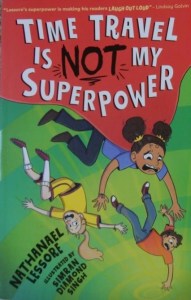
Time Travel is NOT My Superpower / The Appletree Animal Agency Collie Chaos

Sara, the young narrator of the second story set in the town of Walsham where special powers are part of everyday life, is working on improving her recently discovered superpower – teleporting. Thus far she is able to teleport herself but is unable to take any objects with her. However trouble starts when she accidentally teleports not only herself but her best friends, Georgie and Javier, as well as Jock her arch enemy, back in time to 2002. It’s crucial that they don’t interact with anybody, so nothing in the future is changed. However how is that possible when you find you’re at someone’s birthday party, a boy called Herman, someone that you don’t know. They eventually get away though, back to the present day, or is it? If it is, then why is Sara’s Mum wearing flip-flops and her Dad dressed in a parking warden’s uniform? They’re supposed to be superheroes. And as for being fed Brussels sprouts – don’t even mention the F__T word.

Something definitely is wrong, so how will Sara get herself and her companions in this muddle back into their proper universe.

With giggles aplenty both verbal and visual, this will go down well with KS2 readers who enjoy crazy adventures.

It’s winter and we’re back in the village of Mossdale where Appletree Agency have three new clients on their list – Algernon, a ten year old terrapin, Crumpet, a cat that’s something of a diva, and Domino, a dog with three legs. Domino is allocated to Mrs MacDonald but it’s not long before he escapes. The team load up with pet supplies, a compass, snacks and other useful equipment and off they set into the snow: Appletree Agency on the case.

They decide to follow a trail of threepaw prints and thanks to Luca, eventually track Domino down in a field belonging to the curmudgeonly farmer they’d already had a run it with. The dog makes it clear that the children should follow him and he leads them to discover a boy they’d seen earlier but now he’s injured.

Eventually having taken him to safety, the Appletree team learn that the boy, Finn, is staying with his grandpa, the very farmer they’d upset. Moreover he’s an animal lover. Finn was eager for a pet of his own and with Domino forming a bond with him it felt almost like he had one. Then the Appletree Agency members have an idea, an idea that will make everybody happy. But that’s not quite the end of this story …

A wonderfully heart-warming adventure that is perfect for pet lovers who like a touch of humour as well as passion in their stories.

Gordon in the City / Huxley and Flapjack Wild West Escape

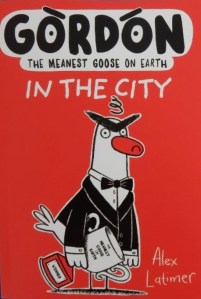
Gordon the erstwhile ‘meanest Goose on Earth’ is now, thanks to Anthony the Piglet, a reformed character. Indeed it’s been almost twelve months since he started trying to be good.
One day as he walks home feeling happy with his new self, he sees a letter pinned to his door. It’s an invitation to present the trophy for the Meanest Goose on Earth to this year’s winner. Hmm!
Being the great friend that he is, Anthony says he’ll disguise himself as a goose and accompany Gordon to the City for the presentation.

This he does and the two arrive expecting one of the four previous runners-up to receive the award. That however, is not what happens. Big surprise or rather, shock horror for Gordon when he discovers the winner. Moreover he and Anthony are invited to stay with her. Not a good idea at all as Gordon rapidly discovers.

Next morning Anthony has disappeared and Gordon starts reverting to his old wicked ways under his host’s influence. Fortunately he comes to his senses and having been told that something dangerous has happened to his friend, Gordon knows he must save him. Is there anyone or any goose, he can call upon to help and if so, what will be the outcome?

I know lots of young solo readers who will be honking their loudest for Gordon and Anthony in this their 4th adventure and looking forward to the next one.

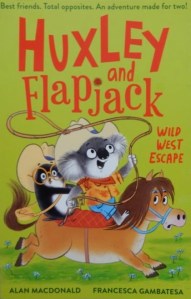
Best friends Huxley the koala and Flapjack the penguin return in a third story and what an adventure they have when they sign up for a job as cowhands at Daisy Bank Farm. This is because Huxley wants a new guitar and has spent all his money. He even goes so far as to tell Dolly the farmer that they can horse ride but on their very first day things start going wrong. However they make it through to sundown when the cows are returned to their pen at Daisy Bank, safely behind a shut gate, so Huxley assures his friend.

Next morning, shock horror! The cattle pen is empty and after looking all over the farm, off they set to search further afield. Eventually they reach Bull Bottom Farm owned by Big Bull. The curmudgeonly fellow insists that all the cows on his land belong to him and are marked with a letter B. But is he telling the truth and if not can Huxley and Flapjack work out which are Dolly’s and get them back to their rightful owner? Could music be the solution?

With an abundance of daftness, this foray into the world of cattle farming is full of action, a bit of guitar strumming and Francesca Gambatesa’s fun colour illustrations. It’s just right for those ready for first fiction books.

Nora Nightsky

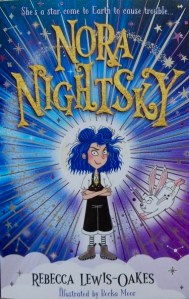
When I say Nora Nightsky is a star, I don’t mean a celebrity but an actual star in the sky. All her family members are part of the constellation Ursa Minor and they love to grant humans, wishes from afar. Not so Nora; all she wants to do is stay in the shadows: after all humans ought to solve their own problems.
However having received several letters from a girl named Olivia wishing for a pet, she decides to take action and sets out to Earth accompanied by Leap her best friend, a hare-shaped constellation, eventually crash-landing in a muddy field.

Her intention is to give Olivia a ‘piece of her mind’ but that’s not what happens. She does though have a plan to obtain a pet for the girl, destination the zoo where a surprise awaits and it’s not a good surprise. Nora’s time on Earth is limited though and she must return from whence she came before her stardust is all used up and her magic fades. Can she obtain the pet for Olivia or will she be stuck forever as a mortal on Earth?

Nora’s character is a delightful mix of rebelliousness and determination that results in her getting into some hugely funny situations with the cheery Olivia, making this a really fun story. It’s made even more so thanks to Becka Moor’s black-and-white illustrations that portray the protagonist brilliantly. Readers will assuredly have their fingers crossed that Nora achieves her goals and can appear in a new adventure soon.

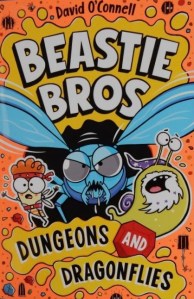
Beastie Bros: Dungeons and Dragonflies

Set in Bugtown, this second adventure of best friends Dribble the snail and Dash the firefly sees the two attempt to recover a priceless treasure.

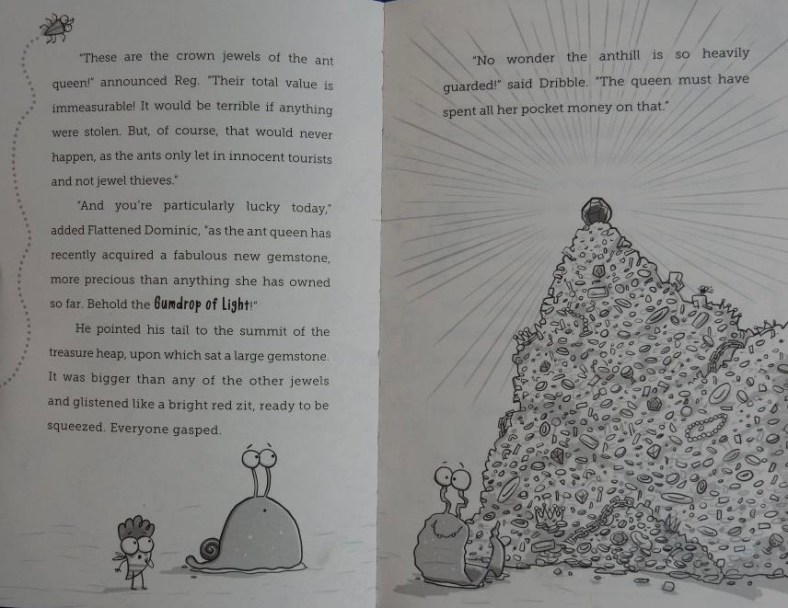
It’s festival time in Bugtown and after an embarrassing moment, or several, with Dribble’s Tummy Tickler invention, they come upon their friend Tilda the earthworm. She suggests they join her on a tour to see the display of the queen ant’s crown jewels. Dribble and Dash are somewhat suspicious of the bus driver and tour guide but they climb aboard nonetheless and the bad feeling Dash has worsens at the sight of the dung beetle passengers already seated.

Having arrived at the displays the friends are taken o a huge room wherein they are shown a fabulous addition to the queen’s collection of gemstones, the Gumdrop of Light.

As they gaze at it some fireworks are thrown, the Gumdrop of Light disappears and so it’s announced, some visitors have been kidnapped.

Realising that his bad feeling about some of those dung beetles was justified, Dash tells Dribble that they are actually master criminals, the Dung Heap Gang. Almost immediately Dash and Dribble are hot on the trail. They pursue the thieves into the maze of dark tunnels. where they soon find themselves confronting gigantic dragonflies; moreover the two friends get separated.

Can the heroic pair find a way to get past the menacing beasties, and can they locate the criminals, retrieve the precious gemstone and restore it to the rightful owner?

Full of zany drawings, a choose your own adventure chapter, a poem about custard and much more including a smashing supporting cast, the entire story is absolutely bonkers and enormous fun. On the serious side, the author aka Professor Crispin T. Earthworm has provided some fascinating bug facts and there are ideas for readers to create their own fantasy stories and a game.

Newly confident solo readers and those sharing the book will relish this.

Five Little Friends

What a treat for anybody who wants to get young children moving their hands, arms and sometimes their whole bodies, and using their imaginations too. This collection of thirty five short rhymes that cover all manner of topics both of the everyday and those full of drama, from tree climbing to teeth brushing, a bubble to a bike and a snake to snow.

There’s a wealth of lovely, playful language such as this from The Waterslide – ‘I’m sliding, sliding, sliding, / in a slipping, speeding flash. // Then I’m out the end / and ready for the … SPLASH!’

I had to laugh to myself as I read On My Phone that encourages young children (for the duration of the rhyme I hasten to add) to imitate the adults around them: it includes the lines ‘On my phone I listen music / and hear messages from my boss’ and concludes ‘I am on my phone so much / I think it’s stuck to my hand …’

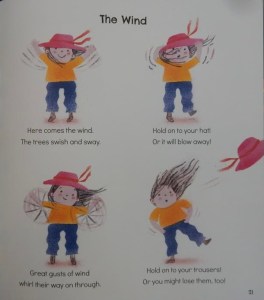
The way Fiona Woodcock has incorporated visual cues to suggest actions for the rhymes into her mixed media illustrations is nothing short of genius. See how she presents The Wind –


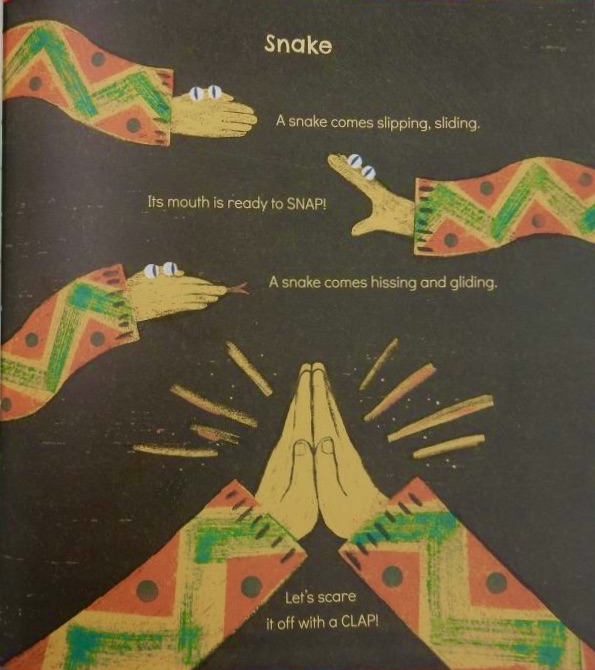
Totally different but equally clever and highly effective is the Snake portrayal –

Teachers, librarians and carers have long used finger plays and action rhymes with young children; this new collaboration from Sean and Fiona offering hours and hours of enriching fun is a must have.

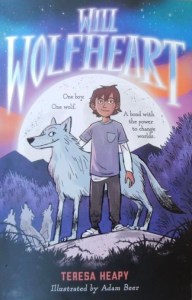
Will Wolfheart


Will loves his dog, Whiskers, more than anything and is devastated when, having moved house, Whiskers goes to live with Will’s grandma, Gran-Mishti, meaning he only gets to see Whiskers at weekends. Then on one of these eagerly awaited weekends, Will is suddenly transported to a magical world wherein Whiskers is a wolf and the two can speak to one another. This world is Wolf World: enchanted and exciting yes, but danger is never far away.

The author’s portrayal of the relationship between Will and Whiskers is superb but equally so is that captured in Adam Beer’s illustrations. However there are a number of other memorable characters too: not least Clara, a human girl and members of the adversarial wolf packs, some of which are friendly towards humans, others far from it; and the wild, magical setting wields a power of its own: I really loved the descriptions of the changing skyscapes. I loved too the support Will’s Dad gave him at a crucial point in the story when the boy was showing great stress.

Animal lovers will certainly relish the tale with its perils aplenty and powerful messages about belonging and ways of loving . However you definitely do not have to love dogs to enjoy this book; I’m petrified of them having been attacked by an Alsatian as a child and was captivated by the story. It would make a terrific read aloud to share with KS2 classes but make sure you show the final illustration of Gran-Mishti’s gate.

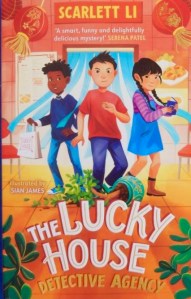
The Lucky House Detective Agency

Living in Leighton-on-Sea, eleven year old Felix and his best friend Isaac absolutely love detective stories and both boys spend a lot of time helping in Felix’s family’s Chinese takeaway, called Lucky House Takeaway.

One evening during a specially busy time the family’s lucky money plant brought from Hong Kong – Optimus Prime they call it – crashes to the ground. Mum is devastated and so the boys decide to use their detective skills to find out who knocked over the precious plant and prevent bad luck from befalling the Lee family. Their initial list of suspects comprises everyone in the takeaway at the time, including regular customers and Felix adds Nina Ding his cousin and nemesis ‘know it all Nina’ they call her.

As they’re repotting the plant, the boys find an old coin with Chinese characters and begin asking around about it. Could the accident by any chance have anything to do with a long lost Chinese treasure? They ask Mr Tsui, who tells them about an old box linked to a visit from Li Hung Chang, a Chinese diplomat from the 1800’s. A vital clue or a red herring?

With an interesting cast of characters, a wealth of information about British-Chinese culture and incidents aplenty, this well-plotted, exciting story is a fun mystery for KS2 readers that will certainly keep them guessing. With Felix’s final “The Lucky House Detective Agency is open for business. Let’s roll.” I wonder what mystery will come their way next?

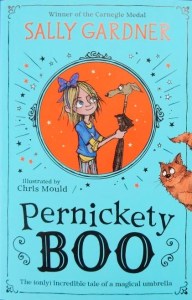
Pernickety Boo

Let me introduce Pernickety Boo, an umbrella, not an ordinary one, though he started out that way. Then an absent-minded sorcerer used him to stir a magic potion, the result being the umbrella acquired magical powers. However his creator left him on an underground train and at Baker Street station he was handed in to the lost property office where he stayed for five whole years.
One day he’s taken, along with other interesting items, to a sale and there he meets young Sylvie Moonshine and a life of adventure ensues. Pernickety Boo can understand cat, has a particular predilection for gloves, especially those made of soft leather, and an ability to time travel, all of which make him extra special.

Totally delightful are his time travels with Sylvie as are those with Jimjam her cat; so too are the encounters with the pushy journalist Ada Moore who is desperate for a scoop.

What an absolutely wonderful, innocent character Sally Gardner has created in her inimitable way. Equally wonderful are Chris Mould’s pen and ink illustrations and together they make a book that exudes humour and is a joy to read from beginning to end. I truly hope that with Pernickety’s ‘See you soon’ on the final page we’ll hear more about him. Read aloud or read alone, you can’t get better than this.

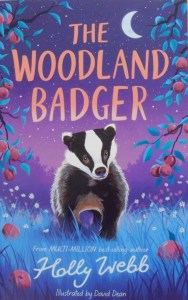
The Woodland Badger

Poppy loves to visit her mum’s allotment very close to their home where there are butterflies and bees aplenty. One day after school she accompanies her mum who is hoping to collect some strawberries for their tea later that evening. However Mum discovers that most of them have been nibbled, most likely by slugs. Fred, another allotment holder, offers them some of his strawberries and also tells them of his pre-bedtime method of keeping the marauding slugs at bay. During their chat he also mentions that hedgehogs eat slugs and they and other wild creatures live in the nearby woods. Mum suggests they stay a bit longer and see if any show themselves. At dusk, first a fox appears and then a badger; the two watch the badger, spellbound.

The following day Poppy talks excitedly about the badger to her teacher, Mr Finch and he responds enthusiastically. Then Poppy and her friend Grace use the school library to do further research and that night Poppy is allowed to sleep out on their balcony in the hope she can get another sighting of Diamond, as she names the badger. She is excited to see not one but two badgers, Diamond and another smaller one she names Ruby.

But then comes some alarming news from Fred: the woodland has been sold to developers and they plan to clear it and build houses, which put the badgers’ home at risk. Poppy and her mum know they must do something. In collaboration with their neighbours, they launch a campaign showing everybody the importance of protecting natural areas and the wildlife residing therein.

Empowering and gently educative, this story shows readers how food chains work in addition to giving information relating to the diet, habitat and behaviour of badgers. A great story for lower KS2 readers.

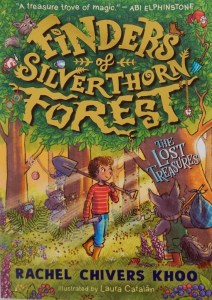
Finders of Silverthorn Forest: The Lost Treasures

As the story opens we meet almost simultaneously the two protagonists: a small boy, Max, and the more diminutive Tuft, who wears odd shoes. It’s partly on account of this footwear that the two meet. Tuft (a Finder) is looking for treasure and Max is a passenger in his mum’s car that almost crashes into what Max mistakes for a tea towel.

Back at Grandma’s, Max continues his mission- to help her find the time capsule she buried almost seventy years ago, before she has to move out of her home. The problem is Grandma can’t remember where she buried it; maybe it was in her garden, or perhaps in the surrounding woods, or even in a treehouse in an ancient oak tree. Off goes Max in an old faux-fur coat of Grandma’s to search the treehouse but is surprised to discover it’s occupied.

Occupied by Finder, Tuftorius Snook, the very creature that Max mistook for a tea towel. Finders are woodland creatures that ‘scavenge lost objects’ that their whiskers help them find and treat them as treasure, even keeping an inventory. “Finders keepers’ is their rule. The two start chatting over tea and a friendship begins. Suddenly a lot more Finders turn up including Tuft’s grandfather, Old Grey.

Tuft persuades his grandfather that Max means no harm and on the way back through the woods, he tells Max that the next day is Domesday. When they arrive at Grandmas’s cottage Max asks Tuft for his help and a plan is formed.

The following morning Mr Pellington, the new owner of Grandma’s cottage arrives telling her that diggers are a coming and she must be out by noon. When they discover his real reason for buying the cottage, Max becomes desperate to see Tuft despite their having said their goodbyes to each other. Can they still do something to stop the entire wood being demolished and most importantly save the oak tree with that treehouse?

Another entrancing story from Rachel (I’ve loved both her previous books) with detailed illustrations by Laura Catalán adding to the pleasure at almost every turn of the page. Woven into the tale is a vital theme about tree preservation.

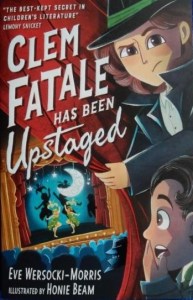
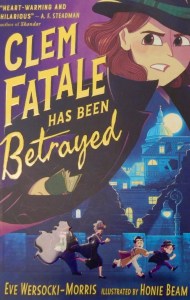
Clem Fatale Has Been Betrayed

This story of gangsters, hoodlums and heists is set in London in the early 1950s. Herein we meet fearless young crook twelve year old Clem Fatale as she embarks on the night’s robbery to be led by her dad at Lord Weatherdale’s North London abode. Things don’t quite go to plan however as said dad, Jimmy Fatale leader of the Spider Gang and notorious jewel thief, seems to have gone missing along with the Fool’s Canary, a rare yellow diamond cut in the shape of the bird. However, Clem and her mates appear to have got themselves a young prisoner.

The outcome is that Clem along with her captive Gilbert, the terribly polite, unadventurous son of Lord Weatherdale for company, follow a trail of clues that take them on hair-raising adventures in greasy spoon cafes, nightclubs, safe houses and through London’s back alleys where rival gang leaders, fences and henchmen all operate. Aided and abetted by the son of Clem’s parents’ Polish cook, Konrad, and Winnie, a cab driver from the West Indies Clem learns that her Dad’s criminal operation has a secret side.

Will she find her father safe and sound or will the most dastardly villain of all prevent her so doing? That is the leading question as the plot turns this way and that. Clem is a great character, determined and resourceful; to her surprise, so too is Gilbert who sticks with her through everything. The dialogue between them is superb. There are lots of other superbly imagined characters including cranky crooks and dizzy dames, some will make you laugh, others hold your breath in horror. Many of these are depicted in Honie Beam’s black and white illustrations

The story’s ending sets the scene for Clem’s next adventure: this reviewer and I have no doubt, countless KS2 readers will await it with bated breath.

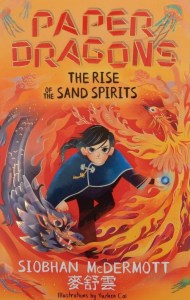
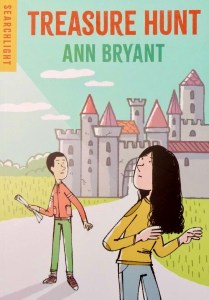
Paper Dragons: The Rise of the Sand Spirits / Treasure Hunt

The second in this gripping series sees Zhi Ging continuing her journey in the magical underwater school Hok Woh. Now she undertakes a highly dangerous mission to rescue her friends and the villagers of all six provinces in the realm from attack. Accompanied by now-phoenix Malo she has to face dangerous sand spirits, enemies hungry for power and awesome lightning breathing dragons if she’s to save both her new home in the world of the immortals and her friends. However as secrets are uncovered, Zhi Ging must work out not only who she can trust but vitally, how she can survive.

With the author’s wonderfully imagined world-building and vivid, lyrical descriptions that include communicating jellyfish, readers will soon find themselves fully immersed in the twisting turning, fast moving plot. However, Zhi Ging’s journey is not only physical but it’s also one of self-discovery and personal development. She gains a considerable amount of wisdom concerning compassion and the power of words. With its blend of Chinese folklore, this is spellbinding indeed. Wither next, one wonders.

This book continues the tale begun in The Rock. The twins, Finola and Zane are at a traditional country fete in Cafner where they enter a treasure hunt that they hope might lead them towards their father. A local girl named Sylvie helps them understand the meaning of the clues but it’s not long before Zane catches sight of Nick Robinson whom he believes is somebody dangerous.. Should they abort the hunt and hurry to safety or continue following the clues to the end; clues in which their Dad has left messages for them. They really need to apply those lessons from Mum about Earth’s culture as well as the analytical thinking that Dad has advocated. And what about Nick Robinson – friend or foe?

The exciting story ends on a cliffhanger leaving readers eager to know if the family will ever be reunited.

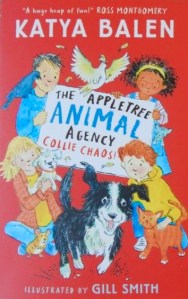
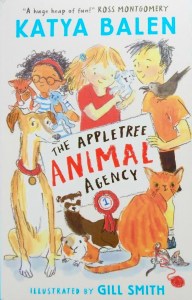
The AppleTree Animal Agency

Mattie loves animals and watches those that come to her garden in the evenings, pretending that Quilla the hedgehog, Bertie the bat and Marmalade the fox are her pets. Seemingly everybody in her class at Mossdale Primary School owns a pet and Mattie desperately wants a puppy but despite frequently asking her dad, he insists they don’t have time to look after one.

One night as Mattie stands watching her animal friends she sees a shooting star and makes a wish on it. Almost immediately through her binoculars, she glimpses a scruffy pup moving unsteadily as though hurt, but when she ventures outside to look, there’s no sign of it.

Next day when Mattie’s walking with her best friend, Zoe, and talking about the puppy, Zoe’s own puppy runs off only to lead them to the injured pup from the previous night. Off they head to the vets but find the place in a chaotic state.

A boy introducing himself as Caspar tells the girls his vet mum and he are staying for the summer while the regular vet goes to visit his poorly mum. The three children sort out the chaos while the vet tends to the injured paw. A couple of hours later everything is back as it should be to Dr Polly’s delight and she calls the three her apprentice vets.

So begins Mattie’s volunteering stint at the vet’s surgery – seemingly her dream is beginning to come true, but Luna as she’s now called, still isn’t hers. Then comes the incident of the runaway ferret: it ends happily and sparks Mattie’s brainwave – a pet-matching service at the village fete.. Zoe and Caspar love the idea and the three start working on it the following morning. Come fete day the service is a great success: is it just possible that all the animals will find suitable homes with responsible owners? Even Mattie’s beloved Luna? …

And so Appletree Animal Agency is formed.

Katya Balen’s feeling-centred story is thoroughly enjoyable and will captivate younger readers especially animal lovers. The friendship, determination and teamwork of the child characters is terrific and a great example to her audience.

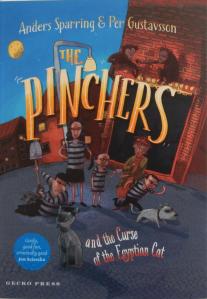
The Pinchers and the Curse of the Egyptian Cat

Is it possible that the unthinkable can happen to Theo Pincher, the only honest member of the Pincher family? It appears so in this latest of tales about them, which is prefaced by a paragraph about the titular ancient curse.

The adventure begins when Theo and his sister Ellen (Criminellen) wander into Pique’s Boutique, an antique shop and accidentally break the best thing in the place, a statue of Bastet, the Egyptian cat goddess. Have they perhaps unleashed an ancient family curse.

Nic Pincher, the siblings’ mum tells them that Pick Pincher, her globe-trotting ancestor had once ignored a warning, nicked the very same cat statue that was guarding Tuttan-K’s tomb, became cursed and found himself unable to commit another robber ever again. Indeed he became a law-abiding police officer.

Suddenly it seems that Ellen has turned honest whereas Theo is becoming something of a criminal.
Then comes a knock at the door: it’s the shop owner, Anne Tique and she has a letter she found hidden inside the broken statue. Mysterious clues may show the family how to undo the curse, so following the clues, the Pinchers sneak out at night, into Ark Park zoo. There they have to contend with monkeys and Grizzly Gustavsson, the nasty bearlike zookeeper who makes trespassers spend the night with the poisonous spiders. Will they succeed in their mission? Will Theo ever return to his normal self again? Maybe an encounter with his best pal, police officer Paul Eessman, whistler extraordinaire, will help in this respect.

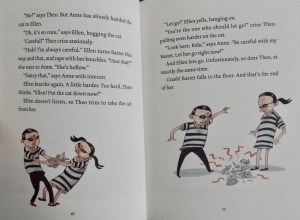
There’s a satisfying conclusion to this fantastical, fast-paced yarn (even Granny Stola makes an appearance in the final chapter.) The abundance of crazy antics are made all the more humorous by Per Gustavsson’s droll images, be they vignettes or filling the entire page. Just the thing to get those in Y3 and above enthused about reading.

The Cursed Tomb

In her latest story, Iszi Lawrence transports readers back to ancient Egypt 1249BCE where we meet eleven year old Henut. We first encounter her as she’s experiencing a troubling dream from which she wakes, tiptoes down from the roof to see whether all is well and hearing strange noises, she heads to the kitchen of her family’s home. Following the sound of loud wing beats, she proceeds to the main room where things are scattered all over the floor; a winged creature launches itself at her and she ends up flat on her back. Alerted by all the noise, Sennefer, her father arrives on the scene. He refuses to believe Henut’s explanation of what has happened and punishes her for what he considers to be her disrespect and lies; harsh and unjust indeed but Henut is used to being treated this way by her father.

Things improve though when Uncle Seti stops by en route to deliver some wine, and shares with his niece and her family stories of what he’s seen on his travels. But then he disappears and in her search for him Henut thinks she saw her mother whom she’s been told was dead; she also finds a scarab amulet.
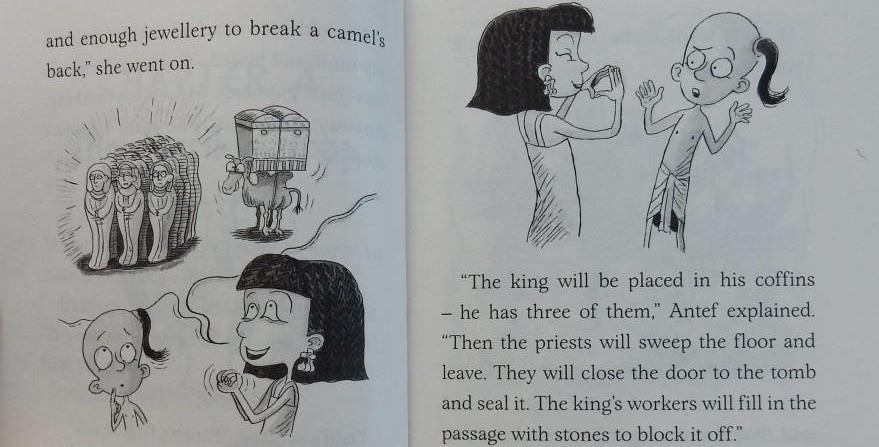
On a festival day among the celebrating crowds, Henut saves the life of the pharaoh’s son Khaemwaset. He thinks she’s brought him luck and wants her to accompany him to a temple along the river as his servant. She reluctantly agrees and so begins her adventure. Henut finds herself engulfed in mystery, forced at enormous risk to her present life and that in the next world, to enter a tomb of one of Egypt’s long dead rulers in the Valley of Kings.

There are numerous obstacles put in her way. Can Henut possibly survive all the challenges that await and manage to get back to her home in Memphis; and can she find out the truth about her mother?

Bursting with fascinating historical details, this is a terrific tale that will excite and subtly inform KS2 readers. It would also be a great read aloud. Henut is a very likeable character who is determined and her actions are conscience driven even if that means departing from the rules. With a glossary and a guide to the gods at the end of the book, this is a story I thoroughly recommend.

Terrible True Tales: The Stone Age/ Terrible True Tales: Greeks

The Great Storm is set on Skara Brae, Orkney, 5000 years back. There live Tuk and Storm both of whom are tired of eating fish and set out to catch a bird for a bit of red meat. On returning to the village, there’s nobody around so they head to the Great Hall where a meeting is underway and learn that their father, Orc, has been accused of theft. Can they uncover the real thief before the villagers serve up their own form of justice?
In The Great Flood, we meet Jay and her family at the end of the ice-age. They live off the land catching deer and whatever else they can. One evening after Jay and Moor’s return from the hunt had involved crossing a rapidly rising river, they sit watching two bands of hunters fighting over deer. Grandfather proceeds to tell the story of Noh, Aye his wife and the building of the ark to survive the great flood. This he then relates to their own experiences of rising water levels and what they must do to survive.

Exciting tales all, wittily told by Terry Deary who uses engaging language play, each being based on historical/ archaeological evidence. Also included are lots of drawings by Tambe. There’s a fact file for each tale and some activities to extend the learning.


The same is true of the companion book, Greeks, illustrated by Helen Flook.

In the four stories herein, Terry Deary breathes new life into fables and legends, each title being an indication of his witty take on a well-known tale. We have The Tortoise and the Dare, The Lion’s Slave, The Boy Who Cried Horse and The Town Mouse and the Spartan House.

Both books deserve to be in KS2 classrooms and should help turn even those disinterested in history, into enthusiasts.

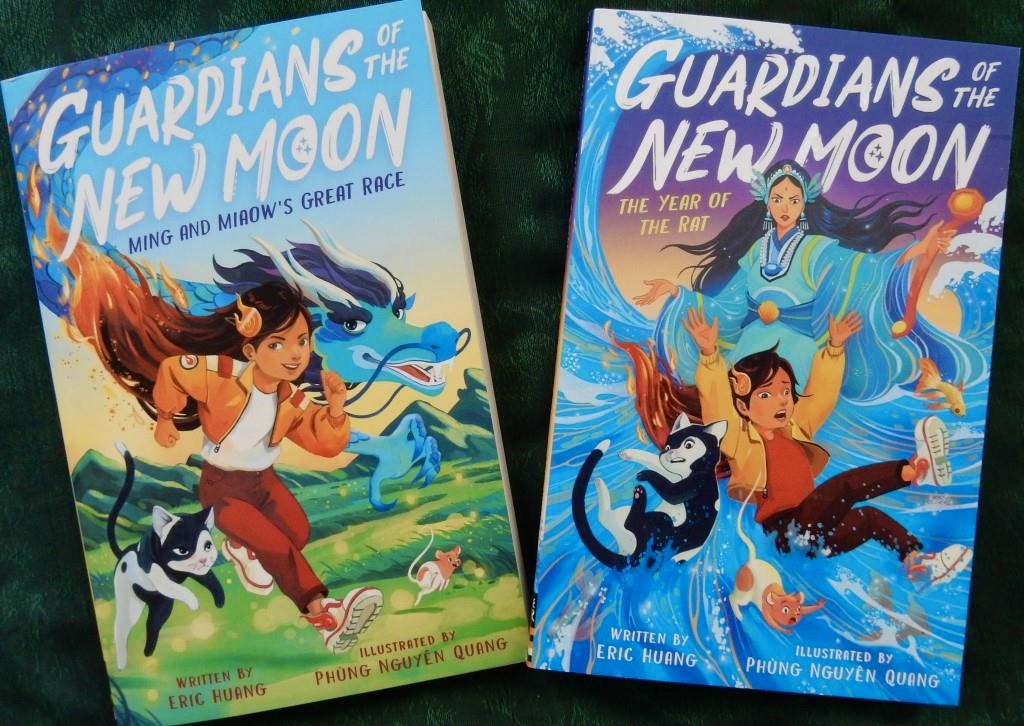
Guardians of the New Moon: Ming and Miaow’s Great Race / Guardians of the Moon: The Year of the Rat

In the first two books in the new Guardians of the New Moon series, readers are transported to a world inhabited by characters from traditional Chinese legends or based on them.
Ming and Miaow’s Great Race begins with the Jade Emperor sitting finishing breakfast and feeling bored by the predictability of his life since creating the Earth. What he longs for is excitement and as he sits staring he notices a black and white cat chasing around near a temple. This gives him an idea: he will organise a great race between all the animals of Earth and the first twelve will each be honoured by having a lunar year named after them.
Miaow, the temple cat is at first not excited by the news of the race but cannot resist participating and sets off on a journey to where the three-part event will start. The Great Race has strict rules that must be adhered to, with rule-breakers being disqualified.
Soon Miaow encounters Ming, a temperamental nine-tailed, elemental fox who is able to shape shift into a human girl and gradually they forge a strong friendship as they struggle to stay in the three day race which takes them down into a valley, across treacherous mountainous terrain and across a mighty river with various competitors falling out at each stage, not so however the wily rat Su. Will these three number among the first twelve across the finishing line? The excitement is high, the perils plentiful and teamwork powerful.

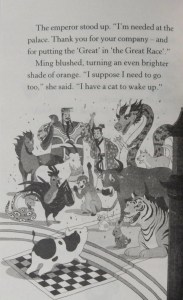
The black and white illustrations help to bring the Chinese folklore characters to life, the story ends with Ming and Miaow becoming The Guardians of the New Moon, thus setting up the next adventure which sees the two preparing for their first assignment in their new roles.

With the race duly completed Su has been honoured by having the first lunar new year named The Year of the Rat after her. The new year is just a week away and that’s when Ming and Miaow (neither having finished the race) are given a new mission: to escort Su to her temple home and liaise with its monks to prepare for the upcoming festivities. Once they arrive, squabbles soon break out and chaos follows.
What happens enrages the sea goddess, Mazu who after thinking briefly acts against the cat and rat by means of a spell.
The celebrations now look increasingly unlikely to go ahead, so can Ming help Miaow and Su see sense and put things right ahead of the new year? It’s that or the Jade Emperor’s plan to honour the twelve animals selected by the Great Race is doomed to fail before it begins.

With action aplenty and lots of dramatic illustrations these stories are just right for readers gaining confidence in lower KS2 as well as for reading aloud around the time of the Chinese New Year (it starts January 29th this year), which is celebrated in many primary schools. I look forward to further titles in the series.

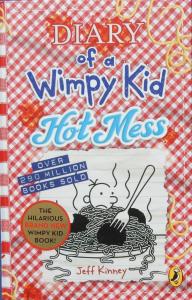
Diary of a Wimpy Kid: Hot Mess

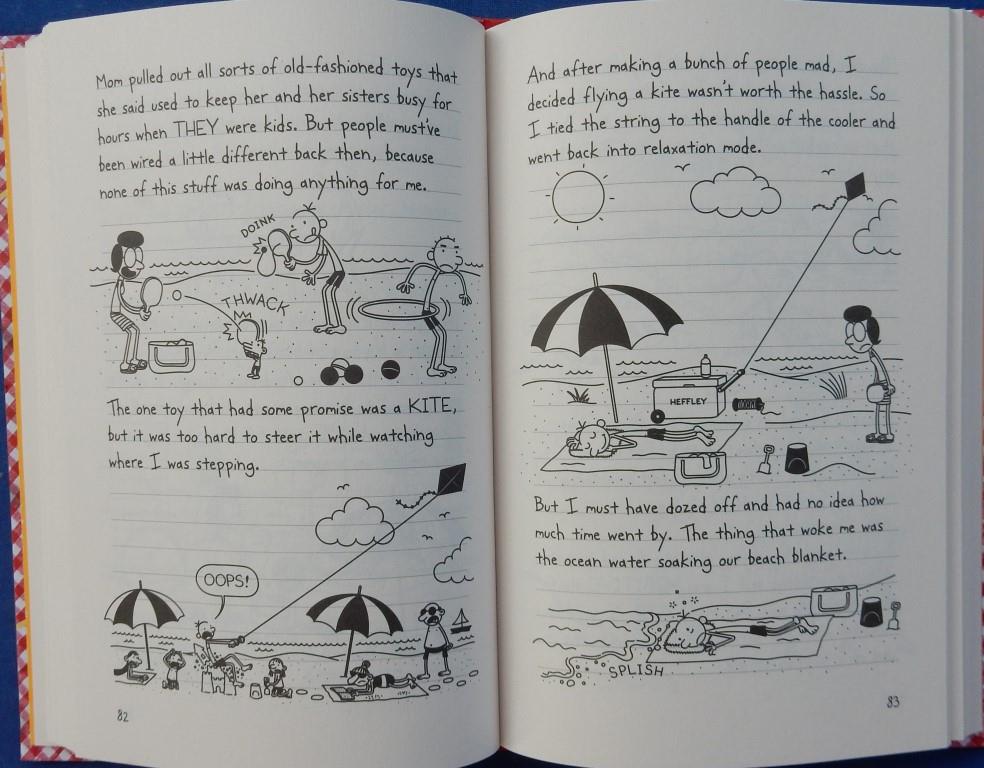
In this 19th book of the series, Greg Heffley and his extended family are spending a summer holiday at a beach house, the very same cabin that his Mum’s family stayed in back in the day when she and her sisters were girls. The reason for this particular location is for Gramma’s seventy fifth birthday, she has requested a re-creation of a family photograph taken at their favourite holiday spot on Ruttyneck Island. As she’s head of the family, there’s no avoiding this and she certainly deserves her top of the hierarchy position on account of her incredible meatballs, the secret ingredients of which are a closely guarded secret. Now with mum determined to carry out Gramma’s wishes, there’s no getting out of it and Greg for one is of the opinion that this will be the worst holiday ever. The thought of spending so much time with his twin cousins, Malcomb and Malvin is appalling and he anticipates that as usual, whenever his Mum and her sister are in close proximity of one another there’s sure to be an argument. The ‘quality family time’ together that Mum hopes for is enough to make Greg shudder: more like the holiday is a recipe for disaster.
The accommodation itself gets things off to a terrible start. To say it’s cramped is a massive understatement and attempting to sleep on a blanket spread on the floor in front of the TV is about as far from satisfactory as Greg can get. Moreover, the so-called beach house, isn’t even on the beach, which means carrying all the gear there, carefully avoiding the part cordoned off as a protected area for nesting plovers. Then once on the beach proper, the items Mum has brought for playing with are ‘old-fashioned’ causing the diarist to write , ‘people must have been wired a little different back then, because none of this stuff was doing anything for me.’

Greg however does learn a few interesting things including some juicy family history about Mum and Cakey’s old boyfriends, as well as information about a canine social media star.
All in all a crazy, funny saga of family with surprises aplenty especially that final twist. My vegan sensibilities prevents me from offering readers a plate of Gramma’s meatballs to eat as they devour this book.

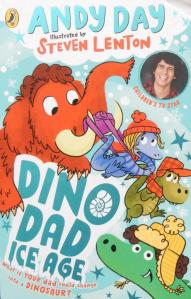
Dino Dad Ice Age

In this sequel to Dino Dad, CBeebies host Andy Day transports readers to the magical island of Dinotropolis. There, protectors of their prehistoric allies young Ruby Thumb and her Dad, both of whom are able to transform into dinosaurs, embark on a cool quest. They need to rescue a baby woolly mammoth and try to reunite it with its mum, as well as unfreeze Dinotropolis.

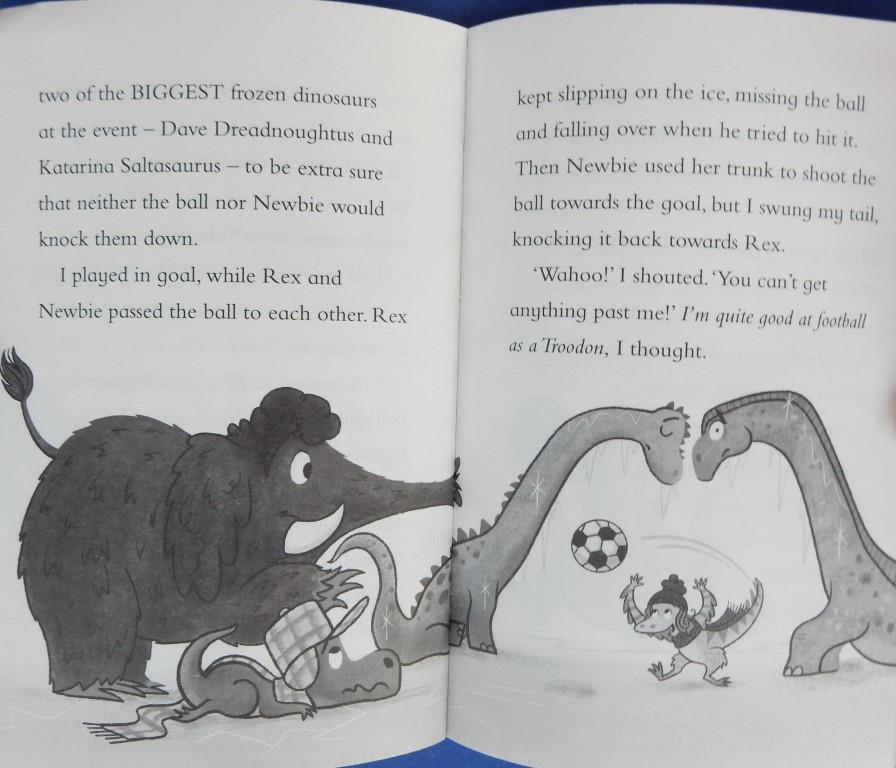
Their adventure is filled with witty banter, there are heartwarming moments and the narrative is sprinkled with dinosaur facts that young dino- enthusiasts will love. (This reviewer learned something from Ruby’s dino facts after the tale ).

Steven Lenton’s terrific, captivating black and white illustrations help bring the story to life on the page

for young listeners or readers just flying solo, as they join the Thumb duo in their undertaking. Then once they emerge from the tale, there are some empty drawing frames at the back of the book and an invitation to fill them.

Doubtless young audiences will be eagerly awaiting Big Dino Talent Show coming next March.

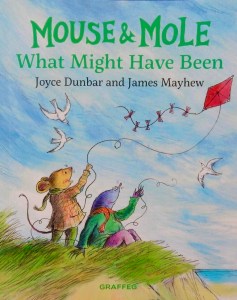
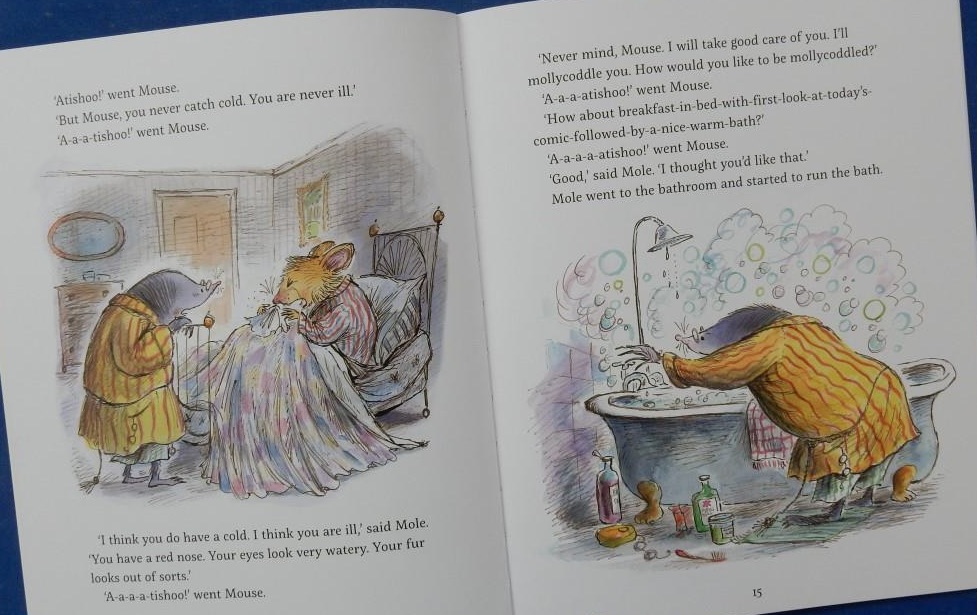
Mouse & Mole: What Might Have Been

This book contains three more episodes in the life of the endearing friends Mouse and Mole.

In the first, A Rainy Day, rain makes its presence felt in no uncertain terms and the two creatures decide to try and stop the increasingly irritating precipitation but end up enjoying themselves to much they fail to notice the change in the weather.

Atishoo! goes Mouse, over and over until Mole declares that his friend needs mollycoddling and offers to make him breakfast in bed and generally fuss over him.

But will Mole’s favourite breakfast be right for Mouse? And what about the hot bath he’s promised and the comic? There’s only one way to find out …and then what?

The final tale sees Mouse and Mole considering What might have beens as they attempt to fly their kite one very blustery morning: will they ever succeed in getting it airborne though? Could all the ‘what ifs’ they’ve pondered upon eventually help matters when it comes to kite flying.

Full of warmth and gentle humour that shines through both Joyce’s text and James’ charming watercolour illustrations. If you’ve never tried any Mouse and Mole books, you are missing a real treat.

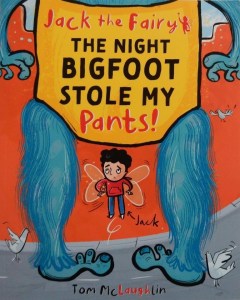
Jack the Fairy: The Night Bigfoot Stole My Pants!

This is the second story of Jack the Fairy. Now having recently discovered that he as well as his mum and uncle Dave are actually fairies disguised as humans, the lad probably shouldn’t have been surprised at the sight of a hairy Bigfoot in his garden pulling his favourite yellow underpants off the line. Nonetheless it’s an ideal opportunity for Jack to undertake his first solo mission. But his decision to chase said Bigfoot down the High Street is a mistake, one that breaks every fairy rule according to his mum and uncle, especially the number one rule: don’t let humans find out that magic is real.

Having landed himself in big trouble, Jack turns to Charlie, his best friend and human for assistance in sorting out the mess. They’ve done some research on the Bigfoot subject but then they find out who the Bigfoot character really is.

Moreover Jack’s pants aren’t the only pair to get stolen: golden ones belonging to a troll are nicked too.

A hilarious tale, splendidly told, with a scattering of jokes and plenty of comical illustrations along with a vital message about accepting who you are, and a smashing ending to boot – or make that to disco dance. With pants featuring large, the book is bound to be a huge hit. Bring on Jack’s next adventure – SOON!

One Wise Sheep

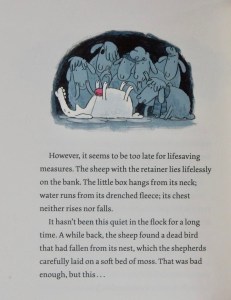
Originally published in German, this is a hilarious retelling of the nativity story unlike any other. It’s a chapter book with occasional illustrations that are perfectly appropriate for Ulrich Hub’s wryly humorous text.

Meet seven sheep, a small flock if ever there was one; it includes one that has a plaster cast on its leg, another that wears a bobble hat, one has its wool parted on the side, there’s one that wore braces but now has a retainer (in a case), one with a snuffly nose that means it needs to sleep away from the rest, one with an eye-patch, plus one more.

One night the sheep, unable to sleep see a bright star and the one with a bobble hat tells the others how it was woken up by a voice singing “ ‘I bring you good tidings’ … ‘And suddenly a host of angels appeared in our field singing praises. I think I even heard trumpets.” Where though are the shepherds? Certainly not kidnapped by UFOs, a goat (with attitude) assures snuffly nosed sheep, going on to say, “For unto us a child is born and you shall find it wrapped in swaddling clothes – “ This sheep reports back to the others, they all assume that the newborn is a girl and set off to find the town where this special baby is said to be.

All kinds of misadventures ensue

and eventually they arrive at their destination only to be told that the baby – a boy – and its parents have departed. The sheep are of course disappointed, especially after creating their own present: a song that begins, “Si-i-lent niiiight”—a song that they speculate is sure to be a hit. `’People will still be singing it in a thousand years.” However, they return to their fields (stopping on the way to pick up litter) and there a special treat awaits.

With a plethora of anachronisms (the shepherds have backpacks containing such items as spare socks and toothbrushes, UFOs, gift cards, wolves wearing mirrored sunglasses to name a few), this is a terrific read aloud (so long as audiences know the traditional Nativity story) to share in the classroom or with a family.
Type to enter text

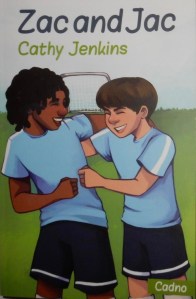
Zac and Jac

Early in the school year, nine year old Jac’s teacher asked the class to write about their real-life heroes and Jac had chosen his dad, a lorry driver. That though is before Jac is asked to join the soccer team his good friend Zac belongs to. Thereafter things at home start getting uncomfortable.

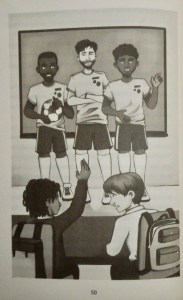
Then comes the news from class teacher, Miss Parker: three professional footballers are coming to talk to the class the following day. They are members of an organisation and what they talk about is racism. As he listens, Jac feels extremely uncomfortable as he starts to realise that the dad he previously thought a hero is in fact, a racist, and that his best friend Zac and his father David, have been the subjects of some of Dad’s racist remarks.

Now with a heightened awareness of racism and how such prejudice is usually passed down from one generation to the next, Jac (from whose viewpoint the story s told) becomes determined to help make change happen in society, starting with his own family. His mum admits she’d been aware of his dad’s attitudes but hadn’t challenged them. Can he with the help and support of his friends and Mum show his Dad that people should not be judged simply by what he thinks they are?

Using football (a children’s local team) as a backdrop, Cathy Jenkins has created a powerful story, sensitively showing what an evil racism is and encouraging youngsters to challenge it whenever it raises its ugly head. That way lines a better future for everyone.

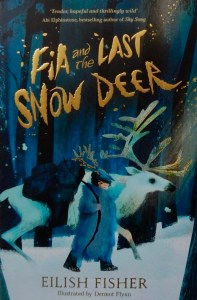
Fia and the Last Snow Deer

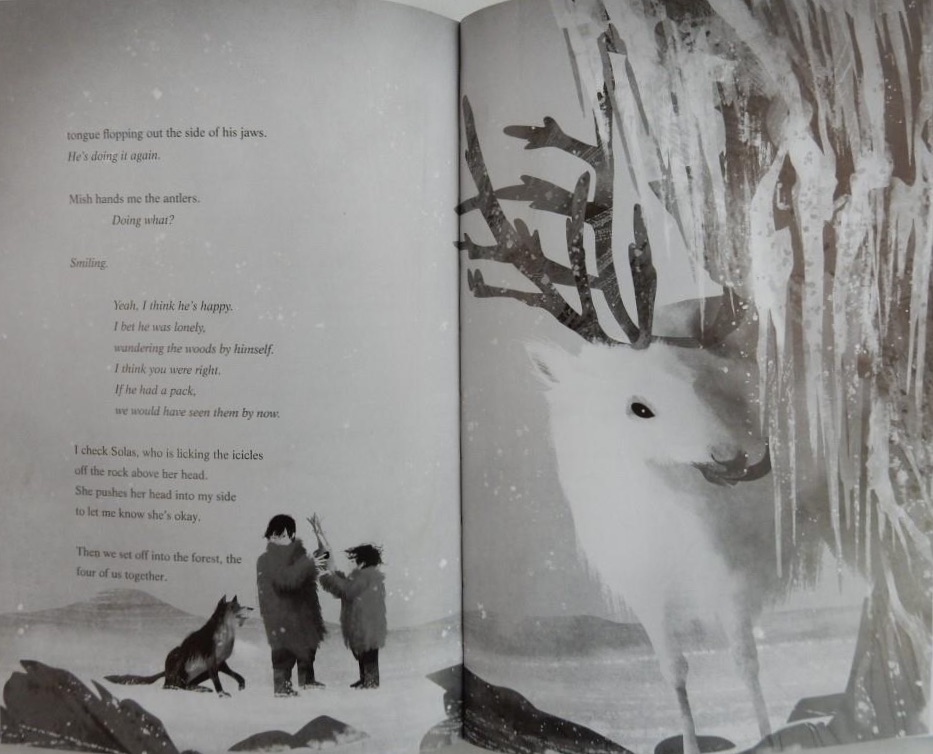
I deferred reading this, put off by the hype it’s had, but once I started, I was immediately drawn in by the author’s lyrical writing and magical storytelling, reading her verse novel in a single sitting.
The setting is Ireland in ancient times and it’s narrated by Fia whose village is trapped under a blanket of snow where after several unending winters the starving villagers are eagerly awaiting the return of the hunters, due to arrive before the next solstice.

However they come with barely enough for a couple of days and so the villagers gather to determine the fate of Fia’s snow deer, Solas (born under the same solstice as the girl thirteen years ago) not only for his meat but also for an ancient prophecy promise that an ultimate sacrifice will return sunlight and life to the world. However, Fia plots with her great grandmother to seek out the Deer Mother who wakes the world at the winter solstice thus saving the village and Solas. Then Fia and her cousin Mish run from the village with Solas, travelling through the harsh landscape, facing such perils as lurking shadows and hardship. They also meet a wolf.

During the journey Fia learns a lot about loyalty, love, family, friendship, jealousy and kindness, and readers find out more about both Fia and Mish, their relationship and standing within the village, as well as the expectations and pressures of birthright and of prophecies. Will they make it to the Deer Mother and ultimately, will Fia find the courage to make the sacrifice required to end winter and bring the sun back – a sacrifice she didn’t fully understand at the outset?

An integral part of the story are Dermot Flynn’s stunning illustrations which echo the transition from darkness to light, while highlighting the love, hardship and hope of the narrative.

A spellbinding read for chilly winter days, best enjoyed snuggled up while consuming a hot chocolate.

King Alfred and the Ice Coffin

Prize-winning author Kevin Crossley-Holland and artist Chris Riddell join forces again, this time in a mythic re-imagining of a story set in Anglo Saxon times. We hear at the start of this rhythmic, dramatically told prose poem, how King Alfred of Wessex met a trading traveller with ‘a tale to tell’. The trader is Wulfstan of Ravenscar and he spins a story to the King, his wife and the royal household telling of adventure, shipwreck and love.

It tells how at an early age, Wulfstan became skipper of a small trading boat. A boat that after a violent storm eventually reached a jetty where he expected a hostile reception. However the people that helped them ashore were welcoming and assisted the traders in mending their boat.
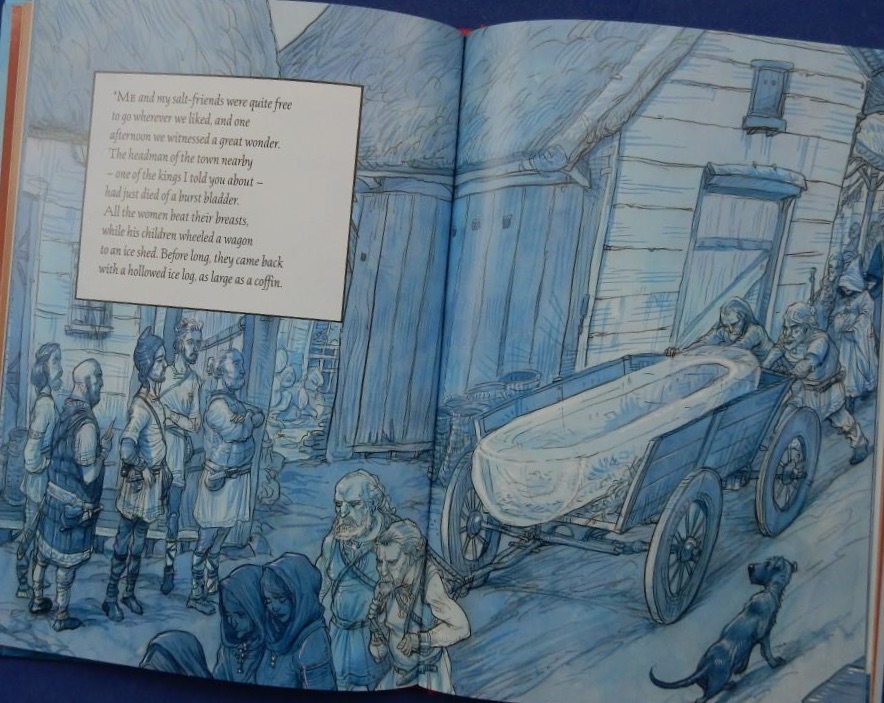
One day after the death of the nearby town’s headman, the visitors learn of some of the people’s customs including their use of a hollowed out ice log as a coffin to preserve the man’s body

and the events that happened including a horse chase hunt for the headman’s wealth, leading up to placing of the body onto the funeral pyre. As for the treasure hunt, Wulfstan himself became the winner of a real treasure, the beautiful golden haired Eliza whose heart he had won.

Riddell’s rich illustrations are at first rendered in sepia tones but once the story of the sea voyage begins, change to blue tones, returning to sepia after Wulstan concludes his account.

This would make a good read-aloud for Primary School classes looking at Anglo Saxon history as well as a solo read those interested in that period.

Kevin the Vampire: A Fanged and Fearsome Fiend

As the story opens Kevin receives a notice concerning his Gloaming,. This is an ancient test that eleven year olds have to pass to demonstrate they have the skills required to be a vampire. There are three skills, the first being Transformation when Kevin must turn into a bat. The second is Mind-Speaking which requires speaking in someone else’s mind and third is a Melt. (into the darkness). The first two shouldn’t prove any trouble for Kevin, however the third is something he isn’t able to do. But if he doesn’t pass all three he will be cast out forever. Kevin needs help and support but the one who could provide these cannot attend the event as it’s only for vampires, no matter she is regarded as part of Kevin’s family; to do so would be a violation of vampire rule number ninety three. What about a werewolf vampire though?

Before the tests begin Kevin’s Dad presents him with a special good luck surprise – the Aurelius Hat of Good Fortune and it certainly works for the Transformation though not all participants are quite so successful.

After this part Kevin and his vampire werewolf buddy take a walk and there follows an unexpected encounter first with dragons and then the Creature Keeper who is impressed with Kevin’s skills.

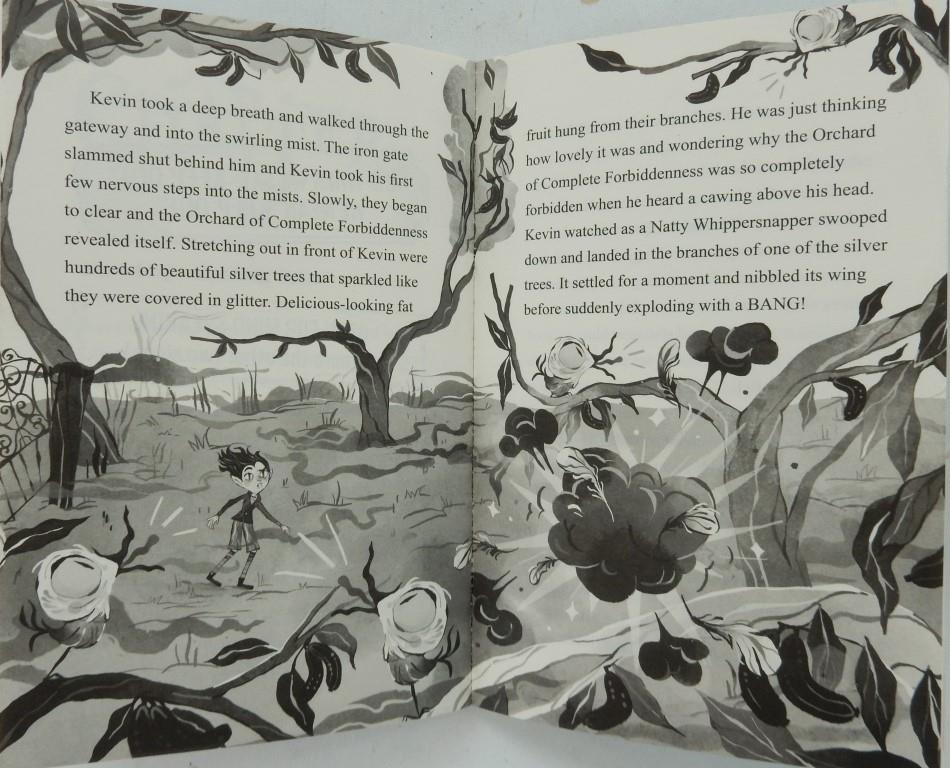
The MInd-Speaking set in the Orchard of Complete Forbiddenness

proves problematic for Kevin and he almost fails but due to unforeseen circumstances, eventually manages to succeed. That only leaves the next day’s Melt: can Kevin complete it in the allocated time? If not then what …

A terrific adventure with a satisfying finale, a cast of characters that includes some pretty nasty beings and Flavia Sorrentino’s weird and wacky illustrations: younger readers will be eager to get their fangs into this one for sure.

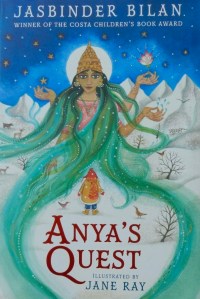
Anya’s Quest

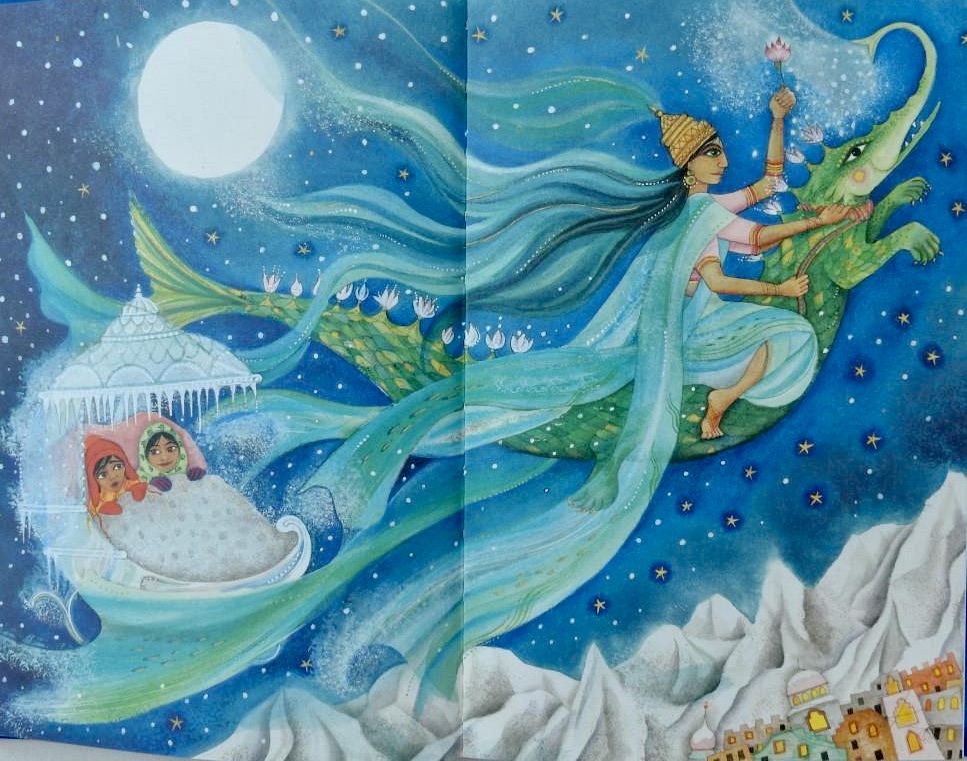
Little does Anya know when she complains to her papa of boredom that she is soon to embark on a vital quest. With her goes Mahi, the cook’s daughter with whom Anya reluctantly accepts as someone to play with in the snow. Anya is called by the goddess, Ganga and the two girls step into a chariot drawn by Ganga’s river dragon spirit companion and they undertake an epic journey through time and right across India.

As they fly Ganga explains that she urgently needs their help to heal the terrible damage that greedy, thoughtless humans have done to the fragile planet over time. They search for elusive spirit animals, lullabies long forgotten and while so doing Anya realises that she’s treated Mahi badly and apologises asking that the two become friends. Friends who can communicate effectively with the children of the world about the horrendous, pollution and its effects and save everything before it’s too late. The girls have to be brave, confront their fears and Anya has to dig deep within herself and connect with her ancestors as her friend has always done. She also needs to find a sacred star-shaped flower from her dreams, said to have healing powers, and use it to help a wounded bear cub.: could the bear be Anya’s spirit animal?

Once Ganga knows both girls are ready, she tells them that they ‘need to join the songs of all the children and sing the earth lullaby’, and thereby gradually heal the planet just like Anya helped the bear cub to heal. She also enlists the help of the other gods to support the earth healing cause and so more and more appear to join in ‘the celebration of sharing the lullabies and the message of hope.’ Finally with a promise to Ganga to do their utmost, the girls return home to the palace where anxious parents await and Anya and Mahi regale them with an account of their adventure and how they intend to make changes in their own lives.

Jasbinder Bilan’s thoroughly enchanting tale inspired by Hindu mythology, and equally enchantingly illustrated by Jane Ray, combine to make a truly gorgeous book. It’s one that will make a superb gift for a special occasion be that Diwali, a birthday, Raksha Bandhan or even Christmas.

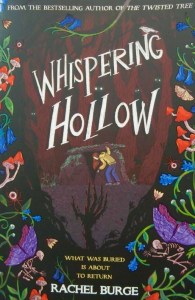
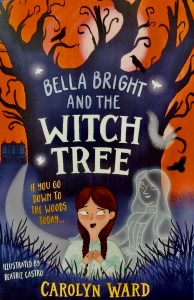
Whispering Hollow / Bella Bright and the Witch Tree

Despite having seen a strange figure at the window during the night on her previous visit, nature-loving Pippa Newton is looking forward to staying again with her grandfather in his cottage at the edge of a forest. Her brother Jed though, isn’t happy about spending half-term without a decent wi-fi connection in a freezing place. However it very soon becomes evident that something isn’t right. For starters, Grandpa seems scared all the time, his home is full of twig creatures, there’s forest debris everywhere and he insists on wearing his jumper inside out. He tells the siblings they are on no account to venture into the forest.
Meanwhile, there are scary beings lurking, watching the children who are in danger from ancient, dark forces, eager to get them into their clutches. Pippa in particular is determined to find out what is happening and so ignores Grandpa’s instructions to stay out of the forest. Nightmarish happenings both keep her awake at night or are the subject of her dreams. Should she talk to Grandpa and risk getting into trouble?
Pippa has a falling out with Jed who thinks talk of faerie magic is stupid.

I’ll leave you pondering on the possibilities and merely say that this tale will very quickly have you in its creepy clutches and keep you reading till the final sentence. It’s superbly written, perfectly paced and full of intrigue and frights. KS2 readers who enjoy spooky tales with love this one.

There are more frights in:

This is the scary sequel to Bella Bright and the Ghost Game. Now Bella has moved she’s pleased to be meeting up with her three friends again; she’s invited them to visit her new home, Spooktwist Cottage, located in the grounds of a ruined manor house. Are there ghostly beings around? As they wander around those grounds, they come upon a hedge maze and despite not everyone being keen to explore it, enter they do. Suddenly they’re back in bygone days (1713 they later discover) when any woman deemed to be a witch could be hanged from a tree. Not only are they facing ghostly beings, there’s a man after them. They also meet a girl named Eva who seems friendly and takes them to see her Aunt Comfort, a healer, who asks if they’d travelled there by touching the tree. They learn that the man, Hopson, is a villainous one full of prejudice and hatred and his son Henry is missing.
Somehow, thanks to the willow tree, Bella manages to get back to the present but without her friends. Reaching the old manor buildings she sees another ghost: it’s Henry Hopson. After talking with him, Bella knows she must get the boy back to his own time and rescue Skylar, Regan and Lex before they disappear for ever.

With many nail-biting moments and several cliffhangers, readers will be rooting for Bella as she digs deep, summons all her courage and strength, determined to succeed in the face of a roaring fire. It’s terrifyingly good stuff and eerily illustrated by Beatriz Castro.

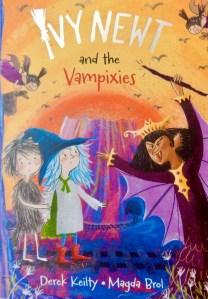
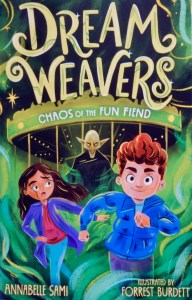
Ivy Newt and the Vampixies / Dream Weavers: Chaos of the Fun Fiend

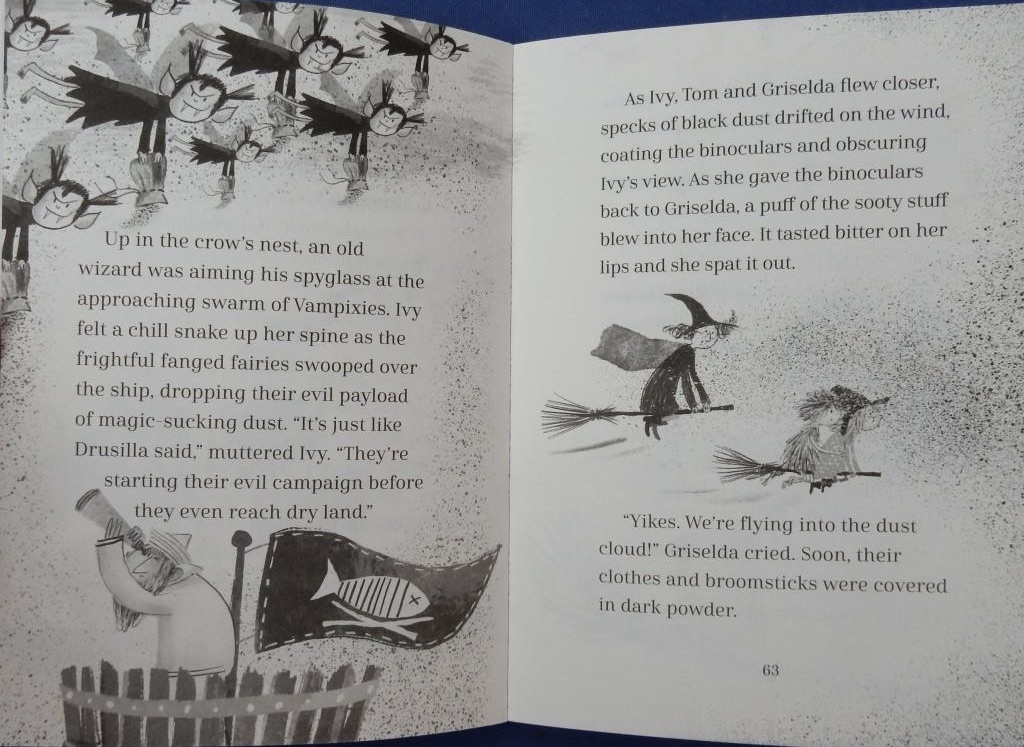
At the start of the story Ivy and Tom, (Ivy’s best friend and familiar) set out with Griselda the Sand Witch on an expedition to find the spell ingredients from her very long list. Their first stop is the Isle of Hob with its extinct volcano Mount Krakatoenail; there they hope to find sneezewort. This they do, but they almost lose Tom when he falls into a quarry-like area in the side of the volcano. Close by, they discover cart tracks running into tunnels that they deduce are part of a dust mine from where Dust Pixies mine the ore which is crushed to make a dust that is on Griselda’s list of required spell ingredients. However as they collect the dust they overhear something alarming that causes them to hide and from their hiding place they hear an announcement from Queen Drusilla, the leader of the Dust Pixies. Said Queen then proceeds to turn the Dust Pixies into Vampixies that will then go and sprinkle this dust everywhere in Miracula thus robbing the witches and wizards of their magical powers.

Griselda and Ivy realise that something needs to be done urgently to prevent this disaster; but what can they do to stop the malevolent plot and thereby save both Miracula and magic itself? The next thing they know, they’re hurtling into the sea not far from the Fishy Wizards’ ship. Perhaps the captain of this ship can help them …

With a plot that moves fast, gentle humour, a satisfying finale and lively black and white illustrations, this fourth adventure for Ivy and Tom will captivate newly confident readers and also works well as a KS1 read aloud.

Tito is eagerly anticipating the holiday with his grandparents especially as his best friend Neena is joining him, his parents and little brother for the week.at the seaside. However even before they arrive at his grandparents’ home Tito feels that something isn’t right. Then the reception they all receive from Nan and Grandad is decidedly unwelcoming. All Grandad is interested in is listening to the clock ticking. It’s very strange indeed that his grandparents’ behaviour is uncharacteristic of their usual fun-loving selves. Tito decides that to get to the root of the trouble he and Neena should dreamweave into Grandad’s dream that night.

Despite feeling somewhat guilty that it’s an invasion of his privacy, he and Neena create a portal through which they enter and it soon becomes evident that they’ve found Grandad as a boy. Then suddenly there appears a tall pale figure that immediately begins to sap child Grandad’s energy. It’s a vampire.; not one that sucks blood, rather this one sucks fun.

In the morning Grandad and Tito talk and iGrandad realises his grandson is a Dreamweaver. He, Tito and Neena set out walking and Grandad tells them that he is a Spiritlink and they in turn tell him about the vampire. As they walk Neena suggests the Bhoot (her uncle) has done something to speed up his plan of merging the human world and the spirit world. Things get progressively weirder but it’s evident that it’s up to the children to find out exactly what is going on. There’s a confrontation with the Bhoot: he’s obviously up to evil tricks and more are to follow.

The story ends on a cliff hanger with Neena and Tito agreeing that they must travel to the spirit world.
A thoroughly gripping tale, the third in the sequence: you really need to read the first two before this one though.

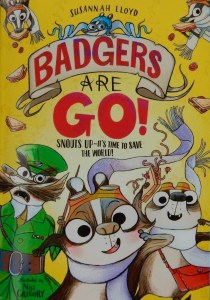
Badgers Are Go!

Lulu Whifferton-Rear likes nothing better than minding her own badgery business; but then she receives a letter concerning herself and a top secret mission. It tells her to report to The Rumptington Academy of Badgering the following morning and is signed by Major Musty Rumptington, She knows there’s no getting out of it and so early one Monday morning off she heads to begin her training.

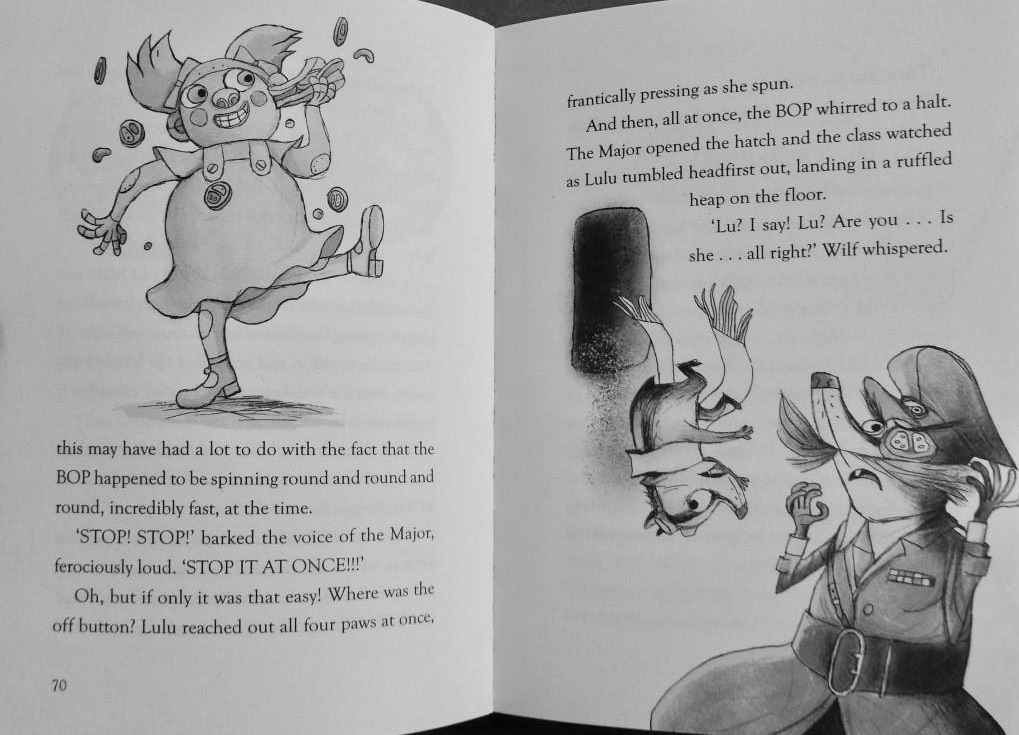
In the dormitory she meets another badger, one Wilfred C. Crumblepaw (Wilf) and the two quickly become good friends. To her surprise, in her first lesson Lulu learns that important humans are not the normal kind, rather they’re Badger Operated Persons or BOPs for short.
As for her training, well from the outset it certainly doesn’t go very well; indeed we could call it utterly catastrophic. For starters there’s the cheese and tomato sandwich procedure where said sandwich ends up in the wrong orifice; this provides one of the many laugh-out-loud moments in the book

and causes Lulu to have serious self-doubts about her suitability for the training. Thank goodness for her pal Wilf who tells her she’s just got a different way of going about things, thus calming her anxiety just a tad, briefly at least. However there also comes a second cheese and tomato sandwich incident at a much more crucial stage in the story; but about this I’ll say no more other than it involves the Prime Minister and the King of Switzerland during a crucial World Peace Conference. Can this perhaps be a case when too much welly turns out to be just what’s needed to save the day and indeed the world? And will Lulu gain her first level Badgering certificate? Errr …

A hilarious romp with some important messages concerning perseverance and self-acceptance (imperfections and all) that will cause readers to cheer for Lulu throughout her trials and tribulations. It’s made all the more fun thanks to Nici Gregory’s lively drawings liberally scattered throughout the book; they really bring the whole badger world to life.

I look forward to reading more about Lulu when she returns next year.

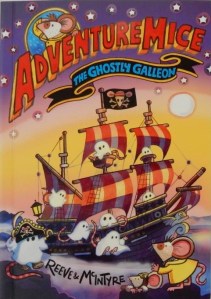
Adventuremice: The Ghostly Galleon

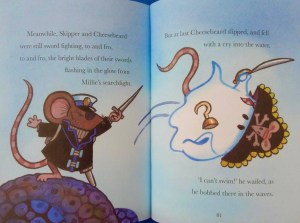
In this the fifth Adventuremice story, the team are sitting telling ghost stories as they drink their bedtime hot chocolate. When there’s mention of the Ghostly Galleon, a ship named the Piranha owned by dastardly Captain Cheeseboard that sank one stormy night and still reputed to sail around Bramble Island when the moon is full, young Pedro expresses the hope that he’ll never be so unlucky as to see this ship. However, come the following morning he accompanies Fledermaus to the sparsely populated Bramble Island to try and find out what’s behind the story..

On the island they meet Farmer Wheatley and his daughter mouse, Rye; the former somewhat reluctantly accepts the visitors’ offers of help with harvesting various fruits. He warns them to steer clear of the bay on the far side of the island and always return by nightfall. However after chasing a large blackberry, Pedro and Fledermaus find themselves right where they’d been told to avoid. Suddenly, what should appear but a ghostly galleon crewed by ghosts – or are they?

Back at Mousebase once more, the two recount their ‘ghost’ sightings to the other Adventuremice and Skipper decides there’s something fishy happening on Bramble Isle.

Can they find out exactly what?
Another delightful addition to the series with just the ingredients to keep young readers turning the pages: amusing, striking visuals, a dramatic plot with a wonderfully inventive and positive resolution and an interesting cast of characters.


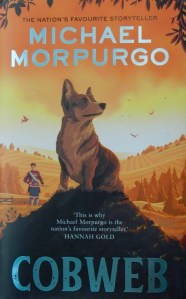
Cobweb

This wonderful story narrated by Cobweb, a Welsh Corgi, was inspired by real life tales of drovers whose job it was to take farmers’ livestock to market to be sold in cities, staying there until all the livestock were sold. One such route was from west Wales to London and Welsh corgis like Cobweb were frequently used.

He was born on a farm and much loved by Bethan, who lived alone with Tad, her father; after her mother and elder brother were both drowned when they went out in their boat to collect the lobster pots against Tad’s advice. We hear how Cobweb became a drover dog when Tad’s second wife gave the dog to her cousin Drover Morgan. The little dog is well cared for and comes to realise that he must remain with the drover and his own much older collie, Goodlad. The latter becomes a good friend and protector, teaching Cobweb the required skills to be a drover’s dog.

Their first trip to London is long and arduous but Drover Morgan is made welcome wherever they stop and ensures both dog’s are fed. Cobweb is kept going by thoughts of Bethan and the drover’s promise that he can return to her once his droving work is done. Then comes news that Napoleon has been taken prisoner and peace is on its way. After delivering all the animals to market in London and resting for a few nights, Cobweb learns the dogs must make their way home sans Drover Morgan.

During the return journey people are celebrating the British victory at the Battle of Waterloo and the two dogs encounter returning soldiers, in particular brothers Robbie and Jonno, the latter having lost his sight in the fighting. They talk of a very brave young French drummer boy they’d brought to England who then disappeared. Later the dogs come upon the very same drummer boy

who accompanies them on the long trek, eventually finding a home with Bethan.

A truly moving portrayal of the powerful bonds that can be formed between animals and humans, and of courage, the ghastliness of war and resulting loss of human life. Michael’s Morpurgo’s words and Michael Foreman’s illustrations together take readers back to an aspect of history that is relatively unexplored in children’s fiction. This would make a great read aloud to KS2 classes.

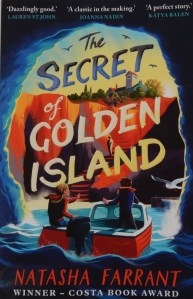
The Secret of Golden Island

Yakov has had to leave his war ravaged home country and now is staying with relations. He struggles to fit in at school and cope with being away from his loved ones. Skylar’s struggles are with how she feels after her grandfather’s stroke (he’s always been her rock) and a bullying incident at school for which she is suspended.

Skylar: ‘I’m not crying.’ Yakov: ‘I know.’ These are the very first words the two children exchange and somehow this brief interaction is the beginning of a friendship, one they both desperately need. Both of them too have a strong desire to change things for the better and not just for themselves but for those they love. It’s this that brings them even closer to one another as they enter a competition, the prize for which is the ownership of the nearby Golden Island. How though can two children compete successfully against adults with schemes and plans of their own?

Certainly, the call of the island is very strong but the quest they embark upon must be kept secret from family members and they only have one another to rely upon for their safety. As the adventure progresses Skylar and Yakov’s friendship deepens, they reveal more about themselves allowing things they’ve kept deep inside to be exposed.

Trying to solve the clues they’ve been given, the pair come up against some competitors who will go to any length to achieve what they want. Can they overcome all the obstacles that arise during their quest, including a desperate race against time with way more at stake than the competition?

Totally gripping, compassionate and exquisitely told, this book swept me away and as I reached the final paragraphs I felt tears welling up, such is its power.

A wonderful read for older KS2 readers and beyond.

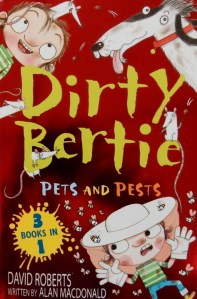
Dirty Bertie: Pets and Pests / The Determined Kitten

This is a bind up of three previously published Dirty Bertie books: Fleas!, Rats! and Bees! each of which contains three episodes in the life of the lad with a magnetic attraction to mischief-making possibilities. He’s involved in such escapades as flea catching (thanks to Whiffer, the house is infested with the things); Bertie and Gran take the pooch to the vets where as you’d expect, chaos soon ensues. In another episode, having locked the supply teacher in a cupboard, Bertie learns what it’s like to be a teacher, under the watchful eye of a slightly bemused school inspector.

He also participates in a cross country run with his classmates that results in a too close for comfort encounter with cows, sets a mouse loose in the classroom (accidentally of course) and decides to try his hand at being a bee-keeper courtesy of Mr Monk’s bees. All this and more besides.

Adult readers aloud, youngsters just starting to fly solo, and listeners at home or in the classroom will find it impossible not to come under the Bertie charm especially with the wealth of comical black and white illustrations.

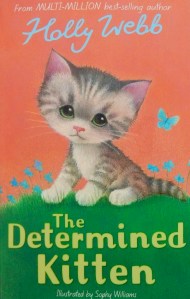
While out walking the dog in the park with her Dad, Rosie comes upon a box containing five ginger kittens, evidently they’ve been abandoned by someone. There appears to be something wrong with one of the kittens but nevertheless Rosie manages to persuade her Dad to take them home. Once Mum sees them, she insists they must be taken to the local animal shelter. To Rosie’s surprise, Sam the cat fosterer lives in an ordinary house and is willing to take them on and help them find new homes. She tells Rosie that she’s welcome to come and visit the kittens at the weekend but also mentions the possibility that little Bill has something called cerebellar hypoplasia, also called wobbly cat syndrome. Rosie continues visiting and helping Sam but it’s not long before all the kittens except Bill have gone to new homes.
Rosie is determined to persuade her parents to let her adopt Bill but Mum is quick to remind her of what her teacher has said about her struggling to concentrate in lessons. The reason for this however, is because she’s being bullied but Rosie doesn’t say so at that point.
How will the bullying problem be resolved and where will kitten Bill eventually find a home?

Just right for animal loving readers around Rosie’s age, especially those who have a penchant for cats.

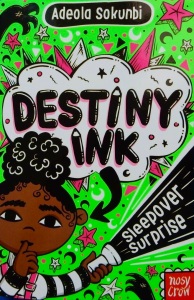
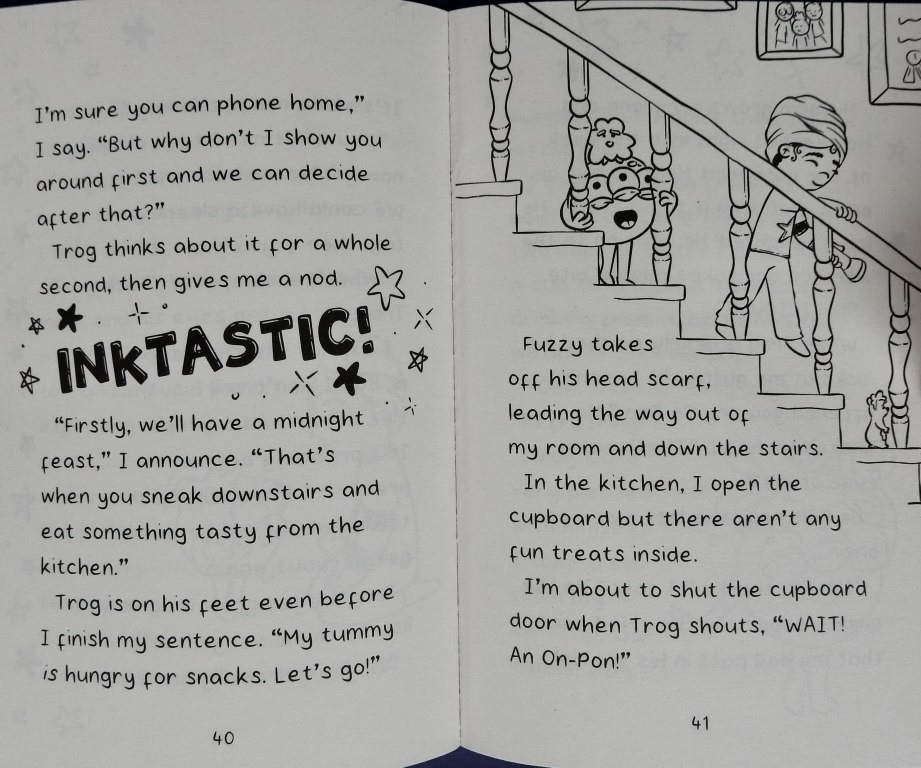
Destiny Ink: Sleepover Surprise

Destiny is one of life’s enthusiasts who finds every day an adventure. As the book opens she is excited to be going to the park to meet her best friend, Olivia. On the swings Olivia reminds her of tomorrow night’s sleepover when the two will be spending the night in a tent under the stars in Olivia’s back garden. Destiny’s tummy starts to feel a bit funny though she assures readers that it’s not because of the sleepover or the possibility of scary monsters. Her mum’s reassuring words “It’s going to be INKTASTIC” followed soon after by “It’s OK if you feel a bit nervous,” don’t completely allay her fears.
Back at home Destiny creates her own tent in her bedroom for a practice sleepover to prepare both herself and Fuzzy, her hamster. She plays in the tent but come bedtime, despite Dad’s brainwave of lending her his torch, she’s still wide awake at 01:28. Suddenly she becomes aware of something strange and the torch reveals an actual monster. A monster – Trog by name – that is clearly scared too and is accompanied by a pet named Furbs. Trog, she learns, is scared of being away from home so Destiny sets about showing her new friend that there’s nothing to be frightened of.

Come the morning with her own fears dissipated, she feels somewhat different. Is she now ready to enjoy her own sleepover at Olivia’s?

It’s great to see how Destiny uses her creativity in overcoming her apprehension and fearfulness.
Adele Sokunbi’s description of how, helped at one point by her Dad, Destiny uses a silk scarf to protect her hair in bed is a detail that will be new to many young readers/listeners, but equally important for those familiar with the practice to see themselves reflected in the story.

Look out for Talent Show Magic, the next sensitively written episode in the life of the delightful Destiny Ink coming this autumn.

Alice Éclair Spy Extraordinaire: A Dash of Daring / The Summer Dolphin

This is the fourth and sadly, final story in the delicious series starring creative, kind, resourceful Alice Eclair.
Alice and her mum are anticipating a relaxing week in the mountains when they arrive at Hotel Anise. It’s not long though before Alice starts feeling disappointed: the atmosphere is far from exciting and she isn’t getting the opportunity to enjoy the hotel’s facilities. However Claude’s appearance on the scene, talking of a complex, ingenious cipher machine that can convert messages into unreadable code in seconds soon dispels her frustration. The problem is the machine has gone missing, along with its maker, Claude’s inventor friend, Jan.

Before long Alice is drawn into a mystery. Then her dastardly Uncle Robert appears on the scene: what is he doing in the hotel? Meanwhile, iJan’s daughter who is staying at the Olympic training camp on the outskirts of the city with her brother, has been receiving unpleasant messages as she prepares to compete in the cycling events to be held in Berlin.

Having persuaded her mother to let her go to the training camp, Alice begins working undercover while at the same time tackling the tricky issue of creating healthy but tasty desserts in the Olympic kitchens. Then to her surprise and delight, her friend Sophie, France’s most talented engineer appears and she offers to introduce Alice to the cyclist Adele and her brother, Hugo. Hugo in turn introduces her to his carrier pigeon. Determined to solve this case, Alice faces many challenges as she follows the numerous clues, some of which as you might expect, are red herrings, sets about working out who she can trust and cracking lots of codes along the way.

A tasty conclusion to the tale and the series: Alice emerges with some new friends including Hugo who happens to use a wheelchair. The author took advice from a fellow author and friend in her sensitive portrayal of this character.

Lillie and her family are having a fortnight’s holiday in the Gower, Wales, staying in Gran and Grandpa’s new home. Things get off to a disappointing start for Lillie who discovers that she’ll have to sleep on the attic floor between the beds of her older sister, Frankie and their cousin Lara.
Almost immediately the older girls gang up and Lillie is made to feel a baby, excluded from their activities but no one else appears to notice she’s lonely and upset.

Then during a boat trip around the harbour, the crew mate Alice, mentions a tidal island that’s a wild bird reserve during the summer months where they might see dolphins as well as seals and birds. Suddenly there in the water they spy a flicking tail, then more; it’s dolphins swimming alongside the boat. One of them in particular, it seems to Lillie, is happy and this makes her feel happy too. Surely that dolphin smiled at me, she thinks to herself.

Later, Frankie and Lara flatly refuse to let Lillie accompany them on a rock-pooling expedition. Instead she decides to go off by herself in the hopes of seeing the dolphins, especially the calf, again, something that when her parents discover where she is, troubles them considerably. However it doesn’t stop Lillie going off exploring alone again after Lara is particularly horrible to her. There’s a problem though, for Lillie doesn’t understand the tide at all and she’s lost track of time. Worse, is that with water up to her chest, she can’t remember any of the special ways to keep safe she’d been told of in school. Then she catches sight of a dolphin; could it be trying to help her?

Whether read by newly confident solo readers or aloud to a class, this mix of sister dynamics and adventure is a story that will be enjoyed by animal lovers especially. David Dean’s black and white illustrations underscore the characters’ feelings throughout the book.

Terrible True Tales: Romans / Terrible True Tales: Egyptians

Having watched his parents slain by the Romans, the boy narrator of the first tale The Captive Celt, is taken from Britannia to Rome as a slave, not to a Roman but to Celtic hero Caratacus.

There he learns vital fighting skills and three years later, his master frees him to return to his homeland.
With maternal death, human sacrifice, brutal corporal punishment, genocide, and child slavery this is pretty terrifying stuff but Terry Deary’s dark, wicked sense of humour shines through it all and children love it.
They will also enjoy the three other stories – The Fatal Fire, The Grim Ghost and The Goose Guards. The Fatal Fire gives a short account of the burning of Rome and of the Emperor Nero.
The Grim Ghost refers to the subject of a tale told to a young boy, Pertinax as he keeps the great Pliny company in the garden. The Goose Guards tells of a boy priest who is determined to get his revenge on fellow pupil Flavia for making him look stupid during a lesson with the head priest.
Each story has an afterword giving a factual historical summary, as well as a ‘You Try’ activity or two.

Egyptians too has four stories loosely based on real events. The Gold in the Grave is told from the viewpoint of Paneb a tavern owner’s son, renowned for his thieving skills. In the robbery he’s aided and abetted by Dalifa,

Both are tasked with getting the treasure out of Tutankhamen’s tomb after the funeral ceremony. You could say of some concerned with this thievery, greed comes before a fall.
The Plot on the Pyramid centres on the pyramid builders, with farmers being required to work for the Pharaoh building a pyramid during Akhet, the time of year when the river rises, flooding the surrounding fields. We read of the trials and tribulations of one farmer, Yenini, member of a gang working under the direction of the bullying Ahmes. With lots of gory details, many young readers will relish this.
In The Magic and the Mummy a father tells his young daughter Neria she’s to assist him in the House of Death where mummies are made. To her surprise she is asked to mummify the pharaoh’s cat so it can accompany him to the Afterlife. There’s a big problem however: this cat looks very like her own cat, Katkins so there’s no way she wants to kill and gut the creature. Is there any way she can save the cat and not get caught and punished for so doing?
The Phantom of the Nile sees Menses, a bit of a chatterbox, training to be a scribe in the local temple. In order to earn extra money to buy his father a much-needed new boat for fishing, he takes on another job, to help Maiarch get rid of the phantom that haunts her new house. When Menses visits the woman a second time he is accompanied by his friend Ahmose who quickly surmises that it’s no ghostly being that is alarming Maiarch. So who is it and what is the intruder’s purpose? Can Menses come up with a plan to expose him and even earn the money his family so badly needs? Greed and doing the right thing are at the heart of this story.

Irreverent and huge fun – the fun being added to by Helen Flook’s illustrations. Put both books in a primary classroom and children will be clamouring to read them.

Super Sausage Dog To The Rescue

When this story starts – the first in a new series – Dottie, an adorable dachshund is residing at Doris Darling’s Home for Dogs. In order to find a forever home however, she is keeping under wraps the fact that this dachshund cross has super skills; she can fly and she can talk. Then into the rescue centre come Harry and his dad and before Dottie can say ‘treat’ she’s in a car heading for a new abode.

Once settled in, it’s not long before Dottie’s super skills are discovered by Harry and the pooch takes the risk of sharing her entire life history with the boy. Happily he thinks Dottie is amazing.
As the two are talking together, a squirrel appears at the window and using its breath and paws writes a message on the glass urging them to attend a meeting the following dawn. Dottie’s powers are urgently needed by Rebecca Refractor who runs Superpets, a secret organisation of superhero pets that keep the world safe from super villains.  How though can the superpets keep the world safe when they are being kidnapped by a supervillain intent on making them part of her collection? 

It’s up to ‘Super Sausage’ Dottie and Harry to stop the petnapping of the remaining superpets by Sparkletta Collector, either that or face being her next victims. Can the duo do it?

The two lead characters take turns to narrate their action-packed adventure giving readers a lot of laugh-out-loud moments: Dottie describes her farts thus, ‘My trumpets are louder than twenty trombones in an orchestra. Big, broccoli-scented bottom belches billow down into the room.’
More laugh-out-loud moments, including one of the Prime Minister glued to the wall wearing his polka-dot pants, are provided by Jenny Taylor’s drawings.

And who wouldn’t want to visit ‘The Factual History Museum’ – just one of Rachel Morrisroe’s splendidly playful phrases. I found myself giggling every couple of minutes as I read this zany tale and like its target audience of primary readers, will eagerly await book two.

How To Stop The End of the World

Col Coleridge is facing a boring summer holiday especially as his parents are far from happy about the time he spends on his Xbox; time they think he should be spending keeping himself fit, especially as he’s just messed up a relay race his family were running in. Then Col notices some strange chalk markings on the pavement close to his home, followed shortly by the appearance of strangers acting suspiciously who claim to be to do with installing super fast broadband in the locality. Could they be burglars perhaps? Col decides to dial 999. However the police and his parents, who are both solicitors, are not at all impressed.

Having had a somewhat strange conversation about strangers in his garden with his young golf fanatic neighbour Noah, Col goes out and formulates a plan, the first part being to further investigate the strange markings. While so doing he encounters Lucy who has only recently moved to the area; she too is intrigued by the markings and is sure they are not to do with broadband. They are runes she informs Col, Anglo Saxon runes.

Another strange thing is that having put up special cameras given him by Lucy, Noah and his dad become convinced they are to spy on Noah’s golfing shots and come a-knocking on the Coleridge’s door to complain. Of course Col doesn’t tell them the real purpose is to watch for the strangers but says he’s bird-watching.

Things get progressively crazier as both Col and Lucy embark on a quest that involves combat re-enactment, an ancient mythical sword, a curse and a mission to save the world.

The writing is bursting with droll humour as the pacy plot twists hither and thither towards the dramatic denouement. A book that will work well as a KS2 class read aloud and for individual readers.
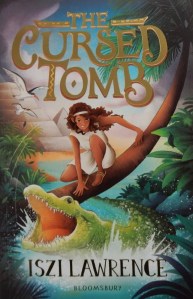
Beti and the Little Round House

Beti and baby Jac live in a cosy little round house built by their Mam and Tad in the woods beneath the mountains in Wales. Living close by are Mr Crouch; his house is a tumbledown round one, and in a ferny house live Beti’s friend, Billie, and her mother Fern.
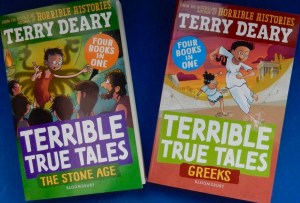
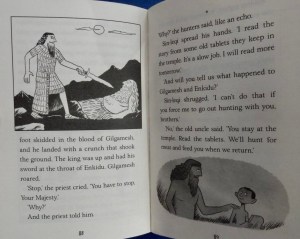
The book follows Beti and the adventures she has presented in four stories, one for each season, starting in the spring when Beti celebrates her birthday with a party and receives a surprise present in the form of a goat to provide her with milk every day; make that a double surprise for along with the mother goat comes a tiny little baby one. Beti names them Goat and Naughty.

When summer comes, Beti enjoys collecting food from the garden – peas and strawberries but she’s not the only one eager to gobble them up: Naughty has her eyes on them too. Back indoors, the little girl has problems amusing her little brother so Tad sends her out and she goes to visit Billie and together the two friends, aided by another friend, Blue, spend the rest of the day endeavouring to fill up an enormous jar with water from the nearby waterfall.

Unsurprisingly there are spills aplenty but also magical seeming dragonflies to assist – fairies, so Beti tells Mam and Tad.

Autumn brings dark evenings and lots of berries to pick and make into pies before the birds gobble them all. There’s also fierce stormy weather that reminds Beti of a dragon with its roaring sounds and she falls asleep somewhere that isn’t her snuggly bed in the little round house. The day ends well though, with huge helpings of Mam’s delicious pie.

With winter comes the ice and snow, a poorly Mam, escaped horses and Beti overcomes her fear of the dark.

Sheer delight from cover to cover. With its gentle humour, Atinuke’s gorgeous descriptions of the natural world and Emily Hughes’ wonderful colour or black and white illustrations on every spread, and themes of family love, friendship and the power of believing in oneself, this is a lovely book to read aloud to foundation stage children. For most of them the portrayal of a simple way of life will be something entirely new.

Dino Dad

Dinosaur daftness to delight comes in the form of a Dino-Dad-Day spent with six year old narrator, Ruby Thumb, her little sister Indiana (Little Indie for short) and their dad, who is a dinosaur expert. Mum, a rare animal photographer, is at work. The adventure takes place on a Saturday and is precipitated by Indie consuming some of Dad’s ‘prehistoric’ porridge then going into his study during a game of hide-and-seek and roaring while they waited for him to clear up a gooey porridgy mess.

When Ruby gives chase, she discovers that her little sibling has vanished. As a result Dad then reveals something he’s always kept quiet about : Ruby is a POOPA – A Protector Of Our Prehistoric Allies – so too are Dad, Mum and Indie. Dad suspects Indie touched his magical ammonite shell when in his study and has accidentally been transported to Dinnotropolis.

Time for Dad and Ruby to use their special POOPA powers and go to her rescue. So begins a madcap chase to discover Indie’s whereabouts before she creates too much havoc on that secret island

and get her safely home before Mum returns in the evening.

Penned by CBeebies host Andy Day, with terrific black and white illustrations by Steven Lenton at almost every turn of the page, this is ideal for younger newly confident readers as well as a fast moving read aloud for those around Ruby’s age.

Puppet

David Almond’s sublimely written poignant fable, with Lizzy Stewart’s impressive illustrations will really pull at your heartstrings.

Silvester is a widowed puppet maker; together with his wife, Belinda, he gained a reputation for creating some of the most beautiful puppets and shows in the area. As a result, the local museum wants to exhibit the subjects of his work and a young woman, Louise from the university wants to write a short history of his creations to be offered for sale when the exhibition opens. All he has left are his memories, posters, and photographs of his beloved Belinda.

So what can a puppet master do when he’s old and alone? Pondering this question, Silvester feels strangely free. Days pass and one night, awaking from his dreams, the attic seems to call to him. Up he climbs, sits at his workbench and fashions a new puppet. Then comes, “E-O.” That’s the first sound the puppet makes: Silvester thinks he’s imagining it. Next morning he tries to get the puppet to stand; it’s a tough call but eventually he succeeds. “Hello, Puppet,” says Silvester. “E-O” comes the reply.

Puppet is a quick learner, he walks and it’s not long before the old man has found a firm place in his affections for his creation. They visit the park together and there they meet a rather unusual girl named Fleur and her mum, Antonia. The latter remembers some of Silvester’s magical shows from her childhood. The puppet becomes known in the local community as Kenneth and soon Fleur becomes Silvester’s ‘apprentice’, learning how to create and use puppets.

This eventually leads up to a public performance – but all the while, Silvester has been growing more and more tired. With the show over and everything cleared away, telling his friends, he’s seldom been happier, the old man heads home with Puppet and they lie down to sleep together. “Jam,” whispers Puppet the next morning … “Da- ad” but … . I had tears in my eyes at this point, such was the emotion I’d built up inside.

With his wondrous tale of creativity, playfulness and the circle of life, David Almond shows that with trust, love and the power of the imagination, anything is possible. Share it with a class: the children will be swept away by the magic of the telling, as will individual readers.

Dirty Bertie Wild! / Puppy Club: Minnie Home Alone

These are both additions to series popular with new solo readers: thanks to the publisher Little Tiger for sending them for review.

The small boy with some disgusting habits returns for three more crazy escapades. The first, from which the book takes its name is an account of a class visit to Go Wild, a trip Bertie anticipates will be the best school outing ever, especially as the children are allowed to get muddy. However his spirits fall considerably when he learns that he’s been assigned to timid Mr Weakly’s group, the worst possible person to have as leader. There’s absolutely no chance that his group will win the prize for the best group – or is there?
Vroom! sees Bertie’s Gran deciding to start driving lessons so she can take her test in her brand new sporty red Mini. A recipe for disaster surely especially with Bertie and dog Whiffler in the car while she’s being instructed and can you believe when she takes her test. Never mind if she fails – there are always alternative ways of travelling.
Finally in Grounded, Bertie goes to great lengths to join his friends Darren and Eugene when they go skateboarding in the park.

Harper is really looking forward to her first school residential trip – four days away from home. However she’s very concerned about how her puppy Minnie will cope with being left alone when her parents are both at work and with his business taking off, Dad too is quite likely to be out of the house. The last time he’d left Minnie by herself she chewed through the cable of his laptop. She begins to think that perhaps she should pull out of the trip.
Harper and her friends do some research and learn that separation anxiety is a common problem with puppies. So begins ‘Operation Home Alone’ as they call it, with just two weeks to go until that school trip. As Harper tells Dad when they’re out for an early morning walk with Minnie, the business of ‘having a puppy is a learning experience for all of us.’ How true that is: it seems to be one step forward and then several back whenever Minnie is left alone.Then Dad drops a bombshell: he’s going to be on a business trip that coincides with Harper’s time away.
Her fellow Puppy Clubbers rally round doing everything they can, but will it be enough to ensure Minne is okay in Harper’s absence?
Another wonderfully warm story of camaraderie for young KS2 readers especially those who love dogs.

Bear and Bird : The Adventure and Other Stories

The first of the four short episodes about best friends Bird and Bear – The Nothing – takes place on a Tuesday, the pals’ usual day for spotting clouds but on this particular Tuesday Bird is poorly, so instead Bear endeavours to make his friend feel better. However she declines his offers of chewy things and other foodie favourites; it’s also a no to a story, a new wonky stick and dancing. ‘Nothing” is all Bird wants. Bear is on his way out when Bird calls him back with a request. Can you guess what it is?

With Bird feeling somewhat better, the two set off for some cloud searching when they come upon a sign, DO NOT GO IN THE HOLE, Bear reads. Off they go again, Bear with his mind on clouds, Bird preoccupied with wondering what his friend is thinking about. Suddenly Bear realises he’s lost Bird and vice-versa. Bird thinks of The Hole. Could Bear be stuck down there? Bird goes to look and finds a stick that’s just right for a rescue.

But who rescues whom?

Episode three sees Bear and Bird at Leaky Lake where they come upon The Mole, a creature whose jokes Bear finds funny. Soon Bird starts to feel left out and so she decides on a get rid of Mole plan. However, things don’t quite go as she hopes as it’s Bear who feels upset. Can they remain bestest
friends or will Mole come between them?


In the final episode Mole is still waiting when the two return to the lake and he has a surprise in store: a little boat – just the thing for The Adventure under Mole’s captaincy. No matter if they encounter such things as pirates and sea monsters, they’ll surely keep each other safe.

As with previous titles in the series, this delightful duo will amuse both emergent readers and young listeners with their ups and downs and silliness that are beautifully captured in words and pictures by the inimitable Jarvis.

Fairy vs Wizard

Eleven year old Danny, has just started at a new school and, so he writes in his diary, he’s desperate for people there to think he’s cool and funny. The problem is that when he opens his lunch box what does he discover inside but fairy, Stink. She says she’s returned to the Humanyworld for a short break and will go home the following day.She does so but only briefly; next day when Danny returns from school there she is sitting on his bed crying. Danny decides to let her stay till the weekend and so begins another spectacularly silly story.

With an agreement by Stink to keep three simple rules, off go Danny, his friend Kabir and Stink to school next morning and almost immediately on arrival Stink breaks one of the rules causing embarrassment to Danny. Then comes news from Danny’s teacher, Miss Nichol, that his form group is to do an assembly and she has written a play for them to perform. It’s called Nelly the Element and the Wizard of Doom and everybody wants to be the wizard.

However a Stink initiated disaster happens in a different assembly and Danny gets labelled as Disco Danny by his classmates, as well as a lot of others when a video of his dance goes viral. As compensation, Miss Nicol tells Danny he’s to play the wizard and by so doing earn a new title, Danny the Wizard. Then comes an announcement from Stink: her good deed is to invite her wizard friend Rufus Nobeard, to come and give Danny wizarding lessons.

With the revelation that Rufus has changed, and on account of crimes committed is now a wanted wizard, things get increasingly chaotic. (I won’t spoil things and reveal what happens thereafter.) Amazingly though, everything ends happily, but I hope, not, ever after, as the series is such fun. I found myself giggling at every turn of the page and so will primary school readers of this second hilarious book of daft diary entries liberally sprinkled with author Jenny’s comical black and white illustrations.

Fairytale Ninjas: Two and a Half Wishes

In this third story of Goldie, Snow and Red aka the fairytale ninjas residents of Hobbleton in the magical kingdom of Waybeyond, the three friends encounter what looks like one of the new guests from Goldie’s parents’ hotel, out wandering in Shadowmoon Forest. Having spoken to her, Goldie suspects Miss Raven is up to no good. Why is she carrying that empty jam jar? And why is she not concerned about the possibility of encountering a troll?

Seemingly this is a villainous enchantress: why else would she have a book about spells, something Goldie discovers later in the day when taking clean towels to Miss Raven’s room. That and a row of glass bottles on the chest of drawers set alarm bells ringing. But then Goldie hears a strange noise coming from one of the drawers and inside she finds that jam jar wherein is a very frightened fairy flying around. Goldie unscrews the lid and out bursts the fairy. Back comes Miss Raven at almost the same moment that Goldie’s Dad appears in the doorway. The next thing Goldie knows is that the woman is chanting a spell and her father is turning into a duck.

Goldie realises that, with the help of her friends, she must outwit this evil enchantress and thanks to the fairy she released, the girls have been granted three wishes. One of these can surely be used to turn her dad back into his normal self.

Young fractured fairytale enthusiasts, be they acquainted with Fairytale Ninjas or not, will enjoy this book with its magical setting, three strong girl protagonists who can perform ninja moves and mythical creatures, though I recommend new readers read the previous books beforehand. Plenty of Mónica de Rivas’ black and white illustrations break up the chapters.

An Elephant in the Garden

This image has an empty alt attribute; its file name is dscn9988-1.jpg

First published some ten years ago, it’s good to see this tale now made available to a new audience. It was inspired by a real life rescue of an elephant during World War 2.


From her bed a frail old lady named Lizzie, resident of a Canadian nursing home, relates her story to her nurse and the nurse’s son, Karl, who reminds Lizzie of her young brother.


During WW2, Lizzie, then sixteen, her pacifist mum, Mutti, and her younger brother Karli lived in Dresden. Their peace-loving Papi was called to fight, Mutti went to work at the Dresden Zoo with the elephants. She had seen a small elephant born and named him Marlene. Rather than have the creature subject to mercy killing like the other zoo animals, should Dresden be bombed, she had persuaded the zoo keeper to let her take the baby elephant home to her back garden and care for it.


When Dresden comes under heavy bombing in 1945 and the city is destroyed. Lizzie, her mum and Karli decide to escape into the country and head with the elephant, towards Uncle Manfred and Aunt Lotto’s farm. At first they think the place is empty but in a barn they come upon Peter, a Canadian flyer who has bailed out of his plane. What does one do when encountering an enemy combatant? Mutti is conflicted but Lizzie is immediately drawn to the young man. Together they all make their way on a perilous trek towards the American lines, helped at one point by a Countess who asks them to take a homeless school choir along with them. As they journey Lizzie becomes ever closer to Peter.


Eventually, despite Peter’s best efforts, Mutti and the children are sent to a camp along with other displaced Germans and Peter returns to Canada promising to come back and marry Lizzie. Is he able to keep that promise? And what of Lizzie’s Papi? Does he survive the war?


A gripping, enormously moving tale that offers an unusual perspective on what was a horrendous time for countless numbers of people. I read it in a single sitting.

Star Friends: Dream Shield / The Firefighter’s Kitten

These are additions to popular series for younger readers: thanks to the publishers Little Tiger for sending them for review.

In case you’ve not met the Star Friends, Maia, Lottie, Sita and Ionie before, they share a special secret – they have magical animal friends – Star Animals – who help them learn magic and fight evil!

There’s excitement in Westcombe: the village is hosting a scarecrow competition and the Star Friends, along with lots of other residents are participating. Strangely though soon after, lots of people in the village start feeling very sleepy and completely lacking energy. Could it be some kind of weird bug that’s doing the rounds: the friends think otherwise. It’s down to dark magic, is what they think. They really need to do something to stop it but that’s going to be a challenge on account of their own sleepiness. It’s something to do with Shades, but where are they hiding?

Can the girls solve the Shade mystery and make things right again? The story ends on a cliff hanger, which will leave readers eagerly waiting the next episode in this deservedly popular series.

Lola’s mum has a new job as crew manager of a team of firefighters. This means that the family has moved to a new town where Lola doesn’t have any friends and must start at a new school. On the positive side their house has a garden and her parents have agreed that once they’ve settled in, they will get a cat.

As Lola walks to school on her first day accompanied by her dad, a boy calls to her, introduces himself as Noah and tells Lola that they will be in the same class. Noah has three cats and that prompts Lola to tell Noah about her cat hopes. Next day as they walk to school the two children see a tiny kitten huddled high up in a tree. On their way home, the kitten is still there and so too are a crowd of people, a fire-engine and to Lola’s surprise, her mum.

Eventually Lola’s mum rescues the creature but nobody knows where it belongs and the animal shelter is completely full. It appears that there’s only one place the kitten can go that night … Lola quickly develops an attachment to the newcomer but will he stay?

With themes that children will immediately relate to: moving house, making new friends and having a new pet, this latest in the prolific author’s animal stories, although slightly predictable will appeal to readers from around six who will love Sophy Williams’ visual portrayal of the kitten.