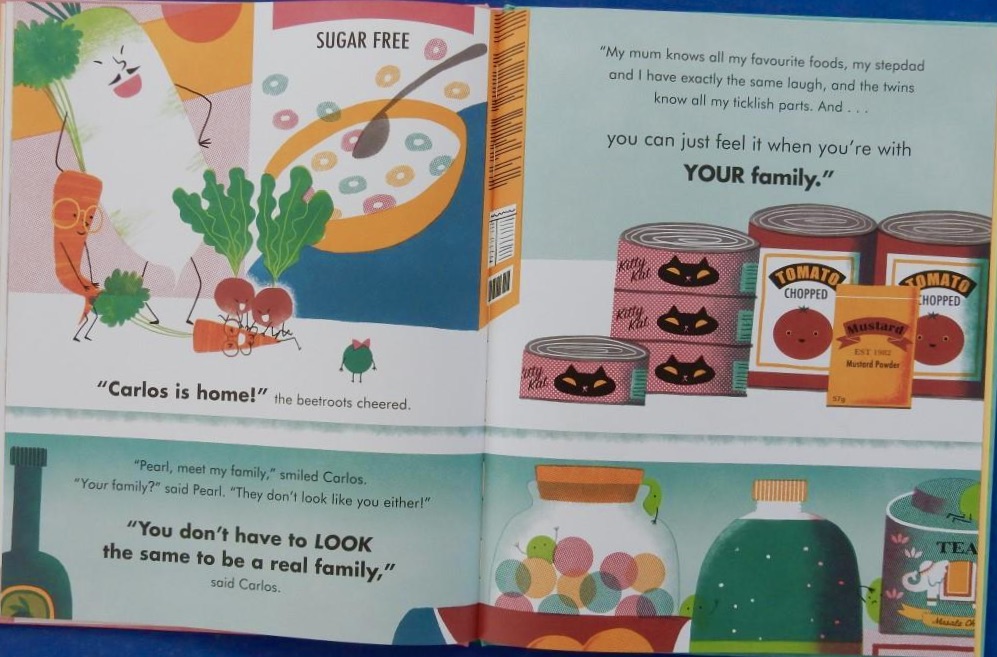
Always Carry Me With You / My Friend Tree

These are both paperback picture books from Ivy Kids: thank you to the publishers for sending them for review.

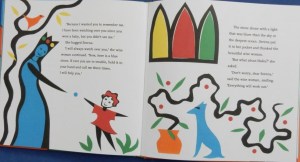
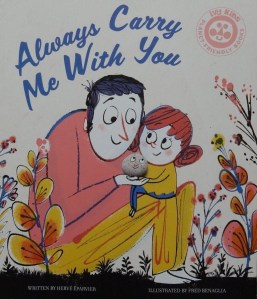
Despite the hard, often cold exterior of the book’s inanimate character, this story is full of love and heart. The love is that shown by a father towards his young daughter, conveyed through something one can hold in the hand – a pebble. He talks to her of its durable nature and longevity, mentioning some of its myriad uses and possibilities.

Without actually saying the words, this father is letting his child know that he will always be there for her no matter what, offering comfort, safe keeping and reassurance that she’ll never be alone.
Dads/ caregivers suggest you keep a pebble in your pocket and show it to your child before you share this treasure of a book that reads like a love letter to a little one. Both author Hervé Eparvier with his warm words and illustrator Fred Bengalia with his mixed media art, have done a sterling job capturing the marvel of an unassuming stone.

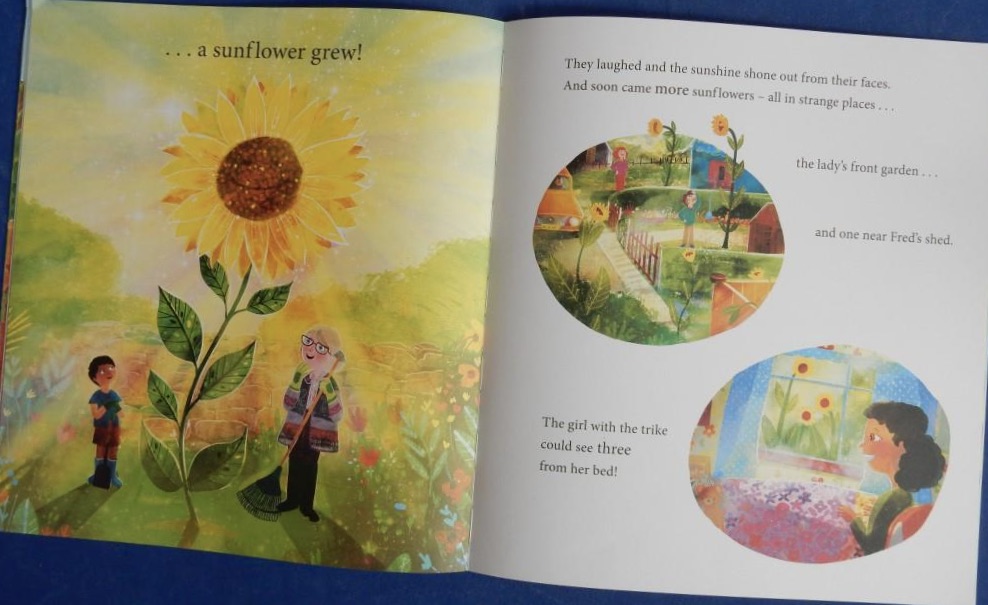
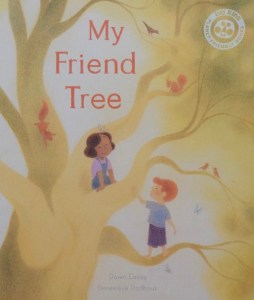
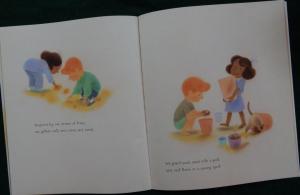
Two children grow up with a constant companion, an old oak tree. They play on it, beneath it and around it and sometimes watch it act as a food source for visiting birds and small animals. The oak provides shade and shelter, warmth and appears to understand the feelings of the girl and boy.
When the oak drops seeds, these fuel dreams of a forest and the children gather them, plant them in pots and place them in sunny places.

They tend the growing seedlings and once sufficiently grown, they plant the saplings around their Tree friend and continue to care for them.

Over time along with the trees, the friends grow, eventually forming a romantic relationship and having children of their own and now the oak is a family tree in more than one sense of the words. It flourishes in the forest and so does the loving family.

Whether the tree’s growth is taken as a metaphor for human growth and change or an example of plant growth and changes, this book with its minimal rhyming text and softly hued, glowing pastel and pencil illustrations, offers a view of the natural world embedded in a story that will likely ignite young children’s interest in growing things and offers plenty of potential in the way of discussion be that at home or school.

Super Swifts / Night Flight

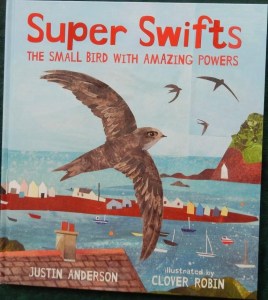
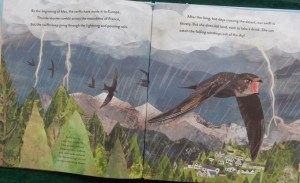
Astonishingly, swifts (champions of the bird world) are able to fly faster and higher than any other birds; even more astonishing is that they might stay airborne for as much as four years, flying up to seventy miles per hour.

Author, Justin Anderson begins this swift story in central Africa’s Congo region in early April and tells of the journey undertaken by one female in particular who with a group, flies from their place of overwintering, towards Europe and their destination in the UK.

A month long journey that takes them over the world’s largest desert, across vast oceans, through thunderstorms to the place where our female will look for her mate, a bird she’s not seen for a whole year.

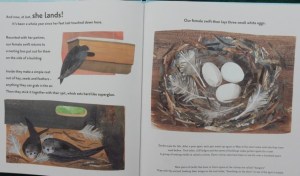
Clover Robin’s mixed media close ups of the pair show them making a nest in which the female lays three eggs each of which hatches into a hungry chick.

I love the author’s description of the pair sticking ‘their nest together with their spit, which sets hard like superglue.’ Come July, it’s time for the mother to make her return journey to Africa; she and the other super swifts will once more take to the skies.

On each spread, there’s a main narrative, alongside which is further information printed in smaller type. An inset box gives fascinating details of swift lice that nestle in young birds’ feathers and breed when the swifts nest again. A final author’s note contains information about some of the swift species and gives ways in which readers can help prevent swifts nesting in the UK from dying prematurely.
I’m looking forward to hearing their screeching cries as they fly over our house this summer.

Also on the subject of birds is a book wherein fact and fiction come together.

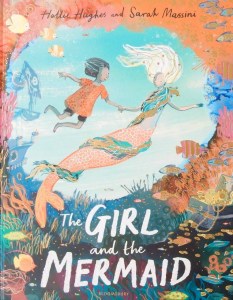
The Girl and the Mermaid

Readers follow the touching and uplifting story of Alina and her granny, residents of a lighthouse. Every evening the two share tales of mermaids woven by Granny as she sips her tea but now these wondrous stories have become faded and forgotten, gone from her memory. Broken hearted at the pain this causes her granny, Alina’s greatest desire is to bring back those stories.

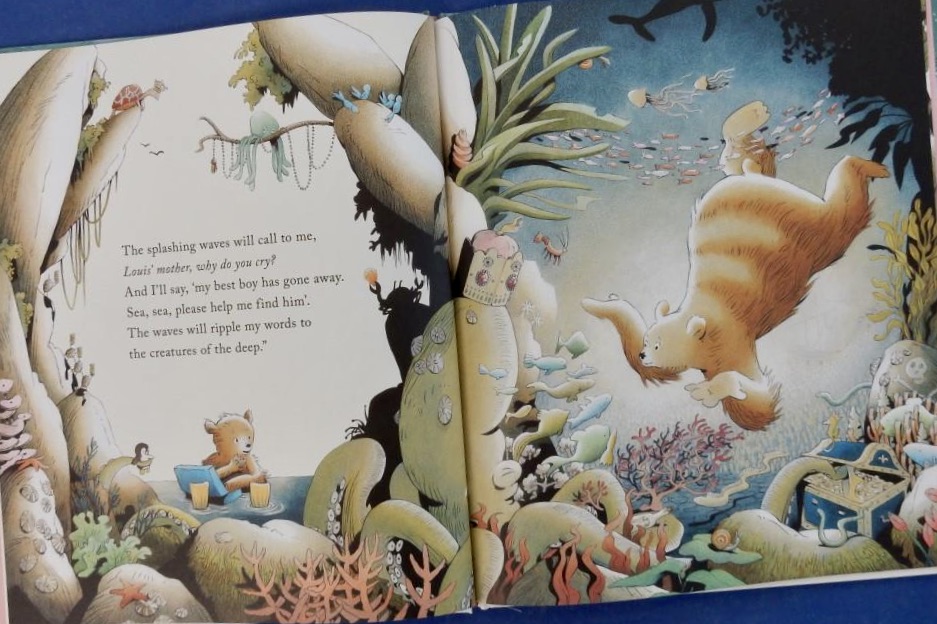
Then one day as she gazes out to sea, she’s surprised to see a mermaid dive from the nearby rocks. The mermaid calls to her urging, “Swim with me … through swirling, whirling ideas to where your granny’s stories are, and many more besides.” Knowing for certain now that Granny’s tales were true, the girl plunges into the waves and follows the mermaid. She discovers wondrous sights such as coral reefs, sunken treasure, shoals of shining fish and other wonders of the deep.

She also encounters other merfolk and receives something special to take back home.

Back at the lighthouse once again, Alina knows it’s now her task to ensure that the tales are kept alive and help them fly far and wide. She’s now Alina the Lightkeeper who will keep Granny’s stories brightly burning.

What a wondrous book to share with children at home or school. The portrayal of the relationship between the two generations is superbly portrayed in both Hollie’s lyrical rhyming text and Sarah’s watercolour scenes that will surely tug gently at the heartstrings of adult readers aloud.

The Magic Callaloo

Inspired by stories of enslaved Africans who made patterns in their cornrowed hair, using them as maps to help them escape to freedom, Trish Cooke’s neo-folktale has its origins in Rapunzel, made popular by the brothers Grimm

It begins in a small village, long ago and far off where there grows a magical callaloo plant that would grant the wish of any villager who ate one of its leaves. Thus all the villagers had everything they needed; but one of those living in the village was selfish and greedy. One night this greedy man creeps into he square, uproots the plant and makes a wish: to have the plant for himself. He then proceeds to eat more and more leaves, making wishes for more and more things until he had so much he could barely move. His laziness of course, has an adverse effect on the callaloo: it shrinks until just one leaf remains.

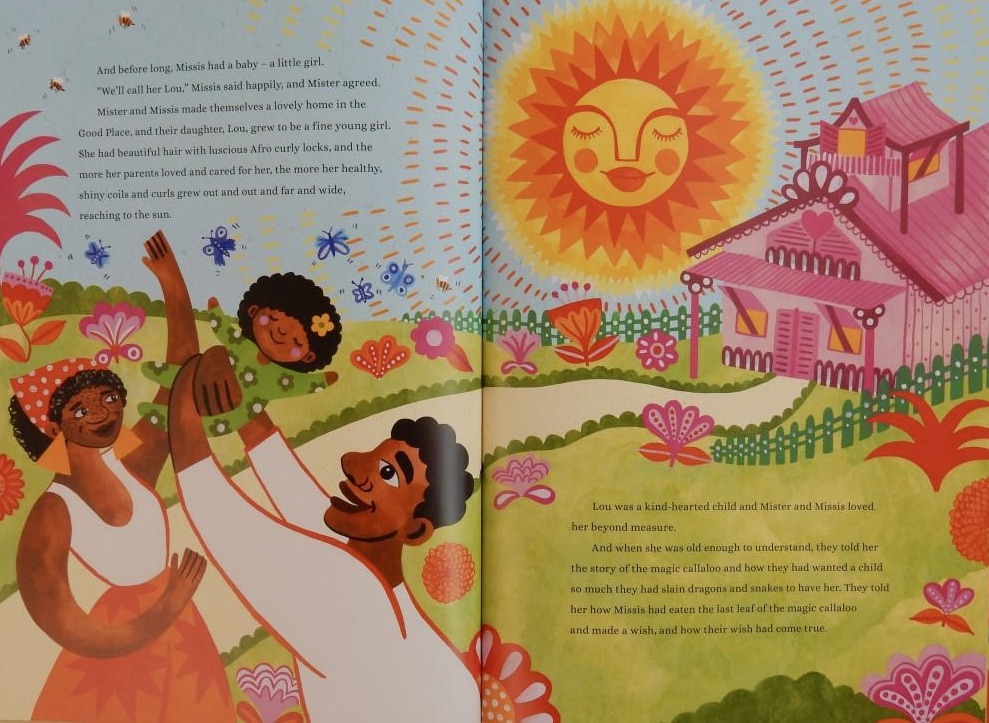
Back in the village, a couple hoping desperately for a child, are greatly distressed at the disappearance of the plant as their hope was that it could provide them with their dearest wish. Then one evening a wise woman tells them where the last leaf is and with renewed hope they begin to search, eventually locating the plant. The Missis eats the final leaf and both she and Mister wish for a child. Before long, to their joy, a baby is born and they call her Lou.

The girl grows into a kind, beautiful curly-haired girl and her parents tell her the story of the magic leaf. Lou makes up a magic callaloo song but her singing bothers her father in case someone overhears its words. Sure enough, the plant thief happens to pass through: he hears her song and snatches her away to his home where he keeps her prisoner, making her do all his work.

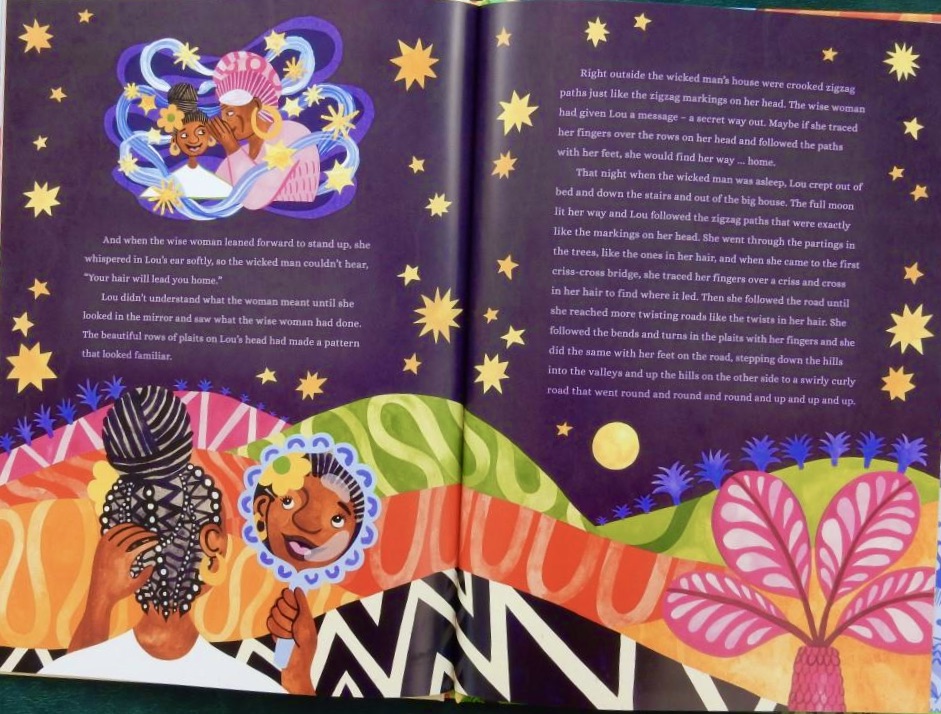
Both Lou and her parents grow ever more miserable, missing each other all the time, till years later who should come along again but the wise woman. Lou tells her of the cause of her sadness and the woman formulates a clever plan using the girl’s tresses which she twists into plaited patterns, quietly telling Lou, “Your hair will lead you home.”

However something else also returns with her.

With themes of longing, captivity and escape, Trish Cooke’s wonderfully woven tale is impressively embroidered with Sophie Bass’s art, which includes a wealth of flora and fauna in kaleidoscopic colours making every turn of the page a visual feast. This longish story will enchant readers across a wide age range.

Grotti

Who could possibly blame the young knight narrator of this story for falling in love with the little green grotti he comes upon in a hollow while carrying out his knightly duties one day. For a start the little thing is clingy and puts on such a sad expression that despite explaining about his calling, the knight feels unable to leave Grotti behind, so the two start travelling together. Then comes the need for a ‘difficult decision’ by the knight: an exchange is made that means the two can travel much more quickly, surviving on berries and bugs

until the knight is faced with another decision in order to enhance what they dine on. A third difficult decision is caused by a sudden snowfall and the need to keep Grotti warm.

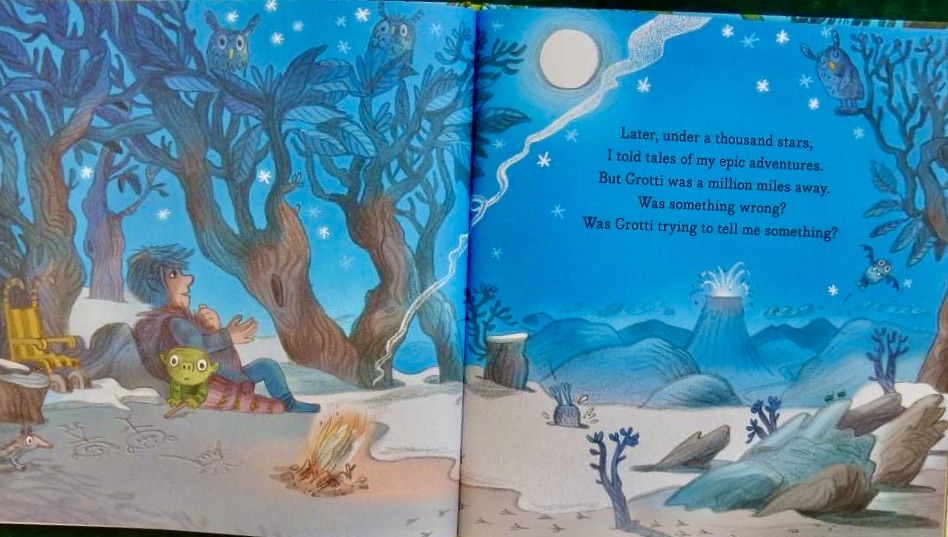
As the two snuggle down under the stars one night, the knight tells tales of his adventures but soon surmises that all is not well with Grotti who seems distracted.

Next morning the knight is faced with an exceedingly snotty Grotti and the realisation of what the little thing has been trying to communicate by means of a stick. Off they go with Grotti leading the way until they reach a house atop a volcanic rock pile. There, his task complete, the knight leaves Grotti with his family and departs to continue his beast battling and other work; but he knows in his heart that something is missing. Will he and the little green Grotti ever see one another again?

Despite his snottiness, Grotti is an adorable character that will endear himself to young listeners; he certainly had that effect on this reviewer. I suspect that this tale with its themes of friendship, family and love, will quickly become a story time favourite with children both in the classroom and at home.

Terrible Horses / When I Feel Brave

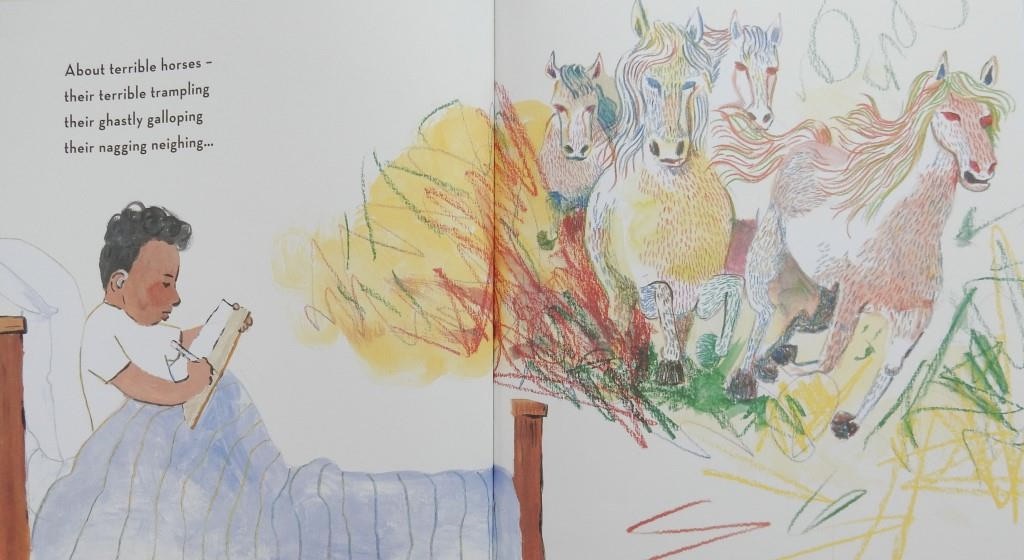
Narrated by the younger of two siblings, a small boy talks of how he feels about his sister, the ways they react to one another and to sharing their things. From the boy’s viewpoint, big sister is a cool character but she causes the pair to fight one another physically, rather than verbally. To release the tension within himself, the boy goes to his room and writes stories featuring terrible horses, with himself as a lonely pony.

Then there’s another fight on account of the narrator taking things belonging to his sister without asking her permission, which triggers further actions that fuel the aggression. Once again the boy retreats into his bedroom, fashions a horse story that includes showing himself as the pony neither able to speak or sleep. Surprisingly though sleep he does and when he wakes the terrible horses book is missing. Who do you think has it now and what will be the outcome?

Raymond Antrobus has penned a seemingly simple tale of sibling rivalry, but it’s one that conveys feelings relating to discord and empathy, both of which Ken Wilson-Max captures so adeptly in his illustrations of humans and of horses.

Another feelings centred picture book is

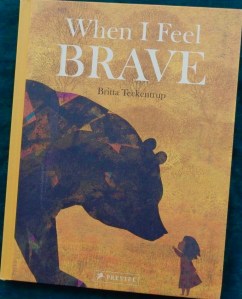
Having presented a girl’s feelings about being angry in When I See Red, Britta Teckentrup examines equally thoughtfully, a girl’s fear and what it means to be brave. By means of the author/artist’s rhyming narrative and evocative collage style illustrations, readers follow a child wandering through a forest who is startled by a huge bear that is initially terrifying, but as she continues her journey, becomes first companion

and by the time they emerge into the light, friend. ‘I can finally see … / that courage and fear / are both part of me’ the child concludes. An important insight indeed and a book that offers child readers and listeners a way of understanding one of their own basic emotions and how bravery allows them to take charge of this emotion.
Try using this first person story as a starting point for a circle time discussion.

Hen in the Bed / Twinkle Twinkle Little Star

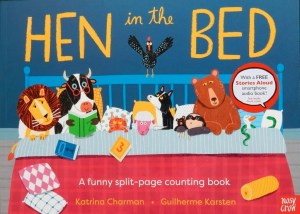
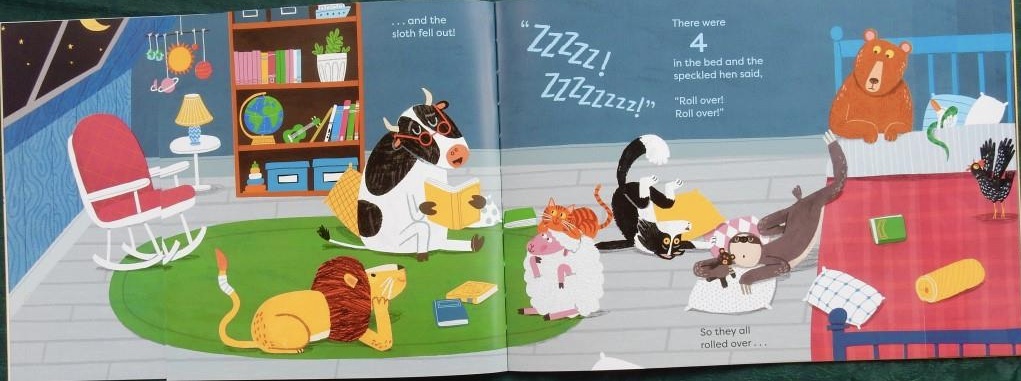
In this version of the popular nursery counting song it’s Hen who orchestrates the rolling over as in turn various animals roll, tumble and fall from bed to floor. Each one makes its characteristic sound : lion roars, cow moos, cat meows, sheep baas, dog woofs, bear growls and so on,

until the speckled hen realises that she misses cosying up with the other creatures and begs them to return, which they do. Once they’re all snuggled up together, it’s a “Cluck! Cluck” from Hen and some shut-eye time for everyone.

Its opening sequence of progressively cut down pages cleverly shows the entire animal entourage in bed. Each turn of the page tumbles one animal after another onto the mat or thereabouts.

Playful counting down practice made into an entertaining pre slumber time tale for young children, or alternatively a fun picture book to share with little ones in a nursery setting.

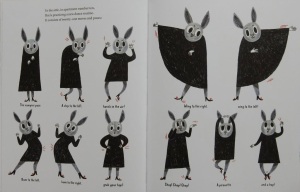
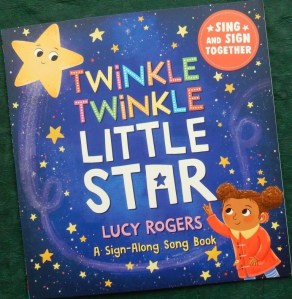
It’s good to see this favourite nursery rhyme in an inclusive sign-along songbook version by Lucy Rogers, herself deaf, who grew up not seeing any deaf characters in the books she read.
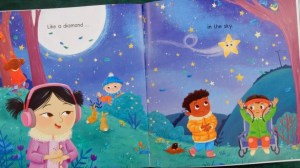
The song is introduced with two double spreads whereon characters using British sign language (BSL) demonstrate how to do the sign for each phrase, thus enabling everyone to join in with signing the entire song.

Many children come to school or nursery knowing no other nursery rhymes so this vibrantly illustrated picture book is one I’d strongly recommend putting in all early years settings as it should enable any child to participate in a visual, gestural rendition. Twinkle, twinkle was always the first song my nursery classes sang accompanied by the appropriate Makaton signs and they loved so doing.

Molly, Olive and Dexter: You Can’t Catch Me! / Dance with Oti: The Turtle Tango

These are both new titles featuring popular characters from previous stories: thanks to the publishers Walker Books for sending them for review.

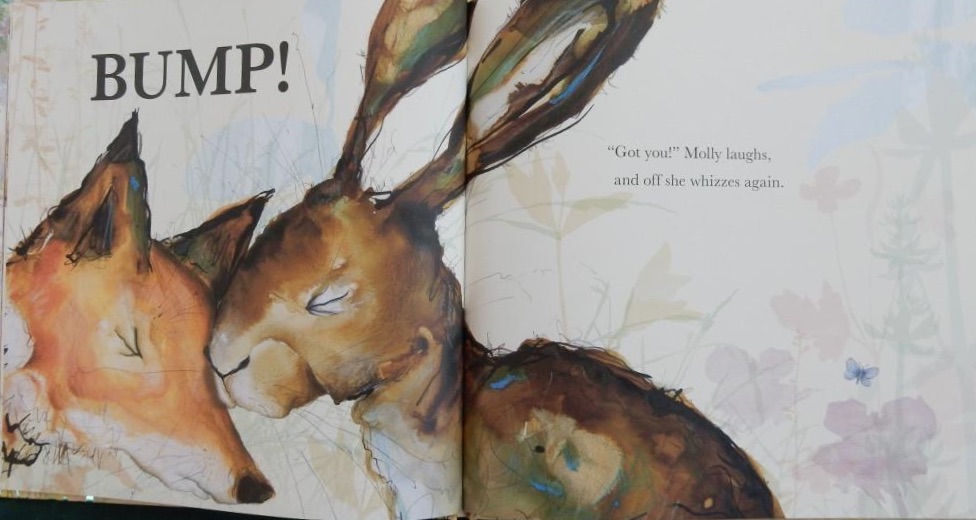
In this third episode in the lives of a trio of residents of a garden oak tree, Molly the hare, Olive the owl and Dexter, the fox, Dexter asks his friends to participate in a game of chase. First to be ‘it’ is Olive but she’s super speedy and soon catches Molly. When she’s the chaser, Molly finds her fast feet and before long she’s got Dexter, well and truly.

The bump leaves the fox feeling all dizzy and after a bit of chasing in a tired tizzy too. Determined to do something to show his vulpine prowess, he does something that perplexes his pals and in so doing proves he too is a worthy participant in the game of catch.

And the winner? What do you think? …

As always, Catherine’s watercolour scenes are superb; every spread makes the reader want to slow right down and linger over it. Young listeners too will appreciate the artistry as well as enjoying the playfulness of the chase.

Having learned to dance the Bird Jive, the Lion Samba and the Penguin Waltz, Mrs Oti’s pupils have a new challenge.

Prior to their performance at the grand opening of the aquarium, Mrs Oti takes the members of her dance class to see the marine creatures that are kept in its watery world. They enjoy watching the rainbow fish, wobbly jellyfish, scuttling crabs, the enormous shark and the turtle family. One of the class, Poppy, is concerned about the baby turtle and it’s the turtles that give their teacher an idea for the performance.

Back at the dance studio, the children enjoy emulating the fin flapping fish, the wobbly wobbly jellyfish and hear some sound advice from Mrs Oti. Advice that proves to be particularly important come the big day on stage when there’s a mishap just before the titular Turtle Tango grand finale.

After the show, along with congratulation from their teacher, each of the performers receives a special surprise thank you present.

After enjoying the vibrantly illustrated story, listeners too can learn the finale dance by following the step by step instructions on the last double spread..

We Are The Wibbly!

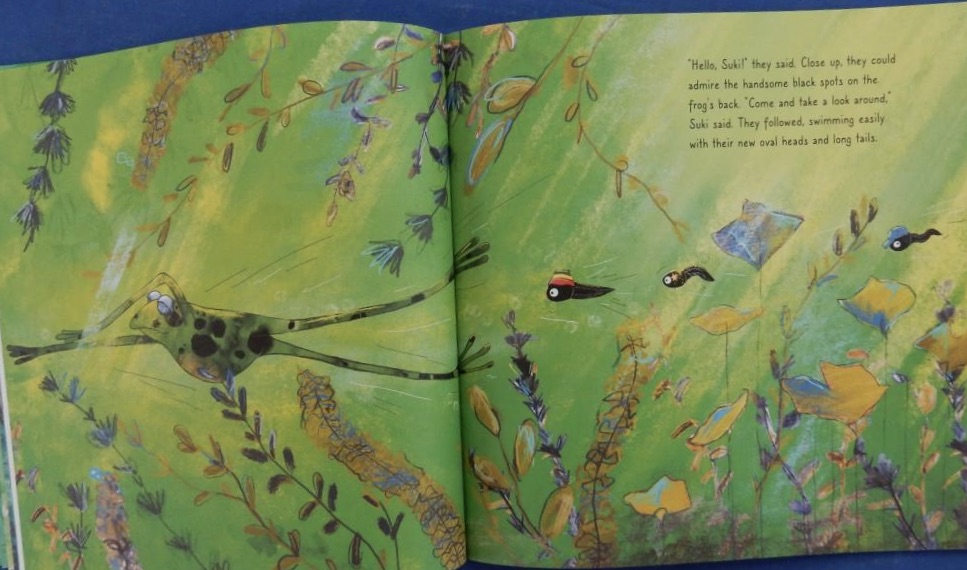
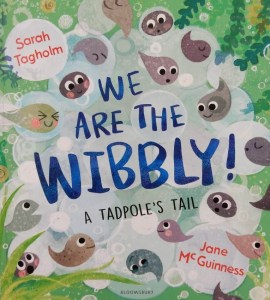
I found myself smiling all the way through this. It’s narrated by a member of the Wibbly community and as the book begins they’re all floating gently along in a relaxed manner encased in their protective jelly coating. But then, ‘OH MY CRIKEYS!’ the narrator’s eggy pals start breaking out of the wibbly and undergoing rapid changes, something our storyteller isn’t keen on doing but feels obliged so to do in order to keep up with the others.

Before long, they’ve all grown tails and become tadpoles, water-flying everywhere. No more relaxing henceforward. Instead there’s this water-flying to become skilled at

and a sudden sprouting forth of new limbs, first back ones and then front ones with which to grab tasty tidbits, after which comes tail shrinkage. Yikes! There are some dangerous furry hungry monsters lurking at the ready on land; this requires some swift water-flying to safety.

Finally – whoopee! Every wibbly is now a frog.
Such a hilarious, heartfelt tale of the narrator’s epic journey from frogspawn to frog, at the heart of which is being ready for change and a fear of feeling left behind

With a bubblesome underwater setting Jane McGuinness’s humorous illustrations are just right: a perfect complement for Sarah Tagholm’s wacky words. Together they offer a wonderfully engaging and memorable rendition of an aspect of springtime zoological ontogeny for the very young.

The Most Amazing Thing / Footprint

Henry is stuck indoors on account of the rain, the other members of his family are at home too: mum is busy working on her novel, his sister Greta is doing an experiment, his father is cleaning his telescope lens and brother Simon is meditating. But Henry with nothing to do, is bored, so he consults his mum who suggests he might draw the most amazing thing. What could that be though? Henry has no idea so he decides to ask his family. Each has a different answer: telling her brother to look down her microscope, Greta says life is the most amazing thing; to Henry, the mind is the most amazing thing, whereas Dad’s response is the universe.

Mum, finally free for a short while, surprises her son with her answer.
Both words and pictures take us through the various parts of the house where Henry goes for inspiration; it’s evident that he learns a considerable amount in his quest for an answer, some of it about himself. Matt Shanks’ watercolour, pencil and gouache illustrations of the images that might be forming in Henry’s brain as he talks to each of his family are full of fascinating details.

A thought-provoking story showing that with an abundance of wonderful things in the universe and a great many different ways to find that wonder, it’s unlikely that two people will have exactly the same view: we all see the world through different lenses. Try asking the children in your class or members of your own family: who or what will they decide is THE most amazing?.

There’s a line in a Native American poem wherein the author prays to the Great Spirit of Life to give him the wisdom ‘to walk softly on the earth’ acknowledging that it is the responsibility of each of us to care for our planet and its natural environment.

In this book, author Phil Cummings and illustrator Sally Soweol Han remind us of the wonders all around us and that we should walk carefully leaving only good behind us. The author’s lyrical rhyming text invites readers to join the children in various parts of the world as they wander out into the morning, looking and listening, but also taking time to pause, ponder upon what they see and hear and to breathe in the beauty,

be that of the deserts, mountains, valleys or wherever they find themselves. Each of the environments – a tropical forest with a river flowing through, the (melting) polar ice, the sandy desert, the smoky city and more – is depicted in Sally Soweol Han’s soft pastel and coloured pencil scenes, each of which shows how we can all, like the children depicted, look after our precious planet. Only that way can the young have the rich futures they hope for and deserve.

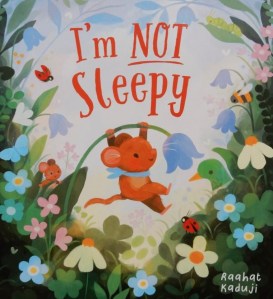
I’m Not Sleepy

When Flora, the littlest dormouse stirs from the long winter sleep, she’s raring to go with a head full of questions, unlike her friends; they just want to sleep. She though is ready to explore the big wide world to try and find answers to ‘Why are bees so busy?’, ‘What do caterpillars eat?’ and ‘How do birds build nests?’ for instance. Ignoring the call to nap with her companions, Flora storms out and immediately encounters a duck. She tells him of her urge to see the world; he offers her a lift to the pond and off they soar together. At the pond Flora is intrigued by the wiggly things, which she learns are tadpoles and the duck talks of recently hatched ducklings.

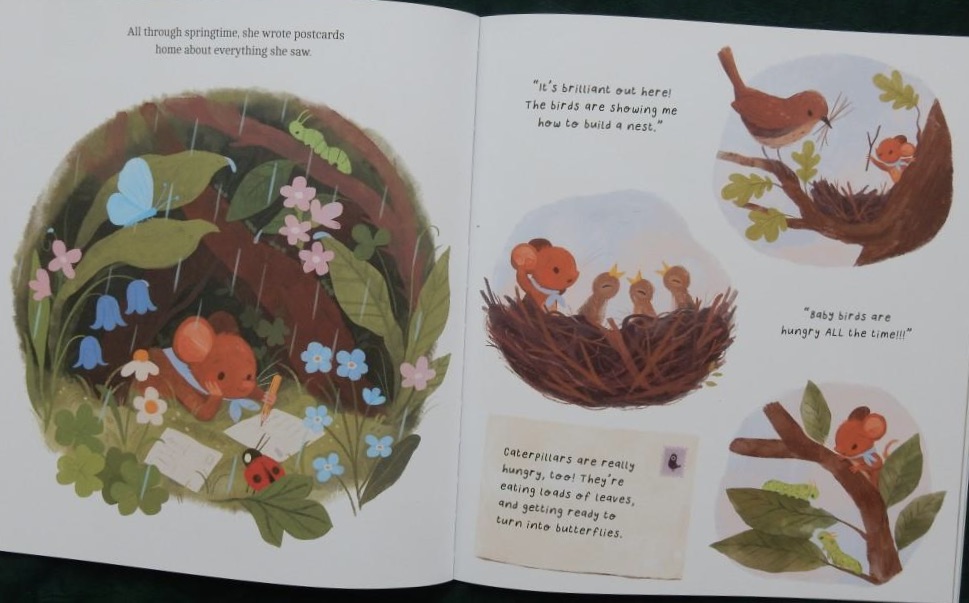
Flora spends the spring learning new things and writing postcards home about what she observes. She follows the development of new baby birds and caterpillars

and watches the bees through the seasons as well as seeing the autumnal pursuits of spiders, squirrels and migrating geese, and despite missing her friends, she doesn’t go home.
Snow falls and Flora starts feeling drowsy. Time for a little nap,she decides, snuggling down among the tree roots where she’s happy to find something fluffy to curl up on. ZZZZZ! Little does she know that her comfy bed is a fox’s tail. Along comes a beetle that immediately realises he needs to get help for Flora before the fox wakes.

Will Flora be rescued or will she become a tasty meal for the fox?

The story has a lovely final twist to it that is sure to make young children and adult readers aloud smile and Flora shares some of the entries from her nature diary, after the tale ends.

Raahat Kaduji neatly weaves facts about the natural world into her story and her illustrations are a delightful mix of the real and the whimsical.

Hugg ’n’ Bugg: The Surprise

In this third Himalayan tale starring yeti, Hugg, and his fur dwelling flea, Bugg, the former is preparing for his birthday, determined to look his best. However it’s not long before he starts feeling furious at what he sees. All the other creatures are sporting new, ornate hairstyles and Hugg is certain that rather than him being in the limelight, they’ll put him in the shade.

Little does the shaggy creature know, but the reason for all the funky tonsorial touches is a surprise party in his honour. A party with all manner of fancy food, some of it looking far from delectable having been whipped up by the guests

and then modified somewhat in transit.

With Hugg and Bugg’s friendship repaired, everyone gathers round the table to tuck in and start filling their tummies, but there’s another surprise awaiting Hugg. What will be the host’s reaction?

Diverting daftness delivered in Ian’s rhyming text and Eoin’s splendid scenes of the animals’ antics.
Fans of the duo will gobble this up but if you’ve yet to meet them, I suggest you start with Hugg ’n’ Bugg: Finding Home and discover how they got together, and then move on to the new one.

Pop!

If you’re looking for a wacky way to encourage small children to practise counting to ten then get your hands on this rhyming story that begins to explode one rainy afternoon when the contents of a packet of popcorn is sent tumbling into a pan atop the stove. On goes the lid and happy to be out of the bag, the corn pieces are in party mood despite the rising temperature. Suddenly there comes a POP! It’s Dave delighted at his muscly new shape.

There’s no time to brag about being unique though, for almost immediately comes POP! number two; Monique has joined Dave making a ‘pair of superhero corn’. Small explosions continue as Shaun, Clare, Dean, Debbie, Ben, Sue, Wendy and Brian. joined the pair in rapid succession. A hip-hop popping party if ever there was one.

Eventually those pops stop and onto the popcorn pals there comes a shower of sugar.

Then from their new resting place the crew settles down to watch – wait for it, a movie. The kind of movie will perhaps make adult sharers cringe at it’s punny nature.

Ridiculous, irresistible fun: this book is sure to become hugely POP-ular with little humans who will want to hear it over and over as they eagerly join in with all the popping.

My Baby Sister is a Diplodocus

Adapting from being an only child to having a sibling is seldom easy as we see in this book.
It begins with a visit to the hospital to collect Mum and the new arrival. Once home the small boy narrator eagerly dangles his soft toy elephant over his baby sister, he plays her guitar music and then shows her around the house. However, before long his initial enthusiasm starts to wane, partly on account of his being told “No!” frequently and when Mum asks, “So, do you like being a big brother?” he replies firmly, “No!” and storms off to his bedroom where he dons his T-Rex pyjamas and proceeds to turn the room upside down.

Warm-hearted Dad comes in, picks up ‘big dino’ and carries him to the parental bedroom (there’s a caption informing us that big brother is a tyrannosaurus) where, snuggled up with Mum and Dad he falls asleep.

‘My baby sister is a diplodocus’ we read on the next spread, presumably feeling somewhat empowered as a much bigger T-Rex. On waking. big brother sees his new sibling in a different, much more accepting light; the two have much in common after all, he now realises.

Concisely written and illustrated with simple images in bright hues that go well with the sympathetic, engaging telling, this is a book to share with a young child in a similar situation to the
child narrator.

Frank and Bert: The One With the Missing Biscuits

Best friends Bert the bear and his foxy pal Frank (our narrator) are off for a picnic in the countryside, something they love to do but all too frequently something goes wrong. On this occasion Bert has brought a special tasty surprise and Frank is eager to find out what it is but his friend tells him he must wait a while.
Having consumed their picnic, Bert settles down for a postprandial nap. Frank decides that there’s no harm in taking a quick peep inside the box and whopee!

Bert has cooked his friend’s very favourite biscuits. It won’t matter if I eat just one, Frank tells himself; but they are so yummy that – well you can guess what he does. What will Bert’s reaction be when he wakes up? Frank thinks up a less than honest explanation for the empty box; but having lied he feels guilty, especially when Bert is so concerned for him.

There’s only one way to sort out this mess: Frank owns up and promises that the next time they go on a picnic he will make up for his wrongdoing; but the best laid plans …

This double act is a deliciously diverting delight and this tale of friendship and forgiveness is sure to make young listeners ask for more.

I Can Do That Too / No, Nancy, No! a Dog Chase in New York

The delightful Hedgehog duo return in a new story.
Eager to do everything Big Hedgehog does, Little Hedgehog enthusiastically helps gather all the fallen leaves. Having collected a huge pile there’s just one leaf remaining and that’s on a high branch of a tree. Unable to reach it by leaping, Big Hedgehog decides to climb up the trunk. “I can do that too!” cries Little Hedgehog. However Big Hedgehog is back on the ground with the leaf by the time Little Hedgehog reaches the top branch. Thereon is a ladybird and of course Little Hedgehog unable to resist copying the insect’s actions launches itself skywards.

This is only the first of the animal actions Little Hedgehog tries and before long a whole host of animal friends starting with a mole,

have been shown what the little prickly creature can do, including swimming in the lake. That’s where during an afternoon of fun, Little Hedgehog learns that not all animals have the same set of skills and abilities. Come nightfall, it’s fortunate that the turtles are willing to offer a lift all the way home to the Hedgehogs’ residence where an owl’s hoots send Little Hedgehog off to sleep but not before a final “I can do that too!”.
Beautiful, textured scenes in Britta’s characteristic style and a gentle tale show little humans that it’s good to be eager to embrace new things but equally, it’s fine to discover that you’re not quite ready to accomplish all you try.

Nancy and her canine best pal Roger are in New York ready to head off to the theatre to see Dogs! The Musical. On arrival Nancy spots Candy the star of the show on a lead outside and in her enthusiasm she accidentally unravels the lead and off goes Candy … through the city and into a cab destination Central Park. Nancy and Roger chase after her but Nancy can’t resist stopping several times as they pursue her into the zoo, past a parade and downtown to the Hudson River where Candy has been blown attached to a bunch of balloons. Eventually she ends up dangling from the Statue of Liberty.

As ever more of the dogs of the city join the chase young followers of the story will enjoy adding their voices to that of the long-suffering Roger with “No, Nancy, No!”

and amused to discover the total chaos Nancy has caused by her thoughtless action. Can she possibly succeed in scaling the heights, rescuing Candy and getting her back in time for the show? Happily with lots of assistance, she can and that night Candy (stage fright overcome) isn’t the only one in the spotlight.
With a final fold out map, lots of famous landmarks, a surprise pop-up, a plethora of flaps and a wealth of detail in the busy scenes, there’s plenty for youngsters to explore in this interactive travellers’ tale.

Help! We Need a Story

The jungle animals are, so they say, bored, very bored; much too bored to take much notice of what Artie the macaque is drawing with his crayons

until eventually after hearing so many complaints, he starts creating anew, giving full rein to his imagination.

With his work almost complete, he writes two final words and then announces to his friends, “Guess what? You’re in a book.” The initial reactions to the title are less than enthusiastic; but then June Baboon starts reading; reading about dragons, a magic bear and much more – robot sharks and zombie hens even and guess who is fighting all these baddies. It’s none other than Captain Artie and his mighty mates. By the time the story is concluded, the other animals are enraptured and truly thankful. From Artie they receive a knowing smile and an anticipation that next morning more magical tales will start to unfold and all because the listeners will start to look at their world in a totally different way.

A splendid story told in rhyme wherein words and pictures show the power and vital importance of the imagination and creativity. It’s one I strongly recommend foundation stage and KS1 teachers share with their classes as well as a book parents and children read and talk about together. Make sure there are pens, crayons and paper to hand for children to use for their own story making.

The Boy Who Loves To Lick The Wind

This story features two boys – the narrator who is dark haired, and his blonde neighbour. Puzzled by the blonde boy’s behaviour, the narrator speaks to the boy’s mother who responds thus, “He’s licking the wind. You should try it.” She goes on to invite the inquirer to join them on a visit to the beach, the place where the best winds can be found. Off they go with ‘the boy next door showing his excitement by his actions and the sounds he makes. Once at the beach he dashes onto the sand stands still and begins his licking ritual, ignoring an invitation to collect shells, Instead he picks up a stone and tosses it into the water.

The two boys then spend time throwing stones until mum calls them for lunch. The boy bites into his sandwich, tosses it away and shows distress, which his mum deals with calmly.

Meanwhile the narrator starts collecting smooth stones and using them to make a castle. Just as he finishes the boy next door runs up, grabs the top stone and hurls it into the sea. The boys then take turns dismantling the castle splash by splash till nothing remains. They jump, spin and yell into the wind till Mum calls to give her son a five minute warning before it’s time to return home. This prompts both boys to dash into the sea and dance around.

The beeper sounds indicating it’s time to leave, which causes the boy to cover his ears and cry. Again Mum is empathetic and they head towards the car but before they reach it, both boys give one final tongue swirling lick of the wind. How wonderful it feels.

The following day in school the narrator tells his class during a circle time session about their day at the beach; his friend demonstrates and then they all lick the wind together.

Some child listeners and adult readers aloud will understand from the outset that the narrator’s new friend is neurodivergent. That means that his brain works in such a way that he experiences and interacts with the world differently from neurotypical people. The story, related and illustrated with great empathy, is an ideal way to introduce neurodivergence to primary school children.

Come Out, Come Out, Chameleon!

“I have a pet chameleon,” announces the white-haired man standing outside his home on the first spread. Beside him is his dog whose gaze is directed towards a rooftop weathervane whereon, as observant readers/listeners will see, is said chameleon. Turn over and the chameleon’s owner tells us, “The only thing is … I’ve never actually seen him.” Surely this guy needs new specs.

He continues sharing with us his possible sightings, each of which he immediately dismisses: “I thought I caught a glimpse of him among the flowers. But it must have been a trick of the light.”
All the while the chameleon is hiding in plain sight: the dog can see it, so too can we readers. On one spread the creature is sitting in the fruit bowl disguised as a banana;

turn the page and he’s lurking among the socks strewn across the bedroom floor.

Audiences will delight in both the playful way the pastel illustrations contradict the words and the dog’s attempts to help the man spot his chameleon: canine body language and facial expressions speak volumes. Eventually the owner succumbs to the possibility that his chameleon doesn’t actually exist. This prompts the dog to come up with a way to solve the chameleon conundrum and hurrah! it works – for a while at least.

Brilliant interactive fun for the very young and their adult story sharers. The simple text also makes this a good book to offer children in the early stages of their reading journey

My Friend Andy

Fluffy the dog, narrator of this story tells how every day s/he walks through the city to the park with best friend Lilly and her Mum. Each morning they walk past Andy, another dog but Fluffy is never allowed to stop and play with him.

One day though, Fluffy chases a ball out of the park and gets completely lost in the city. In all the hustle and bustle Fluffy’s cries for help are drowned; but then Andy comes along with his Dad. Realising that the little dog is lost, Andy’s Dad takes Fluffy in his arms and they walk to a quiet place for a sing song that eventually lulls them all off to sleep.

Next morning they start searching for Lilly and having spent the whole day so doing as night descends on the city, Andy’s Dad spots a ‘Missing’ sign giving Fluffy’s address tacked to a lamp post.

So they head straight there and a joyful reunion takes place. Sadly Andy is not asked in to play and as Fluffy and Lilly snuggle together in bed it’s clear to Lilly that something is still upsetting the dog. Fluffy tries to explain but is unsure Lilly’s understood. However, the following morning on their way to the park something special happens …

Emma Chinnery’s poignant story will surely make readers aloud especially, think deeply about how they view homeless people. Non-judgemental child listeners I suspect, will be more intent on rooting for Fluffy, hoping for a reunion with Lilly and later with new friend, Andy. Emma’s watercolour scenes of everyday life in the busy city capture so well what is never said about how people perceive the homeless.

Be My Sunflower

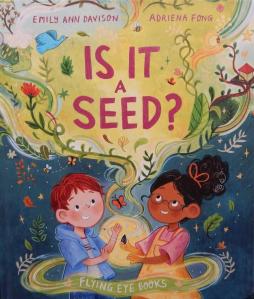
Vernon is a sunflower seed, one of many in the packet Miss Okoro has for the children in her class to plant. All Vernon’s fellow seeds are excited about being released into the world, a world Vernon knows a considerable amount about – scary things like birds, slugs and stormy weather – and thus he feels apprehensive.

Come the next morning a little girl named Carla is given Vernon. Her enthusiastic response , “Be my sunflower” makes the seed feel somewhat more relaxed. Time passes; Carla waters Vernon, the sun shines, warming him and it’s so snug and safe in the soil. Meanwhile the other seeds have begun to germinate

and they encourage him to do likewise, extolling the delights of the stars. Their enthusiasm makes Vernon curious: perhaps he could just have a teeny peep. The stars glitter in the night sky but just as Vernon is reconsidering his opinion of the big wide world, something large swoops by, scooping him up and then dropping him way way down into a sandpit. There the frightened seed stays all night. In the morning a little boy picks him up and hands him to Carla. Carla immediately recognises Vernon and puts him back in his pot.

By the end of the week, Vernon is the only seed that hasn’t sprouted. Carla feels devastated and cries lots of tears right over his flowerpot. The ungerminated Vernon knows that he must act: he spends the night pushing through the soil. Is he brave enough when morning comes to remain exposed? For Carla, yes he is and she is overjoyed. So begins a new way of being in the garden: Vernon grows and flowers and yes, he still knows about the scary things, but now he also knows about some of the wonderful things the world offers, the most important of all being a very caring little girl.

What a lovely story about finding the courage to emerge from your comfort zone and take on the world. Its warmth and reassurance shine through like the sun that sends its rays down to Vernon. Young children will be amused at the seeds having names and the way they talk to one another; will certainly empathise with Vernon and be rooting for him to emerge and reach for the sky. Rosalind Beardshaw’s mixed media, digitally worked illustrations of the personified plants are such fun.

Counting Sheep

Sheepdog Sam has had a tiring day and he’s more than ready for sleep. Not so the sheep; they’re still way too lively. Sam suggests they should try counting sheep ie themselves to make them nod off. He starts “One, Two …”; the sheep try to continue but clearly need lots more practice, so Sam notices as he dashes off towards other wakeful animals. He gives the horses the same ‘count yourselves’ instruction, which results in Sam feeling more drowsy and the horses uttering letters of the alphabet.

It soon transpires that all the farm animals are still wide awake even the cows and Sam leads them into the barn urging them to demonstrate the sleep-inducing counting to the entire farmyard contingent.

The result is only a lot of mooing: it’s time to visit the hen house to seek an answer to the wakefulness epidemic. It’s there that Sam finally discovers the insomnia explanation; it’s also another counting opportunity for the other animals.

Michelle Robinson’s comical bedtime story and counting book with a difference, in combination with Nikki Dyson’s wonderfully expressive illustrations of the farm animals, will surely make wide awake young children giggle. It also offers lots of counting occasions – albeit sometimes slightly chaotic ones – on almost every spread.

My Mother’s Tongues

Sumi’s mother speaks two languages, Malayalam because she grew up in Kerala and English because she learned it at school and having emigrated to the USA ten years back, continues doing so now sometimes using both when she talks to her daughter. Sumi the narrator was born in the United States, uses Malayalam at home with her family and as a result of listening carefully to others at school and around the neighbourhood, describes herself as having two tongues like her mother. She goes on to say that when she visits Kerala with her family each summer she uses Malayalam with her relations and her ability to understand and speak it is improving.

She explains that as her family tell her, if she stops using a language she might forget it. I know that to be true with my speaking of Hindi. The more languages a person learns and speaks, the more people s/he is able to converse with: Sumi’s aunt for example is able to use Malayalam, English, Hindi and Spanish.

But imagine how many opportunities a person might have who is multilingual: that’s what Sumi aspires to. I love that she concludes by saying ‘Having a tapestry of tongues will be my superpower.’

This celebration of learning and using new languages is superb, showing how it helps overcome differences and borders of all kinds as we connect with people from all over the world.

Using canvas backgrounds and quilted textures, Jomepour Bell emphasizes the weaving theme of Uma Menon’s lyrical text in this illuminating book. Everybody should read this especially those who say such things as ‘English is spoken all over the world, so why bother to learn another language.’

Kevin the Orange

Thank you to Alan and Little Door Books for inviting Red Reading Hub to be part of the blog tour for this picture book:

One day Kevin the orange’s best fruity friend Brian the pear – a wise bibliophile by nature – discovers that Kevin is having a colour crisis. Fed up with a life that seemingly lacks fun, he’s decided to turn blue. But how? Brian suggests that by visiting the North Pole and immersing himself in the snow for some time, he will become blue. Suitcase in hand, off goes Kevin.

On arrival he selects a suitable spot, sits in the snow and waits. BRRR! Yes he turns a blue hue but quickly realises it’s not for him. Back he goes, seeks out Brian and asks his advice once more. Now red is his must-be colour. You can probably guess what he’s told to consume to make him sufficiently hot for that to happen. And oh my goodness! it certainly has a powerful effect but not a pleasant one.

Kevin continues consulting his friend and trying other colours

until eventually after a series of further mishaps, he realises there’s really only one colour that’s right for him.

Being true to yourself and the best version of that self you possibly can is an important life lesson for children to learn. Alan’s funny story together with Olla Meyzinger’s zany, exuberant scenes of Kevin’s colourful capers will induce giggles aplenty when you share this with young children.
Four year old Faith with whom I shared the book (several times at her request), was particularly tickled at the sight of a pink Kevin sporting his swimming trunks and arm bands as he pedals off to join the jolly grapes in their swimming pool. 

Be sure to check out the other posts in the blog tour.

Keep Up, Duck!

Puck , the smallest of Mamma Duck’s brood has trouble keeping up with the others as they make their way to the lily pond. By the time they reach the boating lake Puck is way, way behind so Mamma calls, “Keep up, Duck!” Puck looks around at the boats and being an astute little thing, comes up with a solution that sees him hopping and plopping to rejoin the rest of his family.

However he soon falls behind again and again he responds to the titular “Keep up, Duck1” from Mamma by hop, hopping onto a skateboard, then a child’s seat on an adult’s cycle and plopping back with his siblings. But then barking dogs cause another distraction

so Puck hop hitches a ride from one dog then another until with a final plop! he reaches the lily pond at last. And guess what: despite being smaller than all his siblings, diminutive duckling Puck has become the speediest.

Told using a repeat pattern text with a wealth of onomatopoeia and splendidly expressive watercolour and pen scenes of the adorable ducklings and their journey, this problem-solving tale is a delight to read aloud to young children. I suspect it will become a storytime favourite with foundation stage listeners. It would also be a great book for early readers to try for themselves.

We, the Curious Ones

Story and science and their unlikely interconnectedness help us all find meaning in human existence. This symbiotic relationship is explored in the author’s lyrical prose and the two illustrators’ dreamy cut paper art in this book. They take readers on a sweeping journey through time that looks at our evolving understanding of the universe starting from creation mythology …

right through to our current and still growing understanding and knowledge.

We see that to humans, Earth was once considered the centre of the universe, then it was thought of as a planet that revolves around the Sun, next the Sun was considered to be one of billions of stars

and eventually, Earth became seen as one of numerous planets, a medium sized one ‘circling an average star in an ordinary galaxy in an unimaginably vast universe’ a universe that is ‘mostly dark and seems almost empty.’ The designer’s considered choice of a small font might be seen as a metaphor for how very tiny human beings are in this universe and the whole book invites us to think deeply, ask big questions and keep an open mind as new ideas continue to emerge. Awe and wonder – yes but so much more.

There’s a lengthy afterword that finishes thus: ‘We are the storytellers. / We are the curious ones.’ May it ever be so. A book to share and discuss with readers in primary classrooms and beyond, as well as in the home.

The Dolls’ House

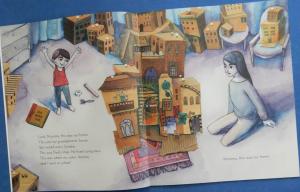
When Mia finds an abandoned dolls’ house in the street near to her new home, she immediately decides to take it back to her house. Once there she straightway begins operation renovation by giving it a coat of bright yellow paint and because the paint hasn’t dried by bedtime, Mia has to leave it outside overnight.

Next morning to her surprise she sees a boy looking at the dolls’ house and he asks to play with her. Mia agrees and she and Aaron spend the day making things for the dolls’ house. The following day Aaron appears again, accompanied by his sister who has an offering for the house and also wants to play.

Gradually that dolls’ house becomes a meeting place where lots of children enjoy playing together – the whole summer long.

Then one evening Mia notices a face briefly staring out from behind the curtains of the house opposite and during the rainy autumn days she waves at the boy who merely smiles. As winter approaches Mia’s mum suggests bringing the dolls’ house indoors but although Mia agrees, she asks to leave it outside for just one more night. She carefully positions an umbrella over the house – just in case – and the following morning the precious dolls’ house is in rather a state. Then she hears a sound and there is the boy from behind the curtain offering shyly to help her fix the house. In his outstretched hands he holds something special.

But Mia too does something special …

With themes of friendship, sharing and empathy, this is a wonderfully heart-warming story to share. If you read it aloud to a class, make sure you have plenty of time for your listeners to explore the details in Claudia Ravalli’s illustrations, large and small. The final fold-out spread of the house interior shows the fully furnished dollhouse with its diverse residents – a visual treat – and a reminder of the enduring fascination of small world play for children.

The Princess and the Pee

This is a modern fairy tale wherein young Princess Amma struggles with a problem that will resonate with lots of families: she wets the bed and is constantly fretting about so doing. The Queen, the King, and the palace staff all have ridiculous suggestions: eating dry toast just before bedtime to soak up all the pee, sleeping with lemons beneath her pillow, and putting feather dusters by the loo so that the princess can “giggle all her pee out before she goes to bed.” Needless to say none of these work: the princess’s worries remain and she wakes to a wet bed every morning.

Fortunately wise Grandma Grace is much more supportive in her approach; “Let’s take our time. Let’s be steady. / She’ll stop when she is good and ready.” is what she urges.

One morning having shooed the other adults out of Princess Amma’s bedroom, Grandma gives her a bubble bath, then sits beside the child and with an encouraging smile tells her, ““My darling Amma, a little bit of pee will NEVER come between you and me.” That evening Grandma Grace snuggles beside her granddaughter and together they let their imaginations grow into magical stories

after which Amma is lulled into slumberland by her Grandma’s calming singing. Come the morning Amma’s bed is to her delight, dry. The palace residents are surprised. other than Grandma Grace, of course; she knows that Amma’s journey to dry nights has just begun and that eventually it will become the norm.

This is a delightfully whimsical, lighthearted way to approach a tricky, often embarrassing issue for younger children, the humour and fantasy nature of which should help make it easier to cope with. Juanita Londoño Gaviria’s textured illustrations are splendidly expressive and convey the changing mood of the story well throughout. I love the portrayal of the supportive relationship of Grandma Grace towards Amma: just what any child in a similar situation needs.

Wanna See A Llama? / We’re Going on an Egg Hunt

In this equally entertaining sequel to Wanna See A Penguin? the same young animal expert, so she says, now includes llamas in her field of expertise. She invites her friend to accompany her on a llama-spotting expedition around the city. As they walk, they encounter all manner of creatures – humped, scaly, furry with spots, shelled,
very long-necked, soft and woolly, but a llama? Not around here declares our self-dubbed expert who evidently hasn’t noticed any of the posters advertising a parade as she leads her long suffering friend who identifies each animal, on a wild-llama chase.
Asserting on the penultimate spread, ‘There can’t be any llamas round here’ our leader heads homewards.

Young listeners will delight in the final spread whereon Ian shows a Llama Parade just behind the two children. Those same listeners will also have enjoyed spotting a llama (or two) in the background of every other double page illustration.

Unashamedly using the nursery favourite ‘We’re Going on a Bear Hunt’ as the basis, Goldie Hawk sends her three young child protagonists, springing into action in search of eggs, baskets in hand. As they walk, the children encounter pecking, clucking hens, munching-crunching bunny rabbits, hopping frogs,

rustling-swishing plants until eventually – yippee! They discover ten eggs. Having loaded their baskets, it’s time to make the return journey back the way they came, arriving just in time to take part in a joyful Easter parade.

Angie Rozelaar’s vibrant scenes with splashes of day-gio pink and luminous green convey the freshness and joy of springtime and of the search. Just right for sharing with very young children as spring and Easter approach. I suggest buying to give instead of an Easter egg; its pleasures will last SO much longer.

I Love Books

On the last day of term, the girl narrator along with her classmates receives this parting comment from her teacher, “Enjoy your holidays, and don’t forget to read a book!” This girl, we then learn is a total bibliophobe. Nonetheless she’s duly taken to the library but nothing there appeals in the slightest

so it’s left to mum to make the choice for her.

Back home, the girl makes herself comfortable and reluctantly, opens the book. To her surprise, she’s almost immediately drawn into the story, a wonderful adventure story wherein she meets a furry guide

who leads her on a search for special ingredients. And what are these ingredients for? The most powerful of all spells …

If ever a child needs convincing of the magical power of books and stories – give them this, Mariajo’s new picture book that has everything you could want – adventure, magic, a demonstration of the power of the imagination and terrific illustrations with clever colour changes. I love the sneaky insertion of the author’s previous two picture books on the class bookshelf on the first spread, as well as a certain polar bear who, along with several other book characters, appears on the final page. Don’t miss out on the endpapers either. As a life-long bibliophile, I love everything about this story.

Once Upon A Storytime / Grandmas are the Greatest

These are both Bloomsbury Children’s Books publications – thank you to the publisher for sending them for review.

Every night Nia and her mum lose themselves in a bedtime story, usually featuring the story components Nia likes most. One night after the story ends, Nia asks, “What if I get lost, like the children in that book?” She describes a scary scenario from a fairy tale, going on to ask if her mum would rescue her and her mum explains just how she’d rescue her. Nia continues conjuring up scary scenes and for each one her mum describes a rescue operation prefacing her plan with a reassuring “Yes, always!”

Nia comments on how brave her Mum is.

Mum then turns things around asking Nia, “But what if I was lost?” Her daughter responds positively and having established that they are both brave and always there for one another, it’s time to switch off the light, Mia safe in the knowledge that their adventures will always have a happy ever after ending.

With dragons, unicorns, wicked witches,

brave princesses, treasure and faraway lands, this is an enchanting bedtime book and one that shows young children stories can empower them. Natelle Quek’s scenes call forth wondrous images and with her clever use of dark and light hues, truly bring the nicely flowing story to life. Young listeners will love identifying the classic fairy tales from which Nia gets her storylines.

Taking little ones through every type of brilliant grandma, author Ben Faulks and illustrator Mia Tudor’s elevating book is a heartfelt celebration of intergenerational love. Prompted by a question from one small child to her Grandma, readers are introduced to all kinds of grans, each one special in her own way. Among others we meet an actor, a gardener, an ambulance driver, an acrobat and a mountaineer, there’s even a secret spy grandma. The important thing though, is that every one of them shares a relationship with her grandchild that is as precious and dependable as the Grandma who responds to the opening query.

Joyfully written and illustrated, this is a delight for any Grandma to share with her own grandchild or grandchildren.

Please!

Deliciously anarchic and utterly bonkers, this is the story of what happens to young Bill who stops at an ice-cream van, forgets to be polite and say please. He’s kidnapped by alien toads and taken into their spaceship, which crashes in the middle of a jungle. Surprisingly the crocs that lurk therein fix the spaceship, climb aboard too and off they go again.

Soon Bill feels hunger pangs and wants to stop for a snack but guess what: he forgets to say the vital words and oops! they all tumble on top of a yak. Will he ever learn to be polite? Not before the yak charges into a fairy-tale land with witches, knights, wizards and others, some decidedly bellicose …

Further chaos follows of a very wet kind, which seems to jump start the politeness cells in Bill’s brain: “Just stop this now, PLEASE!” he yells. Lo and behold, almost before you can say farewell, the lad finds himself back where he started, beside Mr Simon’s ice-cream van where again he now knows to say please. However, there’s another very important little word that he forgets to use. Uh-oh! …

Simon Philip’s hilarious text and Nathan Reid’s equally hilarious scenes of Bill’s lesson-learning journey will certainly have children and adult readers aloud, laughing at every turn of the page and the former one hopes, will not be forgetful when they request lots of re-readings of the book.

It’s Time to Hush and say Goodnight / Our Gorgeous Baby

Both picture books are Walker Books publications: thank you to the publishers for sending them for review.


Inspired by old Indian lullabies, Chitra’s rhyming narrative and Sandhya’s nocturnal scenes that begin in a small child’s bedroom and then transport both the toddler and readers through lush dreamscapes – whistling caves, watery worlds, past weird and wonderful monsters, across the starry sky and more,

– as the parent’s words conjure wondrous images into a fabulous quilt of dreams. All the while as the illustrations show, the father is coping with a gamut of infant emotions before peace descends and all is quiet, the child sound asleep in bed in his father’s arms.

With its oft repeated refrain, ‘ Count the stars that twinkle bright. / It’s time to hush and say good night.’ this is a smashing book to share with a little one just before bedtime; it’s infused with love and the magical images of possibilities inspired by the interplay of the verbal and visual.

One Goose Two Moose / Ten Little Ducklings

Under the direction of a rather bossy goose named Simon, a queue, no make that two queues, are forming outside an ice cream shop. There’s a goose line and a moose line. The trouble is the customers are having trouble getting in the assigned lines. Should I say it’s mainly the Moose that keep getting it wrong to the considerable annoyance of Simon Goose.

Whether it’s intentional or down to the fact that none of the queuers can read the signs, it’s somewhat chaotic. Eventually though after a lot of angst on Simon’s part, there is a line with seven geese, one behind the other. Are those in said line now about to take turns to make a purchase of some delicious frozen confection of their choice?

Look carefully in the bottom right corner of Nicola’s spread showing the seven; there’s something lurking that might just sabotage the entire system. I wonder who gets the last laugh …

Debut author Kael Tudor’s text is huge fun with some cheeky counting opportunities included, and illustrator Nicola has clearly enjoyed herself creating snazzy attire for the moose and geese. Young listeners will delight in the daftness of the whole thing and demand “Read it again” each time you share the story.

‘The sun is up, / it’s a brand new day. Ten little ducklings / want to play.’ And play they surely do in this delightful, interactive, rhyming game of hide-and-seek. First they splash around in the pool, swimming, diving, floating and fishing. Thereafter they zoom around on their scooters, take to the sky in hot air balloons, frolic in the farmyard, explore the jungle, have a snowball fight, attend a chaotic birthday tea, spend time on the beach and eventually tire themselves out ready for bed.

Before Lucy Rowland’s rhyming text begins, is a spread whereon each duckling is named and there’s a never mentioned eleventh character, a little mouse that triumphantly calls, ‘I see you, duckling!’ on every spread bar the final one whereon we assume, he reads the weary ducklings a bedtime story. Aki’s bright scenes have just the right amount of detail for little children who will have great fun finding whichever duckling is hiding in plain sight in every playful situation. I wonder if they might, on a second reading, go back and try naming the one they need to find each time.

What the Worm Saw / Christopher Nibble

Meet Earthworm,’ long, pink and wriggly’ is how it describes itself (earthworms are hermaphrodites) and in common with fellow earthworms is an important part of a garden ecosystem, helping to create and maintain healthy garden soil; and thus performing a vital role in the natural world. Talking directly to an intended young audience, the narrator Earthworm explains that it spends most of the time deep down in the soil, sometimes surfacing to nibble at old fallen leaves and petals from plants, It’s not always safe to do so however as a hungry hedgehog

or bird on the lookout for it’s next meal might want to slurp it up in a similar way that an earthworm consumes soil, pooping out what it doesn’t need; or maybe, a human foot might tread on it and squash the Earthworm.

This fun narrative way of informing young children about the vital role earthworms play works well, especially with Hannah Peck’s engaging illustrations. There’s a final page giving some earthworm facts and the book is published in collaboration with the Royal Horticultural Society (RHS). It’s one to share with young children at home or in an educational setting.

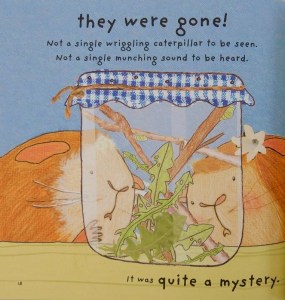
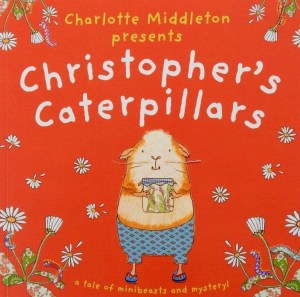
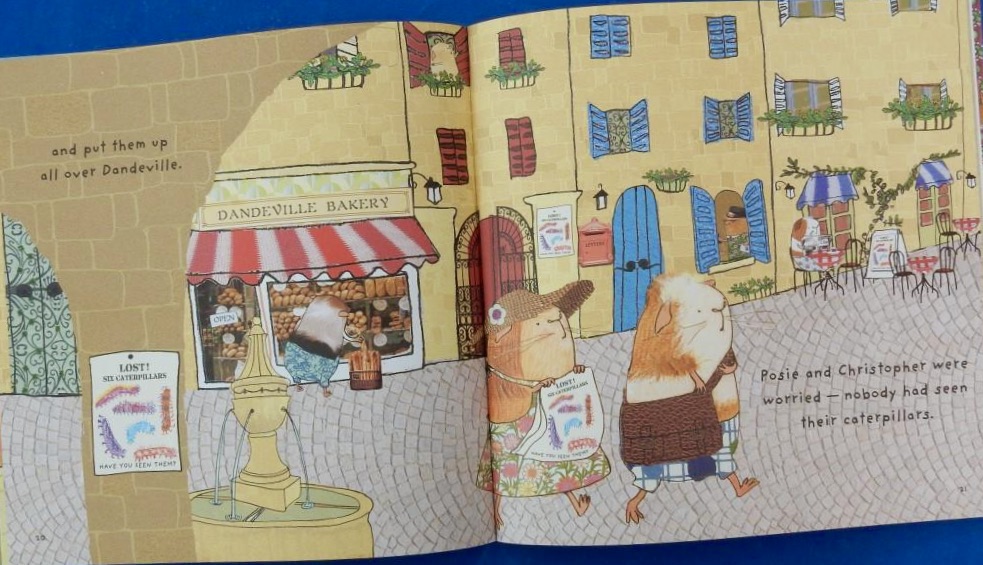
Along with numerous other guinea pigs resident in Dandeville, Christopher Nibble loves dandelion leaves; indeed his favourite activity is munching them. Then one day the joyful sound of munching starts to wane indicating that these leaves are in short supply. Those which are available are being sold online at an extortionate price so instead, the guinea pigs have to make do with cabbage leaves. Dandeville is suddenly a much less happy place.

One day there’s just a single dandelion left in the town and as it’s growing right outside his bedroom window, Christopher Nibble is the only one that knows about it. Oh how his mouth waters but he knows he must resist the temptation to gobble it up and he must ensure than nobody else does so. Resolving to find a way to restore the town’s favourite snack, Christopher Nibble heads to the library where he finds a large book that could be just what he needs. Having read it carefully from cover to cover, can he use his new found knowledge to make Dandeville the cheerful community it once was?

With his patterned shorts Christopher Nibble is a delightful character and a green hero at that. Young children will be rooting for him as he endeavours to turn a crisis into a cultivating craft.

A tale with a timely message about caring for the natural world that is even more pertinent than it was when the original book was published around fifteen years back.

L is for Love

‘L is for Love and L is for Lemons.’ So begins this wonderfully warm story wherein Mama, Baba and three young children set out from their village very early one morning with baskets of lemons bound for the market in Lagos city where they hope to sell all their fruit. It’s a very long way and with limited light, one of the children trips over a large log lying across the path, hurts a leg and starts limping.

As luck would have it, along comes a lorry and the kind driver stops and picks them all up. Having driven through stormy weather the lorry emerges into daylight where most of the wild animals still seem to be sleeping.

Eventually they reach their destination, the sprawling bustling city of Lagos that is full of sounds and bursting with life. There in the market place the family lay out out their stall and set to work selling their produce.

Then comes lunch and after that it’s time to start the very long journey home. Finally, late in the evening, they arrive to find Gran and Grandpa awaiting with outstretched loving arms to hug the travellers.
Joy abounds in Angela Brooksbank’s vibrant scenes that amplify Atinuke’s cleverly constructed alliterative sentences each of which (except one) starts ‘L is for …’ and take both the family and readers on a journey through the panoramic West African landscape. Rich in sensory experiences, this is a wonderful opportunity for young children, be they at home or in the classroom, to discover something about a culture which to the majority will be new.

L most definitely is for love where this reviewer is concerned.

Mo’s Best Friend

This story was inspired by an amazing discovery almost thirty years ago, of footprints – one of a child, the other a dog – by archaeologists working in the Chalet cave in France.
Mo and her family live in the Stone Age, the little girl’s main role being to watch over baby Babba, her fast crawling sibling who isn’t yet aware of danger. Mo has a favourite place away from the rest of her family, a kind of den where she takes her food and listens to the sounds around.

One day when so doing, she hears an unfamiliar YIP YIP coming from a bush. Despite what she’s been told about wild creatures being dangerous, Mo goes to investigate and discovers a small animal, all by itself. When it starts yelping, she looks closely and finds a thorn in its paw. Having had the thorn removed, the little animal wants to play and the two form a friendship, playing together all afternoon.

Then comes a call from Ma summoning her daughter and Mo decides to introduce her new friend to the family. Their reaction is one of horror and they scare the little creature off. Almost simultaneously they realise Babba is missing and a search begins with Mo leading the way. Suddenly Mo notices a footprint and then they hear a ‘WOOF WOOF!’ It’s her new friend and to almost everyone’s surprise, he’s protecting little Babba from a hungry lynx.

Henceforward, its’s not only Mo who has a new friend. I wonder what they decide to name him …

Bridget Marco’s scenes of the simple hunter/gatherer lifestyle of the family group are executed in gouache, and the ochre hues employed are true to the archaeological evidence and cave paintings from 25 thousand years ago. Back matter provides a spread showing stone-age survival skills including flint knapping, and there’s also reproductions of the photos of the human and dog footprints found in the cave.

There’s A Gorilla At The Door!

Daphne and her Mum have just moved in with Anthony; Daphne really misses her friends and so the grown-ups decide to have a family party. Daphne has initial concerns about being bored but is even more concerned at the attire she is expected to wear. to meet the “ wacky bunch1” Anthony calls them, insisting that her help is required.

First to rock up is Aunt Gertrude with a troupe of lively little cousins that Daphne gets on with immediately. These are followed by in turn a bouncy marsupial with a pouch full of popcorn, a fair few flying mammals led by Grandpa Bruce,

a pachyderm on roller skates and a veritable menagerie of family members large and small, feathered, furry and smooth skinned. Things get rather out of hand

and despairing, Daphne cries in alarm, “Can’t we get along? … This doesn’t feel like a happy family party!”

Anthony responds with an idea: will it solve the situation or will it further ferment the family fiasco?
With language play aplenty, the spirited text presents a recently blended family with a host of totally unlikely relations whose antics are sure to amuse young listeners. So too are Sam Caldwell’s scenes of the creatures’ crazy capers.

Green: The Story of Plant Life on Our Planet

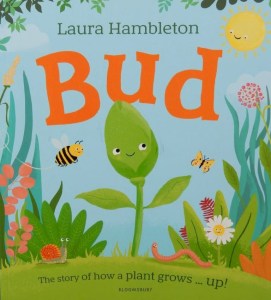
Starting with a single tree, team Nicola and Emily take readers on a journey through the natural world focusing on the vital importance of plant life. In so doing such topics as the process of photosyntheses

and the opposite process, respiration, are elucidated in the author’s carefully considered prose, She takes us right back to 4.5 billion years ago when earth’s air was toxic, moving forward a billion years when the very first plant microbes began to release oxygen into the air and more diverse life forms became possible. We learn how over millions of years the remains of forests were turned into the fossil fuels coal, gas and oil within which were enormous stores of carbon dioxide and energy from sunlight, this energy being used by humans for their various needs It’s terrible to realise that in so doing we have caused the formation of a thick blanket of CO₂ around the Earth thus stopping heat from escaping, the consequence being global warming.

All is not lost though for plants continue to do their work, giving shade, releasing water to create rain as well as using their ‘greenness to trap energy from sunlight and locking CO₂ in their leaves, branches and roots. Plants however need to work with other living things such as animals and fungi to do this, as well as working with each other in communities that Nicola calls ‘great green nations’

This is why it is vital everybody, the world over, stops destroying forests and polluting the oceans and focuses on protecting all things green.

Once again Nicola’s passion, knowledge and understanding shine through her carefully chosen words: the text in combination with Emily’s captivating, detailed scenes have created a book which gives us all hope that it’s not too late for our precious planet.

One Sweet Song

Across the city, its diverse residents stay within the confines of their homes. On a balcony a woman plays a note on her flute – ‘One note trills … / floating in the air.’ It’s heard by a child nearby looking through her window who picks up her triangle, steps onto the balcony and ‘rings a chime,/ soft and true./ One note trills, and/ now there are two.’ This prompts another neighbour to play his violin and then other people and their instruments including a saucepan and spoon,

a cello, a ghatam, a morsing, and bottles join as the music rises until the rhyming text reaches ten, voices young and not so young, sing out and the entire area feels connected and alive with a harmonious sound. “One sweet song that fills the space, / one sweet song, / a warm embrace.’ Then slowly, one at a time the instruments come to rest once more,

leaving everyone at peace with themselves and the world.

Powerful rhythms and lilting rhyme combined with spirited illustrations that have coloured swirls and musical notes weaving in and out of the homes, make a once separated community united by joy.
Author Jyoti and illustrator Sonia have together created a wonderful celebration of the healing power of music and its capacity to bring people together even in difficult times such as the recent pandemic.

Meet the Dinosaurs

Countless young dinosaur devotees will doubtless be eager to clamber into the jeep along with the child driver and her canine friend, belt themselves in securely and set off on a dinosaur safari that, after a visit to a modern day museum, zooms back in time to when the dinosaurs roamed the Earth many millennia ago.
On arrival, the visitors park the jeep, climb out and onto the back of a massive Brontosaurus that is ready and waiting to take them off to meet lots of other dinos. Some, such as the chatty Stegosaurus Diplodocus and Triceratops with its eight hundred teeth, are hospitable, giving the visitors information about themselves and their lifestyle. Others including Allosaurus,

Spinosaurus, the Velociraptors and Tyrannosaurus are ready to talk about themselves but far from friendly, indeed they’re fearsome carnivorous beasties. Not so however, those Pterodactyls that swoop above the jeep as the visitors realise it’s time to head home once more.

Caryl Hart has included a wealth of fascinating facts in her ebullient rhyming narrative that reads aloud really well and in combination with Bethan Woollvin’s instantly recognisable, bold, bright scenes, equally alive with detail, make this action packed adventure one that listeners will want to embark on more than just once or twice.

Ramadan and Eid al-Fitr / The Best Eid Ever

Raya, a little Muslim girl invites readers and listeners to meet her Mama and Aba (who come from different cultural backgrounds) and share what happens during Ramadan and the celebration of Eid al-Fitr, especially in their family. By means of both Sarah Khan’s narrative and Nadiyah Suyatna’s richly coloured illustrations, young children will discover that Ramadan is a month of fasting during the day from dawn to sunset, doing good deeds and being kind and patient to everybody and showing mercy to others.

Then comes Eid-al-Fitr. Raya wears her best bright clothes when she accompanies her parents to the local park where they will join in the Eid prayer, wish one another Eid Mubarak, play games and have a wonderful time. Later there is a big family feast where all Raya’s relations sit down together and share tasty food, both savoury and sweet. This is followed by game playing and a late night. It’s no surprise that Raya tells readers that Ramadan and Eid al-Fitr are her favourite time of the year.
The book concludes with ‘fun facts’ including a presentation of the Five Pillars of Islam, a spread on the lunar calendar and a recipe. Informative and easy to understand this is spot on for KS1 class sharing.
This story starts on the day before Eid al-Fitr with the sighting of the crescent moon signifying the end of the month of Ramadan. Eid al-Fitr is eight year old Aisha’s favourite festival and she’s excited at the prospect of receiving Eid gifts. This year these have been hidden and in order to find them, Aisha and her brother, Samir, must solve a sequence of clues.

Before that though, there are other traditions to complete. Mum decorates her daughter’s hands with beautiful henna designs; there are decorations to hang up, but Aisha doesn’t help as the henna takes two hours to dry by which time it’s sleep time.

Next morning Aisha again starts asking about hunting for those gifts. First though, wearing their new clothes, the family go to say their Eid prayers at the mosque, after which they say, “Eid Mubarak!” to all their family and friends. Back at home, the two siblings take homemade sweets to all their neighbours

and once that’s done, everyone sits down for lunch. At long last Aisha gets the first clue to finding her gifts and the treasure hunt gets under way.

After the story there’s a page of Eid related facts, and a final glossary.
Young listeners will enjoy hearing of Aisha’s eagerness for that treasure hunt, which crops up frequently throughout the narrative. They’ll also enjoy the details and rich patterns in the vibrant illustrations. Personally I’m not keen on digitally created facial features, especially eyes; they remind me too much of those ‘googly eyes’ sold in craft shops. Nonetheless this book is certainly one to include in class collections for sharing with KS1 children before Eid.

I Really Really Need A Poo

The adorable Bush Baby created by Karl and Duncan is back with another piece of toilet humour.

The trouble here is that a poo really needs to be done in private and the little animal is having a great deal of trouble finding a suitable place to do her dumping. She hunts high and low, has several near messy mishaps

and produces a fair few farts until eventually she wiggle walks her way to a truly palatial building consisting of what appear to be purpose built creature compartments.

Joy of joys, one of them is vacant so in goes Bush Baby.

Yes, the toilet is rather on the large size for so small a user as our furry narrator but nonetheless she gets busy. While seated however, she spies beneath the door a pair of furry feet; but Bush Baby needs to finish her business before she makes an exit.

Having relieved herself at long last, she opens the door and there before her is a very large ursine character who is desperate to use his personalised facility. So desperate that he ignores Bush Baby’s warning and heads right inside … PHOAH! Anyone have any air freshener?

Karl’s increasingly tense rhyming text together with Duncan’s hilarious illustrations of the ever more anxious Bush Baby are certain to induce plenty of giggles when adults share this with little ones be that at home or in the nursery or classroom.

The Brilliant Brain

I wonder how many young children realise just how crucial a role the brain plays in controlling what happens in the human body. When I asked nearly four year old Faith where her brain was, her reply “In my tummy” (as her mum is a GP, I think maybe she was joking) it made me realise we had better start sharing Dr Roopa’s guided tour around the brain and its amazing workings, aimed at young children.

Having confirmed that the brain’s location is in her head, how big it is and its role as a kind of ‘control room’, we explored the rest of the book. Herein it’s explained that our brains are responsible for our thoughts, feelings and memories,

as well as for telling our legs to walk and our lungs to breathe. It’s good to see the author doesn’t shy away from using such anatomical terms as cerebrum and cerebellum

as well as naming the various lobes, the spinal cord and nerves, each of which is defined.briefly. I like too, the way she explores in gently humorous, age appropriate language, the interconnectedness of the body’s systems. Her enthusiasm for her subject is evident and in a final author’s note, Dr Roopa shares some tips on how to look after the brain. Throughout, Viola Wang’s bright illustrations with just the right degree of detail, elucidate the author’s text, making this an ideal book to read with foundation stage children both at home and in an educational setting.

I look forward to further titles in Dr Roopa’s Body Books series.

Who Rules the Rockpool?

Who rules the rockpool is the subject of strong disagreement between the book’s narrator, Crab, and Prawn, so the former sets out to explain his thinking to his friend. There’s his courage and strength and that makes him rule supreme. Toughness is not sufficient to ensure one’s survival, insists Prawn; one needs to be smart and not take unnecessary risks as well.

All of a sudden an enormous wave washes the two pals into a much deeper pool where Crab, who naturally wants to rule this new abode, cannot resist challenging the creatures residing therein to a show of strength. To Crab’s surprise, not a single one of the animals is the least interested in a fight. Rather in turn, they give him clues about the rockpool ruler’s identity.

It is many limbed, has the ability to move both in the water and on land, and is brilliant at camouflage. During his search for the ruler Crab becomes absolutely convinced it’s him they’re talking of and because of that, he places himself in a life-threatening situation. Will he survive to tell the tale? And what about that titular question now?

With Matty Long’s characteristic comical, cartoonish art, witty speech bubbles, jokes and splendidly silly scenarios, this subaquatic story will keep young readers entertained for a considerable while. Its three final pages provide some fun facts and an illustrated list of ‘colourful critters’ to send readers searching back through the book as well as onto the seashore to investigate rockpools. 

The Bunny Who Came to Breakfast

This unlikely tale is narrated by a small boy who, while relaxing with a book, suddenly hears a thump, thumping at the door. Young listeners will likely guess the thumper from the clues in Mike Byrne’s first illustration without needing to turn the page on which further clues in vignette form are offered. The visitor is of course the titular Bunny looking totally cute with a twinkle in her eye, a basket in her paws and one suspects, a rumbly tum. The boy and his grandad invite Bunny to sit at their table, and to say that she has a rather large appetite is a huge understatement. Having consumed slices of bread spread – thickly no doubt – with sweet confectionary items, followed by a whole bunch of carrots as well as goodness knows how many eggs served up in various ways, said Bunny then spies through the window, a trampoline. Claiming to be an expert, out she dashes and proceeds to demonstrate her skills. How she doesn’t throw up is anyone’s guess but having smelled something irresistible, she heads for the chicken coop.

Did I mention a basket? It’s soon full to the brim and rather than saying thanks and cheerio, the visitor proceeds to go back indoors and there Grandad mixes up and presents an enormous stack of further treats. She shares these with her young host but despite declaring herself ‘stuffed’, Bunny hasn’t quite sated her appetite. Only after consuming another of Grandad’s culinary delights, does she announce it’s time to leave, followed can you believe, by another request.
It’s the hosts though who have the final word as they bid their chaos creating visitor farewell.

With a nod to Judith Kerr’s The Tiger Who Came To Tea, this delightfully silly saga delivered through Rachael Davis’ bouncy rhyming text and Mike Byrne’s mouth-watering scenes will have young listeners, in Bunny fashion, calling for more.

The Armadillo Who Came For Dinner

The latest creature to win the affection of Hotpot in this sixth book featuring the unlikely friends, Wolf, Hotpot and Omelette rolls up one summer’s afternoon when the three are enjoying a relaxing picnic. Having sent the rest of their food flying every which way, what appears to be a boulder crashes into a tree. Surprised at hearing what she thinks is inanimate, crying “Ouch!”, Hotpot goes over to investigate and offer a sympathetic hug. Somewhat disgruntled at having been addressed as Mr Boulder, the thing tells Hotpot that it’s an armadillo – a tough one at that. The tough armadillo’s response to Hotpot’s ‘What’s your name?” is a rather wobbly “I’m … Dizzy.” This prompts Wolf to invite ‘Dizzy’ home with them for dinner and some TLC.

The following morning Dizzy is much better; not so Wolf’s house; that’s a real mess on account of Dizzy’s roly-poly sleeping. Once again Hotpot offers a hug but Dizzy turns her down saying, “I don’t need hugs!” Instead they head outside for a game of football. Dizzy proves surprisingly adept at soccer but having kicked the ball with considerable force,

it goes missing and instead the friends head off to the fair, accompanied by a very enthusiastic Dizzy. So excited is the armadillo that he wrecks the fair and receives a good telling off from Badger. Suddenly Dizzy’s exuberance is gone and off he goes towards some trees.

Is that the last the others will see of the armadillo or will he, as Wolf reassures Hotpot, come back? And if so, what of that oft-refused hug?

Joëlle’s illustrations be they panels, double spread scenes or vignettes exude warmth and gentle humour making every turn of the page a delight and the ideal accompaniment to Steve’s text wherein he makes clever use of alliteration. Those familiar with previous titles in this series will welcome the return of Wolf et al. but equally, anyone new to the threesome will thoroughly enjoy their armadillo adventure.

Chicken Little and the Very Long Race

Chicken Little returns in a third episode and at the outset she’s feeling bemused. Why the great ado about an announcement that the local record holder, Hare, is to compete in an upcoming marathon, she wonders. The hens have turned the barnyard into a training zone and it seems there’s no getting away from the event. Even though Chicken Little is not by nature a competitive creature, she begins to wonder whether she too should take part. Until that is a certain book penned by Hare appears and her gullible feathered friends start following it to the letter: smoothies aplenty, special ‘Hare-Brand’ sneakers, headbands, self belief in bucket loads, but nothing that might enhance one’s stamina.

Surely not, thinks Chicken Little who tries getting her pals up and doing some preparatory running but they dismiss her concerns, suggesting she prove her running prowess by participating herself, and so she signs up

and starts training, slowly and steadily.

Come race day, Hare is immediately the focus of attention for every chicken, save one. When the race begins it’s soon evident to Chicken Little that the other hens are having serious problems and before long there are only two contenders left in the running. Which one will be first past the post: fame obsessed Hare or our determined little avian competitor?

The combination of Sam Wedelich’s hand-lettered text, speech bubbles and chuckle-inducing digital illustrations make for another fractured fable with an important lesson for humans, as well as for the characters herein.

Huge fun to read aloud to a KS1 class or for solo reading.

Clever Crow

Who would have thought that crows would have the power to captivate but that is just what they do in this unusual non fiction nature book.

In a text that flows along, encompassing everything from feathers to flight techniques and feeding, and more besides, readers will discover that despite not having a melodic song or flashy plumage crows are very clever creatures.

For example these problem solving, tool users are able to extract delicious bugs from between cracks and crevices in the ground using their feet and tough beaks. Moreover, should they have spare food, they dig holes and are able to remember some while later, where it’s hidden.

These birds are playful too and in a manner similar to humans, use play to learn new things. You never know, perhaps you might look out one snowy day and see one or two sliding down a snowy roof.

Unassuming they might be, but these amazing avians can, just like humans, greet one another, tell each other where to find food and warn their fellow crows of danger.

Olivia Lomenech Gill’s mixed media illustrations are realistic yet have something of a magical quality about them and in combination with the words, offer young readers a wonderful and wondrous introduction to crows.

How to Cuddle a Crocodile

This image has an empty alt attribute; its file name is dscn9963-1.jpg

When choosing a pet, a crocodile wouldn’t be at the top of most people’s list but after careful consideration and taking into account that her dad has allergic reactions to many creatures, our young narrator makes the decision and advertises for a croc. Before long, it’s enter one large scaly, snaggle-toothed reptile with a large grin. Now the carer of such a pet has a lot to learn: it needs regular exercise – that’s challenge number one. Game playing comes next but best avoid ball games,

This image has an empty alt attribute; its file name is dscn9964-1.jpg

and hide-and-seek might prove a tad too protracted, not to mention alarming for others in the vicinity.


Pre bedtime tooth cleaning requires assistance from avians and fortunately this particular crocodile (in common with many of her kind) likes to sleep a great deal. Is she a keeper though, or might it be better to bid one another farewell – by mutual consent of course – and hope something more suitable turns up? Err …


This silly story is followed by a spread of crocodile facts, some of which might come as a surprise to young listeners and adult sharers. Wildly imaginative and sure to bring on some giggles, this is a fun-filled follow up to Sam and Sarah’s How to Feed an Elephant.

For fans of the Move and Play series, illustrated by Pintachan there are two new titles this month:


This image has an empty alt attribute; its file name is dscn9959-1.jpg

I Want to be a Frog and I Want to be a Penguin. These are certain to get your little humans hopping, splashing, huddling and sliding, complete with their masks made from the cut outs provided inside the front covers`.