After

“Tell me agin how the world ended.” So says Jen as the story begins; this is something her father has talked of with her many times already. Now the two are walking towards the old city hoping to find food and other useful supplies. Once again Father explains how humans destroyed the world little by little, first its habitats, followed by The Flood that wiped out many of their own kind.

In the city their search of the supermarket shelves yields nothing, but the library has lots of books and Jen is fascinated by an old tablet bearing the label Seacroft Technologies. Then following an encounter with a family to whom they give all they have in the way of food and medicines, Father declares that they should find somewhere to spend the night; this they do in a deserted hotel. Come sunrise they leave, find something for Jen to eat in another supermarket and then proceed to walk, passing a number of wrecked robots including one resembling a massive scorpion. By evening they reach the edge of a forest.

As they sit together Jen notices a flickering in the darkness and urges Father to investigate. The following morning they take a detour despite Father’s concerns that they might encounter people, perhaps not friendly ones. His prediction is correct and they come upon a small community, which to Jen’s delight, seem welcoming. Among them is a boy around her age, so Jen is even more eager to join them. Father though must keep his true existence – an autonomous robot, with the appearance of a human – secret from these clearly technophobic Flood survivors. If not, what will happen?

Jen and Father are not related but have formed a very close bond even though the latter is programmed to be devoid of emotions and relies on a childcare book for his parenting. So when Father’s secrets start to unravel, Jen faces an impossible decision: Father or community? And what of that holiday camp place she’d read about in a brochure a while back?

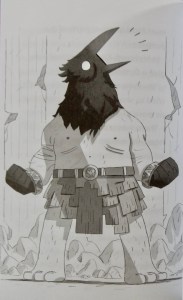
With occasional illustrations by Steve McCarthy, this is another brilliant, entirely credible story set in a Dystopian future by the author of Stitch that is an exploration of what it means to be human; in addition however, Pádraig Kenny explores the role of AI and a possible horrendous outcome of human’s ever increasing reliance on technology.

I wonder just how far child readers think we humans should go in our never-ceasing endeavours to have a better life.

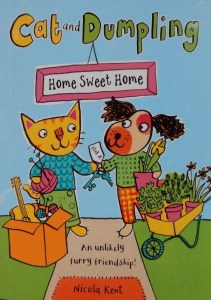
Cat and Dumpling: Home Sweet Home

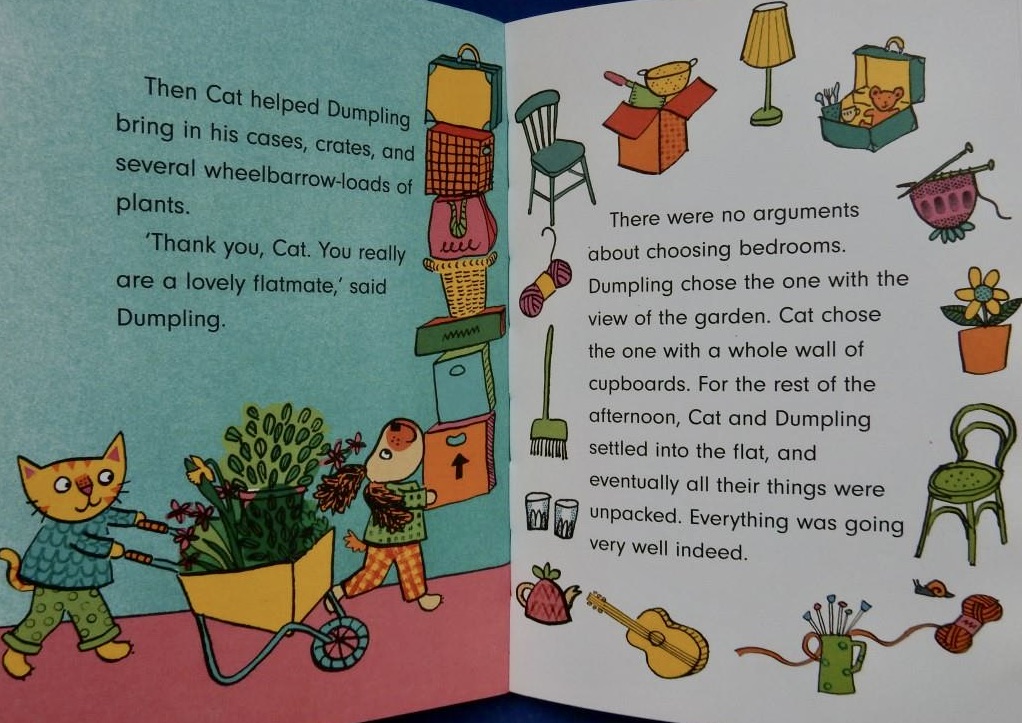
Meet Cat, knitting fanatic and enthusiastic guitar player, who badly needs a new place to live that has plenty of cupboards. Then there’s dog, Dumpling, an ace gardener whose vegetables make delicious feasts. He too needs somewhere new to live, but it must have a garden sufficiently large to accommodate all his plants. They both set out house hunting, visiting several places that are quickly crossed off their respective lists. Feeling downcast they each decide to take a walk and almost simultaneously come upon a sign advertising a flat to rent. Both think this ground floor abode is ideal for their needs, even more so as Delores from upstairs shows them around. Delories thinks they’re both too noisy but is persuaded by their offers of gifts and Cat and Dumpling end up becoming flatmates. All goes well when they move in,

at least initially, but it takes a bit of compromising and kind deeds before come bedtime, it’s truly a case of home sweet home.

Nicola Kent’s sweet story with amusing, full colour illustrations at every turn of the page and short chapters is just right for new solo readers who will assuredly enjoy meeting these new characters and be pleased to know further adventures are in the pipeline.

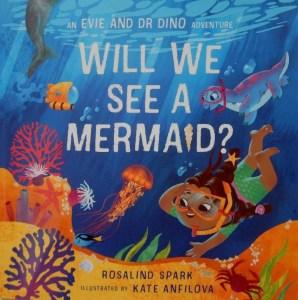
Will We See A Mermaid?

Little Evie is at the beach with her parents and best friend, Dr Dino. Last on her list of things to do that day is to find a mermaid. Dad thinks she has a great imagination whereas Mum tells her she’ll need to look very carefully. So begins Evie’s ocean adventure with Dr Dino. They pack the necessary gear, then before diving deep, the two go and check the rock pools. They’re certainly full of interesting marine creatures but no mermaids.

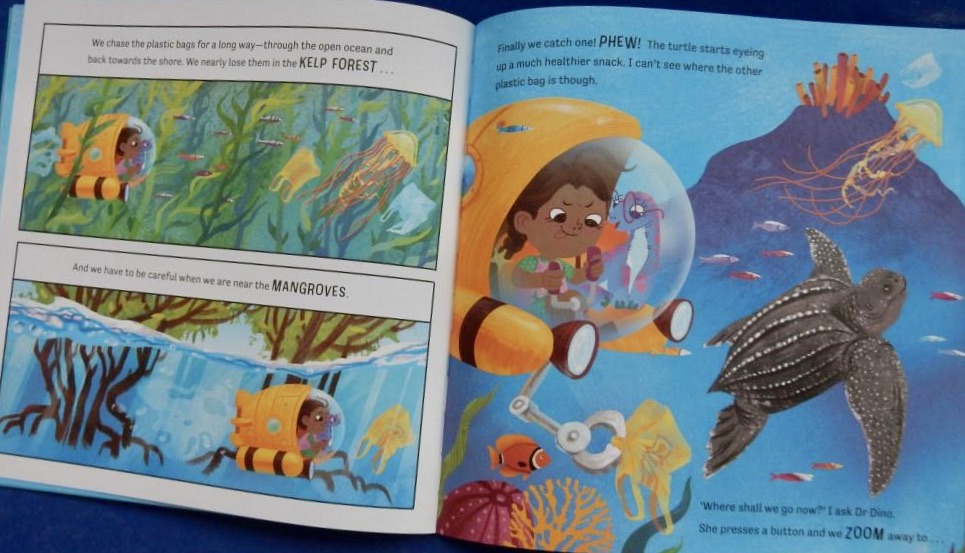
The two build an Ocean Explorer Submarine, launch their craft into the waves and head out to sea. Dr Dino talks about the dolphins they see; then deep underwater they dive and Dr Dino informs Evie and readers about the behaviour of the anchovies and whales they spy. Unfortunately among the marine fauna are some plastic bags and the explorers are determined to prevent a turtle from eating them in mistake for jellyfish. Their bag chase sees them visiting a kelp forest

and a coral reef and diving way way down into the darkest depths until … at last, it’s mission accomplished. But have they seen any mermaids:? Maybe. …

Back on the beach, Mum and Dad help the adventurers collect rubbish left by thoughtless people and Evie offers her definition of mermaids.

This book is full of interesting information, including a gate-fold spread about marine life that will fascinate KS1 children. However, it would also work well as a straightforward story for preschoolers if the reader aloud shares only the main narrative.

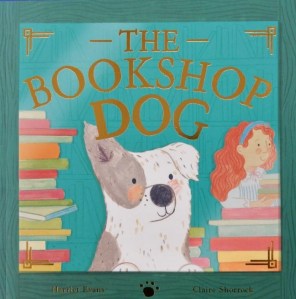
The Bookshop Dog

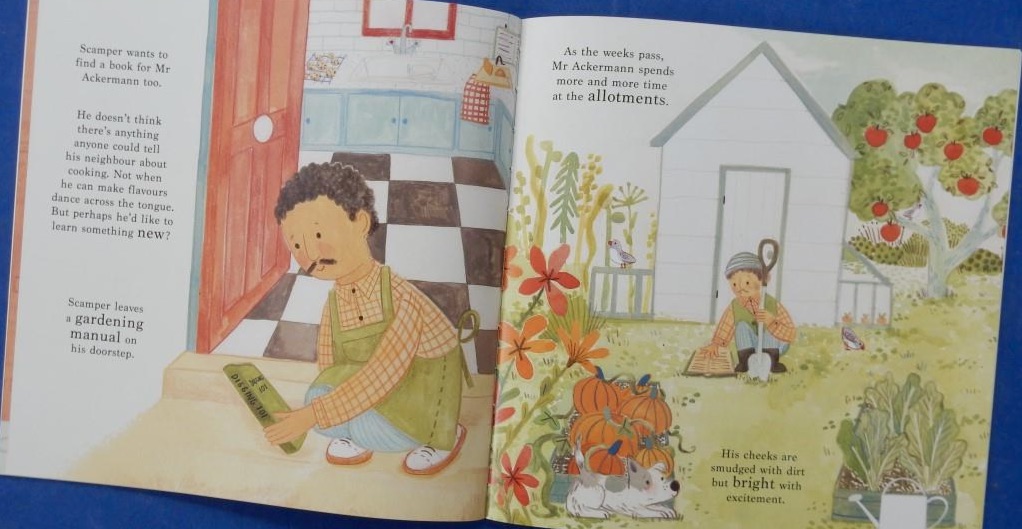
Scamper absolutely loves his home with Paige at The Happy Tails Bookshop and can’t imagine a better place to live in the whole world. Everybody in the neighbourhood has made him feel welcome and he loves them all, Paige especially. To show his appreciation, the pooch decides to follow her example and he selects some books he thinks his friends might enjoy reading. This proves very successful: Scamper has helped all his friends

but is there a book that can put a smile on the face of the person who seems to have read every one already? His search of his friends’ abodes yields nothing suitable and it’s a down-hearted Scamper that returns to the bookshop but joy of joys …

What a delightful character is Scamper, especially in the way his observations enable him to find the right book for each person, even though it’s unlikely to be what they themselves would have chosen.
I love that reading and books are celebrated both verbally and visually at every turn of the page: listeners and readers aloud will love the wordplay and clever book titles – Mansfield Bark and Doggy Deeds of Derring Do – for instance. Claire Shorrock’s illustrations have lots of details that offer starting points for discussion and I absolutely love the exchange between Paige and Scamper near the end: “Reading takes us all on incredible journeys.” (Paige) and ‘reading is a way of coming home.’ (Scamper). So true, both.

Do Not Say These Words

Words are powerful, that is something children learn very early in their lives and once they start speaking that opens up a whole new wealth of possibilities, one of which is humour. It’s humour that author Frances Tosdevin and illustrator Rhian Wright very clearly have had great fun exploring in this splendidly silly book.

We’re in the hands of expert scientist and inventor, The Professor. She, by means of a series of words that young children already think of as a tad naughty, explains that the hilarity induced by the utterance of these words causes giggle-gas and the effect of too much of this in the air is detrimental to the environment. Indeed the world will end up zig zagging around the solar system and we humans will all fall off. The sure way to prevent such a catastrophe is by banning these words and she, aided and abetted by her trusty froggy assistants, have invented a machine that turns these world-wobbling words into harmless, unfunny ones.

The first word for the Prof’s zapping treatment is ‘BOTTOM’ and its safe replacement is in her words, the unfunny ‘FLOPPY PEACH-CHEEKS.’ – make sure you keep a straight face when you read that. next is ‘FART’.

I love the way the alternatives generated by the machine are generated through Rhian Wright’s dramatic illustrations bursting with small details. These provide a great complement to Frances Tosdevin’s terrific text, which offers opportunities for audience participation.

Share this in a classroom – it will appeal across a wide age range – and you’ll likely have the listeners going almost as berserk as the Prof’s machine as the story nears its dramatic conclusion. My partner was spluttering with laughter as we shared it..

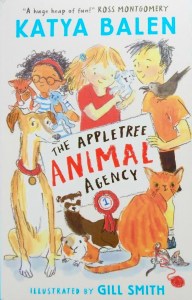
The AppleTree Animal Agency

Mattie loves animals and watches those that come to her garden in the evenings, pretending that Quilla the hedgehog, Bertie the bat and Marmalade the fox are her pets. Seemingly everybody in her class at Mossdale Primary School owns a pet and Mattie desperately wants a puppy but despite frequently asking her dad, he insists they don’t have time to look after one.

One night as Mattie stands watching her animal friends she sees a shooting star and makes a wish on it. Almost immediately through her binoculars, she glimpses a scruffy pup moving unsteadily as though hurt, but when she ventures outside to look, there’s no sign of it.

Next day when Mattie’s walking with her best friend, Zoe, and talking about the puppy, Zoe’s own puppy runs off only to lead them to the injured pup from the previous night. Off they head to the vets but find the place in a chaotic state.

A boy introducing himself as Caspar tells the girls his vet mum and he are staying for the summer while the regular vet goes to visit his poorly mum. The three children sort out the chaos while the vet tends to the injured paw. A couple of hours later everything is back as it should be to Dr Polly’s delight and she calls the three her apprentice vets.

So begins Mattie’s volunteering stint at the vet’s surgery – seemingly her dream is beginning to come true, but Luna as she’s now called, still isn’t hers. Then comes the incident of the runaway ferret: it ends happily and sparks Mattie’s brainwave – a pet-matching service at the village fete.. Zoe and Caspar love the idea and the three start working on it the following morning. Come fete day the service is a great success: is it just possible that all the animals will find suitable homes with responsible owners? Even Mattie’s beloved Luna? …

And so Appletree Animal Agency is formed.

Katya Balen’s feeling-centred story is thoroughly enjoyable and will captivate younger readers especially animal lovers. The friendship, determination and teamwork of the child characters is terrific and a great example to her audience.

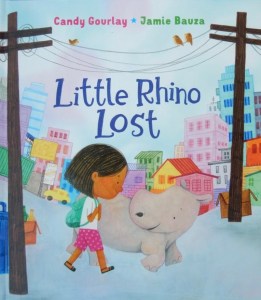
Little Rhino Lost

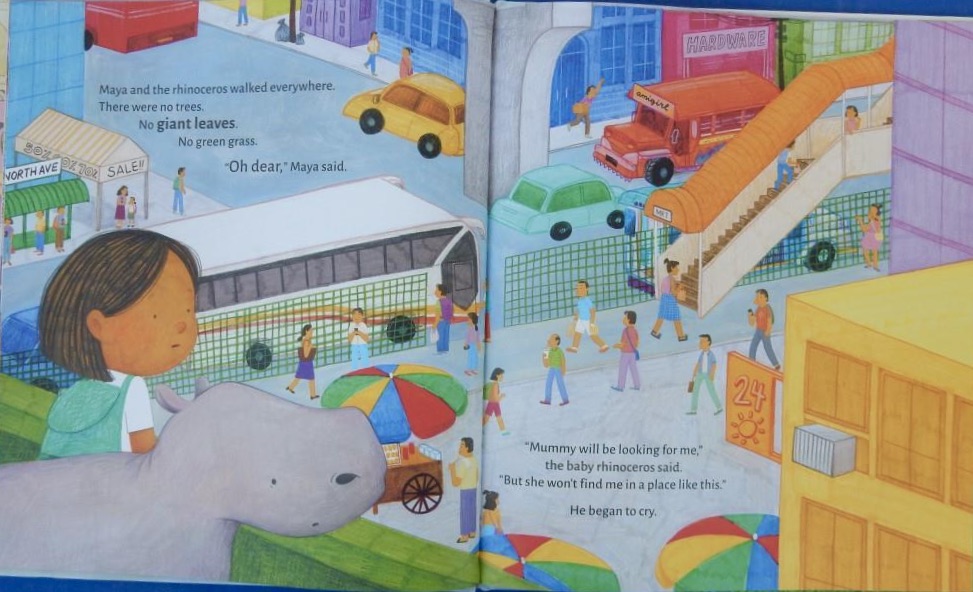
As she wanders in the huge grey urban jungle that is her home city, Maya comes upon a lost baby rhinoceros. She wants to help the creature but needs to know what his home looks like. The baby rhinoceros describes a place full of green plants and trees but as they wander, nowhere looks anything like that,

so May takes the rhinoceros back home with her. She feeds him and with the help of her kind neighbours, does her best to make him feel at home.
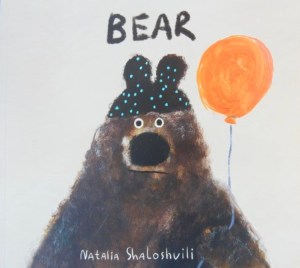
The following morning there’s no sign of baby rhino but instead a note to her from the mother rhino thanking her for her care. Despite knowing that her little friend is safely back home she misses him and wonders if he might come a visit. To that end she sets about turning her garden into a wonderful green space and her neighbours do likewise so that the city gradually becomes somewhere a little rhino could call home.

This charming story about determination, kindness, community and environmentalism, is set in the Philippines, the author Candy Gourlay’s home country. Would that urban dwellers be they in Manila, (the city depicted in some of Jamie Bauza’s scenes) or elsewhere in the world, come together in a similar way to help make all our cities greener.
The Endless Sea

This is a heartrending story of having to leave your home and go in search of a new, safe place to live, told through the eyes of a young girl. She, her parents and sister lived in a Vietnamese village which they were forced to leave on account to being on the losing side of a war.

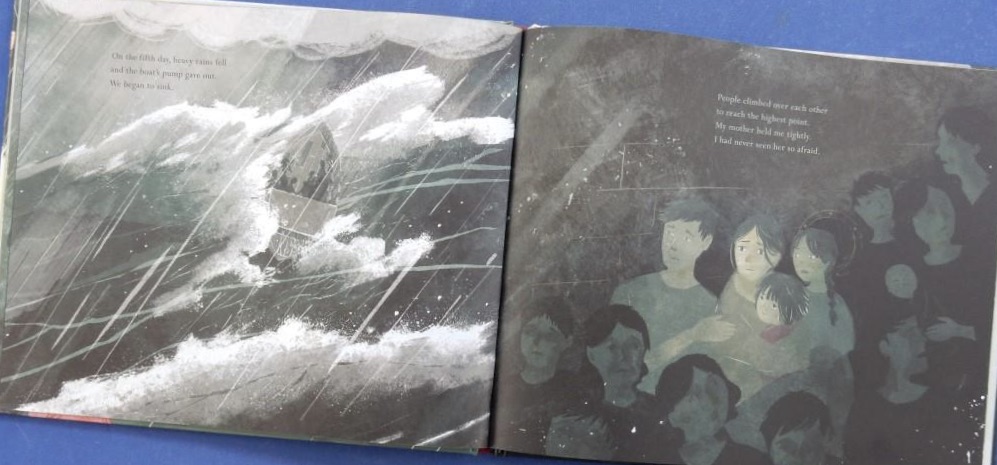
After a long and arduous journey walking under cover of darkness, the family eventually reached a wooden boat that was to carry them, crammed tight for four days, down a river. Then on the fifth day a fierce storm arose, the boat’s pump gave up working and the boat began sinking.
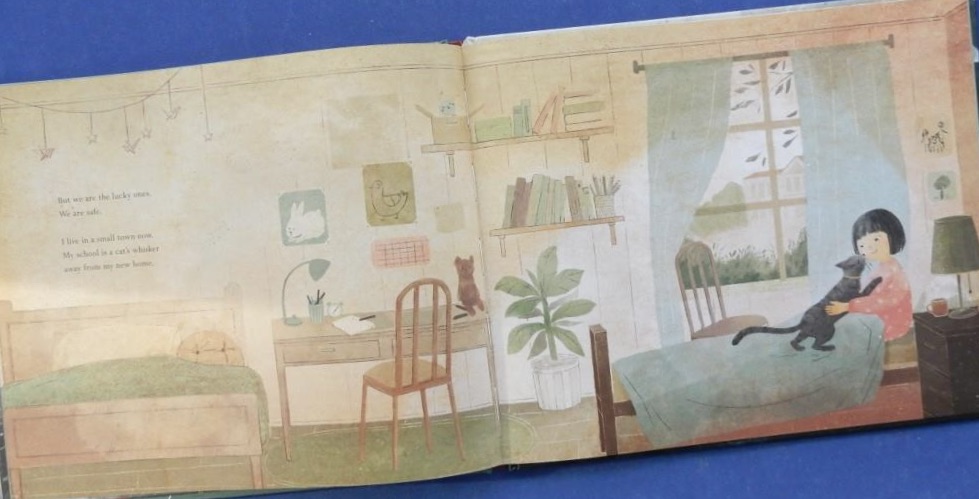
Eventually a ship reached the now rapidly sinking boat, a pallet was lowered and the family lifted to safety. The rescuing ship carried them to a refugee camp where they waited until they were flown to a new country and given a new home. Despite recalling the traumas they’ve been through, the young narrator considers how lucky her family has been

especially when a year on, they are able to celebrate New Year together, hungry no longer but hopeful and able to look forward to many more days together.
Author Chi Thai’s note at the end of the book makes it even more poignant as she writes of how she aged three and her family came to the UK as refugees, for which she is enormously grateful. She goes on to talk of the 36 million refugees there now are and reminds readers how crucial it is that they are treated with compassion. Linh Dao’s illustrations are appropriately sombre during the traumatic escape contrasting with the uplifting scenes of the family established in their new home.
A book to share widely in primary classrooms to help foster that vital compassion and understanding the author speaks of.

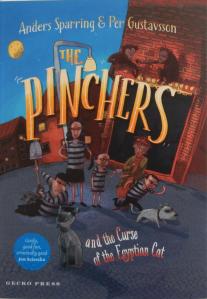
The Pinchers and the Curse of the Egyptian Cat

Is it possible that the unthinkable can happen to Theo Pincher, the only honest member of the Pincher family? It appears so in this latest of tales about them, which is prefaced by a paragraph about the titular ancient curse.

The adventure begins when Theo and his sister Ellen (Criminellen) wander into Pique’s Boutique, an antique shop and accidentally break the best thing in the place, a statue of Bastet, the Egyptian cat goddess. Have they perhaps unleashed an ancient family curse.

Nic Pincher, the siblings’ mum tells them that Pick Pincher, her globe-trotting ancestor had once ignored a warning, nicked the very same cat statue that was guarding Tuttan-K’s tomb, became cursed and found himself unable to commit another robber ever again. Indeed he became a law-abiding police officer.

Suddenly it seems that Ellen has turned honest whereas Theo is becoming something of a criminal.
Then comes a knock at the door: it’s the shop owner, Anne Tique and she has a letter she found hidden inside the broken statue. Mysterious clues may show the family how to undo the curse, so following the clues, the Pinchers sneak out at night, into Ark Park zoo. There they have to contend with monkeys and Grizzly Gustavsson, the nasty bearlike zookeeper who makes trespassers spend the night with the poisonous spiders. Will they succeed in their mission? Will Theo ever return to his normal self again? Maybe an encounter with his best pal, police officer Paul Eessman, whistler extraordinaire, will help in this respect.

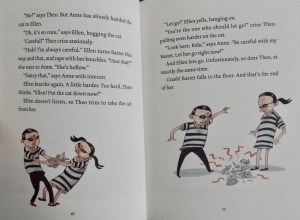
There’s a satisfying conclusion to this fantastical, fast-paced yarn (even Granny Stola makes an appearance in the final chapter.) The abundance of crazy antics are made all the more humorous by Per Gustavsson’s droll images, be they vignettes or filling the entire page. Just the thing to get those in Y3 and above enthused about reading.

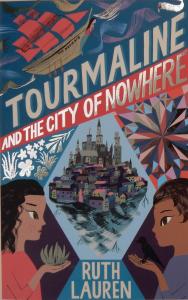
Tourmaline and the City of Nowhere

Tourmaline’s magical ability is no longer a secret so it’s no surprise that lots of people want something from her, including her power-hungry father who is on the loose again.

As the story starts bits of Pellavere University are collapsing, indeed the whole place is in crisis. It seems as though Tourmaline, together with her best friends Mai and George must embark on another adventure just days after their last one. They’re off in an airship to the Midnight Islands to find her father and they hope, save Pellavere. However if the magical City of Nowhere doesn’t hold the solution they seek, it is likely to give Tourmaline’s father what he hungers for.

Ruth Lauren has you on the edge of your seat from the minute Tourmaline embarks on her mission to save her beloved home, a mission which culminates in her finding a new adventure of a completely different kind. Absolutely brilliant. I can’t recommend it enough, but you need to have read books 1 and 2 first: those who haven’t can look forward to a triple treat. I’ve absolutely loved this trilogy especially watching the growth of the main protagonist and the development of the bond between her and her two special friends.

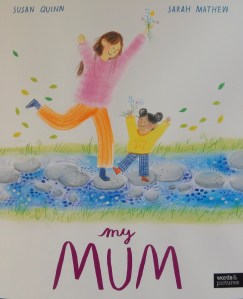
My Mum / Come What May

Mums do so many things for their little ones and this book is a warmly appreciative and loving way to celebrate the day to day adventures they have big and small, told from the viewpoint the little girl narrator. To a mother fixing a child’s broken toy or running through a wildflower meadow and then making a daisy chain may not seem particularly significant but to her offspring, they mean the world. So too of course, do those days at the seaside, building sandcastles, searching for shells, wave jumping and making seaweed crowns. It’s evident that the mum featured loves to encourage and participate in imaginative play; and no matter the weather,

day or night, she’s close by to make things turn out right.

Sarah Mathew’s vibrant mixed-media illustrations are a delight, full of small details for mums and small children to explore and enjoy together. With Mother’s Day approaching, perhaps after several readings, a child could be encouraged to make up their own pictorial celebration of ‘My Mum.

As this story opens Large and Small are doing some baking but it’s not going well for Small AT All. Things are getting dropped, spilled, broken and everywhere is splashed with cake ingredients.
Both cooks want to scream and shout but Large declares love for Small “come what may”. The best way to defuse the situation is to get outside into the fresh air, have a walk and maybe a little picnic in the countryside.

This gives Small an opportunity to indulge in some what ifs, imagining being in turn a roaring dinosaur,

a tiger, a buzzing stinging insect; but for each comes the response ‘I’ll love you come what may’ from Large. Bad mood or good, Large’s love is unconditional, so too is that of Small.

Some of the adults who share this with their little ones are likely to be those who enjoyed the delights of Debi’s No Matter What first published twenty five years ago.

Don’t Squish A Slug

Following his general introduction, author, zoologist and wildlife presenter, Yussef Rafik, divides his bug information under five headings, Masters of Disguise, Amazing Evolution, Daring Defence, Record Breakers and All Sorts of Relationships (some of which are parasitic). The world of minibeasts is truly amazing, albeit on occasion pretty gruesome, so get ready to dive in.

Have you ever wondered why the owl butterfly is so called; indeed were you aware there was such creature? It has earned itself the title ‘Master of Mimicry’ on account of the way the detailed fake eyes on the underwings look so like an owl’s eyes they act as a superb deterrent for potential predators.

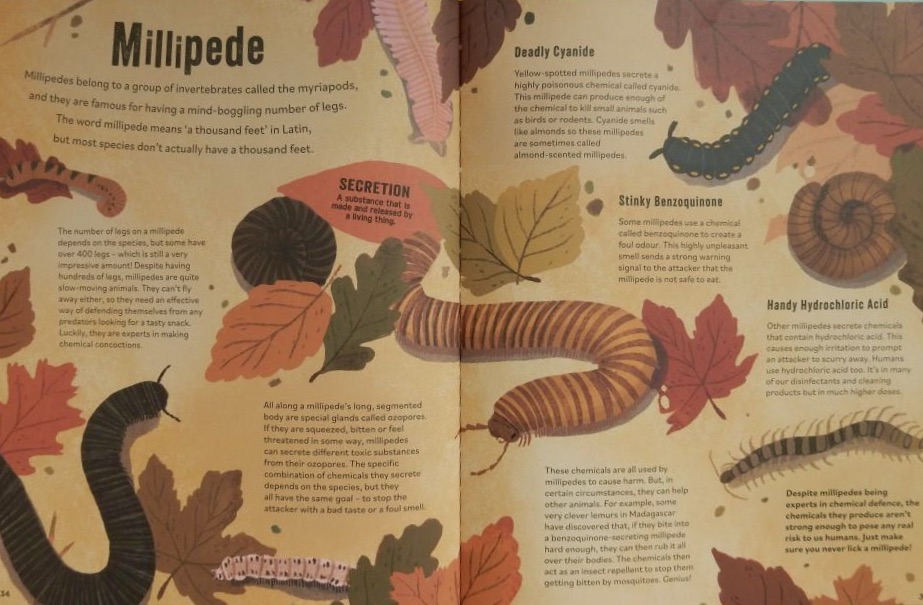
I was fascinated to learn that millipedes have special glands called ozogpores from which they secrete poisonous substances. The yellow-spotted kind secrete the highly toxic chemical cyanide in sufficient quantity to kill rodents or birds. Other kinds use the malodorous benzoquinone, which warns attackers not to eat them. Under certain circumstances though, these chemicals can be of help to other animals, an example being the lemurs in Madagascar. They’ve found out that if they bite a benzoquinone-secreting millipede sufficiently hard, then rub it over their bodies, the chemical acts as a mosquito repellent.

Every bug is either allocated a double spread or single page that includes a superbly detailed illustration the creature in its natural habitat along with the information that is just the right amount for KS2 readers. The author’s knowledge and enthusiasm shine through his text, indeed in his introduction he writes, ’It’s really important that we have empathy for bugs. We should appreciate what they do for our planet and learn to love living alongside them.’

Riley Samels’ illustrations are an ideal complement for the text, detailed but not overly so, and there’s a final glossary and index. Thoroughly recommended for school collections and for budding minibeast zoologists.

Frank and Burt: The One Where Bert Plays Football

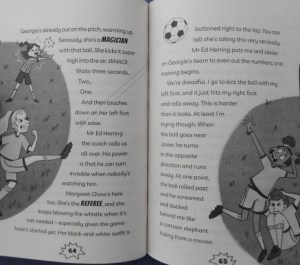
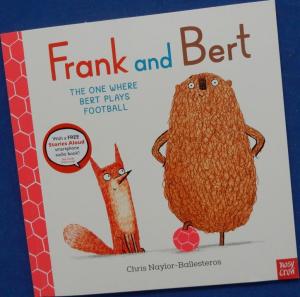
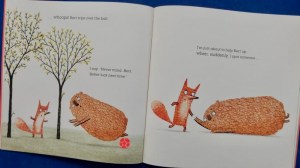
In this 4th tale telling of the ups and downs of the friendship between Frank (fox, who narrates) and Bert (bear) we’re treated to a soccer saga set in the park. Both characters are lovers of the game and Frank has taken it upon himself to teach his pal how to play – sometimes with disastrous results.such as the cake squishing and prickly spikes episode. However, today Bert has a new football and is anticipating scoring lots of goals. He starts with a complete miss, not only of the goal but the ball itself and lands flat on his belly.

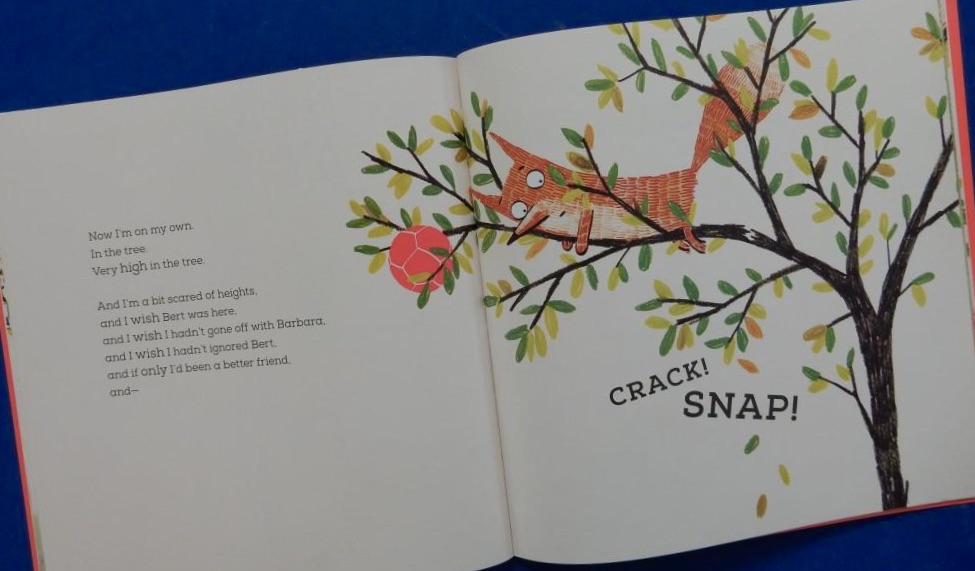
Then just before going to assist Bert, Frank spies ace soccer player, Barbara, and the two of them have a kick about. Barbara’s showing off sends Bert’s ball high up into a tree but does she stay and assist in its recovery. No she doesn’t; that’s left to Frank. He however, having scrambled up to within a paw’s distance, gets an attack of vertigo

and also does some some quick self reflection.

Suddenly the branch bearing Frank snaps pitching him earthward, but he’s fortunate in having a best friend ready and willing to come to his rescue by providing a soft landing surface to cushion the blow. Trust Bert to save the day.

Chris’s superb colour pencil scenes exude energy, humour and pathos, perfectly capturing the changing emotions of his larger than life characters. With vital messages about friendship and decision making, this is another gem of a story featuring the utterly endearing friends.

George and the Mini Dragon

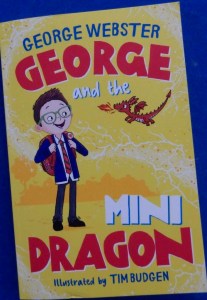
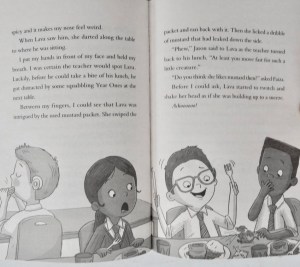
George loves animals and longs for a pet but his parents say it would be far too much work. Consequently when he discovers a tiny dragon at the bottom of his garden after making a wish at his 7th birthday party, he smuggles her inside so his mum and dad don’t find out. George names his new pet Lava and soon discovers that she’s a lively, strong minded, mischievous creature so concealing her is going to be something of a challenge not only at home but at school too.

It’s not long before Lava’s mischief making is noticed by George’s school friends; the art lesson rapidly becomes a glitter scattering opportunity for more than the pupils. Before the lesson ends their class teacher announces that there’s to be a school talent show on the coming Friday. George and his pals, Faiza and Jason. sign up to do a magic show using the set George was given for his birthday. George also has to work out what to feed Lava on.

As the week passes, it seems that the dragon is unhappy. Could she want a friend; she even tries to do the Makaton sign for ‘friends’. – I love that. Maybe though, it’s a dragon friend Lava wants. Then things get a tad chaotic with the fire alarm being set off not long before the talent show begins; it’s a false alarm but Lava is missing. Can George’s Amazing Magic Show even take place? Happily yes and it might just prove even more magical than the contestants or participants could ever have imagined.

Written in collaboration with author Helen Harvey, it’s great to see an inclusive story for younger readers; this one celebrates friendship, family and being yourself, (George has Down syndrome and uses Makaton to help him communicate). Tim Budgen’s illustrations further enliven the tale.

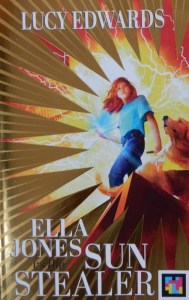
Ella Jones vs the Sun Stealer

This is the first in a new series written by Lucy Edwards, presenter and disability activist, in collaboration with well-known author, Katy Birchall.

Meet twelve year old Ella Jones, who like the author, is blind. Ella lost her sight two years ago and has worked extremely hard to adjust to the challenges of being differently abled. Vital to her endeavours is her guide dog Maisie; so too are best friend Finn and her elder sister Poppy, though Ella still has to cope with battles, both internal and external, which she tries her best to face patiently and kindly.

One day when visiting central London with her family and Finn,

the world is suddenly plunged into darkness, but the pitch black seems not to affect animals, it’s only humans who panic when near chaos ensues. Both of Ella’s parents head back to their places of work, Mum to the hospital and Dad to Croft Tower belonging to the inventor Everett Croft.

Ella and Finn begin to think the darkness might be connected with the legend of Celtic god of light, Lugh, who Ailynn, owner of the Mythos Library they’d visited the previous day, had spoken about. The two friends plus Poppy manage to visit Ailynn who is in the hospital and she tells Ella that she believes she’s the one meant to defeat Lugh and return light to the world. That though would mean that Ellie faces something of a dilemma because its presence is the very thing that makes her different.

However, fuelled by the knowledge that someone else believes in her, Ella and the others return to the museum and start their quest. With clues to follow and a set of rainbow hued stones to find and position in the handle of the slingshot that belonged to Lugh, this is some enormous challenge.

Empathy is key in this moving, twisting, turning fantasy with its young blind narrator. It’s rare to have a character with a vision impairment represented in a children’s novel and the manner of its telling allows we readers to get some idea of how a sightless person might experience the world, Bring on the next story.

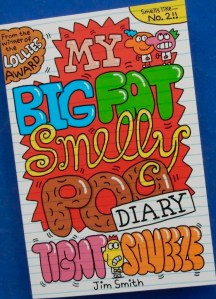
My Big Fat Smelly Poo Diary: Tight Squeeze

Writer of the titular diary is Pedro. He has two friends named Olga and Ozzy: arranged as a acrostic, this spells – well you work it out. They’re actually known as the Poopies.

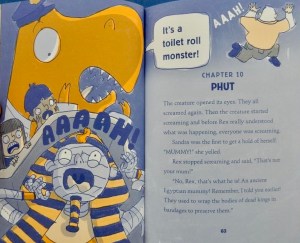
Pedro’s first ‘story’ is entitled My Invention and was prompted by a total absence of toilet rolls in the supermarket due to stockpiling. The tale begins on a Monday morning with their teacher announcing that the local supermarket is running a poster competition showing a product invented by the poster’s creator. Said product will then be manufactured and sold at the supermarket. Some interesting things become the subject of posters including Pedro’s pooh shooz. Pedro is convinced he will be announced as the winner. Not so!

As they walk home together after school the friends see a huge billboard advertising the winning invention which sparks an idea; – a LOO roll business venture. There follows a family supermarket visit that includes Granny, which doesn’t quite go to plan as she gets herself involved in a showdown: who’d have thought she had it in her.

Then there’s toilet roll monster trouble (to keep or not to keep), the coming of Storm Pedro when home-made fart masks come in very useful despite being a tad on the tight side, a sleepover of the pals, a final resolution of the toilet roll monster disagreement, and more.

Overflowing with feelings of friendship, aromas of the whiffy kind, and toilet humour, these crazy wipe-size stories are certain to go down well with Pedro’s human followers and other fans of stinkingly funny
graphic style dramas.

Off they Go!

Poet / writer James Carter and illustrator James Munro have again joined forces on a natural history book, this time on the topic of animal migrations.

Through the former’s rhyming narrative and the latter’s bold, bright illustrations readers are introduced to nine migrating species. First though, there is an introduction to the concept that all creatures may undertake migration.

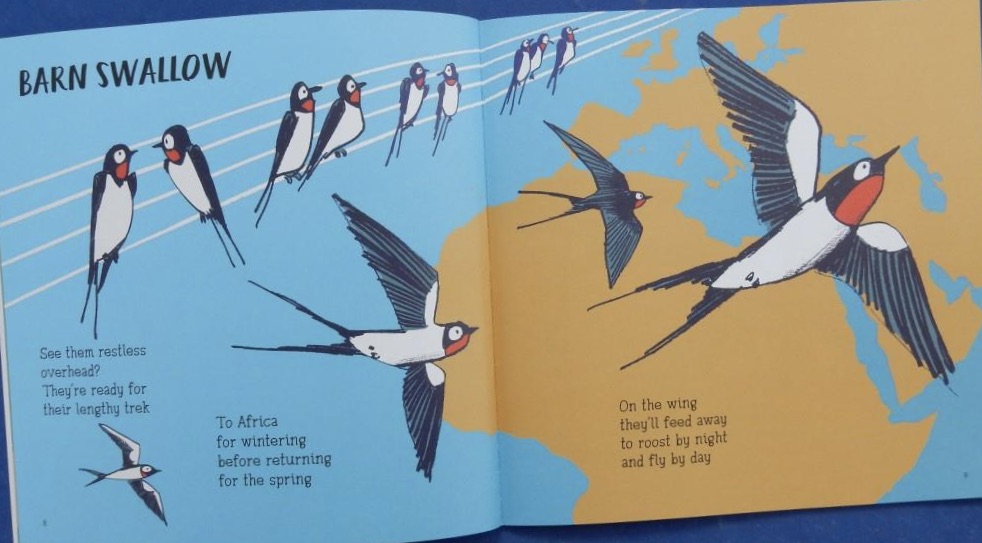
Whether they travel over land, through water or the sky, the selected animals undertake long, often difficult journeys. From Barn Swallows

to Monarch Butterflies, salmon to humpback whales or Christmas Island Red Crabs to humans, we learn more about the different animals and the reasons for their migrating.

Did you know that the globe skimmer dragonfly can journey up to 6,000 kilometres, travelling from India to Africa, island hopping en route to lay eggs and their offspring making the return journey? Some feat.

Included in the final narrative section, is information about animal navigations and unusual migrations making this an ideal introduction to the whole topic.

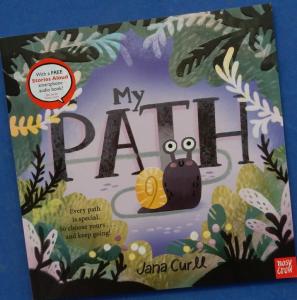
My Path

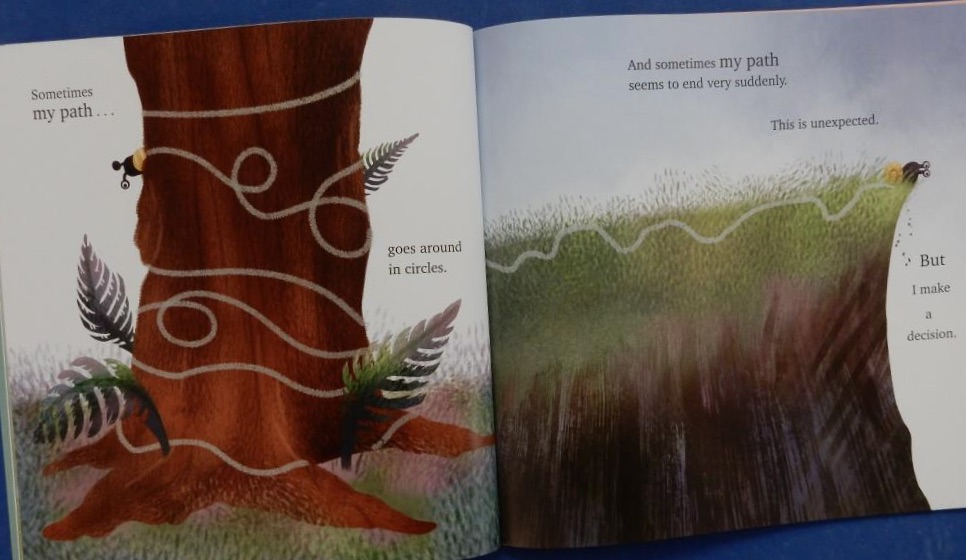
We join a little snail as it follows its path (leaving a slivery trail across the pages,) from sunrise right through to nightfall. Sometimes the little mollusc is alone, sometimes with the company of others and there are obstacles to negotiate, sometimes by going over, sometimes around or even round and round.

The journey may be smooth or rough and when it comes to a very sudden, unexpected end, if it feels like the right path, it’s the way to go. If met by another that challenges a decision, after due consideration, the snail’s decision belongs to the snail, not the challenger. However, when faced with enormous challenges, it’s okay to ask for help. Even with determination and conviction there may be what feel like dead ends but what’s important is to keep going.

Important life lessons are embedded in this story told as a recitation along with expressive illustrations that show so well the snail’s changing emotions as it responds to the variety of experiences encountered on its journey.

This is a book offering much to think about and discuss in a class circle time session with KS1 children, not least that every person’s path is special, a unique learning journey.

Yomi and the Clash of the Abadas

Based on African mythology, this is the fourth adventure for Yomi, Kay and Uncle Olu. After receiving a call for help from their Uncle’s best friend, Daba, they’ve recently arrived in the Democratic Republic of Congo. He is troubled at the disappearance of very large numbers of the Abadas from the national park managed by the Sacred Beast League and wants to know why this is happening.
Arriving at Uncle Daba’s camp, they find the place completely deserted and it seems the place has been attacked by something or someone. Uncle Olu’s reaction is to head back to Kindu, not so Yomi and Kay; but while they’re discussing what they should do a herd of enormous Jagura come hurtling in their direction. All three quickly climb trees.
The next thing they know is that Uncle Olu has disappeared, captured by Beast Hunters.

Now the siblings are on their own and need to hide; but soon they find themselves lost in an unknown place.
Then they encounter a group of young Abadas, but with disquiet among the various herds, can Yomi and Kay persuade the creatures to set aside their disagreements to save their friends and put a stop to the Beast Hunters’ activities in the DRC.

Followers of Yomi and Kayode will be on tenterhooks as they read what I think is the dramatic conclusion to this series. I’ve loved every one of their adventures, each of which is enhanced by Adam Douglas-Bagley’s illustrations.

The Cursed Tomb

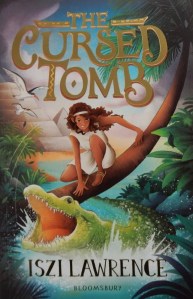
In her latest story, Iszi Lawrence transports readers back to ancient Egypt 1249BCE where we meet eleven year old Henut. We first encounter her as she’s experiencing a troubling dream from which she wakes, tiptoes down from the roof to see whether all is well and hearing strange noises, she heads to the kitchen of her family’s home. Following the sound of loud wing beats, she proceeds to the main room where things are scattered all over the floor; a winged creature launches itself at her and she ends up flat on her back. Alerted by all the noise, Sennefer, her father arrives on the scene. He refuses to believe Henut’s explanation of what has happened and punishes her for what he considers to be her disrespect and lies; harsh and unjust indeed but Henut is used to being treated this way by her father.

Things improve though when Uncle Seti stops by en route to deliver some wine, and shares with his niece and her family stories of what he’s seen on his travels. But then he disappears and in her search for him Henut thinks she saw her mother whom she’s been told was dead; she also finds a scarab amulet.
On a festival day among the celebrating crowds, Henut saves the life of the pharaoh’s son Khaemwaset. He thinks she’s brought him luck and wants her to accompany him to a temple along the river as his servant. She reluctantly agrees and so begins her adventure. Henut finds herself engulfed in mystery, forced at enormous risk to her present life and that in the next world, to enter a tomb of one of Egypt’s long dead rulers in the Valley of Kings.

There are numerous obstacles put in her way. Can Henut possibly survive all the challenges that await and manage to get back to her home in Memphis; and can she find out the truth about her mother?

Bursting with fascinating historical details, this is a terrific tale that will excite and subtly inform KS2 readers. It would also be a great read aloud. Henut is a very likeable character who is determined and her actions are conscience driven even if that means departing from the rules. With a glossary and a guide to the gods at the end of the book, this is a story I thoroughly recommend.

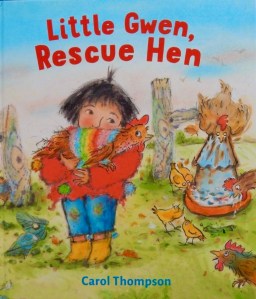
Little Gwen, Rescue Hen

Life is very unpleasant for the hens at the chicken farm. They’re packed tightly in cages, each day feels the same and as she’s constantly pecked by other hens, one little hen loses lots of feathers. Eventually she feels too tired to lay a single egg; but then one day, things change. She’s gently lifted, placed in a dark container and a voice tells her not to be frightened. Then she’s on the move inside the box, heading for an unknown destination.
After some time, the box is carefully put down and opened. The little hen emerges into the brightness of the outside world beyond the confines of her previous existence. There are so many new things to discover and new friends too. But one thing the little hen misses is her feathers that would have protected her from chilly winds, very hot sunshine and incessant rain.

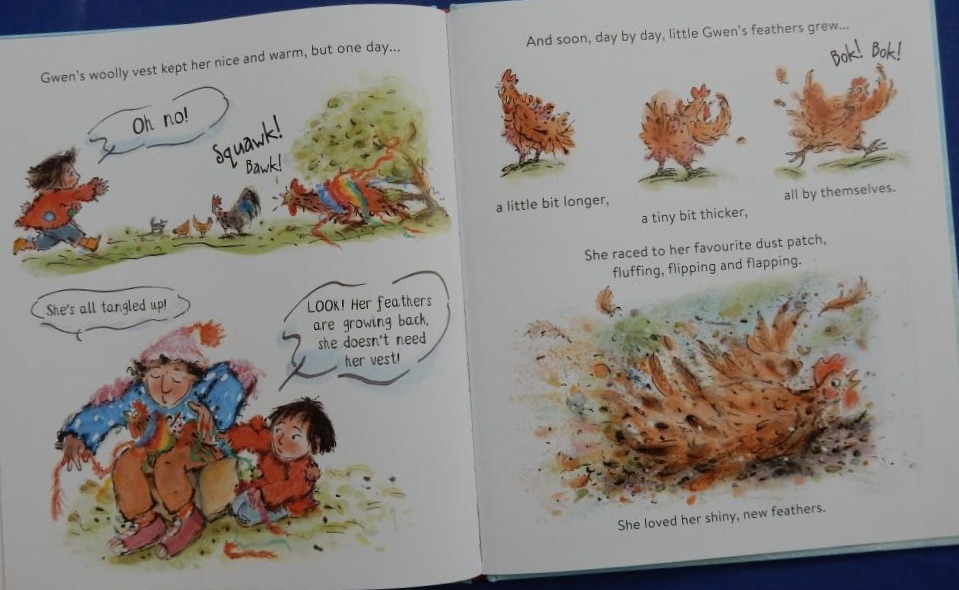
Fortunately the providers of her new home decide to make her a warm vest to wear until her feathers grow back and they decide to call the hen little Gwen. Gwen feels nice and cosy in her new garment until she gets tangled in some twigs that unravel the stitching.

However, with her feathers gradually growing back Gwen no longer needs it. Then one day before sunrise little Gwen goes a-wandering and what an exciting day she has before snuggling down to sleep in her warm safe little chicken house. It’s there that one morning, one of her kind human rescuers discovers a special surprise in the straw. Now what could that be?

This story is a great way to introduce quite young children to animal rights issues and will stimulate lively discussion in a KS1 classroom. Carol Thompson’s illustrations speak volumes as we follow Gwen’s move from terrible conditions to those where she’s treated well and thrives.

Tiny Dogs: The Best Birthday Party

In this third story of the Tiny Dogs series Beatrix Bloom celebrates her eighth birthday with a party, something she’s never done before. Her mum is full of enthusiasm but Bea is less so: can she cope with a party at which she’s the centre of attention? However, she agrees but the tiny dogs are unsure and decide that their special child guardian will need their help. At school when Bea overhears others talking about how amazing their own parties were, she starts worrying all over again. Back home she shares her angst with the tiny dogs and slips Clover into her pocket when the family goes to the party shop. Spoilt for choice, Bea does as her mum suggests and choose a couple of things she really likes, then unsurprisingly selects invitations with dogs on them.

Strangely, the following morning the Tiny Dogs discover the invitations have got scattered all over the place

and Bea has a surprise when they turn up at school and give them to her.

On party day itself Bea is thrilled to see how their room looks and before long the guests start arriving. Things don’t get off to quite the good start everyone hoped but it’s sorted out satisfactorily and the rest of the party goes with a swing – mostly,

thanks in no small part to the tiny dogs. Everyone leaves feeling very happy and even the dogs are infected with the party spirit.

I’d not met the Tiny Dogs before but was enchanted by this story showing the importance of family, teamwork, friendship, as I’m sure readers around Bea’s age will be, whether or not they’ve read the previous books. Rose Libou’s colour illustrations are a delight and add extra charm to her telling.

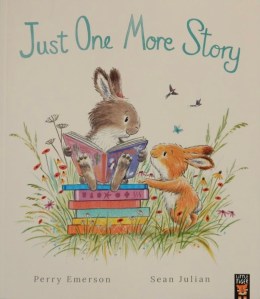
Just One More Story

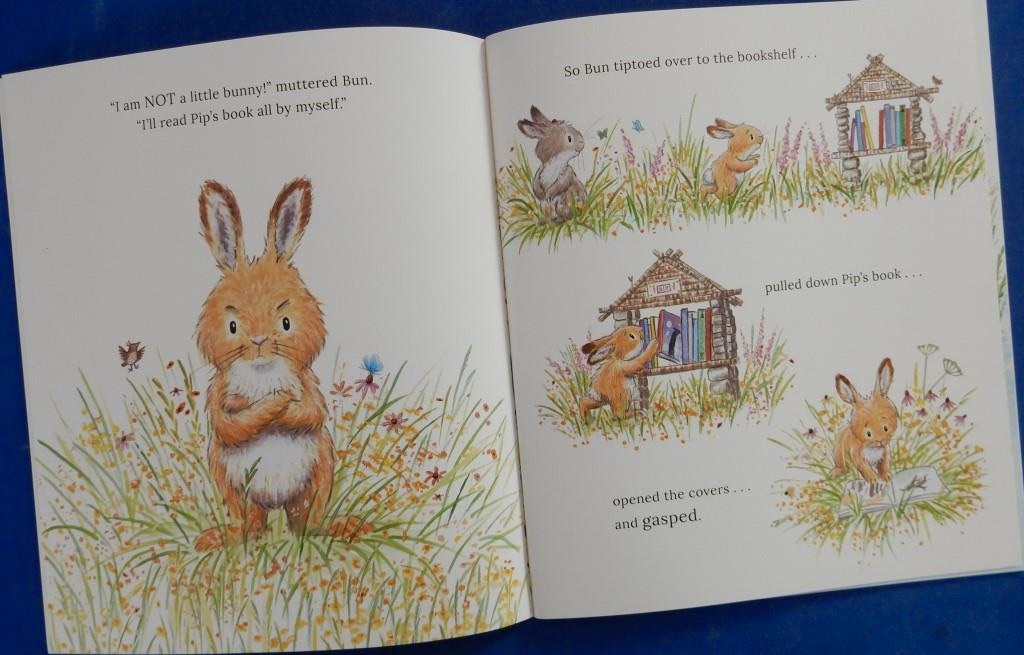
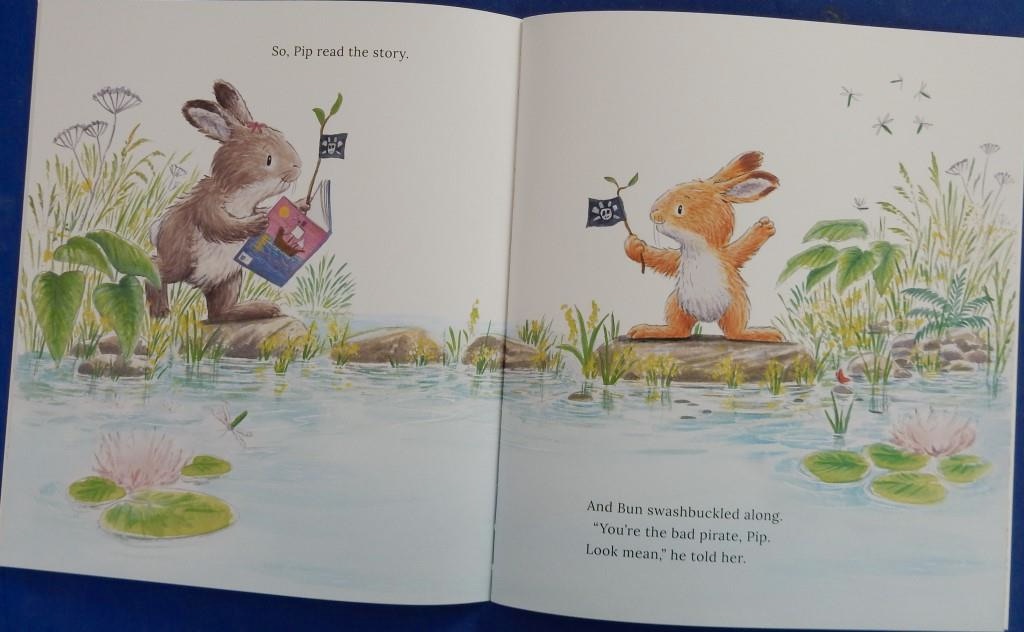
Pip and Bun are bunnies with very different predilections. Pip loves to read; Bun considers books boring and enjoys lively play. So when Pip invites Bun to read with her, he flatly refuses causing Pip to close her book with the comment, “You wouldn’t like this book anyway. It’s not for little bunnies.” Cross at being called ‘little’, Bun decides to read Pip’s book for himself so he takes it from the shelf and looks inside.

He’s astonished to discover the main character is a penguin that rides a motorbike. “Penelope Penguin, super spy!” Pip informs him. With Bun’s interest sparked, Pip starts reading more with the listener very actively engaged. After the story, Bun selects a book about a pirate princess and with Pip reading the words, Bun becomes a swashbuckling freebooter.

They spend the entire day reading stories together until there are no more books on the shelf. Pip suggests they make up their own story; this leads to a squabble with Pip remarking angrily, “Books aren’t for little bunnies.” Bun is left alone feeling very, very small, but Pip too feels. Soon they realise there’s only one way to get themselves out of this impasse: reading books together the way they were, is too good to stop because of a silly squabble.

The characters are endearingly portrayed in Sean Julian’s scenes of the furry, floral frolics. It’s good to see an acknowledgement that there are different ways to enjoy sharing a book, some of which involve being physically actively: so it was for the young bunnies, so it is for their human counterparts.

My First 1 2 3 / Upside Down Opposites / Love

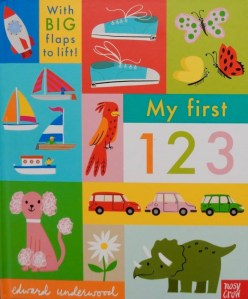
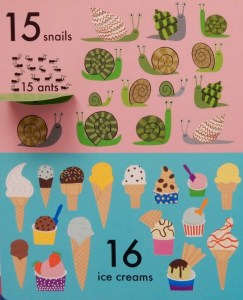
This is a new addition to the excellent My First series illustrated by Edward Underwood. With flaps to lift – one per page – toddlers will engage in the basic counting element and enjoy guessing what is hiding under each flap, quickly working out that the number of hidden items each time is the same as the visible item depicted and clearly labelled.. For instance beneath one of the 3 flowers, are 3 bees, and beneath one of the 18 birds are 18 worms.

A thoroughly engaging way of developing basic numeracy skills – number recognition and one to one correspondence.

The large format of this sturdy book make it ideal for sharing with a toddler and in addition to the mathematical aspects, there’s a wealth of potential for language development. Each of the images depicted on every single one of the coloured background panels is richly patterned and also provides talking/ storying opportunities aplenty.
Definitely one to add to family bookshelves and preschool collections.

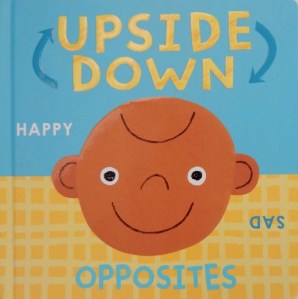
This is a rhyming and visual demonstration of eight pairs of opposites for an adult and young child to share. Each spread uses a different object – a bird in flight, a hand-held ball, a face, a snail, a drinking glass, a squirrel, a hand and a dolphin. The adult reads the sentence on the first verso, the book is then rotated and with the change of perspective, its opposite is seen on the recto and its respective sentence is then read.
Its clever construction means that the book can be read from either end.

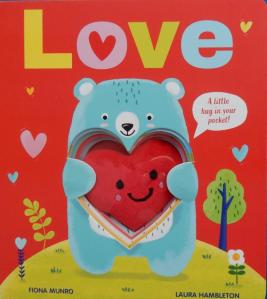
Herein we meet a group of ursine characters and their animal friends as one little bear finds out how the love of family members endures, even when they are separated by long distances and you cannot see your loved ones. Should you feel tired, angry or sad you can take hold of the heart in the centre of the die-cut and cuddle it close to you: that should help you feel that love flowing right to you.
A reassuring narrative by Fiona Munro and sweet, but not sickly illustrations by Laura Hambleton, remind us all, especially small children, that love is inside us and all around.

Paper Dragons: The Fight for the Hidden Realm

Born in Hong Kong, the author grew up with a mixture of Chinese legends and Irish folklore and she draws on these for her debut novel.

Born under mysterious circumstances, twelve-year-old orphan Zhi Ging grows up feeling different from all the others living in her village Fei Chui, but can’t understand why. So, rather than working in the treacherous post pipe to make a living, she decides to go to Hok Woh, the underwater magic training school and learn the skills to become an immortal Cyo B’Ahon. However she doesn’t pass the entrance exam but through resolve, determination and stubbornness she eventually gets an acceptance lantern giving her entry to Hok Woh where she must succeed in twelve challenges to pass her Silhouette year.

It gradually emerges that Zhi Ging has special powers but they put her into much more danger with her life being at stake on occasion as she takes on deadly enemies while in so doing she works out her own identity. Some of the candidates are eliminated for failing various trials but with help both human and magical, she gets through all twelve.

Running through the story is a thread that it’s fine to be different and several at Hok Woh – students and teachers – have a feature that makes them different. It also seems that there may be a traitor in their midst but who will it turn out to be?

With a dramatic ending, this is an unusual adventure in a superbly built fantasy world. I eagerly await the next episode, The Rise of the Sand Spirits coming in April.

The Full Stop That Got Away

Meet Frank, he’s a full stop who loves to make up stories. One day he decides to make up a ‘nice, short, sensible’ one about a dragon. Here’s how it goes: ‘Once upon a time there was a dragon called Dee.’ End of story, so Frank tells us.

However the dragon thinks otherwise and decides to take over the story telling. Dee’s story is a about a tea party to which he invites his dragon pals. A veritable feast it proves to be with goodies galore, a never ending supply of them and that is because Frank has decided to quit.

When fire breaks out you can guess who the dragons call for to come and help. Having been sidelined, the small round entity steps up and cleverly produces some fire-extinguishing precipitation. Finally Frank has proved his point and Dee cannot help but agree.

Our external narrator makes an important comment concerning fun and sometimes allowing it to carry you away just before the book concludes.

With one larger than life main character and another of the fire-breathing kind that he brings into being, this is a very funny rhyming tale about imagination unbounded and knowing when to rein it in. Nathan Reed’s illustrations make this introduction to punctuation into deliciously dramatic dottiness.

Bad United: Foul Play

Bad United, the team that includes a skeleton captain, a dinosaur, a unicorn, a fairy and a spider goalkeeper return with some more splendid soccer silliness. In this instalment team members are celebrating their first win, albeit in a rather dis-united manner, when news comes of their next match. They’re up against Tinkerball’s old squad, The Fairy Dusters – the one from which she was given the boot – and she’s very worried about the prospect of having to perform against them. Nevertheless Hoof suggests the fairy teaches them some special moves, so Tinkerball starts on the magical moves training. A successful session is followed by some enjoyable team bonding.
Come match day, the commentators remark, “Tensions will be running high”. Meanwhile Bad United are given special new magic repellant kit and onto the pitch they go. With Tinkerball’s twin sister heading up the opposition and Tinks out for revenge the sparks begin to fly. Come half time the siblings are both booked and Tinkerball is forced to relate the whole story of why the Fairy Dusters threw her out.

Bad United’s captain gives the siblings a good talking to and the second half begins.
What will be the result? Is it possible that Bad United can win their second match?

Further football foolishness delivered cartoon strip style that new solo readers will revel in.

Bertha & Blink Take To The Skies

When Bertha discovers that her erstwhile friend, now her inventor nemesis, Finnius Fink, has allowed filthy smoke to belch from the chimneys of his new factory in the jungle, she and her roommate, robo-bird Blink, are horrified. With thick smog everywhere, they need to step up their mission to save the jungle from complete destruction and that means asking some of their fellow animals to join them.


The creatures gather at Bertha’s treehouse where she shows them down to her secret workshop to see her latest invention: a plane with lots of additional features – even more once her new friends start to help. Said friends are shocked to learn that Bertha intends Finnius i to steal the invention and enter it into the Invention Competition as his own. During his absence at the competition the plan is that Bertha et al will destroy Finnius’s factory. It’s certainly a daring plan but can they possibly pull it off, get rid of the factory and set about replenishing the jungle trees and plants? Let’s just say that teamwork is dreamwork and sometimes dreams come true.

A fun, early chapter book with lots of speech bubbles and highly engaging illustrations. What will Bertha and Blink’s new mission entail, readers will be eager to discover.

Wrong Time Rooster

There’s excitement down on the farm when a large crate is delivered. With the animals gathered around, Farmer Tony opens the lid to reveal a rooster. Said bird wastes no time in introducing himself as Ronnie. “No more sleeping in late,” the farmer tells them but at dinnertime that evening there comes a resounding ‘COCK-A-DOOODLE-DOOO’; but Ronnie fails to crow the following morning. As a result, the animals remain fast asleep.

After a whole week of wrongly timed crowing, much to the delight of the farmyard entourage, Farmer Tony decides that he needs to have a talk with Ronnie about his efforts.

Apologetically, the rooster explains that he’s been sacked from every job he’s ever had on account of his badly timed crowing. “But nobody ever taught me how to tell the time!” he reveals. Farmer Tony’s parting comment leaves Ronnie convinced that he’ll be re-crated and moved on yet again.

However, the silent farmyard no longer feels right to the animals, nor indeed to the farmer. Rather than sending Ronnie packing, they collaborate on something much better for them all: teamwork rules and that team includes rooster, Ronnie. No more crowing at the wrong time on the farm – or make that almost never …

With rumbustious illustrations, a main character that will endear himself to listeners, its playful narrative that reads aloud well and lots of opportunities for audience participation in the COCK-A-DOODLE-DOOs and WRONG TIME ROOSTER refrains, this is a story that young children will enjoying giggling over, time and again.

Sniff! Sniff! What’s That Whiff?

This story is told in rhyme by a dinosaur that has feasted on a large portion of berries for lunch and soon detects a terrible whiff in the air around. Determined to discover the perpetrator of the bottom-burp aroma , off it goes inviting young humans to join in the search. The first to be interrogated is Pterodactyl. She proffers proof that her toot is not the horrid one that offended our dino. narrator. Nor are those made by Dippy diplodocus, Ankylosaurus,

Triceratops, the Megalodon Shark (his is exceedingly fishy) and Steggy Stegosaurus. Then comes a very strong, meaty smell: Yikes! It’s T-Rex. T-Rex gives chase but unexpectedly stops, apparently feeling exceedingly poorly on account of the stench. Our narrator empathises but a realisation suddenly dawns. That rear end purple parp cloud eruption is coming from our very own narrator’s bum and has been responsible for saving the others from becoming T-Rex’s supper.

Time for a party when feeling de-stressed, the other dinosaurs dance, stomp and relax their bum muscles releasing …


I suspect that along with unicorns and dinosaurs, poohs and pongs are young children’s favourite topic for picture books so this one of Lucy’s and Gareth’s will be a winner on two counts.

How To Walk A Whale

This fourth title in the Peculiar Pets series is narrated by a girl who takes her grandmother’s advice, thinks big and advertises for a whale to come and share her abode. Sure enough, what should appear outside the front door but a blue whale. It’s as well that Granny has a book on whale care to make matters easier. Providing a ‘happy’ environment means that the creature cannot spend more than a couple of hours on land. Then there’s the issue of diet: an abundance of krill is what’s needed and lots of exercise is vital;

but when it comes to accompanying your whale as it swims thousands of miles to find a mate and give birth; and communicating your love often, it becomes evident that as strong as that love is, what is even more important for the pet whale is to rejoin its family in the vast ocean. Of course there’s always the hope that he’ll come back to visit his human friends before too long.

As well as being vibrantly and humorously illustrated by Sarah Horne,, author Sam Wilde has included lots of facts about blue whales in the text. Did you know for example that they filter the krill through big bristles in their mouths. There’s also a final double page spread giving the ‘Top (10) blue whale facts.’
Yes, the book is humorous but it also contains an important message about the responsibilities one takes on when having a pet animal of any kind.

Unicorns in Uniforms: Dragon Inferno

Dragon Inferno is the first instalment in the Unicorns in Uniforms series, the uniforms team being Blaze, the firefighter, Locke, a Police Sergeant, paramedic Dash, Sunny, an air and mountain rescuer and Aquarius, responsible for sea rescue. This story is told from the viewpoint of Blaze.

There’s action aplenty, which starts when two playful young dragon friends, Flare and Glimmer accidentally set fire to Witchy Wood. Abandoning her breathing exercises, Blaze immediately leaps into operation mode. With Sunny already engaged, the firefighter boards Quench, her Flamequencher emergency vehicle and races off towards the scene of the fire.
Enter young witch, Jinx pushing a strange wheeled contraption – seemingly her conjuring has gone a bit wrong. It contains Flare with a broken wing; but almost at once, Jinx’s magic mishaps get far worse and disaster ensues with the inferno heading towards the treehouse of Hex, her grandmother, which is full of powerful magical potions.

Fortunately it’s soon after that Blaze utters the words, “Nothing is impossible for Unicorns in Uniforms’.

Will they, or will they not prove to be right: can Blaze and Quench get everyone to safety before the whole of Witchy Wood is destroyed.

At just over a hundred pages, with Steve Wood’s exuberant illustrations, this is ideal for those in KS1 just starting to read chapter books. I’m sure readers will be eager to read stories told from the viewpoints of the other uniformed unicorns too.

After the story comes some information about real live fire-fighters and their equipment, and a quiz. In addition, Tracy Curran’s narrative offers opportunities for discussion about ways in which to control one’s temper and to stay calm in an emergency.

Cloud Boy

No matter how hard he tries, Bobby’s attention keeps wandering and he finds it hard to stay still. When he becomes distracted, he starts floating upwards and the more his imagination takes over, the higher he goes. His friends, his mum and his teacher try to help but there are so many things that draw his attention away from the everyday things – the colour of a bird’s song and the idea that the moon might get lonely – for instance. Bobby really does want to concentrate like his friends Jess and Nelson, to be organised like his Mum and focused like teacher, Mr Brian, but it only works very, very briefly and makes the boy very tired. His friends and family devise a plan.

However, this restraint makes him feel empty, devoid of imagination and so he cuts himself free. The result is immediately uplifting, leaving friends and family pondering upon how to get the boy down. Perhaps they should try looking at things from Bobby’s viewpoint …

This uplifting story shows the importance of understanding and valuing neurodivergence: it appears that Bobby has ADHD and author/illustrator Greg Stobbs, has drawn on his personal experience in creating the book. I love his use of pink neon to represent Bobby’s imagination.

An important story to share and discuss.

Marty Moose: First Class Mischief

This is the first instalment in an exceedingly funny new series presented in two colours by Claire Powell. First of all don’t be misled, Marty is a mouse, not a moose – that was an ink blot on his birth certificate. We meet Marty on his very first day in the his first ever job – the very important role of Postmouse of Little Ditch. He’s particularly excited as his now retired Great Aunt Ada was reputed to be one of the best at the job.

Determined to be a first-class deliverer too, off he sets to the Post Office where his first encounter is with Cyril Snorter, employee of the month twenty seven times in a row. He also meets other members of the team who appear somewhat sneery. Then with post bag duly slung over his shoulder and instructions to leave no parcel undelivered and to watch out for rotten blueberries – no idea why – he’s on his route.
With several letters duly delivered, Marty is feeling upbeat but then he gets rather lost in a rabbit warren.

Fortunately however, he finds himself unexpectedly embraced by Nibbles Frizzly who is a trifle loopy but she does explain how the confusing number system works

and helps deliver the post. Before long they get stuck in what proves to be a booby-trapped garden where they’re caught between feuding toad siblings, Velma Carbuncle and her young brother. From booby trap to toady trap go Marty and Nibbles. Suddenly Marty recalls reading in an encyclopaedia of his, that toads are known to eat mice. Yikes! Surely his first day at the post office isn’t to be his last.
Light bulb moment! Is star employee Cyril behind all the problems and if so what should he, Marty, do?

Really fun, this zany adventure is told brilliantly both verbally and through Claire’s red and black illustrations. Younger readers (and many adults) will love this and eagerly anticipate The Great Stamp-ede, Marty’s next adventure.

Oh No They Aren’t: Nature

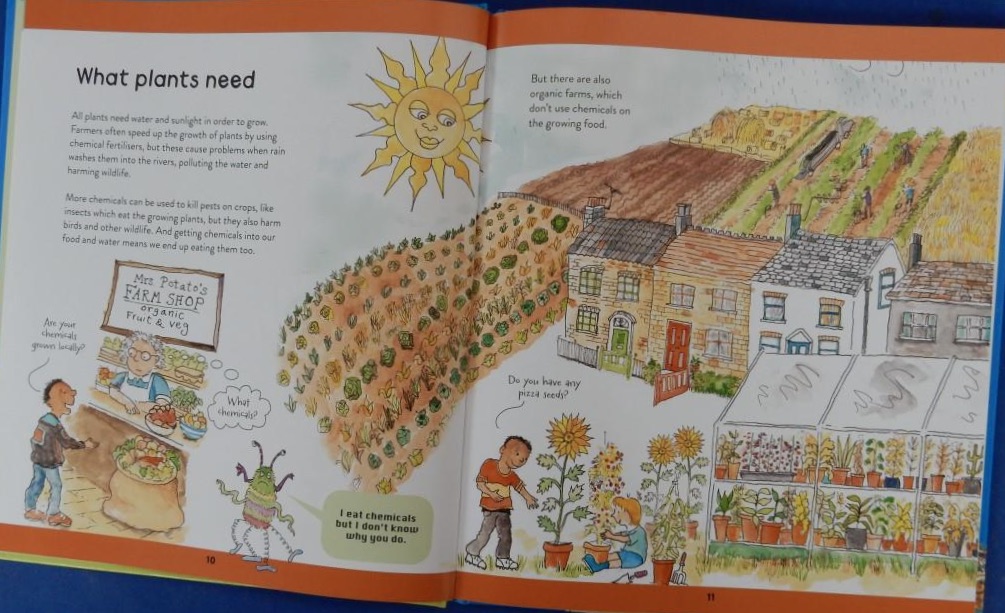
Playful in approach it may be, but there’s a wealth of information about the natural world to be found in this book.

Following his introduction the author adopts his tongue-in-cheek question and answer style replete with pantomime-like ‘Oh no they aren’t!,’ ‘Oh no they weren’t!’ ‘Oh no they don’t’ interjections, in the book’s six thematic sections. These are in order, Prehistoric Life, Green Planet, Under the Sea, Creepy-Crawlies, Predator and Prey and High Fliers.

In Green Planet we read, ‘Flowers are just pretty decorations … aren’t they?’ followed by the rejoinder ‘OH NO THEY AREN’T!’ and an explanation of pollination and its importance.

Then in Predator and Prey we meet several sharks – all of which are fearsome predators aren’t they? Actually no: the whale shark – the largest shark in the world – is a gentle giant. Moreover, if you thought all sharks are very big, that’s wrong too: dwarf lantern sharks are only about the size of a mobile phone. Now that I didn’t know.

Sam Caldwell’s humorous illustrations match the jaunty style of the writing and the book concludes with a useful illustrated geological timeline and a glossary.
A thoroughly engaging addition to the Oh No’ series that will be lapped up by those with a preference for reading factual books rather than fiction.

King Coo: The Secret in the Woods

Ben Pole is a a timid boy whose major worry is not the chaos-causing sink holes that have suddenly started appearing. Rather, a victim of horrible bullies, Ben’s primary concern is to get to the end of term unharmed by Monty Grabbe, son of the unprincipled mayor, and his motley gang. As he flees from them, Ben falls into one of the sink-holes and lands up in an unknown forest.

Enter King Coo, a diminutive but formidable character wielding a spear and with an exceedingly long beard. To Ben’s remark, “I’ve never seen a boy with a beard before,” comes the affronted response, “ How DARE you! I am a GIRL with a beard!” It turns out that Coo’s only company is Herbert, a wombat, obsessed with tunnels. Coo rules the forest, swinging through the canopy and living in a tree house.with ropes, slides and all manner of amazing inventions.

Ben and King Coo immediately form a friendship, but before long their kinship is disturbed by the appearance of Monty and his sidekicks. However, King Coo and Ben, are aided by the former’s ingenious devices that prove extremely useful when an attack is launched.

Who will emerge the victors? What will be the outcome, not only for Monty and gang, but for Monty’s father?

This is a terrific read for younger children mixing together the real and fantastic. Adam’s two main characters, indeed all the characters, make a splendid cast, superbly brought to life through illustrations interspersed throughout the exuberant text, and in its occasional graphic novel format.

Originally published several years ago, it’s great to see this being re-issued by David Fickling Books this month.

The Book is Full of Poop

Having given readers a book full of unicorns and a book full of elves, team Gareth and Nathan now offer a much more whiffy one. I suggest a clothes peg on the nose as you accompany the two child narrators on a poo hunt around town; it promises to be a ‘super-duper-poop-athon’ during which you will encounter creatures of all shapes and sizes, some imaginary, some extinct and others feathered, furry, thick and fibrous, or scaly. Of all shapes and sizes too, are the poos they deposit.

Did you know for instance that hippos poo while on the move

and sharks produce poo of a green colour?

Gareth’s rhyming narrative ends with a warning to beware of hidden poop piles and of course, whenever you conclude a walk around outside it’s wise to check the soles of your shoes.

Young humans will love the poo depositing shenanigans of the animals depicted in Mike’s amusing scenes; adult readers aloud might wish to have an air freshener close by as they share this offering with one or several children.

Hunt for the Golden Scarab

This is a superb start to what promises to be another excellent M.G.Leonard series. Herein she brings together her loves of history and music; she visited Egypt before writing this book, which is evident from the historical and geographical detail included on both modern and ancient Egypt.

Twelve year old Sim loves to play the piano and practise martial arts, the latter his mother teaches. After moving around quite a bit, her main job is to act as caretaker of the Sir John Soane’s Museum in London, which houses the collector’s archaeological and artistic treasures and objects of interest. Mum (Callidora) and son live in the caretaker’s flat and Sim currently attends the local school where he’s made a good friend, Nelson.

One night, when a pair of strangers appear in the museum after it’s closed. Sim is amazed that his mum plays a tune on a penny whistle she has with her and the tune opens a door, transporting them back to the time of Sir John. It transpires that Mum is a Time Key, able to time travel; however so too are her untrustworthy brother, Emmett and his daughter, Jeopardy, whom they meet beneath the basement of Liberty’s department store. Callidora and Emmett are considered renegade keys as they don’t follow the rules set by the Council of Keys, a society that governs movements.

Everyone is looking for the golden heart scarab of Nefertiti, said to hold the secret of eternal life, but at first no-one knows the whereabouts of her tomb. Callidora though works it out and appropriately clad, they travel back in time. Sim meets the young Tut Ankh Amun

and Jeopardy assists in laying out the body.With the council’s hunters hot on their trail, the excitement and danger mount: Callidora, Sim and Jeopardy must piece together the long-hidden clues if they are to solve the mystery of the scarab before they’re found by the Council.

There’s a satisfying ending that leaves the way open for further adventures. The author’s use of music and musical instruments as a way of opening time doors is genius: I for one, eagerly await Time Keys second instalment.

Interestingly there’s also Sim’s Time Traveller’s Diary recorded by his friend, Nelson and a ‘Key’s Guide to Ancient Egypt’ at the end of this book. Manuel Šumberac’s black and white illustrations are splendid too.

Let’s Play Rugby!

This interactive story is published to coincide with the Six Nations rugger tournament, which this year kicks off on 31st January. The aim herein is to help your team lift the trophy and once clad in your gear, like all players the first thing to do is some warming up exercises – jogging on the spot and star jumps – before the kick off.
Now it’s time for you to kick that ball you have in your hands right up high and it’s game on!
Wow! Some of your opponents are enormous so tackling someone with the ball can send them down really hard and win your team back that ball. Yeah!
As the story proceeds we learn more about the game of rugby – the scrum,

the line out and scoring a try, while following the instructions to shout loudly, push, rotate then shake the book, weave your finger through the defenders,

find the gap and touch the book down to score a try. Now it’s up to you to kick the conversion to win that trophy. WOOOO1 Hurrah! One last thing: lift the cup high above your head to show the crowd. What a game!

Co-authored by Irish rugger Gordon D’Arcy and writer Paul Howard, and robustly and dramatically illustrated by Ashwin Chacko, this action-packed picture book captures something of the excitement of the game. One hopes it will not only inspire young children to watch the Six Nations games but also to seek out one of the many rugby clubs that cater for primary school age children with mini-rugby sessions.

Terrible True Tales: The Stone Age/ Terrible True Tales: Greeks

The Great Storm is set on Skara Brae, Orkney, 5000 years back. There live Tuk and Storm both of whom are tired of eating fish and set out to catch a bird for a bit of red meat. On returning to the village, there’s nobody around so they head to the Great Hall where a meeting is underway and learn that their father, Orc, has been accused of theft. Can they uncover the real thief before the villagers serve up their own form of justice?
In The Great Flood, we meet Jay and her family at the end of the ice-age. They live off the land catching deer and whatever else they can. One evening after Jay and Moor’s return from the hunt had involved crossing a rapidly rising river, they sit watching two bands of hunters fighting over deer. Grandfather proceeds to tell the story of Noh, Aye his wife and the building of the ark to survive the great flood. This he then relates to their own experiences of rising water levels and what they must do to survive.

Exciting tales all, wittily told by Terry Deary who uses engaging language play, each being based on historical/ archaeological evidence. Also included are lots of drawings by Tambe. There’s a fact file for each tale and some activities to extend the learning.


The same is true of the companion book, Greeks, illustrated by Helen Flook.

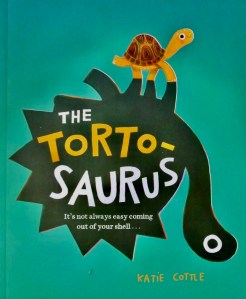
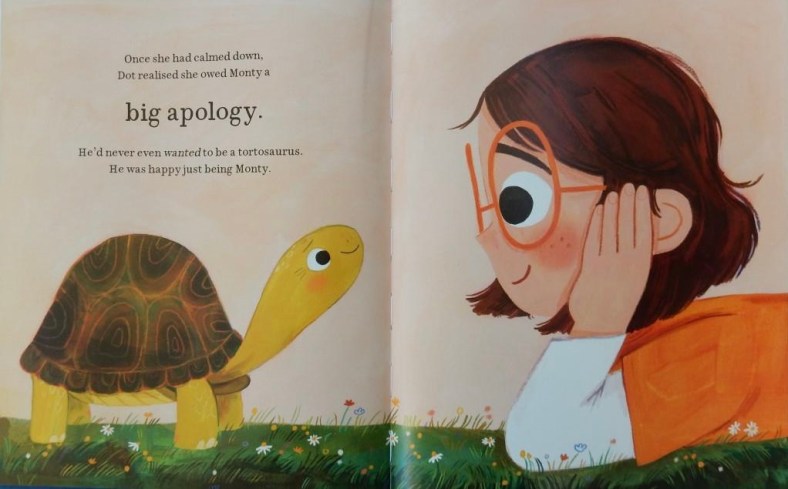
In the four stories herein, Terry Deary breathes new life into fables and legends, each title being an indication of his witty take on a well-known tale. We have The Tortoise and the Dare, The Lion’s Slave, The Boy Who Cried Horse and The Town Mouse and the Spartan House.

Both books deserve to be in KS2 classrooms and should help turn even those disinterested in history, into enthusiasts.

Oops, I Kidnapped a Pharaoh!

K-Pop obsessed Skylar and her best friend, Dana find themselves on a time-travelling adventure after being picked up from school by Skylar’s eccentric Nana in her tuk-tuk. One minute they’re driving back from school and the next they’re in the middle of a desert surrounded by date palms without Nana who runs a catering company and has vanished in search of ingredients for her famous ‘sweet’n’wild fig and falafel burritos’.

After their initial amazement that they’ve time travelled to Ancient Egypt, the friends start to search for Nana, adapting to the new, strange environment. On entering a large courtyard set up for a show of some kind, music begins and from behind a curtain shimmies a boy wearing a gold cloak whom they surmise is the main attraction. He proceeds to perform an amazing slick, synchronised dance routine and Skylar is inspired to join in with some K-pop style moves of her own. The crowd goes wild and the girls realise that the boy dancer is Tutankhamun aged about ten or eleven.

Having found Nana with her purchase and learned that the time travelling was a mistake, they go back to the tuk-tuk, jump in and return to their own time, only to discover that a small boy, aka Tutankhamun, has hitched a ride back to the twenty first century. What can they do about having a boy king from 1331BCE who appears to have a strange affinity with Skylar’s cat and a penchant for Nana’s burritos, to stay overnight? They put him in Skylar’s brother’s bedroom and the girls go off the Skylar’s bedroom and start chatting about their favourite K-pop stars. But there’s still the massive problem of getting the boy back to his own place and time as soon as they can. The trouble is their visitor wants some fun and when they go out, he quickly starts attracting attention at the K-Mania Food Village, so there’s not a minute to lose. It’s back into the tuk-tuk again and yes they do go to Egypt but not in ancient times, nor with the little pharaoh aboard.

With problems aplenty to resolve, the time travelling friends have encounters with Marie Curie, Shakespeare and Henry VIII, all the while making sure the tuk-tuk has the fuel to run on, in their mission to return to Ancient Egypt.

A very funny, fast-paced roller coaster of a read for older primary children or to read aloud with an upper KS2 class: I enjoyed it even more than the Headteacher story in the series.

Ten-Word Tiny Tales of Love

This is former children’s laureate Joseph Coelho’s second Ten-Word Tiny Tales offering, this one having a unifying theme – love – and in an introduction, Joseph tells readers how the tiny tales came about.
Each of the tales is moving in its own special way; you will find great sadness, tender parental and sibling love, spookiness, the fantastical, the humorous and more.

Coming from all over the world, each one of the talented artists has created an equally special, very different scene, thus making every turn of the page a verbal and a visual delight.

We see enigmatic and literal interpretations as well as ambiguity: there is love for such diverse things as a bike, baby birds and a brother,

but in every case the intention is to create a world – a space of awareness – that will spark the reader’s imagination.

To facilitate this, Joseph offers some story writing prompts in the final two spreads.
Altogether a treasure trove that holds within, a wealth of possibilities for creativity both in the classroom and at home.

Coorie Doon: A Scottish Lullaby Story

This debut picture book by renowned poet, Jackie Kay, has its roots in well-known folk songs. Subtitled ‘A Scottish Lullaby Story’, the author also uses some lyrical old Scots phraseology.
The story begins with Shona – a ‘wee bit bairn’ listening to her daddy singing Coorie Doon, till she fell asleep under ‘the huge eye o’the moon. (Corrie Doon’, the author tells us after the story means ‘snuggle in tight, tuck in.’)

This ritual happens every night and sometimes the song a parent sang would be The Tiree Love Song; other times it would be “Goodnight, Irene, … / I’ll see you in my dreams.”
As young Shona sleeps, readers too enter her dream world encountering in different places, her friends her black and white cat Flo, Marley her dog, baby Serenity and more.

Then, sixty years later it’s the turn of Shona to tuck her aged dad into bed and to sing to him, “Coorie Doon, Coorie Doon, wee Daddy” before going out the back door into the night to look at and wave to the moon.

That Shona is adopted is not referred to in the narrative but in a letter to readers at the back of the book, Jackie tells us that she imagined Shona being so, and that she too was adopted as a baby.
Gorgeously illustrated by Jill Calder, her soft, warm scenes help celebrate the small, childhood rituals and how they become embedded within us, a vital part of who we are.

Opposite the title page is a QR code so readers can watch an author video, and listen to recordings by folk singers Peggy Seeger, Claire Brown and Suzanne Bonnar. A treasure of a book.

The Greedy Wolf

Once there was a wolf (a greedy one as they often are in stories) and this one had a particular penchant for fresh young goats. So when walking past Mummy Goat’s house he heard her say to her seven offspring that she was going to get their favourite food for dinner, he was determined to make the kids his next meal. His first attempt to gain entrance was by pretending to be a post person delivering a parcel. Next (with a voice change) he told the kids that he was the ice-cream man, but again the kids kept the door firmly shut.

By now desperately hungry, the wolf resorted to pretending to be a talking rose bush with a flowerpot on his head, sent by Mummy Goat to babysit.

Finally the door started to open and the wolf, feeling particularly prickly, gained entrance, rushing inside with a roar.

Did this scare the little goats? Oh no it didn’t, they were busy cooking. Now the wolf was certain that he’d finally sate his appetite. This he did but who was the more satisfied when he departed from the goats’ abode?

Timothy Knapman’s funny updated telling of the Grimm Brothers, The Wolf and the Seven Little Kids with Jean Jullien’s illustrations of the mock-scary wolf are sure to make young audiences laugh (though the story will be most appreciated by those familiar with the original version). Serve it up in a KS1 class or at home and see how it goes down.

When Fish Finger Froze

Fish Finger has a happy family life and plenty of friends at school; but then one day there appears on his classroom wall an announcement about a school disco to be held that very night. His classmates are excited but Fish Finger starts to worry straightaway. His worries increase after Miss Bag O’Spinach tells the class that they can spend the rest of the school day working on their dance moves and everything Fish Finger attempts ends in disaster.

At home after school, his siblings, Patty and Fillet, are eagerly getting ready for the evening, rummaging in Grans trunk and doing their hair. Mum notices Fish Finger looks upset and when he tells her about his bad dancing, she encourages him with some wise words about doing his own thing. The twins too are supportive and set to work giving him some tonsorial treatment before they leave.

At school, the hall is full of lights and lively movers but Fish Finger remains frozen to the spot, his feelings all tangled in his tummy as the contest is announced. Then suddenly something amazing happens: Fish Finger thaws as he shimmers and shakes across the floor, full of zest and showing surprising confidence as he follows mum’s advice and does his own thing. He’s clearly delighted and so are his friends.
When the parents arrive, Miss Bag O’Spinach realises she’s yet to present the prizes. There are a fair few including one for ‘Best Attitude’. Can you guess who gets this award?

Hearing his name called, the winner suffers a brief re-freeze but quickly warms up, thanks to his helpful classmates and a celebratory dance concludes the proceedings. Hurrah for camaraderie, empathy and especially for the character who overcame fear and bravely did his own thing.

With Michelle Robinson’s spirited rhyming text and Tom Knight’s funny illustrations that capture so well the feelings of the protagonist, this picture book is full of heart and offers a great way to get young children talking about their own feelings and emotions.

The Found Things / Guess How Much I Love You: I See Me

These are two Walker Books titles for very young children: thanks to the publishers for sending them for review.

One morning Rabbit wakes to find the sun shining brightly and decides to go for a walk. First though she needs to dress, but one of her socks is missing. The hunt all over her abode for its whereabouts sees Rabbit discovering various other items of clothing, each of which she dons,

but of the missing sock there is no sign. Rabbit decides she’ll sally forth without it, albeit looking somewhat strange. So strange in fact that when she encounters Squirrel and Mouse, they mistake her for a monster. However the two have a special surprise for their lapine friend. What could it be?

Young children will love Petr’s vibrant, mixed media illustrations with their cutaway parts and enjoy participating in the sock search. Adult sharers especially will endorse Rabbit’s parting joyful comment on the final spread. The book also offers a simple, interactive fun text for children just gaining confidence to try reading it themselves, once an adult has shared it with them.

It’s a lovely spring day and Little Nutbrown Hare and Big Nutbrown Hare are out together enjoying themselves. As they explore they play a game of I-spy. Between them they spot a butterfly, a baby bird in a nest and a tadpole wriggling around in the pond. While they gaze into the water Big Nutbrown Hare asks, “What else can you see in the pond?” I wonder what Little Nutbrown Hare’s response is? (The cover is a giveaway!)

A sweet story featuring team McBratney and Jeram’s two wonderful characters that celebrate their thirtieth anniversary appearance in Guess How Much I Love You, this year. (The Nutbrown Hares have also appeared in a couple of animated TV series of the same name.) Many of the adults who share this board book delight with their little ones will likely remember meeting the characters in the now classic original tale.

Ready Eddie Go! Dressing Up / Ready Eddie Go! Painting

In the first book, young narrator Eddie is joined at home by his two friends, Akil and Nina as they explore the contents of the dressing up box full of ready-made costumes and the materials to invent others.
Child users of this interactive book learn of Eddie’s sensory preferences and the difficulties he has when planning what he’ll wear, as well as being reassured that choosing not to dress up at all, or removing a costume when it gets uncomfortable, are also acceptable. Interwoven into the narrative are both tips to manage any challenges that might crop up such as scratchy labels (it’s not only neurodivergent people who find this unpleasant; I always remove them from jumpers etc.) and related practical ideas including finding a range of items to feel.
Once the three friends are ready, they choose to show their costumes to friends and family

and the book ends with a recap on the whole dressing up experience.
Well presented and relatable to neurodivergent youngsters, this is a very useful book.

So too in the same series is Painting. This one has a school setting and introduces children to messy play activities. Again the possibility of having an itchy label arises when the friends put on their aprons. Coming up with ideas can also be a challenge, as can dropping paint in an unintended place,

and having messy hands.
There are helpful strategies including list making to help with planning and organising, and it’s particularly good to see making ‘mistakes’ presented as normal: for any child mistakes are a vital part of the learning process Another confidence building book.

Magicalia: Thief of Shadows

Bitsy and Kosh’s second adventure begins with the best friends in a lesson at the European Conservatoire of Conjuring as part of their training to become conjurors – those able to wield magic by using a resource called farthingstone to create magicores. After the session they bump into Matteo, a friend who offers his help to get Kosh to his next session, Chrysalides. He ends up in a part of the Conservatoire he’s not seen before as does Bitsy who decided to go along too.

They are met by Chancellor Hershel and then two other members of staff and Kosh learns that he can choose his farthingstone. While there, the chrysalides are attacked by the Shadowsmith, a dangerous thief. Bitsy and Kosh work out what they are searching for and taking it with them, they escape from the chrysalides; but with the disappearance of the Shadowsmith, Kosh and Bitsy are deemed to be the thieves.

This leaves the two no option but to go on the run as they realise they must identify the real villain, bring them to justice and thus prove their own innocence. However, they’re up against a wielder of powerful, dark magic intent on a crime so heinous that it will affect not only the magical cosmodynamic community but also the cosmotypical world. Their mission takes them to various parts of the world – Barcelona, Sri Lanka and Washington and in so doing, will uncover long hidden family secrets and test Bitsy and Kosh both emotionally and physically as they face numbers obstacles and realise the vital importance of team work: can they succeed?

With the plot twisting this way and that, readers, like the protagonists, are on tenterhooks throughout the adventure. Jennifer Bell’s imagination is awesome and all those magical creatures, inspired creations.

I love the drawing by David Wyatt at the head of each chapter.

Betty Steady and the Queen’s Orb

Unlike Dave Schoolboy writer of the fan letter to author Salvador Catflap that appears in the opening chapter of this book, I haven’t read the first story. However, I have read this sequel also starring ‘Right Tough Nut’ Betty Steady, aka the Guardian of Wobbly Rock, and like Dave I laughed a lot. Diminutive in stature, twelve year old Betty is, as the story begins, having a sleepover with her besties, the Crossword Crew, and about to fall asleep when she hears a noise. Outside a figure on a horse is approaching the castle door. It’s one calling himself Andy Underarm, personal messenger of the queen of Upper Crust with a message for King Nutmeg; an invitation to the Turnip Festival, a celebration Betty has long yearned to attend.

The following morning, the delighted King Nutmeg tells Betty that her usual role as Royal Bodyguard has been changed to ‘undercover spy’.Reluctantly, she accepts the offer and off she sets upon her steed Simon Andersen clad in his tiger-print cycling shorts and two pairs of cowboy boots.
After an eventful start, and a two day journey they reach their destination and what a squeaky clean place it is and as for the turnips – wow-ee! King Nutmeg receives a cordial welcome and a reminder from Queen McNiff that he’s a competitor in the Royal Turnip Tournament, something he’d forgotten all about.

On Turnip Day itself, following a night in unsatisfactory accommodation, Betty wakes in a bad mood and as she looks out at the sunrise, she notices a small sprite hovering just outside the window.

Having introduced herself as Misty Jamjar she listens to Betty’s tale of woe about the spell she’s under that’s made her so tiny. Misty invites Betty to a gathering of sprites and pixies later in the day. While there Misty offers to help her get back to her original size but can she really reverse the Toad Witch’s spell? However this offer comes at a price: Betty must steal the queen’s Orb of Ogg. Nonetheless this sounds a straightforward plan and nothing can go wrong surely?

As the tale draws to a close, Betty is given a choice: stay with the queen in Upper Crust and become her full height or return in her tiny form to Wobbly Rock with King Nutmeg. What do you think she chooses?

Turnipferous fun from start to finish with magical mayhem and bonkers behaviour, plus a generous sprinkling of comical characters illustrated in style by Sarah Horne, Nicky Smith-Dale’s second Betty Steady adventure is an absolute hoot.

Squeak! Squawk! Roar!

It’s good to see that Kate Williams, contributor to a fair few anthologies now has her first solo collection comprising fifty five poems and great fun it is too. Essentially it’s a celebration of the tremendous variety of animals that share our planet, but Kate also draws our attention to the plight of so many amazing animals on account of the selfish or thoughtless actions of humans in one way or another. Take for example Jungle Shrink that tells of the destructive effects on the animal inhabitants when tree felling machines go into action, ‘Brmmmm-thud! Brmmmm-thud!’ . And Sharp Wrecked: ‘Gentle as the sliding tide is gentle, / peaceful as the lolling waves are peaceful, rare as her forebears once were plentiful, / harmless as the jagged junk is harmful, / vulnerable as never before, / is turtle.’
No matter where you open the book, the author’s love of earth’s fauna is evident.

It’s not easy choosing just a few to draw attention to, but on the day of writing as well as the above mentioned, I was especially drawn to Dance of the Penguins, a superb portrayal of a sequence of penguin movements;

also Foal in the Field, a delightful account of one foal’s transition from a ‘lazing, dozing; bundle in the grass’ to a ‘ skipping, gliding; // dancer in a golden glow.’

and Albatross
‘Lone ocean bird
surfing the sunset’s glow –
so bright, so white
so graceful, so grand
so calm
so strong
solo’

Adding to the enjoyment are Hannah Asen’s black and white illustrations of many of the featured creatures from mice to monkeys, swans to snails and cows to cobras.

Definitely recommended for solo reading and for classroom sharing. Great to dip in to as well as using as part of an animal theme (so long as you remember the fine line between ‘using’ and ‘abusing’ the poems).