Two Ants Puzzled Elizabeth Laird and Jenny Duke Tiny Owl
In this charming interpretation of Rumi’s classic tale with its theme of looking at the bigger picture, Elizabeth Laird sets her tale, told from the ants’ perspective, in the house of a little girl. The title page shows the two ants out exploring, walking in through an open front door and turning the page we see them starting to explore by climbing up the table leg onto a large white sheet of paper whereon the child is drawing. They walk right along her pencil and what they focus on is the tip and the movement of that pencil in her fingers.
So intently are they looking at the shapes and colours that they slither and slip hither and thither. When the girl pauses and looks up, the ants start to retreat, ending up on the floor safe and sound – just!
Unhurt they begin ascending the table leg once again. This time what they see before them is the entire finished picture and included in it are … two ants. Guess who is inspired to be creative now.
Jenny Duke chooses a variety of perspectives for her scenes making them especially effective and intensifying the small drama as it unfolds, and she cleverly imbues the ants with real personalities. Young listeners will also notice that there is a playful black cat watching the action throughout the story.
Books and the People Who Make Them Stéphanie Verne, illustrated by Camille de Cussac Prestel
This book, translated from the original French by Paul Kelly, gives child readers a look at the stages in the life of a book from the starting point when the content is a germ of an idea in the mind of the author,
right through to when it arrives in the hands and minds of readers.
This encompasses visiting the world of authors who create manuscripts, the editors who read those manuscripts and decide whether or not a particular book should be published. The work of the latter also includes finding new talent be that of authors or illustrators. Much of the role is collaborative and involves not only working with the author but also, copy editors, graphic designers, proof readers and sometimes others too.
In a picture book, the illustrator is as important as the author and sometimes but not always, the two collaborate closely. However, the entire story can be told though illustrations so no writer is involved.
Once a book is printed, – there are several spreads about this process –
it’s time to involve the sales representatives, the people who visit bookshops to show them what is about to be published in the hope of getting orders, They also collect feedback from booksellers.
Clearly the delivery of a book to a bookshop isn’t the end of the story. It’s part of a book-seller’s role to unpack and shelve books, check stock and perhaps organise a special launch event or a workshop for children; and of course they need to get to know what is on their shelves in order to offer advice to customers should it be required.
Many new books are also sent out by a publisher’s press officers, usually prior to publication day, to reviewers/critics who can play a key role in the success of a particular book. Librarians in libraries also provide a link between books and readers; two double spreads are devoted to their work and on the final spread, it’s over to the readers.
I wonder how many young readers will be aware of all these jobs. They certainly should after a close look at the quirky visuals of Camille de Cussac whose diagrams and funky scenes surround the written text.
Peace on Earth Smriti Halls and David Litchfield Walker Books
‘Peace on earth … GOOD WILL TO ALL!’ Surely this is something almost all of us long for and with on-going conflict in several parts of the world, this stunning, heartfelt book couldn’t be more timely.
Lyrically written by Smriti Halls and dramatically illustrated by David Litchfield, it presents a story wherein we follow a group of friends who embark on a journey together over land and sea. A journey that starts out full of joyful anticipation and happy camaraderie
but then, lost and afraid, angry words are spoken – hurtful words – that cause distress and pain.
Thereafter it’s hard for the group to -re-establish that former harmony, peace and light. Fortunately though with the will being there, as it is with the friends herein, they find the courage and the inner strength to be peacemakers. I love this scene showing one of the characters bringing an affirming flame towards the others.
Thus, the story ends with a reconciliation that reunites the characters and they go on to share their joy with others as lights shine forth all along the shore line.
With its combination of striking art and deeply felt words (inspired by Luke 2:14), this book needs to be shared and talked about as widely as possible in many different settings from the family to adult meeting places.
Kevin the Vampire Matt Brown, illustrated by Flavia Sorrentino Nosy Crow
Having enjoyed the proof I couldn’t wait to see the published book with all the wonderfully entertaining illustrations by Flavia. Star of this fangciful story is ten year old Kevin Aurelius, not quite the same as other boys his age for he has fangs and being a vampire he’s immortal. Kevin belongs to a family of travelling performers and as the tale begins they are supposed to be en route to Monstros city for the Festival of Fear but instead have wound up in Lower Drudging in the middle of Nowhere. Batnav failure maybe? With them are an assortment of other eccentric monster characters.
Nowhere is human territory and none of Kevin’s family has seen a human. However, a suggestion is made to put on a performance in Lower Drudging – an impromptu one in the hope of earning some gold that will enable them to get back on track to their original destination.
Also in Lower Drudging, suddenly awoken from her slumbers is a young human, Susie Cabbage who lives with two unpleasant aunts. She is eager to know the cause of her rude awakening so out she goes to investigate. Inevitably Kevin and Susie meet and a friendship develops between them.
Meanwhile shock horror: – the mayor and his council members have noticed the sign put up about the performance to be held that very evening. This is horrifying because nothing fun has happened in Lower Drudging for seventy five years on account of the ‘You-Know-What’ that lives inside Cold Mountain. Is this something that Kevin and Susie can investigate and discover the truth about? It might just save the town …
With its wealth of wordplay, this is a really funny start to a new series with some serious underlying themes about acceptance, friendship and not judging others by their looks. Add to all that a number of monster fact cards strategically placed throughout and a final monster themed alphabet and the result is a cracker. Bring on book two.
Victoria Stitch Dark and Sparkling Harriet Muncaster Oxford Children’s Books
Heavily laced with gothic glamour, is this third in the series starring the unstoppable young Victoria Stitch recently made co-Queen of Wiskling Wood along with her twin sister Celestine. As the story opens there’s also news of a soon to be born new royal baby. Fast forward eleven months and Princess Minnie Stitch, next in line to the throne, bursts forth from her crystal and in the blink of an eye is making Victoria Stitch’s heart glow.
With Wiskmas approaching, Victoria Stitch takes a trip to Spellbrooke where she encounters a pair of Sapphire Society members who are clearly far from pleased to see her. She then learns that the group meets regularly and being Victoria Stitch, she just can’t stop herself using some invisibility dust and going to listen in on their next get together. What she hears makes her think a plot is afoot.
Shortly afterwards Princess Minnie disappears, followed fairly soon by news of a prison breakout. That means two of Victoria Stitch’s greatest enemies are at large again and it’s likely that the two events are connected. Moreover, their destination is the human world. The police tell her to remain in the safety of the palace but feeling as though she’s inflicted a terrible wound upon herself, Victoria Stitch certainly has no intention of so doing.
With her sister’s blessing, off she goes over the magic boundary wall on operation rescue Princess Minnie and recover the stolen Book of Wiskling. The following morning she and her human friend, Naomi, set out, destination Pinks Rock. Can she pull off a very difficult task, or even two?
Another absolute delight despite the setbacks; Victoria’s character continues to develop interestingly the more challenges she faces and as always, the book explodes with magical images. I know a lot of children will be jumping for joy at the chance to read this.
The Star Whale Nicola Davies and Petr Horáček Otter-Barry Books
What a truly beautiful celebration of some of the world’s natural beauty is this book containing forty poems penned by zoologist/ writer Nicola Davies, each one accompanied by a stunning painterly illustration by Petr Horáček.
It’s impossible for me to choose absolute favourites, such are the riches contained herein but one I was instantly drawn to today is Kingfisher, the opening and closing lines of which are: ‘A strike of turquoise lightning / Swallowed by its own reflection / … ‘And nothing matters in the world / But this small glint of wonder.’
It seems as though Nicola visited our re-wilded garden for her description of the kind of garden she loves – a place where ‘stems make a jungly chaos / and beetles prowl.’ … ‘Where wildflowers bloom to feed the butterflies / and bees.’ … ‘where neat and tidy are forgotten / and nature rules.’
As trees are my favourite thing in the natural world, I was also attracted to Mama Tree wherein the description of interconnectedness goes like this: ‘ Mama tree is talking to her children. / Through fungal fingers that wrap around her roots / she reaches out like any mother / to touch, to feed, to warn.’ If I sat beneath the tree Petr has painted for this poem, I don’t think I’d want to move. for a long time.
In this wonderful book you will also be able to fly on the back of a bat and ’learn all the star-scattered secrets of night,’ meet a morning raven, attempt to get your tongue around the moth alphabet, join the Earth in her seasonal dance around the sun; be enchanted by the colours of a dragonfly; you could even encounter a dinosaur or two.
These are all new titles from Oxford Children’s Books: thanks to the publisher for sending them for review.
50 Words About Nature: Plants 50 Words About Nature: Birds Tara Pegley-Stanger and Debbie Powell
These are additions to the series wherein author, Tara Pegley-Stanger doesn’t believe in talking down to young children, instead she uses the correct scientific terms for processes such as photosynthesis, pollination and germinates as well as, in the first book, other plant-related words as she provides a look at the diversity of Earth’s plant life. I totally endorse this approach: children do assimilate ‘big’ words in context and love to impress grown-ups with their ever-growing vocabulary.
Young children sharing Plants with an adult will learn basic facts relating to flowers, seeds, fruits and growth as well as visiting various habitats including a tropical rainforest, a desert, an aquatic location, meeting a botanist at work and more. Birds takes a similar approach introducing basic bird features, some specialisations such as those of waterfowl, the bee humming bird, the Asian peacock and raptors. There are examples of a migratory bird, flightless birds and there’s a spread about an ornithologist. Both books are illustrated in a realistic style by Debbie Powell, whose images are carefully integrated with the text.
Science Words For Little People: Nature Science Words For Little People: Space Helen Mortimer and Cristina Trapanese
Engagingly written and visually attractive, both of these titles in a new series are worth adding to home bookshelves and early years collections. Nature presents life cycles of an apple tree and a frog, as well as spreads on growing, senses, habitats, behaviour, rocks and soil and care of the natural world. Space is introduced by the child characters who have become astronomers having a sleepover in their observatory. Subsequent spreads see them using a telescope, pretending to be astronauts, using fruits to make a solar system, discussing Earth’s rotation, introducing the phases of the moon, a space mission, star gazing, space probes and imagine alien possibilities. Aimed at adult sharers, the final spread of each provides ten ideas for getting the most from the book.
Future Hero: Escape from the Clay City Remi Blackwood, illustrated by Alicia Robinson and Deise Lino Scholastic
Jarell is the ancestor of an Ulfrikan warrior hero called Kundi.and as this third story opens, he is in his cousin’s South London barbershop, Fades undergoing training from barber Legsy to become a mighty warrior.. He’s eager to return to Ulfrika to find the rest of the Iron Animals and reassemble the staff of Kundi. Suddenly he hears the voice of Kimisi calling seemingly from Ulfrika but convincing Legsy of its importance takes some doing. Legsy tells Jarell his hair hasn’t regrown sufficiently to have another symbol shaved into it but on account of the urgency, Legsy agrees to use some special sacred paste instead; however, there is a time limit to how long this will last and without the symbol Jarell will be unable to return from Ulfrika.
Almost the next thing he knows, Jarell is back in the kingdom of his ancestors. There he’s greeted by a small boy, Bo-de, a member of Kimisi’s family who is determined to be in on the journey Jarrell and Kimisi are to undertake. A journey that takes them to Keesah, the underground city of clay. There deadly creatures, Asanbosams, await.
Again Jarrell and Kimisi must work closely together if they are to overcome those with evil intentions, reunite Iron Snake with the Staff of Kind, save the people of Keesah and enable Darrell to return home in time before his symbol wears off completely.
It’s possible to enjoy this as I did, without having read the previous books in the series, but young readers might do better to start with Race to the Mountain and Mission to the Shadow Sea. Black and white illustrations by Alicia Robinson and Deise Lino make it even more dramatic.
These are both Walker Books – thanks to the publisher for sending them for review
Mermedusa Thomas Taylor
In this the fifth and final book in the Eerie-on-Sea mystery series, it’s midwinter once more and nigh on a year since Violet Parma appeared in Herbert Lemon’s Lost and Foundry at the Grand Nautilus Hotel. She had come searching for her parents but in so doing found Herbie, now a firm friend and herself, as Herbie tells her. The mystery of her parents’ disappearance remains unsolved however as the story begins.
I’ve not read any of the previous books in the series but that didn’t stop me quickly getting sucked into this wonderfully written, powerfully atmospheric, gripping tale with its truly memorable characters. Apart from Herbie and Violet, it would be impossible to forget the truly sinister Sebastian Eels, who keeps appearing in unexpected places as the two friends get ever closer to understanding the Deepest Secret of Eerie. New arrivals in town are three monster hunters cum hosts of the Anomalous Phenomena podcast, Professor Newts, Angela Song and sound-man, Fluffy Mike. Their aim is to discover the legend of the Malamander and share it with the whole world. There’s another monster too in the form of the titular Mermedusa.
What is the source of the “Eerie hum” that seems to be calling the Malamander from the deep and is making things to go wrong in town?
Action-packed, there are scary happenings aplenty, and some downright eerie ones in addition to that hum; a number of secrets are unravelled, some reunions take place and with Herbie being a ‘Lost and Founder’ there’s no doubt that whatever comes to light will be largely down to him – and Violet of course.
The Stars Did Wander Darkling Colin Meloy
This decidedly eerie story is set in Oregon, in a small run-down coastal town called Seaham, where many streets and landmarks are named after the Langdons, a wealthy 19th-century fur-trading family. In this town live Archie, Oliver, Chris, and Athena. who are all looking forward to the summer break and going camping. Archie’s dad is in charge of a multimillion-dollar project to develop part of the headlands including the old Langdon house into a resort, upsetting many in the community, but it’s been paused since excavation revealed the promontory to be full of holes. Nobody will really tell the four friends anything so they take it upon themselves to do some investigating, especially after Archie sees: an elderly woman who mutters, “They shoulda left it hid,”.
But then strange happenings arise: Oliver gets some kind of ’episode’ that results in him being hospitalised. There he gets other more vivid visions as he calls them. As well as that there’s some strange behaviour from local adults with parents smelling decidedly odd and the arrival of three Shelley-quoting newcomers in old-fashioned clothes.
The friends decide to head to the local video shop, Movie Mayhem and there Randy, the proprietor, produces a box of photographs and old film from way back and also shares with them his local historic knowledge
Tension continues to build with the ever increasing weirdness and odd aroma of people, and events – why does Oliver keep seeing a zebra? Can some ancient evil be at the heart of all this? If so, can the four friends save their town?
Some of this gave me the feeling a horror movie was unfolding before my eyes, so creepy are the happenings. I’d say this is most appropriate for readers of eleven and over rather than 9+.
Who Let the Words Out? Joshua Seigal, illustrated by Chris Piascik Bloomsbury Education
Joshua Seigal keeps the mood light again with his latest assemblage of more than sixty poems. Many are on school-related topics including The Orange Table about being consigned to a group of less bright children in class. One verse goes like this: I’m not so hot at school work, / which means I’m not too smart / so I sit on the Orange Table / so I can be kept apart.’
Mistaken Identity refers to a happening I’ve been on the receiving end of numerous times although my gender doesn’t match that here: ‘I Called my teacher ‘Mummy’ / which, I’m sure you will concur, / was really rather stupid / as his real name is ‘Sir’. ‘
I particularly enjoyed Poem For Libraries: here’s the final verse. ‘Come to a place / that can sate your addiction / to rollicking rhymes / and fabulous fiction; / a place you can travel / through time at your leisure: / a library of pages / to savour and treasure.’ That could well be put on the door of every public library we’re lucky enough still to have, as well as on the wall of school libraries.
Cats, either large or small, as well as other animals, feature in several poems; you’ll also find one about a teacher acting very strangely, it’s called Going Feral and the final poem, also about a teacher, is one of the few sad ones: I Found It. I won’t quote any of that but hopefully it will whet your appetite and send you out to find a copy of this smashing new collection so you can read it in its entirety and enjoy Chris Piascik’s drawings too.
Imperfectly Perfect Perry Emerson and Hoang Giang Little Tiger
Maria’s day starts badly; she accidentally damages her brother’s favourite book as she’s turning the pages a tad too fast. Robbie is far from pleased, accusing his little sister of ruining the book and stomping off. Needless to say, Maria is upset and in comes a family friend, Bea, with a timely hug. This she follows with a story about the day a bowl she’d given to Maria’s mum broke and was repaired with love and golden glue, making it imperfectly perfect. Maria remains upset so Bea suggests a cheering up walk. During their saunter Maria looks for other imperfectly perfect things around and about,
and by the time a thunder storm breaks, she’s starting to feel better. As well as seeing beauty in the stormy sky, she has an idea about her brother’s book.
Back at home, Maria and Bea then work together carefully making repairs to Robbie’s precious book.
How do you think he will react when Maria goes to his room with an apology and the book?
A sweet and important story about accepting and embracing imperfections, and making amends, engagingly told and illustrated. Hoang Giang’s illustrations underscore the author’s empowering message about discovering beauty in all manner of unexpected places.
The Most Famous Rhinoceros Dianne Hofmeyr and Simona Mulazzani Otter-Barry Books
The inspiration for this moving story reimagined by Dianne Hofmeyr, was Albrecht Durer’s celebrated woodcut print of the rhinoceros sent from India to Portugal in 1515, the woodcut now being housed in the National Gallery of Art, Washington.
We read how Princess Beatrix and her sister receive a one-horned animal as a gift from the Sultan of Gujarat, a creature Beatrix hopes will be a unicorn. However she’s disappointed to see standing on the sea shore straight off the ship, a very large bulky beast with a small stubby horn on the tip of its nose. Genda, is what she names the gift. Her father informs her it is a rhinoceros and mounting his stallion, he leads the animal, along with a host of other creatures, the queen and her entourage through the crowds to the palace.
Beatrix has already formed a bond with the rhino and is horrified to hear the following day, the king announcing a fight between the rhino and an elephant to settle a squabble between her two brothers. From then on she sleeps alongside Genda’s enclosure every night leading up to the combat, a matter she doesn’t tell her new friend about.
However, come the day of the contest, the two animals face one another but no fight ensues, no matter how much enticement the creatures receive.
What will be the fate of Genda? Her brother João demands he be sent away but Beatrix begs that the rhino is returned to India and given his freedom. Not long after a ship sets sail with Genda on board and Beatrix bids her friend a fond farewell but …
Animal lovers horrified at the treatment of creatures such as Genda in this story, sent over vast distances in return for favours from their recipients, will applaud Beatrix’s caring attitude and desire to get this gift sent back from whence he came. Simona Mulazzani’s richly ornate illustrations capture beautifully the period in which the events are set, making the telling even more poignant. They show the contrasting natural beauty of the rhino with the elaborate finery of the human characters and the adornments placed upon Genda for the parade and the fight.
Super Sports Stars Who Are Changing the Game Rick Broadbent, illustrated by Alexander Mostov Walker Books
I couldn’t help but feel rather insignificant when reading about the twenty sporting legends featured in this book. Each one is allocated a double spread, characteristics of which are a brief resumé recounting how the star got to be where they are, a ‘Fair Play’ paragraph, a ‘super sport power’ and an activity for the reader.
All these superstar legends have one thing in common: they’ve all had to overcome obstacles to be where they are at the top of their game, but in addition have spoken out about a cause they passionately believe in and in so doing, have changed not only their sport, but also the world, for the better.
Most of the names are familiar to me – Tom Daley, Marcus Rashford and Ellen MacArthur for instance, but several are new. One such – I’m well aware of his achievements, but not his name – is Ludwig Guttmann a German doctor. Because he was Jewish and therefore in great danger, he left Germany eventually coming to live in England. He set up Stoke Mandeville’s National Spinal Injuries Centre for wounded soldiers. A firm believer that sport was important in their treatment, he organised the first Stoke Mandeville Games and eventually in 1960, those games were staged alongside the Olympics in Rome. This first Paralympics featured 400 athletes from 23 countries and since then, they too take place every four years.
Also new to me is Tesla Loroupe who grew up in Kenya, looked after cattle in the fields and ran ten miles to school every day. Her talent was spotted and in 1994 she became the first female African athlete to win the New York City Marathon. Wanting to give something back to her community, Tegla set up the Peace Marathon, a race that encouraged members of warring tribes to run together. She also works with refugees offering training to athletes in refugee camps, helping youngsters to continue their education. She is the founder of the Tesla Loropue Peace Foundation that aims to promote peace through sport and to highlight the suffering of refugees. Another of her achievements is the Olympic refugee team, which is the result of her petitioning the Olympic committee.
These are just two of the amazing men and women you’ll find in this inspiring book, the final spread of which issues a challenge to readers: identify something you would like to change and set about so doing: everyone has the power to make a difference is the vital message.
Count the Stars Raewyn Caisley and Gabriel Evans Walker Books
No matter what young Maddie sees or does, her everyday world is full of mathematical ideas; that’s just how she sees it, thinks about it and loves it. Perhaps it’s the early morning sunlight streaming through her bedroom blinds; then there are those fractions in her piano practice, the symmetry in flowers, the tessellating pattern in the pathway she and Dad make together,
the wealth of opportunities to count things in nature and much more besides. Almost all the time Maddie is happy and comfortable in how she looks at the world, but very occasionally she notices that it makes her different from her friends – ‘an odd-shaped brick that didn’t fit into the pattern.’ This happens when some friends come to play: whereas Maddie focuses on the mathematical transformations involved in making hats for her dolls,, Grace and Olivia’s only interest is the dolls. Similar when they make cupcakes, her friends are interested in the decorations on the tops, Maddie in contrast, loves measuring out the ingredients.
One day in school when Maddie and her classmates are busy making paper snowflakes, she wishes there was somebody with whom she could share her love of geometry. She doesn’t notice that perhaps there is, in the shape of a new girl, Priya; and for the next few days Maddie feels downcast.
Fortunately though, her perceptive Dad has a surprise in store. That night he organises a night-time playdate with Priya and they pay a visit to the observatory. An unforgettable experience for sure and one that leaves Maddie thinking an absolutely massive, mathematical what if …
From cover to cover and endpaper to endpaper, this is a wonderful, multi-layered book. Apart from being a terrific, superbly illustrated story, it’s overflowing with classroom potential, starting perhaps with a discussion on ways of seeing. I love that it shows how the imagination and creative thinking, and a fascination with facts, can sit side by side, as well as demonstrating the vital importance of notions of what if … as the basis for all new discoveries.
Dream Weavers: Night of the Scary Fairies Annabelle Sami, illustrated by Forrest Burnett Little Tiger
The night before going into Year 5 Tito starts having strange dreams. He’s on a clifftop in his Spiderman pyjamas to see a field full of strange tiny beings flitting about, one of which seems to take a chomp at his big toe.
The following morning, Tito’s teacher asks him to look after a new pupil, Neena, from Pakistan. Trying his best to engage her in conversation, Tito gets virtually nothing from her the entire day, though other members of his class start acting strangely At home he feels he’s failed in his task and researches the Chitral region of Pakistan, Neena’s erstwhile home, discovering that it’s rich in folklore.
Next day in school he tells Neena about his peculiar dreams and this gets her talking. She tells him about the jinn of her hometown – the paris – and on hearing this Tito says he’s seen something similar in his dreams. Neena asks him to draw whatever symbol comes into his head, first on paper and then before he goes to bed, on his hand. That night the two meet in Tito’s dream wherein he’s told they are both Dreamweavers. For the next few nights Tito and Neena meet in their dreams, but during the day, Tito is tired and although his friends Tiffany and Murray begin to get friendly towards the new girl, he doesn’t take much notice of what’s happening to them until he talks further with Neena. She suggests they try going into Tiffany and Murray’s dreams to find out what is wrong and so be able to help them.
Before long, the Dream Team as they call themselves, discover that the paris are playing tricks on Tiffany and Murray, changing their personalities.
At school they see that the rest of the pupils also have new identities. How is this possible?
In their dream travels, the two children encounter a scary man: Neena’s uncle, whom she says is a Dark Weaver, a power-hungry Dreamweaver gone rogue. Now a new plan is needed, first to undo the spell put on the paris, so they revert to their benevolent ways and then to return things to normal in the waking world.
The story ends with Neena introducing Tito to her family members, and a pact is made to put paid to the activities of Dark Weavers. That though, must wait for the next book.
Annabelle Sami certainly transports the reader to other worlds in this tale and despite some scary moments, she keeps things light so child readers are unlikely so have nightmares. I love the way Neena and Tito’s friendship develops and Forrest Burdett’s illustrations provide further details, especially of the characters’ feelings.
Betty and the Mysterious Visitor Anne Twist and Emily Sutton Walker Books
Every summer Betty visits her grandma in the village of Wobbly Bottom. She loves spending time in the Acorn Hollows, the garden shared by all the residents of Grandma’s terrace. There she delights in the abundance of flora and fauna; there too her gran cultivates various fruits and Betty helps her pick them, make jam and sell it in the local market.
Full of eager anticipation Betty wakes on market day only to discover that overnight the garden has become a muddy mess. However there’s no time to investigate properly before they leave for the market.
There it’s full of people buying and selling and come teatime all grandma’s jam has been sold so they head home with Betty determined to find out how the Hollows was spoiled.
She watches through the window that night and in the moonlight she spots a large creature thrusting its nose under the fence but in a trice it’s gone.
The following morning Betty’s Grandma says it was probably a badger and that it’s likely to return. Sure enough, over the next few nights the badger comes back, wreaking havoc in the garden. Supposing it gets into Gran’s fruit cage? Time to get working on a creative solution, thinks Betty and she puts together a frightening monster, then lays a trail towards it.
Wide awake that night, Betty watches and in comes the badger. However, such is the effect of a sudden wind on the monster, that the intruder hastily departs but not before, so Betty thinks, looking directly at her, as if saying farewell.
Grandma is pleased to hear her granddaughter’s account next morning and together the two sit beneath the trees and celebrate with hot chocolate.
Author, Anne Twist’s inspiration for this, her debut picture book, was her own country garden and what a lovely celebration of the natural world it is. It’s also a beautiful celebration of intergenerational love. How brilliantly Emily Sutton’s jewel-like illustrations bring the world of Wobbly Bottom to life; each re-reading will likely reveal fresh details to savour.
When a little girl visits Happydale Animal Shelter, she’s determined to come away with a dog. However, while agreeing that a dog is an excellent choice for a pet, the helpful man there has other ideas. He produces in turn, an anteater, a baby baboon, a python, a frog, a goldfish (dead, rather than playing dead). The little girl remains steadfast, and then he brings in what he says is a dog …
Of course, it won’t do and nor will the wombat, the kangaroo or the albatross. With her body language speaking volumes, the child asks ’Do you even have a dog?” Time to admit the truth, so out goes the girl – almost. The persistent man has one more try, asking what makes a dog so special. Having heard her response, he offers something that fulfils all her criteria, although he admits it’s not of the canine kind. Instead he produces Lucinda and it seems to be love at first sight.
Back home go girl and, balanced rather precariously on her pull-along cart, her new pet.
Evidently, as the final spread shows, her parents are happy to accommodate this new addition to the household.
The interaction between the girl and the man at the animal shelter is superb – signature Agee wry humour, coupled with watercolour illustrations rendered in subdued colours (apart from the thick black outlines) and a perfectly paced text that includes a hilarious final twist.
A winner with this reviewer and so will it be with young listeners and beginner readers who will soon be joining in with the girl’s part of the dialogue.
Albert and his Friends Ian Brown and Eoin Clarke Graffeg
Albert the Tortoise has already established himself as a popular character among children from around three and their adult sharers. Now he wants to introduce himself and his minibeast friends to the very youngest children. In this little book, with its simple text and close-up images, they will meet in turn, Butterfly with its gorgeous wings, then a pair of woodlice, wiggly worm pops its head up through the soil, Buzzy Bee alights on a flower just in time to say hello, Snail slithers up with its shiny shell, Ladybird gives a wave with one of its front legs, Spider proudly shows a newly spun web
and the ants demonstrate their teamwork. On the final spread, Albert’s multitude of friends return the compliment, telling the tortoise what a good friend he is to all of them. Just right for the under threes.
Spooky Little Halloween Nick Sherratt and Sally Symes Walker Books
Not really very spooky as the eight characters that almost leap from the pages of this vibrant ‘Finger Wiggle’ book are all smiling in a friendly manner. First comes a little witch riding her broom, arms outstretched; she’s followed by a little wolf singing to the moon, a spider wiggling its eight hairy feet, a little ghost, a rotund pumpkin, an upside down bat, a black cat and finally a little monster proudly showing his first tooth – albeit a very sharp one. On each spread that introduces Nick Sharratt’s endearing characters, Sally Symes’ simple rhyming text provides a ‘wiggle wiggle’ and a fun, sometimes onomatopoeic phrase to join in with.
That’s How Much I Love You Julie A. Rudi and Tiphanie Beeke Graffeg
One cannot help but bring to mind Sam McBratney’s Guess How Much I Love You when reading this first person rhyming tale wherein an adult racoon tells its cub just how much it is loved. The rhyme reads well aloud presenting in turn pairings such as a sock and a shoe, the sun and the moon, a bowl and a spoon; but it’s Tiphanie Beeke’s richly hued illustrations painted on textured paper showing the two racoons that steal the show, especially the final one wherein paw in paw, adult and cub walk in a woodland setting at sundown. A gentle bedtime wind-down book to share with toddlers.
The Shade Tree Suzy Lee (translated by Helen Mixter) Greystone Kids
This is a re-telling of an old Korean folk tale wherein we see how a young traveller tricks a rich but heartless man into selling him the shade from the tree that grows on the latter’s land. The rich man considers he’s made some very easy cash but hasn’t considered the effects of the lengthening shadow of his house as the day progresses.Whatever the shade touches is thus owned by the traveller, and he can share it with whomever he wishes. Furthermore when the shade covers the rich man’s house, the traveller can enter that house, which he does,
eventually causing the wealthy one to move out. Once the house is vacant the traveller settles down and enjoys life as the new resident.
Much of the power of this thought-provoking telling lies in its simplicity, simple too is Suzy Lee’s art; it’s almost abstract in style and uses a limited colour palette to effect. With its dramatic gatefold, this is altogether an unusual book that feels at once both old-fashioned and contemporary. It would probably appeal most to older readers especially those with an interest in folk stories.
Rapunzel Sarah Gibb Harper Collins Children’s Books
Sarah Gibb has taken the original classic fairytale and turned it into a visual feast.with a mix of gorgeous silhouettes and delicate, detailed colour illustrations, without losing any of the essential elements of the plot in her simplified telling. We still have the drama: the witch discovering the young husband helping himself to the salad leaves from her garden to cure his ailing wife and his promising to give her the baby when born in return. And romance: the baby Rapunzel becoming a beautiful girl incarcerated in a tower, who is visited by a prince and the two eventually marrying.
Rapunzel’s tower is illustrated in true fairytale style, with turrets and weathervanes, vines and roses and the contrasting silhouette style prince staggering through the forest having been seriously hurt as a result of his fall from the tower.
Recently reissued with a new cover, I suggest that if you are looking for a highly pictorial version of the fairytale, look no further than Sarah Gibb’s offering.
Sona Sharma: Wish Me Luck Chitra Soundar, illustrated by Jen Khatun Walker Books
With its Tamil Nadu setting, the Sona Sharma series is one of my very favourites for younger readers. In this fourth story, Sona’s much-loved teacher is getting married and the entire class has been invited. This she learns on the last day before a mid-term break. So far so good, but then Sona sees on the invitation that Miss Rao’s husband to be comes from a place called Vijayawada that’s several hours away by train and by tradition the bride moves to live in her husband’s city. Definitely not good and Sona and her friends want to try and stop this happening so they start making a ‘lucky’ plan to keep Miss Rao as their teacher.
With this in mind, despite her list of things to do during the break, Sona is preoccupied with the possibility of having to bid farewell to her teacher. So. aided and abetted by Elephant, she begins to search for lucky charms . The night when her Amma hears about all of this, her response is, “Fortune favours the brave, Sona. … If you want something, go and make it happen.”
Sona’s way of doing so is to write a petition, get all her friends to sign it, as well as others at the wedding and then after the ceremony, hand it to their teacher. She puts a great deal of effort into this project; but what will be the outcome?
With its theme of embracing change, this enchanting story exudes warmth and family love throughout and as always, Chitra has woven several South Indian Hindu customs into her narrative including some details of the Kanyadaanam ceremony at the wedding
and Paatti’s story about Rudraksha beads, prompted by the seeds Sona’s friend Renu adds to their collection of lucky charms. Whether read aloud or alone, Jen Khatun’s illustrations add to the delights of the book.
The Feeling Good Club: Be Kind, Shazmin! Kelly McKain, illustrated by Jenny Latham Little Tiger
‘Sometimes I miss the old Charita so much it actually makes my stomach hurt.’ So writes her younger sister, Shazmin in her journal at the start of this third episode in the series wherein Bella, Archie and Shazmin help one another to face and cope with the things that worry them by means of supportive friendship and mindfulness activities.
Shazmin is upset that her elder sister, Charita, now a teenager, no longer wants to hang out with her. In a desperate attempt to impress Charita, she persuades Bella and Archie to participate in the making of a video with her, but she keeps the real reason for so doing to herself.
The three friends start working on the video but things keep going wrong, there are misunderstandings and squabbles and the project seems to be heading for the scrap heap.
Is there any way that what started out as a potential prize-winning video, can be rescued, even if that means it taking a rather different direction. And can harmonious relations be restored both in Shaman’s family and with her two Feeling Good Club buddies? Perhaps, but it will take some mindfulness by all concerned.
Children’s well-being has really come into focus since covid and Kelly McKain’s series of highly accessible stories with personable characters openly sharing their emotional ups and downs in situations that children can relate to, provides gently humorous, warm much-needed mentoring in book form.
Gina Kaminski Saves the Wolf Craig Barr-Green and Francis Martin Little Tiger
If you are a teacher, you are likely to realise from the start that Craig Barr-Green’s delightful protagonist and narrator, Gina Kaminstki is neurodivergent.
One morning in school, Gina is finding things a bit ‘rubbish’ and so her TA, Anya, takes her to the peace and quiet of the reading room, says she will read to Gina offering the choice of two books, Little Red Riding Hood or The Big Book of Wolves. Gina picks the former, Anya reads the story. Afterwards our narrator disagrees completely with the tale, declaring, “That girl and the wolf make three big mistakes,” These she decides to fix by paying a visit to fairy tale land.
Duly prepared with a backpack containing breadsticks, her cap and her teddybear, off she goes.into the fairytale. First stop is the home of the mum who duly produces a yummy-looking cake, which she tells Gina to deliver to Granny, giving an excess of information to the child. Then comes ‘Mistake One’ but that is easily rectified: what would you do with a cake? Avoiding making mistake two, she proceeds through the woods, followed by a scary-looking wolf. That’s when the breadsticks come in handy, allowing our protagonist to reach granny’s house, confirm her identity and give her three pieces of information before the lupine arrives on the scene.
When the creature does arrive, Gina tells him of her plan; the wolf acts as per instructions and before you can say, ‘here’s the woodcutter’, off goes Gina, back to the reading room
and thence her classroom. Then it’s a happy ending both for Gina and a certain wolf.
I absolutely loved this; both words and pictures are wonderful. The matter-of-fact telling works SO well – it’s really great for reading aloud – and Francis Martin’s illustrations perfectly capture Gina’s feelings throughout the book, showing so well her spirit of inquiry and propensity for gentle rebelliousness.
Apart from being a splendid story, the classroom potential is massive.
Millie’s Big Decision Ian Eagleton and Max Rambaldi Tate
Young Millie has long wanted a dog and as this story begins she’s visiting a dog shelter with her dads. However, each time she’s introduced to a dog she comes up with an excuse as to why it’s not suitable. Even when she sees one that appears to be a strong contender, she says no.
Then we learn that her grandmother has recently died and Millie fears the possibility of becoming attached to another person, or dog, and experiencing loss again. However her patient parents tell her of the wonderful adventures they and a dog could have together and Millie eventually admits what is holding her back. Once more the little girl thinks of the joy a dog could bring and finally, she takes her favourite into her arms
and decides he should be named Oscar; seemingly she’s already opened her heart. to him. The following week, Oscar joins the family, ‘ready for a new adventure’.
Loss is never an easy subject to discuss with young children, but with Ian’s empathetic, sensitively written story together with Max Rambaldi’s expressive illustrations, this book offers an ideal starting point showing the importance of remembering those we have lost, but also of enjoying the present and looking forward to what the future might hold.
Strongly recommended for family collections and classroom bookshelves.
Wheels: The Big Fun Book of Vehicles Tom Schamp Prestel
This book takes readers on both a historical and worldwide journey that explores everything you can think of with wheels and a whole lot more wheel-related ideas from the cycle of life to cheese; now that’s a pretty broad spectrum you might be thinking, but Tom Schamp’s spreads that begin in ‘Antiquity’ and go right through to the future, are absolutely crammed with captioned images and snippets of information. (A few ships have also managed to sneak their way in despite the “No Boats, Wheels Only!’ signs.)
Schamp begins by stating that nobody knows when, where or by whom the wheel was invented but says that pottery and sculptures have taught us a great deal about wheels in ancient times. Some forms of wheeled transport have a whole double spread devoted to them: there’s one on stagecoaches, then come carriages, steam-powered trains/trams, bicycles,
one entitled Otto’s Autos (essentially early cars), motorcycles, ‘woodies’ so called, which were cars made partly from wood, family vehicles (the four-wheeled kind), wheeled machines used to build roads, emergency vehicles, race cars, race bikes, delivery trucks, buses, taxis, (watch out for the cheeky free-riding hay wagon passenger) and limousines. You will find jokes both verbal and visual, word play, as well as eight characters to search for on every spread.
A book to return to over and over – you’ll find new things to enjoy at every reading, – it’s immersive, great fun and with a wealth of learning potential. Did you know that the commercial 3 wheeler, the Piaggio Ape was named after the worker bee? I learned that from this zany large format book.
Include in primary class collections, and family bookshelves if you have children interested in vehicles.
Drew, Moo and Bunny, too Owen Sheers and Helen Stephens Walker Books
In this magical tale three endearing characters, a boy Drew and his companions Moo and Bunny take off on a red rug for an adventure that sees them travelling around the world. They find themselves aboard a pirate ship whereon they encounter Captain Jacqueline (Jack for short) and her piratical crew – a scary meeting if ever there was one.
When they’re confined to the space below deck they are astonished to discover all kinds of caged creatures; these so the captain informs them, have been captured thanks to her ‘rare-o-scope’, an instrument she produces and proceeds to demonstrate how it works. However instead of being impressed, Drew is horrified the animals have been removed from their natural habitats as trophies, ‘rarer than any of the jewels on Earth.’ and increasingly precious. When Drew goes on to mention that he and his friends too have something uniquely special, in the form of their flying rug, the Captain is eager to add it to her treasure collection and tries to take possession of the rug. In so doing she makes a startling discovery causing her to utter a word that’s never before passed her lips. ‘L_ _ E’.
This is a story that ends happily: Drew proffers some wonderfully wise words that have the desired effect on the pirate captain and her crew; and the three adventurers return to the warmth and safety of their bedroom.
With Owen Sheers’ longish poetic text and Helen Stephens’ richly imagined illustrations, this is a wonderful book to share over several bedtimes. The story was inspired by the true story of Drew Barker-Wright, who aged just four, lost his life to paediatric chordoma – a rare form of childhood cancer. Sales from this book go to raise funds for The Drew Barker-Wright Charity
These are all Walker Books new titles: thanks to the publisher for sending them for review.
Yippee! Rabbit Uh-oh! Rabbit Jo Ham
If you think this rabbit character looks familiar it’s probably because you’ve seen it on merchandise such as mugs and now the same Rabbit stars in two small books for the very young. Yippee! Rabbit sees the little creature running uphill, kite behind and the words, ‘Rabbit go’. Reaching the hilltop with kite flying, is celebrated by a ‘Yippee!’ However turn over and there’s Rabbit and kite both entangled with a tree.
Further sequences follow a similar pattern and see Rabbit swinging close to another rabbit that is digging veggies from the ground and loading them in a wheelbarrow, going for a scooter ride in the rain and finally in a pattern breaking dash, launching high into the air … bound we know not where. The endpapers show Rabbit engaging in a range of other activities, some more risky than others. I suspect this will become a winner with little humans as will the companion book. Uh-oh! Rabbit features two leporine and on the opening spread we first see them on a seesaw with the words ‘Rabbit down’. Turn over and there’s one ‘Rabbit up’, the other blissfully floating along on a blow up unicorn. The next page shows the rabbit from a diving board now in midair ‘Uh-oh!’ – where’s the landing place for ‘Rabbit down’? …
Other sequences show Rabbit ski jumping and then, using a slide, with the same prepositions used in each instance. However the final adventure has a twist and the sliding Rabbit, one assumes will land safely in the larger one’s outstretched paws.
Just right for sharing with the very youngest.
Maisy’s Big Book of Kindness Lucy Cousins
Kindness makes the world a better place but what does this mean for Maisy and her friends Tallulah, Eddie elephant, Cyril, Charley, Dotty, Little Black Cat and Panda?
First are examples of sharing: Maisy shares her toys, allowing Tallulah to play with Panda; she also shares favourite places – her paddling pool on a hot day, her umbrella when it rains and a favourite book during story time .
Giving is another example and Cyril’s birthday provides the backdrop for lots of giving – Maisy makes him a card, Charley bakes him a cake and both are duly thanked for their kindness.
Caring comes next and we see Maisy and Eddie caring for the plants in the former’s garden; then Daisy and Tallulah co-create a bug hotel. Indeed Daisy cares for lots of farm animals too, making sure they all have sufficient to eat. Extra care is needed when Dotty is hurt by a tumble from her skateboard and helping is needed when Little Black Cat gets stuck in a tree and all the friends help make the barbecue lunch Maisy hosts a success, including finding a way to help the planet.
The final scenario is ‘playing together’ which is rich in opportunities be they a quiet game with turn taking or a riotous musical extravaganza.
Altogether a joyful celebration of kindness to share, talk about and one hopes act upon at home and in early years settings.
Absolutely brimming over with minibeast-related information, photographs and diagrams: spend a few hours with this book and you’ll surely come away knowing a lot more about creepy crawlers, fliers, hoppers, wrigglers and jumpers than before. Did you know for instance that it’s thought that 90% of our planet’s life forms and the most diverse group are bugs? Or that bugs have existed on Earth for 470 million years and predate dinosaurs. Wow!
Insects with their chitinous exoskeletons and three-section bodies, form the largest group of arthropods. There are spreads presenting life cycles, habitats; you can dive into a bee hive as well as learn about how honey is made, meet all sorts of beetles and find out why some are so important to the health of the planet.
Not insects but included in this buggy extravaganza are spiders, comprising around half of the arachnid species. You might be surprised to learn that unlike we humans, spiders have blue blood; this is on account of the oxygen being transported around their bodies by haemocyanin, a copper-containing protein.
Watch out for tarantulas, several varieties of which are presented on one of the spreads in this book. So too are ten highly dangerous bugs that can cause serious damage to unwary or unfortunate humans.
In the chapter ‘Bugs and Us’ is a spread detailing how to build a bug hotel and another offering ways to create an insect-friendly garden and there’s a final quiz, should you want to test your acquired knowledge. Back-matter includes a glossary and index.
Also available in this new series are Factology: The Human Body, Factology: Space and Factology: Ancient Egypt, each of which provides a pacy, highly illustrated introduction to the subject,
so if you know children with a budding interest in human biology, space science/astronomy or ancient history, these are a good place to start. They’re ideal for school libraries too.
Lulu’s Nana Visits Anna McQuinn and Rosalind Beardshaw Alanna Max
The stories in the Lulu series presenting young children’s experiences are always beautifully done and so it is in this new one, with words and pictures working so well together as one has come to expect from Anna and Rosalind, who always pays careful attention to detail. Lulu is very excited at the prospect of a visit from her Nana-Bibi and together the little girl and her parents make the necessary adaptions to their sleeping arrangements. When Nana-Bibi arrives, following a rest to revive herself after the long flight, family members share a special welcome dinner.
After this Nana-Bibi unpacks her bags: there’s a surprise present for everybody.
Plans have been made for the visit and the following morning it’s a shopping trip so Nana-Bibi can get some gifts for everyone back home. However, every day is exciting when Nana-Bibi’s around. There’s her cooking, a hair doing session
and more. I love the way cultural traditions are presented and you can almost feel the family’s joy as they share in them.
Perfect for sharing and discussing with preschool children.
One Little Leaf Molly Littleboy and Bryony Clarkson Little Tiger
Trees are my favourite thing in nature and I think it’s never too early to introduce young children to their delights. This chunky, large format board book does just that, starting with a spread showing fifteen named leaves from different trees.Four are depicted on flaps, which when lifted reveal a brief paragraph of information about the respective trees on which they grow
Other spreads are devoted to in turn, sensory exploration of the surroundings,
the growth of a tree, the tree as habitat for other wildlife, some of the uses of tree parts, seasonal changes of a tree and finally, on ‘Happily Ever After’ readers are encouraged to plant a new tree and to explore the themes included further.
A chatty, engaging narrative runs through the whole book, comprising on each page an introductory paragraph and a suggestion encouraging children to become actively involved with the natural world. With clear, naturalistic illustrations this is a good starting point on things arboreal, to share with children in their early years.
All the Things a Tree Can Be James Carter and Nathalia Takeyama Little Tiger
Presenting the wonderful things about trees is difficult in just six double spreads, but author James Carter includes the essentials in this little book. I love the description on the opening page, ‘Trees are ground-hugging / sky-nudging wonders!’ Indeed they are ,be they of the deciduous or evergreen kind, both of which are depicted in Nathalia Takeyama’s first illustration that also includes some woodland birds and animals, and humans. Deciduous trees change with the seasons and this is the theme of the next spread, which has two flaps for little hands to lift and reveal simple sentences and a different visual. The third spread takes us to visit a tropical rainforest, rich in both flora and fauna.
‘They are like nature’s tallest hotels!’ so we read on the spread depicting some of the animals that make their homes in trees, some of which benefit the trees in return. Continuing this idea, the final pages present some ways trees are vital to all manner of Earth’s life forms in that they provide food, shelter, warmth, wood, shade and most importantly, they clean the air that we all breathe. With its integral moving parts, this is a simple introduction to a vast subject for adults and little ones to share.
The Odd One Out Britta Teckentrup Big Picture Press
This book offers a great opportunity for young children to develop their observation skills as they peruse the pages of this ‘spotting book’. The first fourteen spreads present all kinds of interesting animals, a different kind on each, including camels, bats, seals, tortoises, ostriches, pandas, monkeys, rhinos, flamingos, fish, lemurs, penguins and butterflies. In addition a pair of rhyming verses invite the reader to spot the difference on each spread, for example among the camel train, one of their number has a single hump, whereas all the others have two. Another spread asks, ‘Who gets the first fish? Can you spot the winner?’ and depicts a pod of hungry seals, ‘calling out for their dinner’, one of which depicted in the print-like pattern already has a fish in its mouth.
Some of the puzzles are much harder to spot than others; this reviewer found herself going cross-eyed trying to find the cross-eyed lemur looking at its own nose. Young children will certainly be challenged and entertained by most of the spreads.
On the final spread, a new animal is hidden among the melee comprising several representatives from each of the previous spreads.
Whirly Twirly Me Manjeet Mann and Amanda Quartrey Harper Collins Children’s Books
Sometimes children get so overwhelmed by their feelings that they find them impossible to control: so it is for the little girl protagonist in the story Manjeet Mann tells.
From the moment she wakes up, the girl talks of feeling a ‘bit whirly, my insides a bit twirly. my stomach in a knot’ which results in a strop, then a flop and at breakfast time, her elder sister takes the last of her favourite cereal. Hmm! This tangled turmoil continues all the way to school despite Mum promising to replace the cereal but things get even worse. A boy takes her favourite pencil to use, friends play a new game, which she doesn’t understand,
Lola tells her, “You’re no fun” and refuses to play.
Back home, on hearing about their daughter’s anger at school, her parents tell her that it isn’t acceptable to get angry for no reason; but still that whirling twirling persists. Up in her bedroom our narrator is overwhelmed and unable to stop stomping until up comes Mum.
As the two sit together and talk, those knotty feelings begin to dissipate until, reassured by hearing that ‘It’s normal to feel all those feelings,’ … It’s all part of who she is, the child finds a smile, a hug and a way to move forward.
Amanda Quartrey’s illustrations immediately take hold of you, as you follow the progtagonist through her day of small upsetting dramas that mount up and up into something really big. A good book to start a classroom discussion about emotions.
Albert and the Shed Ian Brown and Eoin Clarke Graffeg
While a thunderstorm rages, Albert decides to take refuge in a garden shed, but as he looks for a cosy place to settle the wind blows the door shut so the tortoise resorts to taking a snooze. When he’s woken by sun however, the door is still shut and he’s not happy. Suddenly he hears the voice of the ant commander telling him how untidy the place is and promising to get help with the door.
It’s not long before a rescue party arrives and with no real plan, a little worm finds itself flying up towards the window, which is also firmly closed. However, he does see Albert looking decidedly nervous on account of all the dangerous objects littering the floor. Meanwhile the ant commander decides he and his fellow ants should come under the door and attempt to open it from the inside: that is not a good idea.
Outside, other door-opening attempts including bombardment are being made,
albeit unsuccessfully; however, what none of the would-be rescuers know is that all the while a little caterpillar has been creeping up the door towards the latch.
Will Albert be free at last? And what about the ant brigade, still stuck fast, and they’re not the only things that remain stuck.
With some hilarious moments – from the reader’s viewpoint, though not the characters herein, this latest Albert story will delight, with its dramatic telling and arresting illustrations.
Ember Shadows and the Lost Desert of Time Rebecca King, illustrated by Raquel Ochoa Orion
Having saved her sister, taken down the Fate-Weaver and freed the future, Ember expected things in Everspring to be easier. However not everybody is happy. Ember herself is struggling with the consequences of her actions for there are people who don’t know how to live their lives without the Fate Cards telling them what to do. Then, she discovers something awful on Mount Never: someone has been cutting people’s Fate Threads.
Convincing herself that this is her fault, Ember is determined to stop the Thread Cutter and so together with Hans, she sets off in search of clues, eventually realising that her only chance of preventing the Thread-Cutter from doing more harm is to go back in time to put a stop to it.
Following the strange signs S.E.C.R.E.T. lead Ember and the ever supportive Hans into an astonishing and unbelievably strange world. It is fortunate indeed that Hans is with her for Ember encounters several characters that she’s not sure she can trust, one being a boy named Falcon.
With time running out in which to find the Thread-cutter, can Ember work out who this is and even if she can’t change the past, can she help to forge the best future possible for Everspring residents.
The author has a special talent for both world-building and word play, which she uses to great effect in this inventive, hugely thought-provoking fantasy. Hans’ description of the boat they use at one point as ‘amaza-brillia-fabu-ling’ is terrific and the creation and naming of the underwater world of Emocean, where Ember finds herself, is ingenious.
I love what Ember says as she addresses a meeting in the final chapter, “Most of all, you’ve got to believe in yourself, no matter what. because you can choose who to be now. So, make it someone good.” For that I add my applause to that which filled the meeting hall.
Raquel Ochoa’s black and white illustrations make the story even more exciting.
The Magic of Forests Vicky Woodgate Dorling Kindersley
In this book, written and illustrated by Vicky Woodgate, readers are taken on a fascinating journey around the world and through different kinds of forests and things foresty, guided by Mimi, the cat. Gorgeously illustrated double page spreads explore the various kinds of forest, what a tree actually is (explaining the difference between angiosperms and gymnosperms), the subterranean communication network between tree roots and networks of tiny fungal threads and then looks at different kinds of leaf shapes.
Then comes a section entitled ‘History, folklores, fairy tales’. That includes a timeline going right back 470 million years to the first land plants; but it took another 181 million years for the ginkgos to begin to grow. It took way, way longer though for the wood from trees to become central to human life, to be used for making fires, tools, weapons and wheels, as well as being pulped and made into paper. I was astonished to read that 10, 000 sheets of paper can be produced from a single 14 metre tall pine tree. You’ll encounter some weird and wonderful beings on the next three spreads including the Leshy, a forest spirit from the Slavic regions that is said to defend trees and the animals that live therein.
Super scary is the Jersey Devil, a creature said to bear some resemblance to a kangaroo, only it has a horselike head, horns, horrible claws and emits a blood-curdling, high-pitched scream: I don’t think I’ll go wandering in the Pine Barren Forests of New Jersey.
Next, readers are introduced to some of the environmentalists, activists and scientists who have done sterling work defending the world’s forests, and or, planting trees; some including Jadav Payeng aka the Forest Man of India and Marina Silva (a native Amazonian/politician) continue their work today.
We also visit different forest habitats such as a pine forest, a mangrove forest, a cloud forest,
a rainforest and an underwater forest and meet some of the weird and wonderful animals that live in them and the final part of the book reminds us of the positive effects being in a foresty place has on how we feel.
Immerse yourself in this book with its facts, activities, quizzes and more, and enjoy the author’s illustrations too: You’re sure to find plenty to interest you; I certainly did.
The After School Crime Club Hayley Webster Nosy Crow
Willow is a loner, she’s grieving for her beloved Nanna. Now she’s starting to feel a sense of isolation for no-one can fill the void left by Nanna who was a huge fan of 50s musical films especially Singing in the Rain, which is mentioned frequently throughout the story.
Then she joins an after school study group, at the local bookshop, The Book Box, and there all the other students are way more confident than she is; some are members of her year 6 class although they’ve never conversed. One is Tay Welding who intrigues Willow: she appears to be the school ‘bad girl’ but her nonchalant, I don’t care attitude rather appeals to Willow. She now begins to reflect on her social isolation and starts to feel she might just want to feel accepted and to fit in somewhere.
When some of the study group members take advantage of Willow, daring her to do things she knows in her heart are wrong, to gain membership of their club, she does so. However she keeps hearing Nanna’s voice questioning the choices she’s making and she feels increasingly conflicted.
Can she work out who her true self actually is? In so doing perhaps she can help her Mum process her own grief too.
Hayley Webster writes about the need for acceptance with sensitivity, honesty and empathy. I’ve not read any of her previous books but will certainly seek them out. This one is pitch perfect for older KS2 readers.
Sticky Pines: The Wrath of the Blob Dashe Roberts Future Human
This is the concluding story in the epic, action-packed, sci-fi adventure series: it’s at once wonderfully weird, funny and full of mystery, danger and risks.
Lucy Sladan races against time in an endeavour to save the world from total obliteration. Her friends, the Nagalons, are fighting to survive having been captured by Milo’s despotic father, largely because he considers them different and thus a potential threat, while Milo himself has been trapped in a huge impenetrable blob, which has been exposed following the draining of Black Hole Lake. Lucy though is an enormously brave, tenacious character who doesn’t stray from the path she believes to be the right one; she has some difficult decisions to make along the way and faces huge danger. As her friendship with Milo develops, the boy too has difficult decisions to make, for he’s conflicted between his father’s expectations of him and the feelings he has for Lucy
You will be on the edge of your seat from beginning to end of this thrilling series finale. You’ll find yourself thinking hard about some of the issues raised – particularly difference and acceptance, understanding and showing empathy – long after you’ve closed the book, but that’s what cracking writing like this should do to its readers.
I Can See Nature’s Rainbow Vicky Woodgate Scholastic
There’s a kaleidoscope of vibrant colours to be found in the natural world and that’s what author/artist Vicky Woodgate celebrates in this book.
Starting with blue, a spread is allocated to each of eleven different colours. Yes we all know that sometimes the sky is blue but did you know that there is a blue daisy and a blue starfish? Thanks to chlorophyll, there is an abundance of green in nature’s flora; there are also lots of green insects, quite a few birds and animals. Among the snippets of fascinating information is the fact that ‘the world’s heaviest parrot (the kakapo) weighs as much as a brick. You probably won’t be surprised to discover that kakapos don’t fly. Keep going through the book and you will come upon lots of other things of interest.
Have you ever thought about why there are so few purple animals? You will find the answer on the relevant spread as well as being introduced to several purple bugs, birds, flowers and a peculiar Indian frog that spends just two weeks above ground each year and clucks like a chicken: it’s not surprising I’ve never seen one on my frequent visits to India.
These are just a few of the delights you will encounter as you turn the pages towards the final spreads, one showing rocks and minerals, which explains how they get their unique colouring and the last pages explain what colour is and present some arty activities.
This is the next instalment in Jennifer Killick’s Dread Wood horror-comedy series.
At the start of their first term in Y8, Club Loser are on a trip to the South of France to study wildlife and the Mediterranean coastline. They are on board the ship Melusine to witness the launch of some new wildlife research technology – ROVs – remotely operated vehicles – that Cyborgs (the tech company Colette’s mum works for) have been working on. These are subaquatic drone-like things that enable researchers to view sea creatures on the console up on deck.
When they depart, the gang members feel upbeat and confident of their safety as their dastardly enemies, the Latchitts are in prison in England, but with that couple, nothing is for certain. The story is narrated by animal loving, Angelo, who is fascinated by the ROV and endeavours to learn as much as possible from its operator – useful knowledge, we later discover.
As the trip gets under way, it’s evident that an enormous shadowy creature lurks at the bottom of the ocean; add to that a decidedly creepy man on board ship who wants to talk with Colette. Perhaps the gang’s confidence in their safety was somewhat misplaced.
Indeed it certainly was for something suddenly smashes into the Melusine, the boat starts to sink, almost everyone else on the trip manages to board the lifeboats and escape but the Club Loser gang are trapped. So too somewhere, are Colette’s mum and Mr C. – he who firmly believes that hot choccie can solve any problem – and Captain Boyère. The realisation dawns: only Club Loser can save the day, either that or …
This is where Club Loser’s ability to stick together no matter what, while allowing each person to utilise their particular strength is crucial.
Prepare for some gory happenings in this action-packed, nail-biter; you may find yourself needing to pause and take a deep breath from time to time as you read.
Mrs Owl’s Forest School: The Very Big Den illustrated by Seb Braun, written by Ruth Symons Templar Books
You never know what you will find, if you go down to the woods today, perhaps a forest school in progress. Herein we join Mouse, Squirrel, Fox and Rabbit in a woodland setting beneath the trees where Mrs Owl holds her forest school. During the process of den building the animals use all their senses to learn about wildlife, both flora and fauna of the surrounding environment, as well as learning an important lesson about friendship and inclusivity. In addition they gain some useful skills such as how to tie knots and how to build a bug hotel.
Written in consultation with Lizzie Noble, a forest childcare provider with a wealth of experience in running creative, play-based forest school sessions for families, this is a book that may well inspire youngsters to get out into the wild, wonderful world of nature. Seb Braun’s inviting, detailed, richly hued scenes help underscore some of the instructions woven into the narrative and should encourage young children to find and explore their local woodland places and perhaps try their hand at den-building. In my experience, children need little encouragement when it comes to the building of dens.
Getting Ready for Autumn Kathryn Selbert Nosy Crow
This seasonal sticker storybook is published in collaboration with the National Trust. Herein readers join a family and friends as they enjoy a range of early autumnal activities. Mum, Dad and two children walk in the woods where the trees now have their rich golden, orange foliage, and they keep their eyes open for woodland creatures such as deer, squirrels and birds. They also spend a fun afternoon apple picking in preparation for some baking and take advantage of windy days to fly kites.
With the new term about to begin there are the inevitable getting ready activities as the siblings are starting school. On their first day, Grandma comes to meet them and they visit the park to hunt for conkers. As the chillier days arrive, it’s time to put up some bird feeders and with the approach of Halloween, some ripe pumpkins are ready and waiting to be picked. The book concludes with some Halloween activities.
After the narrative come two ‘can you spot’ pages that will send children back to each spread to find the items shown; there are also several pages containing 120+ stickers to add to the relevant spreads. A useful, book to have to hand as summer ends, especially on a rainy day.
Can You See the Stars Tonight? Anna Terreros-Martin David Fickling Books
Most of us are very aware of the need to rein in our use of energy in order to protect the planet, but I suspect that light pollution is not the first thing that springs to mind when the word pollution is mentioned. I live part of my life in a small village near Stroud in Gloucestershire and the other part in suburban outer London: the difference in the number of shining stars visible in the night sky is astounding. Apart from the houses, there are far more street lights, commercial premises lit at night, illuminated advertising etc. in TW12 than in rural Gloucestershire.
Nora the small girl protagonist in Anna Terreros-Martin’s story, enjoys using her telescope and looking at the stars from her bedroom window and she becomes aware that the stars are much less bright than those in her book. She’s remarking about it to Puffin when suddenly a baby puffin – a puffling – comes flying into her room, clearly in a panic. When she goes down to tell her dads, they tell her that it’s the tenth lost puffling that instead of flying out to sea for winter, has flown into the town that week. Why? Nora wants to know. Dad and Papa suggest they spend the weekend camping on Puffin Island, return the puffing they have and see what is happening on the island.
Once there, with the help of her Papa and Dad, as well as Puffin, Nora learns that pufflings normally use the light of the moon and stars to help them find their way. Then as darkness falls and they sit together under the night sky, Nora realises that light pollution from the town is confusing the little birds.
Back home, determined to find a solution to the issue, she enlists her school friends to join her in making a difference to the amount of artificial light. They make sure all the electric lights are turned off, close the curtains and put up the light shields they’ve made. Now as they look out, it’s clear that the pufflings are flying out to sea, guided by the moon and stars, just as they should be.
An important book that highlights an issue that will be new to many young children. Nora is such an engaging character, let’s hope she is as successful in enlightening and galvanising readers as she is her friends at school.
Too Small Tola Makes It Count Atinuke, illustrated by Onyinye Iwu Walker Books
This is the fourth book in the enchanting series set in Nigeria featuring Tola who lives in a small flat in Lagos, Nigeria, with her older brother, Dapo, and sister, Moji and Grandmummy, the boss. Lockdown is now over and the four are back together and feeling very happy so to be. In the first story, Tola Finds a Solution, Tola’s friend, Mrs Shaky Shaky, who likes to come down and sit on the outside steps and chat to passers by, is having difficulty with the stairs. Tola too is having some difficulty at school because nobody believes that she knows and worked for the most famous Afrobeat musicians in Nigeria. Tola is great at solving maths problems but loneliness is much more tricky. Can she find a way to help Mrs Shaky-Shaky, and perhaps herself too? Tola certainly isn’t one to give up easily
In Tola Counts the Uncountable Grandmummy announces that they are going to take a holiday, something Tola and her siblings have never done before: they’re off to the beach! In the end only Grandmummy and Tola go. Tola is shocked at the amount of rubbish all over the beach, covering a lot of the sand and she realises that she’s found something impossible to count – the grains of sand. Later on she finds two more uncountable things: one is the waves; what could the other be do you think.
In Too Small Tola is a Rock Star, Tola is looking after baby Jide for Mr and Mrs Abdul. Suddenly she realises that he’s crawled off. Where can he be? Can Tola find him?
Readers and listeners will be charmed by these tales, which as always, celebrate family, community and love, as well as trying to find answers to sometimes tricky concerns. Onyinye Iwu’s illustrations are full of warmth and gentle humour adding to the delights of Atinuke’s text.
Mermaid Academy: Cora and Sparkle Julie Sykes and Linda Chapman, illustrated by Lucy Truman Nosy Crow
In this second tale set in and around Mermaid Academy the focus is the under-confident Cora and her dolphin partner, Sparkle. Cora has now been at the academy several weeks and still misses spending most of her time close to her twin, Issy. However, she is excited to hear the news that instead of normal lessons on Fridays, the students would participate in ‘enrichment activities’ or clubs. The club of Cora’s choice is music club, despite what her friends select but then she changes her mind and opts for what her sister has chosen. The day doesn’t go well until much later when she’s back with Sparkle and discovers her magic – it’s whirlwave magic, so Sparkle tells her and reluctantly agrees to Cora keeping this to herself until Issy has found out what her magic is. That means that any practice at creating whirlwaves must be covert.
Meanwhile her friends are excited about the repairs they’d been able to carry out on the damaged Glass Ocean reef but anxious to discover who or what is causing the destructive damage. To this end they all pay a visit to the Sea Sphinx,
the result being the possibility of a clandestine night-time adventure. Soon both Cora and Sparkle are heading towards the diminishing reef to find her friends and hopefully, the coral-crunching culprits. Great danger awaits but can the friends finally solve the mystery? And will Cora eventually decide to be true to herself in choices she makes?
Sparkling fun: younger readers will enjoy diving into the world of Cora and her fellow mermaids made even more magical with Lucy Truman’s drawings.
The product of covid times, this story starts with Amanda who lives on the fifteenth floor of an apartment block waiting for the lift down and clutching a large box given to her by her mum. As the doors open we see the lift is filled with other children and once they reach the ground they all spill out into the open air, ‘like sweets from a box.’ Last to emerge is Amanda with her huge box full of coloured chalks. It’s been a long, cold winter but it hasn’t diminished the children’s creative skills.
First Amanda chooses a green chalk and makes a pattern on the concrete ground. Jackson adds a stalk and it becomes a dandelion. Others add more flowers, a mushroom, a snail slithering on it. Eventually there on the ground is an exotic garden alive with insects, birds and even an alien invader in its spacecraft. Over all of this reigns The Queen of Swirls – Rosie’s idea.
Three days later this wonderful creation becomes the victim of rain; but in the meantime Nasrin, who is missing her mum far off in Iran, captures the concrete creation on her camera and sends the image to her; she passes the image to everybody she knows bringing joy to them too.
Back in their home territory, having received appreciative responses from the apartment residents,
the children are not bothered by the downpour and its effects and once the rain stops, out they come, Amanda pulling the now empty box. This she tears into pieces and so begins a new inventive activity for her and her pals.
Two good things that re-emerged during the pandemic were community spirit and the ability to find joy in the simple things in life: the latter Bob Graham allows the diverse children (not forgetting the dog) he drew in this story to show us all. His mixed media images of the children and their chalk creations bejewel the pages of the book making it a joy from beginning to end.
Ten-Word Tiny Tales Joseph Coelho and various illustrators Walker Books
When explaining how the twenty stories in this book came about, poet and current Children’s Laureate, Joseph Coelho tells readers, ‘these are not cutesy tales – these are tales of teeth and claws!’ Despite their seeming simplicity, each of these fragmented story bits imply a more elaborate story and to this end, Joseph invited twenty artist friends to provide an illustrative interpretation, each one bringing a unique style to the enterprise. The resulting double-page spreads, through the interplay of words and pictures, are in turn mysterious, surreal, inexplicable or downright sinister.
For instance Nahid Kazemi portrays a moment of serenity as Grandma slumbers in her favourite chair while one of her plants – the Venus flytrap – edges ever closer to the blissfully unaware sleeper. Equally disquieting is Thea Lu’s interpretation of ‘The X-rays reveal writing etched onto all of my bones.
Meanwhile Flavia Z. Drago’s dining table scene combines touches of the dark humour of cartoonist Charles Addams with Magritte in her dining table scene; and look how Shaun Tan plays with scale in this enormously unsettling rural scene.
No matter where you open the book however, you are likely to find something to spark your imagination. To facilitate that Joseph offers several drawing and writing prompts to inspire and motivate children to extend the tales with ‘new beginnings, endings and middles’. What he says in ‘Take Your Pen on a Journey’ is what one hopes ,all teachers would be doing in the classroom.
A real treasure box this, with endless potential for creativity both at home and in school.
Space Pirate Bears Alastair Chisholm and Jez Tuya Walker Books
Wet weather, two bored children and a Dad busy working are the starting points for this wildly inventive tale. It’s Dad that does most of the inventing with tragedy in the form of a black hole, a Sniffle attack, a possible wave of alien broccoli, being averted. But there’s also the dreaded Doctor Drab whose aim in life is to turn the entire universe as dull as he is, by means of his terrifying Boron Beam. A hit from said weapon’s beam drained every scrap of fun out of the galaxy
but there was somebody who just might with help, repel those forces of dullness and that was Princess Leonora and her heroic, multi-skilled, Space Pirate Bears.
At this point in Dad’s story, the two children, Jamie and Abby intervene and have a squabble about the direction it should take.
Can they come to an agreement that puts paid to the Dok’s dastardly Boron Beam, leaving the Space Pirates to reign supreme and thus, the world able to revert to a place of fun?
A place of fun is an apt description for what is between the covers of this book. Both Alastair Chisholm’s words and Jez Tuya’s pictures epitomise the delights of story making, the former providing a humorous, twisting turning, action-packed adventure for the latter to play around with in his inventive scenes. A smashing book, especially for Dads to share with their offspring: inspired by the family in the story. Who knows what wild storytelling adventures of their own might result?
The Dog Squad: The Newshound Clara Vulliamy Harper Collins Children’s Books
Eva has always wanted to be a journalist, so when she finds a stray dog almost outside her home, she could have found her first real case. Can she, along with her best friends, Ash and Simone, at the Newshound local newspaper, find the real owner of Wafer, as she names the whippet on account of his thinness. This is necessary because Eva’s mum insists that the dog can only stay with them in their rented flat for one night, partly because their landlord has a strictly no pets policy.
However the search the friends undertake leads to a series of dead ends during which Eva becomes more and more convinced she doesn’t really want to solve the mystery of Wafer’s owner anyway.
This first of Clara’s new series for younger KS2 readers introduces some charming characters: Eva, the star reporter, is compassionate, determined and sticks to her principles. Then there’s Simone who is artistic, and ‘brainy’ Ash who happens to be non-binary.
Can Eva overcome the obstacles she faces, including the landlord and his no pets rule,
and perhaps even get to keep Wafer?
The story includes several issues which are important for children to understand: the responsibilities involved in having a pet being the main one, but also touched on is puppy farming and the treatment of unwanted pets, as well as the aforementioned gender alignment. With plentiful black and white illustrations by the author to captivate and motivate less confident solo readers, this will warm the hearts of youngsters, whether or not they are dog lovers like Eva. Who knows it might even encourage some children to become animal rights activists .
Peanut, Butter & Crackers: River Rescue Paige Braddock Nosy Crow
The second of the funny graphic novel series for pooch and cat lovers sees the friends off in their human’s camper van to spend some time in the great outdoors.
When the decidedly indoor moggy, Butter, discovers that said human has not brought a litter tray, he decides to go and search the forest for one. Otherwise, how will he go to the loo. Having clawed an exit hole through the mesh, off he sets accompanied by Peanut the puppy, on a litter tray exploration. However they get lost and then things rapidly deteriorate when Butter hears the sound of running water and misunderstands what this means. What it does mean is that the two friends suddenly find themselves in a river, clinging to a lump of log for dear life.
Meanwhile Crackers has discovered the two are missing and is searching for them. Can he locate and rescue them? Perhaps, with some assistance from a precision-obsessed beaver.
Full of heart, very amusing and just right for new solo readers, particularly those who are keen on visual storytelling. Bonus pages give guidance on how to draw the three characters, a peep behind the scenes and a sneak peep at the next book in the series.
Brilliant Black British History Atinuke and Kingsley Nebechi Bloomsbury Children’s Books
I wonder how many people know that the first humans in Britain were Black. Migrating from other parts of the world, around 12,000 years ago, they had dark skin, lived in Britain for 7,500 years before the first white Britons came and built Stonehenge and brought farming.
After introducing these first migrants, readers are taken through the Romans, Tudors, Georgians, Victorians, the World Wars, all the way up to the Windrush generation, the colour bar, colonial independence and current Black British culture. Something I discovered was that Dr Charles Drew, a Black American who came to help Britain in World War 2, invented a way to store and ship blood. This saved the lives a thousands of sick and injured Britons, and still does today.
Skilfully interweaving British and world history, the author doesn’t shy away from difficult topics such as slavery
and colonialism, dealing with them frankly.
There’s a spread highlighting Black heroes from World War One, another presenting Black people who make Britain Great, a look at contemporary Black British culture
and there’s a final page on Black Lives Matter, reminding us that there is still work to do to fight racism.
WIth effective use of a variety of layouts, this excellent book is beautifully illustrated by Kingsley Nebechi; it’s informative, eye-opening and a must for every school library.
The younger sibling and narrator of this story, Tessie, envies her older sister for always being in the spotlight at their ballet classes, despite the fact that Tessie has been learning for just a month. Tessie however believes in herself: she’s better than everyone save Maya. Maya danced the Lilac Fairy in last year’s performance of Sleeping Beauty, wore a crown and received three bouquets of flowers.
Mum reassures her younger daughter that with as much experience as Maya, she’ll shine just as bright. Nevertheless, Tessie wants to be the best now, and her jealousy grows. Then come auditions for the autumn show in which she dearly wants to wear that crown. When it’s time for the freestyle, Tessie’s favourite: in this she excels, saying “No rules. No pointed toes. Who needs lessons when you have rhythm?”
Surely this will be sufficient for her to get that lead role. But no, it’s Maya who will be the princess, Tessie and two others are to be bumblebees.
That night back at home. Tessie is angry with her sister, refusing to teach her freestyle dancing because, “You stole my crown.”
Sisterly love saves the day as Maya tells her sister, “You don’t need a crown to be a good dancer.”, and goes on to say that she too had started out as a bumblebee. From then on the sisters practise together, Maya teaching Tessie jumping and balancing, and Tessie teaching her sibling freestyle and grooviness. Come performance day, it turns out two can share the spotlight and receive armfuls of bouquets.
Throughout this tale of personal growth, jealousy and tender sibling bonds, it’s Tessie and her emotions that take centre stage in Jaime Kim’s splendidly expressive illustrations for her story, which is based on her own childhood experiences with ballet and her little sister.
Both books are Nosy Crow publications – thanks to the publisher for sending them for review
Peekaboo Car Camilla Reid and Ingela P Arrhenius
Even before opening this, toddlers will likely be captivated by the opportunity to manipulate the car’s headlights on the cover illustration. Going through the book presents them with an oilcan, a drill, a line of cars, a lorry, traffic signs, a petrol pump and other items that can also perform surprise actions when the sliders are used. Then on the final spread , there’s a mirror waiting to be revealed for a ‘Peekaboo … you!’ Offering lots of occasions to develop their fine manipulative skills, little ones meet vehicles, passengers, tools and drivers in this fun game of peekaboo presented through Camilla Reid’s simple rhyming text and Ingela P Arrhenius’s bright, patterned illustrations.
My First ABC Edward Underwood
This is the latest of the excellent large format 100 First Words series. There are two letters on every one of the thick card pages, on which are various size boxes within each of which is an appealing image and a single word label in a clear, unadorned font. Toddlers will delight in engaging in a ‘point and name’ game with an adult or older child and in so doing will likely learn some new words, as well as seeing familiar ones in print.
Equally, they will enjoy guessing and then looking to see what’s hidden beneath the flaps on every spread – another feature that both publisher and illustrator know appeals strongly to very young children. In this book the hidden object begins with the same letter as that depicted on the flap.
Hours of fun learning potential in this well-designed, attractively illustrated book.
Essentially this is a whistle-stop tour of monarchs, sixty in all, starting with Alfred the Great and going all the way through to our present King Charles 111, presented in Marcia Williams’ trademark comic strip style, with speech bubbles and a wealth of humorous details in both the text (that includes a commentary by royal raven Caw) and illustrations that KS2 readers will really enjoy.
King Caw takes us on a journey along the timeline from 871 BCE to today. Along the way, we learn the dates of each monarch’s reign and any number of quirky facts about them, often relating to their untimely demises.
For instance we read this of William the Conqueror (1066-87) – a thoroughly unpleasant man so we are told: ‘ … he was mortally injured. The wound caused an infection which killed him weeks later. When he came to be buried in France, his coffin was too small and his body exploded.”
This about George 11 (1727-60) made me laugh so much I choked on my coffee: ‘He died on the lavatory after drinking hot chocolate.’
Seemingly the toilet was a dangerous place for royalty: King John (1199-1216) also died on the loo, perhaps due to over consumption of peaches.
A book likely to turn primary age children into history lovers.
Weird and wonderful is Jon Klassen’s adaptation of a traditional Tyrolean folktale. Klassen brings his wry humour to this sometimes creepy, sometimes comforting and consoling telling of what happens when a runaway girl named Otilla dashes through the forest one night, trips in the snow, falls and having found her way out of the woods, discovers a large, old, seemingly abandoned house.
It’s not abandoned entirely though for inside resides a talking skull. Said skull agrees to let Otilla in; the two gradually form a friendship as the girl assists the bodiless being in doing things it would otherwise be unable to, such as drinking tea,
picking and eating a pear from the garden room; the two even dance together. As they take tea, the skull tells of a headless skeleton that frequents the house each night and Otilla determines to make sure it never catches her new friend.
Drawing on her resourcefulness and ingenuity, she annihilates the skeleton, returns to bed
and next day accepts the skull’s invitation to live with him in the rambling old house. An unexpected and unlikely happy-ever-after if ever there was one.
Klassen’s limited colour palette certainly highlights both the cosiness and spookiness of his telling, after which in an author’s note he tells readers how he came across a story called The Skull in a library. It lingered in his mind, morphed into something rather different and eventually became this book. I can’t envisage many other than he who could envisage a cranium companion for a young girl, unless they were creating an unadulterated horror story. This is anything but and even quite young readers and listeners will love it.
With winter fast approaching Bear and Squirrel are having a discussion about the long sleep Bear is soon to have and Squirrel suggests his friend should go with him to find some food. Off they go and soon both animals have found berries. Guess who eats them all. “Save some for me please!” begs Squirrel, “Sharing is caring, you know!” to which Bear responds, “Bears Don’t share!”. The same thing happens when they find nuts – Squirrel’s favourite food. Bear scoffs the lot. He also consumes the carrot, apples, pizza and ice cream without sharing a single morsel.
Eventually the two come upon a picnic laid out on a cloth. This, Squirrel says, is ideal for sharing. Bear however proceeds to stuff sandwiches, smoothies, jelly, cookies and veggie sausage rolls before noticing an enormous cake.
Now Squirrel is at the begging stage and Bear is just about to swallow the entire thing when she notices Squirrel. A funny feeling comes upon the ursine character: what do you think she does next? Come the spring what will Squirrel do with his stash of berries, seeds and cake?
With a fun final twist, this is a delicious story to share especially during autumn days: I love the expressions on the faces of the two main characters. I suspect some young children will be horrified at what they consider to be Bear’s greed, but in the final spread – Winter in the Wild – the author explains that Bear isn’t really being selfish, just consuming sufficient to get him through the period of hibernation.
When Cookie Crumbled Michelle Robinson and Tom Knight Scholastic
Author Michelle Robinson and illustrator Tom Knight seem to have a special propensity to create books with food characters. Their latest stars a cookie named Michael; all the other characters herein are also cookies but Michael is a cookie with a difference. he doesn’t want to match all the rest with their circular, beige spottiness. Instead he likes to sport sprinkles, sweets, have a spicy aroma or even cut a dash with a splash of strawberry jam or chocolate sauce. “Fall in line,” the others tell him.
Eventually he becomes thoroughly dejected, almost at breaking point. “Why can’t I be myself?’ he wants to know. Having one last go at individuality and receiving negative reactions all round, poor Michael crumbles, scattering crumbs every which way.
But then, he listens to what his heart is telling him and he reaches for the tube of icing.
What will the reaction of all the other cookies be?
With Michelle’s highly engaging rhyming text and Tom’s dramatic, laugh-inducing illustrations, this mouth-watering tale celebrates difference, being oneself, acceptance and understanding. Take pride in who you are is it’s vital message.
Stand Up and Speak Out Against Racism Yassmin Abdel-Magied, illustrated by Aleesha Nandhra Walker Books
A social activist, broadcaster and engineer, the author of this book visited schools and asked children what they wanted to know about racism and how to fight for social justice: herein she tries to answer their questions impartially. At the outset, she presents life as being like ‘climbing up a big, tall, scary mountain, and when we are born, we all get a different set of tools to climb it.’ For some the way is blocked, some get access to a cable car, while others must use the stairs and the most fortunate get a ‘jetpack’ is how she puts it, immediately drawing readers into the book.
After that, the book is divided into three main sections: how racism started, what racism looks like today and finally, how do we stand up and speak out against racism? There’s a timely reminder to readers to take the book at their own pace and if something gets too much, stop and return to it when it feels okay. I know that I find myself getting really upset when I hear of people’s racist behaviour in the UK and feel ashamed to be British by some of what I see and hear on the news, for instance. The author states here that the English colonisers created slave codes or rules that formed the roots of the racism so entrenched in today’s world and in her conversational style leads readers through to the book’s final part: what to do – how to stand up and speak out. There are lots of practical suggestions such as asking someone who has made a racist joke why they think it’s funny,
and questioning somebody who has made a judgement about others on account of their race. And of course, if you happen to be the person in the wrong, even by mistake, it’s important to apologise to the one wronged and to try and make reparations.
This is an important book that needs to be in all schools to instigate class discussions; many adults would do well to read it too.
The Princess and the (Greedy) Pea Leigh Hodgkinson Walker Books
Take a popular children’s song and a favourite fairy tale, play around with those key ingredients then mix them together and the result is this clever and very funny new fairy story.
It begins with a ravenous pea that becomes the subject of a new take on ‘There was an old lady who swallowed a fly’, but now said pea does the swallowing and what he swallows is a Brussels sprout. Don’t ask me how a tiny spherical object managed to gulp down a considerably larger, similarly shaped one but that’s how this story goes.
Now this pea just happens to have found the delicacy among the feast laid out on the table of a royal residence and not content with the sprout, this pea goes on to stuff himself with soup, bread, pie, a fancy cake, pickle
and cheese. Having slurped, munched, wolfed, gobbled, noshed and guzzled all of this, our pea feels the need for a cuppa; you can guess what he needed after that. You’re probably thinking he had not a tincy wincy scrap of space left for more but if so, you’re wrong: despite an apparent lack of teeth, into pea’s mouth goes the chomped up table. Serve him right if he suffers from a terrible stomach ache, but instead , off come pea’s shoes and up the stairs he goes for a snooze beneath the stack of mattresses on a four-poster bed. ZZZZZZ
Now comes the fairy tale princess with a very grumpy expression on her face and a very rumbly tummy. Into the bed she climbs and having spent a considerable amount of time tossing around on account of both lack of food and a lumpy bumpy bed, out she tumbles. What do you think she says as she hits the floor? …
Leigh Hodgkinson’s playful, patterned illustrations that complement her text so well, have plenty to amuse. Pea’s expressions are splendid as he relishes every morsel of the meal; so too are those of the royal moggy and the princess. A delicious offering from beginning to end, but for those familiar with the inspirations for the tale, it will taste even better.


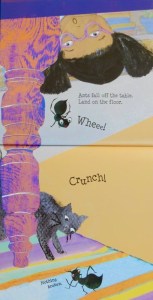


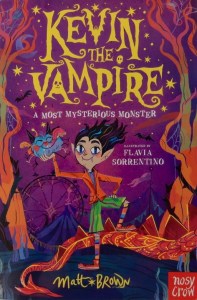
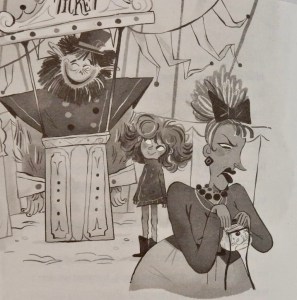
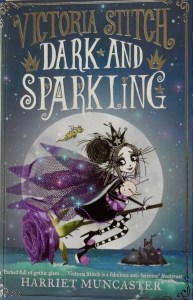
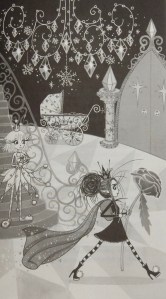


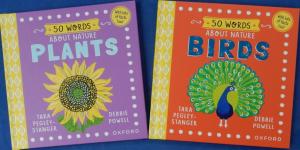
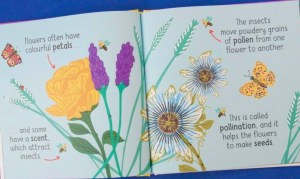
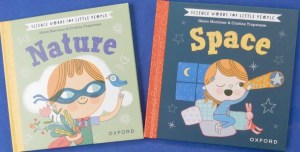
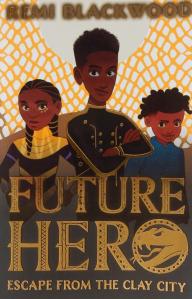


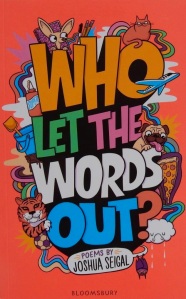
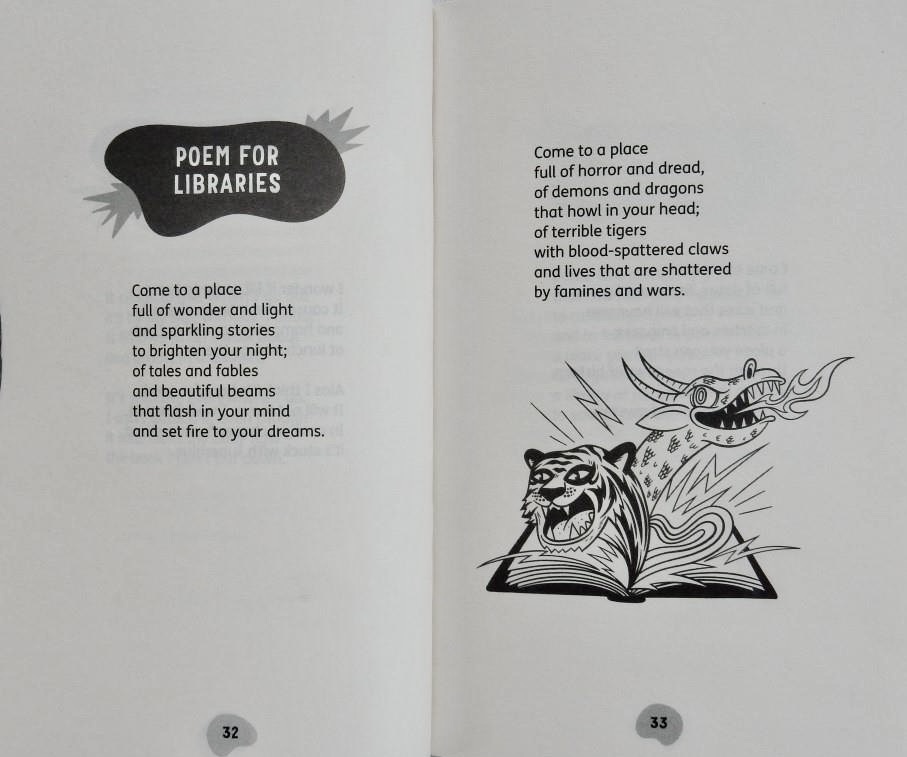


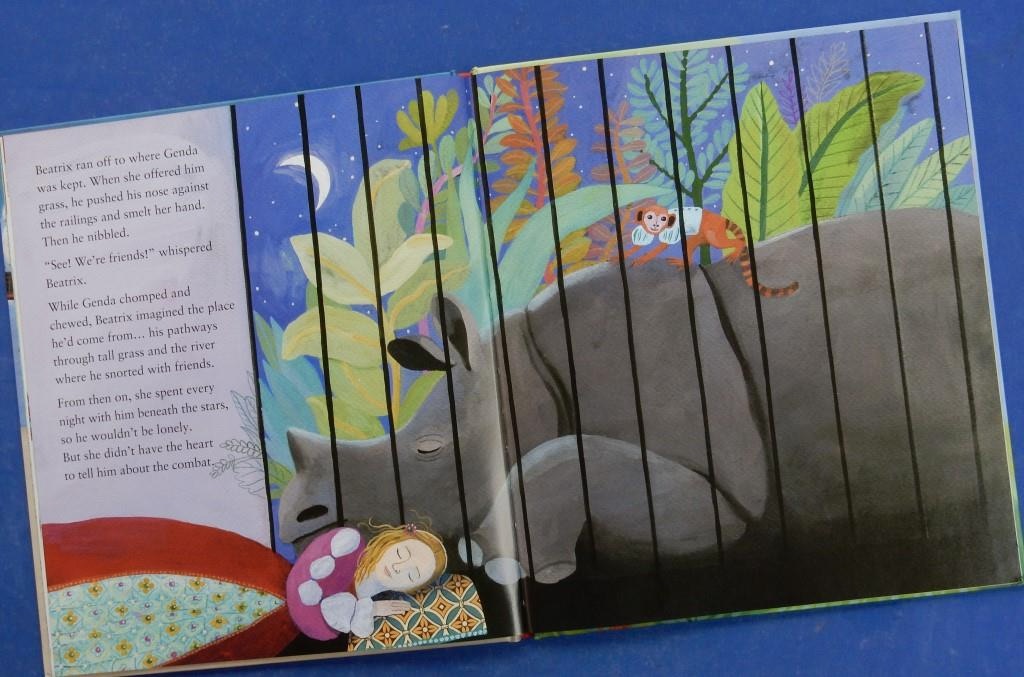

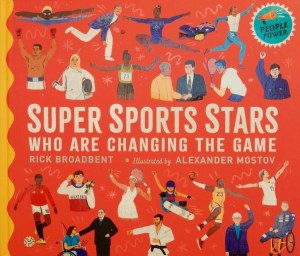


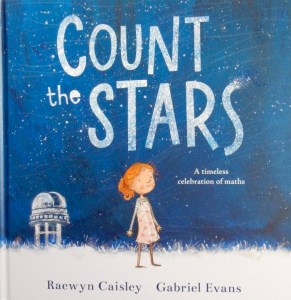
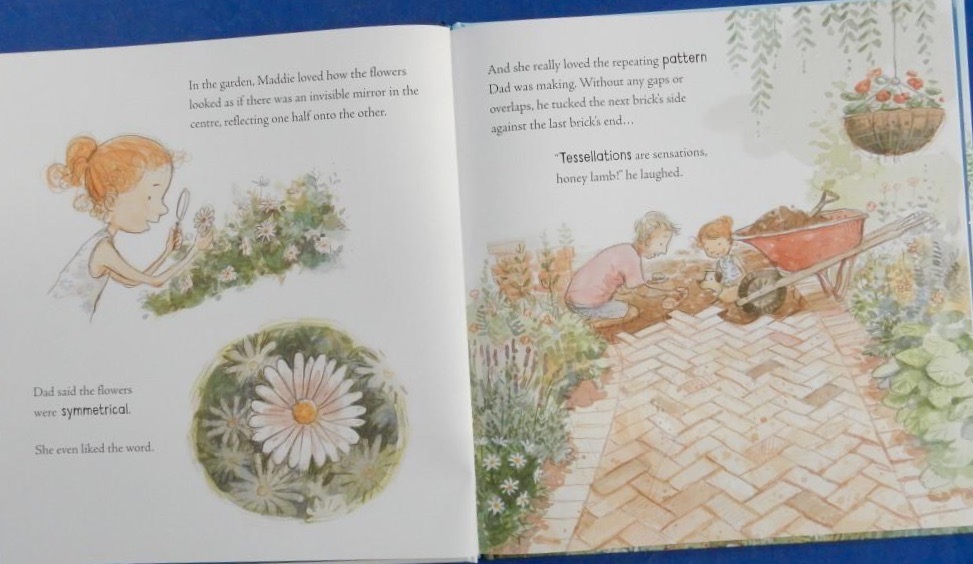
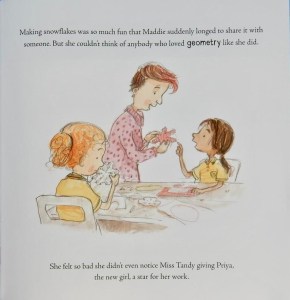
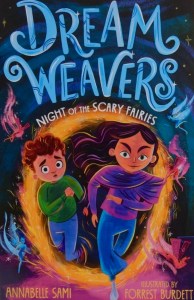
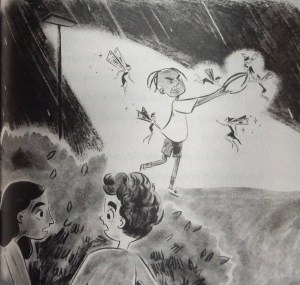


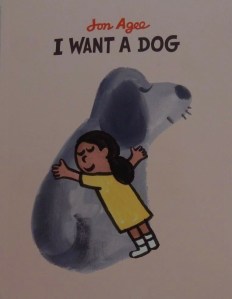
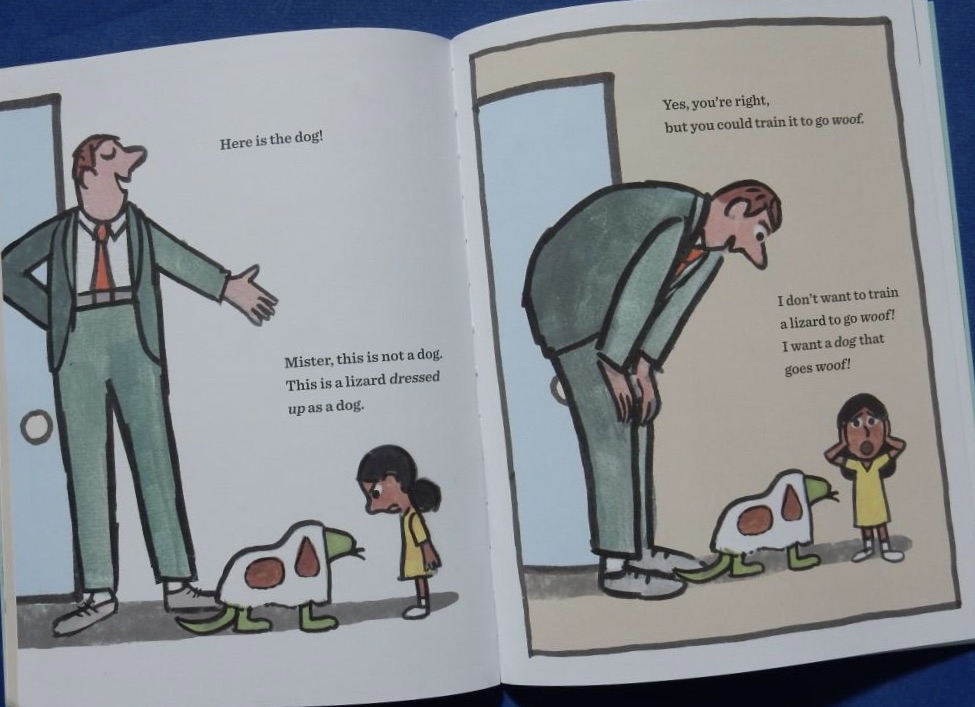
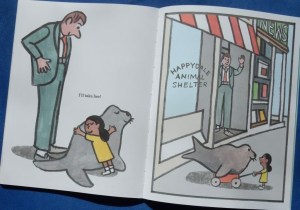


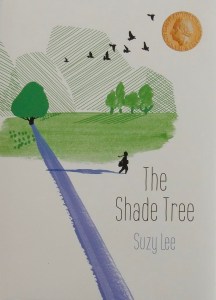


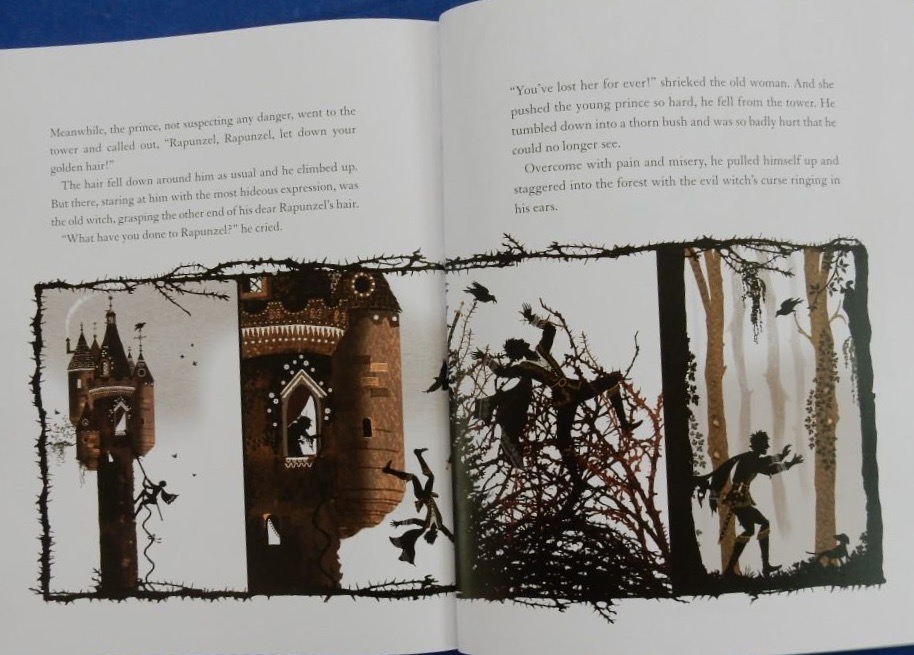


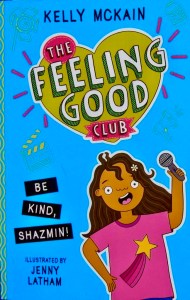
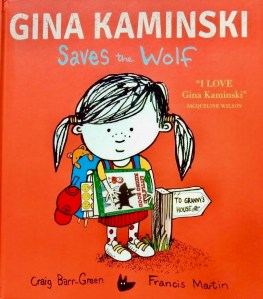


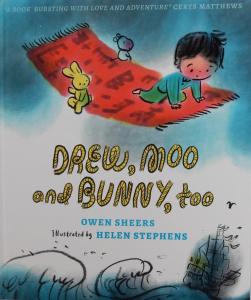

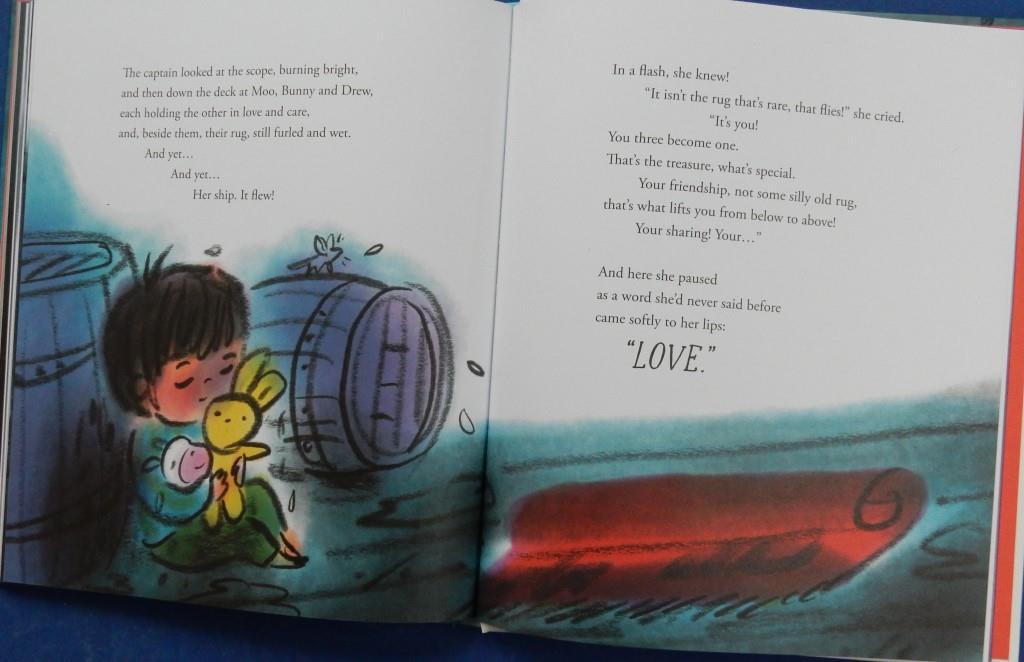
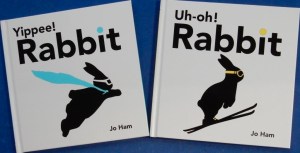
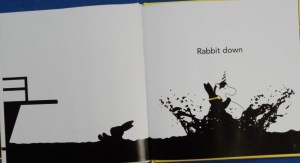

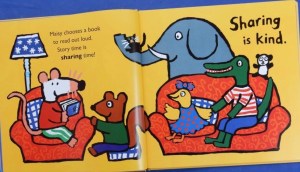
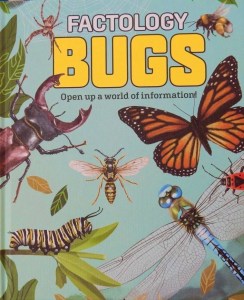
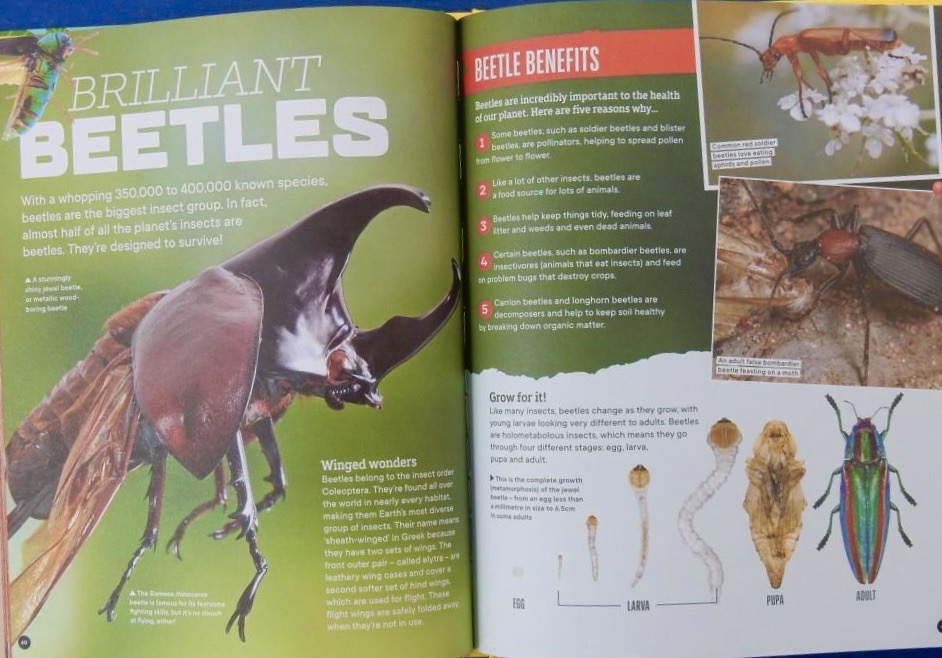
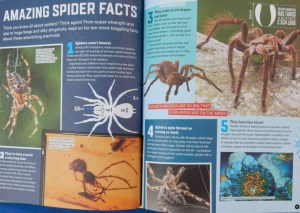
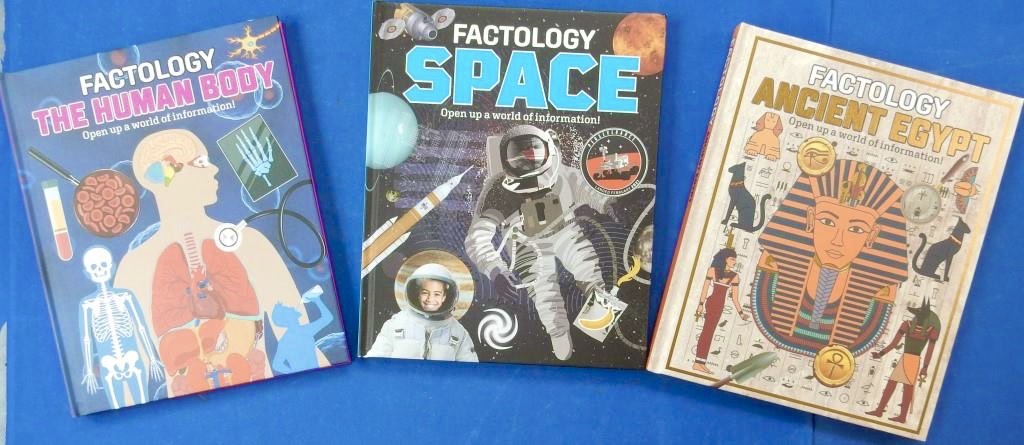
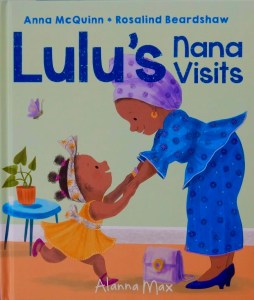
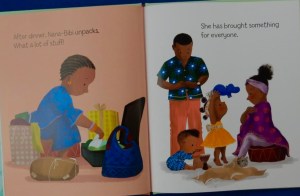
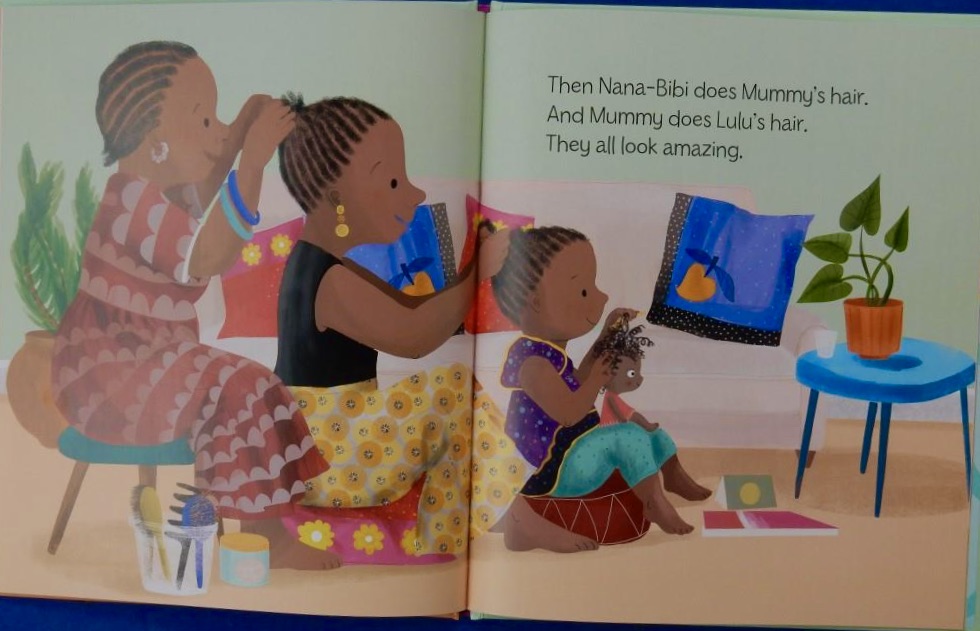
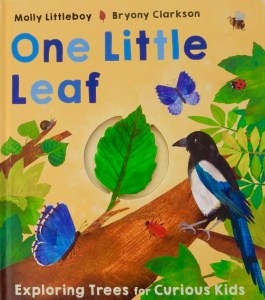
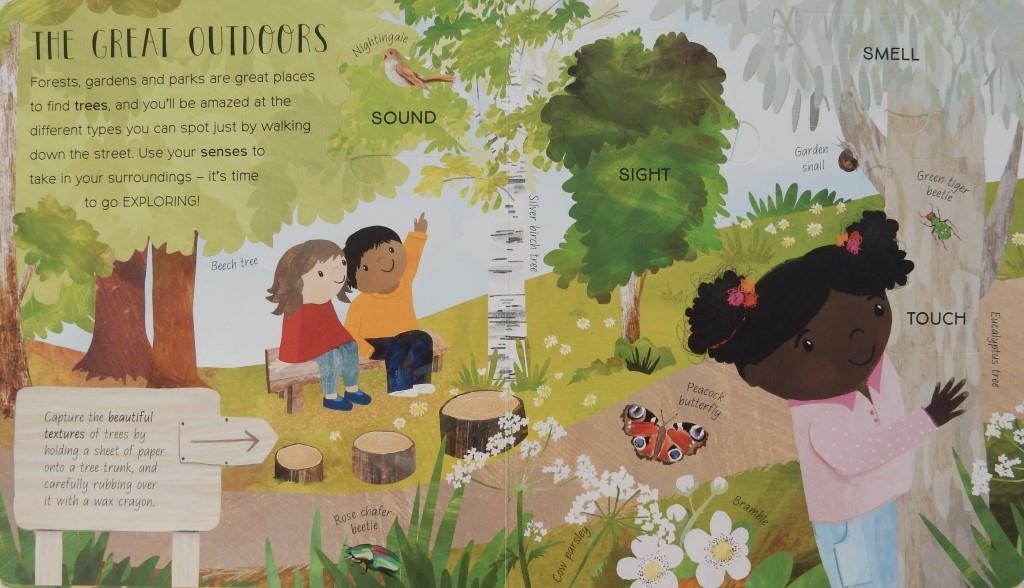
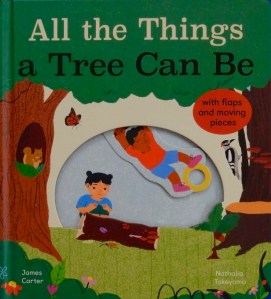


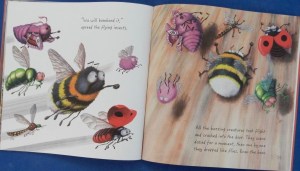
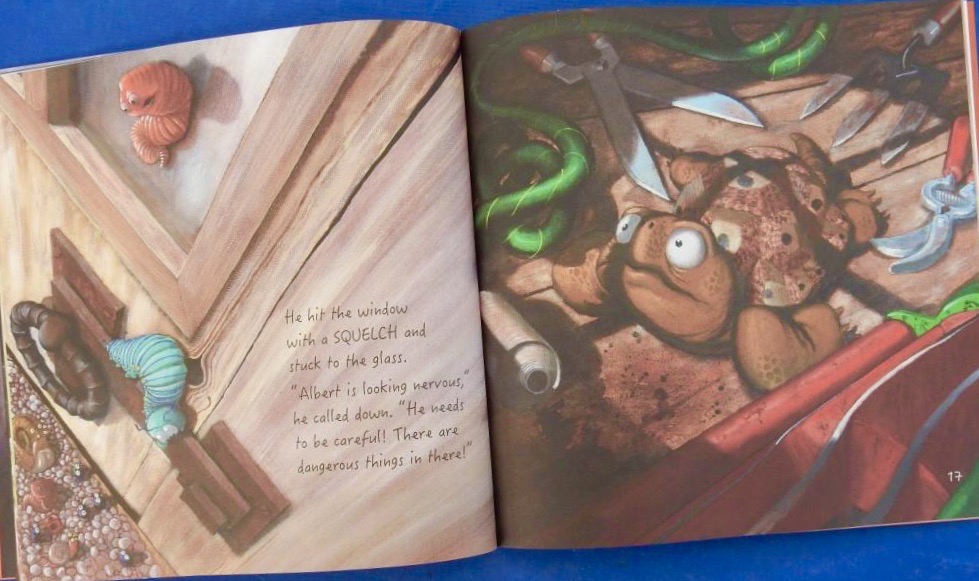

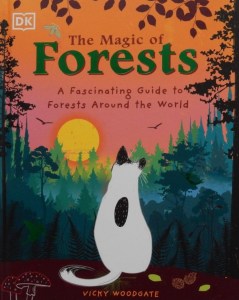
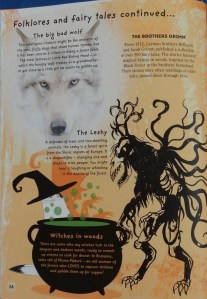
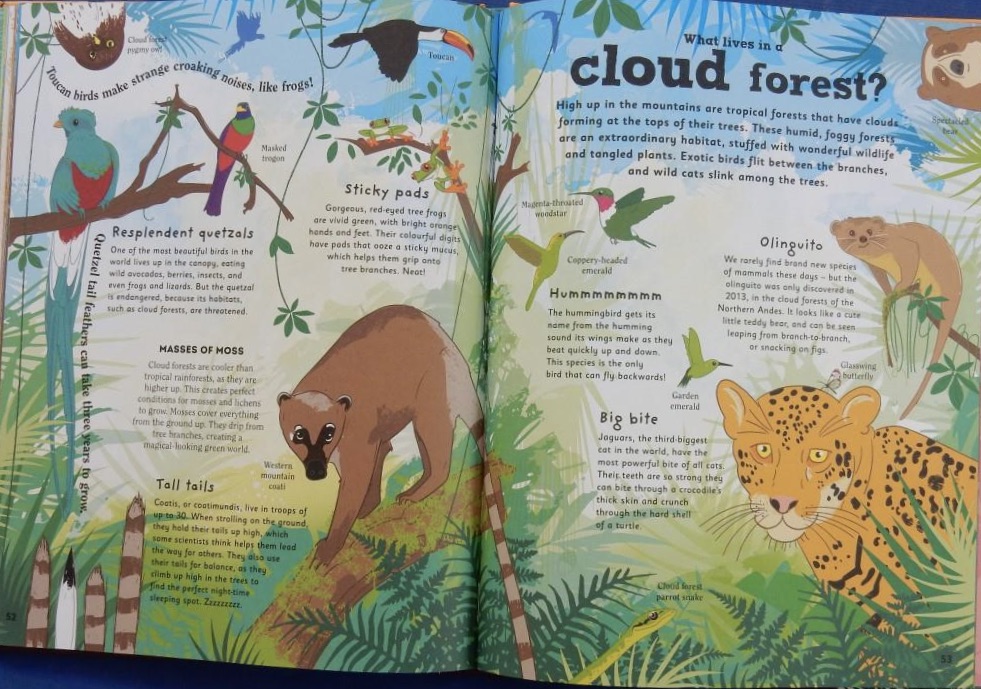


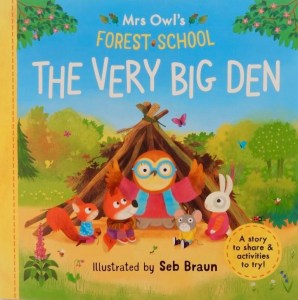
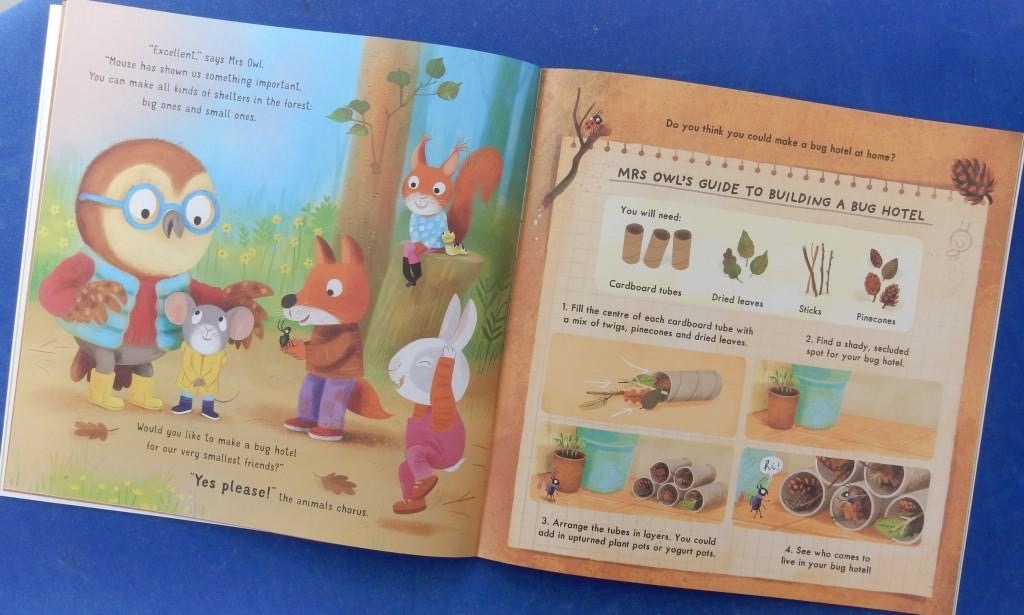
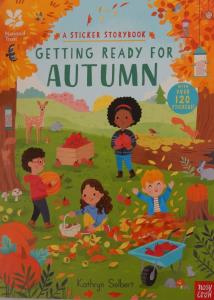
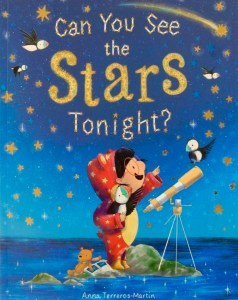
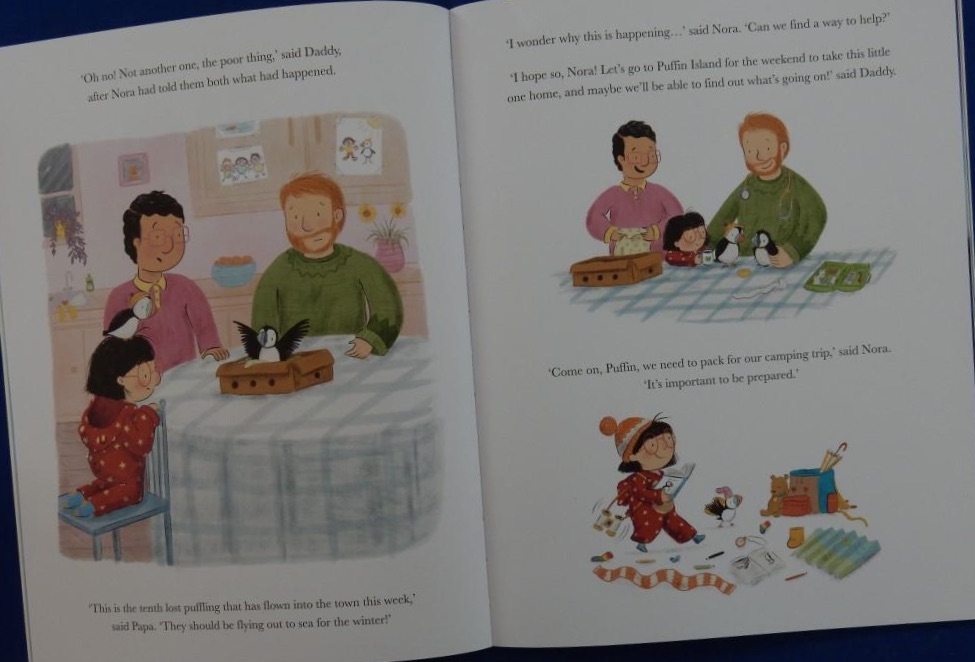
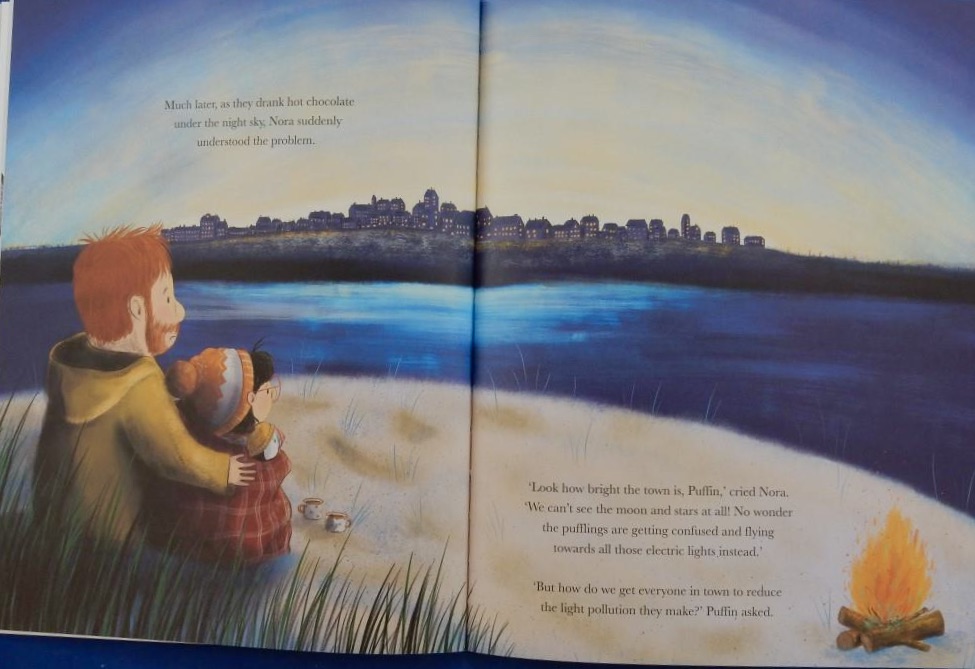

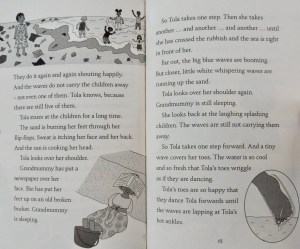

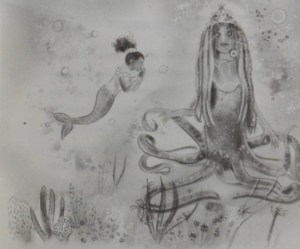


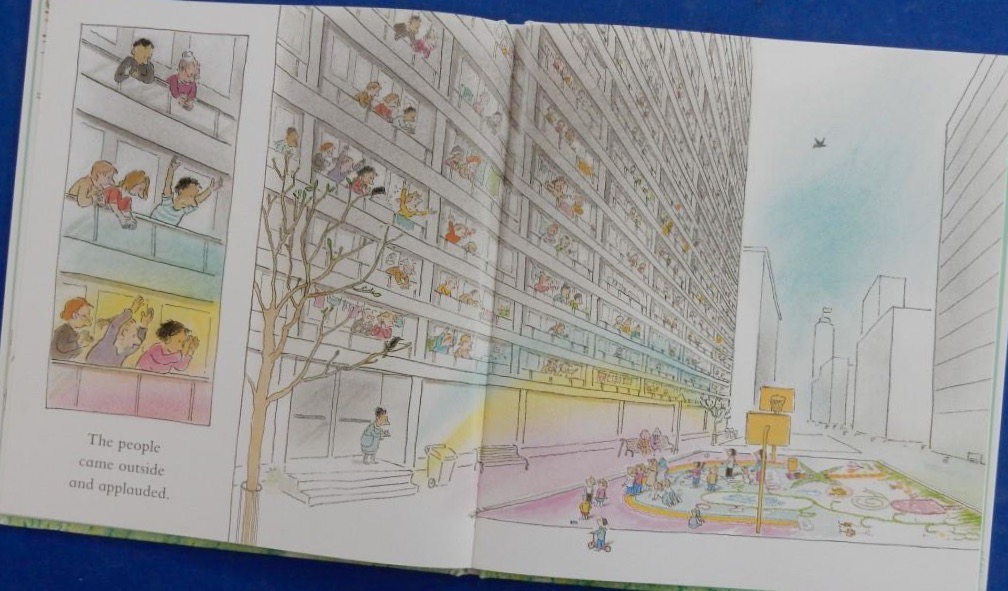

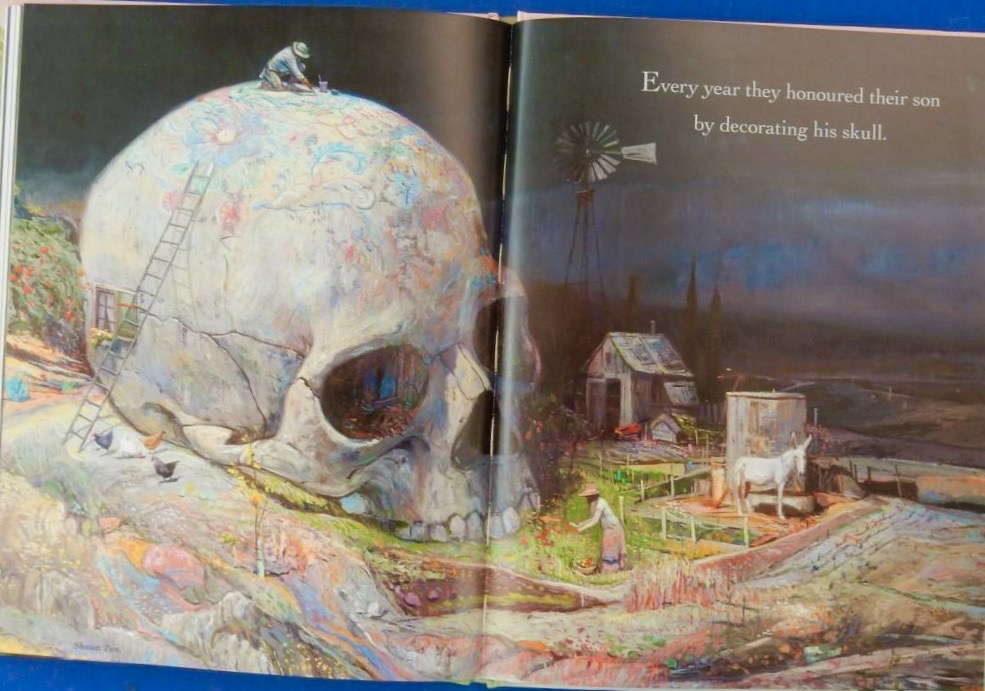


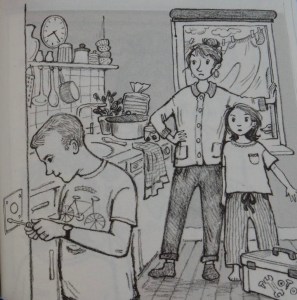


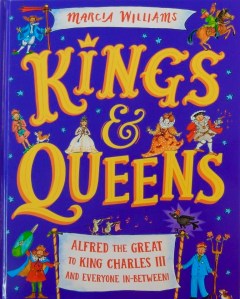
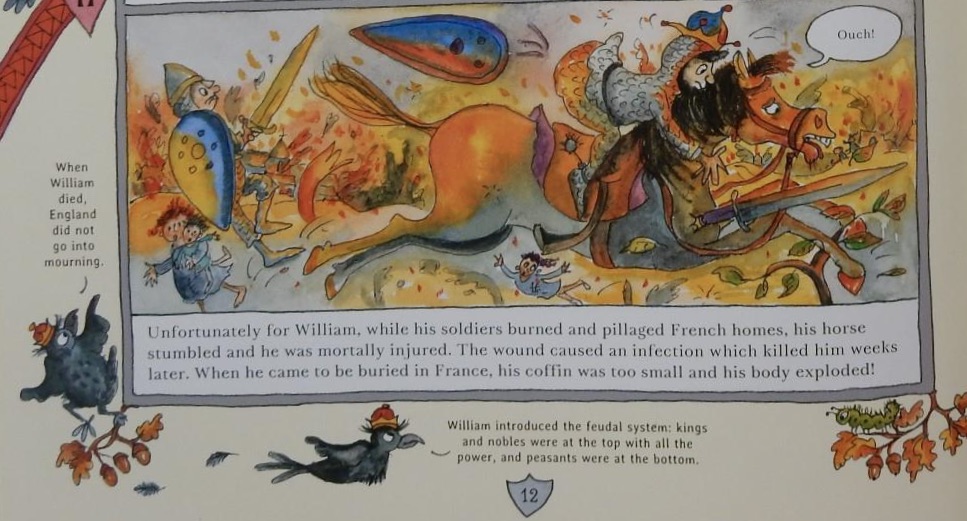

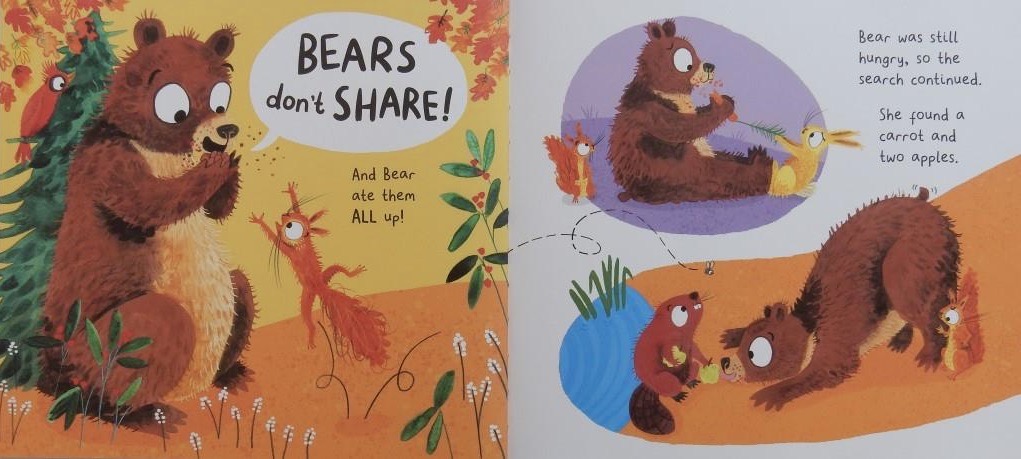



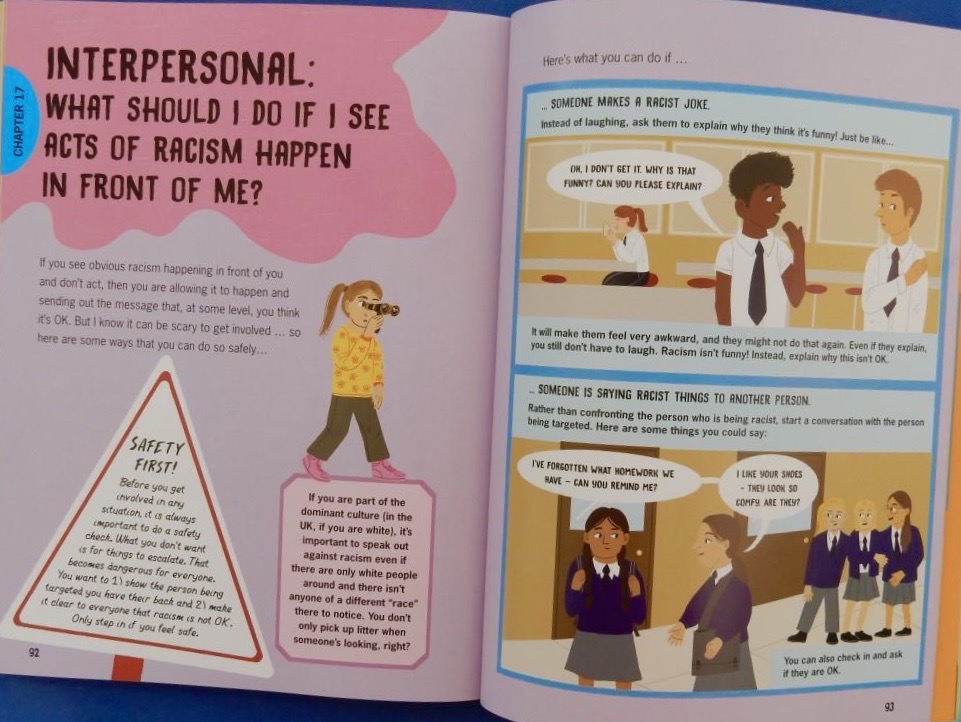

 Red Reading Hub - Jillrbennett's Reviews of Children's Books