Masked Hero

This image has an empty alt attribute; its file name is dscn0042-1.jpg


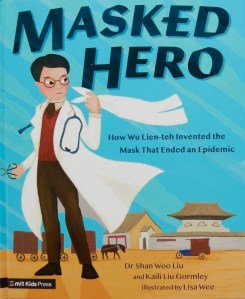
The co-authors of this book – a mother and daughter – both descendants of their subject, tell the story of Wu Lien-teh. Born in 1879, he grew up in what was then Malaya in a happy home with his parents and ten siblings. Wanting to become a doctor, the boy studied hard both at home and school, eventually winning a scholarship to the University of Cambridge where he studied medicine.


Following medical training, came post graduate research in Great Britain and other European countries. On returning to his homeland he had trouble finding an official post due to racial discrimination, however he was undeterred, studied further in Kuala Lumpur, married and opened a medical practice. He then moved to China to lead a new medical college. However in 1910, an awful disease struck Northeast China, killing large numbers of people. Lien-teh agreed to leave his family and travel north to the city of Harbin, near the Russian border, on a rescue mission.


His observations led him to realise that the deadly disease was being spread by a bacterial germ, transmitted when people coughed.
He needed to do something urgently, so, drawing on his creativity and ingenuity, Lien-teh fashioned a new sort of multi-layered mask.

This image has an empty alt attribute; its file name is dscn0043-1.jpg

This met with resistance from racist fellow doctors but within months the epidemic was under control.
Lien-teh continued his work, setting up hospitals and medical colleges all over China and in 1935 he became the first person of Chinese descent to be nominated for a Nobel Prize. His innovations were even crucial in the fight against COVID-19 when masks became part of the lives of us all.
‘When we wear a mask to stop a disease, we are all heroes – just like Wu Lien-teh!’ conclude the authors.


Neatly describing the medical and racist issues Lien-teh faced, as well as drawing parallels between the past and recent times, these authors pay tribute to an amazing person who still hasn’t really received all the credit he deserves. Stylised illustrations by Lisa Wee help bring him to life on the page and the back matter includes some black and white photos.


An inspiring pictorial STEM biography to add to classroom collections.


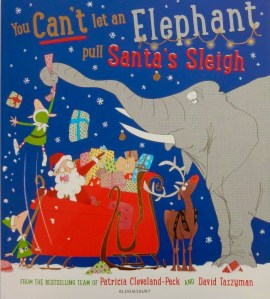
You Can’t Let an Elephant Pull Santa’s Sleigh

This is the sixth in the splendidly silly ‘You Can’t Let an Elephant’ series by team Cleveland-Peck and Tazzyman and it’s full of the Christmas spirit – sort of!

Not only does Patricia consider the elephant as a no go creature for the titular task but she also proffers reasons for not allowing racoons to decorate your tree,

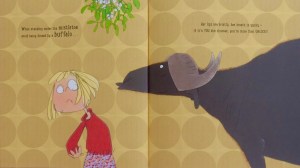
keeping nanny goats away when you open our presents, preventing elephant seals from attempting to illuminate the outside of your home. Moreover you should not try pulling a cracker with an alpaca and when it comes to a giraffe, filling his stocking would seriously deplete Santa’s present store. Unless you want Christmas chaos rather than a seasonal feast, then never ever appoint a wildebeest as head chef; steer clear of a buffalo when you’re close to the mistletoe

and penguins as carol singers are, let’s say, anything but tuneful. And so it continues, much to the distress of the named creatures. Surely there is something the only too willing workers might be able to do to bring Christmas cheer?

Hilarious illustrations in combination with a terrific read aloud text will assuredly bring young listeners plenty of Christmas cheer when you share this.

Here are few ideas as to why an elephant is unsuitable for the role of Santa’s sleigh puller:
Faith (4) The sleigh would just keep spinning around.
Sam (8) An elephant would be FAR too clumsy. Plus it would fall asleep on the job and third it would be impossible unless you had one hundred bottles of magic powder.
Emmanuelle (11): It’s far far too heavy and would never get airborne. Also it would be much too difficult to put a harness around it. Also no elephant in the whole world has a red nose and you need at least one of that kind to pull Santa’s sleigh or you can forget the whole thing.

The Book From Far Away

This image has an empty alt attribute; its file name is dscn0007-1.jpg


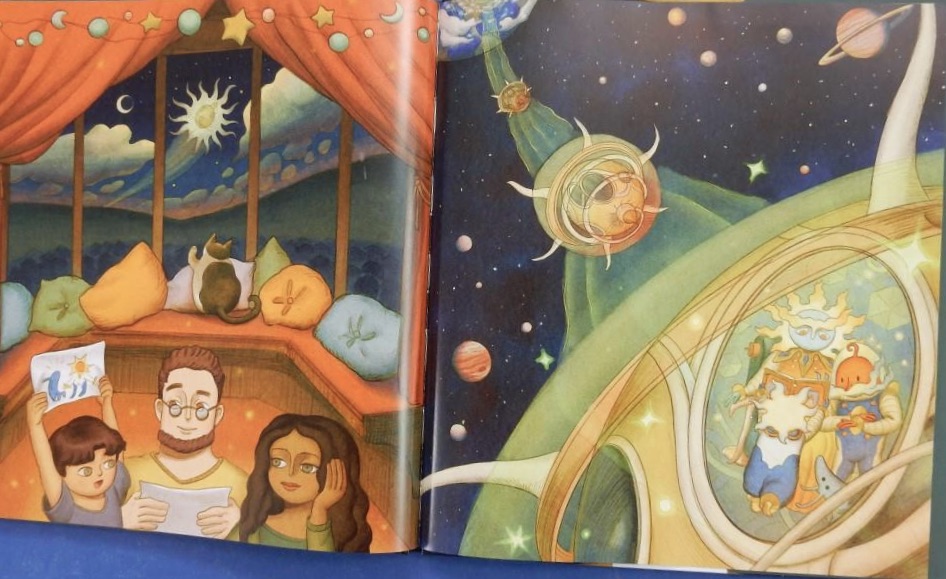
This tale unfolds over 48 pages, which is longer that the average picturebook. It’s an intriguing, wordless story that begins with a little boy wandering in the woods, having spent some time sitting in a tree reading a book he removes from his backpack. Ahead of him, he spies a spaceship landing in a nearby clearing. Out come four otherworldly beings, two seeming adults, a youngster plus a pet.

There follow several spreads showing the extraterrestrials playing and picnicing together,

This image has an empty alt attribute; its file name is dscn0010-1.jpg

after which they return to their spacecraft and take off. The human child emerges from behind the tree where he’s been watching them and finds on the ground a large round, elaborately decorated golden disc that appears to have several transparent overlays – pages possibly.


Suddenly up behind the boy comes the young extraterrestrial, who has seemingly been left behind. The two communicate wordlessly; the Earth child hands the golden disc to the owner and taking his own book from his backpack, gives it to the visitor. Then back comes a spacecraft, the two hug each other farewell, the space child enters the spacecraft and it flies off.


At home later, the Earth child shares with his parents, images of the day’s happenings. Meanwhile, somewhere else in the universe, the outer-space child and family share the Earth book,

This image has an empty alt attribute; its file name is dscn0011-1.jpg

and on the final page, the cat makes an astonishing discovery in the backpack. What might this lead to, one wonders.


A confirmation that books have a universal appeal, and that children are able to understand one another no matter from where they come. Young (and not so young) readers will relish poring over the amazing details in this brilliantly imagined sci-fi tale: who needs words when the mesmerising visuals herein speak volumes?

Economics

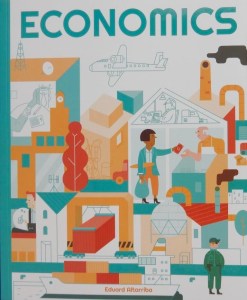
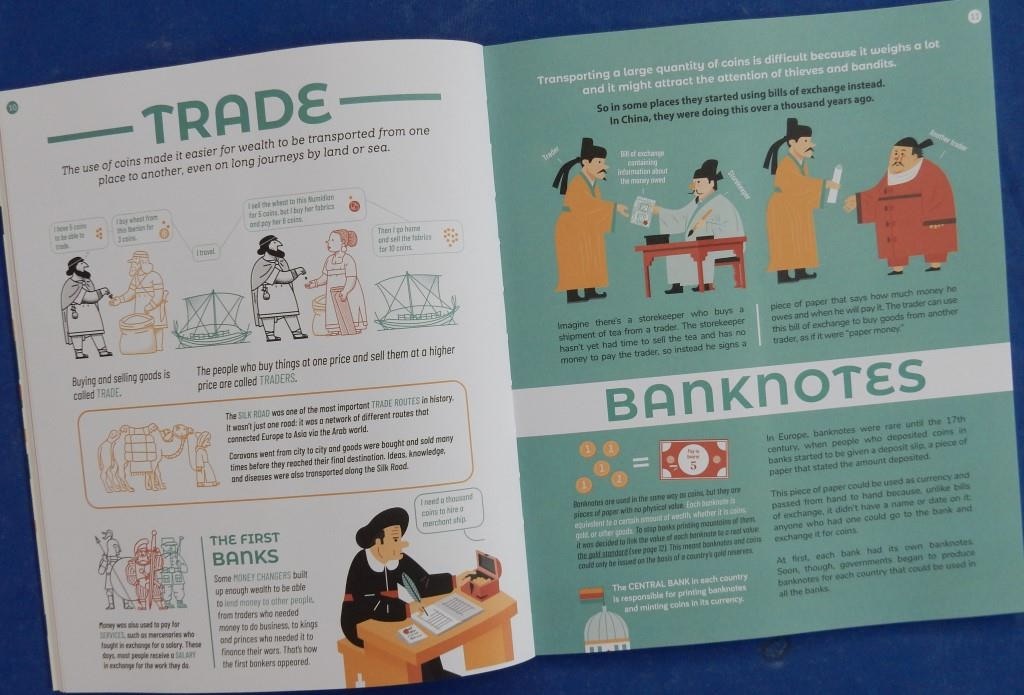
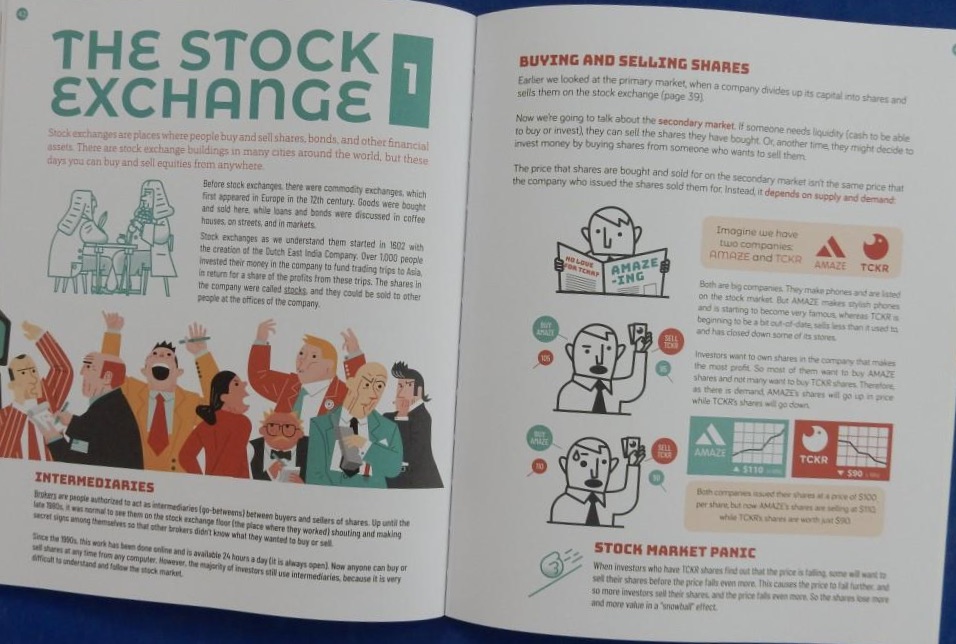
With ‘the economy’ being mentioned almost every time one turns on the TV or radio, this is indeed a timely publication. Herein the author provides an easy-to-understand explanation for older KS2 children about the economy, what fundamental economic ideas and theories are, as well as how its structures and rules impact on our daily lives and shape the way societies and the wider world function. I particularly like the way he uses as a starting point, the example of a village wherein sheep are reared and cheese made from their milk to explain such terms as surplus and exchange. This is just one of the devices used to make the complex world of economics accessible to children; children who will surely encounter words such as inflation and the escalating cost of living in the news.

In his usual fashion, Altarriba’s sequencing of topics explained is carefully considered so that each new subject (there are almost forty in all) segues logically into the next.

With its wealth of infographics and illustrations children can discover such things as how money works, the things you can do in a bank, what happens in the stock exchange and much more.

Altogether an excellent and illuminating introduction to a topic that is something of a mystery to all too many of us.

Welcome to the Mysteryverse / Secret Stories of Nature

These are both Wide Eyed Editions: thanks to Quarto Kids for sending them for review

Contained within the covers of this large format book are some of the as yet, unsolved mysteries about the workings of Earth, its human inhabitants and the universe. It’s divided into five parts each given an alliterative title: People Puzzlers, Earth Enigmas, Natural Niggles, Cosmic Conundrums and Miscellaneous Mysteries, concluding with a couple of spreads telling of some mysteries that science has helped to solve.

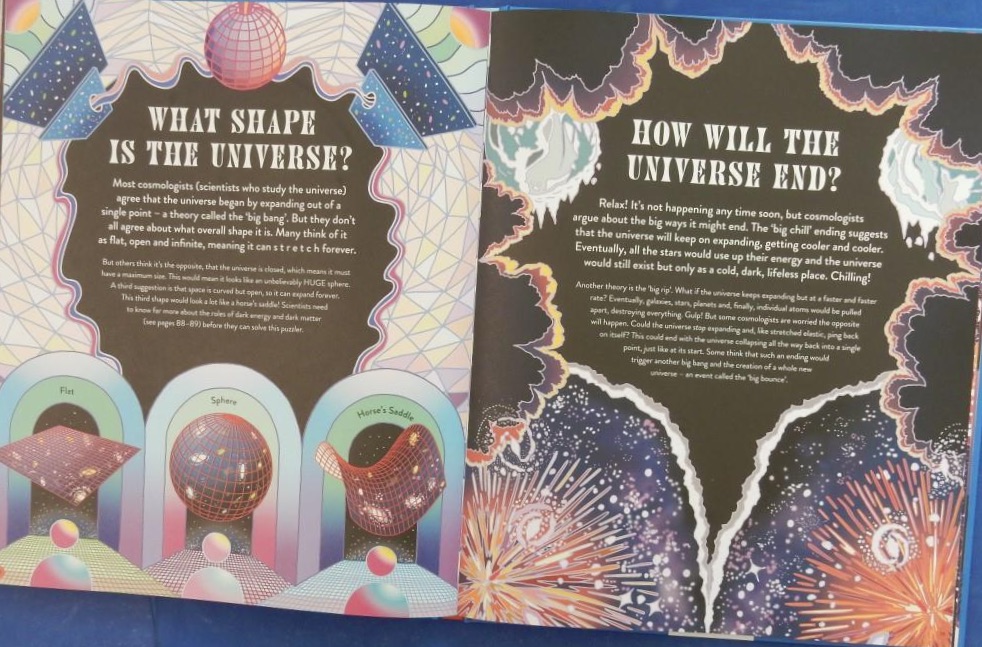
Clive Gifford explores in a straightforward manner everything from yawning and the appendix to optical illusions, from what makes tornados and causes earthquakes to where has all Earth’s water come from, why millipedes and centipedes have so many legs to why cats purr, and what is the overall shape of the universe, and, how will it end.

For each mystery readers are encouraged to think both scientifically and creatively as they peruse the spreads and ponder the questions posed.

An absolutely fascinating compendium of scientific puzzles, made all the more exciting by the detailed, sometimes psychedelic illustrations by Good Wives and Warriors, whose work I’ve not encountered before.
A book for KS2 classrooms and families where there are curious-minded children.

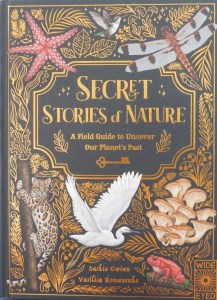
Presenting the biological information in this book as secret stories that nature wants to share with readers is an engaging means of sharing the facts relating to the flora and fauna featured. The sea, the ice, forests, jungles and mountains all have secrets, as do the sky, the night and the ground beneath our feet.

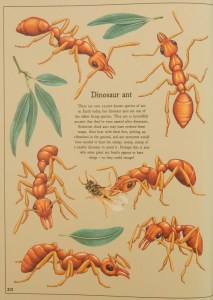
Did you know for instance that there are more than 12,000 known species of ants on Earth today? Or that ants hear with their feet, or rather, they sense the vibrations in the ground around them.

I was fascinated to read that horned tree frogs have bony spikes hidden inside their skulls for defence purposes and that dragonfly ancestors had a wingspan of around seventy centimetres rather than the maximum of twenty in some of those of today.

You may well be surprised to read that rodents including rats and mice share their DNA with humans – now there’s a thought. It might also come as a surprise the fur of polar bears is not white. Rather it’s translucent and appears white because it reflects visible light.

Towards the end of the book is a ‘searching for secrets’ section encouraging readers to stop and look closely at the nature around them to find the hidden treasures that are all around.

With superb illustrations by Vasilisa Romanenko, this is a treasure trove of ‘secrets’ relating to the natural world.

The Wild

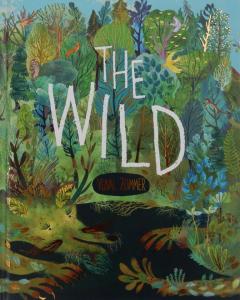
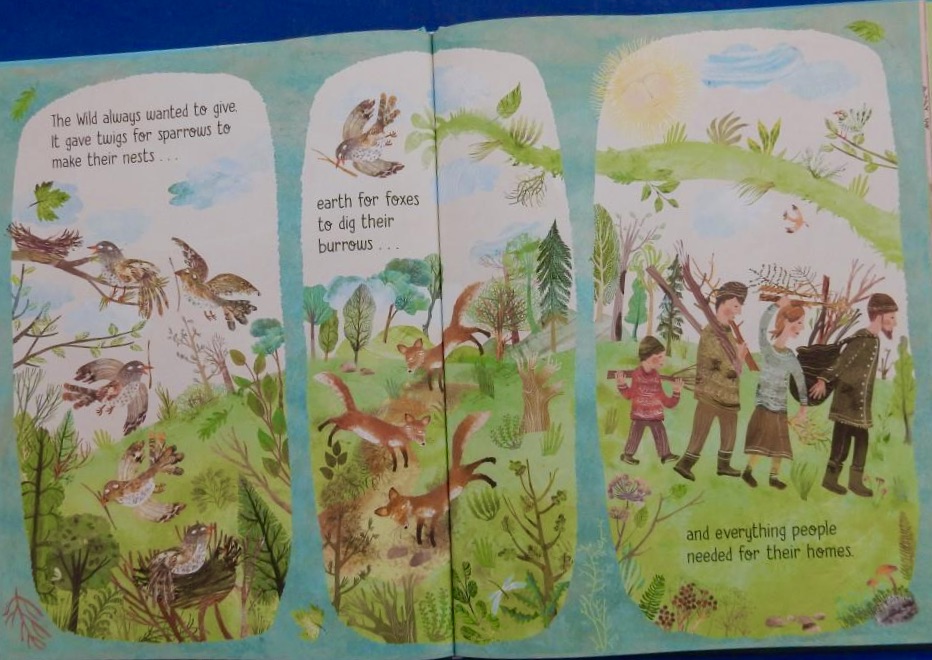
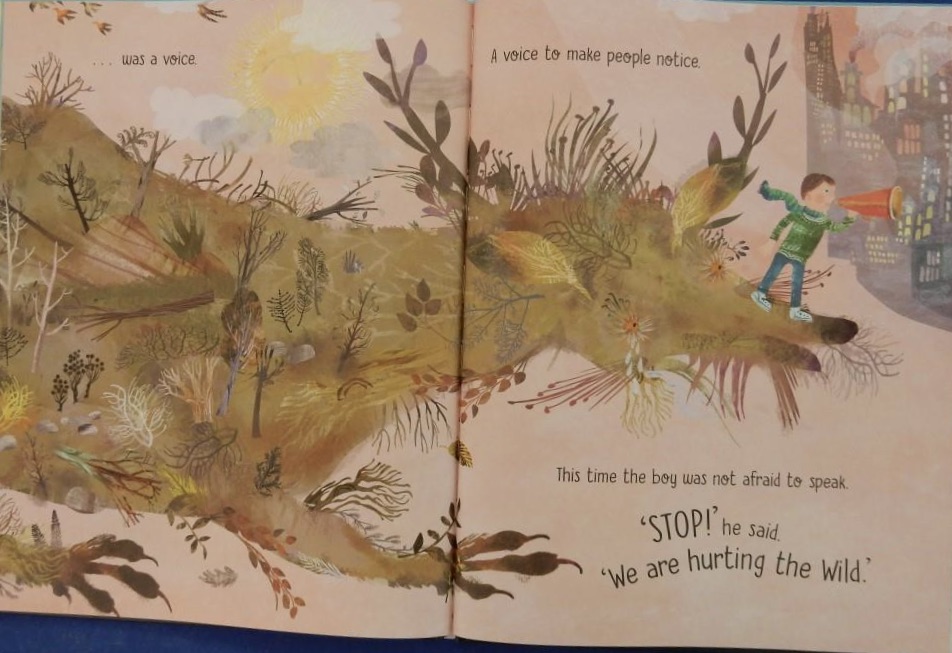
There is a line in a Native American poem where the author asks the Great Spirit of Life to give him the wisdom “to walk softly on the earth”.  This ancient metaphor recognises our human responsibility to take care of the natural environment on which we live and depend for our existence. So it was in the Wild at the start of Yuval’s new fable of our times. The Wild here was a vast place, a place where season followed season and the animals responded to the changes, either by moving or by being still and sleeping. Every living being, be they human, or creatures furred or feathered had all they needed: they lived lightly in the Wild, caring for it and receiving its care in return.

But those humans envisaged that the Wild would always be able to provide what they needed so with the passing years, they became increasingly careless, taking too much as they mined, ploughed, burned and built. They paid no heed to the devastation their actions caused until one day a child looks out of the window and notices a change. “Why does the Wild seem so weak?” he asks but his question goes unheeded. The child continues to worry and question but to no avail until eventually the Wild is unable to give.
Now it’s time for the boy to speak louder and without fear. And so he does: “STOP!’ he cries, “We are hurting the wild.”

Finally others hear his urgent call and they too take up the cry. Not only do they call, but they also change their behaviour. Little by little, with renewed hope , the Wild begins to recover because no human took without also giving something back.

Yuval’s message is also delivered with stark urgency and his collage like illustrations are full of superb textures and details in the realistic, rich colours of the natural world.
A must to read, share, discuss and act upon.

Lore of the Stars: Folklore & Wisdom From the Skies Above

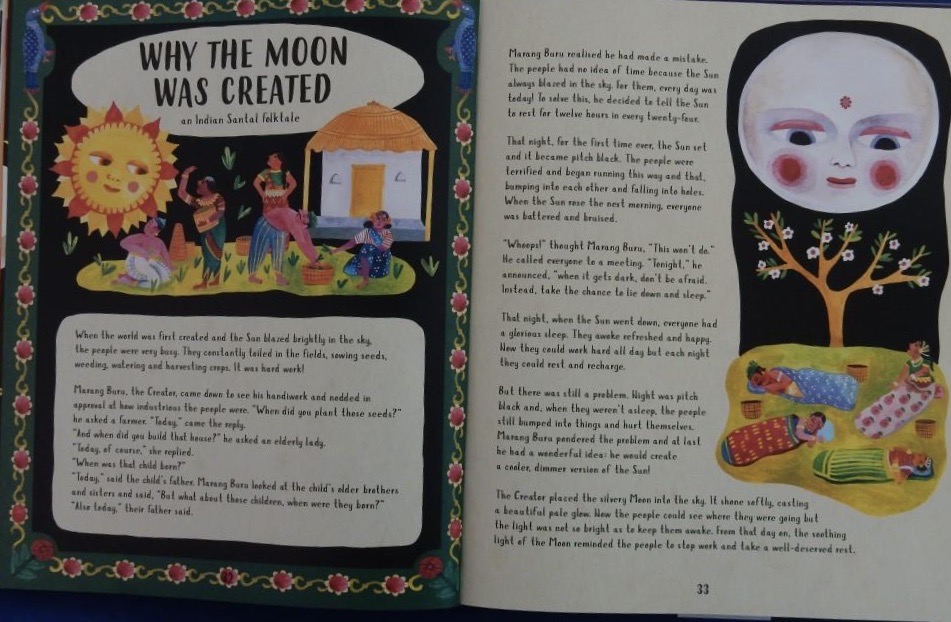
Alluringly presented, and full of fascinating tales and ancient wisdom, this latest in the Lore of series is divided into six sections: The Sky, The Sun, The Moon, The Stars, Planets, Comets and Shooting Stars and finally, The Cosmos.

Each section begins with a traditional story, the first being a Nigerian tale that attempts to account for ‘Why the Sky is So Far Away’ and the other spreads offer a mix of factual snippets and mythological paragraphs pertaining to the section’s theme such as gods and goddesses. I am familiar with the Hindi word for rainbow, Indradhanush so was interested to see Indra included on the Rainbows spread, indeed that is the only spread where I was familiar with all the mythology presented.

It’s pleasing to learn, through brief anecdotes scattered between the vibrant visual images, how different cultures viewed the same plants, animals and other natural phenomena such as sunrise and sunset,

the constellations, as well as augury and aeromancy. However my favourite part of each section is definitely its two page opening story and in this book the Greek myth, the Indian Santal folktale,

the indigenous American tale, the Masai tale and the Visayan Philippine tale were all new to me and a pleasure to read to children.

For school and home collections.

History FACTopia!

In this, the fifth in the clever series readers are invited to ‘Follow ye olde trail of 400 facts’ beginning with the discovery by archaeologists in China of a pair of trousers 3,300 years old right through to the final fact about a group of claqueurs who were hired by theatres in 18th century France to applaud, cry and laugh to inspire audience participation. That, I’ve most certainly not heard of before, but then the same is true of quite a lot of the fascinating facts herein.

It’s overflowing with nuggets of historical information – did you know that in 1988, inspired by local barrow derby races Jamaica formed its first ever bobsled team. I guess they must have had some snow around then.

Astonishing too is to read that in 14th century Europe, when the bubonic plague struck, some people believed that by eating a spoonful of crushed emeralds you could be cured.
Perfect for sparking further investigation from curious minds. Your journey will twist and turn forwards and backwards through time, across the world, embracing a variety of cultures, beliefs and noteworthy happenings. For instance, information about the oldest known prosthetic body part, a 3000 year old artificial toe made of wood and leather, attached to an Egyptian mummy, leads to either further facts about mummies

or information about the world’s oldest pillow made 9000 years ago in Mesopotamia and made of stone. Ouch!

Children will enjoy the humour, vibrant graphic-style illustrations and photos throughout this zany compilation; it’s playful learning that is likely to spark further investigations from the curious.
Back matter includes an index, a detailed glossary of historical terms, and information about the FACTopians.

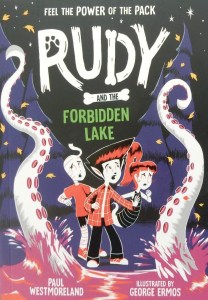
Kitty and the Snowball Bandit / Rudy and the Forbidden Lake

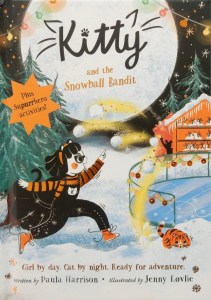
There’s a decidedly chilly feel to Kitty’s thirteenth adventure when she wakes one morning to find that snow has fallen overnight. That evening she, her Mum, Dad and her little brother, Max, head to the Winter Fair and while Kitty and her Mum are enjoying themselves on the ice rink, a snowball suddenly hits Kitty and another woman. Soon an announcement is made warning everyone to take care as a Snow Bandit is in the fairground so as it’s late they decide to return home.

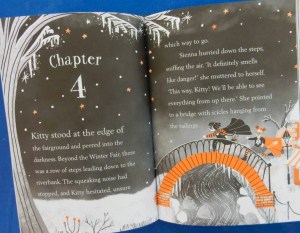
At bedtime Kitty is pondering upon the evening’s events when Pixie the cat appears looking very soggy and sad. She too has been hit, seemingly by the Snow Bandit. Kitty gets dressed again, then donning her superhero cape and mask off she goes onto the roof and heads to the park. Before long she’s hit by another snowball and then spies a figure in an orange cloak – the Snow Bandit.

Eventually Kitty finds herself facing her adversary, also wearing superhero gear and learns that she’s Sienna, the fox girl.

Suddenly there’s a squeaking sound; it’s three baby rabbits adrift in the middle of the river, caught by the current and heading towards some jagged rocks. Kitty is determined to save them, but can she do so? Maybe if the two combine their super powers and collaborate in a rescue effort. Who knows it might even be the beginning of a new friendship …

Pacey, full of action, cat characters and snowballs, with plenty of Jenny Lovlie’s dramatic, beautifully detailed illustrations, Paula Harrison once again has penned an exciting nocturnal adventure for young readers

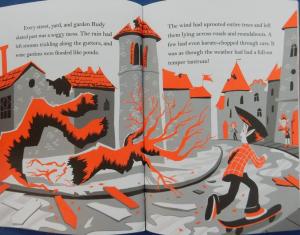
It’s the middle of winter and excitement is high in Cobble Cross on the eve of celebrations for the Winter Solstice. Then as the final preparations are being made a terrible storm hits the town. The following morning Rudi’s Dad notices his silver candlestick is missing, then when he goes out to meet his friends, he learns that other things have gone missing. Is it the the result of the strong winds or is there a thief at large.

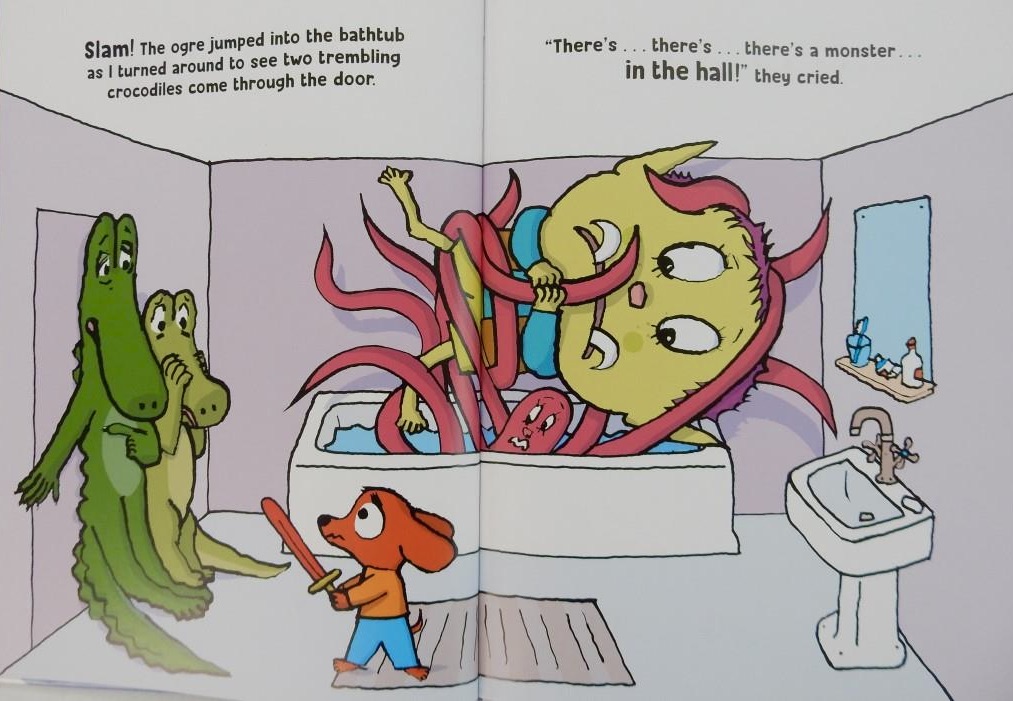
When Femi’s skateboard disappears too, Rudy and his friends start searching in Gnarlybark Forest and suddenly they hear a POP! followed by several other strange sounds. Bubbles start bursting through the surface of the forbidden lake followed by a strange domed entity. Their instinct is to run away but that won’t solve the problem of the missing things. Instead they creep back together to confront whatever it is in the lake. Tentacles start emerging from the water, one of which wraps around Femi. Eventually the tentacled creature drags itself ashore and little by little, this Squibby thing offers an explanation for its behaviour.

What will happen when Squiggly attempts to apologise to all the townsfolk? Will the ensuing chaos subside in time for the celebrations to go ahead after all?

It’s not easy to find books that appeal to both boy and girl newly independent readers but this series featuring young werewolf, Rudy and his skateboarding pals does just that. So, it’s good to see the gang back in this their fifth book. It’s full of dramatic incidents and as always George Ermos’ stylish energetic illustrations capture the changing mood of the telling, adding additional humour where appropriate.

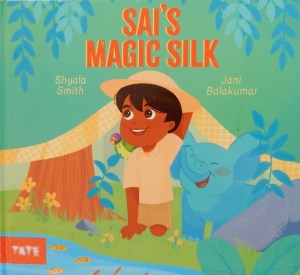
Sai’s Magic Silk

This image has an empty alt attribute; its file name is dscn9968-1.jpg


Sai finds special delight in his Amma’s beautiful silk saris using them to transport him into magical adventures; the problem is he can’t find anybody who wants to share in these adventures.


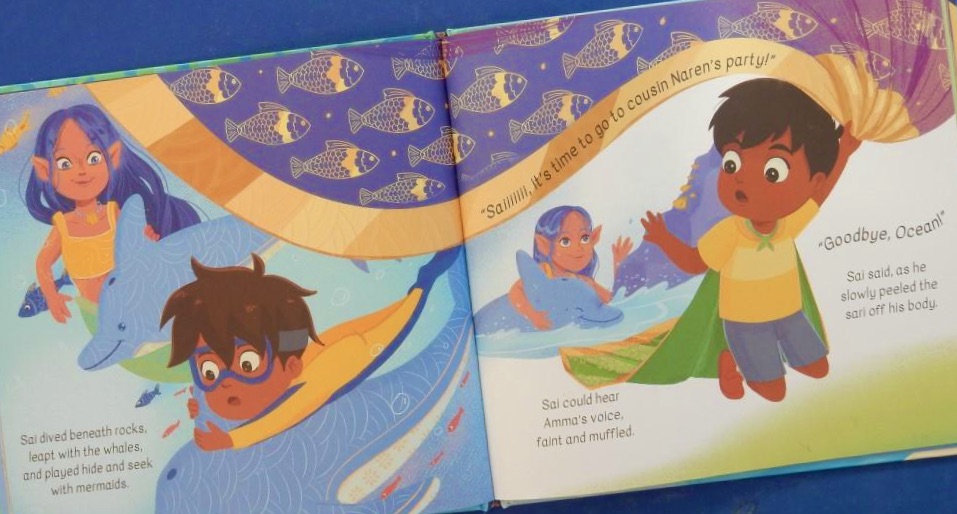
Instead, taking hold of the edge of one of Amma’s saris, he tosses it skywards. Immediately the boy finds himself plunging into the ocean, where he’s surrounded by all manner of underwater creatures through which he swims; he even plays with mermaids. All too soon though, a voice calls him back to reality.

This image has an empty alt attribute; its file name is dscn9969-1.jpg

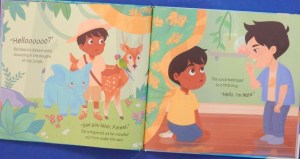
Having bid the ocean farewell, Sai heads to his cousin Naren’s birthday party. There however, all the other children have their eyes glued to screens. Sai picks up the edges of Amma’s sari and instantly he’s in Sri Lanka’s Sinharaja forest surrounded by squawking birds and a wealth of wild animals.


Then “Helloooooo?” comes a sound through the undergrowth and as Sai emerges from beneath the sari, there before him stands a little boy who introduces himself as Nate.

This image has an empty alt attribute; its file name is dscn9970-1.jpg

The two boys soon form a bond and Sai invites Nate to his home to play. In Sai’s bedroom, Nate too, is enchanted by the saris. Sai explains how they facilitate his imaginative play and having looked at their wonderful patterns and adornments, Nate finds Sai’s very favourite one.


Unlike the other children Sai knows, Nate is eager for an adventure. I wonder where they go, for, as the final words of the story say, ‘Anything’s possible with six yards of magic silk.’

With Jani Balakumar’s striking illustrations and Shyala Smith’s effective combination of lyrical description and dialogue, this richly woven vignette of Sai’s everyday life, treats readers/listeners to a journey of the imagination.

Having collected all manner of saris during my travels in India and made them available in my foundation stage classrooms, I know from experience, just how much young children love to use them to enhance their creative play.

Legends of Norse Mythology / Norse Folktales, Myths and Legends

This image has an empty alt attribute; its file name is dscn9983-1.jpg


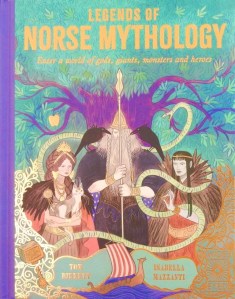
This book transports readers way, way back through time to a realm of ice and fire, magic and mischief. There they will encounter characters from Norse mythology including gods and goddesses, monsters, giants, elves, dwarfs, the Valkyries and other mythical beings – over thirty in all.


Starting with Odin, each individual profile introduces us to the character, giving such details as their chief attributes, there’s a story and additional details. Yes, all the well-known deities are there but you will also meet the likes of the bright and shining god, Baldur, renowned for his goodness,

This image has an empty alt attribute; its file name is dscn9984-1.jpg

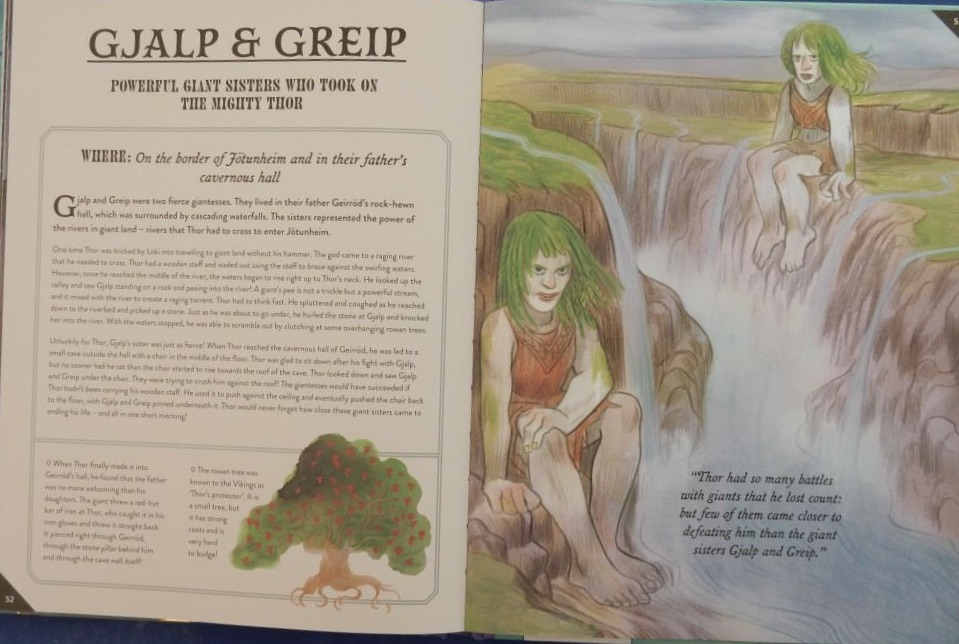
Sif, goddess of wheat and golden hair, married to Thor, the Norns – Urd, Verdandi and Skull, controllers of the destiny of each and every living being in the world. If your preference is giants then you can search the contents page for where to learn of giant sisters Gjalp and Greip,

This image has an empty alt attribute; its file name is dscn9985-1.jpg

and Fenja and Menja, strong giantesses who grind out the salt on the ocean bottom.
Interspersed with the profiles are summaries of famous Norse tales and events such as that of Thor’s hammer and the story of Ragnarök.


The book is concisely written by Norse mythology expert Dr Thomas Birkett and illustrated beautifully, occasionally aptly spookily, by Isabella Mazzanti who manages to capture the essence of each character in her portrayals.


Altogether a very useful introduction to an endlessly fascinating topic; for KS2 readers and beyond.

This image has an empty alt attribute; its file name is dscn9996-1.jpg


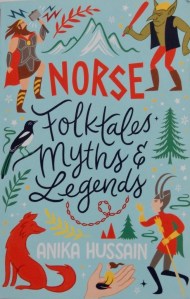
Divided into four parts, the book comprises Legends from Norse Mythology, and a selection of folk tales from Denmark, Norway and Sweden, each section having five stories.


As you would expect, Loki the cunning, shape-changing trickster and powerful Thor, his ‘brother’ feature in the first, the Norse mythology section.


Along with lesser-known stories, the Danish section includes a retelling of Hans Christian Andersen’s Little Thumbelina, the tiny golden-haired girl with the beautiful voice who enchants creatures with her singing including a mole that she narrowly misses having to marry.


New to me in the Norwegian part, using the same folktale structure as Snow White, is The Twelve Wild Ducks wherein a queen who yearns for a daughter makes a deal with a witch: give up her twelve sons in return for a princess daughter.


I read of Jolly Calle for the first time in the Swedish section. It tells of a boy who remains upbeat and positive no matter what, and finds beauty in simple everyday things.


A delightful collection of tales retold in an appropriately direct style; it deserves to be added to KS2 primary class libraries and home bookshelves.

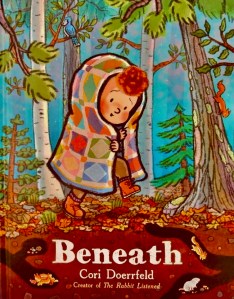
Beneath

Huddled beneath a quilt in the middle of the bed, Finn is having a dreadful day. Grandpa wants to talk about it but Finn, certain his Grandpa won’t understand remains obdurate. Grandpa suggests a walk and reluctantly the boy agrees, insisting that he stays under the quilt. “Don’t worry,” says Grandpa. “I’ll remember to think of what’s beneath.”

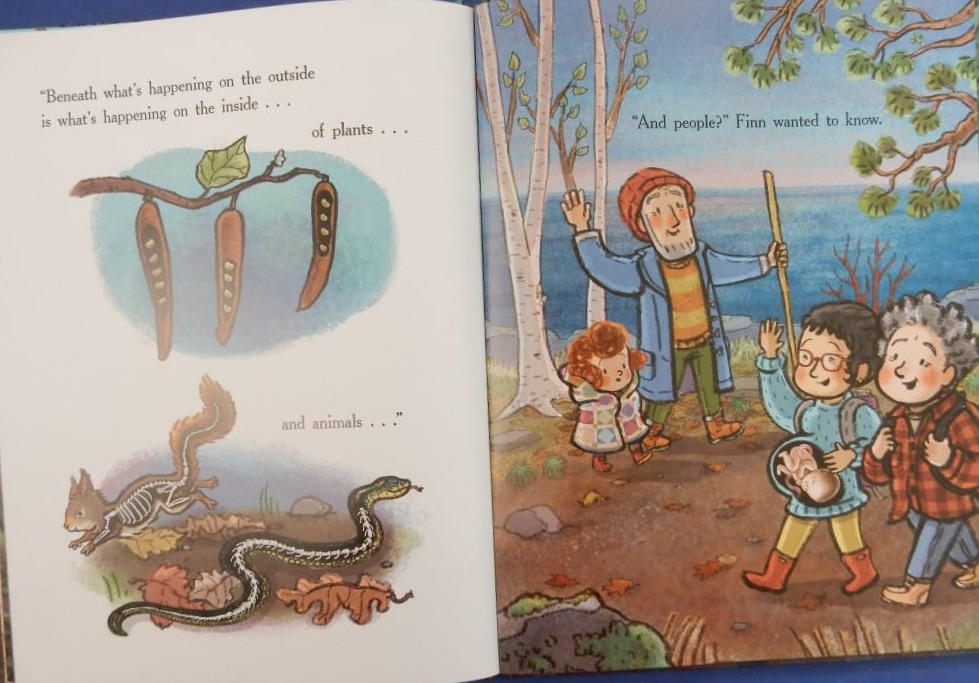
Off they go into the forest and soon Grandpa starts pointing out instances where what’s on the surface conceals hidden complexities – the trees with their subterranean root systems; the wealth of sea life below a fishing boat offshore; the eggs beneath the mother bird sitting in her nest, seeds within a fruit and skeletons inside animals, for example.

“Everyone is more than what you see. Beneath appearances are experiences. Beneath actions are explanations. Beneath what’s different is what’s the same,” he says in response to Finn’s question about inside and outside.

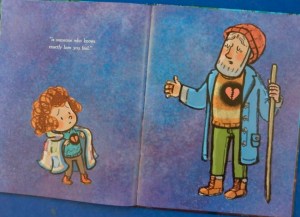
By now Finn has emerged from the quilt and Grandpa draws everything together. “Beneath someone who looks like they won’t understand… is someone who knows exactly how you feel.”

Now reluctant to return home, Finn wraps his quilt around Grandpa and together they climb to the top of the hill and there it’s Finn’s turn to make a reassuring remark to Grandpa.

In one of Cori Doerrfeld’s vibrantly coloured illustrations towards the end of this beautiful story, she reveals that both characters have shared the same serious loss, whom we infer is the maker of the quilt, Finn’s Gramma.

A beautifully crafted, penetrating story of understanding, empathy and acceptance.

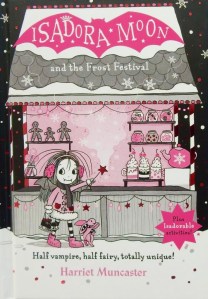
Isadora Moon and the Frost Festival / MIrabelle and the Haunted House

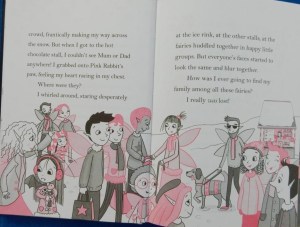
Isadora Moon stars in – can you believe it – her 18th adventure and it starts on the morning of Midwinter’s Eve, a very special time for the entire Fairy Realm. With an invitation from her Aunt Crystal and Uncle Wren to stay in the Winter Fairy Realm, Isadora is super-excited. Having dressed in her warmest clothes (and dressed her beloved Pink Rabbit) she’s ready to depart just in time for Uncle and Aunt to pick them up in their sleigh. Once at Aunt Crystal’s and Uncle Wren’s home, there’s just time to build a snowman before they fly off to the Frost Festival.

What a lot is going on when they arrive. Isadora meets a silver fairy who introduces herself as Estrella and tells Isadora that she’s lost the star that’s needed to go atop the ice rink fir tree at midnight.

Isadora offers to help her look but in all the excitement she loses her parents. The two now have another search to undertake. As midnight draws ever closer Pink Rabbit takes it upon himself to climb up the very fir tree that still lacks Estrella’s star. Will this turn out to be the magical night that all those attending the Frost Festival had hoped?

With its gentle humour and theme of kindness, this will enchant Isadora’s followers and likely be responsible for starting a fair few other children on the road to becoming independent readers. Best read with a mug of hot chocolate, perhaps made to the recipe given at the end of the book.

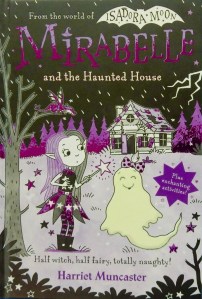
One autumn morning Mirabelle’s Mum urgently needs dragongrass flower petals to make some special eyeshadow and it’s finally agreed that the family should combine going on a picnic with hunting for the dragongrass flowers Mum requires. Off they all fly and having found the perfect picnic spot, Mum and Dad lie back and fall fast asleep. Almost immediately Mirabelle and her brother, Wilbur, fall out and the two part company.

Before long Mirabelle discovers a single dragongrass flower but just as she’s going to pick it, Wilbur reappears and stamps on the plant rendering it useless for potion making, claiming it was an accident. Then Mirabelle’s dragon, Violet, flies off frightened by a sudden thunderstorm and when she follows him, Mirabelle finds herself in a clearing outside a tumbledown house. Shortly after, Wilbur arrives and following another squabble the two enter the house. Further bickering ensues and eventually Mirabelle gets so irate she cries, “I wish you’d just disappear!” And Wilbur does.

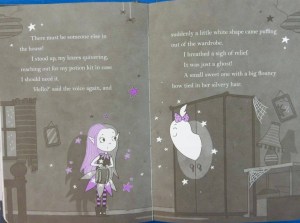
Can she discover what’s happened to him and find Violet? Perhaps, with some assistance from a friendly ghost, named Luna.

What about that dragongrass flower: can Luna help with that too?

Young readers, especially Mirabelle’s countless human friends, will delight in this the ninth adventure starring the little half fairy, half witch. They’ll also enjoy trying some of the activities after this story.

The Panda’s Child

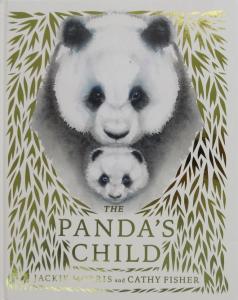
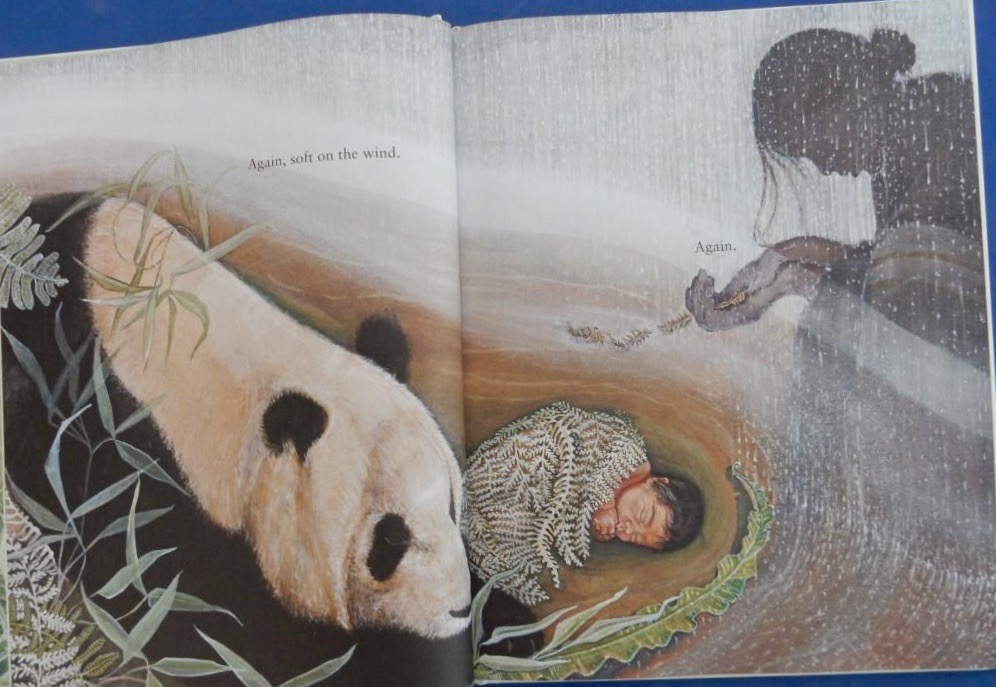
Left behind by her fellow villagers as they walked in the forest, a mother lies down with her baby boy in the warm sun. She drops off to sleep briefly and wakes to discover the infant has gone. After three days of searching the villagers conclude that the baby must have been taken by a creature of some kind or perhaps the forest spirits.

The mother refuses to give up though and continues searching alone, hope gradually fading the longer she looks. But then, drifting on the wind she hears something: could it be? Wonder of wonders, in a cave beside a large ursine creature lies her child, alive after seven days.

The bear – a she panda – must have kept the baby alive, the villagers decide, and henceforward, they have a strong bond with the animal. They also have a special bond with the little child.

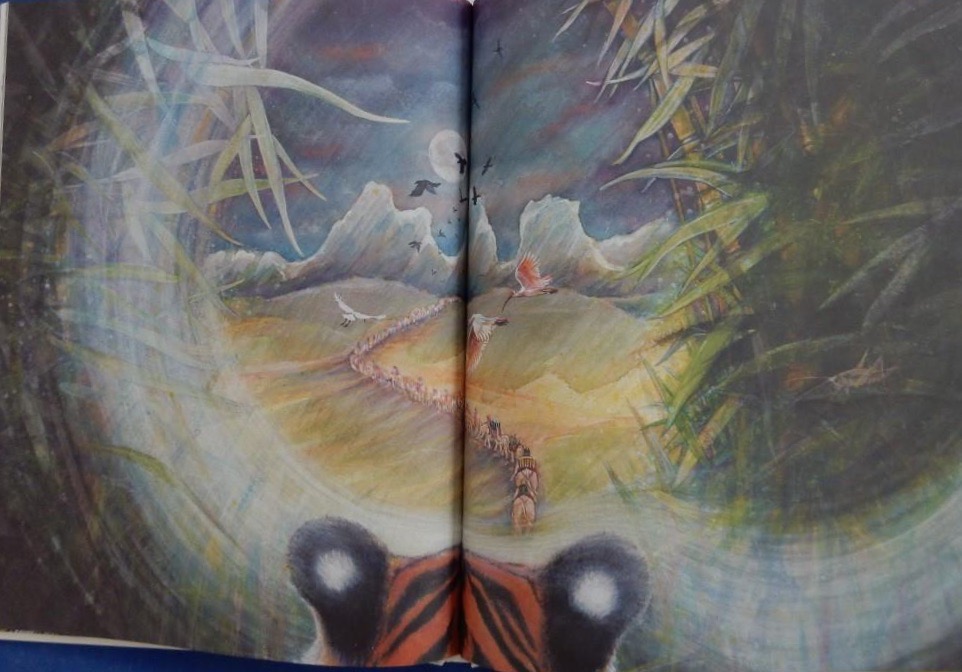
The years pass and on the child’s ninth birthday some strangers ride into the village. It’s evident from their lavish dress these are rich people, accompanied by large hunting dogs and elephants most of which bore cages of animals of various kinds. One cage however is empty. The villagers hope that by ignoring the visitors, they would move on but the boy, attracted to the horses, approaches them and is told they are searching for a black and white creature. Said creature is to be a gift for a great ruler, Alexander. Eventually the riders depart, only to return several days later. This time the empty cage has been filled by a black and white animal: the panda’s child. The boy begs them to take him with them to ensure the creature remains alive and eventually they agree, to the horror of the entire village. But has the child really betrayed all those responsible for keeping him safe? Or does he have another reason for wanting to accompany the wealthy travellers even if it means risking his own life?

Hugely moving, Jackie Morris’s spellbinding tale with Cathy Fisher’s mesmerisingly beautiful illustrations will stay with readers long after the book has been closed. With its environmental and conservation themes it will appeal to a wide age range and would make a wonderful present for a lover of the natural world.

Home Bird Hoot

Hoot is a home loving bird, never venturing beyond her perch in her snuggly treetop abode. The only drawback is she’s always alone. Until that is, Momo, a little mouse, calls one night and invites Hoot to hang out with him. Hoot invites him in and as they sit chatting a friendship begins to develop. One night Momo suggests the two of them explore further afield but Hoot is too scared of what might be lurking outside.

Then one night Momo doesn’t appear for their usual get together. A troubled Hoot summons up all her courage and little by little ventures out into the night. Hearing a squeak, she looks around and what she sees makes her tummy turn over. Can she now leave her perch, find her wings and come to the aid of her friend?

Smriti’s rhyming tale demonstrates how an important friendship can fuel empowerment and inner strength, making someone braver than they’d every thought possible when danger strikes.

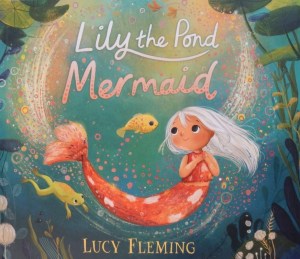
Don’t be afraid to embrace the unknown, be a risk taker is the message: new experiences such as those of Hoot broaden a person’s horizons. There are some delightful details in Lucy Fleming’s illustrations: I particularly love the ‘Peckado’ home delivery service and all the minibeasts but young children will doubtless find other things that especially appeal to them.

A good story time tale to share and talk about.

The Observologist

I learned a new term to describe my partner from the first page of this playful book. He’s an observologist, someone who, as Giselle Clarkson says herein is a person ‘who makes scientific expeditions every day’ … ‘they notice interesting details in the world around them’ … and are ‘expert at finding tiny creatures, plants and fungi.’ Not a day goes by when he doesn’t share some of his observations when we’re out walking, no matter where that is; it’s not surprising we make such frequent stops. And he certainly doesn’t feel embarrassed about turning over large stones or lumps of wood.
The book has five main sections, the first being concerned with the principles and practice of observology that include such important topics as taxonomy and anatomy.

We then visit four places the author suggests are ideal for observological expeditions: a damp corner, a pavement, a weedy patch and behind the curtains.
In the damp patch you’ll likely find the likes of slugs, snails, centipedes and millipedes and my favourite, woodlouse. This small crustacean has many other names including chuggie pigs, used by most children in schools where I mainly live, in Gloucestershire.

In the pavement section you can explore the world of ants, bird poo, lichen,

minibeast droppings and eggs and learn all about worms. (These annelids have three spreads devoted to them.)
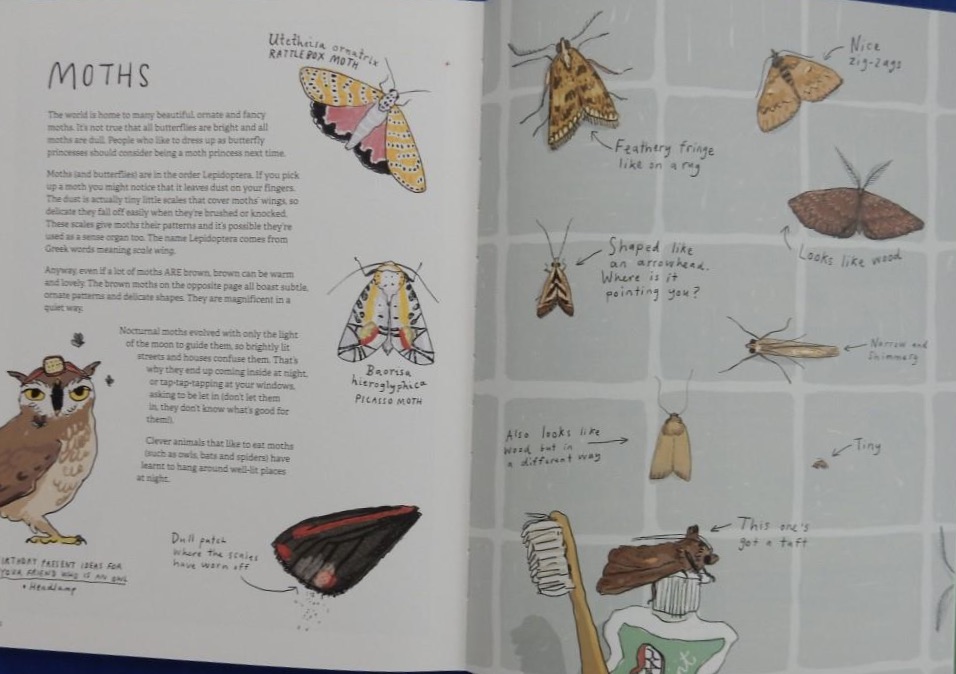
The weedy patch is where you will encounter bees and wasps, cicadas and caterpillars, seeds and surface tension. While, behind the curtain there may lurk cockroaches – yuck! – flies, spiders and moths.

There are several useful ‘how to’ pages, one such is ‘how to get a fly to go outside (at night)’, another is ‘how to relocate a spider’ – I’ve done this one many times.
This smashing book is absolutely brimming over with information, whimsical details -verbal and visual. I envisage countless children completing the ‘required course of study’ and receiving the observologist qualification’ award on the penultimate spread. I wonder if they will all have noticed the 13 spider mites running through the book though.

I’m Going To Be a Princess

Maya and her Mum are walking home from school one day, the former clutching a drawing she’d done in class of a princess. “because I’m going to be a princess when I grow up1”, she announces.
Mum agrees that it’s a fun idea but encourages her daughter to think about other possibilities. She goes on to share information about some amazing Black women through history: a doctor perhaps like Alexa Canady, 

or an award-winning ballet dancer like Misty Copeland? Other suggestions are an athlete like Alice Coachman, 

a rocket scientist, like Annie Easley, and several others. Maya agrees that they all sound brilliant but remains firm that she is going to be a princess. 

However the girl has a surprise up her sleeve: her princess role model isn’t the usual fairy tale kind; instead she wants to be just like Princess Amina, a warrior princess who, five centuries ago, ruled the Zazzau Kingdom in West Africa, a fearless leader, totally devoted to her people for whom she worked tirelessly.

I love the clever flip of the narrative and the trashing of the prevailing princess stereotype. Stephanie Taylor uses a chatty style for her telling which works well and in tandem with Jade Orlando’s lively illustrations, make for an informative, empowering book that deserves to be in all KS1 classrooms.

Have You Seen Dinosaur?

Don’t Take a T-Rex Out For Tea / My Big Playbook / Polly Put the Kettle On

The five dinosaurs lurking between the covers of this large format board book practically leap off the pages as you turn them. In turn young children will delightedly encounter a stegosaurus – a decidedly bad sport that can’t bear to lose, a pterodactyl, not a creature to challenge for a race, then comes a diplodocus, an unsuitable dino. to try to hide in your bedroom on account of its colossal size, a triceratops that will put paid to any musical activities you might engage in, and finally be warned: T-Rex is always on the lookout for a tasty treat, so don’t even contemplate inviting one out for tea.
A rhyming text accompanies the prehistoric pop-outs depicted in Michael Stack’s splendidly silly scenes.

A large format board book, with a die-cut and felt flap to explore on every page. There’s a double spread devoted to numbers 1-5, with other pages of things that go, things you would see outside, shapes, weather-related words. things to find at home, colours, animal sounds and finally, bedtime, which includes a surprise hidden mirror.
Ingela P Arrhenius’ bright, enticing illustrations show either separate items each set against its own coloured background, or a whole scene.
Interactive fun learning for the very youngest to enjoy at home or in a nursery setting.

The local cafe is the setting for this version of a favourite nursery rhyme, its customers being a variety of anthropomorphic animals and Polly is a panda. Once the tea has been duly served, it’s down to pooch, Sukey to remove it from the stove. Off go all the tea drinkers and cake consumers waved on their way by Polly.
One of the ‘Sing along with me!’ series that has a sliding mechanism to add to the enjoyment on every spread and a QR code on the back cover to scan, which enables you to listen to the song. With ever fewer young children starting nursery knowing any nursery rhymes, this is a good place to start.

AlphaBot / The Secret Mountain / Albert Puzzles and Colouring

This interactive, non-fiction book published under Walker Books mitKidsPress imprint is sure to be a winner with children. On the first page comes the invitation: ‘Mix and match the AlphaBot parts! / What kind of robot will you build?’ Subsequent pages are split into three parts with scientific terms in alphabetical order defined on the verso sections and robot related illustrations are on each recto section.

The split pages make the book huge fun allowing the reader to design numerous different robots.. Its sturdy construction with a spiral binding will enable it to stand up to the heavy handling it is sure to get in a classroom or at home, as eager youngsters delightedly flip the sections back and forth, playfully learning a considerable amount while so doing. I met a couple of terms I’d not encountered before.

This book takes children on a long, long journey from Mount Everest all the way to Iceland. They will travel via Scotland’s Ben Nevis, then in turn the highest peak in the Andes, the Rocky Mountains, the Urals dividing Europe and Asia, Mount Broken in Germany, the Dolomites, the Heavenly Mountains of central Asia’s Tian Shan, California’s Mount Whitney, Mount Fuji and finally as night falls, Iceland’s Kirkjufell mountain.

As the sun rises over the Himalayas youngsters will see in the foreground of the illustration, a young snow leopard and her cubs heading off to hunt for food. Also out hunting is a bear and readers are asked, ‘What might he be searching for?’

In each of the following illustrations, every one of which is bursting with wildlife, there’s a mother animal of some kind and her young. So across the day you’ll also spot golden eagles, llamas, moose, brown bears, lynx

and more; some are foraging, others in flight or perhaps playing.

Each spread has a search and find element, another of the interactive elements of this immersive, creature-filled compilation for adults and children to share. Additional facts about eleven animals – one per stopping place – are provided in the three final spreads.

Albert the Tortoise loves to play games with his garden dwelling pals and now in this book he invites young readers to join him and participate in some playful activities at home. There are pages of silhouettes to identity, mazes to negotiate, a search and find, as well as several spreads to colour, others for playing spot the difference, and young children can hone their fine motor skills with dot to dots (those can be coloured in too).

Hubble Bubble Granny Trouble

If you’ve not yet read the stories narrated by a little girl whose Granny is a witch, then this book containing three stories is well worth investing in. Tracey’s magical tales told in a bouncy rhyming style accompanied by Joe Berger’s zany illustrations with their abundance of witchy details are a delight.

In the first – the title story – the girl narrator decides to try and reform her granny who is forever stirring up trouble, but having given her a make-over which includes a new hairdo and dressing her in a tweed suit and exchanging her weird assortment of pets for a cuddly pink rabbit, realises that all that she’s done is make Gran miserable. Time to allow her be herself again.

In Whizz Pop Granny Stop, the girl narrator is determined to have a normal ie magic-free birthday, starting with the birthday cake. Then come making a new dress and at the party, Granny paints everyone’s faces without using her ‘Helping Kit’. It’s a terrific party – but the mess?

Perhaps it’s now time to call upon the assistance of a supersonic broom, and finally, Granny has some very special magic to conclude the celebrations.

Spells-A-Popping Granny’s Shopping involves a trip to the supermarket but the narrator’s request, “No crazy stuff” is not what transpires. Instead out comes Granny’s wand and in no time there are biscuits dancing, popcorn a-popping, packets of soap pursuing underwear, runner beans racing around and that’s not all. Embarrassing indeed, but then a pair or robbers with a large sack appear. Time to make use of that wand, again Granny.

Huge fun from cover to cover and much too good to restrict to Halloween time.

Fox’s Favourite Autumn

Autumn is Fox’s favourite season, he loves everything about it: the abundance of ripe fruits, the misty mornings and honey sunsets. But with autumn come shorter days; Fox isn’t happy about that. He decides to make the days longer, trying several ideas but his friends don’t like what he does.

Nor do they approve of his food-saving. Then, as he desperately tries to stick leaves back on the trees, he encounters Badger wanting to know what he’s up to.

Badger asks Fox what he’ll miss about autumn and Fox starts to list autumnal things he loves so much. As he does so, Fox realises that he’s been missing out on sharing in his friends’ autumnal pleasures.

Wise Badger then points out that it’s the sharing that’s vital and all seasons have pleasurable things to offer if they’re done with friends. Will Fox finally take on board these sage words and make the most of every season and its possibilities?

An important life lesson is presented with gentle humour in this seasonal tale. It’s all too easy to become like Fox and allow the possibilities each season presents to pass us by. Christine Pym’s jolly seasonal scenes reflect the humour in Fiona Barker’s words and together offer a thought-provoking book to share and discuss with young children as the days draw in.

Zoom!

It’s great to see a new series featuring Boy and Grandad, this being the first of four stories wherein the two characters demonstrate the importance of reusing and recycling materials in their adventures. As always creativity and the imagination are key even on the hottest night of the year when this first adventure takes place.

At Grandad’s suggestion the two take the telescope and go up onto the roof where it’s cooler. When Sam tries the telescope the zoom doesn’t work properly, but resourceful Grandad fixes it and Sam sees a planet. Further adjustment enables him to see a space module and a couple of astronauts, whom the lad surmises are in trouble.

Back inside go Grandad and Boy to collect supplies and tools, which they take onto the roof. There they fashion a spacecraft

and off they go, destination the planet whereon the astronauts are stranded.
Happily the two are able to fix the broken module and the astronauts invite Grandad and Boy to have a nap inside their space station. Needless to say, the interior is so exciting that neither visitor gets a wink of sleep before it’s time for them to return home.

Ready for the off Boy realises they are sans a vital bit of equipment,

but happily this time the astronauts are able to offer just what’s needed for a safe landing back on earth – just in time for breakfast …

It’s always a delight to be in the company of these characters with their wonderful child-grandparent relationship. As always too, Sam Usher’s slightly quirky ink-and-watercolour vignettes and large scenes have plenty to explore and like Boy, children will revel in the interior of the space station, while the story subtly introduces both scientific and engineering information. What better way to spend a hot, sleepless night than this.

Last-Place Lin / Where Will the Sleepy Sheep Sleep?

These are both recent Allen & Unwin titles: thanks to the publishers for sending them for review.

It’s young Lin’s first opportunity to participate in the school sports day and she’s in the red team. Dressed entirely in her team’s colour, she enters first the sack race and then the obstacle race, finding them anything but easy. Next she competes in the water balloon toss but finds it very hard. Unfortunately despite heaving with all her might, another child makes fun of her, calling out to her ‘Last-Place Lin’. Lin doesn’t give up though: she does the crab walk, the wheelbarrow race and the tug of war. Further name calling ensues but still she keeps trying, dropping the baton in the relay. 

Then comes the last race – a fun run – and a must compete for everyone so there’s no getting out of it by hiding. After encouragement off she runs, adopting the ‘Last-Place Lin’ as a kind of mantra that enables her feet to follow its rhythm as she puts one foot in front of the other encouraged by a friend and the cheering crowd … 
all the way to the finish line

The author Wai Chim’s experience of participating in an Australian TV show was the inspiration for this story. Essentially it’s a celebration of trying, endurance, doing the best you can and never giving up, no matter what. An important message for young children, who can all too easily get swept up in the ‘must win’ mentality that prevails in the sporting world. Freda Chiu’s expressive illustrations show so well how Lin gives the events her all and the difference a bit of encouragement makes to how she feels. Definitely a book to share and discuss with a KS1 class.

This is a bedtime tale of the tongue-twisting kind. A sleepy sheep is endeavouring to find a suitable spot for a night’s shuteye. But the places he tries are in turn ‘too deep, steep and stony’, ‘too dangerous’ (not to mention noisy), ‘too scary’, ‘too small, dark and damp’, ‘too cold and uncomfortable’, ‘too grimy and gritty’, 

or ‘too lonely’ . Having wandered hither and yon, it seems that luckless ovine is destined to have a miserable night but then … yes young listeners do eventually get an opportunity to bid ‘goodnight’ to the by now, exceedingly sleepy sheep.

Jonathan Bentley’s bold scenes show the sheep’s eyelids becoming heavier and heavier until his eyes are barely open at all as he stands in the corner of the great big paddock almost overcome by somnolence.

Young children love repetition and enjoy alliteration and this fun book has both; it’s just right for a bedtime story, but also, the repeat refrains mean that those in the early stages of reading will soon be taking over from the adult reader aloud.

Vlad the Fabulous Vampire

Meet Vladislav Varnaby Roland Dragul aka Vlad. Vlad has a passion for fashion and consequently he is a stylish vampire. However he has a secret of the colourful sort: behind his black cape he hides rosy pink cheeks that make him look all too alive. Vlad longs to feel and look like any other vampire; he feels insecure with his rosiness and uncomfortable about concealing his real self. However, he starts designing and making his own gear, always covering his cheeks; but having strutted his stuff for a while, he realises that he’ll never be able to hide who he truly is. 

Off goes Vlad to be by himself but after a short time he is alerted to the fact that his vampire pal Shelley is in trouble. What he sees is that she too has a shockingly bright physical trait. This makes Vlad reveal his own secret and with their friendship firmly established and Shelley leading the way, the two venture beyond the Dark Woods for Shelley to share another secret, a sight never before seen by another vampire. 

It’s in this new place that Vlad starts to overcome his insecurity about who he is 

and that’s when his fashion passion really comes into its own. From then on, whenever insecurity raises its troublesome head, Vlad knows he has somebody to help him cope with his self-doubt.

Drawing on her Mexican heritage, Flavia Drago mixes folk art with cartoon style in her illustrations, adding brighter hues to her colour palette as Shelley leads Vlad towards self-affirmation.
Yes you might share this one at Halloween time, but its vital message is for all times.

Once Upon A Witch’s Broom

From Beatrice Blue’s Once Upon A series comes this story of two future witches, best friends Lilly and Moira. Lilly is able to do everything, new learning comes easily to her but not Moira. Moira is shy, things don’t always seem to work for her, she struggles with what she considers her inadequacy and consequently feels very lonely at times. However she is hoping that her once in a witch’s life opportunity, when she receives a magical Relic, will fix her and make her able to do everything well.

On her big day though, Moira’s Relic is a big disappointment. All the other witches receive something that matches their personality but why has she been given a broom? Moira shares her disappointment with Lilly who encourages her friend by saying that their Relics will help them become better witches, no matter what powers they carry. Could Lilly perhaps be right, wonders Moira. She decides to give her broom another chance but nothing works and she ends up breaking the Relic.

She’s just on the point of hiding the useless object away forever when she sees Lilly watching her and asks her a question. The wise answer she receives makes Moira resolve to have one more try.

Could her friend’s kind words and advice make a difference? Can Moira finally learn to believe in herself and let her powers shine?

A heart-warming story, powerfully illustrated, with an important message for all young children that shows them, and reminds us all, that believing in ourselves can reveal the magic we hold within. Young listeners will love following all the froggy details as the tale unfolds.

A Jungle in Your Living Room

Despite being given many houseplants of various kinds over the years by pupils, friends and relations, I have never been any good at nurturing them for long, so I was interested to see the sub- title of this book – ‘A Guide to Creating Your Own Houseplant Collection’.

There are three main sections: All About House Plants, The World of Houseplants and Houseplant Care.
The first presents basic classification, discusses some reasons for growing plants in our homes, plants used in celebrations in the home, talks about how some plants have adapted in order to survive in specific habitats, the conditions under which they survive best in a home environment. There’s a look back to houseplants in ancient history, including the origins of growing miniature trees that most of us know as bonsai. I was fascinated to read of the invention of the Wardian Case and some if its outcomes;

sadly including the triggering of journeys to remote locations of plant hunters to collect exotic plants. Better to paint them in the wild as did Marianne North and later, Margaret Lee, both of whom are mentioned in this book.

The second section is the longest and introduces houseplants of different kinds – succulents, cacti, various crassulaceae, members of the asparagus family, philodendrons, ferns, palms, a number of carnivorous plants

and several others. Interspersed with these are some DIY projects such as creating a desert garden and bonsai for beginners.

Section three looks at houseplant care and there’s a final glossary and index.

Drawing on his wealth of experience in the field, expertise and knowledge, Michael Holland’s straightforward text provides all young readers and beginning indoor plant growers with all they need to know and much more. Each spread is eye-catchingly, sometimes playfully, illustrated in vibrant colours by Philip Giordana.

Winnie and Wilbur: The Witches’ Sports Day

Excitement is building at the prospect of a sports day for both witches and cats; Winnie has her eye on first prize for the main event, a broomstick obstacle race for witches and their moggies. To that end, she undertakes some serious training on the practice course she magics in her garden and is pretty confident about getting that all important prize.

Come sports day, there are ten contestants in the broomstick obstacle race which was to be a timed event with one witch at a time doing the course. Should any cat or witch fall off, the pair would be eliminated. This happens to two of the partnerships but who will be the fastest? Will it be the previous year’s winners Maryam and her moggie Malik or, Winnie and Wilbur?

As the riders await the announcement of the results, a strong gust of wind whips the paper bearing the times far away.

Feelings are mixed regarding the impossibility of declaring a winner, most contestants being satisfied with having thoroughly enjoyed participating and sports day ends with a delicious lunch for all. Now that’s an important notion for young humans to take on board and a great subject for discussion – winning isn’t everything.
As always Korky Paul’s illustrations are rich in delicious witchy detail and the sight of the witches in their sporting attire will take a lot of beating. My favourite Winnie and Wilbur story in a while.
By The Sea

In this over-sized book the author invites readers to join her on a journey around the world’s coastlines.
Each double spread follows a similar format with much of the space being devoted to Martin Haakes’ elaborate, vibrant visual images, that include occasional detailed maps, while across the bottom an elongated text box contains written information. This encompasses physical and social geography including such things as the ebb and flow of the tide, a wealth of history both evolutionary and cultural,

there’s a mythological spread featuring all manner of sea monsters, another looking at the art of tattoos, several pages relating to fishing and fisherfolk and sailors. In travelling from Brighton to the Barrier Reef and the Brazilian coastal rainforest, and Senegal to Shanghai, we learn about coastal settlements, continent formation, the impact of civilisations and tourism; pirates, the whaling industry, the impact of climate change, and much more.

I was interested to see images of the Hindu deity, Ganesha and the celebration of Ganesh Chaturthi featured on one spread; the tradition of immersing Ganesha murthis is one I’ve seen on many occasions when visiting different parts of India in August/ September when birthday celebrations culminate in the lowering of clay-based images into the sea where, supposedly they dissolve and so can return the following year. That is just one of several festivals mentioned on the ‘Traditions’ spread.

Bringing us right up to the present is the issue of climate change and its effects, and there’s a spread looking at how some coastal regions are affected. The final spread takes us to Hawaii where I discovered that it was there that surfing was invented.

Strongly recommended for upper KS2 readers, especially as a topic-related read.

Zeki Hikes With Daddy / Fiona on the Swings & Herbert Climbs to the Top

This latest Zeki story is so full of joy from the front cover illustration right through to Ruth Hearson’s final scene showing a blissfully slumbering infant being carried home on the back of his smiling father after their wonderful day together.

As they explore the great outdoors Zeki notices small details such as a tiny falling leaf, crisp footprints left by a bird in the squelchy mud beside the water, a delicate feather and a bumpy pine cone: what lovely rich descriptive language Anna uses in her verbal pictures of these natural objects and the others mentioned.

It’s great to see both father and son being excited by the natural world,

as well as spending quality time in each other’s company. Spending time in the company of Zeki and his family is always a delight for small children and their adult sharers; both audiences will surely cherish this shared time too.

Like all the others in the series, this book deserves to be part of the early experiences of every toddler. It’s pitch perfect for encouraging talk and new learning.

Just like little humans, Herbert and Fiona Hippo love using the equipment in the park: Hippo Park is where they meet their friends including a frog, a mouse, and a turtle.

Fiona is eager to learn to swing though needs help to get herself up onto a swing seat but Herbert is on hand to assist and provide an initial push to give her some momentum. Following his instructions, she’s soon kicking and tucking her legs as she swings back and forth till Herbert too starts his swing and then it’s time to let their imaginations take flight …

The top referred to in the second title is that of the arched climbing ladder. Urged on by his pals, Herbert takes tentative steps gradually gaining confidence as he goes step, pull, step, pull right to the very highest part. Overcoming sudden wobbliness and the dropping of Teddy, back down he climbs and off into a flight of fancy with frog et al.

Endearing, cartoonish drawings of the activities at the park combined with simple, chatty storylines of friends at play will please the very youngest.

Good Night My Sweet Island / Fantastic Families

Essentially this is a seductively illustrated lullaby that bids, ‘goodnight to all things we love’ on the Caribbean island of Waitukubuli (Dominica). In so doing it celebrates the lush natural world – the forest covered mountains and valleys, the rivers, the wind, the rain and thunderstorms, the rainforest trees, the birds, bees and water-living creatures,

the fruit trees with their luscious mangoes and guavas, breadfruit and the cinnamon trees. It’s also goodnight to the tasty food the child and family are eating, to the festive music and dance, the beaches, cliffs and ‘coral-filled bays.’

Words and pictures work in perfect harmony throughout making every turn of the page both a verbal and visual feast.

I love the patterns, textures and rich colours of the flora and fauna, the waters and sky, and the characters too: the more you look, the more you see in every one of Susanne Heitz’s illustrations. Adding further authenticity to the lyrical telling is the inclusion of some Kwéyòl (Creole) words, definitions of which are given on the final page of the book.

I’ve never visited any of the tropical Caribbean islands but this gorgeous portrayal of the one where the author was born and grew up has made me want to do so.

Young vegan chef, Omari McQueen, celebrates the diversity of families in this picture book, which is inspired by his own large family. Herein he introduces his relatives telling readers, “Family love is like no other and having each other is all that matters.’ Size is unimportant, but the love you have for them all is what counts. He goes on to liken families to food, some are spicy, some savoury, some sweet, but ‘always the most delicious dish.’

Families provide togetherness, safety, comfort, empowerment, support …

and unforgettable shared experiences that make for treasured experiences, they make a house a home.

On the final double spread is one of Omari’s own recipes, cookie dough chocolate cups, which I intend to try soon; and the last page asks readers to think about their own family.

A real warmth emanates from the pages, in no small part on account of Sophia Green’s vibrant illustrations. A book for family bookshelves but also one to share in primary schools especially to open up a classroom theme about families.

Paws, Claws, Tails & Roars

Like Michael Rosen in his foreword to this sumptuous book, I recall that my first encounter with the work of Brian Wildsmith was in the Oxford Book of Children’s Poetry, which I still treasure to this day. His image for Blake’s The Tyger immediately springs to my mind when I close my eyes and visualise.
Wildsmith’s awe inspiring art was very much part of my early years as a teacher. Picture books were at the heart of my classroom practice as a foundation stage teacher and Wild Animals, Birds and Fish were among the first titles included in my book collection to share with the children as part of their visual education and to foster a love of books. One wishes that exposure to such beauty was possible for all young children.

Seemingly those early titles are no longer in print, so it’s wonderful to see this compilation that brings together the art from the three titles aforementioned. A double page spread is devoted to each animal and includes the collective noun for each .

The images are accompanied by Deborah Sims’ poetic descriptions of each of the forty plus creatures illustrated.

This is a book I’d like to see in every classroom from the foundation stage upwards as well as on family bookshelves. And, what a wonderful present it would make.

A Bad Day For Bear

Duncan Beedie’s staring Bear returns for a third adventure. As he leaves his cave intent on the important job he has to do in preparation for the forest party to be held that very evening, Bear is in a good mood. However it’s not to last for the first piece of wood he picks up for the bonfire leaves a splinter in his paw. Into the forest he heads in search of some better wood only to be in the way of a falling log chopped by Beaver. The dam builder apologies and offers Bear some wood for the bonfire. No sooner has Bear begun dragging the logs along than down comes the rain. With three disasters he declares, “Today really is the worst day ever.”
Perhaps Frog can help make him feel better, thinks our ursine friend but as he heads towards Frog’s pond, Bear fails to notice a massive muddy puddle and …

Frog though, is a problem solver: can he solve not one but three problems for his miserable pal? Perhaps with some careful inspection and further consideration.

Come party time, thanks to an extra pair of feet, that important job of Bear’s is completed just in time

and as night falls the woodland animals enjoy a feast around the fire … until it starts to die down. It’s Badger who isn’t pleased at the sudden descent of darkness. However having learnt something from his froggy friend, it’s Bear’s turn to to offer a different perspective. Will it change the others’ viewpoints too?

We all have bad days from time to time and this book is the perfect one to share with young humans on such days to remind them that things aren’t necessarily as bad as they might think. As always Duncan’s text and pictures work in perfect harmony, the former is rich in descriptive language and the latter striking; Bear’s expressions are wonderful and sure to make young audiences both laugh and empathise with the sudden setbacks that befall him.

A Whole World of Art

In this book readers are accompanied by two young friends, Alzena and Miles, who take them on a time-travel journey through the world of art wherein sculptors, architects and artists. are introduced. Encompassing nearly thirty works in all including a stained glass window, the journey begins in 1350 BCE in Giza where stands the bust of Nefertiti and finishes in Prague with the work of Ai Weiwei and his huge 2018 sculpture Law of the Journey.

At each stopping point there is a considerable amount of engagingly written information about the artist featured, their art, and some historical facts such as what inspired the work and where that artwork is currently on display. These take the form of short paragraphs strategically placed on the spread. One such explains that at 469 talents, the cost of building the Parthenon in Athens was more than that of an entire fleet of ships.

On some spreads there are also prompts for readers to look closer or go beyond the page; and there are occasional suggestions for art work, inspired by a particular work of art. One such relates to the Benin City spread and asks, “Can you design a shield that celebrates the ideas you think are important today’ perhaps, like the artists of Benin, including symbols and pattern to add to its effect. On the Tokyo spread where the key artist is Yahoo Kusama, we read: ‘If you like playful works like this, have a look at Akashi Murakami’s art. … See if you can spot the links to Anime (comics) and Magna (animated films) in his work.’

With such a variety of works being shown and discussed, this is a very useful book for older school primary children who will appreciate Dion Mehaga Bangun Djayasaputra’s lively images of the art and artists presented, integrated into which are small photos of the art being discussed.

(Backmatter includes a glossary and suggestions for further reading.)

Bompa’s Insect Expedition

This book was inspired by author David Suzuki’s adventures with his own grandchildren and features twins Nakina and Kaoru who love having adventures with their grandpa. This adventure is a nature expedition and by the time Bompa arrives, the two have amassed everything they might need including Kaoru’s field journal.

As time is short on this particular day, their expedition is an insect search in the area right close to their home. Initially Kaoru is somewhat sceptical about discovering anything new, but there are plenty of surprises and new learning in store.

The two children are both inquisitive and imaginative in their approach as they encounter in turn, a bumblebee, dragonflies, caterpillars of the monarch butterfly, an ants’ nest,

mosquitoes and a lacewing. During their exploration, Bompa imparts a wealth of scientific information, much of it in response to what the twins say, taking every opportunity to encourage and deepen their thinking.
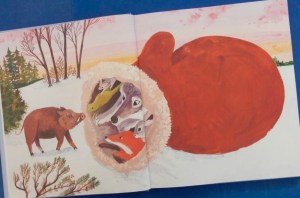
The story ends with the three enjoying a picnic and is followed by a page from Kaoru’s field journal, a peek at the contents of Sakina’s backpack and a final spread with some additional insect facts.

David Suzuki is a renowned scientist/environmentalist and this engaging book is published in partnership with the David Suzuki Institute; his co-author, Tanya Lloyd Kyi, has written numerous books for children. Qin Leng’s watercolour illustrations are a delight, bringing out the intergenerational love between the characters as well as showing details of the fauna and flora of the environment the three explore.

A First Book of Dinosaurs

It surely is a case of ‘eat or be eaten’ in Simon Mole’s poetic presentation of dinosaurs in all shapes and sizes. The large format book dramatically illustrated in collage style by Matt Hunt is divided into four sections: ‘Meet the Dinosaurs’, ‘Eat or Be Eaten’, ‘Dinosaur Families’ and ‘The End. Or Is It?’ Readers/listeners will encounter some already established favourites such as Triceratops, Tyrannosaurus Rex (the first two featured), Stegosaurus and Diplodocus called herein Planet On Legs on account of the numerous small creatures that live on its back. There are many less well known creatures too including the dog-sized Eoraptor (new to this reviewer as is Baryonyx). I love Simon’s description of that one: ‘Swift-sprinter / Tail-flicker / River-watcher / Quick- dasher / Fish-grabber / Flesh-ripper // Best hunter / Gets dinner!’ together with Matt Hunt’s dynamic visual interpretation. A wealth of kennings in that.

Readers are introduced to a variety of poetic forms: Ankylosaurus, Sauropelta and Euoplocephalis are all described in a single acrostic entitled Tough! Tough! Tough!.

There’s a wealth of onomatopoeia, some similes and metaphors, a recipe and even a dialogue with a present-day chicken. To find out what said chicken is doing in a book about dinosaurs, you’ll need to get your own copy; so doing will make you popular with youngsters for sure.

After a look at the downfall of dinos and some fossil evidence, the book ends with a somewhat truncated dinosaur timeline.

A large-format, romping, stomping treasure, beautifully produced and one hopes, likely to turn a fair number of dinosaur-fanatic children into poetry enthusiasts too.

Two Ants Puzzled

In this charming interpretation of Rumi’s classic tale with its theme of looking at the bigger picture, Elizabeth Laird sets her tale, told from the ants’ perspective, in the house of a little girl. The title page shows the two ants out exploring, walking in through an open front door and turning the page we see them starting to explore by climbing up the table leg onto a large white sheet of paper whereon the child is drawing. They walk right along her pencil and what they focus on is the tip and the movement of that pencil in her fingers. 

So intently are they looking at the shapes and colours that they slither and slip hither and thither.
When the girl pauses and looks up, the ants start to retreat, ending up on the floor safe and sound – just! 

Unhurt they begin ascending the table leg once again. This time what they see before them is the entire finished picture and included in it are … two ants. Guess who is inspired to be creative now.

Jenny Duke chooses a variety of perspectives for her scenes making them especially effective and intensifying the small drama as it unfolds, and she cleverly imbues the ants with real personalities. Young listeners will also notice that there is a playful black cat watching the action throughout the story.

Books and the People Who Make Them

This book, translated from the original French by Paul Kelly, gives child readers a look at the stages in the life of a book from the starting point when the content is a germ of an idea in the mind of the author, 

right through to when it arrives in the hands and minds of readers. 

This encompasses visiting the world of authors who create manuscripts, the editors who read those manuscripts and decide whether or not a particular book should be published. The work of the latter also includes finding new talent be that of authors or illustrators. Much of the role is collaborative and involves not only working with the author but also, copy editors, graphic designers, proof readers and sometimes others too.

In a picture book, the illustrator is as important as the author and sometimes but not always, the two collaborate closely. However, the entire story can be told though illustrations so no writer is involved.

Once a book is printed, – there are several spreads about this process – 

it’s time to involve the sales representatives, the people who visit bookshops to show them what is about to be published in the hope of getting orders, They also collect feedback from booksellers.

Clearly the delivery of a book to a bookshop isn’t the end of the story. It’s part of a book-seller’s role to unpack and shelve books, check stock and perhaps organise a special launch event or a workshop for children; and of course they need to get to know what is on their shelves in order to offer advice to customers should it be required.

Many new books are also sent out by a publisher’s press officers, usually prior to publication day, to reviewers/critics who can play a key role in the success of a particular book.
Librarians in libraries also provide a link between books and readers; two double spreads are devoted to their work and on the final spread, it’s over to the readers.

I wonder how many young readers will be aware of all these jobs. They certainly should after a close look at the quirky visuals of Camille de Cussac whose diagrams and funky scenes surround the written text.

Peace on Earth

‘Peace on earth … GOOD WILL TO ALL!’ Surely this is something almost all of us long for and with on-going conflict in several parts of the world, this stunning, heartfelt book couldn’t be more timely.

Lyrically written by Smriti Halls and dramatically illustrated by David Litchfield, it presents a story wherein we follow a group of friends who embark on a journey together over land and sea. A journey that starts out full of joyful anticipation and happy camaraderie

but then, lost and afraid, angry words are spoken – hurtful words – that cause distress and pain.

Thereafter it’s hard for the group to -re-establish that former harmony, peace and light. Fortunately though with the will being there, as it is with the friends herein, they find the courage and the inner strength to be peacemakers. I love this scene showing one of the characters bringing an affirming flame towards the others.

Thus, the story ends with a reconciliation that reunites the characters and they go on to share their joy with others as lights shine forth all along the shore line.

With its combination of striking art and deeply felt words (inspired by Luke 2:14), this book needs to be shared and talked about as widely as possible in many different settings from the family to adult meeting places.

Kevin the Vampire / Victoria Stitch Dark and Sparkling

Having enjoyed the proof I couldn’t wait to see the published book with all the wonderfully entertaining illustrations by Flavia.
Star of this fangciful story is ten year old Kevin Aurelius, not quite the same as other boys his age for he has fangs and being a vampire he’s immortal. Kevin belongs to a family of travelling performers and as the tale begins they are supposed to be en route to Monstros city for the Festival of Fear but instead have wound up in Lower Drudging in the middle of Nowhere. Batnav failure maybe? With them are an assortment of other eccentric monster characters.

Nowhere is human territory and none of Kevin’s family has seen a human. However, a suggestion is made to put on a performance in Lower Drudging – an impromptu one in the hope of earning some gold that will enable them to get back on track to their original destination.

Also in Lower Drudging, suddenly awoken from her slumbers is a young human, Susie Cabbage who lives with two unpleasant aunts. She is eager to know the cause of her rude awakening so out she goes to investigate. Inevitably Kevin and Susie meet and a friendship develops between them.

Meanwhile shock horror: – the mayor and his council members have noticed the sign put up about the performance to be held that very evening. This is horrifying because nothing fun has happened in Lower Drudging for seventy five years on account of the ‘You-Know-What’ that lives inside Cold Mountain. Is this something that Kevin and Susie can investigate and discover the truth about? It might just save the town …

With its wealth of wordplay, this is a really funny start to a new series with some serious underlying themes about acceptance, friendship and not judging others by their looks. Add to all that a number of monster fact cards strategically placed throughout and a final monster themed alphabet and the result is a cracker. Bring on book two.

Heavily laced with gothic glamour, is this third in the series starring the unstoppable young Victoria Stitch recently made co-Queen of Wiskling Wood along with her twin sister Celestine. As the story opens there’s also news of a soon to be born new royal baby. Fast forward eleven months and Princess Minnie Stitch, next in line to the throne, bursts forth from her crystal and in the blink of an eye is making Victoria Stitch’s heart glow.

With Wiskmas approaching, Victoria Stitch takes a trip to Spellbrooke where she encounters a pair of Sapphire Society members who are clearly far from pleased to see her. She then learns that the group meets regularly and being Victoria Stitch, she just can’t stop herself using some invisibility dust and going to listen in on their next get together. What she hears makes her think a plot is afoot.

Shortly afterwards Princess Minnie disappears, followed fairly soon by news of a prison breakout. That means two of Victoria Stitch’s greatest enemies are at large again and it’s likely that the two events are connected. Moreover, their destination is the human world. The police tell her to remain in the safety of the palace but feeling as though she’s inflicted a terrible wound upon herself, Victoria Stitch certainly has no intention of so doing.

With her sister’s blessing, off she goes over the magic boundary wall on operation rescue Princess Minnie and recover the stolen Book of Wiskling. The following morning she and her human friend, Naomi, set out, destination Pinks Rock. Can she pull off a very difficult task, or even two?

Another absolute delight despite the setbacks; Victoria’s character continues to develop interestingly the more challenges she faces and as always, the book explodes with magical images.
I know a lot of children will be jumping for joy at the chance to read this.

The Star Whale

What a truly beautiful celebration of some of the world’s natural beauty is this book containing forty poems penned by zoologist/ writer Nicola Davies, each one accompanied by a stunning painterly illustration by Petr Horáček.

It’s impossible for me to choose absolute favourites, such are the riches contained herein but one I was instantly drawn to today is Kingfisher, the opening and closing lines of which are: ‘A strike of turquoise lightning / Swallowed by its own reflection / … ‘And nothing matters in the world / But this small glint of wonder.’

It seems as though Nicola visited our re-wilded garden for her description of the kind of garden she loves – a place where ‘stems make a jungly chaos / and beetles prowl.’ … ‘Where wildflowers bloom to feed the butterflies / and bees.’ … ‘where neat and tidy are forgotten / and nature rules.’

As trees are my favourite thing in the natural world, I was also attracted to Mama Tree wherein the description of interconnectedness goes like this: ‘ Mama tree is talking to her children. / Through fungal fingers that wrap around her roots / she reaches out like any mother / to touch, to feed, to warn.’ If I sat beneath the tree Petr has painted for this poem, I don’t think I’d want to move. for a long time.

In this wonderful book you will also be able to fly on the back of a bat and ’learn all the star-scattered secrets of night,’ meet a morning raven, attempt to get your tongue around the moth alphabet, join the Earth in her seasonal dance around the sun; be enchanted by the colours of a dragonfly; you could even encounter a dinosaur or two.

A book to keep and a book to give.

50 Words About Nature: Plants / Birds & Science Words for Little People: Nature / Space

These are additions to the series wherein author, Tara Pegley-Stanger doesn’t believe in talking down to young children, instead she uses the correct scientific terms for processes such as photosynthesis, pollination and germinates as well as, in the first book, other plant-related words as she provides a look at the diversity of Earth’s plant life. I totally endorse this approach: children do assimilate ‘big’ words in context and love to impress grown-ups with their ever-growing vocabulary.

Young children sharing Plants with an adult will learn basic facts relating to flowers, seeds, fruits and growth as well as visiting various habitats including a tropical rainforest, a desert, an aquatic location, meeting a botanist at work and more.
Birds takes a similar approach introducing basic bird features, some specialisations such as those of waterfowl, the bee humming bird, the Asian peacock and raptors. There are examples of a migratory bird, flightless birds and there’s a spread about an ornithologist.
Both books are illustrated in a realistic style by Debbie Powell, whose images are carefully integrated with the text.

Engagingly written and visually attractive, both of these titles in a new series are worth adding to home bookshelves and early years collections.
Nature presents life cycles of an apple tree and a frog, as well as spreads on growing, senses, habitats, behaviour, rocks and soil and care of the natural world.
Space is introduced by the child characters who have become astronomers having a sleepover in their observatory. Subsequent spreads see them using a telescope, pretending to be astronauts, using fruits to make a solar system, discussing Earth’s rotation, introducing the phases of the moon, a space mission, star gazing, space probes and imagine alien possibilities.
Aimed at adult sharers, the final spread of each provides ten ideas for getting the most from the book.

Future Hero: Escape from the Clay City

Jarell is the ancestor of an Ulfrikan warrior hero called Kundi.and as this third story opens, he is in his cousin’s South London barbershop, Fades undergoing training from barber Legsy to become a mighty warrior.. He’s eager to return to Ulfrika to find the rest of the Iron Animals and reassemble the staff of Kundi. Suddenly he hears the voice of Kimisi calling seemingly from Ulfrika but convincing Legsy of its importance takes some doing. Legsy tells Jarell his hair hasn’t regrown sufficiently to have another symbol shaved into it but on account of the urgency, Legsy agrees to use some special sacred paste instead; however, there is a time limit to how long this will last and without the symbol Jarell will be unable to return from Ulfrika.

Almost the next thing he knows, Jarell is back in the kingdom of his ancestors. There he’s greeted by a small boy, Bo-de, a member of Kimisi’s family who is determined to be in on the journey Jarrell and Kimisi are to undertake. A journey that takes them to Keesah, the underground city of clay. There deadly creatures, Asanbosams, await.

Again Jarrell and Kimisi must work closely together if they are to overcome those with evil intentions, reunite Iron Snake with the Staff of Kind, save the people of Keesah and enable Darrell to return home in time before his symbol wears off completely.

It’s possible to enjoy this as I did, without having read the previous books in the series, but young readers might do better to start with Race to the Mountain and Mission to the Shadow Sea. Black and white illustrations by Alicia Robinson and Deise Lino make it even more dramatic.

Mermedusa / The Stars Did Wander Darkling

In this the fifth and final book in the Eerie-on-Sea mystery series, it’s midwinter once more and nigh on a year since Violet Parma appeared in Herbert Lemon’s Lost and Foundry at the Grand Nautilus Hotel. She had come searching for her parents but in so doing found Herbie, now a firm friend and herself, as Herbie tells her. The mystery of her parents’ disappearance remains unsolved however as the story begins.

I’ve not read any of the previous books in the series but that didn’t stop me quickly getting sucked into this wonderfully written, powerfully atmospheric, gripping tale with its truly memorable characters. Apart from Herbie and Violet, it would be impossible to forget the truly sinister Sebastian Eels, who keeps appearing in unexpected places as the two friends get ever closer to understanding the Deepest Secret of Eerie. New arrivals in town are three monster hunters cum hosts of the Anomalous Phenomena podcast, Professor Newts, Angela Song and sound-man, Fluffy Mike. Their aim is to discover the legend of the Malamander and share it with the whole world. There’s another monster too in the form of the titular Mermedusa.

What is the source of the “Eerie hum” that seems to be calling the Malamander from the deep and is making things to go wrong in town?

Action-packed, there are scary happenings aplenty, and some downright eerie ones in addition to that hum; a number of secrets are unravelled, some reunions take place and with Herbie being a ‘Lost and Founder’ there’s no doubt that whatever comes to light will be largely down to him – and Violet of course.

This decidedly eerie story is set in Oregon, in a small run-down coastal town called Seaham, where many streets and landmarks are named after the Langdons, a wealthy 19th-century fur-trading family. In this town live Archie, Oliver, Chris, and Athena. who are all looking forward to the summer break and going camping. Archie’s dad is in charge of a multimillion-dollar project to develop part of the headlands including the old Langdon house into a resort, upsetting many in the community, but it’s been paused since excavation revealed the promontory to be full of holes. Nobody will really tell the four friends anything so they take it upon themselves to do some investigating, especially after Archie sees: an elderly woman who mutters, “They shoulda left it hid,”.

But then strange happenings arise: Oliver gets some kind of ’episode’ that results in him being hospitalised. There he gets other more vivid visions as he calls them. As well as that there’s some strange behaviour from local adults with parents smelling decidedly odd and the arrival of three Shelley-quoting newcomers in old-fashioned clothes.

The friends decide to head to the local video shop, Movie Mayhem and there Randy, the proprietor, produces a box of photographs and old film from way back and also shares with them his local historic knowledge

Tension continues to build with the ever increasing weirdness and odd aroma of people, and events – why does Oliver keep seeing a zebra? Can some ancient evil be at the heart of all this? If so, can the four friends save their town?

Some of this gave me the feeling a horror movie was unfolding before my eyes, so creepy are the happenings. I’d say this is most appropriate for readers of eleven and over rather than 9+.

Who Let the Words Out?

Joshua Seigal keeps the mood light again with his latest assemblage of more than sixty poems. Many are on school-related topics including The Orange Table about being consigned to a group of less bright children in class. One verse goes like this: I’m not so hot at school work, / which means I’m not too smart / so I sit on the Orange Table / so I can be kept apart.’

Mistaken Identity refers to a happening I’ve been on the receiving end of numerous times although my gender doesn’t match that here: ‘I Called my teacher ‘Mummy’ / which, I’m sure you will concur, / was really rather stupid / as his real name is ‘Sir’. ‘

I particularly enjoyed Poem For Libraries: here’s the final verse. ‘Come to a place / that can sate your addiction / to rollicking rhymes / and fabulous fiction; / a place you can travel / through time at your leisure: / a library of pages / to savour and treasure.’ That could well be put on the door of every public library we’re lucky enough still to have, as well as on the wall of school libraries.

Cats, either large or small, as well as other animals, feature in several poems; you’ll also find one about a teacher acting very strangely, it’s called Going Feral and the final poem, also about a teacher, is one of the few sad ones: I Found It. I won’t quote any of that but hopefully it will whet your appetite and send you out to find a copy of this smashing new collection so you can read it in its entirety and enjoy Chris Piascik’s drawings too.

Imperfectly Perfect

Maria’s day starts badly; she accidentally damages her brother’s favourite book as she’s turning the pages a tad too fast. Robbie is far from pleased, accusing his little sister of ruining the book and stomping off. Needless to say, Maria is upset and in comes a family friend, Bea, with a timely hug. This she follows with a story about the day a bowl she’d given to Maria’s mum broke and was repaired with love and golden glue, making it imperfectly perfect.
Maria remains upset so Bea suggests a cheering up walk. During their saunter Maria looks for other imperfectly perfect things around and about,

and by the time a thunder storm breaks, she’s starting to feel better. As well as seeing beauty in the stormy sky, she has an idea about her brother’s book.

Back at home, Maria and Bea then work together carefully making repairs to Robbie’s precious book.

How do you think he will react when Maria goes to his room with an apology and the book?

A sweet and important story about accepting and embracing imperfections, and making amends, engagingly told and illustrated. Hoang Giang’s illustrations underscore the author’s empowering message about discovering beauty in all manner of unexpected places.

The Most Famous Rhinoceros

The inspiration for this moving story reimagined by Dianne Hofmeyr, was Albrecht Durer’s celebrated woodcut print of the rhinoceros sent from India to Portugal in 1515, the woodcut now being housed in the National Gallery of Art, Washington.

We read how Princess Beatrix and her sister receive a one-horned animal as a gift from the Sultan of Gujarat, a creature Beatrix hopes will be a unicorn. However she’s disappointed to see standing on the sea shore straight off the ship, a very large bulky beast with a small stubby horn on the tip of its nose. Genda, is what she names the gift. Her father informs her it is a rhinoceros and mounting his stallion, he leads the animal, along with a host of other creatures, the queen and her entourage through the crowds to the palace.

Beatrix has already formed a bond with the rhino and is horrified to hear the following day, the king announcing a fight between the rhino and an elephant to settle a squabble between her two brothers.
From then on she sleeps alongside Genda’s enclosure every night leading up to the combat, a matter she doesn’t tell her new friend about.

However, come the day of the contest, the two animals face one another but no fight ensues, no matter how much enticement the creatures receive.

What will be the fate of Genda? Her brother João demands he be sent away but Beatrix begs that the rhino is returned to India and given his freedom. Not long after a ship sets sail with Genda on board and Beatrix bids her friend a fond farewell but …

Animal lovers horrified at the treatment of creatures such as Genda in this story, sent over vast distances in return for favours from their recipients, will applaud Beatrix’s caring attitude and desire to get this gift sent back from whence he came. Simona Mulazzani’s richly ornate illustrations capture beautifully the period in which the events are set, making the telling even more poignant. They show the contrasting natural beauty of the rhino with the elaborate finery of the human characters and the adornments placed upon Genda for the parade and the fight.

Super Sports Stars Who Are Changing the Game

I couldn’t help but feel rather insignificant when reading about the twenty sporting legends featured in this book. Each one is allocated a double spread, characteristics of which are a brief resumé recounting how the star got to be where they are, a ‘Fair Play’ paragraph, a ‘super sport power’ and an activity for the reader.

All these superstar legends have one thing in common: they’ve all had to overcome obstacles to be where they are at the top of their game, but in addition have spoken out about a cause they passionately believe in and in so doing, have changed not only their sport, but also the world, for the better.

Most of the names are familiar to me – Tom Daley, Marcus Rashford and Ellen MacArthur for instance, but several are new. One such – I’m well aware of his achievements, but not his name – is Ludwig Guttmann a German doctor. Because he was Jewish and therefore in great danger, he left Germany eventually coming to live in England. He set up Stoke Mandeville’s National Spinal Injuries Centre for wounded soldiers. A firm believer that sport was important in their treatment, he organised the first Stoke Mandeville Games and eventually in 1960, those games were staged alongside the Olympics in Rome. This first Paralympics featured 400 athletes from 23 countries and since then, they too take place every four years. 

Also new to me is Tesla Loroupe who grew up in Kenya, looked after cattle in the fields and ran ten miles to school every day. Her talent was spotted and in 1994 she became the first female African athlete to win the New York City Marathon. Wanting to give something back to her community, Tegla set up the Peace Marathon, a race that encouraged members of warring tribes to run together. She also works with refugees offering training to athletes in refugee camps, helping youngsters to continue their education. She is the founder of the Tesla Loropue Peace Foundation that aims to promote peace through sport and to highlight the suffering of refugees. Another of her achievements is the Olympic refugee team, which is the result of her petitioning the Olympic committee.

These are just two of the amazing men and women you’ll find in this inspiring book, the final spread of which issues a challenge to readers: identify something you would like to change and set about so doing: everyone has the power to make a difference is the vital message.

Count the Stars

No matter what young Maddie sees or does, her everyday world is full of mathematical ideas; that’s just how she sees it, thinks about it and loves it. Perhaps it’s the early morning sunlight streaming through her bedroom blinds; then there are those fractions in her piano practice, the symmetry in flowers, the tessellating pattern in the pathway she and Dad make together,

the wealth of opportunities to count things in nature and much more besides.
Almost all the time Maddie is happy and comfortable in how she looks at the world, but very occasionally she notices that it makes her different from her friends – ‘an odd-shaped brick that didn’t fit into the pattern.’ This happens when some friends come to play: whereas Maddie focuses on the mathematical transformations involved in making hats for her dolls,, Grace and Olivia’s only interest is the dolls. Similar when they make cupcakes, her friends are interested in the decorations on the tops, Maddie in contrast, loves measuring out the ingredients.

One day in school when Maddie and her classmates are busy making paper snowflakes, she wishes there was somebody with whom she could share her love of geometry. She doesn’t notice that perhaps there is, in the shape of a new girl, Priya; and for the next few days Maddie feels downcast.

Fortunately though, her perceptive Dad has a surprise in store. That night he organises a night-time playdate with Priya and they pay a visit to the observatory. An unforgettable experience for sure and one that leaves Maddie thinking an absolutely massive, mathematical what if …

From cover to cover and endpaper to endpaper, this is a wonderful, multi-layered book. Apart from being a terrific, superbly illustrated story, it’s overflowing with classroom potential, starting perhaps with a discussion on ways of seeing. I love that it shows how the imagination and creative thinking, and a fascination with facts, can sit side by side, as well as demonstrating the vital importance of notions of what if … as the basis for all new discoveries.

Dream Weavers: Night of the Scary Fairies

The night before going into Year 5 Tito starts having strange dreams. He’s on a clifftop in his Spiderman pyjamas to see a field full of strange tiny beings flitting about, one of which seems to take a chomp at his big toe.

The following morning, Tito’s teacher asks him to look after a new pupil, Neena, from Pakistan. Trying his best to engage her in conversation, Tito gets virtually nothing from her the entire day, though other members of his class start acting strangely At home he feels he’s failed in his task and researches the Chitral region of Pakistan, Neena’s erstwhile home, discovering that it’s rich in folklore.

Next day in school he tells Neena about his peculiar dreams and this gets her talking. She tells him about the jinn of her hometown – the paris – and on hearing this Tito says he’s seen something similar in his dreams. Neena asks him to draw whatever symbol comes into his head, first on paper and then before he goes to bed, on his hand. That night the two meet in Tito’s dream wherein he’s told they are both Dreamweavers.
For the next few nights Tito and Neena meet in their dreams, but during the day, Tito is tired and although his friends Tiffany and Murray begin to get friendly towards the new girl, he doesn’t
take much notice of what’s happening to them until he talks further with Neena. She suggests they try going into Tiffany and Murray’s dreams to find out what is wrong and so be able to help them.

Before long, the Dream Team as they call themselves, discover that the paris are playing tricks on Tiffany and Murray, changing their personalities.

At school they see that the rest of the pupils also have new identities. How is this possible?

In their dream travels, the two children encounter a scary man: Neena’s uncle, whom she says is a Dark Weaver, a power-hungry Dreamweaver gone rogue. Now a new plan is needed, first to undo the spell put on the paris, so they revert to their benevolent ways and then to return things to normal in the waking world.

The story ends with Neena introducing Tito to her family members, and a pact is made to put paid to the activities of Dark Weavers. That though, must wait for the next book.

Annabelle Sami certainly transports the reader to other worlds in this tale and despite some scary moments, she keeps things light so child readers are unlikely so have nightmares. I love the way Neena and Tito’s friendship develops and Forrest Burdett’s illustrations provide further details, especially of the characters’ feelings.