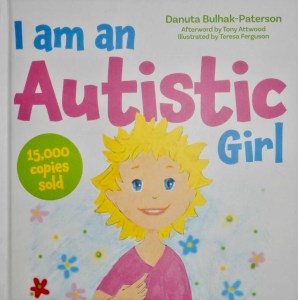
Always Never Always

All these are sage recommendations; I particularly like, ‘Never follow all the rules, / for some are surely made by fools.’

Through both words and pictures it comes through loud and clear that during life’s journey, like the protagonist, we should look for the positives and possibilities in things,

be mindful of the needs of others, be open to as yet undiscovered wonders, put aside negativity and remain open to joy.

An inspiring celebration of what the world has to offer, with Leila Rudge’s gorgeously coloured pencil and watercolour illustrations adding the potential for a wealth of stories large and small emerging along the way as you share the rhythmic text with young children, be that at home or in the classroom.

Lila Greer, Teacher of the Year

This image has an empty alt attribute; its file name is dscn9775-1.jpg


As a young child, Lila Greer is a fearful individual who resides in a large city with her father, four siblings, three cats and a crow. Little by little she gains confidence in familiar situations but a move to a new town sets her back again, especially starting at a different school and having to get used to another teacher. However. Ms Kern is an empathetic person and tells Lila that she can help by cleaning the chalkboard. Lila accepts the offer and the two chat as they work, till the child feels ready to speak of her worries and ‘What Ifs’.


This image has an empty alt attribute; its file name is dscn9776-1.jpg

Time passes and under Ms Kern’s watchful eye, Lila’s self confidence builds and she’s ready to join the other children in the playground. “What if you find friends?” her teacher suggests. And of course, she does. Yes those ‘What Ifs’ return sometimes as Lila reaches adulthood. She too becomes a teacher. That is definitely cause for a visit from the ‘What Ifs’. However, Lila recalls her erstwhile teacher, Ms. Kern

This image has an empty alt attribute; its file name is dscn9777-1.jpg

and how through her kindness, she had enabled the young Lila to find her feet. Who better to emulate as she meets her very first class of children.


Andrea Beaty’s rhyming story in combination with David Roberts’ characteristic watercolour, pen, and ink stylish illustrations show just how powerful the impact of the right teacher at the right time can be for a child. In so doing they have created a wonderful storybook acknowledgement that says thank you to educators wherever they are.

How Does Santa Go Down the Chimney?

If you’ve ever pondered upon the mystery of how Santa manages to go down the chimney, then this might well be the book for you. Countless young children have been spun that yarn over the years and now, frequent collaborators Mac Barnett using an unidentified narrator and artist Jon Klassen, put forward a series of hypotheses concerning his chimney descent, as well as looking at the possible means of entry should the house not have a chimney at all.

Klassen starts with Santa atop a roof, making adjustments: he pulls his belt tight in at the waist while a reindeer holds his jacket. Turn over and we see a mouse-size shrunken figure contemplating entering the chimney’s large opening. However, he might change shape in a different way. becoming super-stretchy so as to enable him to step in one leg after the other.

But supposing he should get stuck? Then what? A hefty kick from one of the reindeer maybe.. And what about all the soot that’s likely to get on his suit? A quick bit of laundry before moving on to his next house, perhaps.

For houses that lack chimneys there’s that well guarded (not) secret regarding the key under the flower pot; alternatively he can transform his shape so he can slide beneath the door or pass through the pipes and out of the tap into the sink. Having gained access things get even sillier. Does he possess the ability to get along with every household dog he meets: that would require a stash of doggy treats secreted about himself, as well as becoming the recipient of a succession of slobbery canine kisses. And what about night vision goggles if the lights are off?

Nothing is certain except that, as we read, ‘Santa goes up the chimney the same way he comes down.’ No conjectures about that though, merely the final assertion, “But I’m so glad he can.’

A splendidly silly seasonal comedy from the partnership that are best known for their droll delights delivered through dead pan words and idiosyncratic illustrations.

Christmas Cobwebs

Pippa Goodhart has written a rather different version of an old Eastern European folktale, The Legend of the Christmas Spider, that is thought to be one of the possible origins of tinsel on a Christmas tree.

Remembering the wonderful, magical times she had at Christmas as a cub, Old Bear resolves to share that Christmas magic with her friends. She gets busy cleaning her home and shooing out the spiders from inside and then turns to the outside, especially the large tree. She decorates it with a twiggy star, berries and rosy apples; then back indoors she bakes and creates a gingerbread house.
With the invitations duly written to all her friends, Old Bear suddenly hears voices. it’s those spiders again, pointing out that they’ve not been invited.

That night, tired from all her labours, Old Bear falls fast asleep right away. Not so those spiders however. They go outside to take a good look at the tree. They scuttle all over it, ‘weaving and winding wondrous webs.’ I love that alliteration and there’s lots more.

Next morning the spiders might have hidden themselves away but the fruits of their labours are evident and when Old Bear looks outside, she is not happy at what she sees on the tree. However there’s no time to do anything before her guests come a-knocking at her door. What do you think their reaction will be?

Just like that magically decorated tree, Ema Maliauka’s illustrations are a joy. So too is that Old Bear discovers the real meaning of Christmas in this tale of acceptance and embracing difference.
A super story to share every year during the festive season.

Santa’s Marvellous Mechanical Workshop / Santa Shark

This image has an empty alt attribute; its file name is dscn9727-4.jpg


It’s Christmas Eve and Lily has just moved into a new house but it doesn’t feel like home, there’s no food in the cupboards and she hasn’t got a single friend in this neighbourhood.


Acting on her mum’s suggestion to go upstairs and unpack her own things, Lily sets to work. She labels, sorts and organises until it’s almost time for bed. Then at the bottom of a box, she comes upon a wrapped package. Inside is a book but the cover and pages are blank. So it seems, but then a strange tiny creature waves and almost the next thing she knows, Lily is surrounded by snow and is being given warm clothes by the creature who tells her that it’s called Widget and is one of Santa’s elfbots. Moreover, she learns, Santa needs her help.

The bot leads Lily to Santa’s workshop wherein many more elfbots are busy making new toys. This isn’t however, where Lily’s assistance is required. In another section, Santa’s favourite, are all manner of old, broken toys. What’s needed Lily is told, is her imagination.

This image has an empty alt attribute; its file name is dscn9728-4.jpg

Can one little girl, one tiny bot and a lot of ingenuity transform piles of what looks like junk into wonderfully exciting toy inventions?


When asked what she would like in return for her efforts, Lily tells Widget her dearest wish before falling fast asleep on the sleigh. What will next morning bring: sadness at missing Santa’s visit or hope and the envisioning of making a new exciting family home?


I love the combination of creativity and up cycling in this magical seasonal story. It’s perfect for sharing in classrooms especially where there are children recently arrived from different parts of the world, and feeling like Lily as Christmas approaches, whether or not it’s a festival they would celebrate.

This image has an empty alt attribute; its file name is dscn9799-1.jpg

Ex-sea-dingly silly, laugh out loud sea-sonal fun is to be found ‘neath the waves in the company of Edgar the shark. It’s late in December and elasmobranch, Edgar, is getting ready to receive a very special guest; it’s none other than Santa Shark. For this he enlists the help of his crab best pal, Lotta. Lotta however has never before heard of Santa Shark so she takes a bit of convincing, but before long she agrees to assist Edgar. As they work together preparing for the visitor, readers are treated to a plethora of puns such as the making of Christmas cods

This image has an empty alt attribute; its file name is dscn9800-1.jpg

and a rendition of “We fish you a Merry Christmas.” However as bedtime draws near, Edgar suddenly has a horrible realisation: there’s no snow. What’s to be done? If there’s no snow, it means no visit from Santa. Can anything cause the desired precipitation? Perhaps the lovely Lotta might have a brainwave …
Dramatic illustrations and a zesty text will amuse both child and adult readers aloud.

Board Books Treats

This image has an empty alt attribute; its file name is dscn9866-1.jpg

Jumana Rahman’s sweet , or rather savoury, debut board book introduces little ones to a favourite Bengali dish.
A baby sits in a high chair watching an adult dropping chopped potato into a cooking pot on the stove – the first task when making the dish. This is followed by the chop chop chopping of chillies which induces a coughing fit in the child. Next onions are sliced and dropped into a frying pan; this brings tears to the baby’s eyes. Turn the page and the infant’s hands are mashing and squishing in a mixing bowl; then in go oil and salt

This image has an empty alt attribute; its file name is dscn9867-1.jpg

as the little one’s tummy rumbles in anticipation. A taste soon comes as the adult whom we never fully see, pops a small piece into the little one’s mouth. Even teddy gets a taste of the treat. Yum, yum aloo bhorta is delicious.


With fun sounds to copy and Maryam Huq’s illustrations that include some details of Bangladeshi culture – books, a stool, poster on the wall, label on the oil bottle – this is a book to share at homes and in nurseries. To complete the experience, why not try making aloo bhorta with little ones.

This image has an empty alt attribute; its file name is dscn9751-1.jpg


Pals Posy and Pip are enjoying a game of hide and seek in the snow and it’s Pip’s turn to hide. Has he hidden himself behind a tree, a hill, the house, a fence perhaps? No, Posy will need to go back indoors to find the whereabouts of his best friend.


Little humans will love lifting the felt flaps to help Posy in her search: I suggest they snuggle up with an adult before they start. That will ensure they’re not too shivery to enjoy the fun details in Axel Scheffler’s snowy scenes.

Peekaboo Santa is essentially a rhyming game with a Christmassy theme and sliders for little fingers to manipulate. So doing will reveal in turn, a pair of birds, a star atop a Christmas tree, an elf, Santa on a sleigh, a candle flame, a playful mouse, a surprise present, children anticipating Santa’s coming and finally, a mirror. With its bright colour palette and festive images , this is just right for the very youngest.

This image has an empty alt attribute; its file name is dscn9783-1.jpg

Little ones will encounter, not just the little dinosaur responsible (with their help) for the stomping, roaring and other sounds in this book, but a number of other prehistoric creatures too. There’s Triceratops, Diplodocus, Stegosaurus, Ankylosaurus and Tyrannosaurus to name just some, as well as a tiny hatchling hiding in plain sight on every spread, waiting for keen-eyed little humans to find it.


A fun book for sharing and as an adult or older sibling reads, said little humans following the story will love pressing the main protagonist’s squishy buttons and in so doing, will be developing their own fine motor skills and powers of observation.

Dasher Can’t Wait for Christmas / ’Tis The Season

Dasher (the reindeer we met previously in the book named after her) is so impatient she just cannot wait for the big night when she’ll help pull Santa’s sleigh. With just one sleep remaining before Christmas Eve, she’s wide awake with excitement and taking a run, she leaps skyward to investigate the music she’s heard.

Enjoying herself thoroughly, as the music dies away she spies bright lights on the horizon. In her joy, she fails to pay heed to the falling snow and is unable to find the North Star to guide her, so again she takes to the sky, hoping to find something familiar. At last she sees something bright way ahead.

Flying towards the light, she discovers a wonderful Christmas tree in a garden and decides to land to take a rest. There she encounters a small girl. Having admitted to being lost and hungry, she receives, thanks to the child Charlie’s kindness, both food and a means of finding the way back home. This Dasher does, just in time to reach the North Pole where a worried Mama and Santa await.

Then off they go, the reindeer team pulling Santa along on his delivery round, during which Dasher ensures that they stop to leave a special thank you to Charlie.

A gentle story with some tense moments and a happy ending, dramatically illustrated by the author.

Constructed of thick card, this fold out book will work well with children from around four, right through KS1. Of the twenty four shortish poems included some have a distinct Christmas feel, others are wintry and the whole thing opens into a gorgeous advent calendar zigzag frieze that can be brought out yearly on the first of December.

There are flaps to open on each of Richard Jones’ beautifully illustrated snowy spreads, the first five of which have four poems each, the next has three and the final page has Philip Waddell’s clever What Christmas Is For, the last two lines of which are the hugely pertinent, ‘Christmas is a time for peace – / Forgiving and forgetting.’

Bunnies In A Sleigh / Pink Santa

‘A crazy Christmas story’ announces the cover and , this rhyming tale of disaster averted thanks to the Sunnytown bunny brigade is definitely that. The story begins in Santa’s workshop where the elves have over-indulged on candy canes and consequently are unfit for further duties. It’s Christmas Eve so the Chief Elf is in a real panic for it seems Santa will be sans his little helpers.
Happily though, who should be heading to the rescue on a sleigh pulled by dogs but those bunnies. Just as Santa’s reindeer are preparing to depart on the delivery round, they appear with a leap and a bound right into Santa’s sleigh. Full of the Christmas spirit they surely are.

With a safe landing duly made on a rooftop, the deliveries begin in earnest and a considerable amount of soot is scattered by exuberant leporine leaps and bounds. Then it’s back aboard the sleigh but not for long thanks to a mistimed present sort by Santa that results in a scattering of the bunnies.

Nonetheless, never say never: those bunnies are there to save another sticky situation and the work continues apace as the end of the night draws ever nearer.
How will it all end? Let’s say, Santa is happy with the way things work out. And the bunnies? It’s a case of munching and crunching with the reindeers.

Ben Mantle’s portrayal of the bunnies is full of the Christmas spirit; readers will love perusing each spread and discovering all the small dramas that are unfolding alongside the main storyline.
Anybody for a carrot?

Tanya Hennessy has used as her starting point the classic Clement Clarke Moore poem that begins, ’Twas the night before Christmas’ and with rhyming stanzas, created something inclusive and alternative.
It begins in Santa’s workshop where the work is complete and Santa is ready for the off. Not quite though, for his suit, which is decidedly whiffy, is badly in need of a wash. Rudolph tosses it in the machine, along with some socks, turns the heat up high and … It turns out that the red colour wasn’t fast, for the suit comes out a vivid pink.

Rudolph turns to Mrs Claus for advice but as she and the elves are pondering the pink hue, in comes Santa. However, he’s not in the slightest bit bothered. Let’s do Christmas pink!’ he declares, adding that pink is for girls, boys, elves, toys, Rudolph, tree and of course, himself.

Having ‘pinkified’ everything, off goes Santa and his team, sprinkling pink cheer wherever they go. An exciting change from the traditional red and green hues and one from which Santa learns so he tells his pals back at the Pole after the deliveries are complete, an important lesson: “the best things in life sometimes come from mistakes.” So true. And as for the following year, who knows …

A warm-hearted tale celebrating being flexible in your thinking and being ready to embrace change.
Full of fun details, Ben Whitehouse’s vibrant illustrations match the upbeat mood of the rhythmic telling.

Molly, Olive & Dexter: The Guessing Game / Tiny Owl’s Scary Day

In the second of this delightful series featuring residents of a garden oak tree, Molly the hare, Olive the owl and fox, Dexter, the friends are playing a guessing game. Dexter thinks of something and it’s immediately guessed by Molly. Her thought is equally easily guessed by her friends and that leaves Olive to be the thinker. “I’m thinking about TWO things at the same time!” she announces.

Young listeners may well have guessed her ‘think’ at this stage but will enjoy following the fun as Molly and Dexter endeavour to work out the answer prompted by Olive’s clues. Even when she practically tells them, the others can’t get the answer right and consequently they get grumpy until at last … the penny drops. Now everyone is happy and it’s time for the three best pals to enjoy a snooze.

Gentle humour and outstanding illustrations make this a gorgeous book to share with the very young.

As dawn approaches, Mummy Owl tells Tiny Owl it’s time for sleep. She though pays no heed to this and despite the possibility of encountering scary things, off she ventures to explore what the day has to offer.

Soon other birds start to chase her; she enjoys the fun but feeling tired, she takes rest by some flowers. It’s there that the first scary thing happens, so away she flies.

The river is her next stop but as she stands on a large stone, Tiny Owl is unaware of being watched. ‘Creep Crack Click Clack’, scary moment number two. Time to take to the air again, in search now of a quiet place.

Resting on a branch along with several other birds feels safe but before long comes scary moment number three.

Accepting that her mother was right about the scariness of the day,Tiny Owl decides to head for home but when she reaches her tree, there is no Mummy Owl waiting to welcome her. Yet another scary moment but this time there is no need to worry; it’s Mummy returning. Where has she been to make her so tired? Having recovered from breathlessness, the two owls snuggle up together until the moon comes up, calling them out into the night sky.

Young children will love following Tiny Owl’s adventure with its alarming encounters, dramatically illustrated in Petr Horáček’s striking illustrations.

King Lion

Being ruler of a kingdom is a lonely task so King Lion decides a friend would relieve his loneliness. His roaring however, only serves to send any potential companions running. So he tries paw waving, smiling and cracking jokes but nobody understands his message. Then feeling lonelier than ever, he climbs right up to the very top of a clocktower – the tallest place in his kingdom – and asks once more if anyone will be his friend. Again all that happens is that his roars, jaws and claws cause terror and misunderstanding. “The King is dreadful,” say his subjects as they rush away to hide leaving their ruler growing ever wilder with sadness, which he expressed as always by roaring.

Then one day, a little girl sees the lion with his alarming characteristics. She though has a feeling that perhaps she understands the creature.

That night she comes up with a very, very brave plan. This she enacts the following morning … There’s no better way to communicate than this child’s way, which is based on experience and understanding, both of which lead to a lesson for the lion and the start of a happy friendship between the two.

Funny, joyful and dramatically illustrated.

Mouse & Mole: Boo to the Who

We’re back in the company of the delightful Mouse and Mole for three further episodes.
Here and There starts with Mouse announcing that he’s going for a walk. Mole decides to accompany him despite not knowing the destination. Before long they reach a kissing gate; Mouse is interested in how it works, Mole asks, “Are we there yet?” On they go till they get to a bridge. Mouse pauses to enjoy the water; Mole merely says, “But are we there yet?”
A grassy meadow,

a stile, a windmill, a cornfield with haystacks all offer brief stopping points but Mole still grumbles. Time to return home. Mouse tells his pal it was a very good walk. Mole remains troubled about the location of ‘there’. They consult the map and Mouse points out all their stopping places. A realisation dawns on Mole …

In Boo to the Who the two decide on a cosy night indoors but very soon Mole is troubled by a pair of staring eyes – they belong to the WHO that comes creeping in the night, he tells Mouse. According to hearsay it can squash the breath right out of you. After some discussion, they go out into the darkness to investigate, suitably disguised so as to ‘show this WHO who’s who.’ A strange encounter takes place that ends with pie sharing.


A Sad Moment sees Mole in a state of perplexity. Mouse gives him a bowl of his favourite pea soup to eat with his favourite spoon but instead of tucking in, Mole opens the door and goes outside in the cold, to heighten the pleasure of eating his soup, so he says. Starting to consume his soup, he tells Mouse that it’s the happiest moment in his life; but then he gives a loud sob of sadness. Mouse is somewhat confused. There follows a philosophical discussion, essentially on the topic of savouring the moment as Mole relishes his repast.

It’s all wonderfully droll with Mouse not batting an eyelid over his friend’s overthinking of so many things. James’ witty illustrations capture so well the quirkiness of the relationship between the friends.

Do You Remember?

As a mother and child lie in bed in the dark, they take turns to share fond memories. The voices are printed in different colours to enable readers to know who is speaking. “Do you remember …” the mother begins, “when we had a picnic in the field?” What we see are dreamlike watercolour scenes wherein Smith brings to life this treasured time when the child was excited about finding and sharing sweet berries when he and his parents were on a picnic.

The child then recalls the trials and tribulations of learning to ride a bike. We can almost feel the tension of the darkness caused by the loss of power relieved somewhat by Grandpa’s old oil lamp.
The boy now asks, “Do you remember . . . leaving our home behind? We packed up everything we own in our pick-up truck and drove down the motorway, farther than we’d ever been … We were lost.” “Of course I remember,” his mother replies.

A change of landscape is called to mind as the two drive through the city … to where they now are. Changed also is the number of family members for having handed his son a teddybear, the father has stayed behind.

There follow two beautiful wordless spreads and we realise that the move has only just happened for what we see next are partly unpacked belongings about which the mother and son have been reminiscing.

The boy then moves to the window asking, “Can we make this a memory, too?’ As the sun rises he savours the smells and sounds of this new city street and reassures himself that all will be well. “Yes, I will remember this,” he says returning to his mother’s side.

We know not why the father isn’t with them: that is for us to surmise.
A truly touching tale, awesomely told through the fusion of lyrical text and tender illustrations.

Rosie Frost & the Falcon Queen

When Rosie Frost’s mother dies, her world is upended. She’s an orphan and according to her mother’s letter of final wishes, she is sent to Bloodstone Island where there’s a school for exceptional students. This school – Heverbridge – was founded by Queen Elizabeth I to honour her late mother, Anne Boleyn. As a scholarship girl, Rosie soon finds herself on the wrong side of some of the pupils and the unpleasant deputy head, Mr. Hemlock. Part of the island is a conservation site where many endangered species are found. It’s not long before Rosie is worried that Mr Hemlock has plans that will harm the island’s precious animal inhabitants and indeed their whole environment.

Believing he needs to be stopped and aiming to make her voice heard, Rosie enters the Falcon Queen Games, a three-part competition aligned with the school’s values of courage, power, and freedom. By so doing, she also hopes to discover more about herself and who she is.

As a pupil, and even more so as a contestant, Rosie faces bullying and adversity at almost every turn. However, she makes a number of helpful friends and allies, though isn’t always sure who is to be trusted. As Rosie faces misfortunes and mishaps, she does so with determination, constantly endeavouring to push herself beyond her comfort zone.

With its fantastical and historical elements, this fast-paced, twisting, turning story will captivate older readers who enjoy mystery adventures. It ends on a cliff-hanger with its main protagonist clutching something that she is told, is a reminder of the the spark within her, of who she really is.
I look forward to the next episode.

A Way to the Stars

Young Joe wants to find a way to the stars but when he tells his friends they just laugh at him. Not so his Dad though: noticing the responses from those friends, he intervenes offering help.

Together they try all manner of ways to reach the stars, some pretty risky, but with his supportive parent always there to catch him, no harm comes to Joe. Instead they have lots of fun being inventive as they try constructing among other ideas, a tower to climb, building a rocket and fashioning a seesaw.


Refusing to give up – “in your dreams” Joe says as they laugh over their efforts – father and son build a shed, paint the inside with a gorgeous skyscape and fall fast asleep. We share in their thrilling dream as they rise skywards and “danced among the stars … wandered through the heavens,. They spun across the galaxies … and they kept on dancing.” …

All the way to the stars.


I love the way in which Gill Smith’s colour palette moves from the warm autumnal hues of the opening spreads to the midnight blues of the skyscapes towards the end of the story. A truly uplifting tale of resilience from the minute we meet Joe in his bedroom with its planet mobiles and other evidence of his passion and his ambitions.

A Trip to the Top of the Volcano With Mouse / Gotta Go!

These are both Toon Books an imprint of Astra Books for Young Readers – thanks to GMC Distribution for sending them for review.

Mouse and a human have embarked on an expedition few people would contemplate: they are going to climb Mount Etna. Mouse though is much more interested in when there will be a pizza eating opportunity. The entire story is told through speech bubbles and Viva’s striking graphics, and includes a number of non-fiction elements including the necessary climbing equipment and is followed as they start their ascent, by basic information about volcanoes and their structure, plants and animals.

All the while Mouse interrupts with comments relating to the pizza he desires and complaints about the climate conditions.

An enjoyable, satisfying excursion for the climbers and for readers too, especially those with a preference for visual stories or under confident readers of prose. The inspiration for this came from the story creator’s own experience of a Mount Etna climb.

Having assured his mum that he doesn’t need to use the loo before setting off to Grampa’s, ten minutes from their destination Owen looks up from his on-screen game and announces “I gotta go!” Mum offers some advice but the result is thoughts about water-related items. However the boy manages to hold it in until Grampa’s where he makes an immediate dash up three flights of stairs, to the bathroom … ‘Ahhh … “ the relief.

Off they go to the park accompanied by dog, Whizzer. Owen learns why Grampa and other older people get up early and they play a ball game with Whzzer who also pauses to wee against a tree. Grampa and Owen start discussing holding-it tactics. “I find that dancing helps me!” Grampa says and before you can say, ‘wee’, the two of them are going through Grampa’s repertoire of preventative dance moves, including the Tinkle Twist and the Wee-wee Walk, then Owen introduces the Pee-pee Hop, the Piddle Patter and the Leafy Shake.

All the while the queue to use the restrooms is growing ever longer behind them and some of those waiting also try out the moves.

Enter Mum to collect her son; she wonders what is going on and asks Owen if he needs the loo before they leave for home. Once in the car she comments, “Well, that was a great learning experience, wasn’t it?”

I’m sure readers of this comic tale will agree wholeheartedly with that. I’ve yet to meet a child who doesn’t enjoy toilet humour stories and Frank Viva’s with its apt colour palette, is sure to make them giggle from start to finish. I’ve never encountered this author/illustrator before and I wholeheartedly recommend his take on an experience we can all relate to.

Kaia’s Big Felines / Duck, Duck, Tiger / The Kid with Big, Big Ideas

Like all young children, Kaia has a multitude of feelings and emotions, each of which she associates with a different kind of cat and she loves to play with these creatures in her mind.
She sees herself as fast and fearless like Cheetah, loves to be in the spotlight like Leopard, is sometimes carefree and lighthearted like Puma, quiet and calm like Snow Leopard, and identifies with Tiger’s fierce temper. When her emotions become too intense, she needs to take some quiet time alone to rest and regain her equanimity. After this her friends can return and it’s time for some peaceful shuteye.

A charming, beautifully illustrated book to show youngsters that we experience a variety of feelings and that there are times when we all feel emotionally overwhelmed. A helpful starting point for a KS1 classroom circle time discussion.

Lila feels out of place all the time, like a tiger in a world full of ducks. She struggles with her feelings of otherness and in order to belong and not be rejected, she hides her true self and tries her best to be a duck. Eventually though, her efforts at pretence take their toll and she can’t cope any more so she decides to confide in her Gran. Gran’s empathetic response is such that it encourages Lila to embrace her true tiger self, to discover what true pride really means for her.

An affirming picture book that uses a feline metaphor was inspired by the author’s childhood experiences. Yes, this boldly illustrated, affirming book is about and based on the acceptance of an LQBTQ+ identity, but the story is equally applicable to those who feel different in any way, offering a safe space within which to talk about feelings of otherness and discuss embracing our unique selves, acceptance, and self-pride.

Listen carefully to children’s ideas is the message that comes across loud and clear from this rhyming story, which begins like this: ‘There once was a kid with glittery nails / who always wore colorful socks, /and all around town, this child was known / for thinking outside of the box.’ Hurrah! a creative, divergent thinker. In this instance a nonbinary child with ideas so big and wild that grown-ups often dismiss them. I love this, “Imagine if everyone was accepted, / with curiosity and an open mind. / And if every place in the world was safe / and every person you met was kind!”
Sadly this child begins to lose heart having overheard a discussion on Gran’s tv news. However Gran is a supportive person and with her encouragement and help, the two of them come up with the biggest idea so far – Just Ask Kids – a programme where people of all ages and stages come together on air and endeavour to solve problems by using their imaginations.

Although things are improving in this respect, children are all too frequently excluded from decision making. We need to be braver and bolder and accept that children’s voices need to be heard; some of their ideas might set our world on the road to real progress. Illustrator Jacob Sousa has used his imagination to great effect in his portrayal of this book’s protagonist and the way in which one community is opened up to change.

Tom Gates: Five Star Stories / The Case of the Chaos Monster

These are two recent titles from Scholastic: thanks to the publisher for sending them for review.

In the latest hugely silly, enormous fun account by Tom Gates we find the boy pondering upon what story to write from his repertoire of hilarious happenings to gain a place in Oakfield School’s book of Five-Star Stories. Having heard about the book from his teacher, he takes his sister’s advice and goes to his room in search of inspiration. There he keeps his collections of odd objects – just what he needs when it comes to writing a funny story. First he remembers about Great Aunt Aggie’s fake bird hat, currently sitting up on top of his wardrobe. Or what about that special weird stone with a hole and how he found it. Perhaps an account of the cinema visit and the mystery of his favourite cinema snack – Chocoteezers might be a better option; but on fourth thoughts, could the saga of his very special pen be the one to go for.

His mind is buzzing with possibilities but he can’t waste any more time (other than doing a special five star doodle) or the closing date for entries will be gone. Which story will he write and will it be chosen for the book and who will get to read it?

Be prepared for giggles galore and comical doodles in abundance when you read this.

Set in an alternative 18th century London, this sees the return of the Elemental Detectives,
Marisee and Robert with another mystery to solve. It’s six months after their first case and alarming things are happening to the city’s music. A young soldier’s bugle playing is stopped unexpectedly after a few notes and more music starts disappearing.’ Even the orchestra playing in the Vauxhall Pleasure Gardens comes to a sudden halt.

A horrific monster, the Domedary has awoken and is threatening the city. Could this be connected to a stowaway Fumi – an air spirit – from Salzburg that had hidden itself in the musical box of Nannerl who is travelling to London with her family that includes child prodigy, Wolfgang?

Supported by the well-keeper Marisee’s Grandma, with the Fumis claiming back their favour from Marisee, the two young detectives must track down the thief that’s behind the disappearance of the music, a quest that involves visiting among other locations, the Isle of Dogs with its weird windmill as well as encounters with characters both human and elemental, some trustworthy, others definitely not.

Brilliantly imagined, this enthralling tale will keep older readers gripped throughout.

An Animal A Day

Following A Dinosaur a Day, author Miranda Smith turns her attention to wild creatures of all shapes and sizes.

My first port of call was the date this book arrived in the post – 27th October – where the featured creature was the Eastern Water-Holding Frog found in eastern Australia. This small carnivorous amphibian, I discovered, ‘aestivates’ when it becomes too hot and dry … burrowing underground and making itself a water-conserving cocoon from mucus, only breaking out when it rains, which could be several years later. This frog shares a double spread with five other animals, each of which exhibits a form of hibernation, another type of dormancy.

A number of double spreads are thematic, whereas others are devoted to a single animal. One such is Red Deer (16th November). This date is during the two month rutting season and the sound of stags bellowing and clashing antlers with rival males is one I frequently hear in Bushy Park.


I was surprised to meet one of the world’s biggest tortoises, Española giant tortoise, a resident of Española island off the coast of Ecuador. This herbivorous shelled reptile can be as much as a metre long and weigh 70kg, and may spend as much as two thirds of each day at rest. Sadly this tortoise is among the critically endangered animals.

No matter where you open the book (one suggestion given is that you start on your birthday), you will find something of interest as you visit our planet’s amazing ecosystems and habitats and discover how the native animals are able to thrive, or at least survive. Each one is strikingly illustrated by one of the named artists.
Readers concerned especially with conservation of the threatened species, will find information about how we can all contribute to their survival. Back matter includes a quiz, glossary and index.

The Duck Who Came For Dinner

It’s the turn of a fluffy little duck to become the guest in team Steve and Joëlle’s fifth in their series featuring animals who came for dinner. This story begins one windy day when Wolf, Hotpot and their crocodile, Omelette are chasing washing that has been blown off the line. Instead of a garment, Wolf catches a duck who now has a wonky wing and a bumped head. The latter has resulted in memory loss, so Hotpot decides that because she fell from a tree, they’ll call the little duck Apple. They invite her so spend the night with them on account of her wibbly wobbliness and after Wolf has given some first aid to Apple’s wing, they all dine on vegetable soup.

Next morning Apple decides to start flying practice, which proves pretty hair-raising and Wolf suggests that a trip to the river might be a better idea than more flying. Determined to show her independent spirit, Apple waddles boldly up the hill

but in her excitement, she fails to stop at the top and ends up dashing right over and splashing into the river, followed almost immediately by Omelette who proves to be the inferior swimmer.

As the days pass, Apple’s wing becomes stronger but to her distress she still can’t fly very far. Then comes another sudden gust of wind whisking away the washing once again. The mention of the word kite gives Apple an idea.

Next day it’s still windy but it’s Hotpot that is whisked away. Who will come to the rescue? And what will this lead to? …

Existing fans of Wolf and Hotpot’s adventures will love this new one; but whether young children are already familiar with their previous stories matters not: with its unconventional little duck, this is an absolute delight.

Girls Rule: 50 Women Who Changed the World

This is the second book written by double Paralympic champion Danielle Brown, the first para athlete to represent Team England in an able-bodied event at the Commonwealth Games,
Right from her introduction readers are empowered by such words as “There are no limits to how great your dreams can grow, or how much you can achieve when you keep your curiosity burning … You are bold, talented, unstoppable. And when you stay true to your beliefs, you too, can change the world.’

Travelling through history and to various parts of the world, we are introduced to female activists, artists, writers, teachers and educators, peacekeepers, pirates, politicians, spokeswomen, scientists, sportswomen and survivors who have, or are still changing the world. Often they’ve had to overcome almost impossible odds, getting over or through huge barriers, in pursuit of what they believe(d) to be right or important.

One of the women was a new name to me: Christine de Pizza an Italian who lived from 1364 to 1430. Her father became a member of the French royal court and when living in France she had access to the palace libraries and learned to read and write. After her supportive husband died, she had no money and unexpectedly, decided to become a writer who challenged the way women had always been presented in stories and accounts. She uncovered and shared true stories of women inventors, artists, scholars and more in the hope that sharing these would change the way women were treated. She was also determined to get a better education for girls.

Those who care a lot about the environment will be interested to read about Wangari Maathai who grew up in rural Kenya. Having earned a degree from an American University, she returned to her home village and on realising that vast forest areas of Kenya had been destroyed, began planting trees. She founded the Green Belt Movement and over the next three decades, despite the negative attitudes of Government officials, more than thirty million trees were planted. Eventually this inspired a United Nations campaign. What Wangari realised, that many others didn’t, was the strong link between looking after the environment and the reduction of poverty and in 2004, she was awarded the Nobel Peace Price for her work helping communities, particularly women, to restore the environment and their livelihoods. What do you think she did to celebrate her prize?

Stylishly designed, a double spread is allocated to each woman featured and as well as the written biographical details, there’s a large illustration and for most, a significant quote. Here are a couple: “I refuse to believe that you cannot be both compassionate and strong.” (Jacinda Arden, the Prime Minster of New Zealand for over five years) and “The greatest gifts we can give our children are the roots of responsibility and the wings of independence.” (Maria Montessori, doctor and educator.)

Another inspiring book about following your dreams for KS2 readers.

The Incredible Adventures of Gaston Le Dog

This image has an empty alt attribute; its file name is dscn9794-1.jpg


This story is based on tales the author was telling his son on holiday in France where the book is set. When Michael was ill with COVID-19, one of his aims was to get better and finish this book. I found myself smiling all the way through as I followed Gaston’s journey with its multitude of adventures and challenges where danger lurks at every turn.

Determined to return to the wonderful beach he remembers from long ago, Gaston leaves his close friend Hirondelle and has to navigate a world of fairy tale, magic and myth. In so doing he encounters all kinds of intriguing, mostly animal, characters willing to offer help on his journey.

This image has an empty alt attribute; its file name is dscn9798-1.jpg

Readers may well recognise characters from classic stories including Puss in Boots. Which ones can Gaston truly trust and will his adventure finally lead to all that he’s hoping for?


It’s captivating, playful, thought-provoking and multi-layered: a special treasure of a book – made even more so by Viviane Schwartz’s splendid illustrations. Perfect for solo readers but equally an absolute delight to read aloud: it will appeal to a wide age range and is a tale to return to over and over. It’s likely new understandings will emerge at each re-reading.


The Snowman and the Robin

Over forty years ago, Raymond Briggs created the The Snowman, which has become a classic. Since then others have added additional layers of seasonal magic to the story and now we have this wondrous tale by Michael Foreman.

On a chilly winter’s evening in a park in London there stands a snowman created by children who have clad him in a striped scarf and old woolly bobble hat. As the snow falls around him, the snowman suddenly hears, “Hey! Mr Snowman! You’re back!” It’s a little robin standing atop a statue, the Snowman discovers having turned his head around with considerable effort. The two strike up a conversation that quickly becomes a friendship as Robin invites the snowman to accompany him on a tour of the city.

We then follow the two on a night of adventure as the robin takes to the wing and the snowman finds his feet. Gliding through Hyde Park they pass the Albert Memorial and Marble Arch, then onwards to other famous London landmarks including Buckingham Palace,

Piccadilly Circus, Trafalgar Square with Nelson’s Column, and Big Ben. As the sun rises, their itinerary also takes them to the Millennium Wheel

and it’s there that the snowman notices something, to his eyes the wheel is growing. Robin knows that it’s not the wheel but the snowman that is gradually changing.
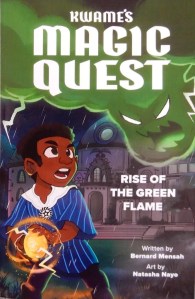
His night of wonderment is coming to an end but not before he discovered how absolutely amazing the world is, even if his own existence is short. The last few spreads are truly beautiful and poignant. Foreman’s artistry with words and pictures remained undimmed; indeed here it shines brighter than ever.

This, like its progenitor, is sure to become a classic. Buy to give and buy to keep.

Peter the Cat’s Little Book of Big Words / Get Off Bear!

Do you want to help your child become a logophile or a philomath, or perhaps both? Then try sharing a copy of this compilation by Peter, feline ‘Pawthor’ of this lexicon and a character from the Gaspard the Fox series. Said moggy shares his passion with readers, providing one or more big words for most letters of the alphabet. Each word is accompanied by its meaning and the way it is said on one page and opposite is a full page illustration by James, almost all from the Gaspard series.

Peter’s book is logically arranged in alphabetical order starting with ‘Acclivitous’, meaning rising steeply and going through to ‘Voluminous’ where it ends. Several letters aren’t featured – H, J, K, O, Q, R, T, U although there’s a proliferation of Ps, Cs and Ss.
In my experience, young children love to impress grown-ups by using big words so this book should definitely hit the spot.

The forces push and pull are explored in this simple, fun story. Bear turns down his animal friends’ invitation to join them in building a snowman, saying he wants to go sledging instead. However being on flat ground means that the sledge won’t move. Frog offers to push but Bear is far too heavy and he doesn’t seem aware that the sledge needs to go in a downward direction, which means getting up the hill first.

Even with all the other animals’ combined assistance, their pulling and pushing results in a snapped tow rope and a return to the place from where the co-operative effort began. Is there a way that Bear and all his friends can enjoy a sledge ride even if some of their number need to hone their steering skills?
As always in this series, Tony Neal’s illustrations are bursting with humour.
The final spread offers some force-related activities for adults and little ones to try together.

The Oak Tree

One thousand years ago, a little acorn began to grow. Through Julia’s characteristic rhyming narrative and Victoria Sandøy’s illustrations we follow a thousand years of changes through the Norman

and Tudors periods, the Victorian age and the 20th century World Wars, as it grows to become a magnificent oak tree in modern times.

A tree that provides food and shelter for a multitude of birds including jays, owls and woodpeckers; and creatures such as squirrels and bats, a king even, until having become hollowed out, it topples in a storm and becomes a place of play for both children and animals

as well as an abode for hedgehogs and somewhere for ants to deposit their eggs, spiders to spin and beetles to scuttle.

That is not the end though, we come full circle as there on the ground beside the fallen oak is an acorn that is just beginning to grow into a new tree.

A clever amalgam of fact and fiction: I love that Victoria always shows this tree as a location where children play happily: her atmospheric pictures capture beautifully, the changing seasons, even in the snowy scene a warmth emanates from her illustration.

Young children will delight in spotting all the creatures mentioned in Julia’s text as they follow the story.

Ready, Steady Squirrel

When little Evie squirrel’s Granny is poorly, Evie takes it on herself to collect all the food they need for the long winter. Having consulted the map and wrapped up warm, she sallies forth clutching a huge basket, on her first ever solo squirrelling expedition. Close by she discovers acorns hidden in a tree stump. Into the basket they go as it begins to snow. Then, after a considerable amount of wriggling and attempting to avoid all the prickles, she has collected all the fir cones.

Chestnuts are next, followed by hazelnuts. This involves digging right down into the snow but Evie’s determined to collect every single nut. Now all she needs to do is to push her load home and as she tells herself at every challenge, she doesn’t need help from anyone. It’s an uphill struggle but Evie reaches the hilltop and then decides to have a little rest. Closing her eyes she leans back and …

The next thing she knows is the contents of her basket are scattered every which way. As for Evie, she tumbles all the way back down the hill to land in the midst of her friends. Her response when asked if she’d like to play is tears, followed by the story of how she’s collected everything herself, only to lose it in the snow.

Moose and Woodpecker reassure Evie that help is at hand and operation treasure hunt begins. It’s not too long before, with a brimming basket and a toboggan ride, the little squirrel arrives back home. “We did it together!” she tells Granny.

A warm-hearted tale of determination, friendship and courage, that Nicola has illustrated with elan to match her main character.

The Ice Children

This image has an empty alt attribute; its file name is dscn9739-1.jpg


With echoes of Hans Christian Andersen’s The Snow Queen and Oscar Wilde’s The Selfish Giant, this magical fantasy from the author of Twitch and the Adventures on Trains series draws you in from its opening lines: ‘Once upon a warm winter, in the dawning darkness of December, a boy was found in the city rose garden. The boy looked like a statue. He was frozen solid.’ Said boy, Finn, the five year old brother of Bianca is wearing his pyjamas, his hair is full of icicles but he’s still alive – at least he has a heartbeat but nobody can wake him. Bianca is determined to find out what is going on. She soon suspects that the sparkling silver book he got from the library has something to do with it but the book has mysteriously disappeared.


Now whereas one frozen child is indeed puzzling, with the number of ice children increasing day by day, it is imperative that the mystery is solved and Bianca knows it’s down to her to discover the truth. Who or what is behind the freezings? Could it be that strange tall cloaked man with a top hat and a triumphant smile?


This image has an empty alt attribute; its file name is dscn9740-1.jpg

Bianca’s quest takes her into a fantastical winter wonderland, full of beauty and danger where nothing is what it seems: a world splendidly depicted in Penny Neville-Lee’s black and white illustrations


This image has an empty alt attribute; its file name is dscn9741-1.jpg

Make yourself a hot chocolate, snuggle up in your hoodie blanket and prepare to be transported into a brilliantly imagined tale, at the heart of which is a vitally important message about climate change and global warming.

This In Not Polar Bear / Ruffles and the cold, cold snow

Here are additions to favourite Nosy Crow picture book series – thank you to the publishers for sending them for review.

No matter what the ursine character looks like, readers are assured that the large white furry creature is NOT a polar bear. What is evident from the outset however – polar bear or not – is that he’s exceedingly versatile and can turn his paws to all manner of activities such as roller skating, violin playing , ski-jumping, high board diving, train driving,

disco dancing and more. Moreover when it comes to keeping a friend safe, helping with a spot of research,

tunnelling for treasure or even saving the world then it’s pretty clear who to turn to: that new and truly astonishing friend who sports a bobble hat and scarf. Should young listeners acquire such a friend, I wonder what name they would give it.

A splendid addition to team Timms and Adamson’s This is not a series which despite its chilly setting, bounces along apace when read aloud and is illustrated with panache in Ged’s vibrant scenes that contain a wealth of humorous details.

Playful Ruffles and his teeny tiny kitten pals return in a wintry tale that tests the pooch’s courage to its limits. Like this reviewer, Ruffles does not love the cold, cold, slippery slidey snow, in contrast to his feline friends. They absolutely delight in it until that is, they find themselves buried so deeply they can’t free themselves.

When Ruffles hears their desperate Miaow! Miaow-ings for help, he feels scared:

supposing he too sinks and gets stuck in that snow …
After some thinking, worrying and whimpering, he thinks some more. Can he find sufficient daring to attempt a rescue operation and get the kittens safely back home to the warm indoors?

BRRRR! Definitely one to share snuggled up in the warmth of a nursery or home, preferably with a hot drink.

Celebrate!

This image has an empty alt attribute; its file name is dscn9748-1.jpg


Wow! What a massive and challenging undertaking to research and present fifty festivals and celebrations from all over the world. This is what writer Laura and illustrator Hannah have done, in collaboration with the British Museum.


By bringing people together, festivals help create a sense of belonging – of being connected – be that to a country, a religion, a family or another group with a shared interest. The first nine festivals in this book are celebrated all over the world, so next time you participate in Diwali or Christmas festivities for example, think how many others all over the globe are doing so too.


Then come ten celebrated in different European countries, followed by in turn seven in parts of the African continent, six in countries of Asia, the same number in North America. We learn of nine celebrated in countries of South and Central America. Inti Raymi is when the Inca people of Peru, many with their faces painted yellow, honour Inti (their sun god) by making music and dancing.

This image has an empty alt attribute; its file name is dscn9750-1.jpg

The final three we’re introduced to are observed in countries of Oceania.


During my travels to India I’ve participated in quite a lot of festivals, mainly Hindu ones, at various times of the year, and have also enjoyed being an onlooker at secular and religious festivals there and in other parts of the world. However, I was fascinated to learn of a fair number that were new to me: it’s great to discover new rituals, celebratory dress, dance and music. One such is the Golden Stilt Festival that marks 30th September 1830 when Belgium officially became a country. Its highlight is the Fight for the Golden Stilt.

This image has an empty alt attribute; its file name is dscn9749-1.jpg


With her vibrant scenes, Hannah Tolson’s illustrations really help bring each celebration to life on the page. She does so in such a way that readers are likely to notice different details each time they revisit the book.

What You Need To Be Warm

In 2019 Neil Gaiman author and UNHCR Goodwill Ambassador, asked his Twitter followers, ‘What reminds you of warmth?’ He received thousands of replies and from these he composed a freeform poem in aid of UNHCR’s 2019 winter appeal.

The images Gaiman gathered signifying warmth range from clutching a baked potato

to ‘The tink tink tink of / iron radiators /waking in an old house. / To surface from dreams in a bed , / burrowed beneath blankets / and comforters,’ …to ‘the wood burning / in the stove’ .
There is hope though for the poem concludes thus, ‘You have the right / to be here.’
Thirteen artists: Yuliya Gwilym, Nadine Kaadan, Pam Smy, Daniel Egnéus, Beth Suzanna, Marie-Alice Harel, Petr Horáček, Chris Riddell, Bagram Ibatoulline, Benji Davies, Majid Adin,

and Richard Jones each provided an original illustration. Twelve illustrators offered comments printed at the back of the book. Oliver Jeffers created the stirring cover art and this important, compelling book is the result.

A wonderfully warm glow emanates from his cover images: would that such warmth be offered to all refugees and other people displaced of necessity around the world. With both the on-going conflict in Ukraine and now that in Israel and Gaza, its humanitarian message is even more urgent today than it was four years back when the tweet went out.

A donation of £1.55 from each sale of the book in the UK and at least 40p from sales in other territories will be donated to the UN Refugee Agency.

Princess Minna: The Wicked Wood / Mermaid Academy: Maya and Rainbow

These are additions to popular Nosy Crow series for younger readers: thanks to the publisher for sending them for review

There’s nothing multi-talented young Princess Minna likes better that sorting out problems in her kingdom but she wakes one morning to discover that not only are her parents, the King and Queen missing but so too is her best friend, Lorenzo the dragon. This requires help, she decides. She dashes into town where she learns from some woodcutters that the missing characters were heading for the Wicked Wood where resides the Wicked Witch and all manner of wicked creatures. Somebody needs to rescue them but those woods are so terribly creepy that Princess Minna hopes one of the townsfolk will offer to go instead of her. Up steps Little Betty Button and with a bag of breadcrumbs, she sets forth leaving a trail, through the Enchanted Forest towards Wicked Woods; but she doesn’t return. A similar thing happens with two more volunteers.

Eventually Minna realises there’s no option but to go herself. After a time she reaches a clearing and what she discovers there is a real surprise. A very unusual house. Yes all the missing characters are there but almost immediately, so too is the ‘Wicked Witch’. But is she really the wicked character she’s rumoured to be? And why are the Big, Queen and Lorenzo in the Wicked Woods? To reveal the reason would be to spoil the story so I’ll just say all ends happily with Minna et al safely back at Castle Tall-Towers.

Borrowing the occasional traditional fairy tale trope, team Applebaum and Hagoo has created another magical story for readers just starting to fly solo.

As the story opens lesson-loving, organised Maya wonders whether she and her fun loving dolphin, Rainbow will ever bond; could it be that they’re just too different to become real partners?
Then comes an announcement from Dr Oceania: to help them become good ocean guardians, all the first year students and their dolphins are to go on a team-building camping trip to the Northern Fjords to study the flora and fauna. Each dorm must complete a co-operative project. They’ll leave the very next day by Magical Globe, so the students must make sure they have the necessary equipment ready and Maya and her dorm friends are determined to come up with a very special, winning project.

Before leaving they decide on the focus of their project. Before leaving too, Maya realises that she’s not as good at making bubble tunnels as she is at everything else she’s tried and not being perfect is something that bothers her a lot. However she doesn’t ask her friends for help for fear of losing her star pupil image. But she’ll come to regret this decision during the three days camping expedition.

Will she change her mind and have the courage to seek assistance? Possibly, after some timely conversation with Rainbow …

Containing an important life lesson, this latest Mermaid Academy adventure has all the magical ingredients series followers enjoy including Lucy Truman’s black and white illustrations.

Scrap / Solve Your Own Mystery: The Transylvanian Express

These are two recently published adventures from Little Tiger – thanks to the publisher for sending them for review.

This is a sc-fi, action-packed adventure that will intrigue you from the outset. It stars loyal robot and former king Scrap, and the only humans left on the planet, two young sisters Paige and Gnat who are struggling to survive against the odds. The setting in the future is Somewhere 513, where the robots intended to prepare the way for human habitation, decided to keep it for themselves. A battle was the result and the other robots fled leaving King, who sided with the humans.

Fast forward a decade and a mangy robot is living a solitary existence on the Pile – an area of abandoned junk – where he has carefully constructed himself a home in which to see out his days. As he reflects upon how desperate he is to belong to his surroundings his thoughts are interrupted by the appearance of two figures, their faces hidden beneath their clothes. He tells them to get lost, but convinced that this robot is the one they’ve been searching for, the girls tell the robot that their mother had told them to find him. At least Gnat believes it’s King, but Paige is far from certain.

When the robot refuses to reveal his name, Gnat decides he is to be called Scrap. Paige is quick thinking, slow to trust Scrap on account of his appearance mainly, but very loving towards Gnat. Gnat in contrast is open-minded and her manner of speaking is delightful.

Scrap really wants nothing to do with the girls but his conscience won’t let him abandon them to the Hunters who are searching for them and despite his grumpiness he proves to be full of heart, loyal and caring towards them.

We also meet Mayor Harmony Highshine, full of evil plans, and Morten Prometheus, playing a role he doesn’t like; indeed new characters keep on appearing as the plot twists and turns with Scrap, Paige and Gnat facing various enemies, escaping and then finding themselves in further danger.

All this makes for a thrilling and thought-provoking adventure, not least on account of the upgrading issue. There’s humour too though, partly thanks to Gunner whose phrases that aren’t quite right; “charm down”, “hazard a guest” and “I’m folding all the cards” will surely make you smile and there’s a wealth of other wordplay too. Then we have Alessia Trunfio’s superb illustrations.
Bring on the second adventure of Scrap, Paige and Gnat.

Want to be a detective? Then try this the fourth of this series that puts the reader in charge of the direction in which the mystery story goes. Like the previous ones, it features characters from the town of Haventry.

You and your yeti boss, Klaus Solstaag are seven days into a railway journey aboard the Transylvanian Express, destination Castel Ursprung, home of the vampire Count Fledermaus. However, before you get there, a mystery needs .solving: Night Mayor Franklefink has vanished from the train. Somebody aboard must have played a role in his disappearance, but who has the strongest motive?

There are several possibles. Could it be Franklefink’s archnemesis Bramwell Stoker? Or is Sandra Rigmarole, elf District Governor and colleague of the Night Mayor, a more likely suspect? Maybe Franklefink’s monster wife has turned against him? You dear reader, decide!

By following the prompts and choosing what route to take, you will be lead down various paths and be offered a number of clues to assist you in solving the crime. One thing I can assure readers is that this trip will be anything but boring and that eventually the perpetrator of the crime will be unmasked.

With a wealth of mock scary illustrations by Louise Forshaw to add to the fun, this will be especially welcome for readers who enjoy problem solving.
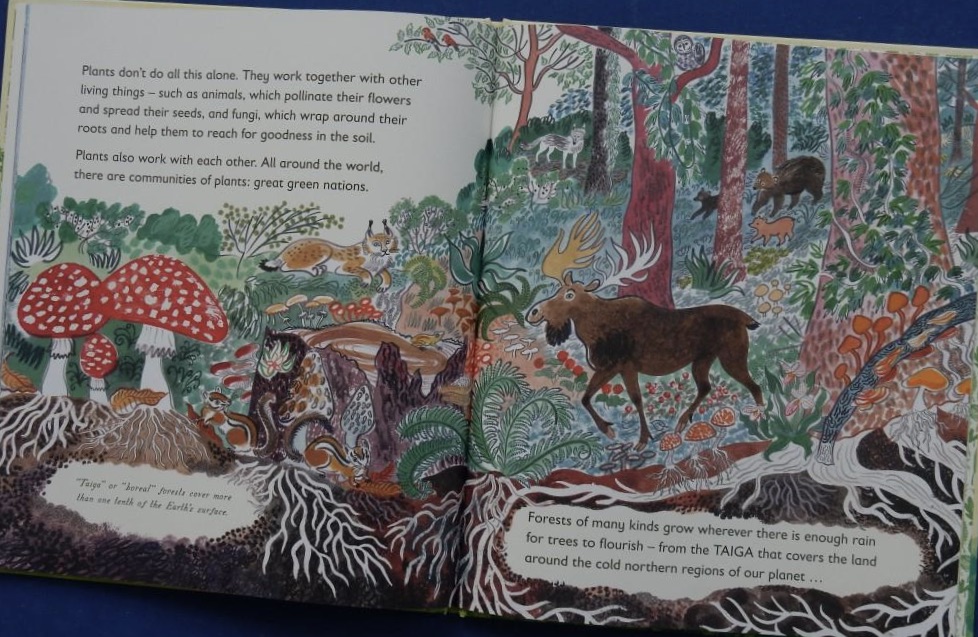
Catch! / Hello Winter

This is a delightful story wherein we join Kiona and her Mum playing catch one sunny afternoon. When the little girl finds her ball too big, they try all kinds of other objects such as a berry and an apple
but nothing works for Kiona. Back indoors, Mum offers Kiona an ice cream, but you can guess where it ends up;

even the bubbles at bath time elude the child. Happily though, Mum knows the perfect thing that assuredly her daughter can catch; it’s something that stays with Kiona for ever: what could it be?

A lovely read aloud for preschoolers; it has everything you could ask for: repetition, opportunities to encourage mathematical thinking that can be taken up again when playing outdoors, as well as Ken Wilson-Max’s vibrant illustrations that show Kiona’s changing feelings so clearly.

Yet another example of Alanna Max’s pitch perfect picture books for under fives.

The fourth in the Best Friends With Big Feelings series wherein each title is set in the natural world of Season Isle and features four magical friends, the focus being on a different seasonal character.each time. Now it’s time for Autumn to pass the weather crown to Winter but instead he gives it to Spring, saying that the others don’t like playing her frosty, freezing games. Upset, Winter walks off to play snowy games by herself. Solo play isn’t fun though, and the bunnies she tries to involve are not interested.

However, her three pals soon start feeling troubled about what they’ve done and decide to search for their friend. It’s a really chilly journey they make but can they find Winter and put things right between them once more? Maybe, but Spring, Summer and Autumn will need to feel warm if that crown is to be bestowed upon its rightful wearer.

In this, the series concluder, the life lessons the friends share with young children are about the importance of turn taking and empathy

Where Do I Start?

Subtitled ‘How to Navigate the Emotional Journey of Autism Parenting’ this is I would say the go to guide for any parent with a neurodivergent child whether or not that child has already got a diagnosis. It’s written by Kate Laine-Toner, founder of Bristol Autism Support, the mother of a 13 year old child with autism and also received a neurodivergence diagnosis herself last year. So, this comes from a place of deep understanding, knowledge and empathy.

I’m not a parent but have taught many children from age three to eleven who were clearly neurodivergent; sometimes this was acknowledged by parents and shared with me and sometimes not. So I’m not the target audience for this book but I wish it had been around when I was in the classroom. I know I would have been in a better position to help those parents having read it.
There are two parts to the book, the first focuses on How to Help Yourself (as a parent); the second is on How to Help Your Child.

The seven chapters that comprise the first section give helpful advice on topics that include looking after yourself, talking to family and friends about autism and being assertive with professionals in education and healthcare, why you need help and how to get it. Interwoven throughout are Kate’s story of her daughter’s journey and her own experiences. For example she looks at some of the true feelings around a diagnosis that parents may be too frightened to disclose. I love the garden metaphor used: ‘view your autistic child as an amazing garden, and that autism is the soil in which everything in your child grows. … there will be plants and flowers that thrive without any help and those that need support and extra nourishment.’

Not all parents are by nature assertive but parents need to be assertive to get the help they need and to this end, several ‘why’ questions are offered (with an extended example).
Why can’t my child have this reasonable adjustment at school?
Why can’t we have the first appointment of the day?
Why can’t the GP meet us in the waiting area?
Why can’t we arrive 15 minutes before everyone else?
Why can’t my child eat the food we brought from home when the rest of us are ordering meals?

These asked in a non aggressive manner should, one hopes, get the person you are addressing thinking about how they might help.
Other key pieces of advice include never comparing your child with other children and focusing on the positives.

Part two has 12 chapters; these look at topics such as ‘How to Advocate for Your Child’, coping with your child’s anxiety, how and when to talk to your child about autism, emotional regulation (this includes an explanation of the differences between meltdowns, tantrums and shutdowns), sensory processing differences and executive functioning. The last – the ability to plan, organise and carry out tasks is something most neurodivergent people struggle with. Chaining (a technique to help with learning a new skill/routine) and using visuals can be a great help here.

The final chapter reminds readers of the importance of being in the here and now with a child, rather than worrying unduly about what their future might hold.
The book concludes with a lovely poem by Kate, which is also entitled ‘Where Do I Start?’

Thoroughly recommended no matter where a parent is on their journey with their neurodivergent child. I would also suggest a copy should be in every primary school.

Britannica’s Encyclopedia Infographica

If you are looking for a book to lure your children away from screens then try this. It’s a weighty, highly visual book absolutely bursting with interesting facts, divided into topics – space, followed by in order land, sea and sky, living planet, animals, the human body and the human world. Before these is a “How to Read This Book’ spread that explains the main ways the infographics organise and present the information. This should start youngsters off on the right track thinking about counting and order, measurement and rules, scale, colour and pattern, position and familiar comparisons.

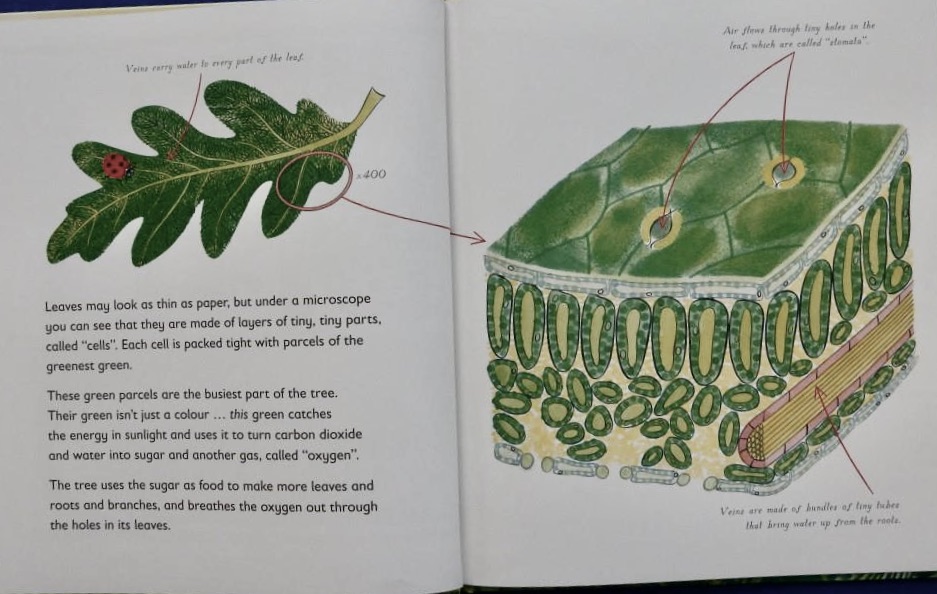
I turned first to the living planet section and was fascinated to learn some new names that describe both leaf shapes and vein patterns. Some were familiar but not pedate (palmate but with indented lobes) and flabellate (fan shaped). Another new term was arcuate that describes a vein pattern (pinnate but the veins curve towards the leaf margins).

I was astonished to learn that the seed of a rare palm, the coco de mer can weight up to 25 kilos and be as long as 30.5 centimetres. I wouldn’t like that to fall on my head.

Moving on to the animals section, I was intrigued by the information on the ‘smallest known’ page. Did you know that the smallest land mammal, the Etruscan shrew is only 6cm long including its tail or that the nano-chameleon, the smallest reptile is a mere 1.4cm long (not including the tail)?

However, it’s true to say that no matter where you open this bumper book, you are likely to be wowed or amused by something that you read. I’m sure a considerable number of children will enjoy the poo and farts’ spread that includes a presentation of the Bristol Stool Scale with visuals of all seven poo types.
With its eye-catching design, key questions, enticing headings and bite-sized paragraphs, this format should work in all manner of settings and situations both at home and in the classroom. It definitely should be in every school library – primary and secondary; just think of the many ways it might be used.

Adventuremice: Mice on the Ice

This image has an empty alt attribute; its file name is dscn9657-3.jpg


This is my first encounter with the Adventuremice and it mattered not that I wasn’t familiar with their back story. Mice on the Ice is an immediately engaging tale of camaraderie and problem solving, and this book has a decidedly chilly feel to it as overnight snow has transformed Mouse Islands into a sparkling white world. Not only is it white but the sea has already frozen over. Relative newcomer to the group, Pedro, is somewhat confused and finds it difficult to negotiate the icy world. However he is looking forward eagerly to the upcoming Frost Fair for which preparations are underway..

Then comes bad news from the Frost Fair organising committee; the group of mice that had gone to the mainland to collect all the treats for the fair have been stranded on account of the frozen sea and cannot return.


Should they cancel the event or is there perhaps a way that a rescue operation might be staged, after all problem solving is the Adventuremice’s forte. Pedro has an idea … could it possibly save the Frost Fair and bring seasonal joy to the entire town?

This image has an empty alt attribute; its file name is dscn9659-5.jpg

They’ll certainly have to outwit the cat, Fluffykins with her viciously sharp claws and teeth.


Both author and illustrator know just what works with children just starting to fly solo as readers: exciting, sometimes quirky plots with innovative outcomes, main characters that are brave and kind, and illustrations full of fanciful details. This story has all that and more.

The Big Dreaming

This image has an empty alt attribute; its file name is dscn0026-1.jpg


Little Bear has never experienced the long winter hibernation before so when he’s told of the Sleep he’s nervous about this unknown event. Together Little Bear and Big Bear decide that what’s coming is a Big Dreaming. But then Little Bear worries that he’ll run out of dreams and end up with a ‘Big Nothing’.
He decides to go in search of some dreams and off he goes through the forest till he meets a squirrel. “Squirrel, Squirrel, Squirrel,” he says. “We’re getting ready for the Big Dreaming, / we’re getting ready for the Sleep. / Do you have any spare dreams, / for when we sleep, deep, deep?” Squirrel offers his dream of ‘Happiness Right Now’


This image has an empty alt attribute; its file name is dscn0027-1.jpg

Little Bear’s next encounter is with a rabbit. He repeats his question (children will already be joining in) and Rabbit tells of the ‘Dream of Coming Home Safe’, and Wolf, the next creature Little Bear meets, talks of the ‘Always Having Hope’ dream.

As Little Bear heads for home, down comes the snow: the Cold has come. Now the ursine cub worries about getting back home in time for the Big Dreaming. But then he remembers dreams that he’s gathered from the other creatures and with the help of those, he finds his way back home to Big Bear.
This image has an empty alt attribute; its file name is dscn0028-1.jpg

Finally the two curl up together and dream and dream …


Poignant and lyrical, Michael’s telling will especially resonate with adult readers aloud who know of his covid journey and children will request frequent re-readings of the book which will give them the opportunity to savour such lines as ‘the light in the moon went out. / Like a candle blows out in the wind.’ They’ll savour too, Daniel Egnéus’s beautiful illustrations with their different perspectives and gorgeous autumnal colour palette, which then changes with the seasons. I hope that they will absorb the life lessons the story gently imparts.


I wonder what your answer might be should you be asked by a little human to offer your special dream.


How to Chat Chicken

Zoologist Nick Crumpton clearly enjoyed writing this splendidly quirky book on creature communication, for which he uses a chatty, matter-of-fact style.

Beginning with primates – chimpanzees, gorillas, orangutans, night monkeys and common marmosets – he focuses on the wonderful sounds these animals make to let others of their kind know they need food, investigate something new, want others to stay clear of them,

want to make friends, want a mate or are defending their territory. If your garden is frequented by a fox at night you could listen very carefully through an open window and you might just catch the ACK-ACK-A-ACK-ACK-A (This is my garden) of a fox indicating to another fox to vamoosh.

Not all animal sounds are vocal however. Some animals including grasshoppers and leaf cutter ants use a process called stridulation. Grasshoppers stridulate to advertise their whereabouts in order to attract a mate; leaf cutter ants stridulate when they want help from their nest-mates.

Then there is echolocation; dolphins use CLICKCLICKCLICKCLICK when they want to find their prey or to indicate they want to play.

Some creatures, dogs for instance, use pheromones (special chemicals) to communicate. I had to smile at the description of lampposts being used as ‘doggy chat rooms’.
And can you believe, there is even a form of animal dialect: the squeaks and clicks made by naked mole rats sound slightly different depending on which colony they are from.

There’s a concluding explanation of the science behind the sounds, a meet the author and the illustrator spread, a glossary and an index.

The book is very visual: Adrienne Barman’s playful cartoon style illustrations work really well with the written text. Add to primary school collections and home bookshelves.

Cotton Cloud Refuses To Rain

We in the UK seem to talk about the weather much more frequently than elsewhere, at least that’s my ecperience. Here’s a story showing how weather shapes so much of what we do.

Cotton Cloud’s over-riding desire is to make people happy. To that end she consults other clouds – Cumulus, Stratus and Cirrus for advice. Cumulus, the puffy one teaches Cotton how to make floating cloud castles, Stratus shows her how to hug the horizon by hanging low, whereas Cirrus trains Cotton to flick her tail as she dances across the sky. However, Nimbostratus, the one Cotton didn’t speak to, insists Cotton should learn to rain. Now Cotton knows full well that rain makes people sad and so she ignores Nimbo’s advice, spending her days getting pleasure from seeing people’s happy responses to her playful images and behaviour.

For a while everything is fine and dandy but one day along blows Wind telling Cotton that rain is needed for the plants to grow. Wind however gets rebuffed. Conditions worsen for plants and their growers: people’s delight diminishes with every passing day.

Will Cotton ever realise that, rather than blaming others, she needs to change her ways? Fortunately some thunderous words from Nimbo cause her to weep and …

Both funny and educative, this story demonstrates the importance of both balance in nature and friendship. Children will have fun looking at all the details in Hannah George’s digitally worked illustrations as well as enjoying the different weather- and geographical-related characters and their changing expressions.

A good book to share with a KS1 class especially during a weather-related topic.

Star Friends: Enchanted Mist / Magic Keepers Tunnel Trouble

We’re back with the Star Friends, they who have a special secret in the form of magical animal friends – a young fox, a fallow deer, a red squirrel and a wildcat who help them learn magic and fight evil.
This group – Maia, Ionie, Sita and Lottie and their animals is being watched by four other forest creatures in need of their help.The following morning after a dream Maia senses that something is wrong; could something bad be about to happen?

Then at school, a classmate Maddie who has only recently joined and doesn’t really have any friends, approaches Maia and asks if they could team up for the Super Science Week, one of the exciting events being planned for the end of term and Maia agrees. Super Science is being organised by new teacher, Miss Amadi and the class have a session that involves using essential oils and making perfumes.
After this session, all of a sudden everyone wants to be friends with Maddie. Why is this? The Star Friends have a feeling that it’s something to do with magic. But from where is it coming? Maddie, or somebody else? They are determined to find out.

Cleverly mixing magic elements with real life issues about primary school relationships that readers will relate to, this is an addition to a series that continues to feel fresh and fun, made even more so by Kim Barnes’ illustrations.

Determined to learn all they can about the curios left by Ava’s Great Aunt Enid, she and her friends want to ensure that chaos-causing magic doesn’t break free again. They’re distracted at home by younger siblings, but then on the way to school Ava’s little sister, Mai, mentions seeing a monster at her window the previous night. Shortly after, Mai takes a tumble on the ice and as Lily goes to help her up, Ava notices movement in the undergrowth. An animal or something else?

Then again Mai speaks of a monster visiting her and their Tibetan terrier, Pepper is also acting anxiously. Little by little Ava becomes more convinced that something magic is going on. Can any of the crystals help her understand? It transpires that a stone gargoyle has apparently come to life and has been visiting the Curio Room and now a crystal has been taken.

Not long after, something much more important is taken by the gargoyle, which disappears with its catch into some underground tunnels. Readers will likely feel frissons of fear when this happens. The mystery deepens and the friends really must use all their resources to get to the bottom of what exactly is going on and why.

An intriguing tale of camaraderie and the importance of sibling bonds that established followers of the Magic Keepers will love; those new to the series would do better to read the previous two books first.

A Whale Of A Time

Wow! What an enormous undertaking on Lou Peacock’s part, selecting a funny poem for every day of the year, including one for a leap year, was my immediate thought on receiving this book. My next, following almost immediately was, what an enormous amount of pleasure this carefully selected collection will give to children, families and classes.

There are twelve sections, one for each month. The spreads have between one and five poems and each spread is illustrated with panache by Matt Hunt in a way that draws together all the poems thereon. This makes it hard to resist reading each poem, if there’s more than one; why not say I.

Most of the poets – a diverse lot – whose work is included herein are familiar to this reviewer, though there’s a sprinkling of new names too and a fair few that are anonymous. I’d not before encountered Rolli; the first verse of The Moonless Night goes thus: ‘Oh, please, / Oh, please! / The moon’s not cheese. / It’s golden-crumbling / tummy-rumbling / crispy-flaking / hungry-making / butter-fluffy / oven-puffy / rich and tasty / PASTRY!’ What a lot of tasty kennings.
However, if your preference is for Jumblies, Jellicle Cats or Jamaican Summers, you’ll find those too.

There are nursery rhymes re-written including an anonymous version of Mary Had A Little Lamb: ‘Mary had a little lamb, / A lobster, and some prunes, / A glass of milk, a piece of pie, / And then some macaroons.’
There’s also this ‘Mary had a crocodile / That ate a child each day; / But interfering people came / And took her pet away.’

Everyday topics abound – there are socks, shoes,

sneezes, spinach as well as dogs, dinosaurs, the weather, and family members, to mention a few.

Whatever way you choose to read this book – preferably aloud with other people – you are guaranteed to find an abundance of fun. Every primary classroom needs a copy.

Winnie-the-Pooh at the Palace

Jeanne Willis’s carefully crafted rhyming text, based on the rhyme of A.A.Milne’s Buckingham Palace poem, tells what happens when Christopher Robin and Pooh embark on an excursion, destination that same palace.

When they depart the train it’s pouring with rain, soaking the sentries and prompting Pooh Bear’s comment, “That must be why they keep changing the guard.” But then the rain turns to snow and they ponder the possibility of gaining entrance to the palace. However the royal butler sends them away telling the two would-be visitors that the King is busy with ‘Royal Affairs’.

Instead Christopher Robin and Pooh Bear embark on a snowball fight, once the Bear’s misunderstanding is cleared up. Before very long though, the snow worsens and as tea is contemplated, who should appear with a sledge? It’s Piglet. Christopher Robin just happens to have some string in his pocket and soon, holding tight, the three whizz off through the ever thickening snow heading straight towards a frozen lake. As they hit the bank the sleigh-riders tumble off.

But where is Pooh Bear? Piglet spies a pair of feet protruding from a snow-pile and out comes the Bear, a crown atop his head. Suddenly they have the perfect reason to return to the palace. Will they gain admission this time I wonder and will Pooh Bear finally have his favourite food?

Despite the weather conditions, Jeanne Willis’ story has all the warmth of the original books as well as the gentle humour. Mark Burgess too, shows respect to Shepard’s original style in his watercolour illustrations.

The Football Encyclopedia

Are you looking for a special book for a soccer-loving child? If so then this could be the answer; it comes from the same team that write the hugely popular Football School series and is illustrated in vibrant colour by Spike Ferrell.

Bellos and Lyttleton’s approach is to help readers comprehend the world through soccer thus enlarging their understanding of bigger issues such as national identity, gender equality, human rights and technology, as they peruse the book. There are five sections, each of which concludes with a quiz.

Section one, The Game includes the worldwide origins of the game in Africa, Asia, Europe, the Americas and Oceania and a highly amusing visual timeline. There’s also a very clear explanation of how to play the game with its rules and laws – vital for a reviewer like myself whose knowledge of the game is pretty poor, as well as pages on shirts and other kit, the ball, and a final ‘gallery of the greats’.

The Clubs deals with football clubs in the UK and around the world, leagues, competitions, kit colours, mascots, stadiums, and a useful, interesting section on how clubs are structured and funded.
The third part begins with a spread documenting the birth of international football, followed by another on flags, pages on the World Cup, both men’s and women’s, the Euros and more. I love the spread presenting the various animal nicknames of some countries.
Next, the Football Family charts a possible path to becoming a professional player, then explains what it’s like so to be – this covers nutrition, resting and recovery;

we also learn about the role of a coach, the referee and tactics.
Finally, Football Everywhere underscores the authors’ conviction that football is a good starting point for learning, with ten sections examining football ‘through ten different lenses from numbers and language to technology and the future’.

Both full of information and highly entertaining, I envisage if this is put in a classroom, there will either be groups of children clamouring to read it together, or a queue of individuals needing to create a rota to feast their eyes on it.

Animal Tales From India

Among others you will meet lazy lions, a lapwing loth to listen to his wife’s advice, the result being an angry Sea and the washing away of the lapwings’ eggs.

There’s also a crocodile of the cunning kind, a talkative tortoise whose garrulousness results in him plunging headlong from a great height but fortunately landing on soft ground, and an egocentric elephant.

Yes the stories are ancient, but the messages they carry – many about friendship – are relevant to today’s children and Nikita’s warm, gently witty way of telling makes them easy to assimilate when read aloud.
A splendid addition to Nosy Crow’s Classic Series: I strongly recommend adding it to family bookshelves and primary classroom collections. These fables would also make good stories for sharing in assemblies.

Evolution

Botanist Sarah Darwin, the great, great granddaughter of Charles Darwin and paleobotanist Eva-Marie Sadowski, in association with The Natural History Museum, London, take readers on an enthralling journey through Earth’s history going right back to its formation around 4.5 billion years ago. This journey is aided by a timeline of the geological eras that stretches (along the bottom of some of the pages of the book) through time until the present.

Guided by the authors and the superb, detailed illustrations, we meet a number of pioneering people – adventurers and thinkers, some of whom in turn influenced the thinking of Darwin and Wallace, people who made vital discoveries about the world around them and shared their theories on topics such as natural selection, the movement of land masses, variation and the changing climate.

Illustrations of some of the flora and fauna which were to be found during each relevant era are included.

A ‘Human-Made’ spread introduces Ugur Sahin and Oziem Tureci who invented one the the first COVID-19 vaccinations and draws attention to the human-made climate crisis. This leads neatly to a reflective spread on the future where we meet several current pioneers who are working to help save the natural world and guide us all towards a more sustainable future.

The book ends with a tree of life, a world map showing almost all the species mentioned, as well as a glossary and index. A fascinating, beautifully presented book for KS2 readers and beyond.

The Deadlands: Trapped / Press Start: Super Rabbit Boy vs Super Rabbit Boss!

In this the second of the series the last surviving dinosaurs continue to do battle for territory and a cabal of the carnivorous kind are aiming to provide a killing field of plant eaters on which to feed.
But with the predators drawing ever closer, Eleri and the other members of the Grotto herd decide to go on the attack. Out on a scouting exercise, Zyre is spotted and with their whereabouts now known to the enemy they need to find a hiding place. But what is the Feast of Flames that Zyre has heard the enemies speaking of?
As night turns to day it seems that the only choice for Eleri et al, so Zyre suggests, is to head towards the Salted Scorch, a secret path across the Deadland. Perilous, yes but they might be able to enlist some help and anyway they are out of options.
So, on they go, only to discover a general and her squad of raptors are hot on their trail, not safe at all but in the magma-heated tunnels of the Fire Peak, headquarters of the Carrion Kingdom. Surely not? But it is so and they’re trapped right at its heart.
Now, not only are they facing the likelihood of being captured and the horror of being consumed at any time, the exiles then come upon a captive herd of herbivores urgently requiring rescuing. Moreover the carnivores have a stash of weapons. This means that the continuing overarching carnivores vs herbivores war will henceforward be devastatingly different.
As things become ever more perilous, can Zyre and the others free the prisoners? It will need a ruthless plan but if successful it might just secure their release.

With nail-biting happenings coming thick and fast, this twisting, turning fantasy adventure will have readers on the edge of their seats right through to the end, an end that doesn’t mean the war is finally over.
For younger readers is

An addition to Thomas Flintham’s series based on video gaming, this fourth story begins with Super Rabbit Boy setting out on a rescue mission, destination Boom Boom Factory, home of his enemy King Viking. On arrival he enters a room he thinks is the King’s workshop and there he ignores a ‘Do Not Push Button’, warning sign. Big mistake! He finds himself in a back-to-front world where everyone good is now bad and everyone bad is now good including King Viking – confusing indeed.
How will Super Rabbit Boy extricate himself from all weirdness and find his way back to his proper world?

Great for building reading confidence, this is brimming over with brightly coloured comic style illustrations. It will appeal especially to young readers who are partial to video games.

Alice Eclair Spy Extraordinaire: A Sprinkling of Danger / Montgomery Bonbon: Death at the Lighthouse

This image has an empty alt attribute; its file name is dscn9678-4.jpg


Gifted young baker and spy, Alice is back for a third adventure, set in and around the grand Palace of Versailles which is being used as a film set for a team of American movie makers.


Arriving at Claude’s flat, she learns that he thinks the film director, Glen Carmine, could be a spy and wants Alice to get herself onto the film set and discover what is going on. In addition she is to take on a new agent recruit, Pierre, whom she soon finds out, resents her ‘nannying’ as he calls it. He gets himself a role on the set as hairdresser to star, Catrine Bell, but thanks to her patisserie skills, Alice gets herself hired on set too, to the chagrin of Pierre, who appears to have his own agenda. She does though make an ally of Milton, nephew of the director.


The weather becomes increasingly worse and so too does Alice’s feeling that somebody is trying to get rid of her, perhaps even kill her. Then due to heavy snow, the cast, crew and staff are forced to stay overnight in the palace, giving Alice opportunities to snoop around for clues. In addition she is beginning to suspect that Pierre isn’t to be trusted.


As more alarming things happen to Alice, she starts to think that maybe she’s not up to this case; does she even want to continue being a spy? But then things happen to make her change her mind; she just has to get to the bottom of this, her hardest mission yet.


Sarah Taylor-Todd’s crafting of the setting for this tale is superb, as are the details of the splendid sweet treats that Alice herself crafts. Readers will find their mouths alternately watering over the descriptions of Alice’s confections, and going dry at the life-threatening events that happen to her.
Definitely as tasty as the previous books in the series, though also, I think, the most perilous.

This image has an empty alt attribute; its file name is dscn9682-4.jpg


Ten year old Bonnie and Grandpa Banks head to Odde Island for a much needed holiday, but when you’re a private detective, it’s unlikely that a quiet rest without mystery, intrigue or murder is what will transpire even if you have deliberately left your sleuthing gear safely at home in your bedroom.
They’ve barely set foot in the place when they learn of the death of lighthouse keeper, Maude Cragge who had supposedly been blown by the storm and fallen from the top of the lighthouse.
Fortuitously, so it would seem, Grandpa just happens to have packed Bonnie’s yellow bag of equipment after all. It’s time to investigate. And it looks as though the two holiday hopefuls have a murder mystery to solve.


It’s not long before Bonnie decides it isn’t just the one mystery relating to this strange island that she needs to get to the bottom of.

This image has an empty alt attribute; its file name is dscn9683-4.jpg

She can however call on the assistance of friend Dana, who is also staying on the island.


Wit and humour abound, there’s a plethora of puns, and at the same time, intrigue and high drama, and I love the Poirot speak. All this accompanied by Claire Powell’s delightful illustrations which help elucidate some of the clues. A terrific sequel with more to come.

Cosmic Wonder: Halley’s Comet and Humankind

The author/illustrator personifies the comet in her third person telling, which follows the comet, portrayed as a shiny sphere with a long flowing tail, on its recurring visits to planet Earth, chronicling its visitations which occur ‘about every seventy-six Earth years’ beginning millennia ago and ending with a mention of 2061 when the comet is next due to return to an Earth, shaped largely by the actions of humans alive today. This reminded me of T.S. Eliot’s lines ‘Time present and time past / Are both perhaps present in time future,/And time future contained in time past.’

We’re told that ‘one kind of creature began to live differently.’ and scenes show humans of various races changing over time, but all, having looked skywards, telling one another tales of the ‘broom star’ up above. These visits, they recorded in various ways using ink, clay and words.

From afar, the comet witnesses times of war and times of peace, and notices a multiplicity of human feelings, the most powerful being that of ‘boundless love’.

After many hundreds of visits, humans name the comet Halley’s Comet after an astronomer, Edmond Halley. Earth continues to fill with ever more humans and what the comet sees in 1986 are two children walking along a beach below a neon lighted industrial city, belching out filthy smoke.

What the comet sees too are space probes surrounding it; they leave it to continue orbiting around an earth described as ‘small and vast all at once / holding so much life and such great promise’, with dreams of what the next visit might show. One only hopes that what it discovers on its 2061 visit is not an Earth ruined by our failure to address the environmental damage we are causing.

At every turn of the page, Ashley Benham-Yazdani’s luminescent, mixed media illustrations show the soft-edged comet shooting across an inky wash sky and gorgeous scenes of the happenings on Earth through the ages.

This is a truly thought-provoking precis of human history from an unusual perspective that makes it all the more powerful. Back matter includes further historical details and an author’s note that speaks to every reader.

The Tree Next Door / A Happy Place

These are two new picture books from Little Tiger – thank you to the publisher for sending them for review.

At the bottom of a long garden a tree stands proud. Both garden and tree are loved, especially by their owner, an old woman. She gets companionship and rewards aplenty from her garden and it keeps her busy.
One day as winter is giving way to spring, a new neighbour arrives and catches sight of the tree next door. From then on she visits the garden whatever the weather, or the season, talks with the owner and asks questions of her.

A year passes and throughout that time the girl has found much joy in the old woman’s garden but as the chilly wintry days come, the garden gradually fades.

The old woman no longer visits her garden; this the girl notices and soon begins to worry. Will she be lonely? Or will she know that her young friend and others around still think of her. She decides to do something for the woman and asks all the other neighbours to participate in her plan. Every one works together until finally …

A sweet story of friendship and community spirit, all watched over by a very special tree.

Clever use of peek-through die-cuts and cutaway gorgeously illustrated pages work in tandem with a straightforward poetic text telling of a small child’s moonlit walk, guided by a star, in order to find his happy place. In so doing the intention is that the child then falls fast asleep.

Dream or not, the scenes of the natural world – the moonlit river all a-sparkle and dotted with wading herons,

the forest with dancing squirrels and foxes, stoats and hares, work their magic and finally, watched over by the star shining brightly through the bedroom, we see the child finally slumbering peacefully.

A beautiful bedtime story to share with little ones, especially those who, like the protagonist have trouble dropping off to sleep.

Three Tasks for a Dragon

Prince Lir is heir to the throne of the Kingdom of Lagin. However as his stepmother tells him in no uncertain terms, he can’t ride a horse, lift a sword, or summon the wolfhounds. Consequently she deems him unworthy to become king; instead her biological son, Prince Delbayne, will inherit the crown. Moreover she banishes her stepson from the kingdom but at Prince Delbayne’s suggestion, he is given a seemingly impossible quest that will likely end in his death: to rescue a maiden Cethlenn, who had once worked in the palace kitchens, from the once fearsome dragon Lasvarg.

Having arrived at the dragon’s island cave, he discovers that the dragon is well past his prime, unable now to fly or breathe fire, and drunk on cherry wine made from cherries stomped upon by Cethlenn, who has become his servant. The prince insists that the dragon, honour tradition by setting him three tasks to perform. First, cure the dragon’s mould-induced ailments, second, fix his broken wing, and lastly restore his fire-breathing power. Little by little while doing these tasks, Prince Lir grows closer to Cethlenn and she to him.

However he turns down her request to stay with her on the island at that time. Instead he sets forth to return and confront his stepbrother in the hope of preventing him receiving the wolfhound crown. Could it be that Cethlenn is the wolfhound queen? How will it all end?

Lyrically written with a fair few thrills and awesome illustrations of the dragon, this is a magical fairy tale that will assuredly keep readers turning the pages, albeit slowly so they can savour P.J. Lynch’s magnificent artistry.

Bear and Bird: The Stars and other stories

This image has an empty alt attribute; its file name is dscn0056-1.jpg


Four more tales starring two best friends who have a tendency to misunderstand one another.
The first, The Spoon, tells what happens when the pair fall out over a spoon and as a result, each of them decides a new best friend is needed. Bear writes a letter advertising his need, folds it into a paper boat and sends it out onto the lake. Bird finds it and responds and so it goes on each saying something about themself. Thirteen boat letters later, a breakfast meeting is arranged at Badger’s cafe.

This image has an empty alt attribute; its file name is dscn0057-1.jpg

Both arrive at the venue, seat themselves at separate tables and wait … and wait … What will be the outcome? Could a spoon (or two) lead to a reconciliation?


The Cake refers to one made by Bear after he’s scoffed the one he finds on the way to Bird’s abode. Unsure who the original cake was intended for, Bear tosses ingredients into the mix that could please more than one recipient and the result is, let’s say, revolting. Nevertheless he hides it and when Bird comes along, Bear draws her attention to the ‘surprise’. A surprise it surely is, but not a pleasant one. Will either of the two dare to sample said cake?


The Rock also involves a cake, or rather the desire for one. It begins at the market. where Bear tells Bird to wait while he goes and buys the cake.

This image has an empty alt attribute; its file name is dscn0058-1.jpg

Bird decides to sit on a ‘rock’ so her friend will know where she is. However, the rock isn’t what it seems.


Finally, The Stars is all about dreaming and wishing and the friends decide so doing is pretty close to perfection.


Jarvis has the kind of wry, gentle humour that appeals both to young children and adults. These stories are as seductive as the first four, full of charm, warmth and genuine affection. Perfect for new solo readers or for sharing.