It’s clear from the outset that Paul considers himself an entitled peacock. He has the biggest nest, the most loyal friend and his pride and joy – the most beautiful feathers in the forest. His trusty pal Noris the loris ensures that Paul receives plenty of pampering every single day until one evening a fierce storm blows up. Norris is sent out for more branches to strengthen Paul’s nest but the loris has had enough of his feathery friend’s arrogance and bossiness.
The following morning Paul wakes to discover disaster has struck: he no longer has a home, Norris and worst of all, his feathers have gone – every single one.
For the first time ever, the peacock heads out on his own to search for those missing feathers; Paul is nothing without his plumage so he’s determined to retrieve every single one. Now politeness is not a quality Paul possesses so he goes about demanding the animals he comes upon with one of those feathers to return it immediately; either that or he attempts to snatch it back.
Hmm, you’ve a lot to learn Paul and you’re going to have to do it the hard way, and eventually he does. Could those same creatures that he’s treated so badly enable Paul to discover that there’s something even more important in life than himself and his appearance?
Tilly Matthews’ fun fable demonstrates the importance of considering the feelings of others as well as being able to show humility and value one’s friends. The illustrations are full of drama and details that will amuse both young listeners and adult sharers of the book. Lots to think about and discuss here.
Have an air freshener close at hand when you share this malodorous book with youngsters for you’ll be paying a visit to an exceedingly pongy place.
At this unique zoo (make sure you read all the signs at the entrance) you will encounter more than twenty fart varieties so wearing a nose peg or a face mask might be a good idea. Read too the signs relating to the beastie(s) in each enclosure. Thanks to Leigh Hodgkinson’s narrative and madcap visual portrayals you will quickly discover they come in all shapes and sizes including those sneaky, cheeky …
shlumpy and grumpy, squeaky and freaky, even posh farts (though how that’s possible I truly wonder) and several others.
Finally, however comes an empty enclosure: seemingly a fart has done a runner but where could it possibly be? Chaos rapidly ensues. With the zoo gate wide open the escapee might be anywhere, but it’s not actually left the venue. A couple of eagle-eyed security staff eventually apprehend the whiffer (Evade Fartum), put it back on its recliner and lock the gate but how long will it remain there is anyone’s guess – check out the final scene.
Replete with silly speech bubbles, this is fetid fun for little ones and any adult with a sufficiently strong constitution to read aloud Leigh’s rhyming rendition. (Wearing my science studies hat, the final User’s Guide to Farts is not strictly correct as a classification. For instance ‘Escaping farts should be Fartum evado and ghostly farts should be Fartum umbrabilis and so on … ie only the genus name is capitalised, not the species.)
Another subject with great appeal for young children is:
Not Another Unicorn Book Laura Baker and Chris Jevons Scholastic
The unicorn narrator of this book is anything but pleased at the possibility of being in a unicorn book, vowing she would ‘never, ever ‘ do so but fate takes its course …
There’s nothing for it but to escape its covers as soon as possible. Try as she might with her chomping, poo-dodging and running, her search for adventure doesn’t match up to her expectations. Maybe being in a unicorn book is not actually so bad after all. Assuredly it has its compensations.
Undoubtedly countless little human unicorn lovers will fall for the protagonist in this rainbow coloured setting with its sparkly starry sprinkles that even hover over the poo piles and delicious-looking confections shown in Chris Jevon’s dramatic scenes
Max & Chaffy: Hunt for the Pirate’s Gold! Jamie Smart David Fickling Books
From the creator of Bunny vs Monkey and Looshkin books, the Max & Chaffy books (this is the fourth), are a less demanding read. Set on Animal Island they feature Max and her pal cum sidekick Chaffy who, having now become official members of the chaffy finding club, are very enthusiastic about sallying forth on their next chaffy hunt. (For the uninitiated Chaffies are small spherical beings with one and a half ears and like to eat lettuce, most of them anyway.)
As they’re wandering on the beach the friends come across Foghorn. He offers to take them in his boat to a secret part of the Island, reachable only by sea. Once there, the threesome rapidly becomes a foursome when Chaffy finds a bobbly creature that the rather curmudgeonly Foghorn insists is not actually a chaffy. Max suggests it’s a Puffa Chaffy and soon encased in special underwater bubbles,
Puffa Chaffy, Max and Chaffy embark on an underwater foray involving a map in a bottle, the possibility of treasure and a pirate captain related to Foghorn. It’s an adventure that Foghorn cannot resist joining once he discovers a personal connection. He even lets his kindheartedness come to the surface whenever Puffa Chaffy feels scared and all ends happily with the finding of not one but two new chaffies.
With its vibrant colour palette and a text almost exclusively in speech bubbles, this is a delight – engaging and full of charm. Included too are some puzzle extras..
Rather more complex is
Magic Pickle and the Roots of Doom Scott Morse Scholastic
Herein you will find the titular Magic Pickle that flies around sporting a large star on its head, and his young human sidekick, Jo Jo. She wears a purple onesie with a unicorn horn.
When Magic Pickle is approached by Herb Cloverson, a decidedly malodorous character that is far from happy with life as a garlic clove, Pickle is rather dismissive. Then the clove is itself approached by the evil tuber, Square Root, who says he’s looking for a friend. So Herb Cloverson becomes Square Root’s sidekick and the two set about removing the star from Magic Pickle and thus taking away his power. With the goal achieved and the star on Square Root’s head, he sets about amassing an underground army.
Meanwhile the powerless Pickle is thoroughly downcast and it’s left to Jo-Jo to encourage him to fight back. By now Herb Cloverson has realised that he’s being used and hence is still looking for a friend. So too is Magic Pickle, so can they put things right between them? And will justice finally prevail? Perhaps, with some input from the Information Leek who offers assistance to Jo-Jo, together with the power of teamwork
Replete with veggie-related puns, it’s funny, clever, crazily compelling and diverting in a daft way.
The Dictionary Story Sam Winston and Oliver Jeffers Walker Books
A little dictionary’s realisation that she’s merely a list of definitions whereas the other books lined up beside her on the shelf contain stories, makes her decide that things must change: she resolves to ‘bring her words to life’. Thereupon an alligator of the hungry kind makes an appearance by opening the definitions enclosing him and proceeds to the D pages from where a delicious smell emanates in the form of a doughnut (donut is used here). The tasty confection sees him coming and rather than being consumed rolls off, accidentally right into Ghost – make that through him – and wakes the apparition. Donut continues on its way hotly pursued by Alligator, to the moon. As said moon starts interrogating the two, Ghost appears scaring the moonlight out of them all and prompting Alligator and Donut to rush off until midway through the dictionary the former catches up, only to collide with the Queen who ends up flat on her derriere.
Where will this all end, you might be wondering. Let’s just say total chaos ensues mainly due to the appearance of a tornado, spilled ink, a Viking, an umbrella and more.
In order to restore some semblance of order to the situation and the dismayed dictionary, she calls upon the help of her friend Alphabet whose song solves everything leaving all the words back in their proper places at last. PHEW!
Make sure you read all the tiny print on the dictionary pages ; those definitions are frequently hilarious and very clever, seemingly serving as a stage upon which the alphabetic characters perform. The definition of marmalade for instance is ‘A sort of jam made from citrus fruit, usually oranges. Marmalade is perhaps the main reason that the universe came into existence.’ Vacuum cleaner is defined thus, “An electrical machine that is used to clean floors by sucking up dust and dirt. It’s great at cleaning the house, but you’d best leave the dishes to something else.’
Sam Winston’s comic pacing of the tale – a meta celebration of words – is superb. Superb too are Oliver Jeffers’s naive style illustrations showing the shenanigans of the characters. Totally immersive and brilliantly created right from the real dictionary shown at the front of the book. The more you read it the more delights you will discover, it’s a veritable wordy wonder.
These are both Little Tiger board books: thanks to the publishers for sending them for review.
Cows Are Pink! Becky Davies and Gareth Lucas
Down on the farm, the animals have all got their colours muddled up. Small children will enjoy predicting what is behind each cut out section before the page is turned to reveal in turn which animal is pink, yellow and red. What about cats though? They’re a bit more problematic and they certainly aren’t green, one of the colours visible through a cat diecut. So what is orange, black and green? The final spread shows eight different farm animals and each is appropriately coloured, to the satisfaction no doubt of the little mouse character. With bright, textured illustrations by Gareth Lucas this is a playful book for the very youngest.
How It Works: Fire Engine Molly Littleboy and David Semple
Curious learners, especially those with an interest in vehicles will enjoy this addition to the How It Works series. Nee-naw! Nee-naw! goes this emergency vehicle but first come explanations for little ones about where fire engines are kept; what firefighters do at the fire station when not out on call,, as well as what their uniform comprises. When the crew receives an alarm call it’s a case of off as fast as they can go, sirens and flashing lights warning other vehicles to give way as they approach. Once the scene is reached it’s masks on and out with the hoses.Sometimes though fire engine crews have to perform acts of rescue for such things as cats stranded high in trees, or they might pay a visit to a nursery or primary school to teach the children the importance of fire safety. Perhaps some of them will be so enthused they go on to join the fire service themselves.
With cutaways, ‘did you know?’ questions, labels and a simple narrative there’s plenty to engage small children.
Wildlife in the Balance Dr Sharon Wismer and Terri Po Flying Eye
In this latest Flying Eye natural history offering author Dr Sharon Wismer introduces readers to the concept of keystone species and their impact upon various ecosystems.
There are introductory spreads explaining ecosystems, food chains and webs, and outlining the work of Professor Robert Paine whose experiments along the Washington State coastline in the 1960s demonstrated how the removal of a top predator from rock pools resulted in the collapse of the biodiversity of the ecosystem. He identified the ochre sea star as top predator and keystone species responsible for the biodiversity of the rock pools.
We learn that apex predators are not the only keystone species: herbivores, plants, prey, insects and habitat modifiers can also be keystone species maintaining the ecosystem in which they live.
Readers are then introduced to a dozen keystone species across the globe’s five major biomes: aquatic, desert,
grassland, forest, and finally, tundra. These include salmon, the saguaro cactus, European rabbits of the Iberian peninsular, green-backed fire crown hummingbirds and krill. Terri Po’s illustrations of the landscapes, flora and fauna are at once stylish, arresting and informative and expand and make accessible, the considerable scientific information conveyed by Sharon Wismer in her text, which concludes with a spread on how humans can help these vital keystone species. Backmatter comprises a glossary and index. Altogether a fascinating book for KS2 readers and beyond..
For readers with a particular interest in the underwater worlds or for reference in a cross-curricular ocean topic is:
Factology: Oceans Button Books
This highly visual book presents a wealth of facts about the ocean and its flora and fauna. In addition there is information on various topics such as the history of exploration and how people navigated their ships, subaquatic exploration of the ocean depths in the hope of finding treasure among the sunken wrecks.
Readers visit coral reefs and submarine volcanoes, see some of the wonderful deep-sea fishes and other creatures – giant squids, anglerfish, blowfish and the spooky-looking barrel eye fish and the fang tooth fish that has the largest teeth of any ocean species, find out how tides work, why the sea is salty and discover how tides and currents work. There’s a gallery of deep-sea deities and a spread introducing marine monsters such as the Kraken and a look at some of the horrendous outcomes of marine pollution
All this and much more, so imagine yourself into a submersible and take the plunge..
The Secret of Golden Island Natasha Farrant Faber Children’s Books
Yakov has had to leave his war ravaged home country and now is staying with relations. He struggles to fit in at school and cope with being away from his loved ones. Skylar’s struggles are with how she feels after her grandfather’s stroke (he’s always been her rock) and a bullying incident at school for which she is suspended.
Skylar: ‘I’m not crying.’ Yakov: ‘I know.’ These are the very first words the two children exchange and somehow this brief interaction is the beginning of a friendship, one they both desperately need. Both of them too have a strong desire to change things for the better and not just for themselves but for those they love. It’s this that brings them even closer to one another as they enter a competition, the prize for which is the ownership of the nearby Golden Island. How though can two children compete successfully against adults with schemes and plans of their own?
Certainly, the call of the island is very strong but the quest they embark upon must be kept secret from family members and they only have one another to rely upon for their safety. As the adventure progresses Skylar and Yakov’s friendship deepens, they reveal more about themselves allowing things they’ve kept deep inside to be exposed.
Trying to solve the clues they’ve been given, the pair come up against some competitors who will go to any length to achieve what they want. Can they overcome all the obstacles that arise during their quest, including a desperate race against time with way more at stake than the competition?
Totally gripping, compassionate and exquisitely told, this book swept me away and as I reached the final paragraphs I felt tears welling up, such is its power.
A wonderful read for older KS2 readers and beyond.
Right from the cover illustration, young children will love being in the know as to the whereabouts of Bear’s glasses but the ursine character decides that he’s left them at Giraffe’s house so off he trots. Now sans specs, as he tells us, he ‘can’t see a thing’ but nevertheless he comments on various objects he passes en route to his friend’s, misidentifying them in turn as a deer, a crocodile, an elephant, a flamingo, each of which astonishes him.
He even fails to recognise Giraffe who is taking it easy on his lounger, calling him instead a snake. Bear apologies and explains his plight; Giraffe then ‘returns’ the glasses to their owner, which allows Bear to uphold his original notion.
Bear goes on to tell his pal of the unusual sights he’s seen en route and eager to see them for himself, Giraffe accompanies the now bespectacled Bear as he makes his way back the same way he came. Of course, neither spots the flamingo nor the elephant,
the crocodile or the deer though a confused Bear blames his glasses. These he then removes and goes on to point out to Giraffe, three lions nearby.
A terrific, tongue-in-cheek comical delight that puts forward the possibility that seeing with one’s imagination is preferable to viewing reality. Little ones will relish Timmers’ tale of discovering – albeit accidentally – new ways of seeing the world and loudly correcting him with regard to the misidentifies flora and fauna.
The Little Worried Caterpillar Christine Pym Scholastic
Little Green is on the brink of change. However she’s not aware of this when she wakes early one morning ready to play with her caterpillar pals, but she can’t find them anywhere on the ground. Then a call tells her that they have morphed into butterflies and are way up above her. “You’ll be next, there’s no doubt!” they tell her. However rather than sprouting wings, she sprouts fear, a fear of change that brings with it worries about the unknown. Her friends reassure Little Green that change is what they were born to do and it’s exciting but this makes her feel even worse.
Along comes bee with what is meant to be some helpful advice; she gets momentary relief but that’s all.
Other creatures also offer suggestions but nothing works until Rabbit appears on the scene. Rabbit listens and what her new friend tells Little Green enables her to feel ready to embrace and prepare for that transformational change
and become … Butterfly Green.
Some young children take change in their stride, others needs considerable support from empathetic friends and understanding adults. A book such as this one is particularly valuable for sharing with the second kind. Christine Pym’s illustrations capture so well Little Green’s fearfulness and eventual delight.
Dig Dig Dinosaur Professor Anjali Goswami and Maggie Li Nosy Crow
Three intrepid little explorers with their kit at the ready are on an expedition in the hope of finding something, something ‘REALLY big’. Dig! Dig! Dig! they go till one person discovers some remains of a sharp clawed dinosaur. These claws make the finder conclude that they belonged to a Velociraptor.
A second child’s Dig! Dig! Dig! digging unearths three large horns: young readers can perhaps guess from which dinosaur these came..
Still intent on finding something even bigger, they continue hunting till the third explorer tells of a dinosaur with a very long tail. and a tiny head supported by an extra long neck.
Little ones can have fun guessing what this might be before the big reveal fold out … They will also enjoy the peep hole pages showing the skeletal remains the young explorers find during the dig.
Worry Boots Lisa Thompson and Aysha Awwad Scholastic
It’s Connie’s first day at school and after putting on her shiny new boots she, her mother and younger sibling set off for the bus stop. Before long Connie stops and calls out to her mum, “There’s something in my boot!” Having wriggled her foot around, her tummy feeling like a dinosaur’s bumpy bottom, she then, declares that it’s a dinosaur and consequently she can’t go to school because everyone will stare at her.
Mum reassures her that this won’t happen and they continue on their way, Connie now not feeling the lumpy bump.
Having boarded the bus, Connie feels the thing in her boot again only now it seems hard and spiky. It must be a unicorn’s horn she decides, informing her mum of the situation and again saying she cannot go to school. Now her tummy feels hard and spiky. Mum tells her all will be well but as they approach the school gate Connie feels another visitation – sharp and pointy this time. There’s no way she’s going into school with a shark in her boot. She’ll frighten everyone out of their wits.
With a sharp pointy feeling in her tummy Connie then sees her teacher welcoming the children as they arrive in the classroom and she has a big smile on her face. Maybe it’s not a shark then, but still that boot and Connie’s tum don’t feel quite right. Before she says goodbye, quick thinking Mum suggests they remove whatever is in her daughter’s boot; she upends it and out falls … What do you think?
Feeling so much better Connie then goes to join the other children in the classroom. With so many new friends perhaps her day won’t be nearly as bad as she had been anticipating.
Acknowledging young children’s first day anxieties, this reassuring story is perfect for sharing with little ones. With her powerful imagination, Connie is a delight and Aysha Awwad’s portrayal captures her feelings beautifully.
The Great Crisp Robbery Pamela Butchart, illustrated by Thomas Flintham Nosy Crow
The latest story narrated by Izzy unfolds on a night train from Aberdeen to London. None of the young travellers has been on a sleeper train before and the realisation that it means bunk beds adds to the excitement. A BIG ADVENTURE indeed: Gary Petrie even has his silky dressing gown and judging from the enormity of her suitcase it would appear that Maisie thinks she’s going to be away for ages. Why though has Miss Yu and not Miss Jones been designated ‘teacher in charge’ when the children have only known her for a few days? Surprising to Izzy is that Jodi suddenly appears on the train having escaped early from the wedding she’s been at and she’s still wearing a floaty pink bridesmaid dress.
As the journey is about to get under way Izzy looks out the window and gasps in horror: on the platform stands a hooded figure watching them: surely it has to be a train robber. Those familiar with Pamela Butchart’s child characters know that it doesn’t take much for imaginations to run wild and their misunderstandings to become suspicions that lead to them being way off beam as they become certainties. Here we have a group of hysterical youngsters on account of Gary’s sixteen missing packets of crisps, albeit Tesco Finest varieties, not to mention all the spending money.
How on earth – make that on railway lines – is this all going to end? Actually it doesn’t exactly do so for puffing and panting and puzzling over what Miss Yu will say in her ‘quick chat’ readers leave the train about an hour from its destination.
Primary readers will devour this faster than Gary’s crisps and the sandwiches from the refreshments trolley and then want more. With its multitude of twists and turns, this adult reviewer was left decidedly dizzy especially at the impending BIG TROUBLE facing Izzy and her pals.
The Majorly Awkward BFF Dramas of Lottie Brooks Katie Kirby Puffin Books
Presented in diary form as usual, with plenty of Lottie’s amusing doodles, this one relates the events from New Year’s Day to the day after Valentine’s day.
January 1st sees Lottie in high spirits about her new boyfriend, Daniel, but as readers might expect, Amber is jealous and makes plenty of mean remarks about the relationship. She even starts giving out application forms at school for the role of Amber’s boyfriend, and then holds auditions.
With regard to Lottie however, she has an abundance of hugely embarrassing moments due to eyebrow alterations and style icon attempts with over-size earmuffs, just to name a couple. Then comes brother Toby’s announcement of his new year’s resolution: to get a dog and for once in her life, Lottie is in agreement with him, even going so far as to aid and abet his plan for mum persuasion. Eventually there comes a new member of the household: enter five-month old golden cockapoo, named Snookers, though that soon gets changed to Pot Noodle, thanks to a remark by Mum. Said pooch is adorable but there’s a major snag, he’s full of mischief, destructive and definitely, despite what Dad was led to believe, NOT toilet trained. How on earth is Lottie meant to cope with a new boyfriend and a new dog that insists on leaving deposits of poo all over the carpet and in other extremely annoying places.
Assuredly she has a whole lot less time to spend on other people – her gang especially, one of whom, Jess, shares the news that she might be gay.
My goodness all that and more in just a few weeks. It’s easy to see why the Lottie Brooks books have become so popular with’tweenage’ girls. I have no doubt fans of the series will eagerly devour this and readers new to Lottie will be equally enthusiastic after reading this one.
A Mystery At The Incredible Hotel Kate Davies and Isabelle Follath Frances Lincoln Children’s Books
We’re back at the Incredible Hotel for a second story which begins one autumn afternoon when manager Mr Starch announces that the World Baking Contest is to be held in the hotel and the head judge will be Chef Tartine, owner of the Stupendous Restaurant. Moreover Chef Stefan has been chosen to represent the city of Delaunay in the event. Stefan works and works until he’s invented a new secret recipe but come the morning of the contest, shock horror! His recipe has disappeared.
Fortunately ace detective, aka Matilda, the hotel’s bellhop, Stephan’s best friend is at the ready to solve the case. But who can the thief possibly be? It turns out that a chef’s hat has also gone missing as well as a cushion.
As Matilda continues trying to find a thief, the police are busy interrogating various suspects. She follows footprints but suddenly is apprehended and accused by Mr Starch of being the thief herself. Just in time however, the determined Matilda discovers the whereabouts of the recipe and the other missing articles. All is forgiven by a very shame-faced manager
and she’s given a new role; but by now there are only ten minutes of the competition left. Surely Stefan can’t bake his cake in time for the judging – or can he …
Another truly tasty treat from team Davis and Follath. Children will delight in joining Matilda as she follows clues to the surprise revelation of the culprit, as well as savouring the delicious details in Isabelle Follath’s mixed media scenes of the unfolding events. Watch out for the antics of the cat and mouse as you peruse the pages.
One Day at a Time Rachel Ip and Natalle Quek Hodder Children’s Books
Robin and Poppy couldn’t be happier with their family life; their days are full of fun and adventuring together. And every springtime the children and their parents plant sunflower seeds together and watch them grow and bloom in the summertime. Then one summer Daddy tells the children that their parents are separating and will be living in different homes.. “We’ll always be a family, and we’ll always love you,” Dad reassures them. Poppy and Robin don’t want this to happen but despite the tears and talking, and the hugs, happen it does.
As you would expect both brother and sister are emotionally mixed up;
they also show this in different ways. Robin shares his worries with his friends at school whereas Poppy keeps everything to herself.
Both of them though ask their parents lots of questions and they all choose sunflower blooms to take to their parents’ new homes. Homes that are very different too.
Come the following spring Robin finds the dried out sunflower heads in the garden shed; they are absolutely full of seeds and give them an idea. Before long they have more than enough to sow in both mum’s and dad’s gardens. Little by little both Poppy and Robin have accepted their new way of life and realise that they will be okay; They are able to laugh more, hug more and of course, there is more than enough love for everyone; after all they are still a family no matter what. A sensitively written and illustrated story that is full of hope and love, a story that offers an optimistic view of separation. However Poppy and Robin are fortunate in the way their parents separate; not all families are so amicable; indeed some children’s parents are downright hostile toward each other and this takes its toll on their offspring.
Also about changes in family circumstances is:
Roots of Love Sarah Asuquo and Ruthine Burton Scholastic
Subtitled Families Change, Love Remains, this story starts with a happy little girl, Tia who has just enjoyed the best day at school ever. But that evening after dinner her mother tells her to leave her project about her family and come and join a talk with her mum and dad. She knows they have been keeping something a secret recently and realises quickly that this isn’t going to be cheerful chat. Instead she learns that her parents are going to separate and that her dad will move out. “We’re still a family, we’re just changing to something new,” her mum tells her. Devastated little Tia rushes upstairs and cries herself to sleep.
Next day at school her class are to present their projects about families; inevitably Tia is worried about how her classmates will react to what she says. However what she hears from some of her friends about the variety of families they have, surprises, reassures and empowers her, enabling her to share her project too.
Using the apt metaphor of a tree Tia explains how her family has changed.
Ultimately reassuring, Sarah Asuquo’s story with its inclusive illustrations by Ruthie Burton is one for KS1 class collections as well as for sharing with individuals.
All You Need To Know About Dogs Fred Blunt Happy Yak
Now I’m no lover of cats, far from it – they bring me out in an itchy rash, neither am I a dog lover (having been mauled by an Alsatian as a child). However I am a fan of Fred Blunt’s picture books. which is why I read this. It’s told by a matter of fact cat and indeed there are actually two versions. The first is extremely brief, blunt you might say and is over in one spread; the second is the extended one for which our narrator employs rhyme to talk about the various breeds of dog
and to inform us of the many reasons dogs are stupid. For instance despite their having an excellent sense of smell, they use it for ridiculous activities. Then there’s what they do with their poo and as for the fur … It’s hard not to agree with all that moggy has said thus far.
In contrast when you come to cats, they are just cats,
only with some felines you get rather more than you bargained for and when a scary moment arises dogs come into their own. It’s assuredly the case here for loyalty reigns and a dog might just turn out to be the best friend of all.
Both cat and dog lovers of all ages will lap this up; so too will those who enjoy wit and a good laugh.
A Boy Called Book Vincent Ralph and Aaron Cushley Scholastic
When a mother and father decide to call their newborn baby Book, it bothers a variety of people and puzzles the little boy he becomes. One day he asks his mum, “Why am I Book?” “Because your life is a story … You can write it however you want,” comes the reply.
First Book decides to become an adventure story, full of exciting chapters. When he turns four, Book starts school but for him, this feels like being part of a scary story. Until that is, his mum’s mention of heroes and being brave leads to Book making his very first friend.
A friend who loves to have fun and laugh a lot – a joke book.
Gradually Book learns such a lot that he aspires to become an encyclopaedia but not all his book types bring him happiness; he also faces sadness, loss (an emptiness inside) but then he receives a special something in the post that makes him forget his sad feelings for a while. So too do pictures of different kinds and gradually back come Book’s smiles. Eventually Book sees that his life is much more than a book; it’s an entire library and one that will keep on growing and growing …
Vincent Ralph’s picture book author debut is an unusual and powerful one that shows the power of story to shape us, inspire us and also to heal us. Powerful too are Aaron Cushley’s scenes of the boy’s developing competences and supportive family life. On a similar theme is
Reading Together Robert Broder and Melissa Larson Blue Star Press
Having an adult or two in your life who are passionate about reading and share books with their baby from the outset, will likely set that infant on the road to becoming a reader and lover of books and stories too. So it is for the mother and father narrators of this book who read to their little one from birth. We are party to various developmental stages such as sitting up and eating solid food, alongside various kinds of books – an abc, flap books the child can manipulate independently, books of nursery rhymes. We see how stories come to life on the page with their elements seemingly becoming a part of the home environment too.
We see too the joys of visiting a bookshop and coming out with arms full of new picture books to enjoy together at every opportunity, so much so that after reading and loving them so much they needed to be mended; books such as wordless ones, rhyming ones and fairy tales. Sometimes no book at all was needed, instead a story would be co-created using family members’ imaginations.
Such was the power of all this book/story experience that eventually two readers in the family become three as the child grows up to be an independent reader herself. Job done, you might say; hopefully not, for confident solo readers too should have stories read to them and I suspect it was so in this family.
Melissa Larson’s portrayal of family life in this household certainly shows how memories are created and emphasises the importance of sharing books together right from the start. What a wealth of connections are created by so doing.
Rosie Raja: Undercover Codebreaker Sufiya Ahmed Bloomsbury Education
Rosie Rajah’s third adventure is possibly even more exciting than her previous two. As the story starts, Rosie and her papa are parachuting over the Belgian countryside. On landing they are met by Brigitte, an American. The Americans have recently joined the war but it soon appears that Brigitte has her own agenda when it comes to the Nazis. Both of them though are involved in rescue missions; and there’s also a meeting up between Rosie’s papa and an old school friend.
Pretty soon, Papa announces that they need to head back to England, but first Rosie must change her appearance as the Nazis have issued an alert regarding her . Once safely on English soil, Papa’s mission is to find the Nazi spy operating undercover at Station X aka Bletchley Park. His first stop though is at RAF Abingdon where he’s been asked to check out something and while so doing, Rosie meets Noor Inayat Khan. She’s working there as a radio operator deciphering messages and is a descendant of Tipu Sultan.
One of the amazing codebreakers Rosie encounters is Alan Turing who despite his genius, is a shy retiring character. But, there are also resistance fighters and double-crossers so Rosie has much to contend with and decide whom to trust especially when her father is in very serious danger. Can she keep her head and do something to save him?
Meanwhile back in pre-partition India, Rosie’s aunt, Rani-K is very involved in Gandhi’s Quit India Movement that is working to gain independence from British rule – another important piece of political history children will be made aware of.
Another truly gripping episode in the life of a girl who occasionally lets her emotions rather than her mind guide her actions. I was enthralled throughout.
Fly Free! Roseanne Greenfield Thong and Eujin Kim Neilan Astra Books for Young Readers
Using a chain of simple interactions between a variety of people and the repeat refrain, “Fly free, fly free, in the sky so blue. When you do a good deed, it will come back to you!” the narrative of this story comes full circle.
Set in Vietnam, the story opens with young Mai who visits the temple early one morning. Before going inside she feeds the birds kept in a cage near the entrance. As a Buddhist, it is her hope that someone will be able to do what she cannot afford: to pay for the release of the birds. On this particular morning Mai notices another girl Thu, who removes her red slippers before going in; Mai waits and when she comes out, offers her some bird seed so she too can feed the birds. She also whispers the “Fly free …” refrain. This sets off a concatenation of good deeds and having performed a kind action each person sings the same refrain as a kind of suggestion to pay it forward when an opportunity arises.
Eventually the chain comes full circle and as Mai watches, a man pays for the birds’ release, nodding to her to open the cage.
In a final note the author explains that her story of the characters’ actions is based on the Buddhist doctrine of karma as well as the principle of the wheel of life.
Using earthy tones and subtle texturing Eujin Kim Neilan’s striking scenes show the gentle joy each character experiences as they perform a kind act. It’s vital that all children come to understand the importance of empathy and generosity and sharing this heartwarming tale of selfless actions and having a circle time discussion is one way of demonstrating these qualities.
For Mo, the narrator of this story, things are changing way too fast. She’s just started secondary school where one of the teachers in particular doesn’t understand how to work with what they call her disruptive behaviour, sending her out of the classroom frequently. Mo is neurodivergent and has trouble making real friends; they tend to be bemused by her stimming and annoyed by her tendency to correct factual things when others, teachers included, get them wrong. Add to this, the fact that her body is developing she hates the ‘rubbery blobs that have appeared seemingly overnight’, on her chest.
Then Mo meets Carys, preferred name Onyx; who appears to like her; could this be the true friend she’s been hoping for. She certainly encourages Mo to go to drama club.
During history the class hear of a disused Victorian asylum in the locality. This sparks Mo’s interest but Dad tells her Denham is private property and exceedingly dangerous. However after school one day she and Onyx manage to get in, albeit only for a short while. So, despite Onyx’s father having told his daughter that Mo’s a bad influence they resolve to make another visit, at night this time, fuelled by the possibility that her great uncle had been kept there. Meanwhile rehearsals for the drama club’s forthcoming production take up some of Mo’s time and energy.
When Halloween night comes the friends keep their promise to each other and return to the asylum. There Onyx opens up to Mo about the issues she’s dealing with, but as they proceed disaster strikes: the floor and Onyx vanish down into blackness. What will be the outcome of the accident?
Mo is a very endearing character and her friendship with Onyx/Carys is really well portrayed, which is no surprise as the author, Chloë Heuch is herself neurodivergent, a part-time teacher and a parent. Highly recommended for older readers.
Huxley and Flapjack: Trouble At Sea Alan MacDonald and Francesca Gambatesa Little Tiger
This is the second story of best friends, Huxley, an outgoing koala and Flapjack, of a somewhat nervous disposition who prefers staying at home whereas his bestie likes to seize every opportunity for a new adventure.
It’s a hot summer’s day and the two are spending the day on the beach, Flapjack hoping to be able to finish reading his book. It seems unlikely this will happen as the rescue of a wildly thrown ball (you can guess by whom) results in a meeting with underwater explorer, Winston, or Wizz for short.
Wizz invites the two to join him aboard his submarine to search for the shipwreck of the Isabella on board which he suggests they might find some treasure. Needless to say Huxley immediately starts imagining the possibilities whereas Flapjack is rather worried, especially when his friend takes over steering the craft. This almost inevitably leads to a troublesome situation but also a discovery; make that several, not to mention a shark encounter
when the two friends try to untangle the submarine’s propellor from the seaweed. Do they find treasure though? That rather depends on what you call treasure.
Full of drama and with one of Francesca Gambatesa’s illustrations on every spread reflecting the humour of each situation, this is ideal summer reading for new solo readers.
As is:
Wigglesbottom Primary: The Pirate Cat Pamela Butchart, illustrated by Becky Moor Nosy Crow
This latest in the Wigglesbottom Primary series is, like its predecessors, pitch perfect for newly independent readers. Like the others too, it contains three zany episodes, the first being the titular The Pirate Cat which starts when Miss Riley announces a Y2 class trip to the beach. However it’s not for the purposes of paddling, sand castle building and picnics. Rather the children are to spent their time participating in a beach clean up project. The possibility of a prize makes things rather better but then what should appear on the sand but a black and white cat; a cat Jayden King immediately suggests could be of the piratical kind.
It isn’t, but it certainly ensures that the litter grabbers are put to good, if unexpected, use; moreover the moggy – Carlos – is actually a regular passenger on the bus used for the class trip. Episode two, The Tallest Pupil in the World is so called because Miles suddenly has a growth spurt that gets rather out of control. Can this really be so or is there another reason that his trousers are way, way too short when he puts them back on after PE? The Halloween Disco concludes the book and inevitably its announcement causes MEGA excitement but ends up with one of Class 2 in a decidedly sticky mess thanks to ‘ghost slime’ no less.
Brilliantly funny, laugh out loud silliness conjured up by an author with a wonderful imagination, abetted by an illustrator who accentuates the drama in every situation.
The Seal on the Beach Mara Bergman and Brita Granström Walker Books
This treasure of a picture book celebrates the delights of a British seaside holiday: sand dunes, cliff walks, bracing salt water bathing, beach huts, a pier, a boat trip, ice-cream and the littoral wild life to be seen. It’s also a story of a young girl, Maggie’s anxiety; about missing her Mum, her new-born baby brother sick n hospital and the seal pup abandoned on the beach, which she finds stranded among the pebbles while out walking with her Uncle Jack and Aunt Jean.
It’s the most amazing thing she’s ever seen and she feels very protective towards it, so much so that it haunts her dreams.
Her aunt and uncle, as well as the lifeguards to whom they report their find, reassure Maggie that the seal mother will return. That doesn’t happen however and a very sickly little seal has to be rescued and cared for by the RSPCA.
There’s a happy ending though both for Maggie’s own family and the seal pup, named after her, which she sees returned to the sea.
Mara Bergman’s episodic, poetic prose is every bit as elegant as Brita Granstrom’s beautiful watercolours, which are a joy to behold. Feast your eyes on the seaweed, snail and shell strewn endpapers before reading the story with children. For adult sharers it will likely bring back memories of their own childhood summer seaside adventures.
The Boy and the Octopus Caryl Lewis and Carmen Saldana Puffin Books
The arresting cover image of a small child snuggled up with an octopus immediately drew me into the pages of the book. Meet Stanley whose favourite toy is that octopus and who in his dreams sees its skin change colour according to various feelings. Particularly important is Octopus’s ability to camouflage himself and hide when something scary comes along; indeed when beset by anxiety and fear Stanley would really like to be able to disappear.too.
There’s the occasion when other children mock him as he walks in the park leaving him unable even to talk with his dad about what happened. That night though Stanley and Octopus have a dream encounter with a sea monster and when he wakes from the experience something feels different. The following morning Stanley sets about using his creativity to convey his feelings
under the watchful eye of his supportive dad. Thereafter having made a promise to his dad, Stanley is ready to step out and face up to difficult situations with a new-found confidence, empowered by his artistry.
Being bullied is a topic that many children find hard to talk about, often thinking when it happens that it’s somehow their fault. In her text Caryl Lewis makes it clear this isn’t so.
Carmen Saldaña’s arresting underwater sleep scenes are awash with pinks and blues in contrast to the family and park pictures that have been executed with a much more varied colour palette.
As an Early Years teacher I have encountered many traumatised children from different parts of the world: they would frequently reveal their feelings through their art so this story particularly resonated with me. It’s one to share and talk about in Foundation stage settings and at home.
Here’s a case of ‘anything you can do’ as an adorable baby bear copies the actions of a series of animals, for instance ‘If the frog jumps … Tiny Bear jumps too1’ This ursine character is certainly energetic for it also seeks to emulate cat’s stretch, snake’s wriggle and five other actions in turn. Tiny humans will certainly enjoy demonstrating their own rolling, standing on one leg, flipping over kicking their feet up and hugging a loved grown-up. Equally they will delight in lifting the flaps – two per spread – as an adult reads aloud the simple repetitive text.
I envisage this interactive little board book being read to destruction.
Where Do You Sleep? Agnese Baruzzi minedition
Each of the featured young animals has a different place to sleep that suits them (eight if you count the owl in the hollow of the tree on the cover illustration revealed by pulling the tab.) Small children will also discover a baby fox beneath the roots of a tree, a kitten in a basket beside the couch, a hedgehog with adult under a pile of fallen leaves, a bat dangling in a cave, a fledgling snuggled in a cosy nest, a husky in a den beneath the snow and a squirrel in a tree trunk hole. The final spread addresses the little listener who, as expected will fall fast asleep in a cot.
Each of the tabs stands out from the full page scene as the artist has used a colour that contrasts with the background and to keep the toddler’s interest, it’s not located in the same place on every spread. Interactive fun that can also help little ones develop their fine motor skills. Agnese Baruzzi’s text, four lines per animal, is written in rhyme that won’t cause the adult reader to cringe when they read it aloud and she also makes effective use of texture throughout.
Aisha and her parents live in Jakarta. It’s the summer holidays so they are going to spend the time at Grandma’s in a countryside village as they always do. However, Aisha’s not happy: she longs to go somewhere different like her friends.
Once in the car, Aisha talks of her friend Jennie; she’s off to a snowy place: what does snow taste like? Recounting Jennie’s description to her parents gives Mum an idea and they stop for a while and savour a special sweet crispy, crunchy treat – es campur.
As they continue Aisha talks of the blue sky another friend sees when in his holiday home swimming pool, prompting Dad to point out the stunning blues visible through the car window.
The car engine overheats and they have to pause their journey. At her mum’s behest Aisha and Dad go and lie down in a grassy field where the little girl describes the wonderful hues of tropical fish in an aquarium, another of her friends saw on his holiday. Suddenly the sky is filled with multi-coloured kites soaring above.
When they resume their drive, Aisha contemplates the beauty of the colours she’s seen on the way until they finally reach their destination. There Grandma stands;
Aisha is so excited to see her, but she’s even more excited when Grandma serves up her favourite meal. Could its predominantly yellowy colour be Aisha’s favourite? She’s not sure but of one thing she is certain: henceforward she is going to savour the amazing colours in her own life rather than compare her experiences with those of others.
Appreciating what you have is an important theme of this book wherein Nabila Adani’s illustrations engulf readers in a kaleidoscope of colours as they join Aisha on her journey of discovery.
Olu’s Teacher Jamel C. Campbell and Lydia Mba Walker Books
Understandably Olu is very nervous about starting nursery school. His Dad reminds him that his friends Akeem and Sarah will be there, but what about the teacher? As he contemplates this new person, imagining all kinds of scary possibilities, he suddenly says, “MACARONI!” This is the word Olu uses when he’s really nervous. His worries get the better of him several times despite the reassurances from his Dad and Mum; and they reach the nursery building all too soon for our little narrator. However, it’s a really warm, friendly face that greets him and introduces himself as ‘Jay”. When Jay smiles he shows his shiny gold tooth, which he does all the way to the classroom. Once there he invites Olu to sit with his friends and make some pictures.
Mum gives her son a goodbye hug and departs leaving him in Jay’s care. Olu could not have had a better teacher that Jay: he plays the boy’s favourite reggae music on his guitar
and at story time, dons a special cape before sharing a book with the children. Olu is surprised at how quickly the session has gone and it’s time to leave. Before so doing, however, a realisation dawns: Jay actually looks like Olu – another reason he’s eagerly anticipating returning to nursery the next day.
A smashing, hugely reassuring book by a smashing teacher (the author is himself an Early Years educator) and as he writes after the story, he knows that starting nursery is one of the big, and most important, transitions in a child’s life and it’s vital everything possible is done to ensure that for every child, it’s a positive one. Lydia Mba’s illustrations of the diverse community Olu joins when he starts nursery certainly make it look an exciting, enabling place to be.
In this allegorical tale about migration, a group of once happy dandelions is forced to move in the face of tools, machines and weed-killing chemicals.
With their spirits low, they hear the words of a calling breeze that gives them the courage to move from the persecution of their homeland field and float upwards. They drift over the walls, fields, meadows of the countryside, higher over city rooftops, up, up traversing mountains, cliffs and seemingly endless seas of blue.
Finally they find a peaceful place and with hope renewed, land in a green grassy environment to begin life anew;
a tranquil place where the bees and other minibeasts make them feel welcome and where in time, they will become a part of a thriving community of wildlife once more.
The watercolour illustrations are touched by whimsy whenever a minibeast is depicted, helping to keep the fable light in tone throughout the book. The penultimate page gives factual information about dandelion plants – their importance and various uses.
A seemingly simple story about seed dispersal that offers a good starting point for talking with very young children about humans who, in times of crisis, see no option but to flee their homes and seek sanctuary in another country.
Rabbit On the Rampage Lorna Watson and Rikin Parekh Walker Books
Like many young humans, Rabbit has a favourite object that accompanies her to lots of different places and like adults, young children get very annoyed when they can’t find that special thing. Rabbit’s favourite thing is a carrot; this she takes to swimming with her every Sunday but rather than plunge said carrot into the pool, Rabbit deposits it in her coat before entering the water. One Sunday though, shock horror! When she goes to retrieve Carrot it’s not there. A search of the pool and changing room prove carrotless and Rabbit is convinced it’s been stolen.
Following the suggestion of the swim coach, she retraces her steps; first stop Badger’s home where she’d had lunch. In storms Rabbit accusing her friend of Curly Carrot theft. Badger’s response is to remind her he doesn’t like carrots and instead offers one of his garden peas. This infuriates Rabbit and wow does she let Badger know.
Next Rabbit returns to the dance school where she’d had a lesson with Madame Mouse. Once again she makes a dramatic entry and accusation. This is met by the offer of a cauliflower from the dance teacher, which again infuriates Rabbit causing her to hurl the crunchy crucifer out the window.
A further revisit results in an awful outcome,
though now Rabbit is starting to feel just a tad bothered about the way she’s treated her pals. Off home to bed she goes and there garment by garment she removes her outdoor attire …
Time for Rabbit to make amends to her innocent friends …
Hilarious! Lorna Watson’s debut as picture book author is definitely destined to be a big hit with young children. Her rhyming text is brilliantly complemented by Rikin Parekh’s wonderfully dramatic scenes of Rabbit and her outrageous behaviour as she storms around on her search.
G.O.A.T. Kate Temple, Jol Temple and Rebel Challenger Scholastic
Goat considers himself the Greatest Of All Time: none of the other creatures comes anywhere near him when it comes to greatness. Take Duck for instance; Duck is the Deadliest Underwater Crumb King and Donkey is Devourer Of Nice Kind Easter Yams.
Donkey needs correcting on G.O.A.T. for thinking it stands for Grunts Often At Termites, something Goat denies doing, though the Termites disagree on that. And so the discussion goes on until it appears that all the animals have ways of being GOAT, well maybe make that all but one.
Totally bonkers though if you’ve met books written by Kate and Jol Temple this probably won’t surprise you. Deliciously daft too are Rebel Challenger’s colourful portrayals of the animal characters – an ideal complement for the text.
Now should you want to introduce acronyms to children, this book offers a great starting point; however first and foremost it should be shared for its hugely playful content. I imagine it going down really well in a KS1 classroom: the most important thing children will get from it is that language is fun.
Max Meow: Cat Crusader John Gallagher Puffin Books
There’s a feline superhero on the prowl It’s Max Meow, resident of the ‘furr-ociously cool city of Kittyopolis’. Max is an aspiring vlogger and podcast host and his best friend is human scientist Mindy Microbe whom he visits in her secret lab, the intention being to make a science video. Mindy has acquired a rare space meatball, which is suddenly snatched away. by a robot. The friends give chase, seize it back and when Max takes a bite of it, he finds himself with superpowers; with the ability to fly, super strength and a fiery tail, he becomes the Cat Crusader.
It transpires that the robot Reggie was sent by the villainous Agent M, a mouse, and Big Boss who want the meatball for their own heinous purposes.
Max finds that being a super hero is hungry work and so he and Mindy head for their favourite restaurant to sate their appetites. This leads via some hot sauce, to a falling out between the two of them and they stop speaking to one another.
Both tricky and sticky situations occur with the result that Max realises that superpowers alone will not be sufficient to save the day and indeed, save Kittyopolis itself.
Action-packed, and with pawsful of wacky humour, this pacy tale cleverly sets the scene for the second book in the series. Fans of visual story-telling especially will lap it up.
Bunny vs Monkey: The Impossible Pig! Jamie Smart David Fickling Books
I’m sure for readers of comics and graphic novels, the name Jamie Smart and his anarchic Bunny vs Monkey series needs no introduction and this is a paperback edition of a previously published hardcover documenting the wild and wacky escapades of Bunny et al in the woods through the four seasons from spring through to winter, concluding with a gathering for Christmas lunch. With its frenetic pacing and giggle-inducing gags throughout, enthusiasts will relish the on-going daftness.
Off-the wall comedy for primary readers doesn’t get better than this.
The Bison and the Butterfly Alice Hemming and Nancy Leschnikoff Ivy Kids
Free to roam wherever she chooses and well fed, Bison should feel happy but she doesn’t. Woodpecker suggests that she needs a friend. Woodpecker’s place is in the treetops so off sets Bison in search of that “Someone to trample through the woods with”. But why would any creature want to befriend a big hairy animal like her, she wonders. Woodpecker explains how Bison’s stripping of bark from the trees, provides access to food, a great help for a bird seeking breakfast.
As she goes about her regular daily activities, Bison encounters some of her smaller forest neighbours – Dung Beetle,
Lizard – in particular but although both say they benefit from her actions, (Dung Beetle eats her poo and Lizard enjoys sunbathing in the bare patches of earth the large animal makes as she rolls) neither is that special friend.
Suddenly Bison hears what sounds like crying; she stops and asks, “Is everything all right?” Resisting the ‘Go away” instruction because the voice sounded so sad, Bison responds thus, “It sounds like you need a friend.” .
Now despite not wanting to trample through the woods, it turns out that this lonely butterfly is the ideal companion for woodland rambles. So begins a wonderful friendship …
Produced in collaboration with Kent Wildlife Trust, the author uses a sweet tale of searching for a friend to show how an ecosystem works. Backmatter gives information about Bison’s role as a ‘keystone species’ that helps keep nature in balance enabling key plant species to flourish, which act as a food plant for heath fritillary butterflies. Following that is an outline of The Wilder Blean Project launched two years back – an exciting success story so far.
With its expressive illustrations and narrative style writing, sharing this story containing messages about the impact we have on those around us, and the importance of kindness, empathy and friendship.with young children would provide a good starting point for learning about ecosystems.
Secret Factopia! Paige Towler, illustrated by Andy Smith What on Earth Books
You never know where you might end up when you open this book. Readers will discover all kinds of weird, wonderful and sometimes downright disgusting facts as they explore the various trails presented in this latest Factopia extravaganza. With 400 mysterious facts trails to follow, there are revelations of secrets relating to a whole gamut of topics from fashion to forensics, creepy crawlies to camouflage and cryptography, and toilets to theme parks, all in bite-sized chunks.
Did you know that the spiky tropical durian fruit has a powerful smell that is said to resemble sweaty socks and rotten onions? I think I’ll pass on that one despite its nutritional value.
This, like the previous six titles in the series, acts as a great springboard to further research on topics that capture a reader’s interest. I found myself looking several things up as I worked my way through the pages, including that about clothing with hidden solar panels that can charge a phone battery and the reference to a lady slipper orchid so rare that it’s given its own police guard.
This is one of the spreads that integrates photography and Andy Smith’s (often comical) art. Another is that where a photograph of a place in China where 1437 people participated in the largest ever hide-and-seek game has numerous faces peeping out. Readers will surely enjoy seeing how many they can count.
Back matter includes an index, and a list of information sources. Fun and immersive; it certainly deserves a place in primary school collections.
Perla The Mighty Dog Isabel Allende and Sandy Rodríguez Bloomsbury Children’s Books
Isabel Allende’s debut picture book is narrated by Perla, a pooch with self-attributed superpowers. The first is, ‘I can make anybody love me.’ The second is ‘I can ROAR like a lion.’ The latter is pretty astounding given Perla’s diminutive size.
When the Rico family arrives at the animal shelter looking for a guard dog, Perla employs superpower number 1, which makes young Nico Rico fall for the pooch. For him no other will do but to convince the other Ricos, Perla uses the lion-like roar and that seals the deal. Once in the Rico’s residence – a big old house that once ‘belonged to a wizard’ who still apparently visits leaving sprinklings of magic dust behind – Perla gets to know the family members better. That includes forming a pact with Lucy, the somewhat lazy moggie.
What would satisfy Perla the most though is to be able to help Nico, who unbeknown to the humans in the family, is being bullied at school.
Then one Saturday when playing ball with Nico, an incident with a squirrel results in Perla facing up to a very large, fearsome dog by roaring and charging, the result being celebrity status for Perla.
This prompts Nico to ask magnificent Perla to teach him superpower number 2, aka the mighty roar; this the obliging pooch promptly does with some slightly alarming but ultimately satisfying results for both Nico and Perla.
It’s the latter’s winsome narrative, with its vital message about finding the courage to stand up to bullies, which makes this book such an enjoyable read aloud. That and Sandy Rodríguez’s spirited, splendidly expressive ink and watercolour scenes.
Around the World with Friends Philip Waechter Gecko Press
When Racoon decides he’s ready for adventure he anticipates his round the world trip will be a solo one. However, having visited Badger to borrow his boat and paddle, he’s persuaded that his friend should accompany him. Before long Racoon has also collected Fox with a supply of eggs, Bear to keep jellyfish and marine monsters at bay and Crow to act as lookout. Off go the friends in upbeat mood down the river. It’s not long before they encounter what Fox decides is a poisonous water snake but is quickly put right by Racoon’s reassurance that it’s a grass snake. On they go,
only to be caught in rapids which fortunately don’t capsize the boat, eventually reaching a sandy bank where they decide to make a camp and eat. Wasps make a nuisance of themselves but Bear gets rid of them while Fox cooks a delicious meal. After this they play football and take a cooling swim.
Then down comes the rain and with night descending they realise that it’s time to head home.
Agreeing that it’s been ‘a proper adventure’ they gather up everything and agree to have another expedition in a few days time.
A perfect day, thinks Raccoon as he lies abed reading the same book that prompted him to undertake the trip in the first place.
Waechter’s illustrations created mainly with pen and crayon, be they of the animals’ homes, the locality or the areas the friends pass through on their adventure, are full of details that will cause readers to pause and spend time looking closely at each one. With its gentle humour, this is just the story to share with children on a warm, lazy summer’s day.
Pirate Academy: New Kid On Deck Justin Somper, illustrated by Teo Skaffa uclan publishing
ARRR! me ’earties! It’s time to fast forward to the year 2507 and step aboard for a cracking pirate adventure.
Classmates Jasmine and Jacoby are privileged to be studying at the Pirate Academy under the tutelage of legendary pirates. Like their fellow students – fifteen are chosen each year – Jasmine and Jacoby are from famous pirate families and are in Barracuda class. All is not well though: unexpectedly Jacoby receives an unfavourable assessment; this the lad graciously accepts promising to do better in future. Then Jasmine is summoned to Captain Salt’s office where she’s hoping to hear about what has caused the non-return of her parents and their ship. Tensions rise even further when Captain Raven Moon dramatically removes her son, Wing, from the Academy, ominously telling Jacoby, “These are dangerous times to be a pirate … be careful my precious boy.”.
Shortly after, another boy, Neo Splice, mysteriously arrives at the school. He tends to keep himself to himself, which arouses the suspicions of others and Jasmine has a feeling she’s seen the lad before somewhere. Is he trustworthy or an enemy? There are certainly enemies at work outside the Academy but could there be a traitor within threatening their safe world too? There’s definitely a surprise in store for Jacoby. It’s crucial that Jasmine and Jacoby set aside any differences and work together using all the skills they’ve learned. This action-filled page-turner ends on a cliffhanger leaving readers eager for the second adventure;
Missing At Sea
Book 2 starts four weeks later with Barracuda class about to face the first challenging test of their abilities, the Oceans Bound.weekend. The pirate apprentices are divided into five teams, each with a leader, one of whom Jacoby hopes will be himself and when this isn’t so he’s devastated. Jasmine though is selected and this makes their relationship somewhat tricky but eventually she, Neo and Jacoby form a team.
A much greater difficulty emerges when she learns that her Uncle Noah – a ringleader of the League of True Pirates – has somehow managed to escape from Pirate Federation’s maximum security prison. Nonetheless she refuses to let this put her off participating in the event and her crew sets sail along with the other four. Before so doing each leader is given a coloured glass bottle continuing a note on which is written the first of a series of tasks.
Soon members of one team (you can probably work out which) find themselves facing unexpected dangers in the form of highly venomous vipers and spiders with a poisonous bite,
as well as a skull. Eventually another crew’s members become concerned that a rescue might be required; they just need to persuade the remaining Barracudas to join them in operation rescue mission. Even so, it will take all they’ve got for the tenacious young pirates to complete the course and triumph against their heinous enemy.
With some shocking plot twists, the story like the first one, ends on a cliff hanger that will ensure readers are left thirsting for book three.
Torla & Smorla and the Lower Than Average Cloud Kes Grey and Chris Jevons Happy Yak
Meet giraffe friends, Torla and Smorla with their star patterned coats. One day the two are out on a ‘longer-than-average walk’ when Smorla comments on the beautiful day. However with Torla’s head engulfed by a fluffy white ‘lower-than-average cloud’, as her friend tells her, nothing is visible but white. Her concerns about seeing where she’s going are quickly allayed when Smorla offers to take the lead, saying that sooner or later the cloud will disappear.
Now trust is crucial in such situations and Torla totally trusts her pal, following her instructions carefully. In this way (but now seeing grey) she avoids bumping into a tree (taller than average), tripping over ‘lazier-than-average lions’;
she navigates a path without getting scratched by the ‘pricklier-than-average bushes’. By now the cloud has become an even greyer grey.
They stop just before a chasm in their path where Smorla tells her friend to bend her knees and do her biggest forward jump ever. Safely across, they walk round crocodiles practising yoga and bingo-playing hippos, over an elephant enjoying the sun, across a tightrope traversing a ravine,
past dancing flamingos until finally they stop. Down comes heavy rain from the now black cloud above Torla’s head. Now can you believe it but Smorla just happens to have a pocket within which she has something else that’s bigger-than-average. Can you guess what?
Children will love the animal antics of the bit part players almost as much as the dialogue between the giraffe characters, which as one would expect of Ken Grey, is wonderfully droll.
This is the ninth in Owen Davey’s deservedly popular non-fiction animal series. At the start is an overview that mentions there are eight distinct bear species and possibly around fifty subspecies from various parts of the world from Arctic regions and tundra to tropical jungles.
Featured in By Design, the spectacled bear, native of South America, is so-named for its facial markings, has an immensely powerful bite, sharp, fang-like canine teeth, good eyesight and sense of hearing but mostly explore the world through their excellent sense of smell, which so we read, is over 2,000 times better than a human’s. Did you know that bears are able to smell a bar of chocolate stashed away in a locked car? Hopefully they can’t use their long claws to pick car locks but stick to using them for purposes such as digging, climbing, fighting and catching prey.
Amazingly, the earliest modern bears -the dawn bears – lived about 23 to 5.3 million years ago whereas modern day humans have been around less that 1,000,000 years.
With regard to movement, bears normally walk on all four legs, all have the capacity to outrun Olympic sprinters, use their claws to climb trees for such purposes as finding food, escaping enemies or perhaps hibernating. They are also able to swim and like being in water, polar bears being the best swimmers; this last fact you will discover on the And the Award Goes To spread.
When it comes to nutrition, almost all bears tend to eat anything depending on what is available, not so giant pandas, which stick almost exclusively to bamboo, the result being they are now classed as a vulnerable species as few areas have sufficient bamboo to satisfy their needs. Bears feature in the mythology of many cultures around the world and have been thought of as such diverse things as healers, spirits, religious symbols and guides.
The final spread mentions giant pandas and polar bears as reminders to readers. of the damage we humans do to the planet and the hope of giving greater priority to the protection of bears and their habitats in the future.
Characteristic of this series is the vast amount of facts presented in a well organised, lively and entertaining manner. The information level is spot on for primary school readers and the illustrations are as always, superb.
The Boy Who Painted the World Tom McLaughlin Oxford Children’s Books
When a boy steps into a book he’s under the impression it’s empty but he’s wrong. So intent is he at looking around that he upends three cans of paint sending their contents everywhere. When he apologises for the mess he’s made, he’s told by a brush that the spilt paint is not mess, rather it’s an opportunity and soon the green splurge is transformed into a ‘messy-a-saurus’. The brush then suggests the boy should try painting, something the boy says he cannot do. Nevertheless he dips the brush into the pot of blue paint and nervously makes a square shape, albeit a wobbly one.. With further encouragement from the brush he proceeds to produce all manner of things with wobbly shapes.
This so excites the brush that he tells the user that he’s made art. Further playfulness with the brush and paint in various hues results in such things as a pink lemonade ocean, llamas sporting pyjamas and a brown bear until finally they’ve got all the colours of the rainbow. After a bit of rainbow sliding, paint splashes and splurges are everywhere. As you will by now probably expect, these are rapidly transformed, becoming creatures, friendly and not so friendly, and a way more enormous mess.
By this time, the boy needs no encouragement: a realisation dawns and whoppee! There’s no stopping our young paint brush wielder.
What a wonderfully joyful, effervescent celebration of creativity unleashed and an important demonstration that if you accept your mistakes with a positive attitude you can turn them into imaginative opportunities. Young children aren’t inhibited by not being able to draw/paint, rather they just enjoy being creative. However all too soon those negative, “I can’t paint” notions take over and their confidence in themselves as artists wanes. Share this story; it could, one hopes, help keep that creative spark from being extinguished as they get older.
Godfrey is a Frog Alex Latimer Oxford Children’s Books
After undergoing the usual changes from tiny egg floating in a pond, Godfrey has become a frog. He sits atop a lily pad eagerly anticipating the next change but weeks pass, then months and he’s still the same two armed, two legged, long, sticky tongued frog.
As he looks around at the other creatures he decides they’re all way more exciting than he is. Then having made a final inspection in the hope he might have missed a new development. Godfrey plunges into the pond, right to the bottom, where he immerses himself in the mud. Up swims minnow, Brinley. “I wish I had legs like yours so I could hop about!” says the fish. Other pond creatures also express a wish to possess features like Godfrey’s.
The frog ponders upon their words for a while. Maybe now something else is changing – something within. Is Godfrey finally ready to accept and appreciate himself and his fabulous frogginess.
Alex Latimer’s fabulously funky portrayal of Godfrey will ensure he endears himself to young audiences who will love being in the know about a frog’s life cycle. (Just in case any have yet to learn this, there’s a pictorial spread showing how it happens after the story).
Listeners will love the alliterative phrases in the text and Alex’s playful scenes, especially those showing Godfrey’s protruding tongue and imaginings about possible changes.
Bea’s Bad Day Tom Percival Bloomsbury Children’s Books
This is the latest in Tom’s Big Bright Feelings series. Bea has been counting down the days to her birthday and now with just two left to go, she’s very excited. A party is to be held and all her family members have been invited including her Grandma, Bampi and cousins.
The following day though it starts to snow and it keeps on and on until everything is white and it’s obvious the postman won’t be able to deliver any cards or presents; moreover her dad can’t go and get any party food. At least some relations are coming tomorrow, thinks Bea.
Next day Bea wakes early but after three hours nobody has come: her Mum says it’s because all the roads are blocked. Having tried hard the previous day not to show her disappointment, Bea cannot control her emotions any longer.
She’s too upset to open the present Mum gives her, and Bampi’s phone call does nothing to lift her mood. To a tearful little girl, it feels like everything is broken.
Then her elder brother, Archie suggests the two of them go out sledging. To Bea’s surprise, as the two WHOOSH down the hill in the falling snow, Bea decides that although different, this birthday is after all, great fun. Gradually those cracks disappear and by the time they return into the warm, every single crack has vanished. In comes Dad carrying a splendiferous cake but he fails to notice there’s something in his path.
Is it possible that Bea’s special day can still end with laughs? Maybe, with the help of some spoons and that yummy cake …
Another cracking – pun deliberate – story to share with children around Bea’s age. This one sensitively portraying the emotions around disappointment, helps ensure that little ones are better equipped to cope, should they find themselves in a similar situation to Bea. Add to family bookshelves and foundation stage collections.
These board books are Little Tiger Books – thanks to the publisher for sending them for review
Bear’s Wash Day Nicola Kent
As a result of Bear and Croc’s smoothie making, Bear’s clothes are covered in spatters of juice so the two decide to do some washing. They collect all the dirty clothes, load up the washing machine, add the washing liquid and press the on button. Round and round go the clothes and once the machine has done its cycle, it’s tine to go out into the garden and hang everything on the line to dry in the sun. As soon as Bear’s dungarees are ready to wear once more, he puts them back on and the friends finally drink their smoothies. With a spinner and flaps to help develop their fine motor skills, little ones can enjoy this simple domestic episode and have fun making the various sounds that accompany the action.
Hide and Seek with the Baby Animals Molly Littleboy and Gareth Lucas
A game of hide and seek offers an opportunity to meet the baby animals that are playing the game on the five spreads herein. Each one has a different shaped felt flap behind which lurks a noisy little creature. Toddlers can join in the play and try to guess the baby animal that went WOOF!, the chirping bird in the birdcage, the squeaker behind the heap of hay,
and meet the bubble blower that’s giving his location away before finally meeting the winner of the game. Touchy feely fun with dayglo bright scenes by Gareth Lucas in which various minibeasts appear on every spread, adding to the playful experience.
This wordless story really begins on the title page where we see a group of fourteen animal friends gathered for a picnic. Down swoops an eagle and snatches up the outspread blanket on which are the animals’ belongings – a hat, a football, a toy sword, a small soft toy, a parasol and various other bits and pieces, plus a cake. The animals give chase and suddenly a heron goes for the thief causing it to release the blanket with the result that its contents are scattered far and wide landing in various places on the cliff, in the water and up a mountain.
The ensuing rescue operation is a wonderful example of visual storytelling. I would advise concentrating on one item to follow at a time, then going back and following another as the whole picture is too huge to take in every detail at once: I started with the floppy hat and immediately noticed the gorilla sitting in a bush perhaps eager to get its paws on the thing.
On the other hand there are some helpful animals that appear on the scene and observant readers will delight in contemplating all the outcomes
as the romp of a tale twists and turns its way to a thoroughly satisfying finale. Time for a slice of cake methinks.
Dirty Bertie: Pets and Pests Alan MacDonald and David Roberts Little Tiger
This is a bind up of three previously published Dirty Bertie books: Fleas!, Rats! and Bees! each of which contains three episodes in the life of the lad with a magnetic attraction to mischief-making possibilities. He’s involved in such escapades as flea catching (thanks to Whiffer, the house is infested with the things); Bertie and Gran take the pooch to the vets where as you’d expect, chaos soon ensues. In another episode, having locked the supply teacher in a cupboard, Bertie learns what it’s like to be a teacher, under the watchful eye of a slightly bemused school inspector.
He also participates in a cross country run with his classmates that results in a too close for comfort encounter with cows, sets a mouse loose in the classroom (accidentally of course) and decides to try his hand at being a bee-keeper courtesy of Mr Monk’s bees. All this and more besides.
Adult readers aloud, youngsters just starting to fly solo, and listeners at home or in the classroom will find it impossible not to come under the Bertie charm especially with the wealth of comical black and white illustrations.
The Determined Kitten Holly Webb Little Tiger
While out walking the dog in the park with her Dad, Rosie comes upon a box containing five ginger kittens, evidently they’ve been abandoned by someone. There appears to be something wrong with one of the kittens but nevertheless Rosie manages to persuade her Dad to take them home. Once Mum sees them, she insists they must be taken to the local animal shelter. To Rosie’s surprise, Sam the cat fosterer lives in an ordinary house and is willing to take them on and help them find new homes. She tells Rosie that she’s welcome to come and visit the kittens at the weekend but also mentions the possibility that little Bill has something called cerebellar hypoplasia, also called wobbly cat syndrome. Rosie continues visiting and helping Sam but it’s not long before all the kittens except Bill have gone to new homes. Rosie is determined to persuade her parents to let her adopt Bill but Mum is quick to remind her of what her teacher has said about her struggling to concentrate in lessons. The reason for this however, is because she’s being bullied but Rosie doesn’t say so at that point. How will the bullying problem be resolved and where will kitten Bill eventually find a home?
Just right for animal loving readers around Rosie’s age, especially those who have a penchant for cats.
Who Ate Steve? Susannah Lloyd and Kate Hindley Nosy Crow
Here’s a deliciously tongue-in-cheek tale wherein, in best teacherly voice, the narrator embarks on a lesson about size and to that end has enlisted the services of Marcel, a corvid of some sort, as an exemplar of big and earthworm Steve, to represent small, and like Marcel, sports a hat. However Marcel’s undesirable behaviour soon annoys the teacher/narrator. The teacher part of myself was greatly amused by the words and different type used to show this: ‘I’m waiting, Marcel. We are ALL waiting. … Thank you. AND his HAT, if you please … That wasn’t so hard, was it?’
As you would expect Marcel’s natural instinct is to consume his fellow helper and his continuing efforts so to do – each of which is thwarted – increase the narrator’s frustration at being unable to deliver the lesson in its entirety as the end of the book draws nigh.
You are probably wondering if we do learn about size before the final page; the answer is in the affirmative and there’s a superbly satisfying twist on the last spread.
With the combination of that memorable voice created by Susannah Lloyd and Kate Hindley’s brilliant comical illustrations, in particular those showing Marcel’s facial expressions, this has to be the funniest picture book I’ve read for many months. Share it wherever and whenever you can.
Lola and Larch Save the Sunshine Spell Sinéad O’Hart Nosy Crow
Despite her grandma’s excitement about the size her marrows have grown to overnight, Lola suspects something isn’t right and then Larch is sure she’s seen a plant from the wheelbarrow waving at her. Lola’s convinced something weird is afoot, especially when Grandma’s polytunnel smells decidedly odd, tomatoes grow so much they explode and the veggies start leaping about.
Lola and Larch decide to make a foray into the forest to investigate. Shock horror: the fairy kingdom is almost completely overgrown; Their encounter with King Ash (the fairy king) leads to a suggestion that the dastardly Euphorbia Spurge is behind what’s happened; furthermore he insists that Larch remains rather than return to the human world with Lola. It’s a tearful Lola who sets off back to her Grandma’s but on the way a tiny fairy, Con, gives her a special leaf that will enable her to talk to Larch without being able to see her so long as Larch too is holding a similar leaf.
That night Lola is awoken by Larch’s voice coming from the special linden leaf and before you can say ‘Sunshine Spell’ she’s up and out to a forest rendezvous with Larch.
Then with Euphorbia’s purple magic swirling around them, the two friends head for her house. A difficult journey for Lola, but they must get there and retrieve the distilled sunlight that’s a vital ingredient for the all important Sunshine Spell that will break Euphorbia’s magic. Can they save the day once more?
Another mix of enchantment and friendship that will delight fans of the first story in the series, again with Rachel Seago’s black and white illustrations that bring out the humour throughout this second adventure.
Mirabelle and the Picnic Pranks Harriet Muncaster Oxford Children’s Books
Mirabelle has promised her Mum that she’ll be on her best behaviour when their new neighbours, Fredrick, Felice and their son Oswald come for a barbecue. So how come her brother Wilbur discovers frogspawn in his drink when they all sit down for the feast? Not only that but the kitchen floor is awash after Mirabelle’s mopping.
When Mum comes in with a pile of dirty crockery she goes flying, dropping what she’s carrying and smashing it to smithereens. The result is that Mirabelle is sent up to her bedroom. From there she watches as her brother and Oswald head for the sprinkler. Longing to join them but realising she’d be spotted, Mirabelle finds a sneaky plan has come into her mind; one she just can’t ignore. Out comes her potion bottle necklace, her swimming costume and her special fairy wings, off comes the lid of her shrinking potion bottle and …
Having eventually succeeded in descending to the garden, Mirabelle starts to wish she’d stayed in her bedroom. Indeed before long she realises that the whole escapade is a big mistake. Then she hears her distressed-sounding mum shouting that her daughter isn’t in her bedroom. Can Mirabelle restore herself to her normal size and if so, what will her parents and the visitors have to say? Let’s just say that one of the latter surprises everyone at her reaction.
This sixth story starring the mischievous Mirabelle will delight her countless young fans who will be rooting for her throughout. Anyone for trifle?
If it didn’t sound so ridiculous to call a bee adorable I would do so with regard to Billie. When she drops into a little boy’s life she’s searching for a someone who wants a pet: Billie has decided to enter the pet show in the town’s Festival of Talents. As luck would have it, the boy has been looking for a pet though he warns the bee that to enter will mean hard work. Nonetheless the two start getting ready for the events. .
When the big day arrives the boy warns Billie to keep her wings tucked in and make sure she doesn’t buzz. What incredible entries there are for some of the events but then comes the much anticipated pet show. Billie is entered as a ‘miniature, long-eared, yellow-striped fluff-bean.’
With two rounds under her fluff Billie faces the agility round. Her boy issues a reminder to Billie before she sets off and things are going well until the final obstacle – a high wall. After one failure Billie prepares for her second chance and uh-oh! You can guess what she does; and what happens next.
Up steps Billie’s boy; he speaks out for his ‘pet’ and decides to leave. As you might expect, Billie is disqualified but that’s not quite the end of the story.
Following Billie’s adventure is a factual page giving some of the reasons why bees are such an important part of the natural world.
A fun book a-buzz with an abundance of humorous detail on every spread and vital messages about being true to yourself and the importance of friendship.
Where the Water Takes Us Alan Barillaro, illustrated by the author Walker Books
When eleven year old Ava learns she’s to spend the summer at her grandparents’ remote island cabin with her Nonno and Nonna, because her mother’s twin pregnancy has become complicated, she can’t let go of the fact that she’s been labelled a ‘burden’. In addition she feels terrified that something awful could happen to her mother.
Soon after her arrival when out paddling the canoe, Ava notices a boy standing with a fishing rod on the dock. He endeavours to make conversation but she turns down his offer of showing her pike and continues paddling before ending up in the water. Ava is so tired that once she’s pulled herself out she falls asleep. She’s awoken by a powerful storm and a woodpecker falling at her feet, which she is unable to revive. This leads to second encounter with the boy, Cody MacDonald, who is with his father and he insists on seeing that she gets safely back to her grandparents’ island.
That evening when Ava and Nonna are talking about birds, Nonna says that a dead bird falling at your feet or on your doorstep can be a sign that a death will come to the family. Ava then hears her mother is back in hospital and decides that nothing else matters except that her mother must be saved. She returns to Deer Island to make a deal with the dead woodpecker. Back at the cabin, Ava is told that rather than trying to call her Mum she should write her a letter and as a further distraction, she should walk to the spring with Nonno to collect some jugs of water.
At the spring there’s another chance meeting with Cody and despite Ava denying she’s friends with him Nonno leaves her with the boy to fill their jugs. While there Ava discovers two eggs – robin’s eggs so Cody says. During the ensuing conversation despite herself, Ava finds she’s getting closer to the boy, and she then takes the two eggs back to her grandparents home for protection. Caring for two baby robins with her Nonna’s help might just be what she needs.
Then a situation unfolds which puts Cody’s life in danger and Ava must summon both her swimming skills and courage to save the day.
With themes of protection, friendship and identity, this is a truly compelling, sensitively written story full of lyrical descriptions about the natural world. The author’s occasional delicate watercolour illustrations have a quiet power of their own: be sure to follow the development of the two eggs along the bottom and up the edge of the recto pages.
Kodi & the Mystery of Komodo Island Paul Deslandes and Rose Gerrard New Frontier Publishing
Young Kodi is a Komodo dragon living on the island of Komodo, a place with an ancient mystery about a gigantic lizard-eating beast. Kodo has many skills: he can crack codes like no other but what he wants to do most is to discover the truth about the legendary beast without becoming its latest feast. Determined to prove his mother wrong when she insists the creature is mere myth, he decides to call the deadly dragon with a song , “Oh, Dragon, Oh Dragon, wherever you may be. I’m juicy and delicious so come and munch on me!” No sooner are the words out of his mouth than Kodi hears an enormous swoosh above his head and feels the shaking of the ground beneath his feet.
Safely back home he reports to his Mum but she still insists he’s making up stories. However the following night Kodi sallies forth again. He immerses himself in the waters around the island and sings his song for a second time.
Back home safely his Mum dismisses what her son says about his encounter, but this serves to fuel Kodi’s determination to meet the dragon face to face. And so he does. Now though, there is nowhere for Kodi to hide.
There he stands: will he be Dragon’s next treat or will the resourceful detective Kodi live to see another day? …
A funny read aloud told in rhyme, with suitably dramatic scenes of the cast of characters, especially the young protagonist whose expressions and body language are really well done.
Unicornia: Learning to Fly Ana Punset, illustrated by Diana Vicedo Walker Books
Young Claudia, the narrator of this story, has recently moved to the city of Unicornia. Her first day at the Unicornia Academy of Magic proves much more challenging than she’d anticipated: her potion mixing goes wrong to the amusement of her classmates and then she’s too upset to participate in the Unicorn Flying class which displeases teacher, Mr Trot, especially with an assessment imminent.
Meanwhile, her parents have opened a shop selling magical food and it’s here that she encounters two familiar-looking girls who introduce themselves as her classmates, Pippa and Sara, Before long the three girls are laughing together and Claudia has two new friends. The next day’s spell mixing lesson goes much better thanks to Pippa and Sara and in Magical History Claudia makes another friend, a crow named Nibbles. However the Unicorn Flying class does not go well.
Pippa and Sara take Claudia around the city to get to know it better and one place they visit is a shelter for unicorns, another is the school stables after the staff have left, their intention being for Claudia and Chai (the unicorn Mr Trot had introduced to her) to get to know one another better. Can Pippa and Sara help Claudia form a bond with the unicorn and make sufficient progress to succeed in tomorrow’s flying exam?
Bursting with excitement, and with whimsical illustrations by Diana Vicedo at every turn of the page, this enchanting chapter book is perfect for new solo readers especially lovers of fantasy and magic stories.
Dive, Dive into the Night Sea Thea Lu Walker Studio
This book has such an alluring cover illustration that you immediately feel you want to join the diver/narrator and plunge into the depths of the night sea. If you choose to do so, you will be rewarded by a fascinating and awe-inspiring undersea journey. Each spread (they open horizontally) reveals something different: the first being the coral reef where small fish including triggerfish and batfish are able to find safety in its cracks and crevices. The narrator likens the reef to an underwater hotel where such fish can hide from potential nocturnal predators.
The beam of the narrator’s torch attracts a wealth of creatures from plankton, the tiniest organisms in the sea, to some gigantic ones such as the scary-looking but harmless Manta rays. However, turning off the torch enables the diver and readers to see the bioluminescent plankton, described as ‘a constellation of stars’.
A return to the reef brings another surprise in the form of fluorescent corals; these are revealed only when the diver’s special blue/ultraviolet torch light is shone on the reef after dark.
Clever use of scale allows us to appreciate the size of the creatures in relation to the diver and the use of flaps allows for two levels of text: a larger font offers a text that will is essentially an interesting story to share with young children, whilst hidden beneath the flaps presented in a smaller font is more detailed information about the fascinating night sea. Did you know that sperm whales usually keep half of their brain awake when they sleep; this is termed unihemispheric sleep? This helps them to control their breathing,
Inspiring awe and wonder aplenty, this is a smashing, cleverly designed book to have in a Foundation Stage/Key Stage 1 classroom.
This Is Happy! Anna Ross and Debi Gliori Otter-Barry Books
Happiness can be found in the very smallest of things, but we need to slow right down and look carefully. Only then will we truly appreciate what a wonderful world surrounds us. The adult carers in this book are aware of this and do all they can to ensure that the children have as many opportunities as possible tto discover it too. The children experiment with paints, plant seeds and watch them grow,
get right up close to damp earth after a rain shower They frolic on the seashore, lie flat in the grass on their tummies and investigate using all their senses. There are birthdays to celebrate with energetic dancing and delicious food, muddy streams to splash in, opportunities to let their imaginations take flight in a variety of ways – inventing new stories ,
entering those in books and perhaps even visiting distant galaxies as they stand beneath a starry sky. Maybe the very best of all though is to be found when snuggled up with family members …
Lyrically and engagingly written by Anna Ross with Debi Gliori capturing the rapturous moments the diverse cast of five families enjoy.
Slow down and share this delightful book with the little ones in your life; it’s never too soon to introduce young children to mindfulness.
Monsters At School Laura Baker and Nina Dzyvulska Happy Yak
My goodness! How glad am I that I’ve never had to teach a class anything like the one in this third book featuring the monsters created by Laura Baker and Nina Dzyvulska.
Now the monsters are having their first day at school and as it begins we see them setting off and approaching the entrance. Once inside they start getting up to all kinds of ridiculousness but that’s in-keeping with the “Yes, it’s free-play time!’ line in the rhyming text.
Lunch time, as you might expect, is a very messy affair, after which, out go the monsters to expend some of their energy in the yard, swinging, sliding, skipping and more. Back indoors an art session gets under way with the Dog Monster noisily making its presence felt as it sets all the other monsters off on a chase. Near chaos ensues but eventually everyone settles down again until it’s time to go home. PHEW!
The vibrant, action-packed illustrations are hilarious especially those of monster mayhem, which at one point author Laura Bakesr describes as ‘Catching, snatching, steering, clearing! Climbing up the walls.’ Young children will delight in this madcap romp and have great fun looking for Monster Dog hiding (often in plain sight) on every spread.
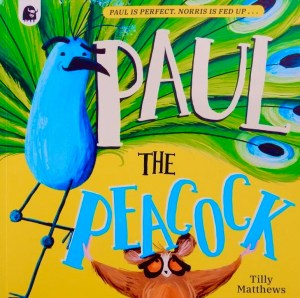
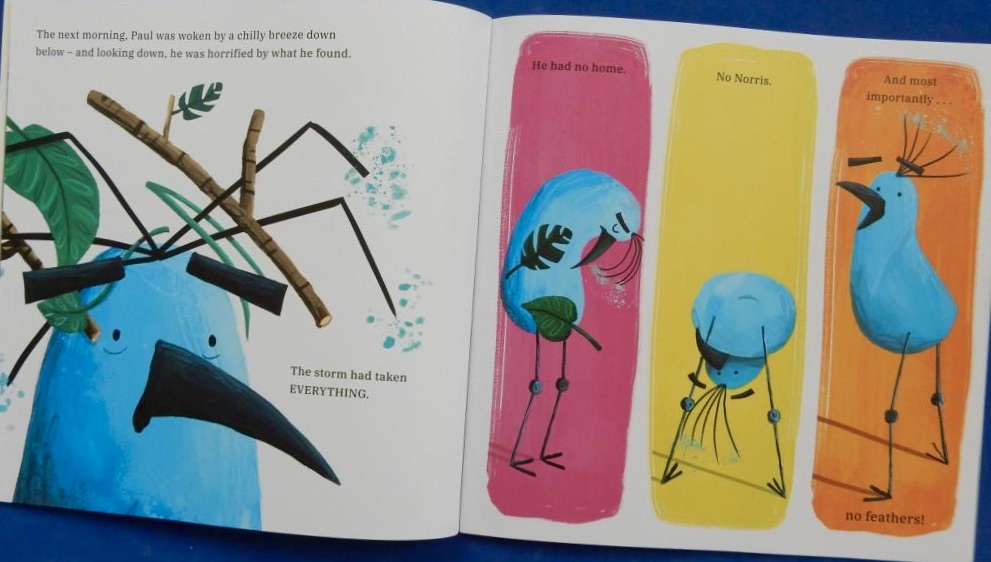
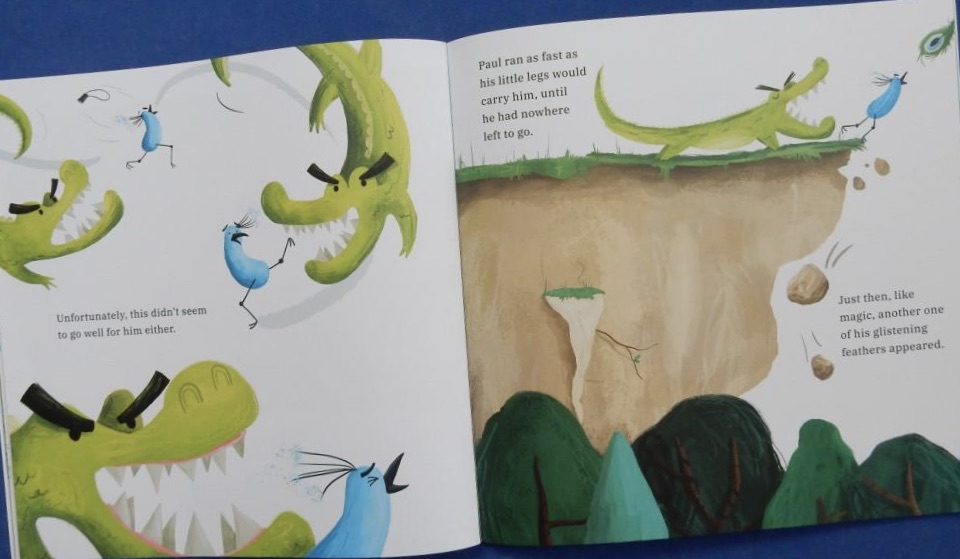


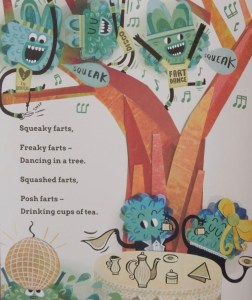


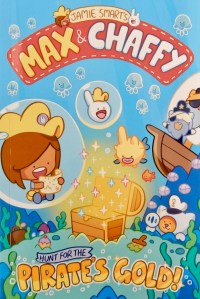
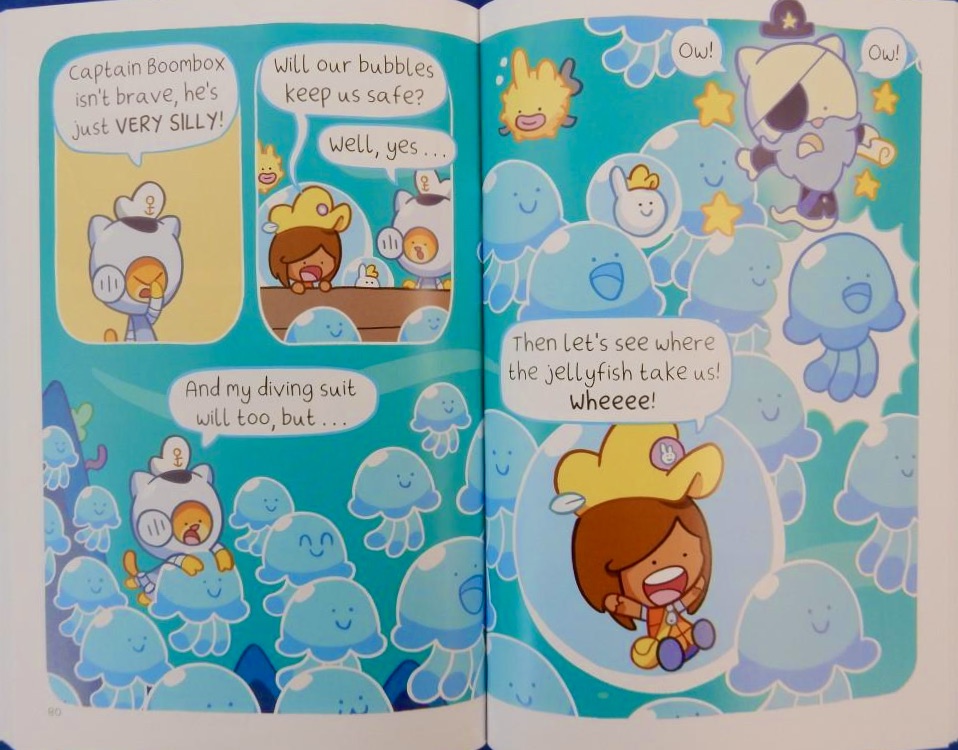
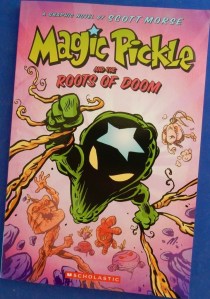
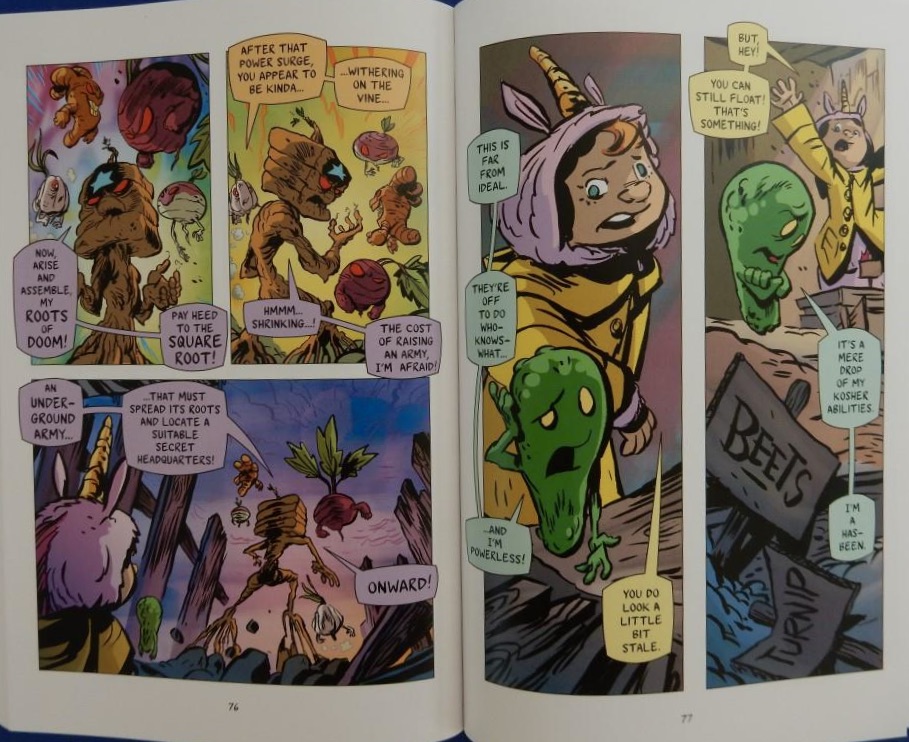
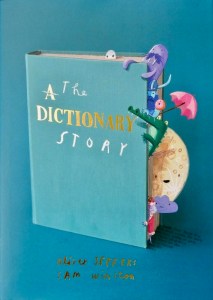

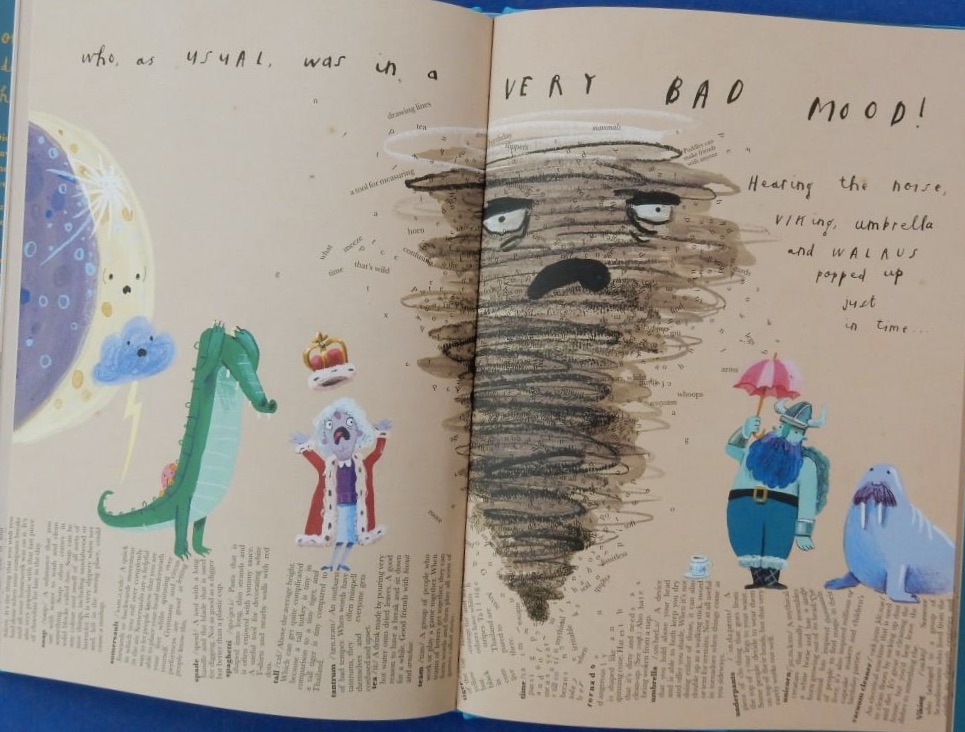
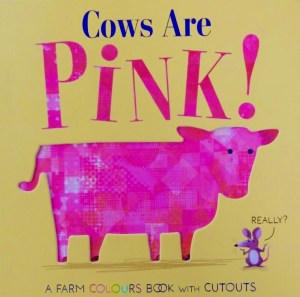
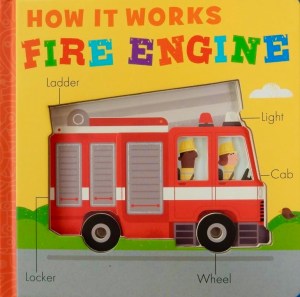
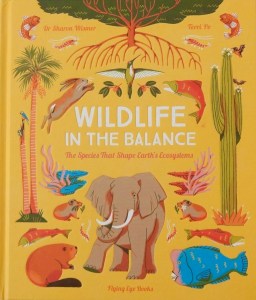
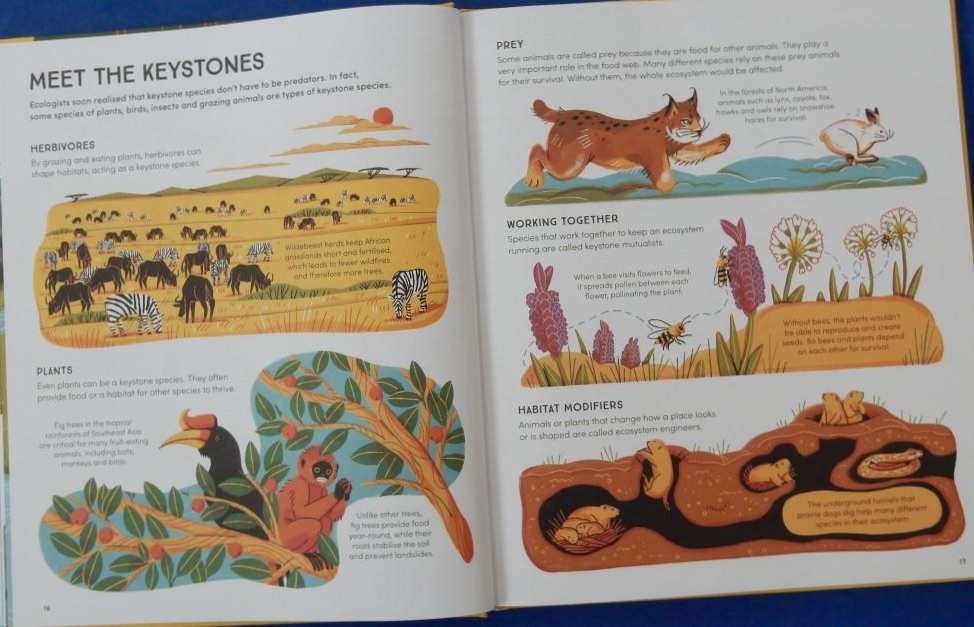
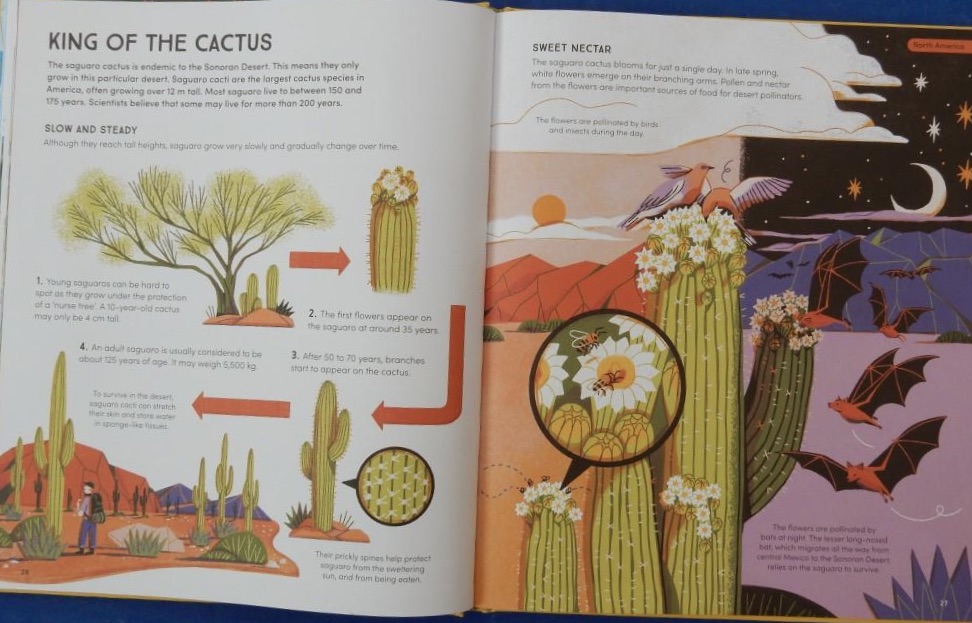
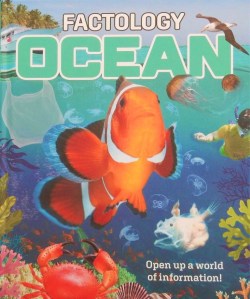
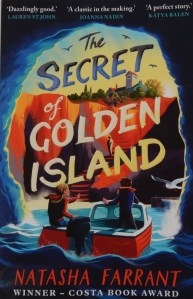

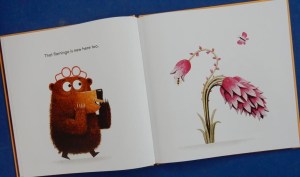
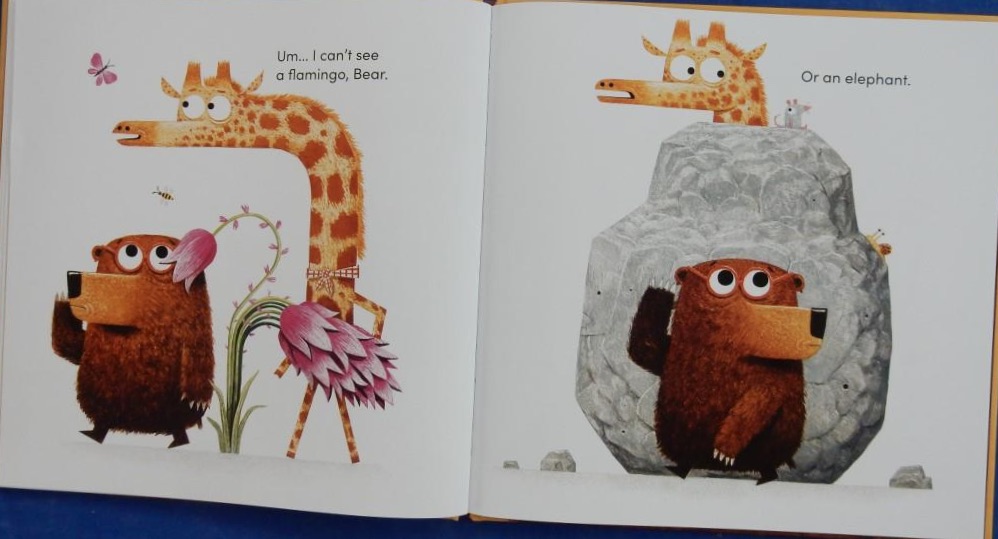
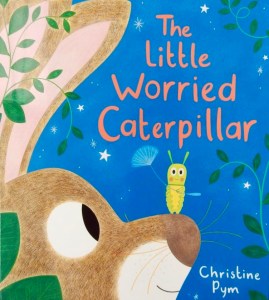
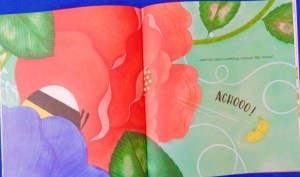
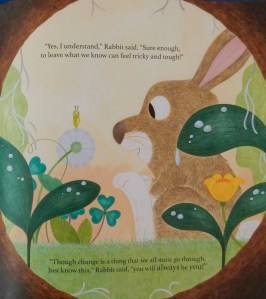
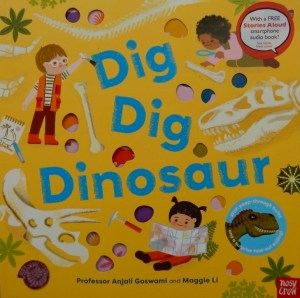
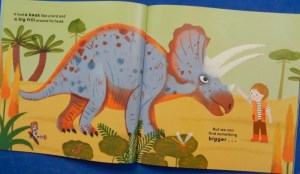
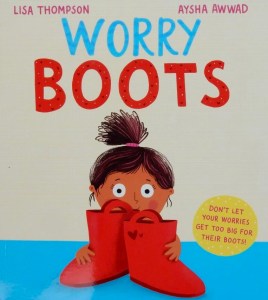
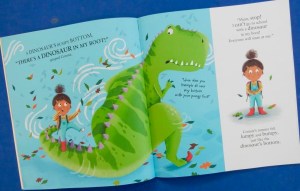

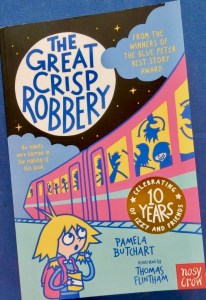
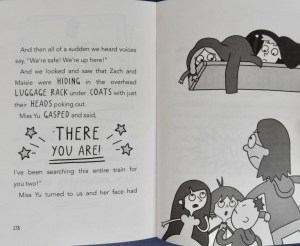
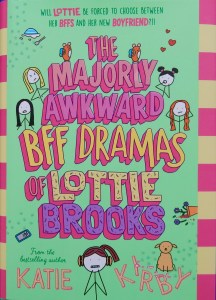


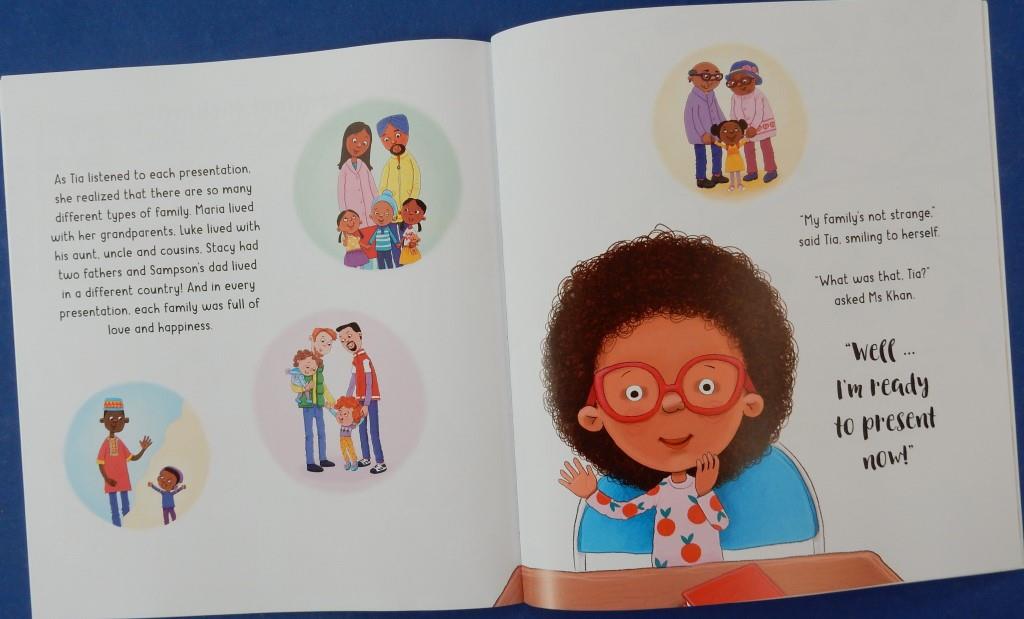
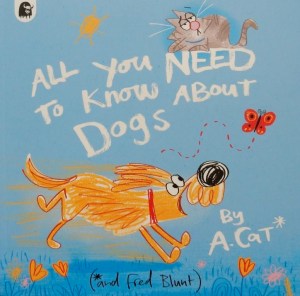
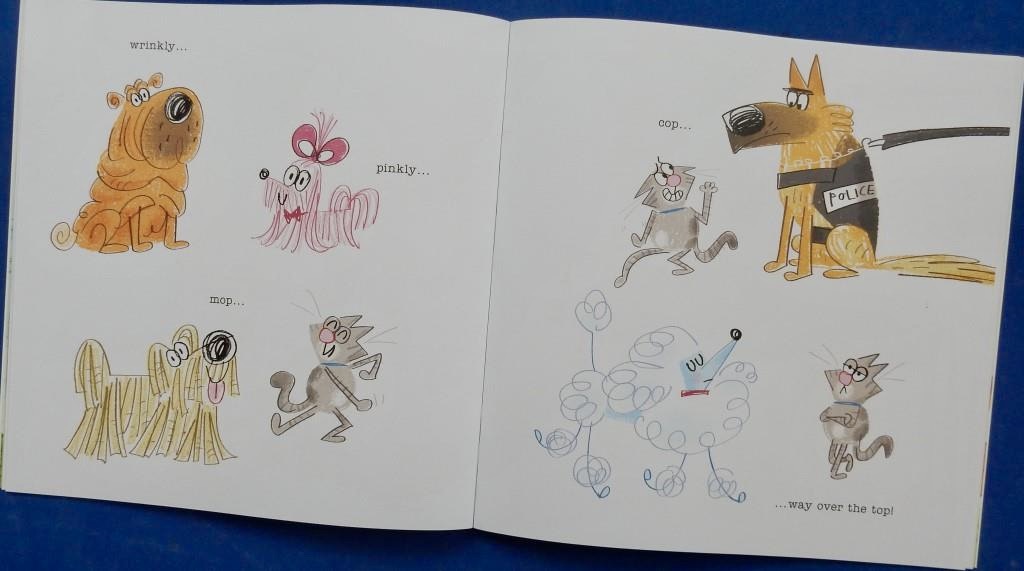

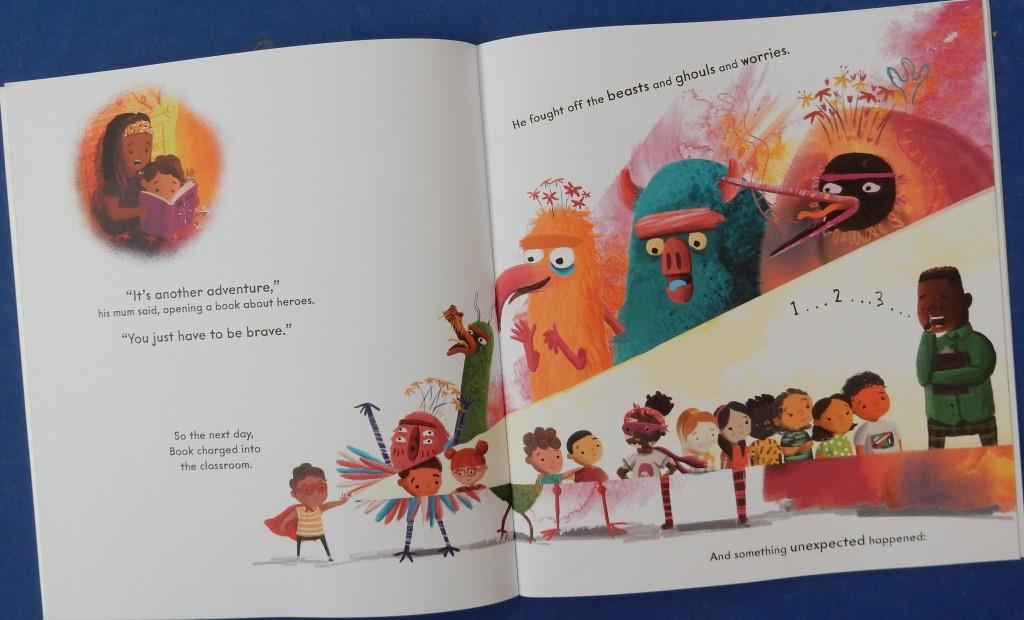
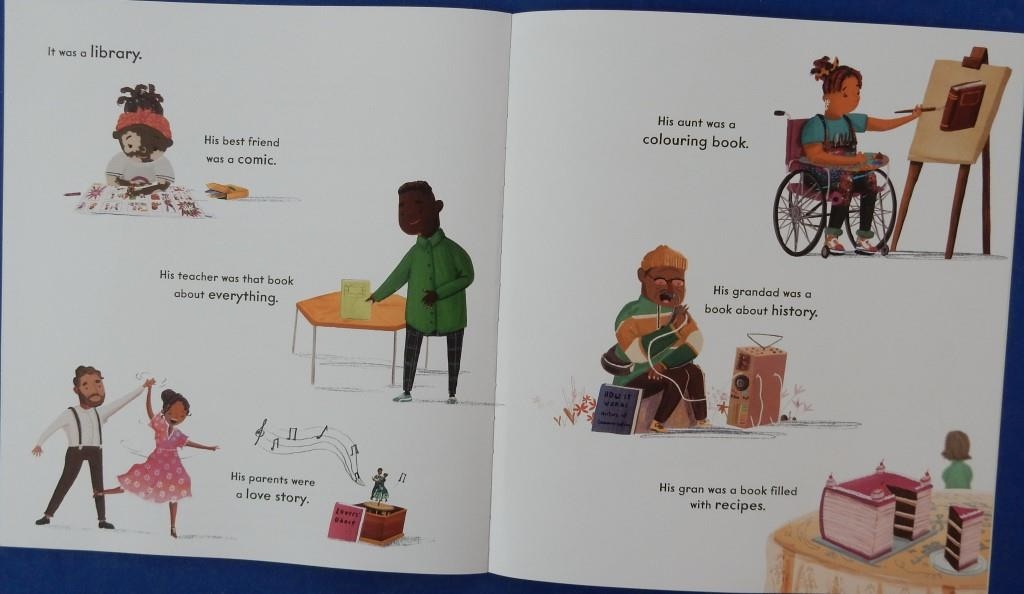


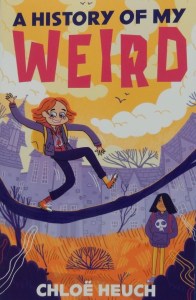
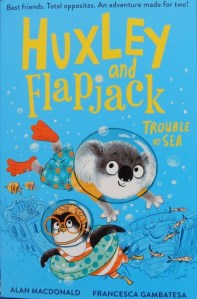
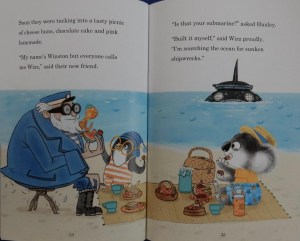
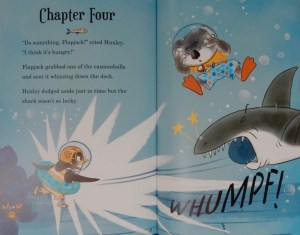
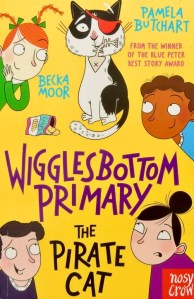
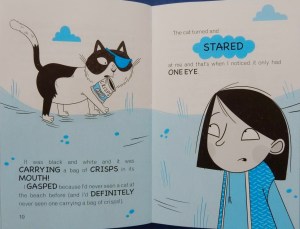


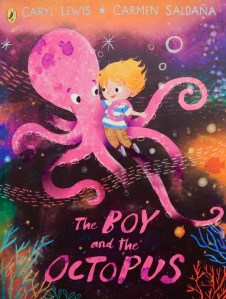
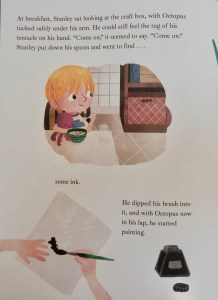
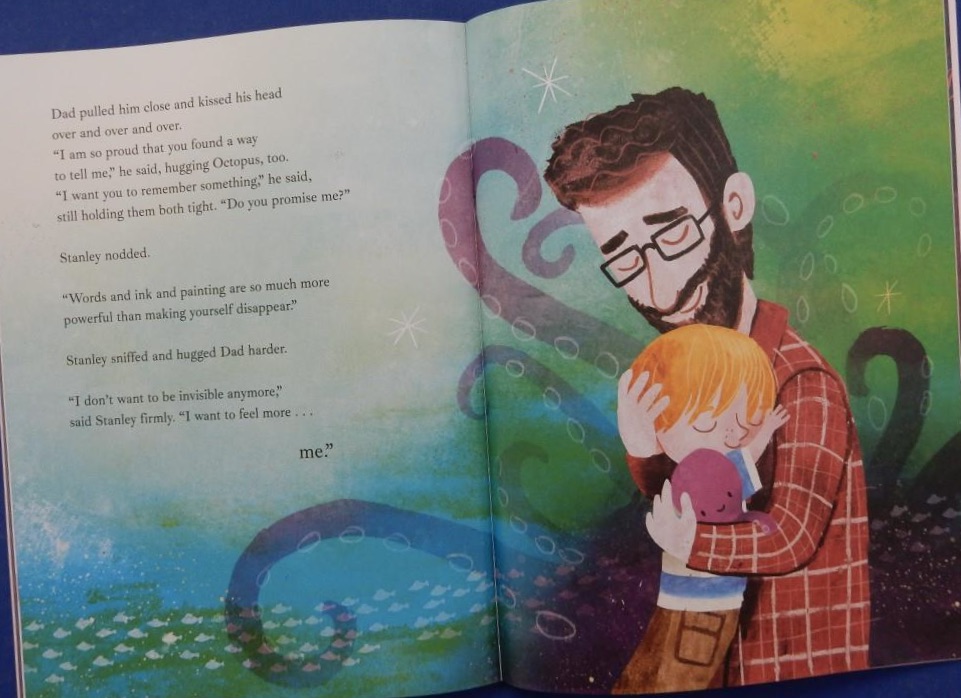


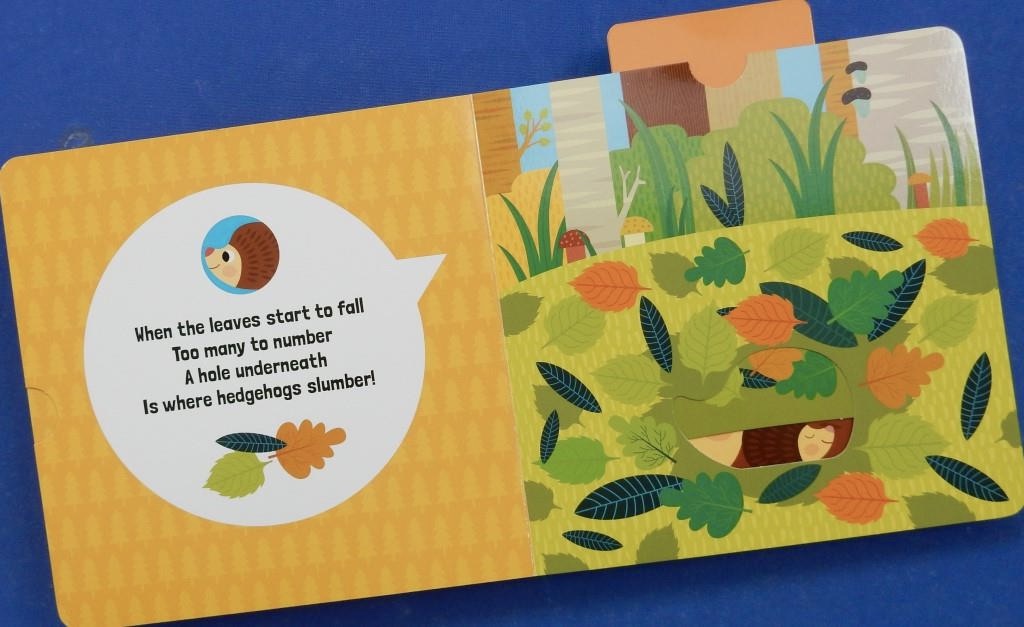

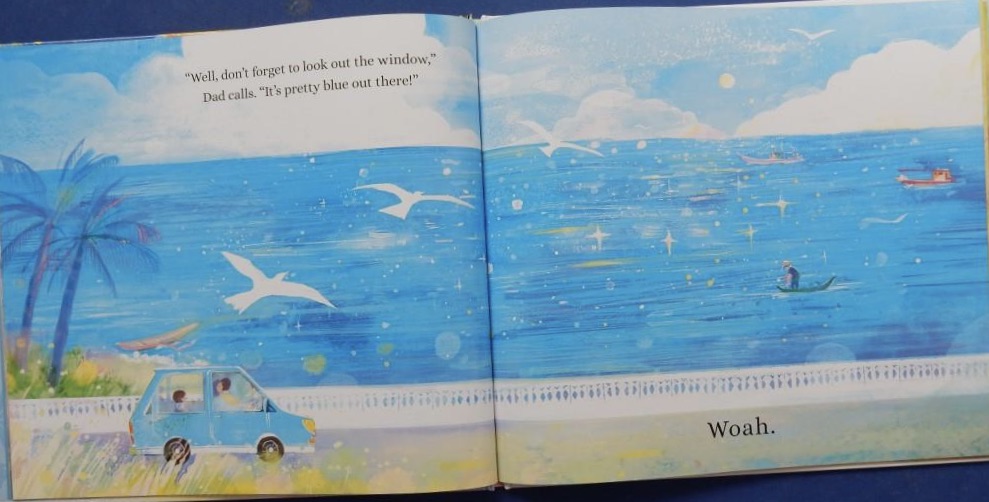

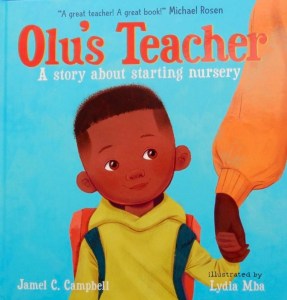
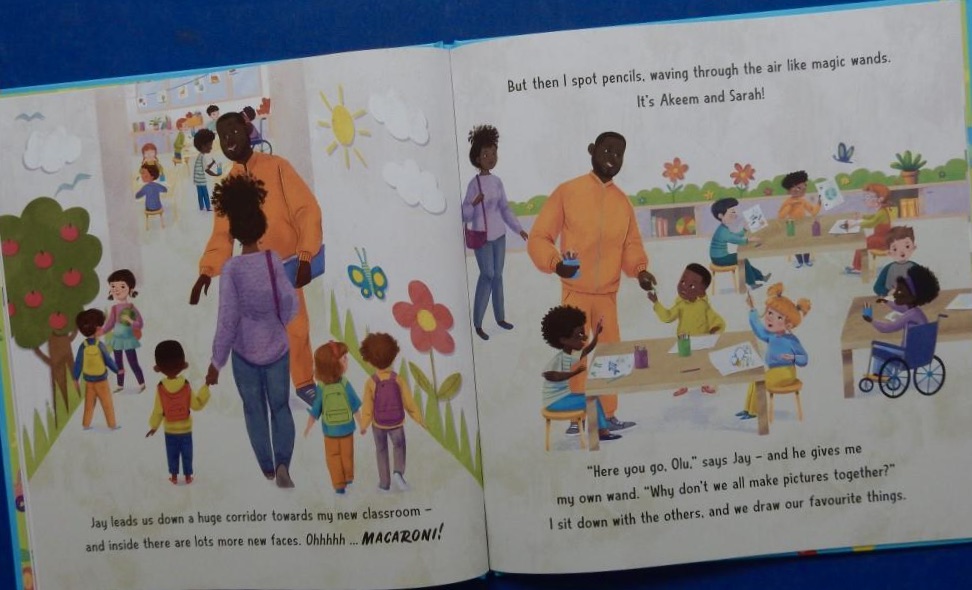
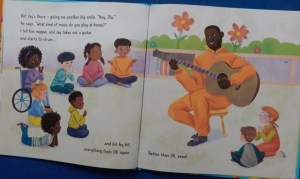
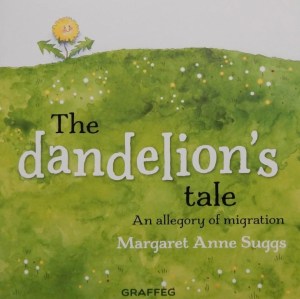
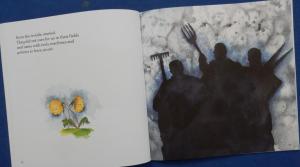
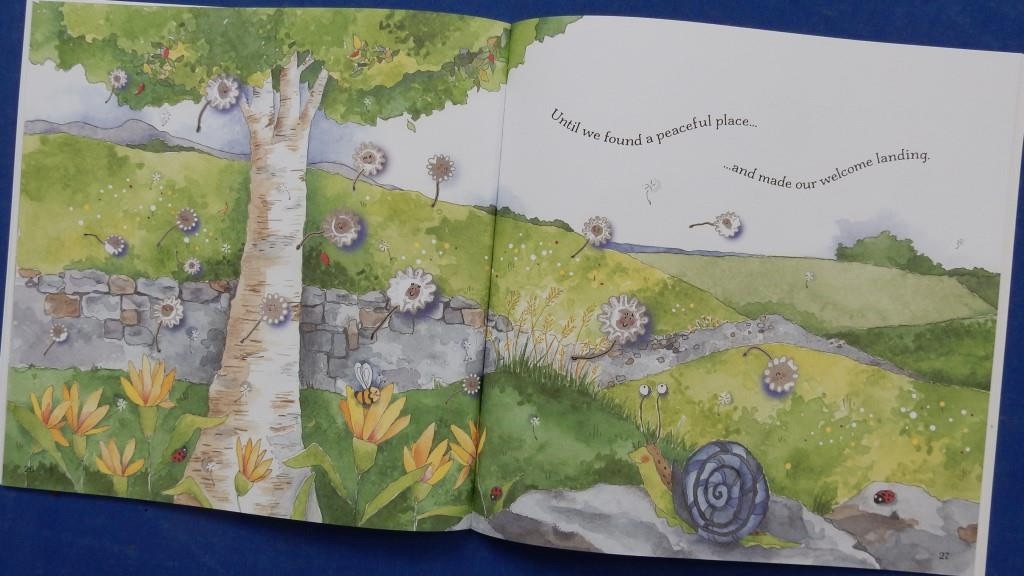


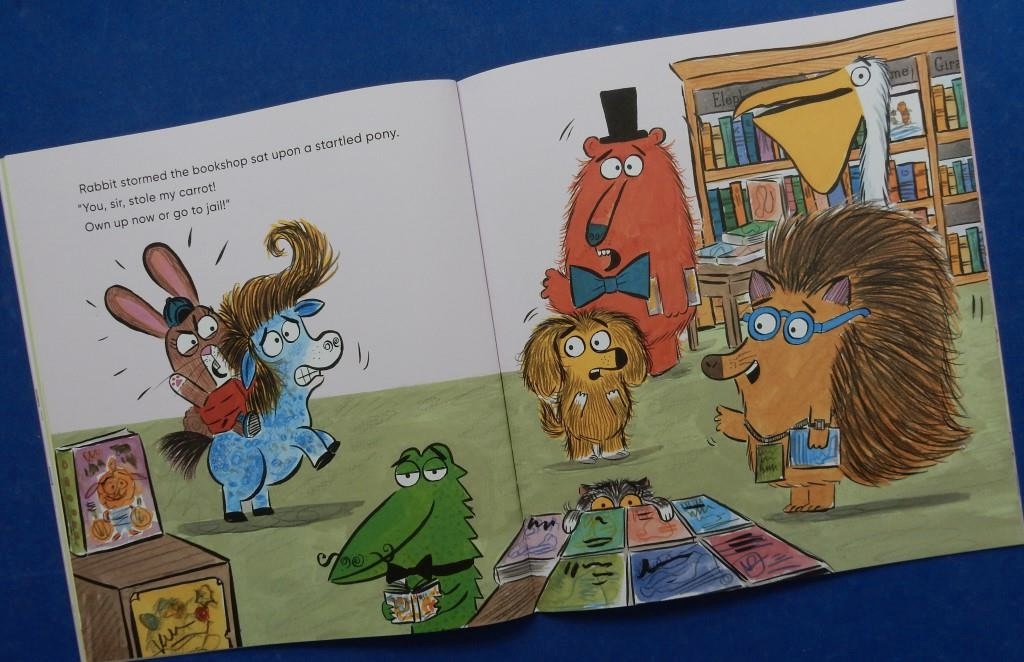


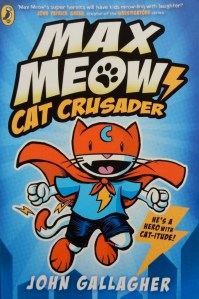
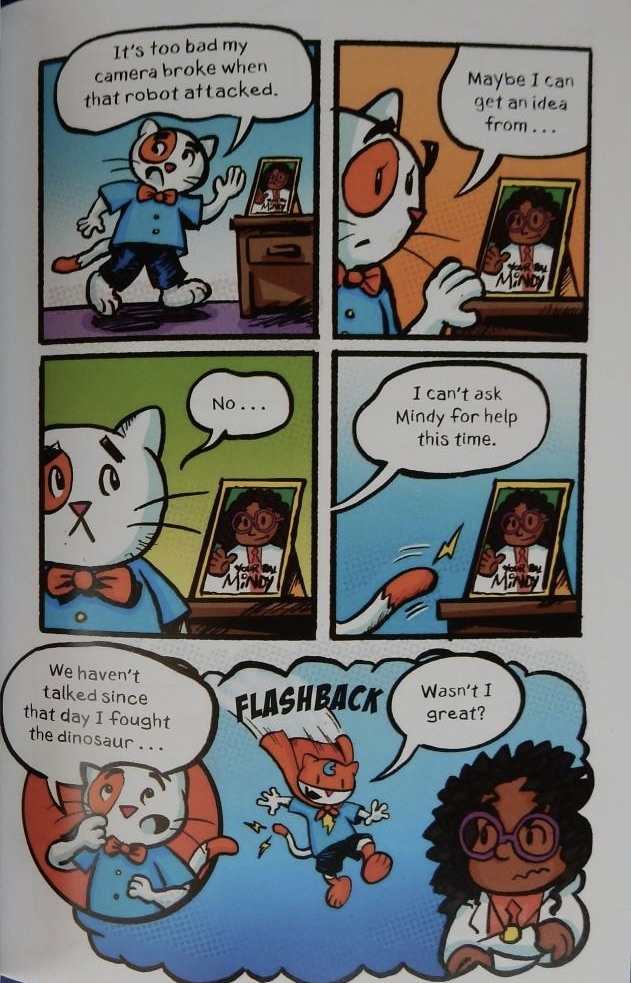
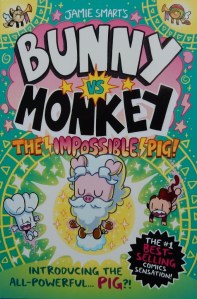
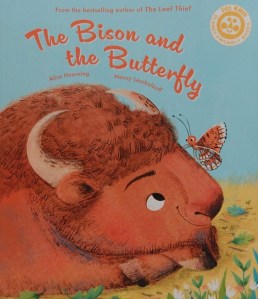
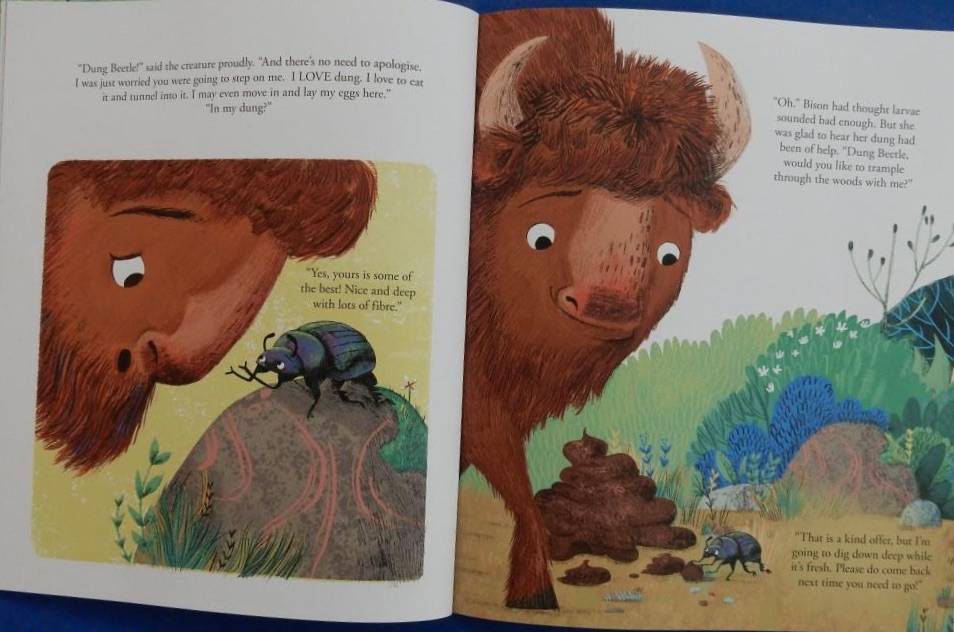

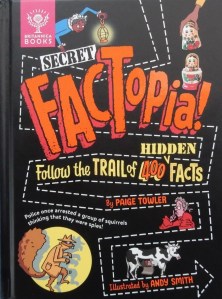
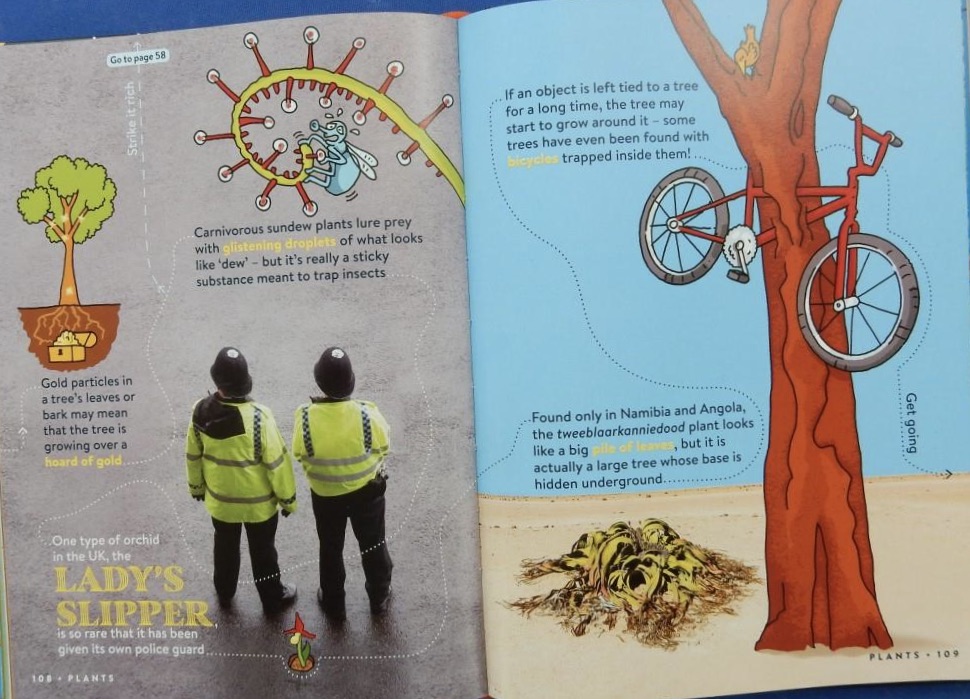
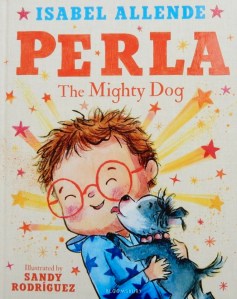
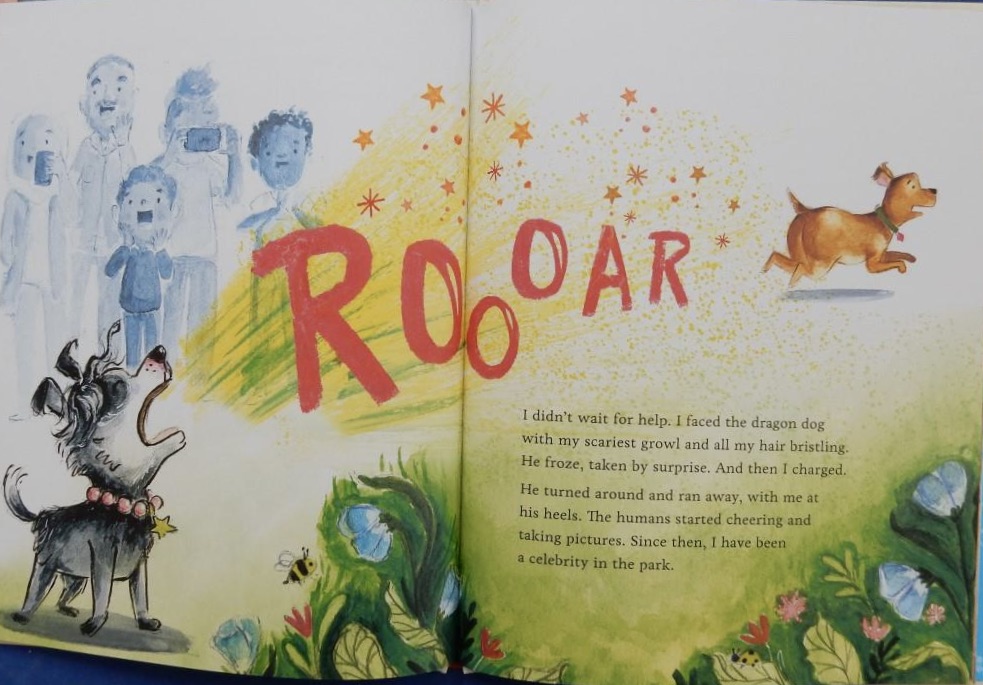

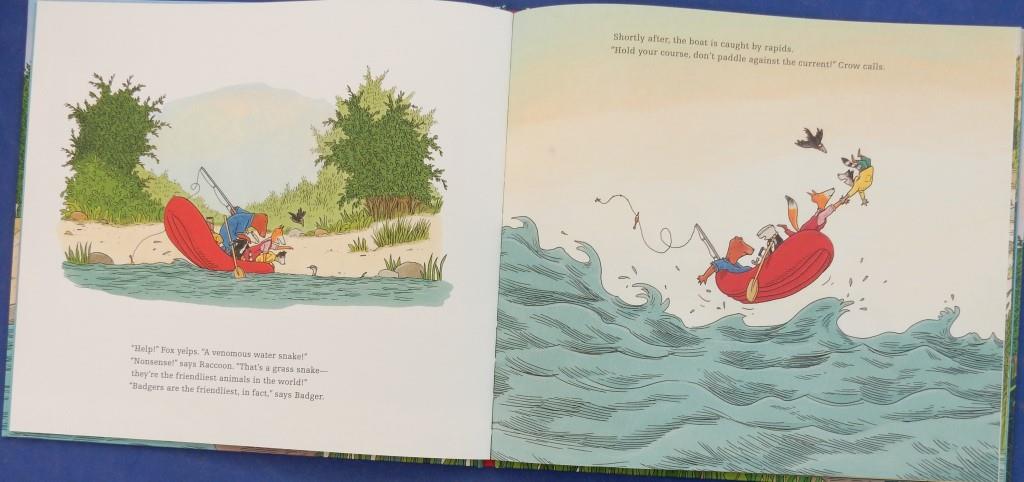
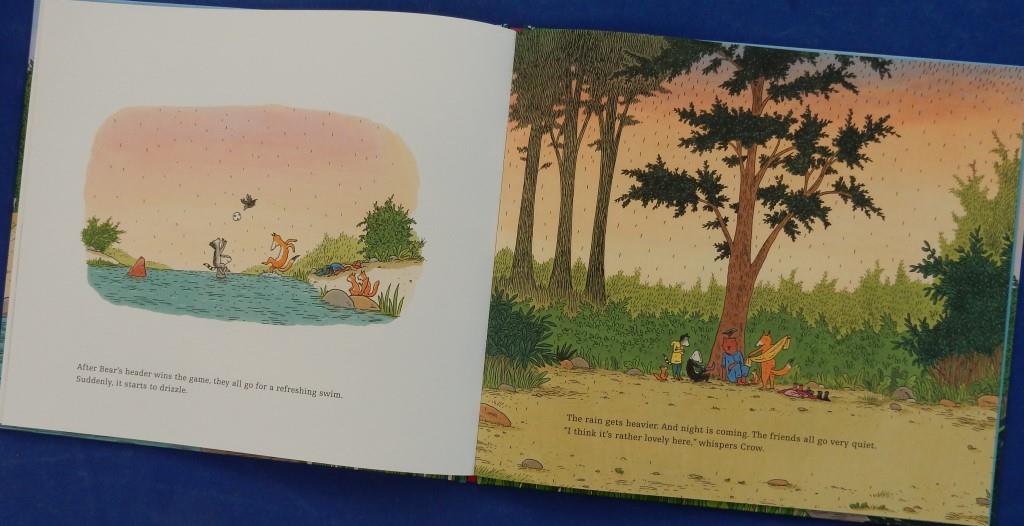
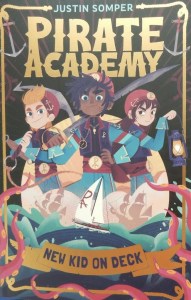


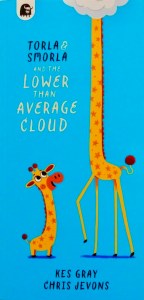
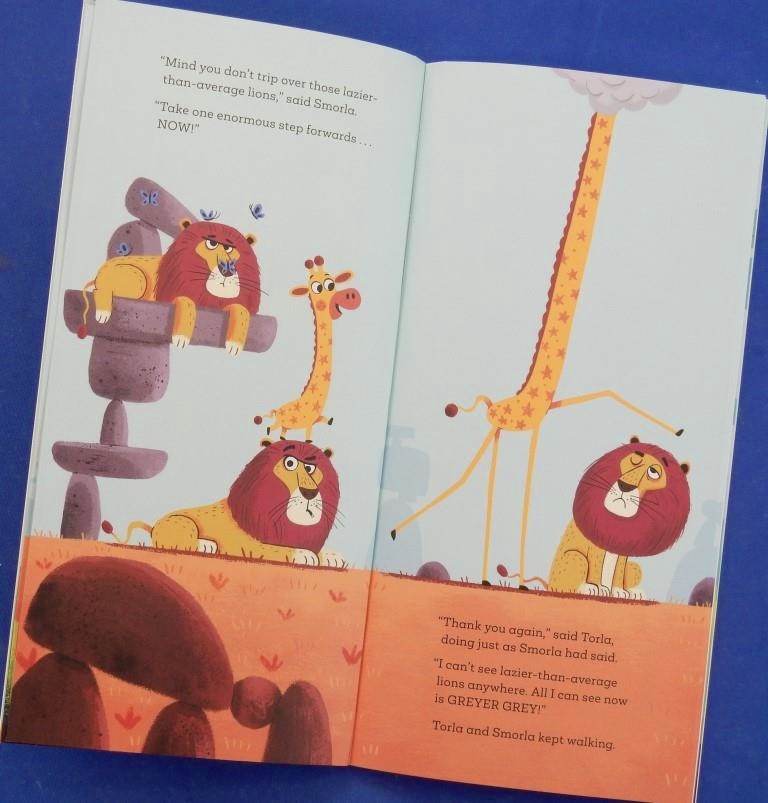
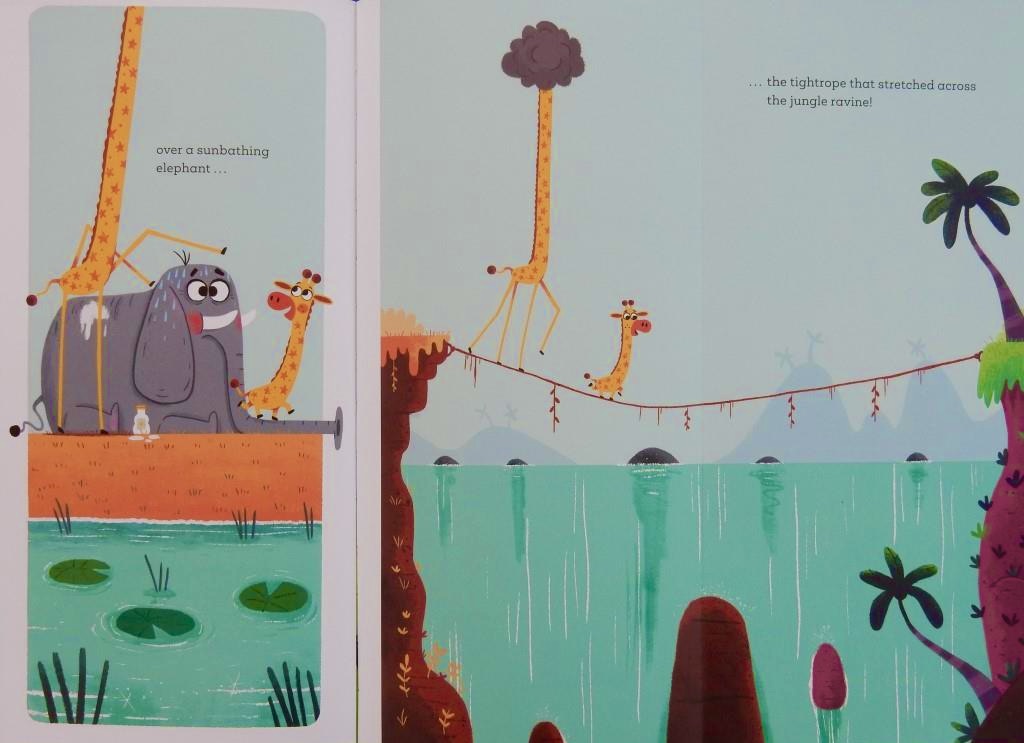
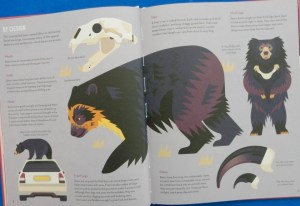
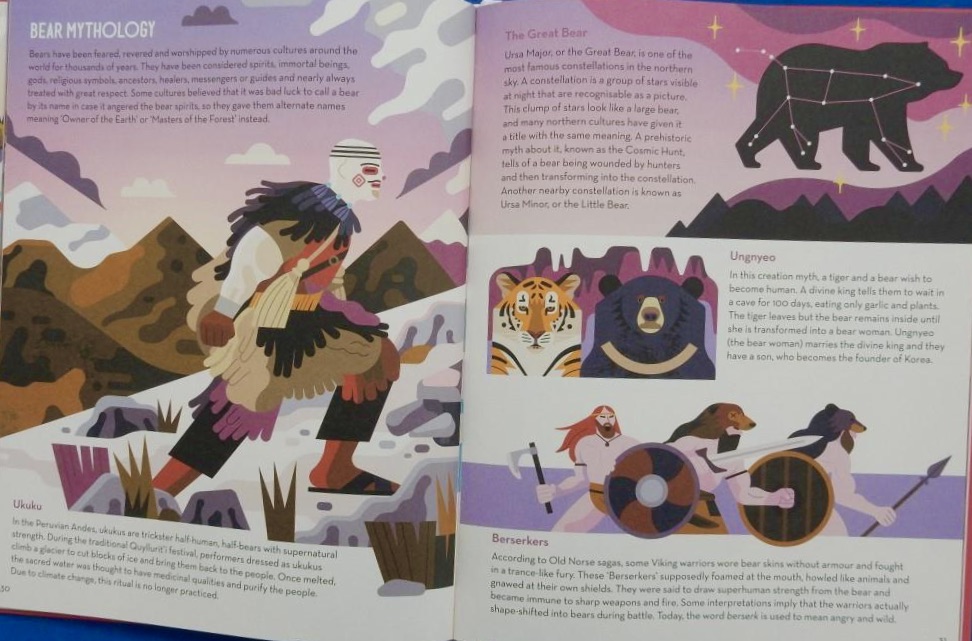
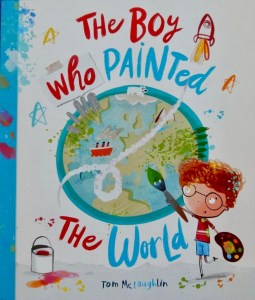
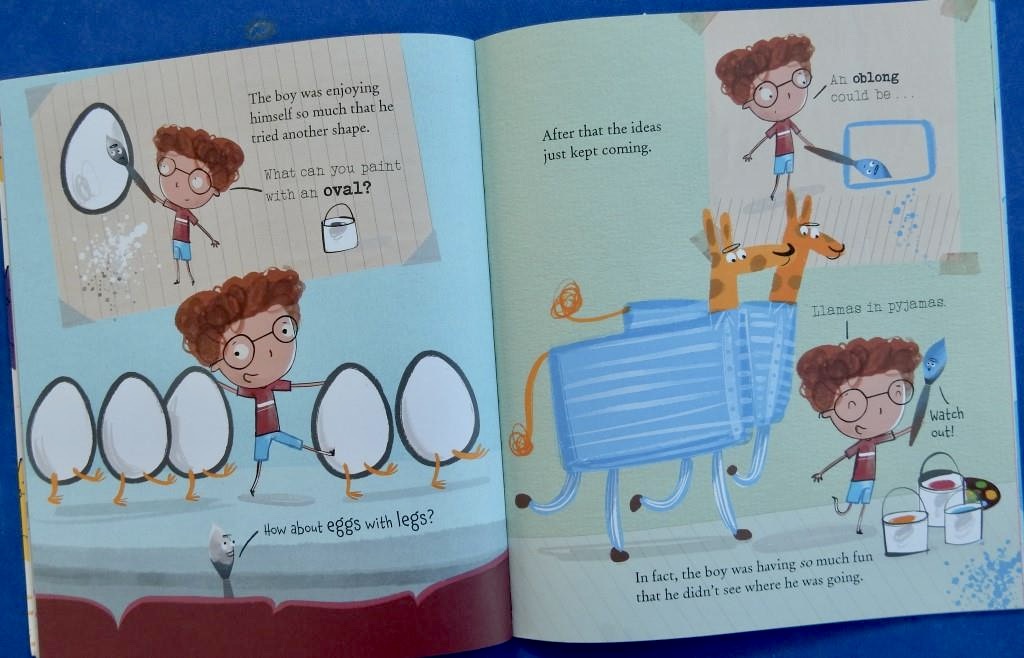
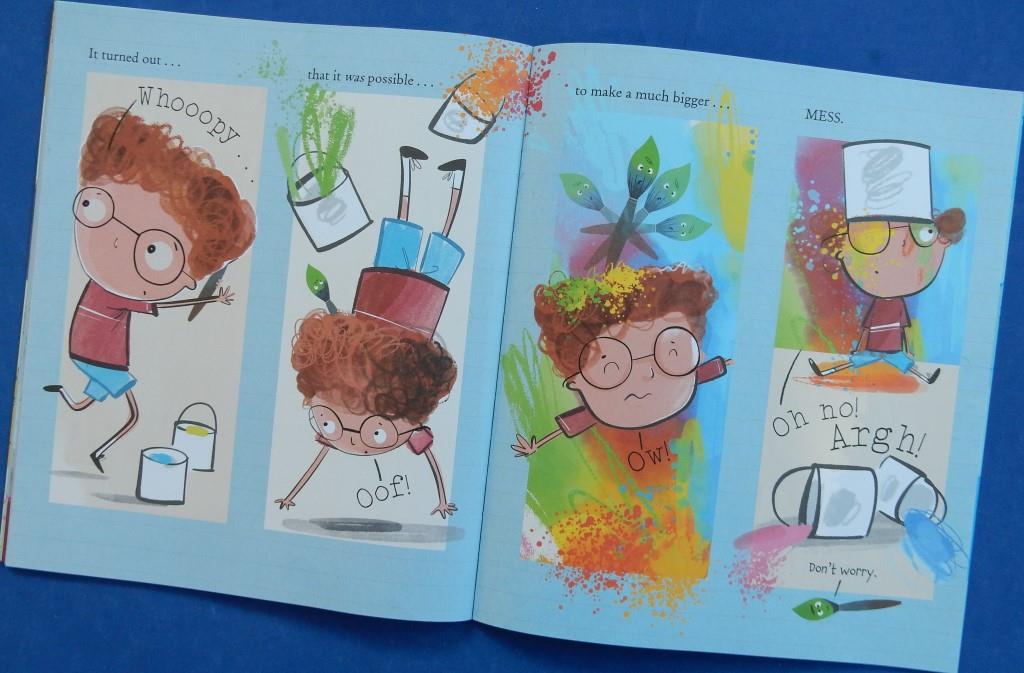
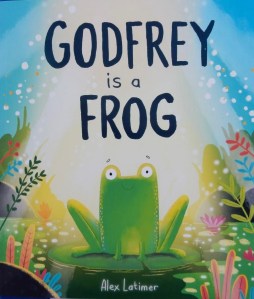
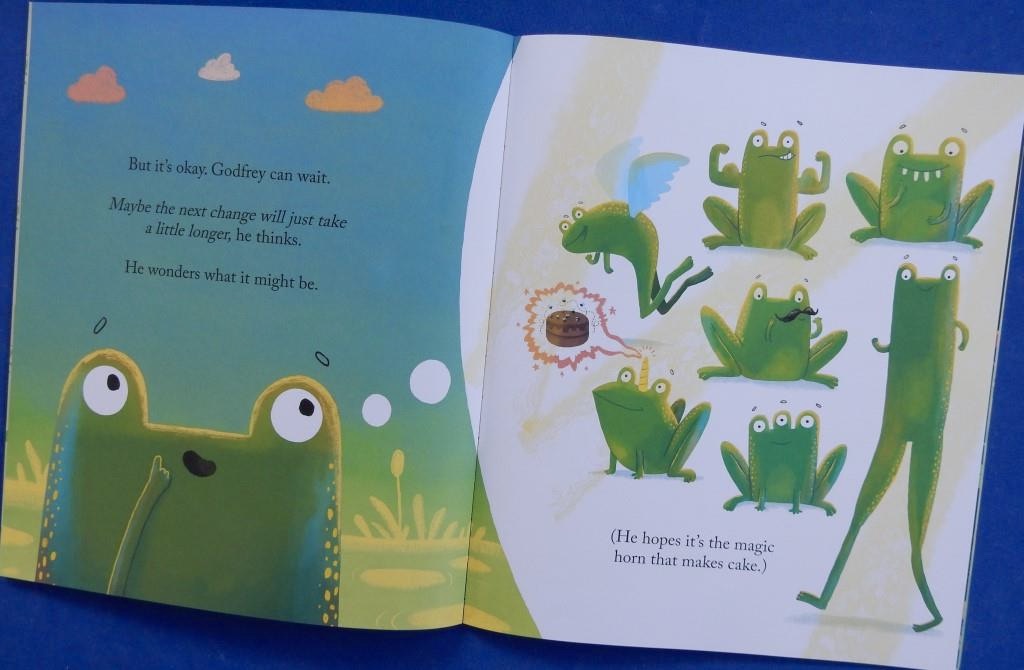
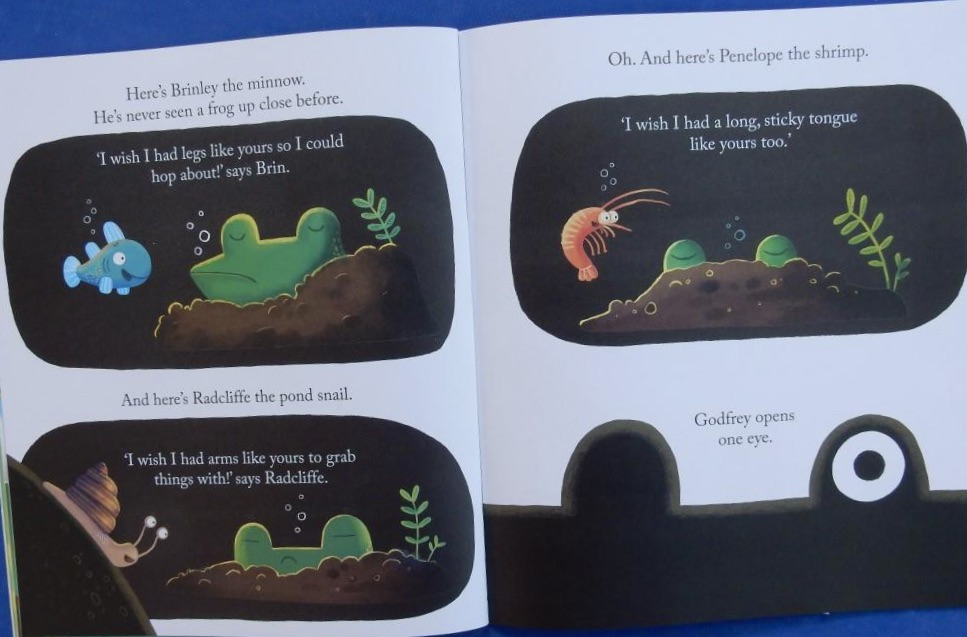


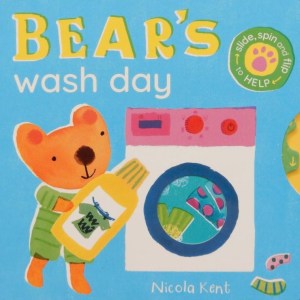

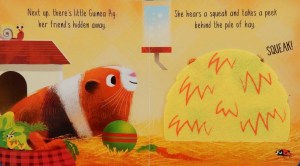
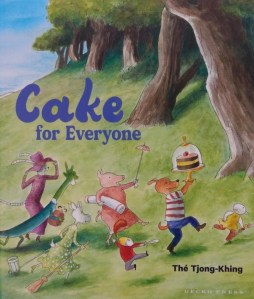
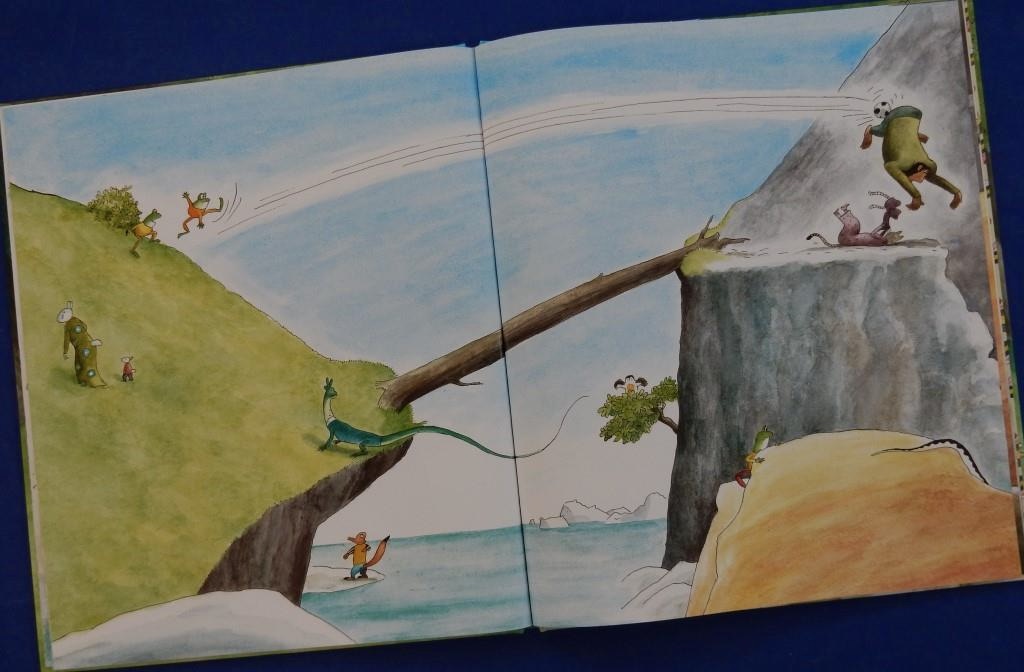

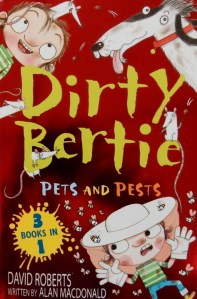
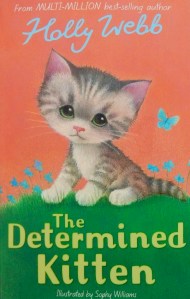
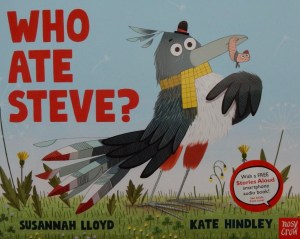
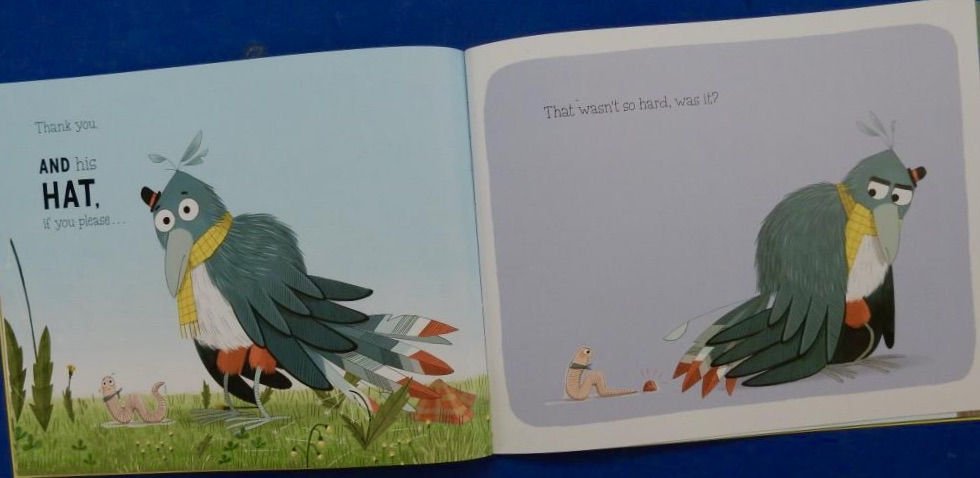
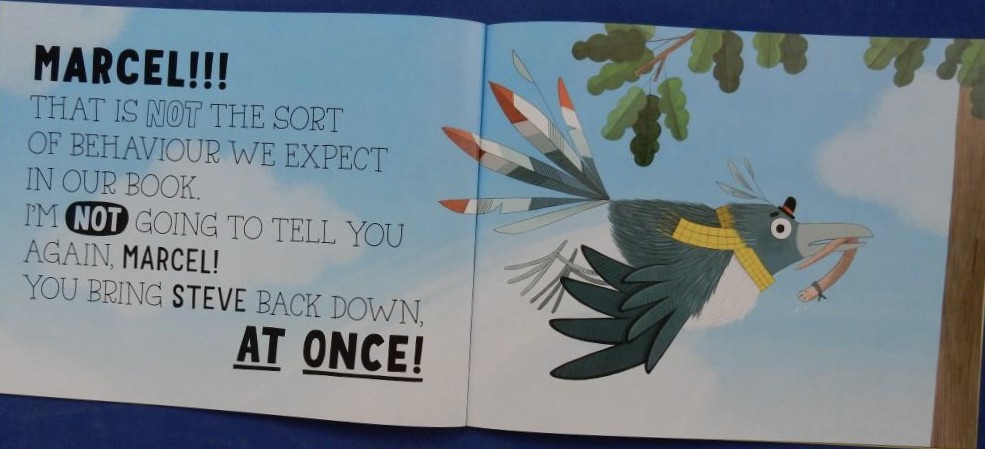
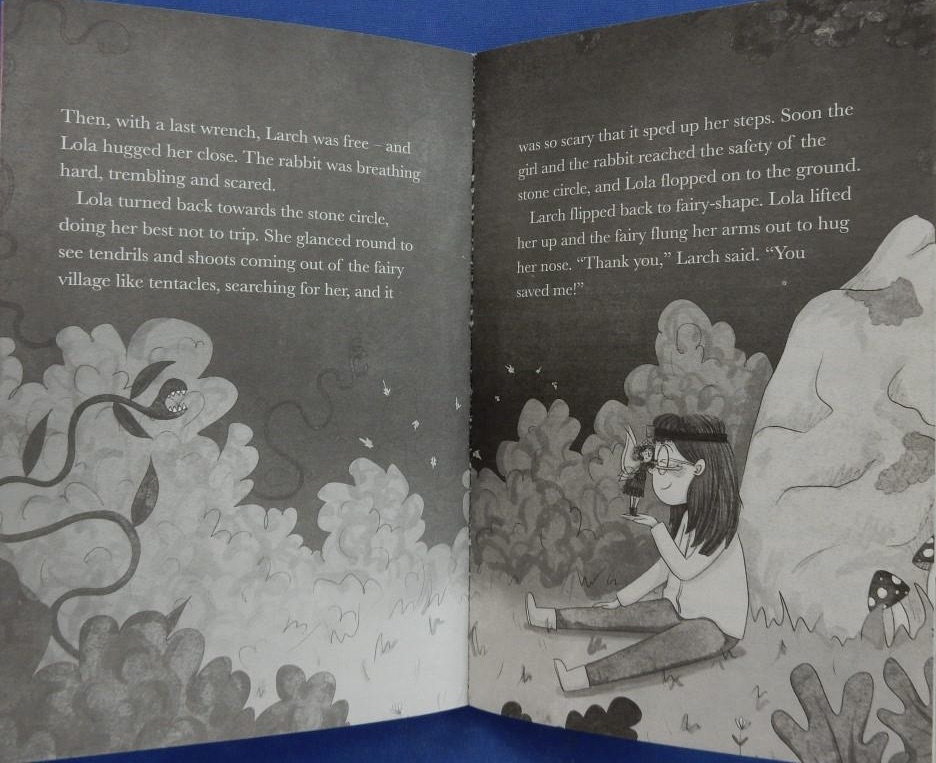

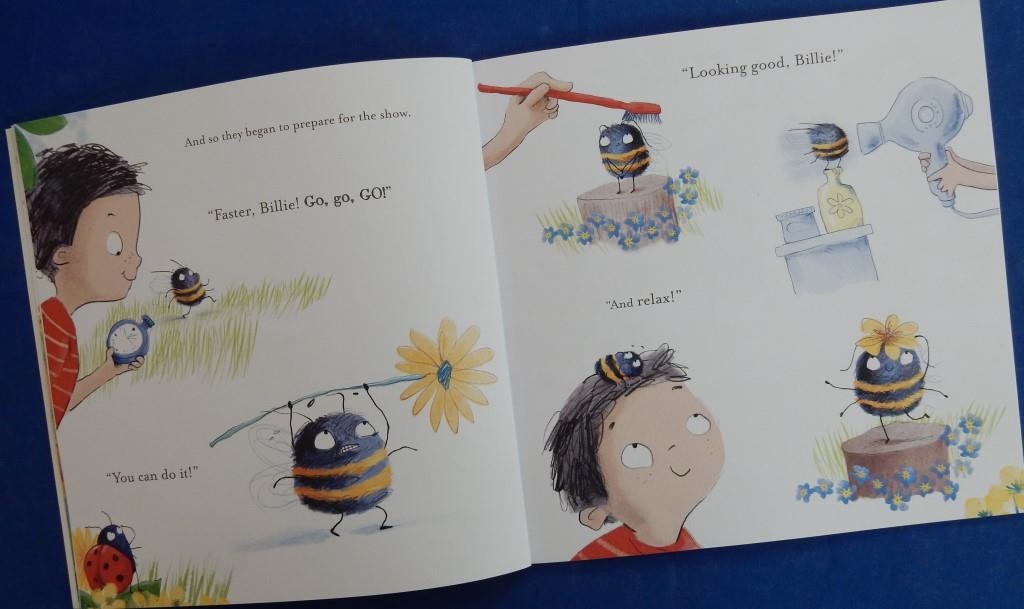

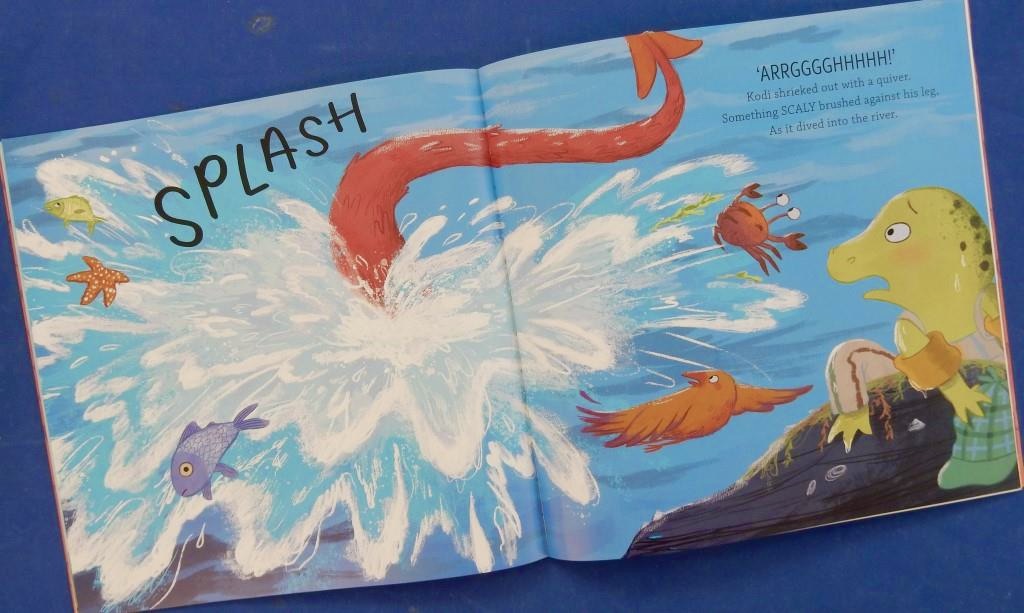
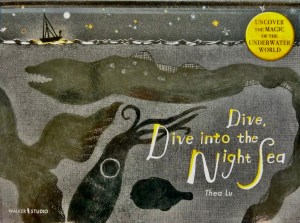


 Red Reading Hub - Jillrbennett's Reviews of Children's Books