What You Need To Be Warm

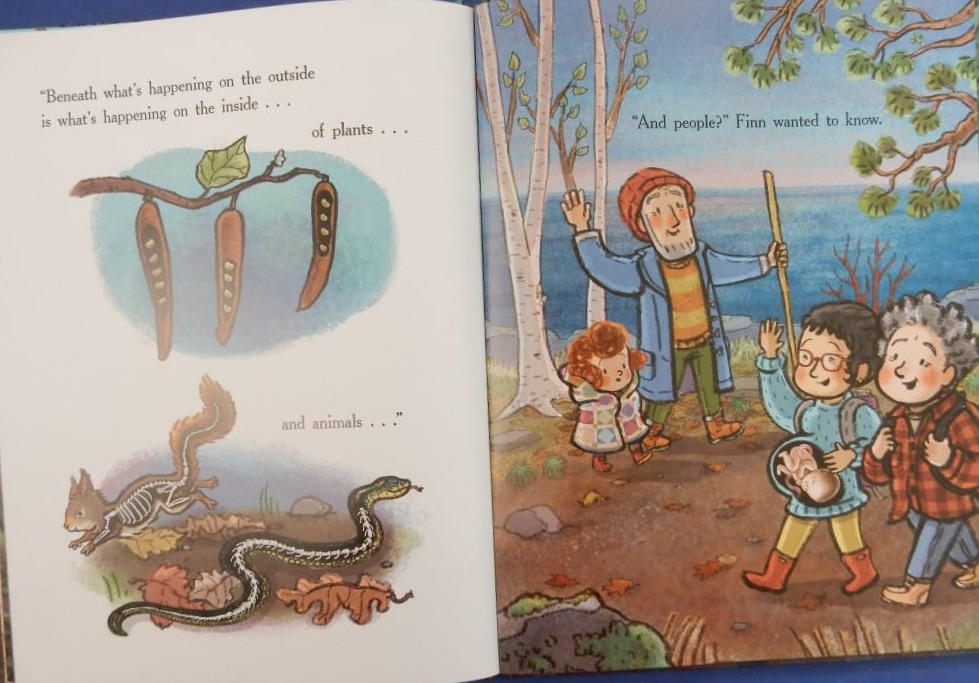
In 2019 Neil Gaiman author and UNHCR Goodwill Ambassador, asked his Twitter followers, ‘What reminds you of warmth?’ He received thousands of replies and from these he composed a freeform poem in aid of UNHCR’s 2019 winter appeal.

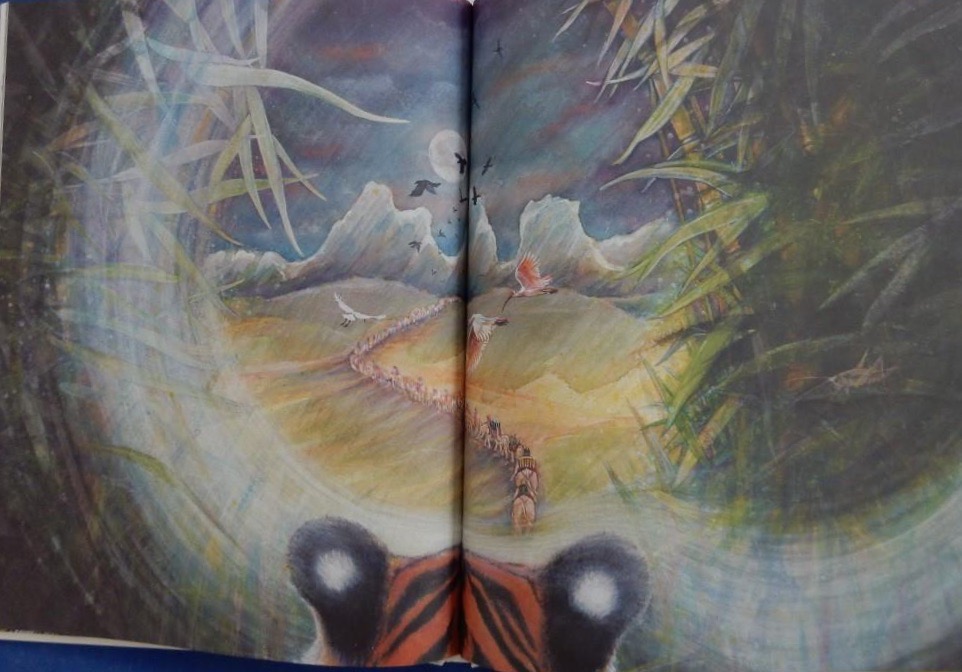
The images Gaiman gathered signifying warmth range from clutching a baked potato

to ‘The tink tink tink of / iron radiators /waking in an old house. / To surface from dreams in a bed , / burrowed beneath blankets / and comforters,’ …to ‘the wood burning / in the stove’ .
There is hope though for the poem concludes thus, ‘You have the right / to be here.’
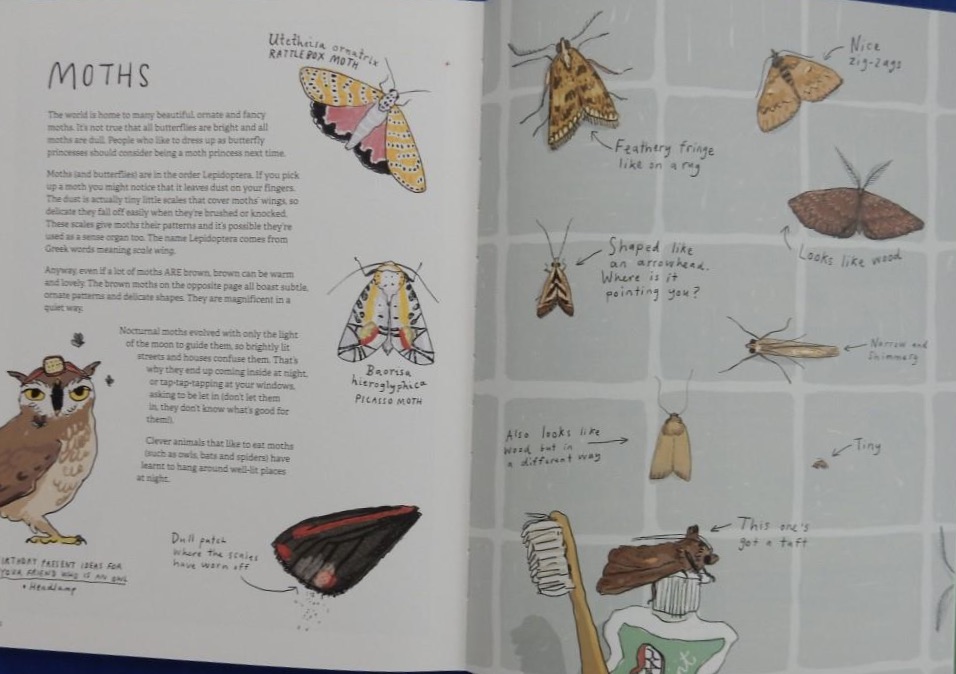
Thirteen artists: Yuliya Gwilym, Nadine Kaadan, Pam Smy, Daniel Egnéus, Beth Suzanna, Marie-Alice Harel, Petr Horáček, Chris Riddell, Bagram Ibatoulline, Benji Davies, Majid Adin,

and Richard Jones each provided an original illustration. Twelve illustrators offered comments printed at the back of the book. Oliver Jeffers created the stirring cover art and this important, compelling book is the result.

A wonderfully warm glow emanates from his cover images: would that such warmth be offered to all refugees and other people displaced of necessity around the world. With both the on-going conflict in Ukraine and now that in Israel and Gaza, its humanitarian message is even more urgent today than it was four years back when the tweet went out.

A donation of £1.55 from each sale of the book in the UK and at least 40p from sales in other territories will be donated to the UN Refugee Agency.

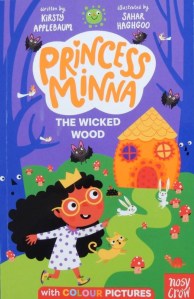
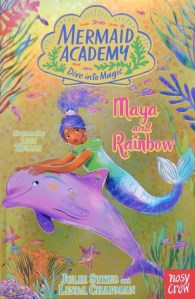
Princess Minna: The Wicked Wood / Mermaid Academy: Maya and Rainbow

These are additions to popular Nosy Crow series for younger readers: thanks to the publisher for sending them for review

There’s nothing multi-talented young Princess Minna likes better that sorting out problems in her kingdom but she wakes one morning to discover that not only are her parents, the King and Queen missing but so too is her best friend, Lorenzo the dragon. This requires help, she decides. She dashes into town where she learns from some woodcutters that the missing characters were heading for the Wicked Wood where resides the Wicked Witch and all manner of wicked creatures. Somebody needs to rescue them but those woods are so terribly creepy that Princess Minna hopes one of the townsfolk will offer to go instead of her. Up steps Little Betty Button and with a bag of breadcrumbs, she sets forth leaving a trail, through the Enchanted Forest towards Wicked Woods; but she doesn’t return. A similar thing happens with two more volunteers.

Eventually Minna realises there’s no option but to go herself. After a time she reaches a clearing and what she discovers there is a real surprise. A very unusual house. Yes all the missing characters are there but almost immediately, so too is the ‘Wicked Witch’. But is she really the wicked character she’s rumoured to be? And why are the Big, Queen and Lorenzo in the Wicked Woods? To reveal the reason would be to spoil the story so I’ll just say all ends happily with Minna et al safely back at Castle Tall-Towers.

Borrowing the occasional traditional fairy tale trope, team Applebaum and Hagoo has created another magical story for readers just starting to fly solo.

As the story opens lesson-loving, organised Maya wonders whether she and her fun loving dolphin, Rainbow will ever bond; could it be that they’re just too different to become real partners?
Then comes an announcement from Dr Oceania: to help them become good ocean guardians, all the first year students and their dolphins are to go on a team-building camping trip to the Northern Fjords to study the flora and fauna. Each dorm must complete a co-operative project. They’ll leave the very next day by Magical Globe, so the students must make sure they have the necessary equipment ready and Maya and her dorm friends are determined to come up with a very special, winning project.

Before leaving they decide on the focus of their project. Before leaving too, Maya realises that she’s not as good at making bubble tunnels as she is at everything else she’s tried and not being perfect is something that bothers her a lot. However she doesn’t ask her friends for help for fear of losing her star pupil image. But she’ll come to regret this decision during the three days camping expedition.

Will she change her mind and have the courage to seek assistance? Possibly, after some timely conversation with Rainbow …

Containing an important life lesson, this latest Mermaid Academy adventure has all the magical ingredients series followers enjoy including Lucy Truman’s black and white illustrations.

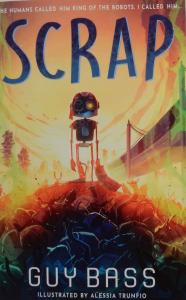
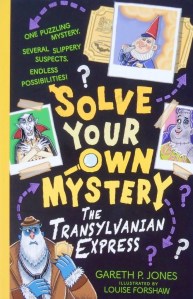
Scrap / Solve Your Own Mystery: The Transylvanian Express

These are two recently published adventures from Little Tiger – thanks to the publisher for sending them for review.

This is a sc-fi, action-packed adventure that will intrigue you from the outset. It stars loyal robot and former king Scrap, and the only humans left on the planet, two young sisters Paige and Gnat who are struggling to survive against the odds. The setting in the future is Somewhere 513, where the robots intended to prepare the way for human habitation, decided to keep it for themselves. A battle was the result and the other robots fled leaving King, who sided with the humans.

Fast forward a decade and a mangy robot is living a solitary existence on the Pile – an area of abandoned junk – where he has carefully constructed himself a home in which to see out his days. As he reflects upon how desperate he is to belong to his surroundings his thoughts are interrupted by the appearance of two figures, their faces hidden beneath their clothes. He tells them to get lost, but convinced that this robot is the one they’ve been searching for, the girls tell the robot that their mother had told them to find him. At least Gnat believes it’s King, but Paige is far from certain.

When the robot refuses to reveal his name, Gnat decides he is to be called Scrap. Paige is quick thinking, slow to trust Scrap on account of his appearance mainly, but very loving towards Gnat. Gnat in contrast is open-minded and her manner of speaking is delightful.

Scrap really wants nothing to do with the girls but his conscience won’t let him abandon them to the Hunters who are searching for them and despite his grumpiness he proves to be full of heart, loyal and caring towards them.

We also meet Mayor Harmony Highshine, full of evil plans, and Morten Prometheus, playing a role he doesn’t like; indeed new characters keep on appearing as the plot twists and turns with Scrap, Paige and Gnat facing various enemies, escaping and then finding themselves in further danger.

All this makes for a thrilling and thought-provoking adventure, not least on account of the upgrading issue. There’s humour too though, partly thanks to Gunner whose phrases that aren’t quite right; “charm down”, “hazard a guest” and “I’m folding all the cards” will surely make you smile and there’s a wealth of other wordplay too. Then we have Alessia Trunfio’s superb illustrations.
Bring on the second adventure of Scrap, Paige and Gnat.

Want to be a detective? Then try this the fourth of this series that puts the reader in charge of the direction in which the mystery story goes. Like the previous ones, it features characters from the town of Haventry.

You and your yeti boss, Klaus Solstaag are seven days into a railway journey aboard the Transylvanian Express, destination Castel Ursprung, home of the vampire Count Fledermaus. However, before you get there, a mystery needs .solving: Night Mayor Franklefink has vanished from the train. Somebody aboard must have played a role in his disappearance, but who has the strongest motive?

There are several possibles. Could it be Franklefink’s archnemesis Bramwell Stoker? Or is Sandra Rigmarole, elf District Governor and colleague of the Night Mayor, a more likely suspect? Maybe Franklefink’s monster wife has turned against him? You dear reader, decide!

By following the prompts and choosing what route to take, you will be lead down various paths and be offered a number of clues to assist you in solving the crime. One thing I can assure readers is that this trip will be anything but boring and that eventually the perpetrator of the crime will be unmasked.

With a wealth of mock scary illustrations by Louise Forshaw to add to the fun, this will be especially welcome for readers who enjoy problem solving.

Catch! / Hello Winter

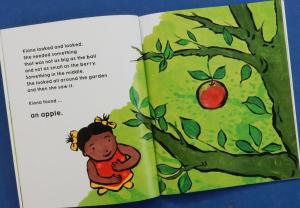
This is a delightful story wherein we join Kiona and her Mum playing catch one sunny afternoon. When the little girl finds her ball too big, they try all kinds of other objects such as a berry and an apple

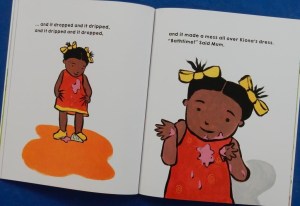
but nothing works for Kiona. Back indoors, Mum offers Kiona an ice cream, but you can guess where it ends up;

even the bubbles at bath time elude the child. Happily though, Mum knows the perfect thing that assuredly her daughter can catch; it’s something that stays with Kiona for ever: what could it be?

A lovely read aloud for preschoolers; it has everything you could ask for: repetition, opportunities to encourage mathematical thinking that can be taken up again when playing outdoors, as well as Ken Wilson-Max’s vibrant illustrations that show Kiona’s changing feelings so clearly.

Yet another example of Alanna Max’s pitch perfect picture books for under fives.

The fourth in the Best Friends With Big Feelings series wherein each title is set in the natural world of Season Isle and features four magical friends, the focus being on a different seasonal character.each time. Now it’s time for Autumn to pass the weather crown to Winter but instead he gives it to Spring, saying that the others don’t like playing her frosty, freezing games. Upset, Winter walks off to play snowy games by herself. Solo play isn’t fun though, and the bunnies she tries to involve are not interested.

However, her three pals soon start feeling troubled about what they’ve done and decide to search for their friend. It’s a really chilly journey they make but can they find Winter and put things right between them once more? Maybe, but Spring, Summer and Autumn will need to feel warm if that crown is to be bestowed upon its rightful wearer.

In this, the series concluder, the life lessons the friends share with young children are about the importance of turn taking and empathy

Where Do I Start?

Subtitled ‘How to Navigate the Emotional Journey of Autism Parenting’ this is I would say the go to guide for any parent with a neurodivergent child whether or not that child has already got a diagnosis. It’s written by Kate Laine-Toner, founder of Bristol Autism Support, the mother of a 13 year old child with autism and also received a neurodivergence diagnosis herself last year. So, this comes from a place of deep understanding, knowledge and empathy.

I’m not a parent but have taught many children from age three to eleven who were clearly neurodivergent; sometimes this was acknowledged by parents and shared with me and sometimes not. So I’m not the target audience for this book but I wish it had been around when I was in the classroom. I know I would have been in a better position to help those parents having read it.
There are two parts to the book, the first focuses on How to Help Yourself (as a parent); the second is on How to Help Your Child.

The seven chapters that comprise the first section give helpful advice on topics that include looking after yourself, talking to family and friends about autism and being assertive with professionals in education and healthcare, why you need help and how to get it. Interwoven throughout are Kate’s story of her daughter’s journey and her own experiences. For example she looks at some of the true feelings around a diagnosis that parents may be too frightened to disclose. I love the garden metaphor used: ‘view your autistic child as an amazing garden, and that autism is the soil in which everything in your child grows. … there will be plants and flowers that thrive without any help and those that need support and extra nourishment.’

Not all parents are by nature assertive but parents need to be assertive to get the help they need and to this end, several ‘why’ questions are offered (with an extended example).
Why can’t my child have this reasonable adjustment at school?
Why can’t we have the first appointment of the day?
Why can’t the GP meet us in the waiting area?
Why can’t we arrive 15 minutes before everyone else?
Why can’t my child eat the food we brought from home when the rest of us are ordering meals?

These asked in a non aggressive manner should, one hopes, get the person you are addressing thinking about how they might help.
Other key pieces of advice include never comparing your child with other children and focusing on the positives.

Part two has 12 chapters; these look at topics such as ‘How to Advocate for Your Child’, coping with your child’s anxiety, how and when to talk to your child about autism, emotional regulation (this includes an explanation of the differences between meltdowns, tantrums and shutdowns), sensory processing differences and executive functioning. The last – the ability to plan, organise and carry out tasks is something most neurodivergent people struggle with. Chaining (a technique to help with learning a new skill/routine) and using visuals can be a great help here.

The final chapter reminds readers of the importance of being in the here and now with a child, rather than worrying unduly about what their future might hold.
The book concludes with a lovely poem by Kate, which is also entitled ‘Where Do I Start?’

Thoroughly recommended no matter where a parent is on their journey with their neurodivergent child. I would also suggest a copy should be in every primary school.

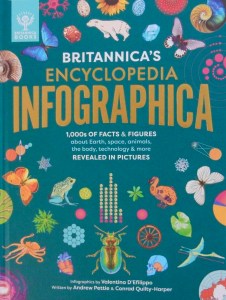
Britannica’s Encyclopedia Infographica

If you are looking for a book to lure your children away from screens then try this. It’s a weighty, highly visual book absolutely bursting with interesting facts, divided into topics – space, followed by in order land, sea and sky, living planet, animals, the human body and the human world. Before these is a “How to Read This Book’ spread that explains the main ways the infographics organise and present the information. This should start youngsters off on the right track thinking about counting and order, measurement and rules, scale, colour and pattern, position and familiar comparisons.

I turned first to the living planet section and was fascinated to learn some new names that describe both leaf shapes and vein patterns. Some were familiar but not pedate (palmate but with indented lobes) and flabellate (fan shaped). Another new term was arcuate that describes a vein pattern (pinnate but the veins curve towards the leaf margins).

I was astonished to learn that the seed of a rare palm, the coco de mer can weight up to 25 kilos and be as long as 30.5 centimetres. I wouldn’t like that to fall on my head.

Moving on to the animals section, I was intrigued by the information on the ‘smallest known’ page. Did you know that the smallest land mammal, the Etruscan shrew is only 6cm long including its tail or that the nano-chameleon, the smallest reptile is a mere 1.4cm long (not including the tail)?

However, it’s true to say that no matter where you open this bumper book, you are likely to be wowed or amused by something that you read. I’m sure a considerable number of children will enjoy the poo and farts’ spread that includes a presentation of the Bristol Stool Scale with visuals of all seven poo types.
With its eye-catching design, key questions, enticing headings and bite-sized paragraphs, this format should work in all manner of settings and situations both at home and in the classroom. It definitely should be in every school library – primary and secondary; just think of the many ways it might be used.

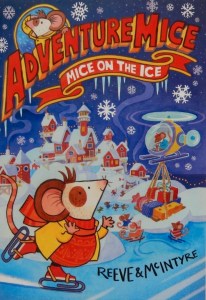
Adventuremice: Mice on the Ice

This image has an empty alt attribute; its file name is dscn9657-3.jpg


This is my first encounter with the Adventuremice and it mattered not that I wasn’t familiar with their back story. Mice on the Ice is an immediately engaging tale of camaraderie and problem solving, and this book has a decidedly chilly feel to it as overnight snow has transformed Mouse Islands into a sparkling white world. Not only is it white but the sea has already frozen over. Relative newcomer to the group, Pedro, is somewhat confused and finds it difficult to negotiate the icy world. However he is looking forward eagerly to the upcoming Frost Fair for which preparations are underway..

Then comes bad news from the Frost Fair organising committee; the group of mice that had gone to the mainland to collect all the treats for the fair have been stranded on account of the frozen sea and cannot return.


Should they cancel the event or is there perhaps a way that a rescue operation might be staged, after all problem solving is the Adventuremice’s forte. Pedro has an idea … could it possibly save the Frost Fair and bring seasonal joy to the entire town?

This image has an empty alt attribute; its file name is dscn9659-5.jpg

They’ll certainly have to outwit the cat, Fluffykins with her viciously sharp claws and teeth.


Both author and illustrator know just what works with children just starting to fly solo as readers: exciting, sometimes quirky plots with innovative outcomes, main characters that are brave and kind, and illustrations full of fanciful details. This story has all that and more.

The Big Dreaming

This image has an empty alt attribute; its file name is dscn0026-1.jpg


Little Bear has never experienced the long winter hibernation before so when he’s told of the Sleep he’s nervous about this unknown event. Together Little Bear and Big Bear decide that what’s coming is a Big Dreaming. But then Little Bear worries that he’ll run out of dreams and end up with a ‘Big Nothing’.
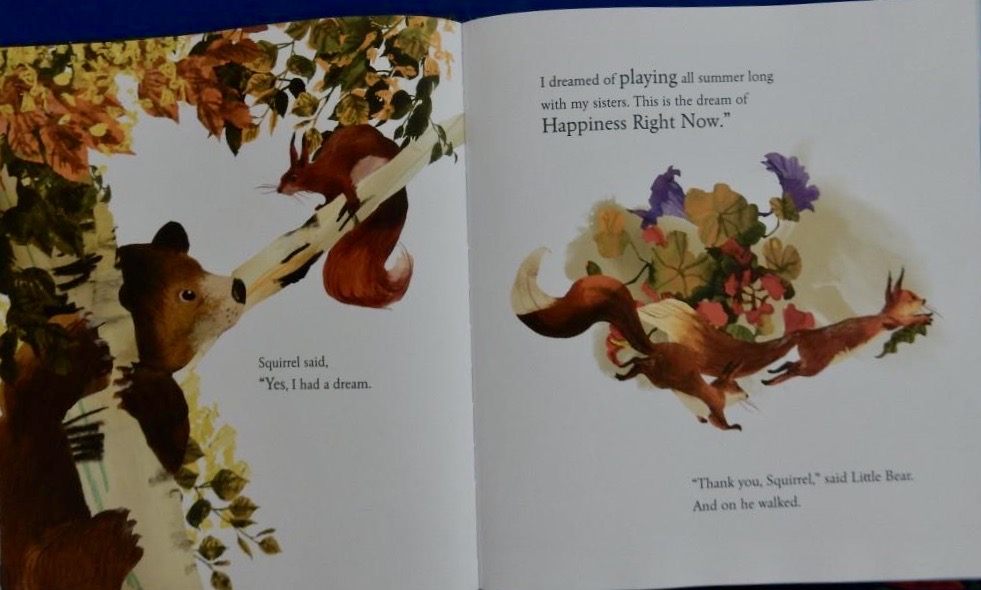
He decides to go in search of some dreams and off he goes through the forest till he meets a squirrel. “Squirrel, Squirrel, Squirrel,” he says. “We’re getting ready for the Big Dreaming, / we’re getting ready for the Sleep. / Do you have any spare dreams, / for when we sleep, deep, deep?” Squirrel offers his dream of ‘Happiness Right Now’


This image has an empty alt attribute; its file name is dscn0027-1.jpg

Little Bear’s next encounter is with a rabbit. He repeats his question (children will already be joining in) and Rabbit tells of the ‘Dream of Coming Home Safe’, and Wolf, the next creature Little Bear meets, talks of the ‘Always Having Hope’ dream.

As Little Bear heads for home, down comes the snow: the Cold has come. Now the ursine cub worries about getting back home in time for the Big Dreaming. But then he remembers dreams that he’s gathered from the other creatures and with the help of those, he finds his way back home to Big Bear.

This image has an empty alt attribute; its file name is dscn0028-1.jpg

Finally the two curl up together and dream and dream …


Poignant and lyrical, Michael’s telling will especially resonate with adult readers aloud who know of his covid journey and children will request frequent re-readings of the book which will give them the opportunity to savour such lines as ‘the light in the moon went out. / Like a candle blows out in the wind.’ They’ll savour too, Daniel Egnéus’s beautiful illustrations with their different perspectives and gorgeous autumnal colour palette, which then changes with the seasons. I hope that they will absorb the life lessons the story gently imparts.


I wonder what your answer might be should you be asked by a little human to offer your special dream.


How to Chat Chicken

Zoologist Nick Crumpton clearly enjoyed writing this splendidly quirky book on creature communication, for which he uses a chatty, matter-of-fact style.

Beginning with primates – chimpanzees, gorillas, orangutans, night monkeys and common marmosets – he focuses on the wonderful sounds these animals make to let others of their kind know they need food, investigate something new, want others to stay clear of them,

want to make friends, want a mate or are defending their territory. If your garden is frequented by a fox at night you could listen very carefully through an open window and you might just catch the ACK-ACK-A-ACK-ACK-A (This is my garden) of a fox indicating to another fox to vamoosh.

Not all animal sounds are vocal however. Some animals including grasshoppers and leaf cutter ants use a process called stridulation. Grasshoppers stridulate to advertise their whereabouts in order to attract a mate; leaf cutter ants stridulate when they want help from their nest-mates.

Then there is echolocation; dolphins use CLICKCLICKCLICKCLICK when they want to find their prey or to indicate they want to play.

Some creatures, dogs for instance, use pheromones (special chemicals) to communicate. I had to smile at the description of lampposts being used as ‘doggy chat rooms’.
And can you believe, there is even a form of animal dialect: the squeaks and clicks made by naked mole rats sound slightly different depending on which colony they are from.

There’s a concluding explanation of the science behind the sounds, a meet the author and the illustrator spread, a glossary and an index.

The book is very visual: Adrienne Barman’s playful cartoon style illustrations work really well with the written text. Add to primary school collections and home bookshelves.

Cotton Cloud Refuses To Rain

We in the UK seem to talk about the weather much more frequently than elsewhere, at least that’s my ecperience. Here’s a story showing how weather shapes so much of what we do.

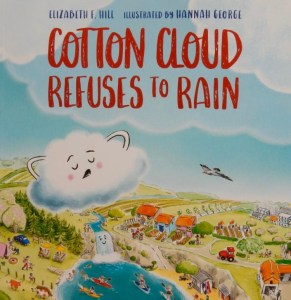
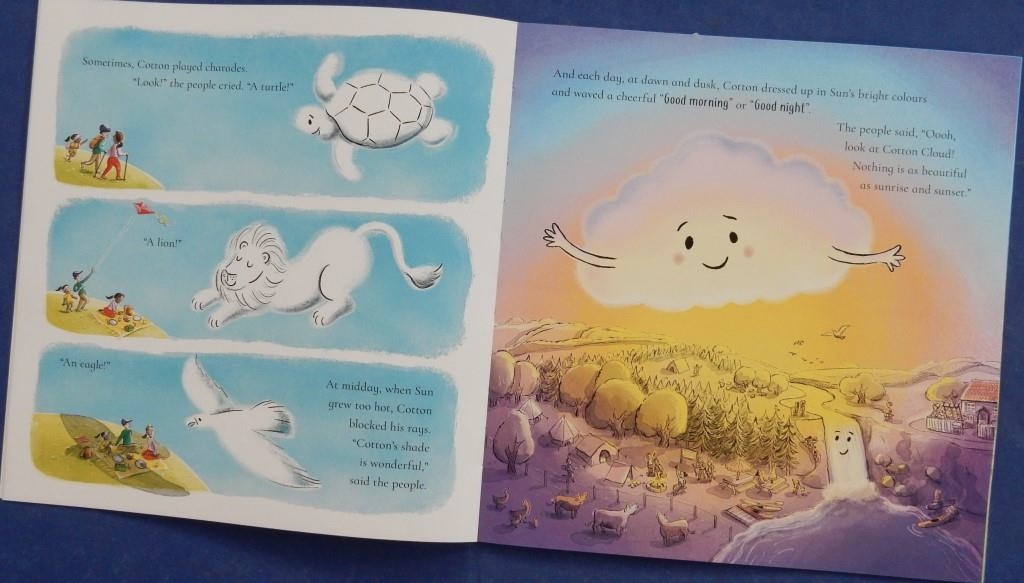
Cotton Cloud’s over-riding desire is to make people happy. To that end she consults other clouds – Cumulus, Stratus and Cirrus for advice. Cumulus, the puffy one teaches Cotton how to make floating cloud castles, Stratus shows her how to hug the horizon by hanging low, whereas Cirrus trains Cotton to flick her tail as she dances across the sky. However, Nimbostratus, the one Cotton didn’t speak to, insists Cotton should learn to rain. Now Cotton knows full well that rain makes people sad and so she ignores Nimbo’s advice, spending her days getting pleasure from seeing people’s happy responses to her playful images and behaviour.

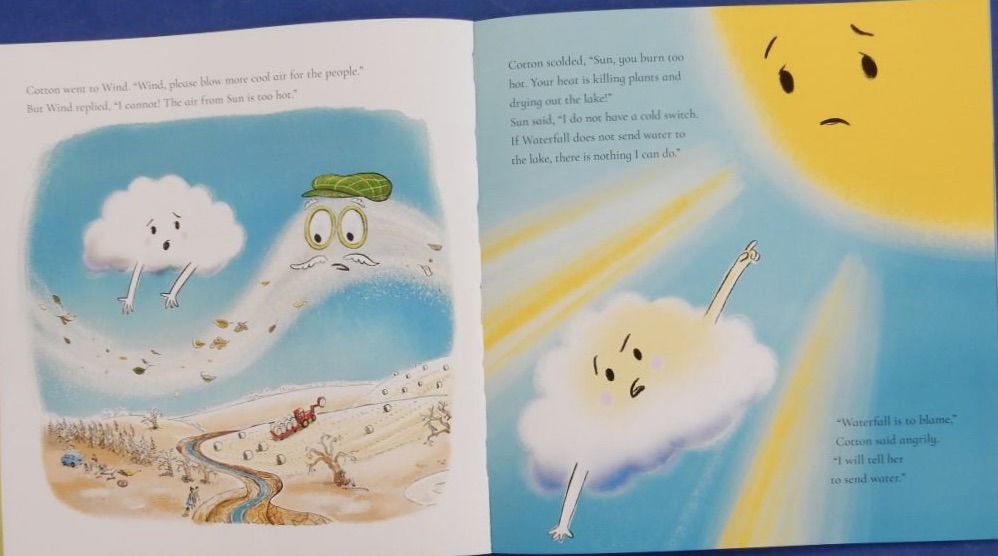
For a while everything is fine and dandy but one day along blows Wind telling Cotton that rain is needed for the plants to grow. Wind however gets rebuffed. Conditions worsen for plants and their growers: people’s delight diminishes with every passing day.

Will Cotton ever realise that, rather than blaming others, she needs to change her ways? Fortunately some thunderous words from Nimbo cause her to weep and …

Both funny and educative, this story demonstrates the importance of both balance in nature and friendship. Children will have fun looking at all the details in Hannah George’s digitally worked illustrations as well as enjoying the different weather- and geographical-related characters and their changing expressions.

A good book to share with a KS1 class especially during a weather-related topic.

Star Friends: Enchanted Mist / Magic Keepers Tunnel Trouble

We’re back with the Star Friends, they who have a special secret in the form of magical animal friends – a young fox, a fallow deer, a red squirrel and a wildcat who help them learn magic and fight evil.
This group – Maia, Ionie, Sita and Lottie and their animals is being watched by four other forest creatures in need of their help.The following morning after a dream Maia senses that something is wrong; could something bad be about to happen?

Then at school, a classmate Maddie who has only recently joined and doesn’t really have any friends, approaches Maia and asks if they could team up for the Super Science Week, one of the exciting events being planned for the end of term and Maia agrees. Super Science is being organised by new teacher, Miss Amadi and the class have a session that involves using essential oils and making perfumes.
After this session, all of a sudden everyone wants to be friends with Maddie. Why is this? The Star Friends have a feeling that it’s something to do with magic. But from where is it coming? Maddie, or somebody else? They are determined to find out.

Cleverly mixing magic elements with real life issues about primary school relationships that readers will relate to, this is an addition to a series that continues to feel fresh and fun, made even more so by Kim Barnes’ illustrations.

Determined to learn all they can about the curios left by Ava’s Great Aunt Enid, she and her friends want to ensure that chaos-causing magic doesn’t break free again. They’re distracted at home by younger siblings, but then on the way to school Ava’s little sister, Mai, mentions seeing a monster at her window the previous night. Shortly after, Mai takes a tumble on the ice and as Lily goes to help her up, Ava notices movement in the undergrowth. An animal or something else?

Then again Mai speaks of a monster visiting her and their Tibetan terrier, Pepper is also acting anxiously. Little by little Ava becomes more convinced that something magic is going on. Can any of the crystals help her understand? It transpires that a stone gargoyle has apparently come to life and has been visiting the Curio Room and now a crystal has been taken.

Not long after, something much more important is taken by the gargoyle, which disappears with its catch into some underground tunnels. Readers will likely feel frissons of fear when this happens. The mystery deepens and the friends really must use all their resources to get to the bottom of what exactly is going on and why.

An intriguing tale of camaraderie and the importance of sibling bonds that established followers of the Magic Keepers will love; those new to the series would do better to read the previous two books first.

A Whale Of A Time

Wow! What an enormous undertaking on Lou Peacock’s part, selecting a funny poem for every day of the year, including one for a leap year, was my immediate thought on receiving this book. My next, following almost immediately was, what an enormous amount of pleasure this carefully selected collection will give to children, families and classes.

There are twelve sections, one for each month. The spreads have between one and five poems and each spread is illustrated with panache by Matt Hunt in a way that draws together all the poems thereon. This makes it hard to resist reading each poem, if there’s more than one; why not say I.

Most of the poets – a diverse lot – whose work is included herein are familiar to this reviewer, though there’s a sprinkling of new names too and a fair few that are anonymous. I’d not before encountered Rolli; the first verse of The Moonless Night goes thus: ‘Oh, please, / Oh, please! / The moon’s not cheese. / It’s golden-crumbling / tummy-rumbling / crispy-flaking / hungry-making / butter-fluffy / oven-puffy / rich and tasty / PASTRY!’ What a lot of tasty kennings.
However, if your preference is for Jumblies, Jellicle Cats or Jamaican Summers, you’ll find those too.

There are nursery rhymes re-written including an anonymous version of Mary Had A Little Lamb: ‘Mary had a little lamb, / A lobster, and some prunes, / A glass of milk, a piece of pie, / And then some macaroons.’
There’s also this ‘Mary had a crocodile / That ate a child each day; / But interfering people came / And took her pet away.’

Everyday topics abound – there are socks, shoes,

sneezes, spinach as well as dogs, dinosaurs, the weather, and family members, to mention a few.

Whatever way you choose to read this book – preferably aloud with other people – you are guaranteed to find an abundance of fun. Every primary classroom needs a copy.

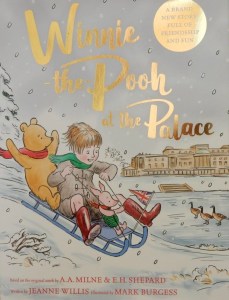
Winnie-the-Pooh at the Palace

Jeanne Willis’s carefully crafted rhyming text, based on the rhyme of A.A.Milne’s Buckingham Palace poem, tells what happens when Christopher Robin and Pooh embark on an excursion, destination that same palace.

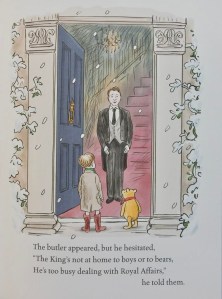
When they depart the train it’s pouring with rain, soaking the sentries and prompting Pooh Bear’s comment, “That must be why they keep changing the guard.” But then the rain turns to snow and they ponder the possibility of gaining entrance to the palace. However the royal butler sends them away telling the two would-be visitors that the King is busy with ‘Royal Affairs’.

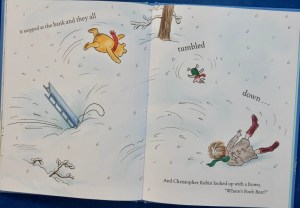
Instead Christopher Robin and Pooh Bear embark on a snowball fight, once the Bear’s misunderstanding is cleared up. Before very long though, the snow worsens and as tea is contemplated, who should appear with a sledge? It’s Piglet. Christopher Robin just happens to have some string in his pocket and soon, holding tight, the three whizz off through the ever thickening snow heading straight towards a frozen lake. As they hit the bank the sleigh-riders tumble off.

But where is Pooh Bear? Piglet spies a pair of feet protruding from a snow-pile and out comes the Bear, a crown atop his head. Suddenly they have the perfect reason to return to the palace. Will they gain admission this time I wonder and will Pooh Bear finally have his favourite food?

Despite the weather conditions, Jeanne Willis’ story has all the warmth of the original books as well as the gentle humour. Mark Burgess too, shows respect to Shepard’s original style in his watercolour illustrations.

The Football Encyclopedia

Are you looking for a special book for a soccer-loving child? If so then this could be the answer; it comes from the same team that write the hugely popular Football School series and is illustrated in vibrant colour by Spike Ferrell.

Bellos and Lyttleton’s approach is to help readers comprehend the world through soccer thus enlarging their understanding of bigger issues such as national identity, gender equality, human rights and technology, as they peruse the book. There are five sections, each of which concludes with a quiz.

Section one, The Game includes the worldwide origins of the game in Africa, Asia, Europe, the Americas and Oceania and a highly amusing visual timeline. There’s also a very clear explanation of how to play the game with its rules and laws – vital for a reviewer like myself whose knowledge of the game is pretty poor, as well as pages on shirts and other kit, the ball, and a final ‘gallery of the greats’.

The Clubs deals with football clubs in the UK and around the world, leagues, competitions, kit colours, mascots, stadiums, and a useful, interesting section on how clubs are structured and funded.
The third part begins with a spread documenting the birth of international football, followed by another on flags, pages on the World Cup, both men’s and women’s, the Euros and more. I love the spread presenting the various animal nicknames of some countries.
Next, the Football Family charts a possible path to becoming a professional player, then explains what it’s like so to be – this covers nutrition, resting and recovery;

we also learn about the role of a coach, the referee and tactics.
Finally, Football Everywhere underscores the authors’ conviction that football is a good starting point for learning, with ten sections examining football ‘through ten different lenses from numbers and language to technology and the future’.

Both full of information and highly entertaining, I envisage if this is put in a classroom, there will either be groups of children clamouring to read it together, or a queue of individuals needing to create a rota to feast their eyes on it.

Animal Tales From India

Among others you will meet lazy lions, a lapwing loth to listen to his wife’s advice, the result being an angry Sea and the washing away of the lapwings’ eggs.

There’s also a crocodile of the cunning kind, a talkative tortoise whose garrulousness results in him plunging headlong from a great height but fortunately landing on soft ground, and an egocentric elephant.

Yes the stories are ancient, but the messages they carry – many about friendship – are relevant to today’s children and Nikita’s warm, gently witty way of telling makes them easy to assimilate when read aloud.
A splendid addition to Nosy Crow’s Classic Series: I strongly recommend adding it to family bookshelves and primary classroom collections. These fables would also make good stories for sharing in assemblies.

Evolution

Botanist Sarah Darwin, the great, great granddaughter of Charles Darwin and paleobotanist Eva-Marie Sadowski, in association with The Natural History Museum, London, take readers on an enthralling journey through Earth’s history going right back to its formation around 4.5 billion years ago. This journey is aided by a timeline of the geological eras that stretches (along the bottom of some of the pages of the book) through time until the present.

Guided by the authors and the superb, detailed illustrations, we meet a number of pioneering people – adventurers and thinkers, some of whom in turn influenced the thinking of Darwin and Wallace, people who made vital discoveries about the world around them and shared their theories on topics such as natural selection, the movement of land masses, variation and the changing climate.

Illustrations of some of the flora and fauna which were to be found during each relevant era are included.

A ‘Human-Made’ spread introduces Ugur Sahin and Oziem Tureci who invented one the the first COVID-19 vaccinations and draws attention to the human-made climate crisis. This leads neatly to a reflective spread on the future where we meet several current pioneers who are working to help save the natural world and guide us all towards a more sustainable future.

The book ends with a tree of life, a world map showing almost all the species mentioned, as well as a glossary and index. A fascinating, beautifully presented book for KS2 readers and beyond.

The Deadlands: Trapped / Press Start: Super Rabbit Boy vs Super Rabbit Boss!

In this the second of the series the last surviving dinosaurs continue to do battle for territory and a cabal of the carnivorous kind are aiming to provide a killing field of plant eaters on which to feed.
But with the predators drawing ever closer, Eleri and the other members of the Grotto herd decide to go on the attack. Out on a scouting exercise, Zyre is spotted and with their whereabouts now known to the enemy they need to find a hiding place. But what is the Feast of Flames that Zyre has heard the enemies speaking of?
As night turns to day it seems that the only choice for Eleri et al, so Zyre suggests, is to head towards the Salted Scorch, a secret path across the Deadland. Perilous, yes but they might be able to enlist some help and anyway they are out of options.
So, on they go, only to discover a general and her squad of raptors are hot on their trail, not safe at all but in the magma-heated tunnels of the Fire Peak, headquarters of the Carrion Kingdom. Surely not? But it is so and they’re trapped right at its heart.
Now, not only are they facing the likelihood of being captured and the horror of being consumed at any time, the exiles then come upon a captive herd of herbivores urgently requiring rescuing. Moreover the carnivores have a stash of weapons. This means that the continuing overarching carnivores vs herbivores war will henceforward be devastatingly different.
As things become ever more perilous, can Zyre and the others free the prisoners? It will need a ruthless plan but if successful it might just secure their release.

With nail-biting happenings coming thick and fast, this twisting, turning fantasy adventure will have readers on the edge of their seats right through to the end, an end that doesn’t mean the war is finally over.
For younger readers is

An addition to Thomas Flintham’s series based on video gaming, this fourth story begins with Super Rabbit Boy setting out on a rescue mission, destination Boom Boom Factory, home of his enemy King Viking. On arrival he enters a room he thinks is the King’s workshop and there he ignores a ‘Do Not Push Button’, warning sign. Big mistake! He finds himself in a back-to-front world where everyone good is now bad and everyone bad is now good including King Viking – confusing indeed.
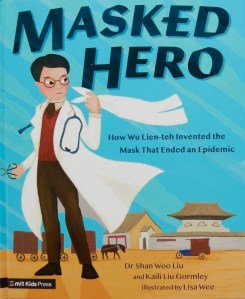
How will Super Rabbit Boy extricate himself from all weirdness and find his way back to his proper world?

Great for building reading confidence, this is brimming over with brightly coloured comic style illustrations. It will appeal especially to young readers who are partial to video games.

Alice Eclair Spy Extraordinaire: A Sprinkling of Danger / Montgomery Bonbon: Death at the Lighthouse

This image has an empty alt attribute; its file name is dscn9678-4.jpg


Gifted young baker and spy, Alice is back for a third adventure, set in and around the grand Palace of Versailles which is being used as a film set for a team of American movie makers.


Arriving at Claude’s flat, she learns that he thinks the film director, Glen Carmine, could be a spy and wants Alice to get herself onto the film set and discover what is going on. In addition she is to take on a new agent recruit, Pierre, whom she soon finds out, resents her ‘nannying’ as he calls it. He gets himself a role on the set as hairdresser to star, Catrine Bell, but thanks to her patisserie skills, Alice gets herself hired on set too, to the chagrin of Pierre, who appears to have his own agenda. She does though make an ally of Milton, nephew of the director.


The weather becomes increasingly worse and so too does Alice’s feeling that somebody is trying to get rid of her, perhaps even kill her. Then due to heavy snow, the cast, crew and staff are forced to stay overnight in the palace, giving Alice opportunities to snoop around for clues. In addition she is beginning to suspect that Pierre isn’t to be trusted.


As more alarming things happen to Alice, she starts to think that maybe she’s not up to this case; does she even want to continue being a spy? But then things happen to make her change her mind; she just has to get to the bottom of this, her hardest mission yet.


Sarah Taylor-Todd’s crafting of the setting for this tale is superb, as are the details of the splendid sweet treats that Alice herself crafts. Readers will find their mouths alternately watering over the descriptions of Alice’s confections, and going dry at the life-threatening events that happen to her.
Definitely as tasty as the previous books in the series, though also, I think, the most perilous.

This image has an empty alt attribute; its file name is dscn9682-4.jpg


Ten year old Bonnie and Grandpa Banks head to Odde Island for a much needed holiday, but when you’re a private detective, it’s unlikely that a quiet rest without mystery, intrigue or murder is what will transpire even if you have deliberately left your sleuthing gear safely at home in your bedroom.
They’ve barely set foot in the place when they learn of the death of lighthouse keeper, Maude Cragge who had supposedly been blown by the storm and fallen from the top of the lighthouse.
Fortuitously, so it would seem, Grandpa just happens to have packed Bonnie’s yellow bag of equipment after all. It’s time to investigate. And it looks as though the two holiday hopefuls have a murder mystery to solve.


It’s not long before Bonnie decides it isn’t just the one mystery relating to this strange island that she needs to get to the bottom of.

This image has an empty alt attribute; its file name is dscn9683-4.jpg

She can however call on the assistance of friend Dana, who is also staying on the island.


Wit and humour abound, there’s a plethora of puns, and at the same time, intrigue and high drama, and I love the Poirot speak. All this accompanied by Claire Powell’s delightful illustrations which help elucidate some of the clues. A terrific sequel with more to come.

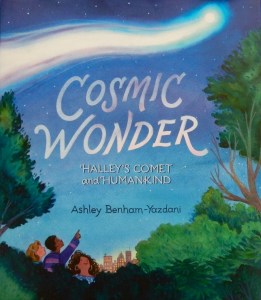
Cosmic Wonder: Halley’s Comet and Humankind

The author/illustrator personifies the comet in her third person telling, which follows the comet, portrayed as a shiny sphere with a long flowing tail, on its recurring visits to planet Earth, chronicling its visitations which occur ‘about every seventy-six Earth years’ beginning millennia ago and ending with a mention of 2061 when the comet is next due to return to an Earth, shaped largely by the actions of humans alive today. This reminded me of T.S. Eliot’s lines ‘Time present and time past / Are both perhaps present in time future,/And time future contained in time past.’

We’re told that ‘one kind of creature began to live differently.’ and scenes show humans of various races changing over time, but all, having looked skywards, telling one another tales of the ‘broom star’ up above. These visits, they recorded in various ways using ink, clay and words.

From afar, the comet witnesses times of war and times of peace, and notices a multiplicity of human feelings, the most powerful being that of ‘boundless love’.

After many hundreds of visits, humans name the comet Halley’s Comet after an astronomer, Edmond Halley. Earth continues to fill with ever more humans and what the comet sees in 1986 are two children walking along a beach below a neon lighted industrial city, belching out filthy smoke.

What the comet sees too are space probes surrounding it; they leave it to continue orbiting around an earth described as ‘small and vast all at once / holding so much life and such great promise’, with dreams of what the next visit might show. One only hopes that what it discovers on its 2061 visit is not an Earth ruined by our failure to address the environmental damage we are causing.

At every turn of the page, Ashley Benham-Yazdani’s luminescent, mixed media illustrations show the soft-edged comet shooting across an inky wash sky and gorgeous scenes of the happenings on Earth through the ages.
This is a truly thought-provoking precis of human history from an unusual perspective that makes it all the more powerful. Back matter includes further historical details and an author’s note that speaks to every reader.

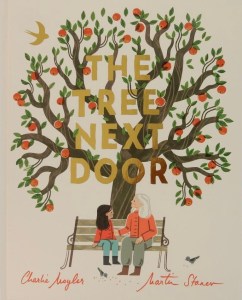
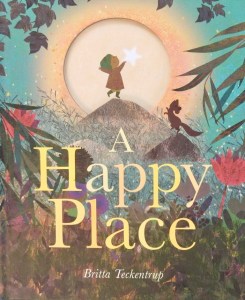
The Tree Next Door / A Happy Place

These are two new picture books from Little Tiger – thank you to the publisher for sending them for review.

At the bottom of a long garden a tree stands proud. Both garden and tree are loved, especially by their owner, an old woman. She gets companionship and rewards aplenty from her garden and it keeps her busy.
One day as winter is giving way to spring, a new neighbour arrives and catches sight of the tree next door. From then on she visits the garden whatever the weather, or the season, talks with the owner and asks questions of her.

A year passes and throughout that time the girl has found much joy in the old woman’s garden but as the chilly wintry days come, the garden gradually fades.

The old woman no longer visits her garden; this the girl notices and soon begins to worry. Will she be lonely? Or will she know that her young friend and others around still think of her. She decides to do something for the woman and asks all the other neighbours to participate in her plan. Every one works together until finally …

A sweet story of friendship and community spirit, all watched over by a very special tree.

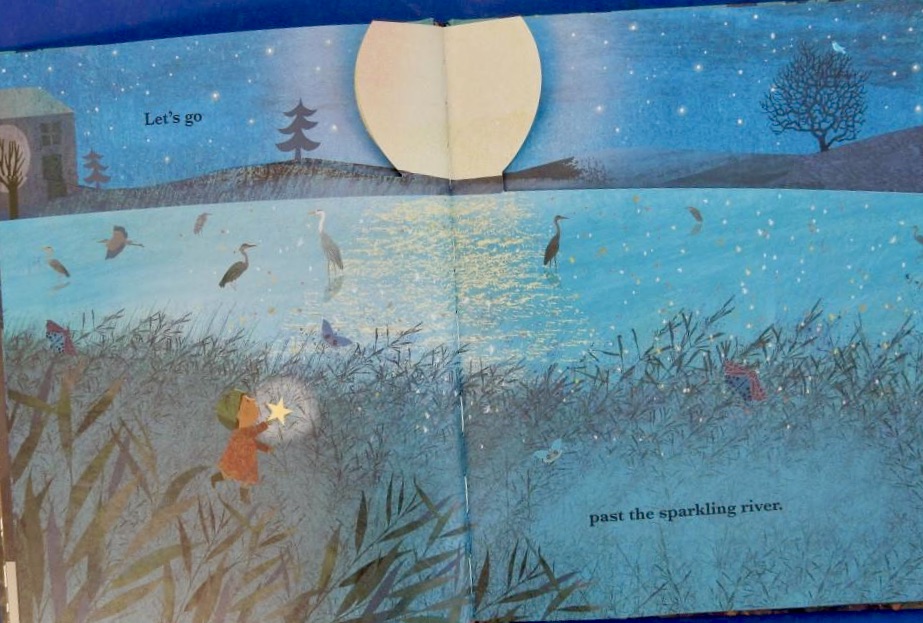
Clever use of peek-through die-cuts and cutaway gorgeously illustrated pages work in tandem with a straightforward poetic text telling of a small child’s moonlit walk, guided by a star, in order to find his happy place. In so doing the intention is that the child then falls fast asleep.

Dream or not, the scenes of the natural world – the moonlit river all a-sparkle and dotted with wading herons,

the forest with dancing squirrels and foxes, stoats and hares, work their magic and finally, watched over by the star shining brightly through the bedroom, we see the child finally slumbering peacefully.

A beautiful bedtime story to share with little ones, especially those who, like the protagonist have trouble dropping off to sleep.

Three Tasks for a Dragon

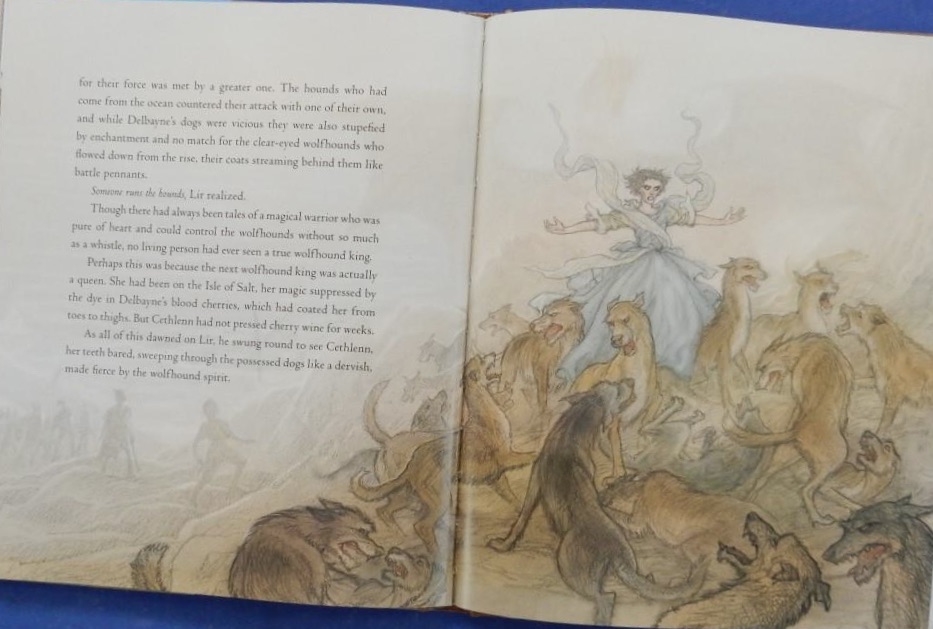
Prince Lir is heir to the throne of the Kingdom of Lagin. However as his stepmother tells him in no uncertain terms, he can’t ride a horse, lift a sword, or summon the wolfhounds. Consequently she deems him unworthy to become king; instead her biological son, Prince Delbayne, will inherit the crown. Moreover she banishes her stepson from the kingdom but at Prince Delbayne’s suggestion, he is given a seemingly impossible quest that will likely end in his death: to rescue a maiden Cethlenn, who had once worked in the palace kitchens, from the once fearsome dragon Lasvarg.

Having arrived at the dragon’s island cave, he discovers that the dragon is well past his prime, unable now to fly or breathe fire, and drunk on cherry wine made from cherries stomped upon by Cethlenn, who has become his servant. The prince insists that the dragon, honour tradition by setting him three tasks to perform. First, cure the dragon’s mould-induced ailments, second, fix his broken wing, and lastly restore his fire-breathing power. Little by little while doing these tasks, Prince Lir grows closer to Cethlenn and she to him.

However he turns down her request to stay with her on the island at that time. Instead he sets forth to return and confront his stepbrother in the hope of preventing him receiving the wolfhound crown. Could it be that Cethlenn is the wolfhound queen? How will it all end?

Lyrically written with a fair few thrills and awesome illustrations of the dragon, this is a magical fairy tale that will assuredly keep readers turning the pages, albeit slowly so they can savour P.J. Lynch’s magnificent artistry.

Bear and Bird: The Stars and other stories

This image has an empty alt attribute; its file name is dscn0056-1.jpg


Four more tales starring two best friends who have a tendency to misunderstand one another.
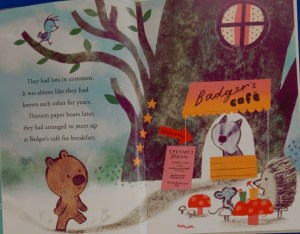
The first, The Spoon, tells what happens when the pair fall out over a spoon and as a result, each of them decides a new best friend is needed. Bear writes a letter advertising his need, folds it into a paper boat and sends it out onto the lake. Bird finds it and responds and so it goes on each saying something about themself. Thirteen boat letters later, a breakfast meeting is arranged at Badger’s cafe.

This image has an empty alt attribute; its file name is dscn0057-1.jpg

Both arrive at the venue, seat themselves at separate tables and wait … and wait … What will be the outcome? Could a spoon (or two) lead to a reconciliation?


The Cake refers to one made by Bear after he’s scoffed the one he finds on the way to Bird’s abode. Unsure who the original cake was intended for, Bear tosses ingredients into the mix that could please more than one recipient and the result is, let’s say, revolting. Nevertheless he hides it and when Bird comes along, Bear draws her attention to the ‘surprise’. A surprise it surely is, but not a pleasant one. Will either of the two dare to sample said cake?


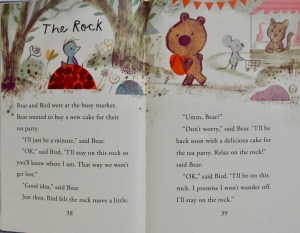
The Rock also involves a cake, or rather the desire for one. It begins at the market. where Bear tells Bird to wait while he goes and buys the cake.

This image has an empty alt attribute; its file name is dscn0058-1.jpg

Bird decides to sit on a ‘rock’ so her friend will know where she is. However, the rock isn’t what it seems.


Finally, The Stars is all about dreaming and wishing and the friends decide so doing is pretty close to perfection.


Jarvis has the kind of wry, gentle humour that appeals both to young children and adults. These stories are as seductive as the first four, full of charm, warmth and genuine affection. Perfect for new solo readers or for sharing.


Heavy Metal Badger

Badger has music – rock music – deep within and it’s bursting to come out. So much so that he can hold it no longer; it simply explodes as does Badger right out of his sett. Grabbing two sticks he strikes at the trees, disturbing Woodpecker who is not impressed.

Thinking perhaps he needs some music lessons, off he goes , first stop Mrs Smythe’s class but he discovers that the recorder definitely is not the instrument for him. Back in the woods he spies a band of ants marching in line and in rhythm to their own playing.

However, things don’t go as well as Badger was hoping: the result is far from satisfactory for the ants, and the luckless Badger is forced to beat a hasty retreat.

So what about the possibility of joining the church choir; disaster strikes, though the choirmaster is encouraging, but off Badger goes feeling more than a little dispirited. Suddenly he sees a flyer advertising for a lead singer. Organised chaos seems to have been following Badger but could he finally have found the tribe he’s been searching for?

With a plethora of rock-themed puns, both verbal and visual, Duncan’s rhyming tale will have listeners wriggling on their seats in glee at the splendid silliness and cleverness of this Beedie offering, which essentially is a search for one’s true identity and a celebration of finding a way to express oneself.

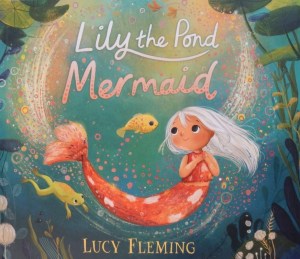
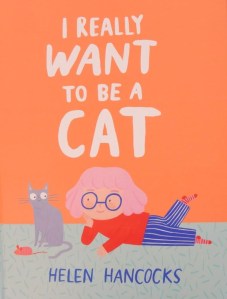
Lily the Pond Mermaid / I Really Want To Be A Cat

These are two new titles from Walker Books – thanks to the publisher for sending them for review

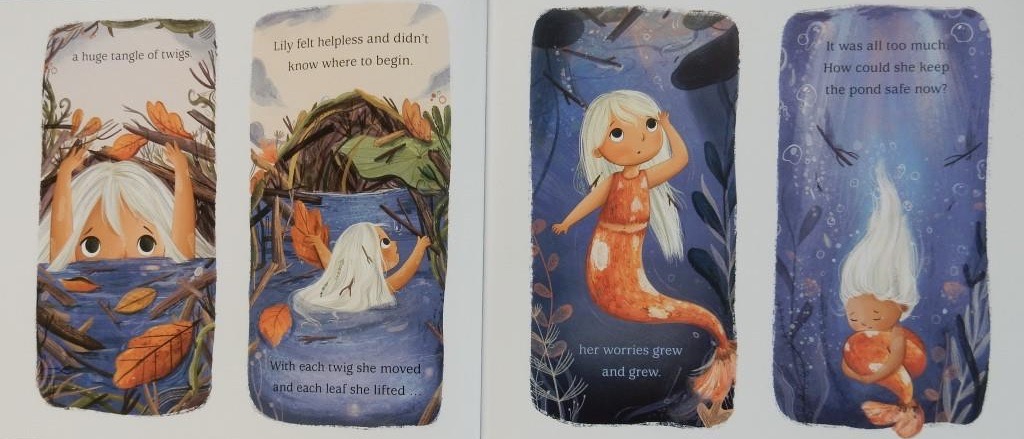
Ponds are lush and green and teaming with life, the occasional one even holds a secret. One such is that which Lily the mermaid calls home. She takes care of all the flora and fauna around that make up her world – the damselflies and dragonflies, butterflies, water snails, fish and frogs, the aquatic plants too. Lily’s very best friend is Bobble, one of the tadpole family and she takes great pains to keep the pond safe for all those living in and around it. However, aware that ponds can all too easily be spoiled, Lily lies awake worrying about what might happen. She keeps herself busy by day in attempts to keep her worries at bay but they keep on growing bigger.

When a storm hits the pond, the result the following morning is debris everywhere she looks. Lily’s worries grow even larger – supposing further devastation happens?

Feeling almost totally overwhelmed, the little mermaid senses a tiny flicker of courage within herself. Can she finally reach out to her friends, tell them of her fears and ask for their help?

It’s amazing what teamwork can do in times of need, and so it is with Lily and her pond community.
So it can be too with young human listeners and readers, for Lucy Fleming’s story shows the power of camaraderie and of finding your inner strength to reveal how you feel to your friends.

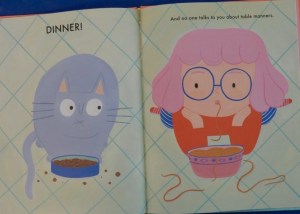
Have you ever wondered what it would like to be a cat? The little girl narrator does just that as she addresses her own moggy, focusing on all the positive aspects of life as a feline such as her grey companion. Time is never an issue, you can play with your body shape, steal around ninja style, hide away so no-one can find you, and your eyes give you great nocturnal vision. Moreover you are free to go here, there and anywhere without being asked about your movements. You are fearless, adventurous and almost independent.

There is however, one downside to a cat’s life, from a young human’s viewpoint, that is: do you know how cats get themselves clean.? Err, no thank you.

Playful, gently humorous and sure to appeal to cat lovers, young and not so young.

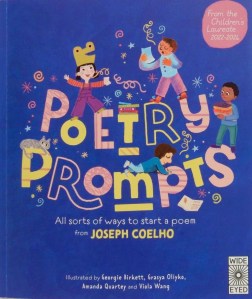
Poetry Prompts

This image has an empty alt attribute; its file name is dscn9672-4.jpg


Children’s laureate, Joseph Coelho provides 41 ways for readers to ‘discover the poet within.’
His first prompt is to have a dedicated notebook of your own that you can always have to hand when an idea arises; he even demonstrates how to make such a book from a single sheet of paper.
He then proceeds to one word poems; the trick so we read, is to have a long title. If this idea works for you, you can he suggests, in his first ‘poetry power-up,’ write several on the same theme for example: ‘The Sound of Water / Splash. // The Feel of Water / Cold. // The Taste of Water / Nothing.’


There are suggestions for penning poems that use rhyme and repetition, alliteration, onomatopoeia, similes, and metaphors as well as certain poetic forms such as haiku, and more challenging, triolets.
Most of the ideas are relatively light-hearted but there are also prompts for a ‘Home Is …’ poem in relation to World Refugee Day, and another for plastic pollution.


The four illustrators portray a diverse cast of children, as well as playful images of fauna, flora and an abundance of food ,

This image has an empty alt attribute; its file name is dscn9673-4.jpg

which offer further inspiration. The message that poetry is “about having fun with words” comes through loud and clear. I envisage lots of primary age children having great fun with the ideas in this book. (If used in a classroom though, it would be advisable, I think, to include prompts for some non-Christian festivals as well as those for Christmas and Easter.)


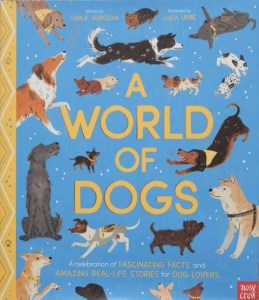
A World of Dogs / Illuminoceans

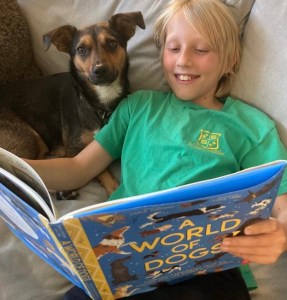
Since being attacked by an Alsatian as a five year old in the park, I have suffered from cynophobia and so I thought it best to ask a relation, ten year old Leo, who is a dog lover and owner, to read this book, which is packed with fascinating facts, historical information and real-life stories, and tell me what he thought. He absolutely loved it and has read it several times.


“My favourite parts of the book are the section about different breeds of dogs – I never knew there were so many” … “and I really enjoyed the pages telling of dogs in the war. I especially liked finding out that they could win medals for military service.”

Beautifully presented and illustrated, this is an excellent book to include in a school topic on pets, as well as a great book to give to a dog lover.

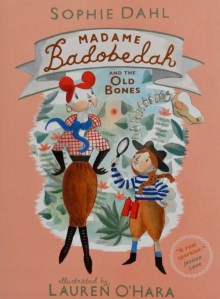
Madame Badobedah and the Old Bones

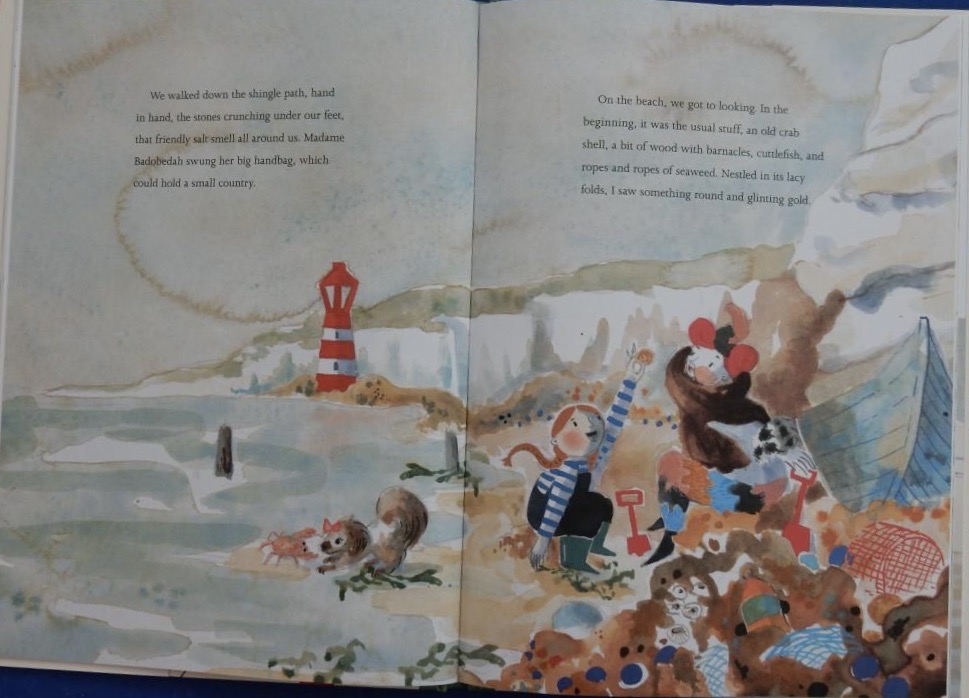
If you’ve not read the first book, Madame Badobedah, she is a long term resident of the Mermaid Hotel, a seaside establishment managed by young Mabel’s parents. Mabel has taken it upon herself to keep an eye on what the guests are up to and has become firm friends with the wonderfully eccentric Madame Badobedah.

In this adventure the two spend their Saturday on the beach, foraging for interesting things. Mabel discovers a golden coin,

her companion suggests she should make a wish; Mabel wishes for ‘a big adventure.’

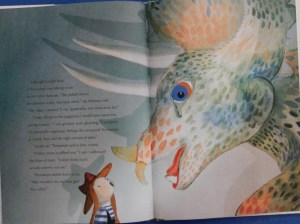
The following night the two friends are rummaging through Madame B’s dressing table drawers and come upon something that prompts the owner to tell Mabel about leading an expedition in North America and encountering a Triceratops with terrible toothache. She also talks of another item, which Madame B. has yet to return to its rightful place.

After dinner, the two friends, Mabel holding her coin, set off to the Natural History Museum, Madame B’s pocket containing a precious jewel. There Mabel’s wished for adventure looks set to happen for suddenly there comes a voice. Could it possibly be a dinosaur addressing them? …

Another timeless tale, told in four parts, that celebrates adventure, friendship and the power of the imagination. Lauren O’Hara’s illustrations are full of charm and whimsy – just perfect for portraying the exploits of eccentric teller of tall tales Madame Badobedah and her young friend.

Butterfly Skies / Fletcher and the Seasons

Readers can enjoy creating their own 3D butterflies – twenty in all – using the thick cardboard press-outs at the front of this book, which is published in collaboration with the National Trust.
The second section contains beautifully illustrated spreads of in turn, the Orange-tip, the Camberwell Beauty, the Clouded Yellow, the Comma with those wonderful patterns on the upper surface of its wings,. Then come the Swallowtail, the Peacock with its startling eyed wings, the Chalkhill Blue, (one of my favourite butterflies)

the Purple Emperor, the Pearl-bordered Fritillary and the Green Hairstreak. All these are European species, some being rarer than others, the Green Hairstreak, the UK’s only green butterfly, for instance.

The caterpillars of each species are also included in Kate Reid’s illustrations, as well as the flora – often the food plant – on which they are frequently found.

My only slight criticism of the art is the use of ‘googly eyes’ for the butterflies and caterpillars.
Give this to a child and you may well spark a life long interest in butterflies.

As little fox Fletcher journeys through the four seasons accompanied by his friends, he enjoys what each one has to offer and what makes it different from the other seasons. Spring brings woods with blossom on the trees; summer is warm and a great opportunity to play in the sun; autumn is the time when the leaves come fluttering down from the trees and winter often brings snow and ‘cosy lights aglow’.

With Tiphanie Beeke’s softly glowing illustrations evoking each different time of year and featuring the characters from the Fletcher picture books, and a brief accompanying text, this board book offers a good opportunity to introduce them to younger children, as well as to talk about what they enjoy about each season.

The Ogre in the Hall

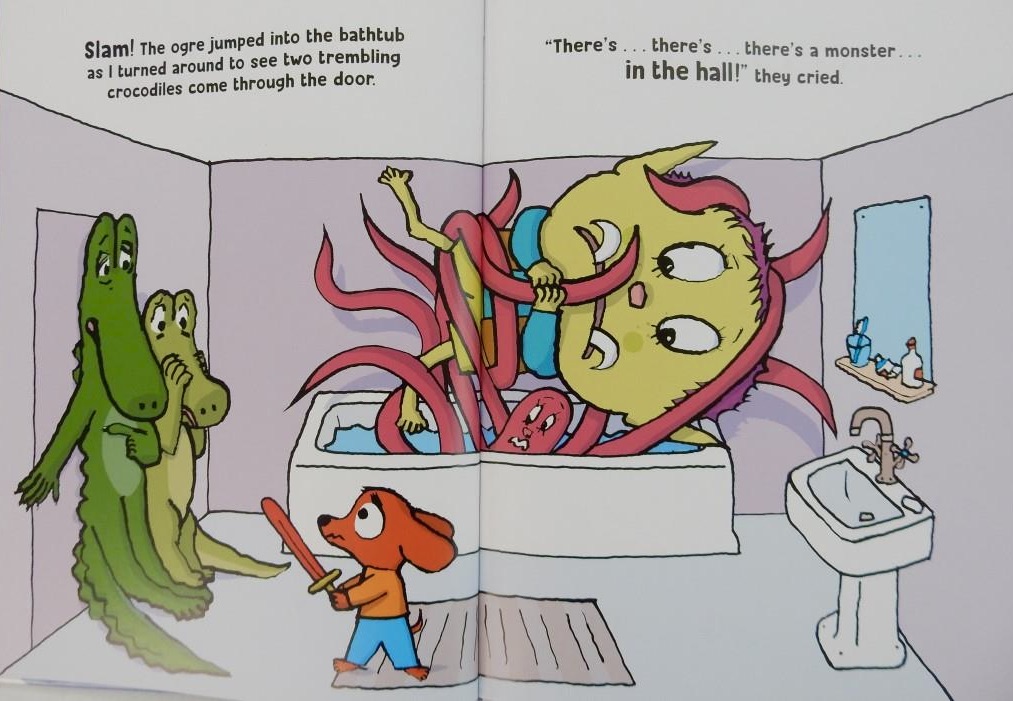
Jojo is in urgent need of a wee but it’s night-time and although the bathroom is close to his bedroom, the presence of an ogre makes it a dangerous walk through the hallway. Nonetheless, needs must, so, sword in paw, Jojo ventures forth into the darkness only to find that the bathroom is occupied, but who is within? Not his mum or dad but sitting on the loo is the ogre; moreover he has a tummy ache. But why use somebody else’s bathroom? It turns out that this ogre is scared of the dark and there’s no light in his own bathroom.

Having used the loo, the ogre needs to wash his hands, however this too is problematic. Jojo’s other bathroom – the one with a sink – is also in use, by an octopus that’s languishing in the bathtub. Henceforward further mayhem unfolds in the shape of a pair of crocodiles and they are scared of a ‘monster’ in the hall.

All this time poor Jojo is still holding on, increasingly afraid he’ll wee in his pyjamas. How will this all end? To tell would be to become a story-spoiler so you’ll need to find a copy of this highly amusing book with its hugely funny illustrations and discover for yourself. Young listeners will certainly enjoy it but whether you’ll want to share it at bedtime is open to doubt.

The Dress in the Window

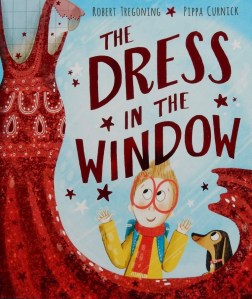
One day when walking through town with his mum, a boy spots a sparkling red dress in the window of a second-hand shop. Dazzling and flowing, the dress seems to be asking the boy to stop and take notice, so he does. He imagines who might have owned the dress previously but the lad knows how amazing it would make him feel.

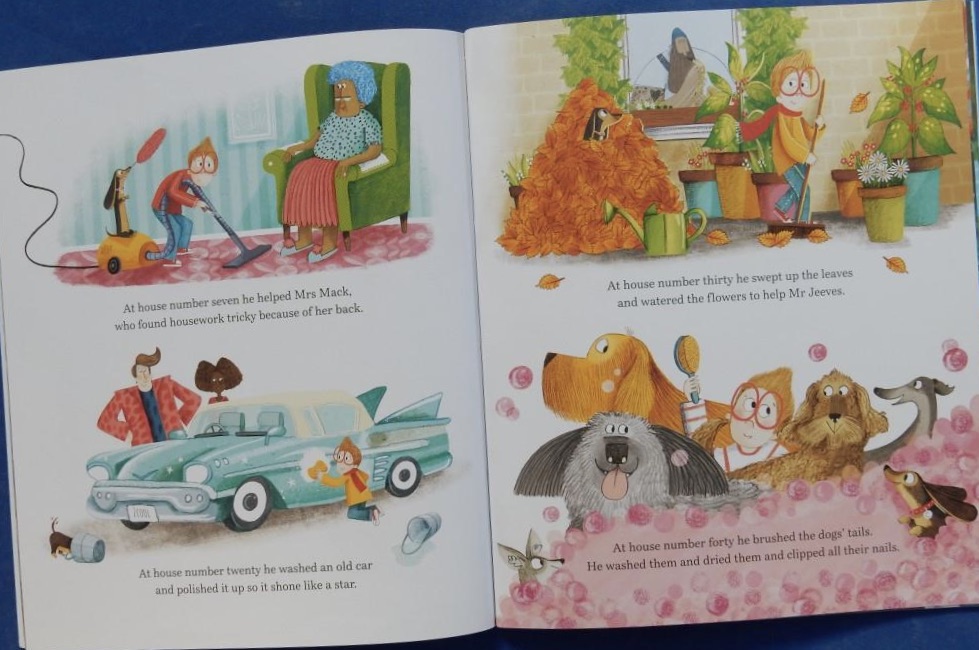
Rather than offering to buy it for her son, Mum suggests he earns some money by doing chores for other people so he can pay for it himself. This he does by washing cars, helping with housework, tending a neighbour’s garden and doing a bit of pet care.

Gradually the money mounts up till the boy has sufficient to buy the dress.

Next day is his birthday and after school, the boy can hardly wait to return to the secondhand shop and make his longed for purchase. Horror or horrors! The dress has gone from the window. Mum pacifies her son with talk of presents waiting at home and when they get there, it’s not just presents waiting for him. All the neighbours are there too and they have a tea party.

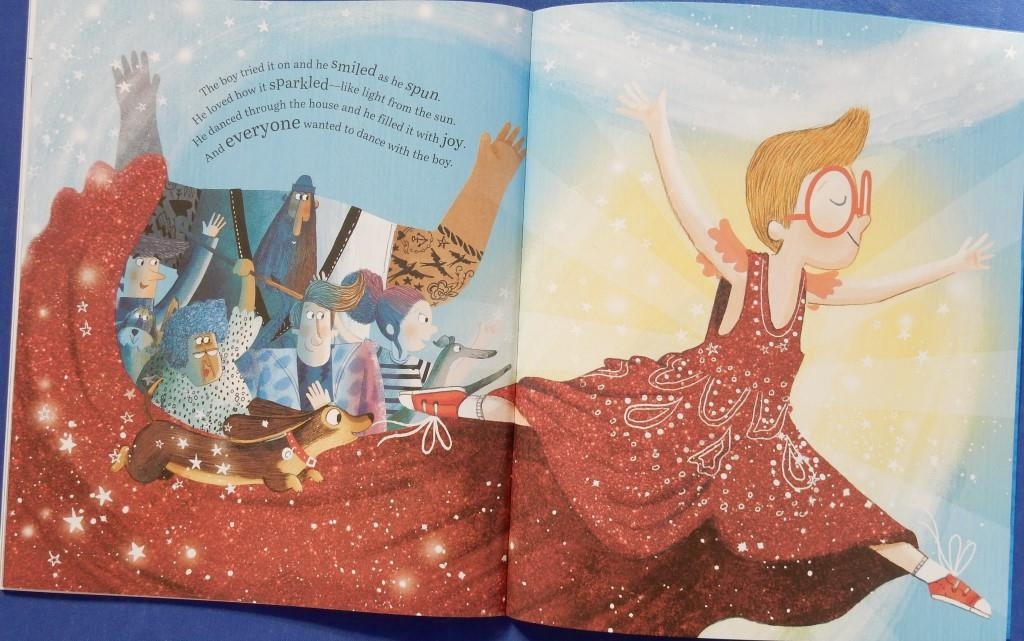
Then comes present-opening time. Joy of joys, when he opens the present from Mum, there is the shimmering, glimmering dress. How he smiles, how he sparkles as he dances with delight – right out of the house and into the street.


What a splendidly joyous celebration of being true to yourself. With its themes of unconditional love and acceptance, this lovely story is a demonstration of just how amazing life can be when you have the support to be true to yourself. The combination of Robert Tregoning’s rhyming text that is a treat to read aloud and Pippa Curnick’s gorgeous illustrations make this a very special book to share with young listeners at home or in the classroom.

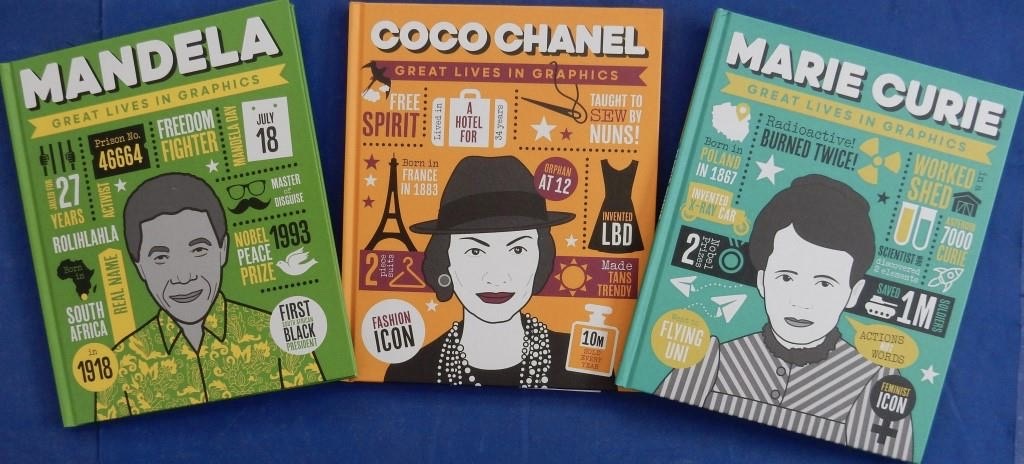
Great Lives in Graphics:Mandela / Great Lives in Graphics: Coco Chanel / Great Lives in Graphics: Marie Curie

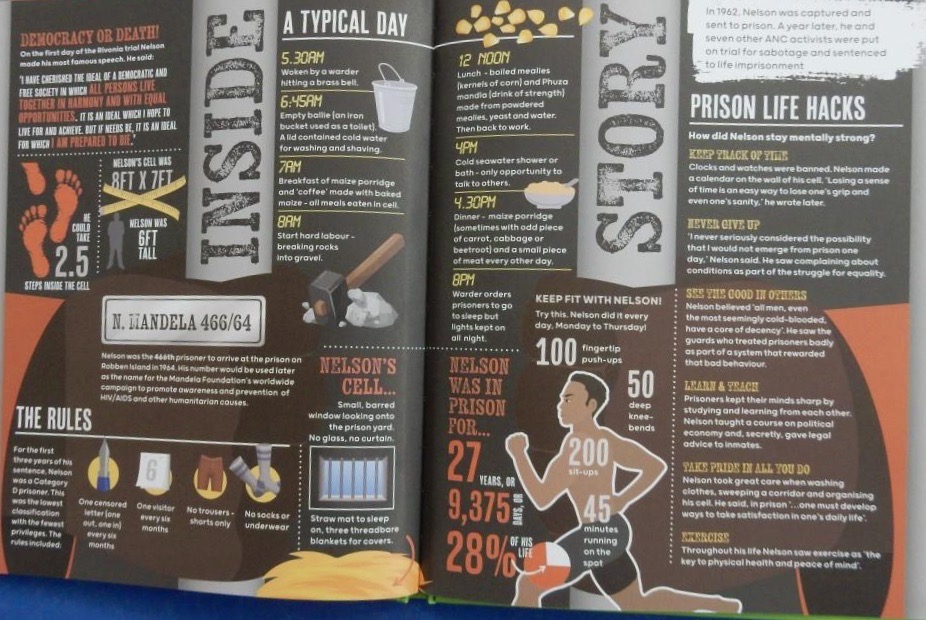
When in my early years of teaching, I passed on the news to my KS2 class that Nelson Mandela had finally been freed from prison, we all climbed up on the tables and cheered. (You’d never get away with that now but Mandela was then and has remained, my all time hero.) So of course, I was immediately interested to see the first of these titles being added to this very useful series. Readers will discover how Nelson’s life as the son of an African chief resulted, through his education, in his becoming an activist who protested against the apartheid system imposed by the white minority in South Africa in 1948; how his activism eventually led, when he was leader of the military wing of the ANC, to his arrest in 1962. He was sentenced to life imprisonment in 1964.

Fortunately though, he was released age 71, in 1990, a year before apartheid was abolished. After his release, Nelson was awarded the Nobel Peace Prize (1993) and the following year became South Africa’s first democratically elected president. he spent his last years in his home village.
An awesome man indeed.

If vou have an interest in fashion, then try a companion volume about Coco Chanel who overcame poverty as a child to become one of Paris’s key artistic talents. However, during WW2 it was rumoured that Coco acted as a Nazi spy. She made a comeback in fashion, in 1954, aged over seventy when she transcended ageism with her designs.

We all owe a great deal to Marie Curie, subject of the third book, the only woman to have been awarded two Nobel prizes, the first for physics, the second eight years later in 1911, for chemistry. Justifiably being dubbed a scientific genius, Marie faced prejudice and sickness, dying suddenly in 1934 from a bone marrow disease resulting from the effects of radiation.

All three, highly visual biographies, each of which has a final glossary, are definitely worth adding to KS2 libraries.

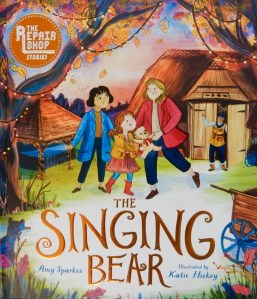
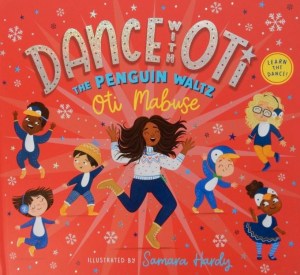
The Singing Bear / Dance With Oti: The Penguin Waltz

It’s always a huge pleasure to visit the Repair Shop and see Jay Blades and his team of expert repairers in these picture books that are based on the real life events of those who visit the workshop. This one featuring Kwai, Anne and young niece Lucy who bring along Singing Ted, for the team to work their magic on, being the third.

Kwai’s elder sister, Anne recounts part of her back story, explaining how as an eight-year old, she learned that her parents were going to adopt a baby girl, Kwai, from Hong Kong. When the little girl arrives, she’s quiet and sad and to try and cheer her up, the family visits the toy shop where they buy a teddy that plays a lullaby at the turn of a key.

On seeing the bear, little Kwai’s eyes light up for the first time

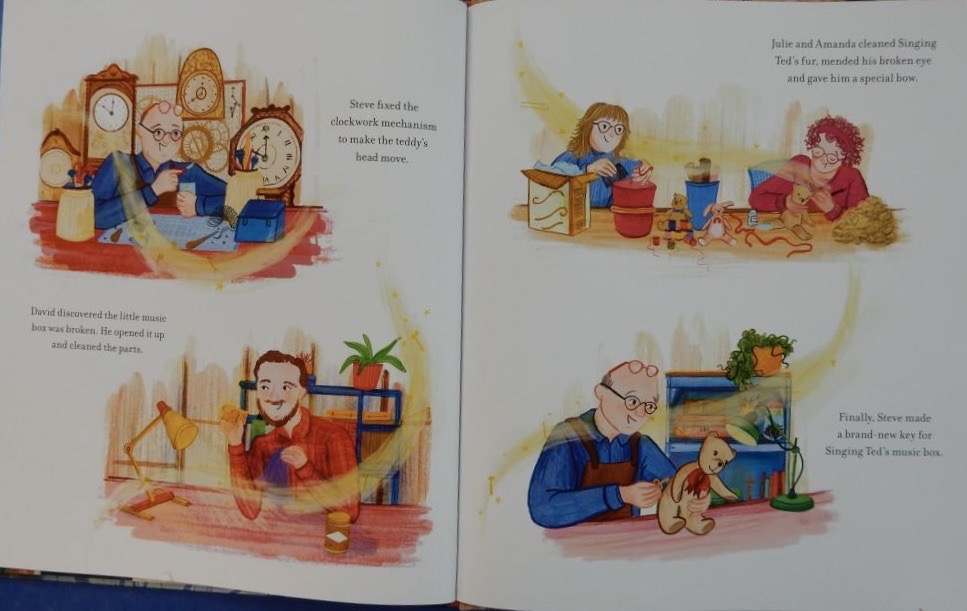
and from then on, Singing Bear as she names her teddy and Kwai go everywhere together. Inevitably over the years, the bear has been loved so much that it now needs Jay and his fellow workers to use their skills on Ted. Can they make the bear sing again as well as fixing the other things that need restoring?

Happily when, the three return, Jay greets them with a big smile and wonderful news.

Amy Sparkes’ telling is a delight but Katie Hickey’s superbly expressive illustrations, endpapers included, really bring the events to life making the book even more special. Back matter recounts the true story of the Singing Bear and introduces Jay and his expert team.

Mrs Oti and her dance class are preparing for a special wintry themed show when the snow falling outside prompts one of the children to ask if they can go out and play. Wrapped up warm, off they go and straightway as Mrs Oti teaches them how to balance on snowy ground, penguins are mentioned. This leads one of the pupils to initiate a penguin waddle and after a snowball fight, and further talk of penguins , Mrs Oti tells them she has an idea for the final dance in the show: the Penguin Waltz.
Back indoors, re-energised by hot chocolate, the practising begins in earnest.
Come the day of the show, what a performance the children give until it’s time for the finale. A mishap occurs but Gan’s quick thinking and sense of teamwork save the situation and the dance finishes perfectly, to the delight of watchers and performers.

A delightful addition to the Dance with Oti series: Samara Hardy’s bright, lively illustrations showcase Mrs Oti and her class beautifully: their camaraderie really shines through.
Read the book with your KS1 class, then get up and try the moves: you and your listeners can learn the penguin waltz by following the step by step instructions on the final spread.

A World Full of Winter Stories

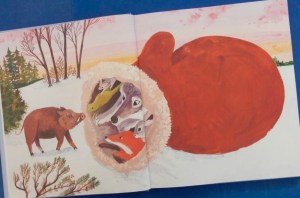
This is a veritable cornucopia of folk tales, myths and legends – fifty in all – gathered from around the world and retold by Angela McAllister. There are six sections: Birds and Beasts, Tricks and Troubles, Ice and Snow, Quests and Journeys, Spirits and Magic and the shortest, Christmas. Each contains stories I was familiar with, but also several new to me. One such was the very first, a tale from Japan telling how snowballs made by the children of the Sky Goddess become the ‘The First Rabbits’. Also new to me, from the same section is an amusing Ukrainian story about a dropped mitten that, unbeknown to its boy owner, becomes a temporary shelter for seven animals.

From the Tricks and Troubles section, a story from Kazakhstan that made me smile was The Marvellous Coat wherein a crafty man tricks another into exchanging coats, ending up with a thick warm coat plus a fine horse, instead of his original holey coat and worn out steed.

Bears feature quite often in wintry tales and this book is no exception. The Long Winter. a Dene story from Canada, in the Ice and Snow section tells how a group of animals struggling from the constant winter climb up into the sky to search for the world’s warmth. There they discover some bear cubs from whom they learn of the whereabouts of that which they seek, although reclaiming it from the mother Bear and restoring sunshine is anything but an easy task.

If you’ve ever wondered why some trees and bushes never lose their leaves, The First Evergreens, a Mongolian tale in section four, offers an explanation that involves a good-hearted swallow.
There’s an Inuit story in Spirits and Magic that took my fancy. It tells how a stolen wife was reunited with her husband, a village chief thanks to an old woman, a special charm and some magic words remembered just in the nick of time.

You might be surprised to learn that a scarecrow features in the final section, in a story from North America, a scarecrow that ends up helping Santa.

This book is a joy to share with children at home or in the classroom during the winter months. The tales are just the right length for a story time session and Olga Baumert’s illustrations, be they large or small, bring an extra touch of magic to each one.

Masked Hero

This image has an empty alt attribute; its file name is dscn0042-1.jpg


The co-authors of this book – a mother and daughter – both descendants of their subject, tell the story of Wu Lien-teh. Born in 1879, he grew up in what was then Malaya in a happy home with his parents and ten siblings. Wanting to become a doctor, the boy studied hard both at home and school, eventually winning a scholarship to the University of Cambridge where he studied medicine.


Following medical training, came post graduate research in Great Britain and other European countries. On returning to his homeland he had trouble finding an official post due to racial discrimination, however he was undeterred, studied further in Kuala Lumpur, married and opened a medical practice. He then moved to China to lead a new medical college. However in 1910, an awful disease struck Northeast China, killing large numbers of people. Lien-teh agreed to leave his family and travel north to the city of Harbin, near the Russian border, on a rescue mission.


His observations led him to realise that the deadly disease was being spread by a bacterial germ, transmitted when people coughed.
He needed to do something urgently, so, drawing on his creativity and ingenuity, Lien-teh fashioned a new sort of multi-layered mask.

This image has an empty alt attribute; its file name is dscn0043-1.jpg

This met with resistance from racist fellow doctors but within months the epidemic was under control.
Lien-teh continued his work, setting up hospitals and medical colleges all over China and in 1935 he became the first person of Chinese descent to be nominated for a Nobel Prize. His innovations were even crucial in the fight against COVID-19 when masks became part of the lives of us all.
‘When we wear a mask to stop a disease, we are all heroes – just like Wu Lien-teh!’ conclude the authors.


Neatly describing the medical and racist issues Lien-teh faced, as well as drawing parallels between the past and recent times, these authors pay tribute to an amazing person who still hasn’t really received all the credit he deserves. Stylised illustrations by Lisa Wee help bring him to life on the page and the back matter includes some black and white photos.


An inspiring pictorial STEM biography to add to classroom collections.


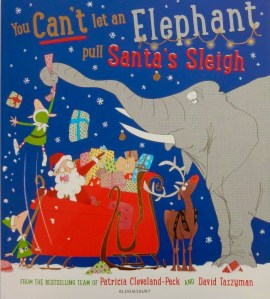
You Can’t Let an Elephant Pull Santa’s Sleigh

This is the sixth in the splendidly silly ‘You Can’t Let an Elephant’ series by team Cleveland-Peck and Tazzyman and it’s full of the Christmas spirit – sort of!

Not only does Patricia consider the elephant as a no go creature for the titular task but she also proffers reasons for not allowing racoons to decorate your tree,

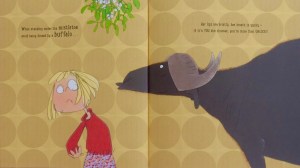
keeping nanny goats away when you open our presents, preventing elephant seals from attempting to illuminate the outside of your home. Moreover you should not try pulling a cracker with an alpaca and when it comes to a giraffe, filling his stocking would seriously deplete Santa’s present store. Unless you want Christmas chaos rather than a seasonal feast, then never ever appoint a wildebeest as head chef; steer clear of a buffalo when you’re close to the mistletoe

and penguins as carol singers are, let’s say, anything but tuneful. And so it continues, much to the distress of the named creatures. Surely there is something the only too willing workers might be able to do to bring Christmas cheer?

Hilarious illustrations in combination with a terrific read aloud text will assuredly bring young listeners plenty of Christmas cheer when you share this.

Here are few ideas as to why an elephant is unsuitable for the role of Santa’s sleigh puller:
Faith (4) The sleigh would just keep spinning around.
Sam (8) An elephant would be FAR too clumsy. Plus it would fall asleep on the job and third it would be impossible unless you had one hundred bottles of magic powder.
Emmanuelle (11): It’s far far too heavy and would never get airborne. Also it would be much too difficult to put a harness around it. Also no elephant in the whole world has a red nose and you need at least one of that kind to pull Santa’s sleigh or you can forget the whole thing.

The Book From Far Away

This image has an empty alt attribute; its file name is dscn0007-1.jpg


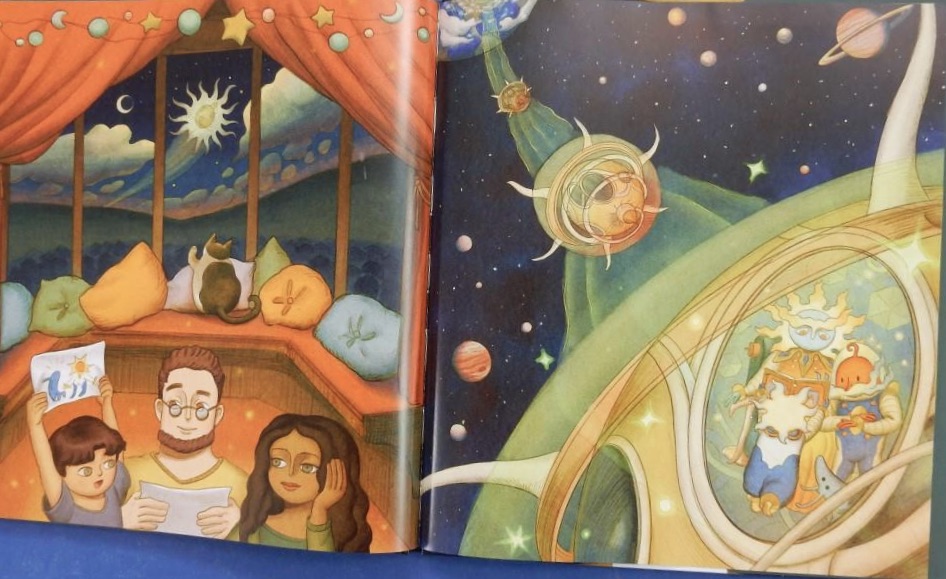
This tale unfolds over 48 pages, which is longer that the average picturebook. It’s an intriguing, wordless story that begins with a little boy wandering in the woods, having spent some time sitting in a tree reading a book he removes from his backpack. Ahead of him, he spies a spaceship landing in a nearby clearing. Out come four otherworldly beings, two seeming adults, a youngster plus a pet.

There follow several spreads showing the extraterrestrials playing and picnicing together,

This image has an empty alt attribute; its file name is dscn0010-1.jpg

after which they return to their spacecraft and take off. The human child emerges from behind the tree where he’s been watching them and finds on the ground a large round, elaborately decorated golden disc that appears to have several transparent overlays – pages possibly.


Suddenly up behind the boy comes the young extraterrestrial, who has seemingly been left behind. The two communicate wordlessly; the Earth child hands the golden disc to the owner and taking his own book from his backpack, gives it to the visitor. Then back comes a spacecraft, the two hug each other farewell, the space child enters the spacecraft and it flies off.


At home later, the Earth child shares with his parents, images of the day’s happenings. Meanwhile, somewhere else in the universe, the outer-space child and family share the Earth book,

This image has an empty alt attribute; its file name is dscn0011-1.jpg

and on the final page, the cat makes an astonishing discovery in the backpack. What might this lead to, one wonders.


A confirmation that books have a universal appeal, and that children are able to understand one another no matter from where they come. Young (and not so young) readers will relish poring over the amazing details in this brilliantly imagined sci-fi tale: who needs words when the mesmerising visuals herein speak volumes?

Economics

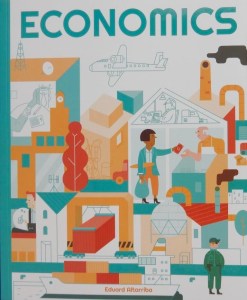
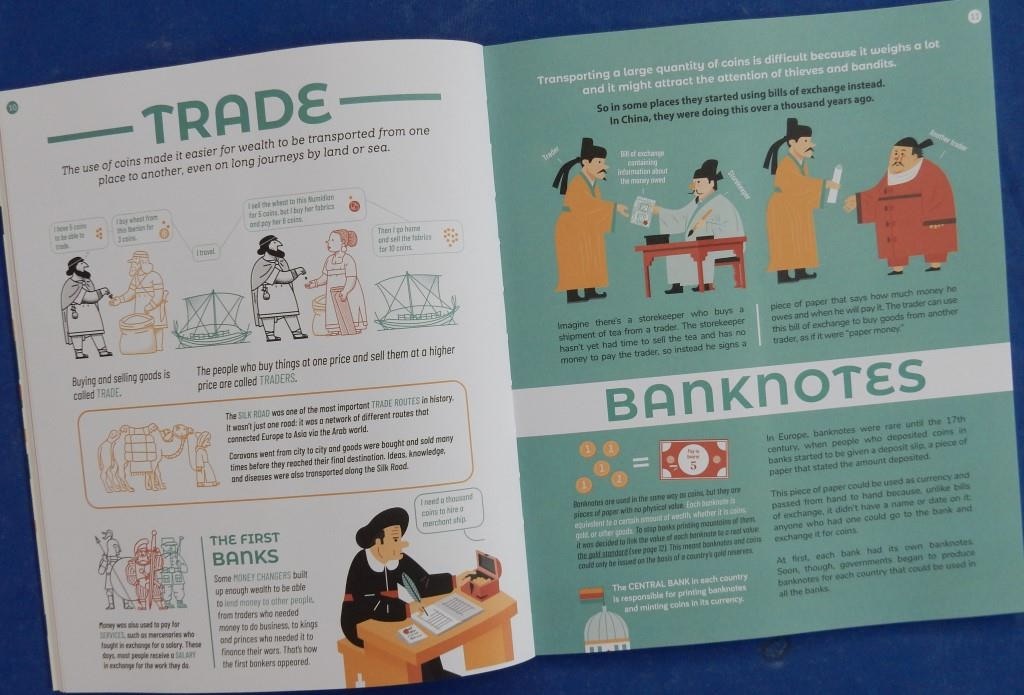
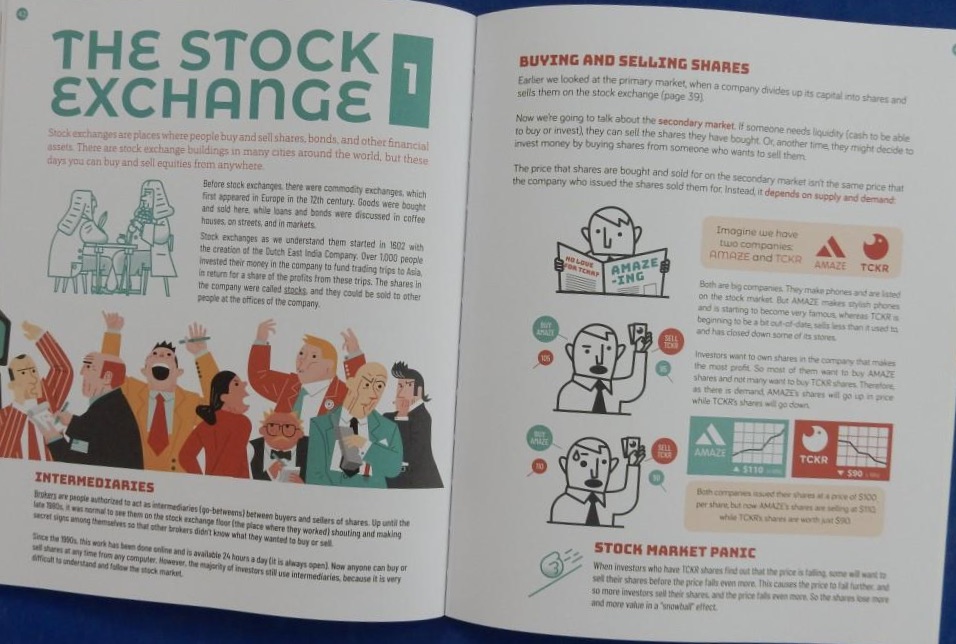
With ‘the economy’ being mentioned almost every time one turns on the TV or radio, this is indeed a timely publication. Herein the author provides an easy-to-understand explanation for older KS2 children about the economy, what fundamental economic ideas and theories are, as well as how its structures and rules impact on our daily lives and shape the way societies and the wider world function. I particularly like the way he uses as a starting point, the example of a village wherein sheep are reared and cheese made from their milk to explain such terms as surplus and exchange. This is just one of the devices used to make the complex world of economics accessible to children; children who will surely encounter words such as inflation and the escalating cost of living in the news.

In his usual fashion, Altarriba’s sequencing of topics explained is carefully considered so that each new subject (there are almost forty in all) segues logically into the next.

With its wealth of infographics and illustrations children can discover such things as how money works, the things you can do in a bank, what happens in the stock exchange and much more.

Altogether an excellent and illuminating introduction to a topic that is something of a mystery to all too many of us.

Welcome to the Mysteryverse / Secret Stories of Nature

These are both Wide Eyed Editions: thanks to Quarto Kids for sending them for review

Contained within the covers of this large format book are some of the as yet, unsolved mysteries about the workings of Earth, its human inhabitants and the universe. It’s divided into five parts each given an alliterative title: People Puzzlers, Earth Enigmas, Natural Niggles, Cosmic Conundrums and Miscellaneous Mysteries, concluding with a couple of spreads telling of some mysteries that science has helped to solve.

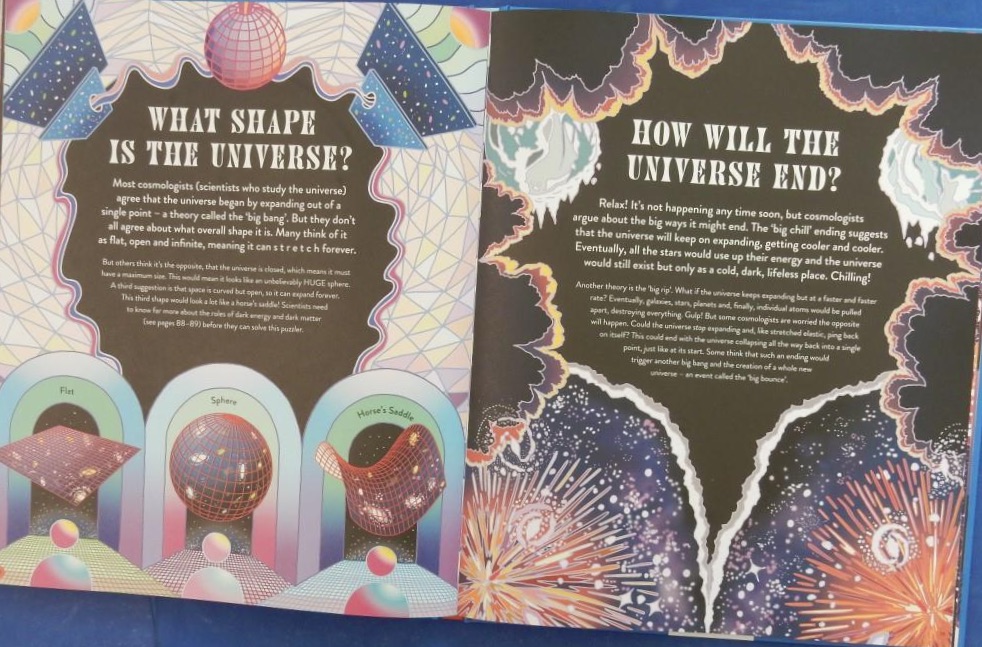
Clive Gifford explores in a straightforward manner everything from yawning and the appendix to optical illusions, from what makes tornados and causes earthquakes to where has all Earth’s water come from, why millipedes and centipedes have so many legs to why cats purr, and what is the overall shape of the universe, and, how will it end.

For each mystery readers are encouraged to think both scientifically and creatively as they peruse the spreads and ponder the questions posed.

An absolutely fascinating compendium of scientific puzzles, made all the more exciting by the detailed, sometimes psychedelic illustrations by Good Wives and Warriors, whose work I’ve not encountered before.
A book for KS2 classrooms and families where there are curious-minded children.

Presenting the biological information in this book as secret stories that nature wants to share with readers is an engaging means of sharing the facts relating to the flora and fauna featured. The sea, the ice, forests, jungles and mountains all have secrets, as do the sky, the night and the ground beneath our feet.

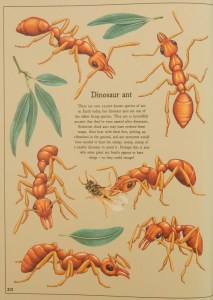
Did you know for instance that there are more than 12,000 known species of ants on Earth today? Or that ants hear with their feet, or rather, they sense the vibrations in the ground around them.

I was fascinated to read that horned tree frogs have bony spikes hidden inside their skulls for defence purposes and that dragonfly ancestors had a wingspan of around seventy centimetres rather than the maximum of twenty in some of those of today.

You may well be surprised to read that rodents including rats and mice share their DNA with humans – now there’s a thought. It might also come as a surprise the fur of polar bears is not white. Rather it’s translucent and appears white because it reflects visible light.

Towards the end of the book is a ‘searching for secrets’ section encouraging readers to stop and look closely at the nature around them to find the hidden treasures that are all around.

With superb illustrations by Vasilisa Romanenko, this is a treasure trove of ‘secrets’ relating to the natural world.

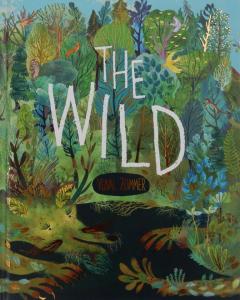
The Wild

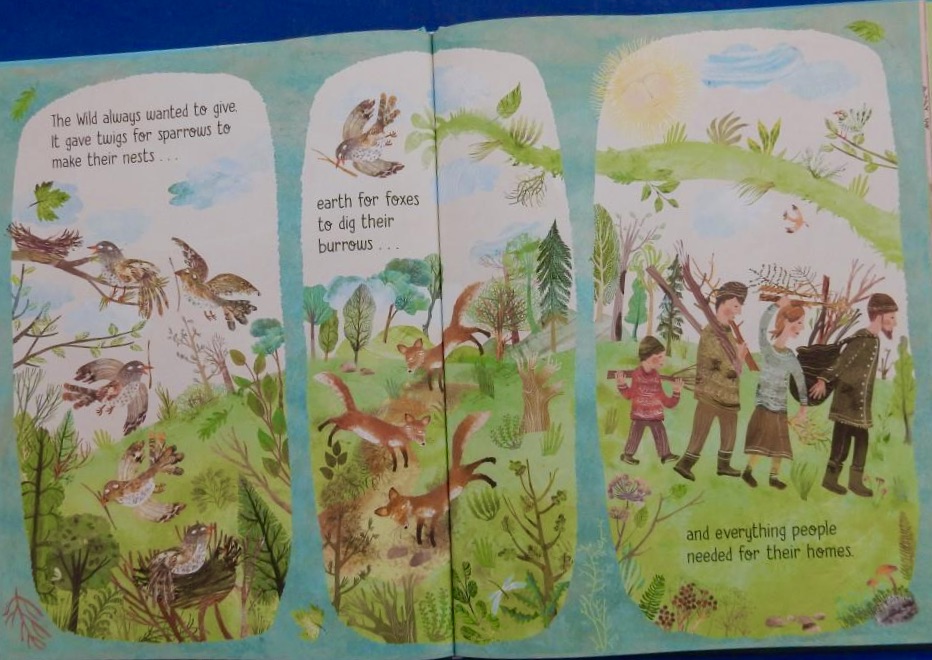
There is a line in a Native American poem where the author asks the Great Spirit of Life to give him the wisdom “to walk softly on the earth”.  This ancient metaphor recognises our human responsibility to take care of the natural environment on which we live and depend for our existence. So it was in the Wild at the start of Yuval’s new fable of our times. The Wild here was a vast place, a place where season followed season and the animals responded to the changes, either by moving or by being still and sleeping. Every living being, be they human, or creatures furred or feathered had all they needed: they lived lightly in the Wild, caring for it and receiving its care in return.

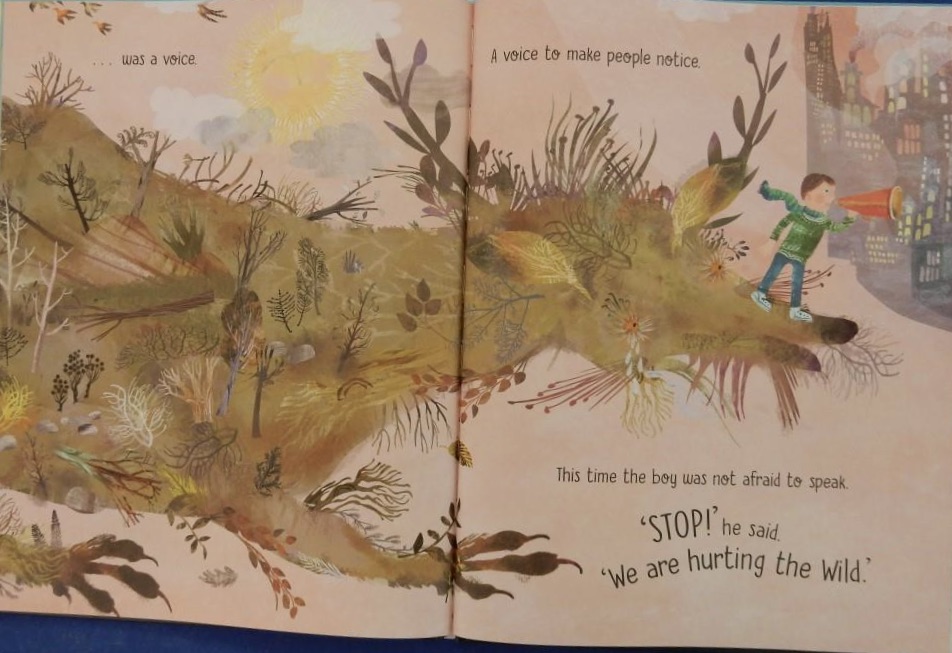
But those humans envisaged that the Wild would always be able to provide what they needed so with the passing years, they became increasingly careless, taking too much as they mined, ploughed, burned and built. They paid no heed to the devastation their actions caused until one day a child looks out of the window and notices a change. “Why does the Wild seem so weak?” he asks but his question goes unheeded. The child continues to worry and question but to no avail until eventually the Wild is unable to give.
Now it’s time for the boy to speak louder and without fear. And so he does: “STOP!’ he cries, “We are hurting the wild.”

Finally others hear his urgent call and they too take up the cry. Not only do they call, but they also change their behaviour. Little by little, with renewed hope , the Wild begins to recover because no human took without also giving something back.

Yuval’s message is also delivered with stark urgency and his collage like illustrations are full of superb textures and details in the realistic, rich colours of the natural world.
A must to read, share, discuss and act upon.

Lore of the Stars: Folklore & Wisdom From the Skies Above

Alluringly presented, and full of fascinating tales and ancient wisdom, this latest in the Lore of series is divided into six sections: The Sky, The Sun, The Moon, The Stars, Planets, Comets and Shooting Stars and finally, The Cosmos.

Each section begins with a traditional story, the first being a Nigerian tale that attempts to account for ‘Why the Sky is So Far Away’ and the other spreads offer a mix of factual snippets and mythological paragraphs pertaining to the section’s theme such as gods and goddesses. I am familiar with the Hindi word for rainbow, Indradhanush so was interested to see Indra included on the Rainbows spread, indeed that is the only spread where I was familiar with all the mythology presented.

It’s pleasing to learn, through brief anecdotes scattered between the vibrant visual images, how different cultures viewed the same plants, animals and other natural phenomena such as sunrise and sunset,

the constellations, as well as augury and aeromancy. However my favourite part of each section is definitely its two page opening story and in this book the Greek myth, the Indian Santal folktale,

the indigenous American tale, the Masai tale and the Visayan Philippine tale were all new to me and a pleasure to read to children.

For school and home collections.

History FACTopia!

In this, the fifth in the clever series readers are invited to ‘Follow ye olde trail of 400 facts’ beginning with the discovery by archaeologists in China of a pair of trousers 3,300 years old right through to the final fact about a group of claqueurs who were hired by theatres in 18th century France to applaud, cry and laugh to inspire audience participation. That, I’ve most certainly not heard of before, but then the same is true of quite a lot of the fascinating facts herein.

It’s overflowing with nuggets of historical information – did you know that in 1988, inspired by local barrow derby races Jamaica formed its first ever bobsled team. I guess they must have had some snow around then.

Astonishing too is to read that in 14th century Europe, when the bubonic plague struck, some people believed that by eating a spoonful of crushed emeralds you could be cured.
Perfect for sparking further investigation from curious minds. Your journey will twist and turn forwards and backwards through time, across the world, embracing a variety of cultures, beliefs and noteworthy happenings. For instance, information about the oldest known prosthetic body part, a 3000 year old artificial toe made of wood and leather, attached to an Egyptian mummy, leads to either further facts about mummies

or information about the world’s oldest pillow made 9000 years ago in Mesopotamia and made of stone. Ouch!

Children will enjoy the humour, vibrant graphic-style illustrations and photos throughout this zany compilation; it’s playful learning that is likely to spark further investigations from the curious.
Back matter includes an index, a detailed glossary of historical terms, and information about the FACTopians.

Kitty and the Snowball Bandit / Rudy and the Forbidden Lake

There’s a decidedly chilly feel to Kitty’s thirteenth adventure when she wakes one morning to find that snow has fallen overnight. That evening she, her Mum, Dad and her little brother, Max, head to the Winter Fair and while Kitty and her Mum are enjoying themselves on the ice rink, a snowball suddenly hits Kitty and another woman. Soon an announcement is made warning everyone to take care as a Snow Bandit is in the fairground so as it’s late they decide to return home.

At bedtime Kitty is pondering upon the evening’s events when Pixie the cat appears looking very soggy and sad. She too has been hit, seemingly by the Snow Bandit. Kitty gets dressed again, then donning her superhero cape and mask off she goes onto the roof and heads to the park. Before long she’s hit by another snowball and then spies a figure in an orange cloak – the Snow Bandit.

Eventually Kitty finds herself facing her adversary, also wearing superhero gear and learns that she’s Sienna, the fox girl.

Suddenly there’s a squeaking sound; it’s three baby rabbits adrift in the middle of the river, caught by the current and heading towards some jagged rocks. Kitty is determined to save them, but can she do so? Maybe if the two combine their super powers and collaborate in a rescue effort. Who knows it might even be the beginning of a new friendship …

Pacey, full of action, cat characters and snowballs, with plenty of Jenny Lovlie’s dramatic, beautifully detailed illustrations, Paula Harrison once again has penned an exciting nocturnal adventure for young readers

It’s the middle of winter and excitement is high in Cobble Cross on the eve of celebrations for the Winter Solstice. Then as the final preparations are being made a terrible storm hits the town. The following morning Rudi’s Dad notices his silver candlestick is missing, then when he goes out to meet his friends, he learns that other things have gone missing. Is it the the result of the strong winds or is there a thief at large.

When Femi’s skateboard disappears too, Rudy and his friends start searching in Gnarlybark Forest and suddenly they hear a POP! followed by several other strange sounds. Bubbles start bursting through the surface of the forbidden lake followed by a strange domed entity. Their instinct is to run away but that won’t solve the problem of the missing things. Instead they creep back together to confront whatever it is in the lake. Tentacles start emerging from the water, one of which wraps around Femi. Eventually the tentacled creature drags itself ashore and little by little, this Squibby thing offers an explanation for its behaviour.

What will happen when Squiggly attempts to apologise to all the townsfolk? Will the ensuing chaos subside in time for the celebrations to go ahead after all?

It’s not easy to find books that appeal to both boy and girl newly independent readers but this series featuring young werewolf, Rudy and his skateboarding pals does just that. So, it’s good to see the gang back in this their fifth book. It’s full of dramatic incidents and as always George Ermos’ stylish energetic illustrations capture the changing mood of the telling, adding additional humour where appropriate.

Sai’s Magic Silk

This image has an empty alt attribute; its file name is dscn9968-1.jpg


Sai finds special delight in his Amma’s beautiful silk saris using them to transport him into magical adventures; the problem is he can’t find anybody who wants to share in these adventures.


Instead, taking hold of the edge of one of Amma’s saris, he tosses it skywards. Immediately the boy finds himself plunging into the ocean, where he’s surrounded by all manner of underwater creatures through which he swims; he even plays with mermaids. All too soon though, a voice calls him back to reality.

This image has an empty alt attribute; its file name is dscn9969-1.jpg

Having bid the ocean farewell, Sai heads to his cousin Naren’s birthday party. There however, all the other children have their eyes glued to screens. Sai picks up the edges of Amma’s sari and instantly he’s in Sri Lanka’s Sinharaja forest surrounded by squawking birds and a wealth of wild animals.


Then “Helloooooo?” comes a sound through the undergrowth and as Sai emerges from beneath the sari, there before him stands a little boy who introduces himself as Nate.

This image has an empty alt attribute; its file name is dscn9970-1.jpg

The two boys soon form a bond and Sai invites Nate to his home to play. In Sai’s bedroom, Nate too, is enchanted by the saris. Sai explains how they facilitate his imaginative play and having looked at their wonderful patterns and adornments, Nate finds Sai’s very favourite one.


Unlike the other children Sai knows, Nate is eager for an adventure. I wonder where they go, for, as the final words of the story say, ‘Anything’s possible with six yards of magic silk.’

With Jani Balakumar’s striking illustrations and Shyala Smith’s effective combination of lyrical description and dialogue, this richly woven vignette of Sai’s everyday life, treats readers/listeners to a journey of the imagination.

Having collected all manner of saris during my travels in India and made them available in my foundation stage classrooms, I know from experience, just how much young children love to use them to enhance their creative play.

Legends of Norse Mythology / Norse Folktales, Myths and Legends

This image has an empty alt attribute; its file name is dscn9983-1.jpg


This book transports readers way, way back through time to a realm of ice and fire, magic and mischief. There they will encounter characters from Norse mythology including gods and goddesses, monsters, giants, elves, dwarfs, the Valkyries and other mythical beings – over thirty in all.


Starting with Odin, each individual profile introduces us to the character, giving such details as their chief attributes, there’s a story and additional details. Yes, all the well-known deities are there but you will also meet the likes of the bright and shining god, Baldur, renowned for his goodness,

This image has an empty alt attribute; its file name is dscn9984-1.jpg

Sif, goddess of wheat and golden hair, married to Thor, the Norns – Urd, Verdandi and Skull, controllers of the destiny of each and every living being in the world. If your preference is giants then you can search the contents page for where to learn of giant sisters Gjalp and Greip,

This image has an empty alt attribute; its file name is dscn9985-1.jpg

and Fenja and Menja, strong giantesses who grind out the salt on the ocean bottom.
Interspersed with the profiles are summaries of famous Norse tales and events such as that of Thor’s hammer and the story of Ragnarök.


The book is concisely written by Norse mythology expert Dr Thomas Birkett and illustrated beautifully, occasionally aptly spookily, by Isabella Mazzanti who manages to capture the essence of each character in her portrayals.


Altogether a very useful introduction to an endlessly fascinating topic; for KS2 readers and beyond.

This image has an empty alt attribute; its file name is dscn9996-1.jpg


Divided into four parts, the book comprises Legends from Norse Mythology, and a selection of folk tales from Denmark, Norway and Sweden, each section having five stories.


As you would expect, Loki the cunning, shape-changing trickster and powerful Thor, his ‘brother’ feature in the first, the Norse mythology section.


Along with lesser-known stories, the Danish section includes a retelling of Hans Christian Andersen’s Little Thumbelina, the tiny golden-haired girl with the beautiful voice who enchants creatures with her singing including a mole that she narrowly misses having to marry.


New to me in the Norwegian part, using the same folktale structure as Snow White, is The Twelve Wild Ducks wherein a queen who yearns for a daughter makes a deal with a witch: give up her twelve sons in return for a princess daughter.


I read of Jolly Calle for the first time in the Swedish section. It tells of a boy who remains upbeat and positive no matter what, and finds beauty in simple everyday things.


A delightful collection of tales retold in an appropriately direct style; it deserves to be added to KS2 primary class libraries and home bookshelves.

Beneath

Huddled beneath a quilt in the middle of the bed, Finn is having a dreadful day. Grandpa wants to talk about it but Finn, certain his Grandpa won’t understand remains obdurate. Grandpa suggests a walk and reluctantly the boy agrees, insisting that he stays under the quilt. “Don’t worry,” says Grandpa. “I’ll remember to think of what’s beneath.”

Off they go into the forest and soon Grandpa starts pointing out instances where what’s on the surface conceals hidden complexities – the trees with their subterranean root systems; the wealth of sea life below a fishing boat offshore; the eggs beneath the mother bird sitting in her nest, seeds within a fruit and skeletons inside animals, for example.

“Everyone is more than what you see. Beneath appearances are experiences. Beneath actions are explanations. Beneath what’s different is what’s the same,” he says in response to Finn’s question about inside and outside.

By now Finn has emerged from the quilt and Grandpa draws everything together. “Beneath someone who looks like they won’t understand… is someone who knows exactly how you feel.”

Now reluctant to return home, Finn wraps his quilt around Grandpa and together they climb to the top of the hill and there it’s Finn’s turn to make a reassuring remark to Grandpa.

In one of Cori Doerrfeld’s vibrantly coloured illustrations towards the end of this beautiful story, she reveals that both characters have shared the same serious loss, whom we infer is the maker of the quilt, Finn’s Gramma.

A beautifully crafted, penetrating story of understanding, empathy and acceptance.

Isadora Moon and the Frost Festival / MIrabelle and the Haunted House

Isadora Moon stars in – can you believe it – her 18th adventure and it starts on the morning of Midwinter’s Eve, a very special time for the entire Fairy Realm. With an invitation from her Aunt Crystal and Uncle Wren to stay in the Winter Fairy Realm, Isadora is super-excited. Having dressed in her warmest clothes (and dressed her beloved Pink Rabbit) she’s ready to depart just in time for Uncle and Aunt to pick them up in their sleigh. Once at Aunt Crystal’s and Uncle Wren’s home, there’s just time to build a snowman before they fly off to the Frost Festival.

What a lot is going on when they arrive. Isadora meets a silver fairy who introduces herself as Estrella and tells Isadora that she’s lost the star that’s needed to go atop the ice rink fir tree at midnight.

Isadora offers to help her look but in all the excitement she loses her parents. The two now have another search to undertake. As midnight draws ever closer Pink Rabbit takes it upon himself to climb up the very fir tree that still lacks Estrella’s star. Will this turn out to be the magical night that all those attending the Frost Festival had hoped?

With its gentle humour and theme of kindness, this will enchant Isadora’s followers and likely be responsible for starting a fair few other children on the road to becoming independent readers. Best read with a mug of hot chocolate, perhaps made to the recipe given at the end of the book.

One autumn morning Mirabelle’s Mum urgently needs dragongrass flower petals to make some special eyeshadow and it’s finally agreed that the family should combine going on a picnic with hunting for the dragongrass flowers Mum requires. Off they all fly and having found the perfect picnic spot, Mum and Dad lie back and fall fast asleep. Almost immediately Mirabelle and her brother, Wilbur, fall out and the two part company.

Before long Mirabelle discovers a single dragongrass flower but just as she’s going to pick it, Wilbur reappears and stamps on the plant rendering it useless for potion making, claiming it was an accident. Then Mirabelle’s dragon, Violet, flies off frightened by a sudden thunderstorm and when she follows him, Mirabelle finds herself in a clearing outside a tumbledown house. Shortly after, Wilbur arrives and following another squabble the two enter the house. Further bickering ensues and eventually Mirabelle gets so irate she cries, “I wish you’d just disappear!” And Wilbur does.

Can she discover what’s happened to him and find Violet? Perhaps, with some assistance from a friendly ghost, named Luna.

What about that dragongrass flower: can Luna help with that too?

Young readers, especially Mirabelle’s countless human friends, will delight in this the ninth adventure starring the little half fairy, half witch. They’ll also enjoy trying some of the activities after this story.

The Panda’s Child

Left behind by her fellow villagers as they walked in the forest, a mother lies down with her baby boy in the warm sun. She drops off to sleep briefly and wakes to discover the infant has gone. After three days of searching the villagers conclude that the baby must have been taken by a creature of some kind or perhaps the forest spirits.

The mother refuses to give up though and continues searching alone, hope gradually fading the longer she looks. But then, drifting on the wind she hears something: could it be? Wonder of wonders, in a cave beside a large ursine creature lies her child, alive after seven days.

The bear – a she panda – must have kept the baby alive, the villagers decide, and henceforward, they have a strong bond with the animal. They also have a special bond with the little child.

The years pass and on the child’s ninth birthday some strangers ride into the village. It’s evident from their lavish dress these are rich people, accompanied by large hunting dogs and elephants most of which bore cages of animals of various kinds. One cage however is empty. The villagers hope that by ignoring the visitors, they would move on but the boy, attracted to the horses, approaches them and is told they are searching for a black and white creature. Said creature is to be a gift for a great ruler, Alexander. Eventually the riders depart, only to return several days later. This time the empty cage has been filled by a black and white animal: the panda’s child. The boy begs them to take him with them to ensure the creature remains alive and eventually they agree, to the horror of the entire village. But has the child really betrayed all those responsible for keeping him safe? Or does he have another reason for wanting to accompany the wealthy travellers even if it means risking his own life?

Hugely moving, Jackie Morris’s spellbinding tale with Cathy Fisher’s mesmerisingly beautiful illustrations will stay with readers long after the book has been closed. With its environmental and conservation themes it will appeal to a wide age range and would make a wonderful present for a lover of the natural world.

Home Bird Hoot

Hoot is a home loving bird, never venturing beyond her perch in her snuggly treetop abode. The only drawback is she’s always alone. Until that is, Momo, a little mouse, calls one night and invites Hoot to hang out with him. Hoot invites him in and as they sit chatting a friendship begins to develop. One night Momo suggests the two of them explore further afield but Hoot is too scared of what might be lurking outside.

Then one night Momo doesn’t appear for their usual get together. A troubled Hoot summons up all her courage and little by little ventures out into the night. Hearing a squeak, she looks around and what she sees makes her tummy turn over. Can she now leave her perch, find her wings and come to the aid of her friend?

Smriti’s rhyming tale demonstrates how an important friendship can fuel empowerment and inner strength, making someone braver than they’d every thought possible when danger strikes.

Don’t be afraid to embrace the unknown, be a risk taker is the message: new experiences such as those of Hoot broaden a person’s horizons. There are some delightful details in Lucy Fleming’s illustrations: I particularly love the ‘Peckado’ home delivery service and all the minibeasts but young children will doubtless find other things that especially appeal to them.

A good story time tale to share and talk about.

The Observologist

I learned a new term to describe my partner from the first page of this playful book. He’s an observologist, someone who, as Giselle Clarkson says herein is a person ‘who makes scientific expeditions every day’ … ‘they notice interesting details in the world around them’ … and are ‘expert at finding tiny creatures, plants and fungi.’ Not a day goes by when he doesn’t share some of his observations when we’re out walking, no matter where that is; it’s not surprising we make such frequent stops. And he certainly doesn’t feel embarrassed about turning over large stones or lumps of wood.
The book has five main sections, the first being concerned with the principles and practice of observology that include such important topics as taxonomy and anatomy.

We then visit four places the author suggests are ideal for observological expeditions: a damp corner, a pavement, a weedy patch and behind the curtains.
In the damp patch you’ll likely find the likes of slugs, snails, centipedes and millipedes and my favourite, woodlouse. This small crustacean has many other names including chuggie pigs, used by most children in schools where I mainly live, in Gloucestershire.

In the pavement section you can explore the world of ants, bird poo, lichen,

minibeast droppings and eggs and learn all about worms. (These annelids have three spreads devoted to them.)
The weedy patch is where you will encounter bees and wasps, cicadas and caterpillars, seeds and surface tension. While, behind the curtain there may lurk cockroaches – yuck! – flies, spiders and moths.

There are several useful ‘how to’ pages, one such is ‘how to get a fly to go outside (at night)’, another is ‘how to relocate a spider’ – I’ve done this one many times.
This smashing book is absolutely brimming over with information, whimsical details -verbal and visual. I envisage countless children completing the ‘required course of study’ and receiving the observologist qualification’ award on the penultimate spread. I wonder if they will all have noticed the 13 spider mites running through the book though.

I’m Going To Be a Princess

Maya and her Mum are walking home from school one day, the former clutching a drawing she’d done in class of a princess. “because I’m going to be a princess when I grow up1”, she announces.
Mum agrees that it’s a fun idea but encourages her daughter to think about other possibilities. She goes on to share information about some amazing Black women through history: a doctor perhaps like Alexa Canady, 

or an award-winning ballet dancer like Misty Copeland? Other suggestions are an athlete like Alice Coachman, 

a rocket scientist, like Annie Easley, and several others. Maya agrees that they all sound brilliant but remains firm that she is going to be a princess. 

However the girl has a surprise up her sleeve: her princess role model isn’t the usual fairy tale kind; instead she wants to be just like Princess Amina, a warrior princess who, five centuries ago, ruled the Zazzau Kingdom in West Africa, a fearless leader, totally devoted to her people for whom she worked tirelessly.

I love the clever flip of the narrative and the trashing of the prevailing princess stereotype. Stephanie Taylor uses a chatty style for her telling which works well and in tandem with Jade Orlando’s lively illustrations, make for an informative, empowering book that deserves to be in all KS1 classrooms.